

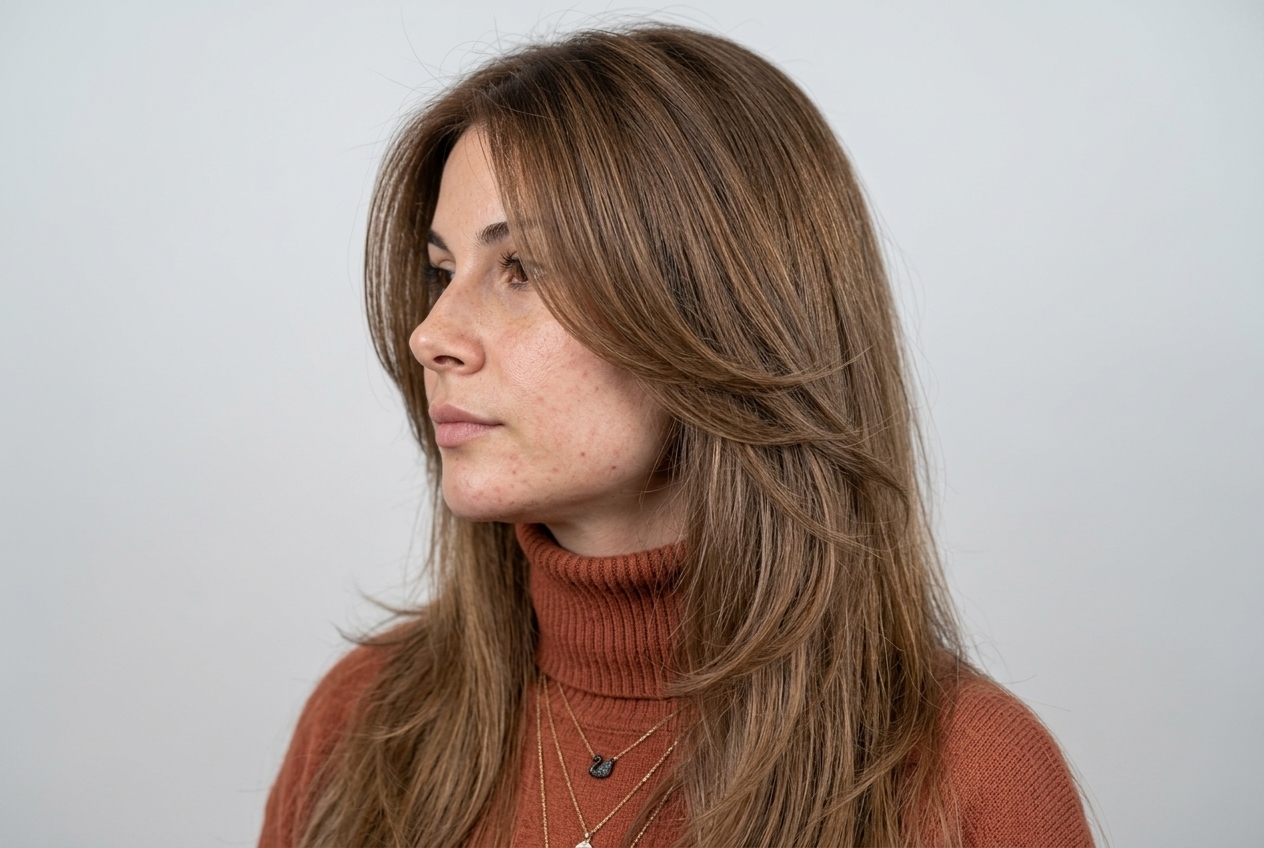
Fine hair is one of those things that can feel like a constant negotiation. You want the length, but keeping length on fine hair sometimes means the ends look wispy, the roots fall flat by noon, and the whole thing just sits there — defeated. The good news is that the right cut changes all of that. Not a trim, not a style trick, but an actual haircut built around the way fine hair behaves.
The cut is everything. Fine hair that’s been cut strategically holds volume better, moves more convincingly, and genuinely looks fuller — not like someone tried hard to make it look fuller. The difference between a fine-hair-friendly cut and a random chop is measurable from across the room. Hair that’s cut without considering texture and density tends to hang lifeless or look stringy at the ends, no matter how many products you apply.
There are specific cuts — some classic, some newer — that do real work for fine hair. Whether you want something polished, something with movement, or something low-maintenance, these twelve long haircuts can give fine hair the appearance of real thickness.
- 1. Blunt Cut with a Slight U-Shape
- 2. Long Layers with a Blunt Perimeter
- 3. Face-Framing Layers
- 4. Long Shag with Soft Layers
- 5. Curtain Bangs with Long Hair
- 6. Long Bob (Lob)
- 7. Feathered Layers
- 8. Side-Swept Bangs
- 9. Wispy Bangs with a Long, Mostly One-Length Cut
- 10. Choppy Layers
- 11. V-Cut with Light Internal Layers
- 12. Balayage-Ready Layered Cut
- The Right Cut Is Worth the Research
- Frequently Asked Questions
1. Blunt Cut with a Slight U-Shape
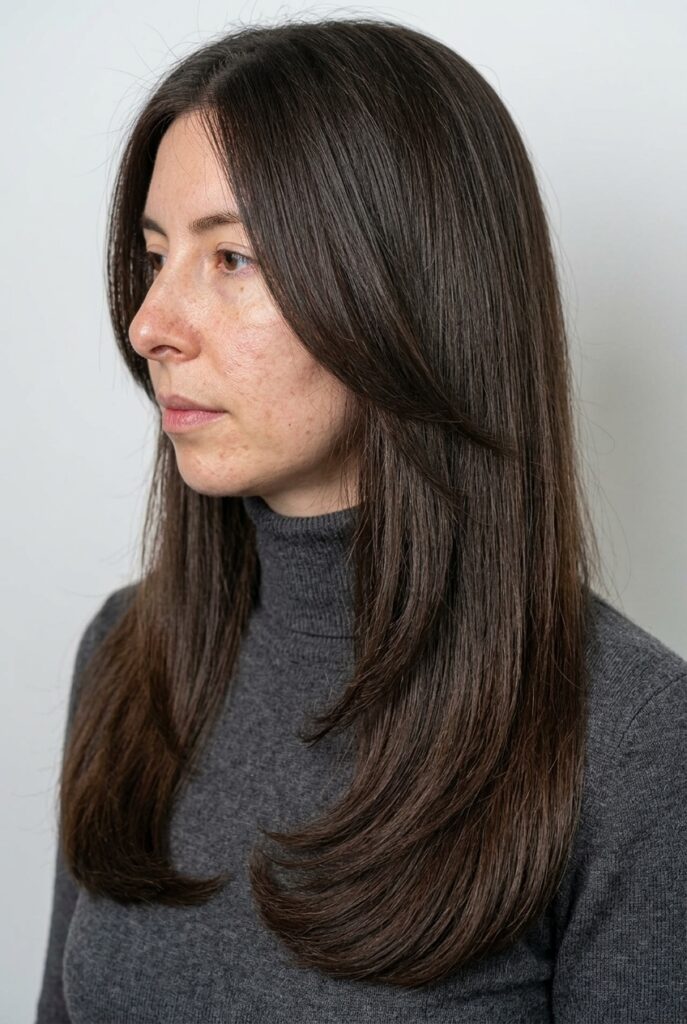
The blunt cut is probably the most straightforward option for fine hair, and it works because of simple physics: all the hair ends at the same point, creating a concentrated line of density at the bottom. That clean, uniform edge makes ends look thick and full, even when the strands themselves are delicate.
A perfectly straight horizontal blunt cut can sometimes look too severe, so many stylists add a slight U-shape — a gentle curve that softens the line without losing the weight at the ends. Blow-drying upside down and using a volumizing spray at the roots amplifies this effect considerably. This cut also holds up well between trims, which is a practical bonus.
2. Long Layers with a Blunt Perimeter
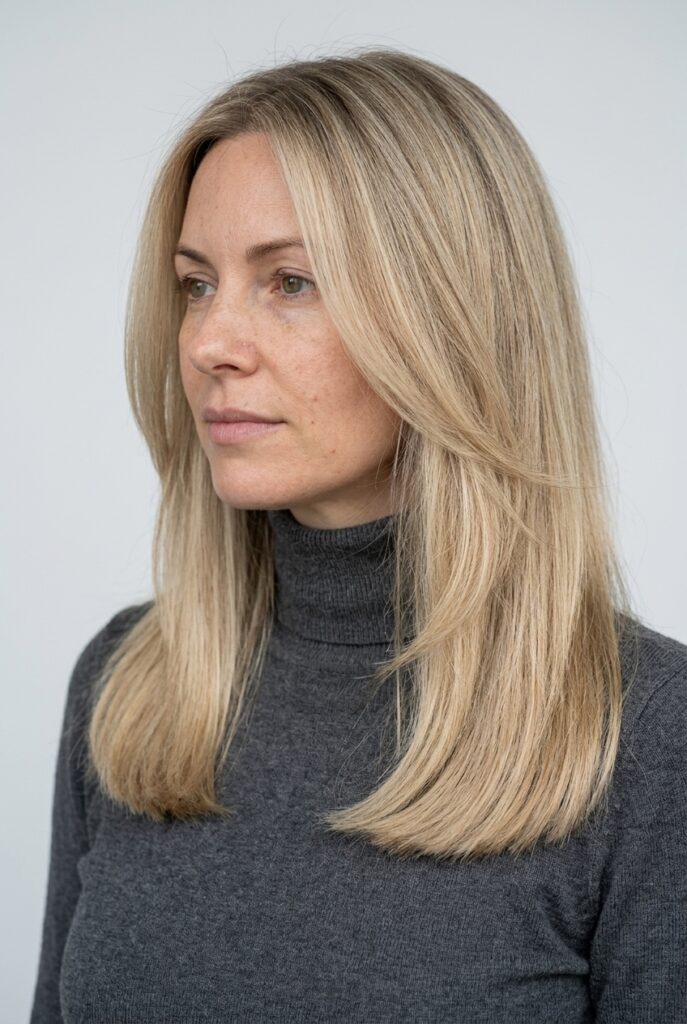
This one gives you the best of both approaches. Long, soft layers through the mid-lengths add movement and prevent the hair from looking like a curtain, while a blunt perimeter at the bottom keeps that all-important density at the ends. It’s a combination that reads as full and healthy rather than flat and thin.
The key word here is long layers. Short layers on fine hair can make it look sparse, especially through the ends. When layers are gradual and blend smoothly into each other, the hair moves as one piece instead of separating into thin, visible sections.
3. Face-Framing Layers
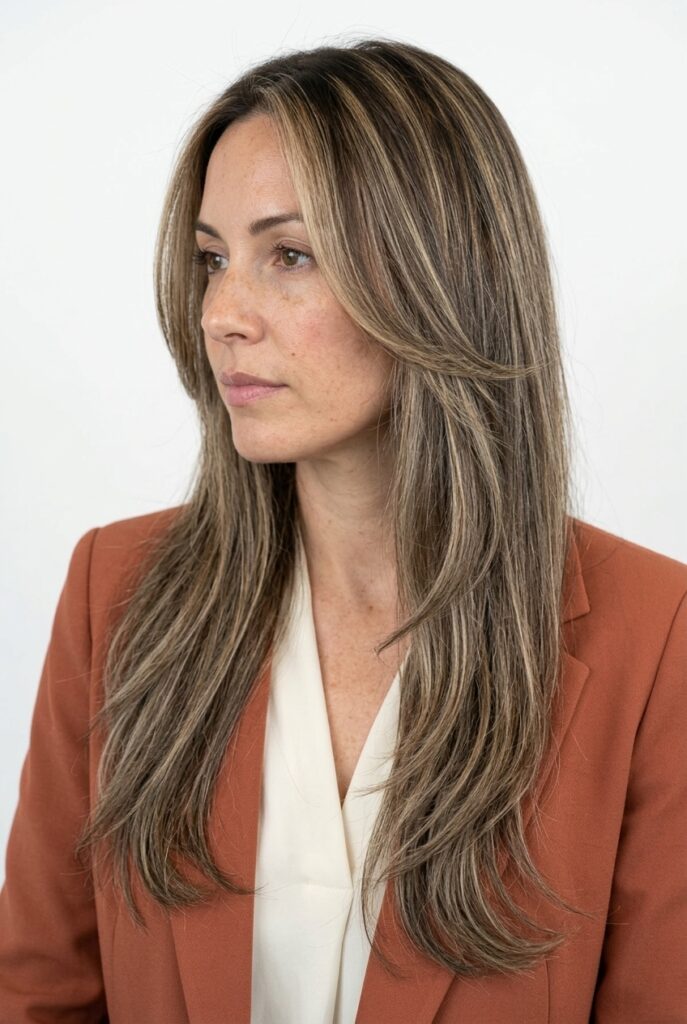
Face-framing layers are cut specifically around the front sections of the hair — the pieces that fall closest to your face. They’re shorter than the rest of the cut, usually hitting somewhere between the chin and the cheekbones, and they create a graduated effect that draws the eye upward and inward.
For fine hair, these layers do double duty. They add visible texture at the front where people look first, and they create the impression of volume around the face without removing weight from the rest of the cut. Styled with a round brush pointing outward from the face, they give a lift that fine hair normally struggles to hold on its own.
4. Long Shag with Soft Layers
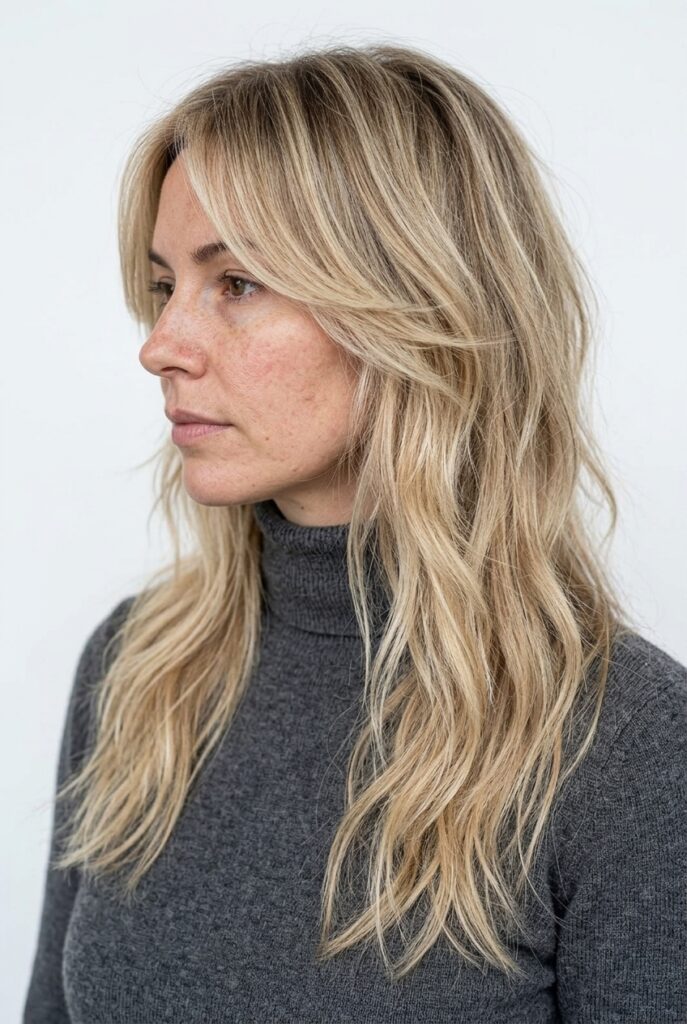
The shag has been a reliable volume-builder for decades, and the modern version is more refined than its 1970s predecessor. A long shag uses a combination of layers at different lengths — shorter through the crown, longer through the back — to create body and movement throughout the entire cut rather than just at the ends.
The layered structure of a shag means that even fine hair has multiple levels of texture working together. Hair at the crown is lifted by the shorter layers beneath it, and the overall silhouette looks fuller and more dynamic as a result. This is one of the better options for women who want volume without sacrificing length.
5. Curtain Bangs with Long Hair
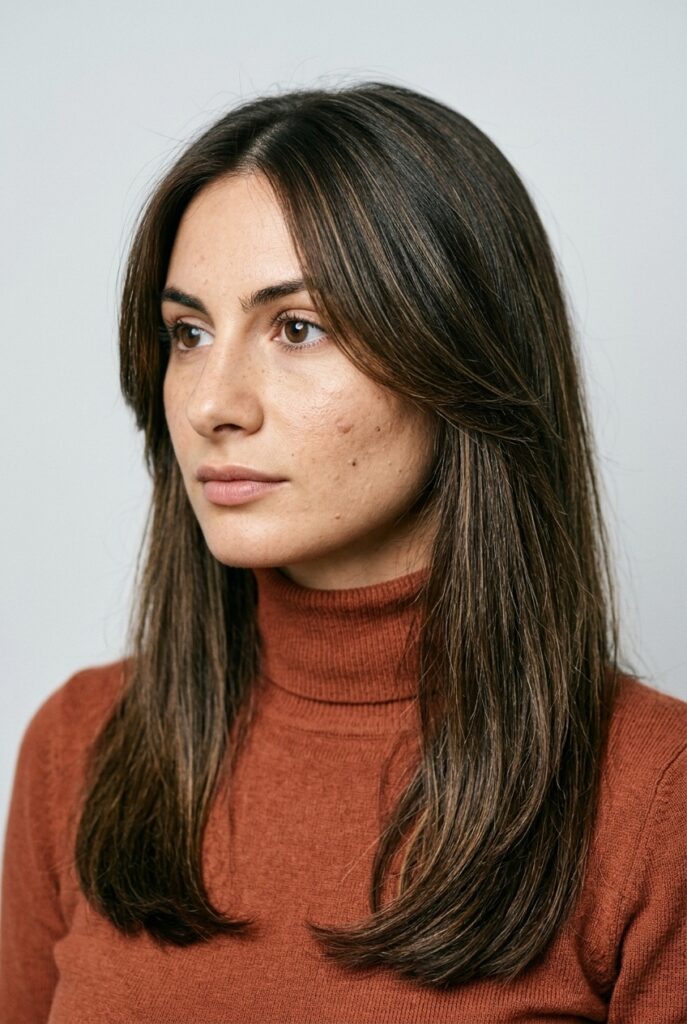
Curtain bangs are exactly what they sound like — bangs that part down the middle and sweep to either side of the face. They’re universally flattering, which is why they’ve stayed popular across different decades and hair trends.
For fine hair specifically, they add structure and visual interest at the front of the face, where the hair often looks flattest. The horizontal line created by the bangs gives the eye something to read as fullness, even if the rest of the hair is quite fine. They also draw attention to the face rather than the hair, which is a clean redirect. Curtain bangs can be styled with a round brush for more volume or left to air-dry for a softer, more casual look.
6. Long Bob (Lob)
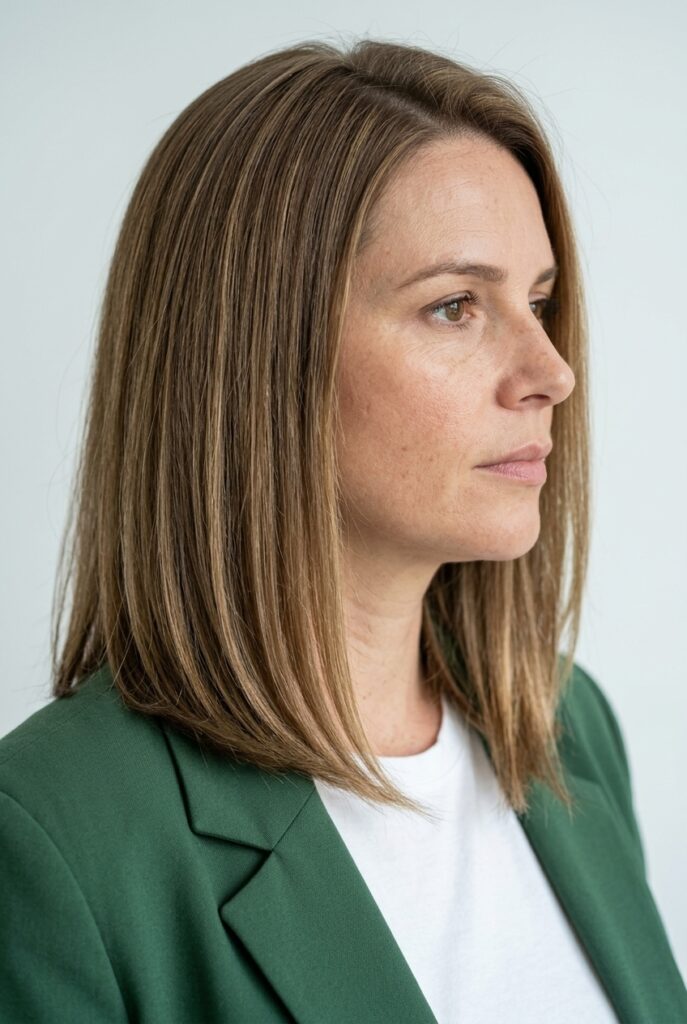
The lob — a bob that hits anywhere from the collarbone to a few inches below — is a classic choice for a reason. Cutting fine hair to this length removes the weight that accumulates at the ends of very long hair and replaces it with a more compact, controlled silhouette that looks fuller overall.
A lob keeps enough length to feel like real hair without the drag that comes from growing fine hair past the shoulders. It also styles easily: straight, wavy, or half-up, it holds its shape better than longer lengths. For women who’ve been growing their fine hair long and wondering why it still looks thin, the lob is often the answer.
7. Feathered Layers
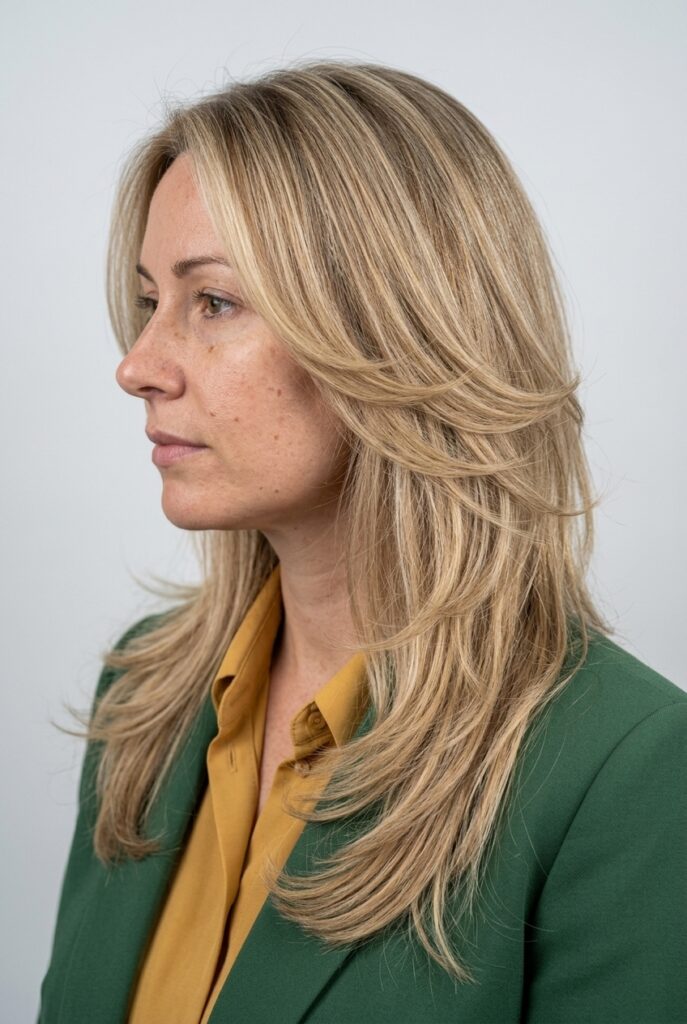
Feathered layers are a specific type of layering technique where the ends of each layer are thinned and softened rather than cut blunt. The result is hair that has movement and airiness throughout, almost like each strand is slightly lighter at the tip.
This works particularly well on fine hair that also has some natural wave or body. The feathering catches light along the layers, which gives the hair a dimensional look — more texture, more depth. Styled with a round brush or a diffuser, feathered layers make fine hair look like it has significantly more going on than it actually does. Feathering that starts below the chin and continues through the ends is the sweet spot: it adds volume without making the ends look sparse.
8. Side-Swept Bangs
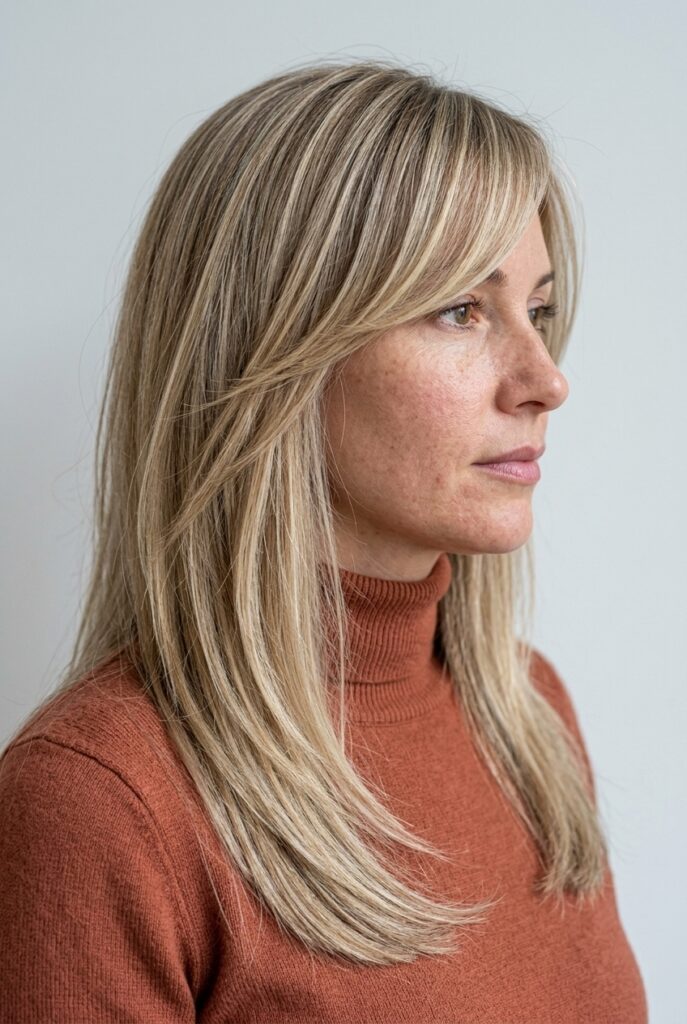
Side-swept bangs solve a specific problem with fine hair: the front section. The hairline area tends to be where fine hair looks its thinnest, and side-swept bangs cover that without committing to a heavy fringe that pulls weight away from the rest of the hair.
They can be cut at different lengths — grazing the eye or falling past the cheekbone — and styled with a round brush to create a soft lift. The side sweep also creates an asymmetrical line across the face that reads as volume and movement, both of which fine hair benefits from. They’re easy to grow out if you change your mind, which makes them a lower-commitment option compared to full bangs.
9. Wispy Bangs with a Long, Mostly One-Length Cut
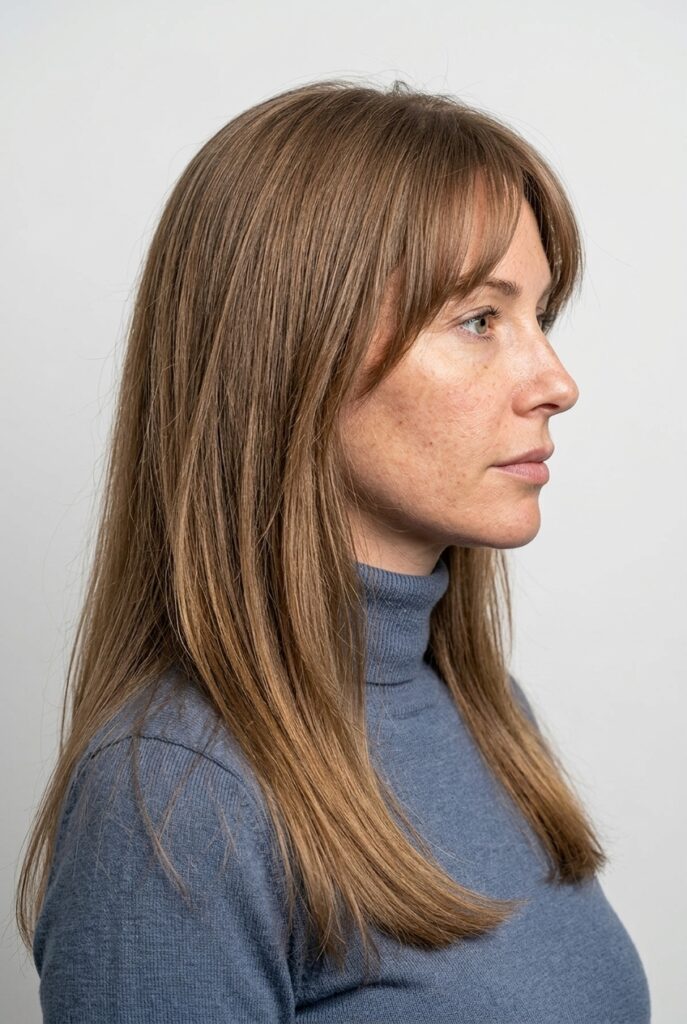
If you prefer your length kept mostly uniform but want something that changes the look of fine hair, wispy bangs added to an otherwise simple long cut make a noticeable difference. Unlike heavy, blunt bangs, wispy ones have soft, separated ends that create texture at the front without taking volume away from the rest of the hair.
The horizontal line across the forehead adds structure that draws attention upward, and the overall silhouette — long hair with a soft fringe — is polished and put-together. The key is keeping the rest of the cut clean and the ends healthy so the simplicity of the style reads as intentional rather than flat.
10. Choppy Layers
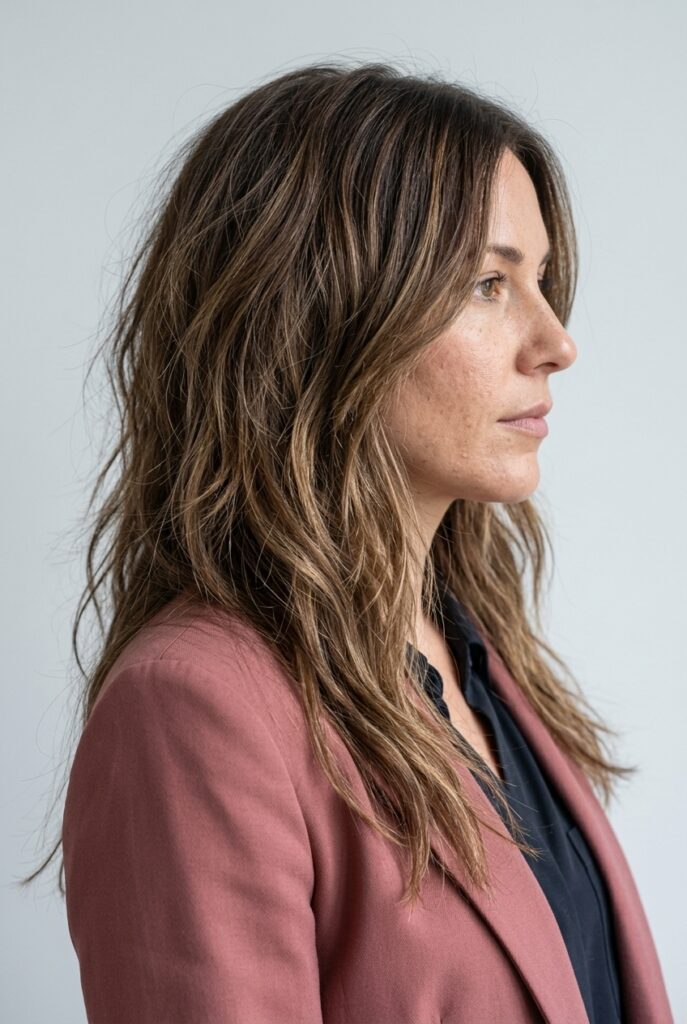
Choppy layers are cut with more visible separation between each layer — the ends aren’t softened or blended as smoothly as traditional layering. The result is more texture and a slightly more undone look that gives fine hair a lot of visual body.
This is a good option for women who lean toward a more casual, effortless aesthetic. Choppy layers styled with a texturizing spray or a salt spray look deliberately tousled, and that texture reads as thickness. A razor cut is sometimes used to create this effect, which also helps the ends feel lighter and more fluid rather than heavy.
11. V-Cut with Light Internal Layers
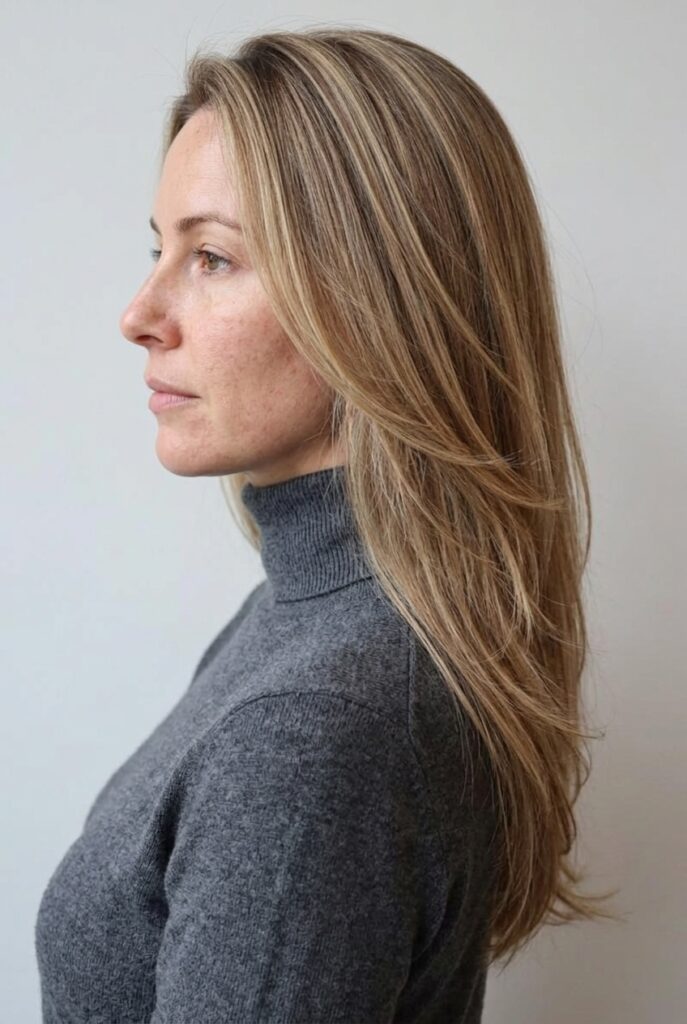
A V-cut means the perimeter of the hair is cut into a V-shape — longer in the center, shorter on the sides — rather than a straight or U-shaped line. For fine hair, this works best with light internal layers that support the shape without removing too much weight.
The pointed center creates a lengthening effect and gives the hair an interesting silhouette that reads as intentional. It also adds a sense of movement: the hair naturally falls away from the center point and creates a layered-looking effect even when the internal layering is minimal. This is a particularly good choice for women with straight or slightly wavy fine hair who want something that looks styled without a lot of effort.
12. Balayage-Ready Layered Cut
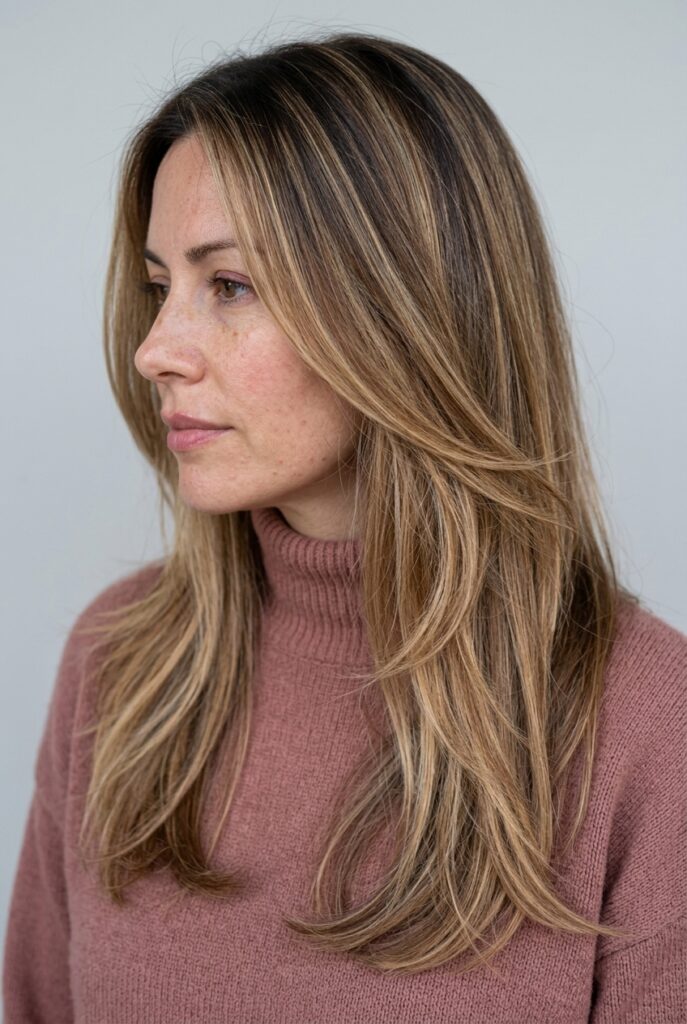
This last one isn’t a single cut style so much as a combination strategy: a layered long cut designed specifically to work with a balayage or highlight coloring technique. When fine hair has soft layers that catch color at different points through the hair, the color contrast creates an illusion of depth and texture that the cut alone can’t always achieve.
The layers are what make this work. Balayage on a one-length fine-hair cut can look flat because all the color sits at the same level. Layers give the color different surfaces to land on, so the hair looks multi-dimensional — and multi-dimensional hair always looks thicker. This is a good direction for women who are already considering a color change and want to maximize the result.
The Right Cut Is Worth the Research
Fine hair responds to cuts differently than thick hair does, and that’s not a limitation — it’s just information. A blunt cut that makes thick hair look heavy makes fine hair look full. A choppy layer that would be too much on dense hair is exactly enough texture on fine strands. The cuts above all work because they’re built around how fine hair actually behaves: how it falls, where it loses volume, and what kinds of shapes give it the best chance of looking its best.
Before your next appointment, it’s worth showing your stylist a reference photo or two from this list. Being specific helps, because the difference between a cut that transforms fine hair and one that doesn’t often comes down to small technical decisions — how long the layers are, where the perimeter lands, whether the ends are feathered or blunt. Fine hair has more options than most women realize. It just takes the right cut to bring them out.
Frequently Asked Questions
Q: What is the single most effective long haircut for fine hair?
A: The blunt cut with a slight U-shape is consistently one of the most effective options for fine hair. The uniform weight at the ends creates a strong visual line that reads as fullness, and it requires relatively little maintenance to keep looking good.
Q: Should women with fine hair avoid layers?
A: Not at all, but the type of layer matters. Long, gradual layers are great for fine hair because they add movement without removing too much weight. Short, heavily stacked layers can make fine hair look sparse, especially through the ends. The key is keeping layers long and smooth.
Q: Can women with very fine hair keep their hair long?
A: Yes, but very long lengths — past the mid-back — can make fine hair look limp because the weight of the length pulls volume flat. A collarbone to bra-strap length tends to be the sweet spot where fine hair still has enough body to look full.
Q: Do bangs actually help fine hair look thicker?
A: They do. Curtain bangs, wispy bangs, and side-swept bangs all add a horizontal line at the front of the face that creates the illusion of volume. They also direct attention toward the face rather than the hair itself, which is a useful redirection when the hair is fine.
Q: What is the difference between a lob and a long haircut for fine hair?
A: A lob typically hits between the collarbone and a few inches below, while a long haircut falls below the shoulders. Both can work for fine hair, but the lob tends to look fuller because there’s less length pulling the hair down. Women who want more visible thickness often find the lob delivers results faster.
Q: How often should fine hair be trimmed to keep it looking full?
A: Every six to eight weeks is a reasonable target. Fine hair tends to develop split ends and breakage faster than thicker hair types, and those damaged ends make the hair look sparse and dull. Regular trims keep the ends healthy and the silhouette clean.
Q: Does color affect how thick fine hair looks?
A: Yes, significantly. Balayage and highlights create dimension that makes fine hair look more textured and full. A flat, one-tone color on fine hair tends to emphasize its flatness. Warm highlights or a root shadow that adds depth at the base can make a noticeable difference.
Q: Are there any styling products that help long fine hair hold volume?
A: A lightweight volumizing spray or mousse applied at the roots before blow-drying is one of the most effective approaches. Dry shampoo at the roots also adds grip and lift. Heavy oils and serums should be applied only to the mid-lengths and ends — keeping them away from the scalp prevents the hair from going flat quickly.
Q: What should women with fine hair avoid when choosing a haircut?
A: Very heavily layered cuts where the layers are short and numerous tend to work against fine hair, making the ends look thin and disconnected. One-length cuts with no shaping at all can also fall flat. Cuts that remove too much internal weight leave fine hair without enough body to hold its shape through the day.

