

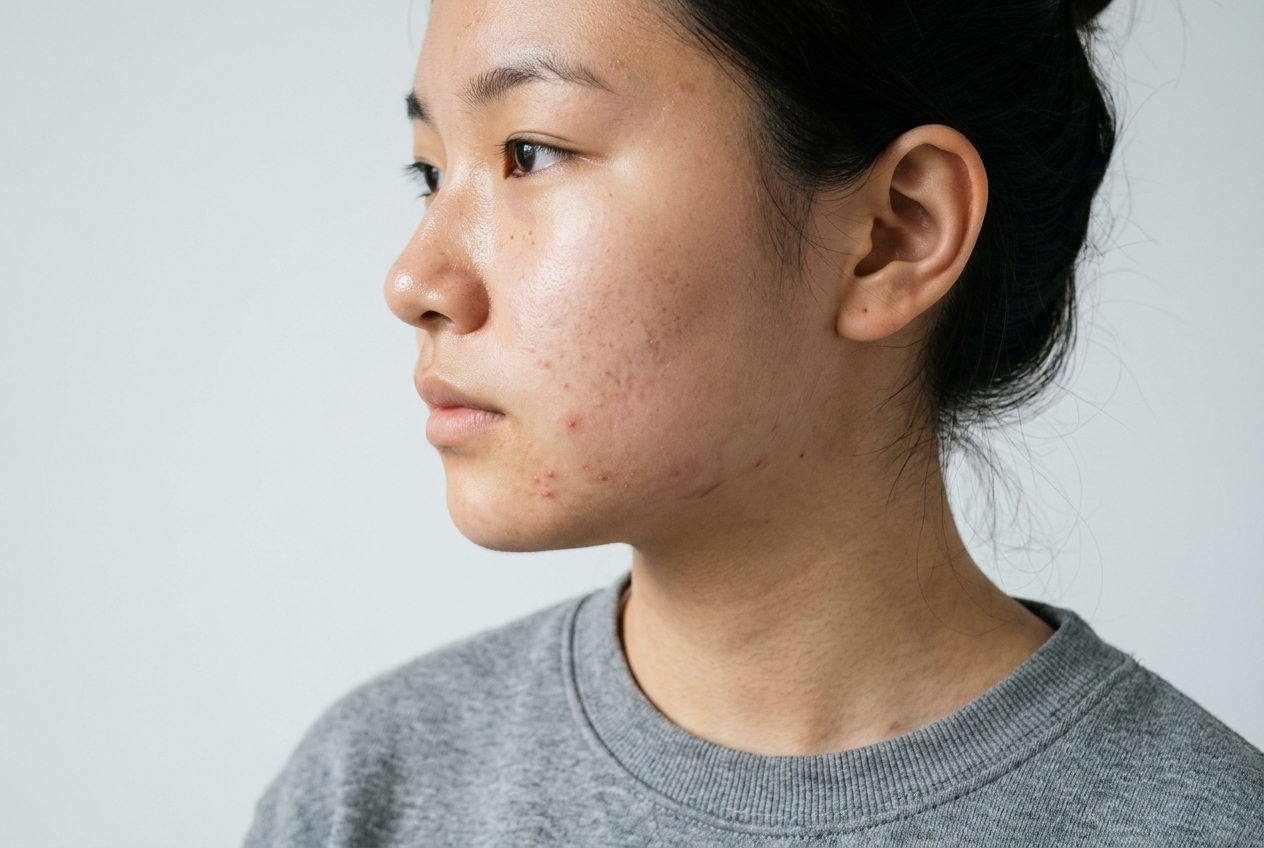
Oily, acne-prone skin during the teen years is one of the most common skin concerns out there — and one of the most misunderstood. The breakouts, the shine, the endless frustration of trying product after product with no real change. If your daughter is going through this, or if you’re a teen yourself trying to figure it all out, you’re not alone.
Here’s what most people get wrong: oily skin is not dirty skin. During puberty, rising hormone levels — specifically androgens — send the skin’s sebaceous glands into overdrive, producing far more oil than the skin actually needs. That excess oil mixes with dead skin cells, gets trapped inside pores, and sets the stage for breakouts. It’s a biological process, not a hygiene failure.
The good news is that with the right habits and a simple, consistent routine, oily and acne-prone teen skin is very much manageable. What follows are 10 practical, dermatologist-backed tips that actually work — no overcomplicated routines, no expensive products required.
- 1. Wash Your Face Twice a Day — Not More
- 2. Don't Skip Moisturizer
- 3. Use the Right Active Ingredients
- 4. Wear Sunscreen Every Single Day
- 5. Exfoliate — But Not Too Much
- 6. Stop Touching Your Face
- 7. Change Your Pillowcase Weekly
- 8. Watch What You Eat and Drink
- 9. Get Enough Sleep and Manage Stress
- 10. Know When to See a Dermatologist
- Clear Skin Is a Long Game — And That's Okay
- Frequently Asked Questions
1. Wash Your Face Twice a Day — Not More
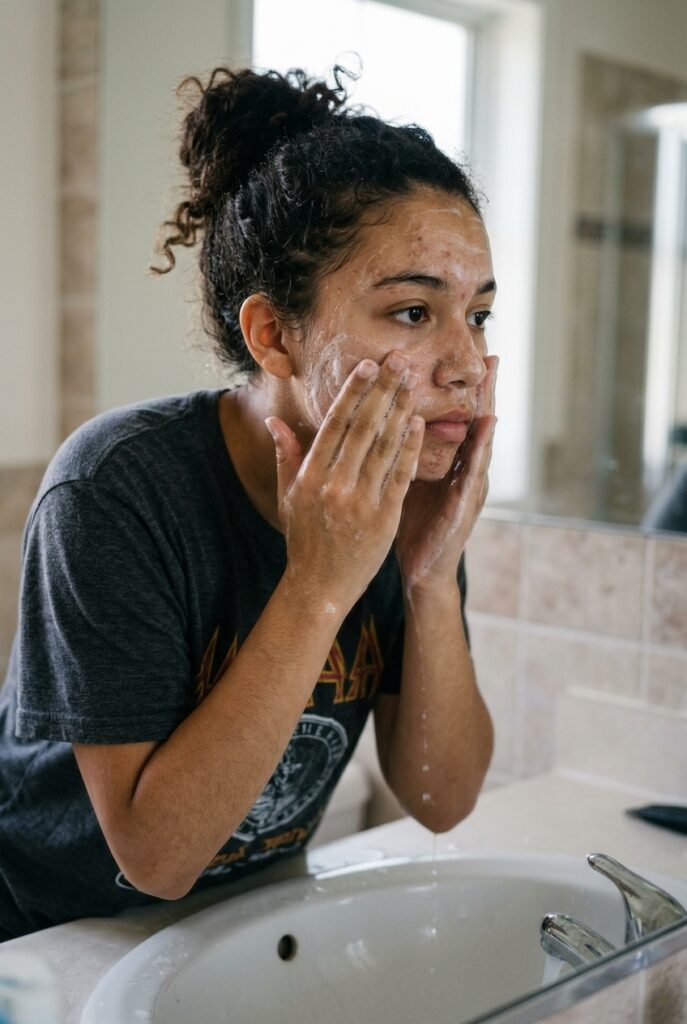
Twice a day is the sweet spot: once in the morning to clear the oil that built up overnight, and once at night to remove the day’s dirt, sweat, and pollution. That’s it. Washing more than that strips the skin’s natural barrier and triggers a rebound effect — the skin senses it’s been over-dried and produces even more oil to compensate.
Choose a gentle, foaming cleanser labeled “oil-free” and “non-comedogenic,” which means it won’t clog pores. For teens dealing with consistent breakouts, a cleanser with salicylic acid or benzoyl peroxide can help. After exercise or heavy sweating, a quick rinse with a gentle cleanser is fine — just keep the overall count to two full cleansing sessions per day.
2. Don’t Skip Moisturizer
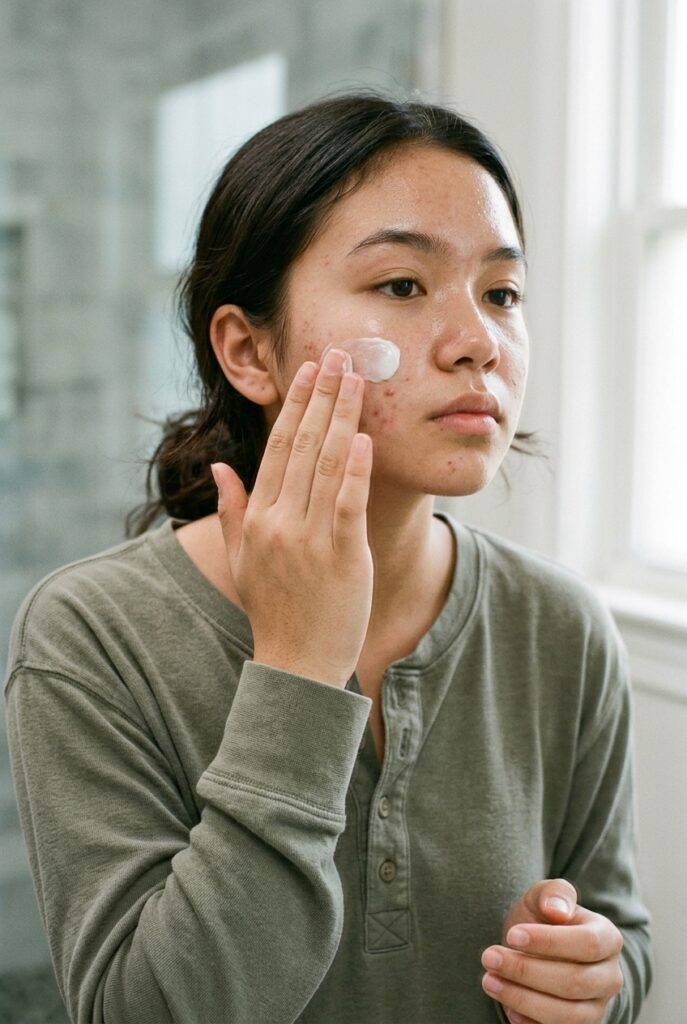
This one surprises a lot of people. Moisturizer on oily skin? Yes — absolutely.
When the skin lacks adequate hydration, it overproduces oil to make up for it. A lightweight, oil-free, non-comedogenic moisturizer applied after cleansing keeps the skin balanced without adding grease or clogging pores. Look for formulas with hyaluronic acid or glycerin, both of which hydrate without heaviness. Ceramides are another great ingredient — they reinforce the skin’s protective barrier, which keeps irritation at bay.
If you’re using acne treatments like benzoyl peroxide or salicylic acid (both of which can be drying), a good moisturizer becomes even more necessary to prevent peeling and irritation.
3. Use the Right Active Ingredients
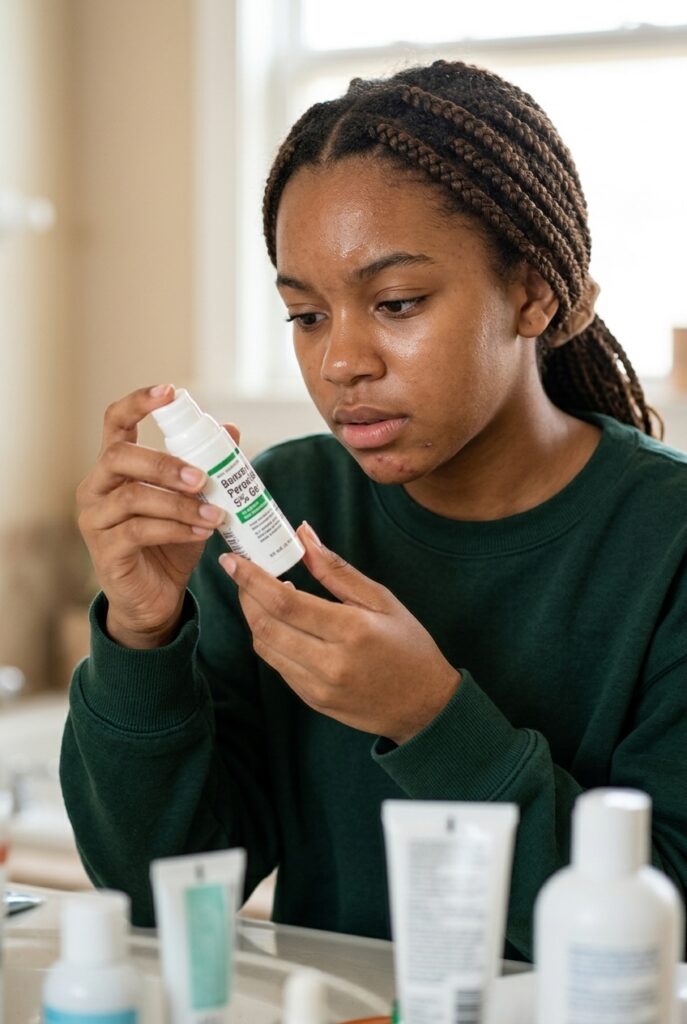
Not all acne-fighting ingredients work the same way, and knowing the difference matters.
Salicylic acid is a beta-hydroxy acid that penetrates directly into the pore and dissolves the oil and dead skin cells clogging it. It’s excellent for blackheads and whiteheads, and it’s gentle enough for daily use in low concentrations (0.5%–2%).
Benzoyl peroxide kills acne-causing bacteria on contact. It works well for inflamed, red pimples. Start with a lower concentration (2.5%–5%) to reduce the risk of dryness and irritation.
Niacinamide (also called vitamin B3) reduces redness and inflammation without irritation — a great option for sensitive skin that reacts badly to stronger actives.
A good rule: pick one active ingredient to start with and give it 6–8 weeks before deciding whether it’s working. Layering multiple strong ingredients at once often leads to more irritation, not clearer skin.
4. Wear Sunscreen Every Single Day
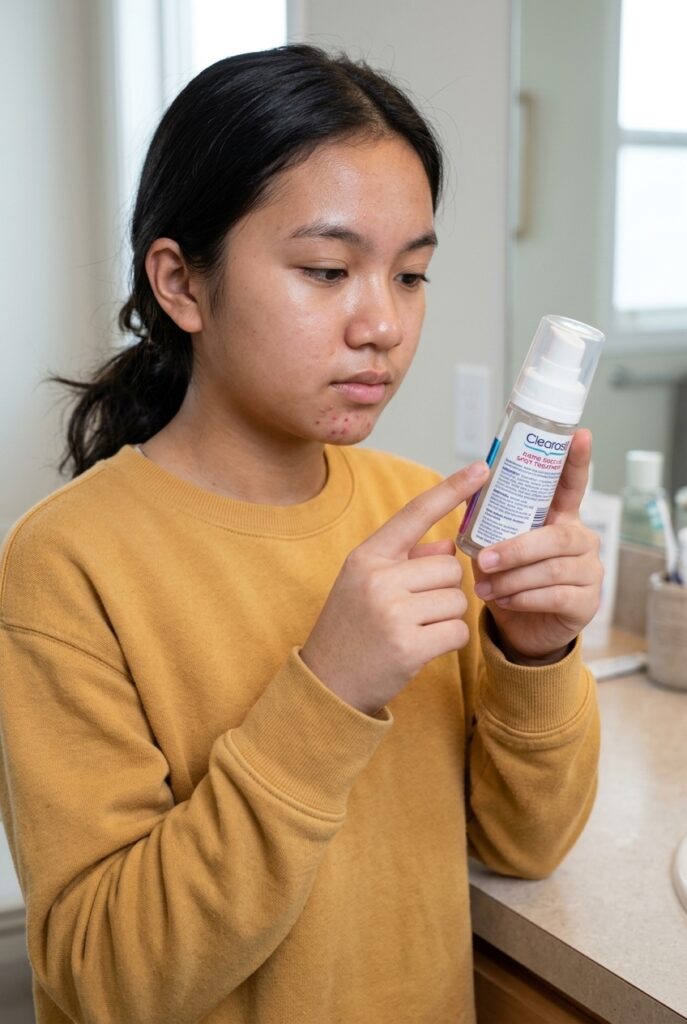
A lot of teens skip this step — and some even believe that sun exposure helps clear acne. It doesn’t. Sun damage is cumulative, and the habits formed in the teen years have real consequences decades later.
Many acne treatments, like salicylic acid and benzoyl peroxide, also make the skin more sensitive to UV rays. Without protection, that translates directly to faster fading of post-acne dark spots and a higher risk of sun damage on already compromised skin.
The fix is straightforward: a broad-spectrum SPF 30 or higher, applied every morning. For oily and acne-prone skin specifically, look for gel-based or fluid sunscreens labeled “oil-free” and “non-comedogenic.” Many of these are completely weightless and won’t cause breakouts.
5. Exfoliate — But Not Too Much
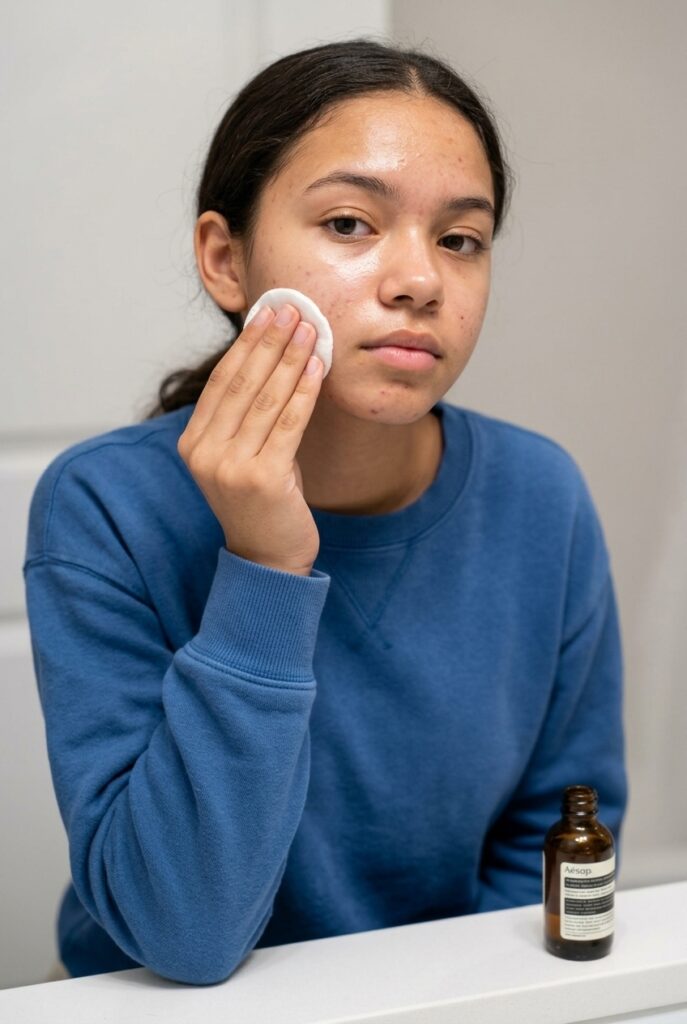
Exfoliation removes the layer of dead skin cells that pile up on the surface and contribute to clogged pores. Done right, it’s one of the most effective tools for keeping oily skin clear. Done wrong, it backfires fast.
Limit exfoliation to one or two times per week. Physical scrubs with large, rough particles can create microscopic tears in the skin — skip those. Chemical exfoliants are a smarter choice: glycolic acid (an AHA) works on the surface, while salicylic acid (a BHA) goes deeper into the pore. Both are widely available in toners, pads, and serums.
If the skin is visibly red, flaking, or feels raw, cut back. Over-exfoliation is one of the fastest ways to disrupt the skin barrier and trigger a long stretch of sensitivity and breakouts.
6. Stop Touching Your Face

Hands carry bacteria, oils, and debris from everything they touch throughout the day. Every time fingers come into contact with the face — whether it’s resting a chin on a hand, absentmindedly touching the forehead, or picking at a blemish — those impurities transfer directly to the skin.
Picking and squeezing pimples deserves its own warning. Beyond spreading bacteria to surrounding pores, it pushes inflammation deeper into the skin, which dramatically increases the risk of permanent scarring. A pimple that would have healed on its own in a few days can turn into a dark mark that takes months to fade.
Spot treatments — small applications of benzoyl peroxide, salicylic acid, or sulfur directly on a blemish — are a much better approach than picking. They treat the problem without creating new ones.
7. Change Your Pillowcase Weekly

A pillowcase might look clean after a night or two, but it’s collecting oil, sweat, dead skin cells, and bacteria every single time it’s used. Sleeping on that surface for a week straight and then wondering why breakouts keep showing up along the jawline or cheeks is a pretty direct cause-and-effect relationship.
Swap pillowcases at least once a week. If breakouts are particularly bad, flipping the pillowcase to the clean side halfway through the week adds extra protection. Some women find that switching to a satin or silk pillowcase helps — these materials are less absorbent and create less friction on the skin.
8. Watch What You Eat and Drink

The link between diet and acne is still being studied, but the current evidence is clear enough to be worth paying attention to. High-glycemic foods — white bread, sugary drinks, chips, candy — cause rapid spikes in blood sugar, which in turn spike insulin levels and stimulate oil production. Some research also points to dairy as a potential trigger for certain women, though this varies by individual.
A diet built around fruits, vegetables, lean proteins, and whole grains supports skin health from the inside out. Hydration matters too — drinking enough water throughout the day helps the skin maintain its natural balance. This doesn’t mean a strict elimination diet; it means being aware that what goes into the body shows up on the face.
9. Get Enough Sleep and Manage Stress

These two go hand in hand, and both have a direct impact on acne. During sleep, the body repairs and regenerates skin cells. Cutting sleep short disrupts that process and raises cortisol levels — the stress hormone that triggers increased oil production and inflammation.
High stress on its own has the same effect. Between school pressures, social dynamics, and everything else the teen years throw at people, stress is practically unavoidable. But building in regular outlets — exercise, time outside, creative activities, even simple deep breathing — makes a measurable difference for the skin. The American Academy of Dermatology recommends that teens get 7–9 hours of sleep per night, not just for overall health but specifically because of its effects on skin condition.
10. Know When to See a Dermatologist
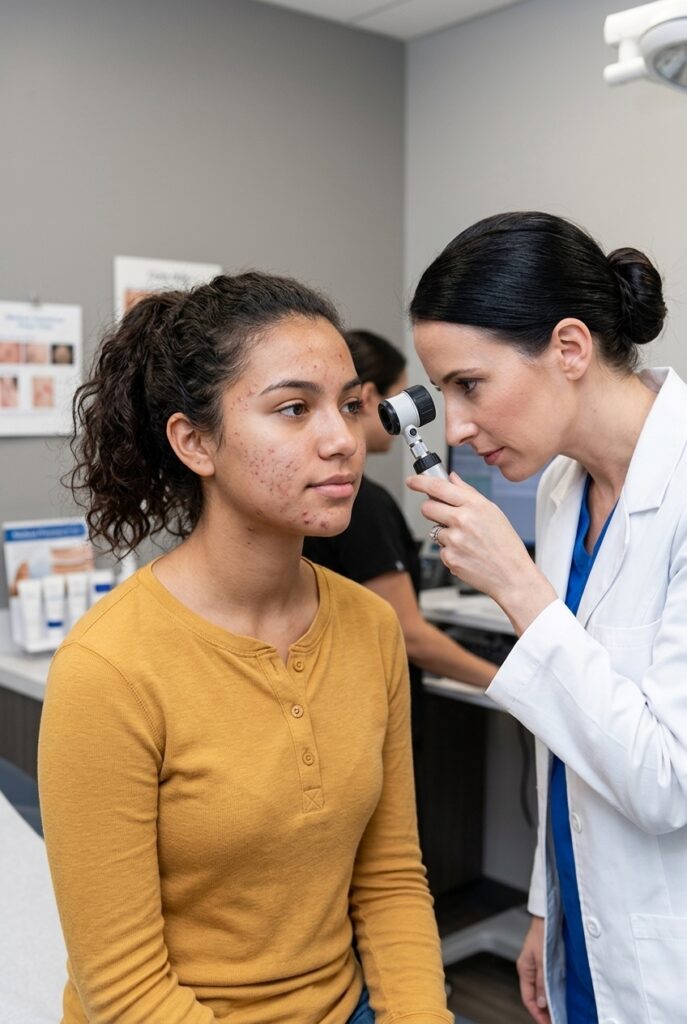
Over-the-counter products and consistent routines clear up a lot of cases of teen acne. But they don’t clear up all of them — and waiting too long when the skin isn’t improving can lead to scarring that’s far harder to treat than the acne itself.
A few situations call for professional help:
- Acne that hasn’t responded to OTC treatments after 6–8 weeks of consistent use
- Painful, deep cysts or nodules under the skin
- Breakouts that are leaving dark spots or scars
- Acne affecting confidence or daily life in a significant way
A board-certified dermatologist can prescribe treatments not available over the counter — prescription-strength retinoids, oral antibiotics, hormonal therapies, or in-office procedures like chemical peels and light therapy. Getting professional guidance sooner rather than later can prevent long-term skin damage.
Clear Skin Is a Long Game — And That’s Okay
Teen skin changes fast, and no routine produces overnight results. The skin’s cell turnover cycle alone takes anywhere from 20 to 40 days, which means even the right products need weeks of consistent use before showing real progress. The most effective approach is keeping things simple: a gentle cleanser, the right active ingredients, a lightweight moisturizer, and SPF every morning. Add in clean pillowcases, a reasonable diet, enough sleep, and a hands-off approach to blemishes — and those habits will carry well beyond the teen years.
Oily, breakout-prone skin is not permanent. For most women, it settles significantly by the mid-twenties as hormone levels stabilize. In the meantime, the goal isn’t perfection — it’s building a routine that works consistently and doesn’t make things worse. Stick with it, be patient, and don’t hesitate to bring in a dermatologist if the skin isn’t responding on its own.
Frequently Asked Questions
Q: How many times a day should a teen with oily skin wash their face?
A: Twice a day is the right amount — once in the morning and once before bed. Washing more often strips the skin and causes it to produce extra oil to compensate, making oiliness worse rather than better.
Q: Do teens with oily skin really need a moisturizer?
A: Yes. Skipping moisturizer causes the skin to overcompensate by producing more oil. A lightweight, oil-free, non-comedogenic moisturizer keeps the skin balanced without adding grease or triggering breakouts.
Q: What’s the difference between salicylic acid and benzoyl peroxide for acne?
A: Salicylic acid works by penetrating into pores and dissolving the oil and dead skin cells clogging them — making it great for blackheads and whiteheads. Benzoyl peroxide kills acne-causing bacteria, so it’s better suited for inflamed, red pimples. Many routines use both, just not layered on top of each other.
Q: Is it okay to pop pimples?
A: No. Squeezing or picking at blemishes pushes bacteria and inflammation deeper into the skin, which increases the risk of scarring and can spread bacteria to nearby pores. A spot treatment applied directly to the blemish is a much safer option.
Q: Can diet really affect teen acne?
A: Research suggests it can for some women. High-glycemic foods and dairy have shown up as potential triggers in multiple studies. A diet with more whole foods, fruits, vegetables, and adequate water won’t cure acne on its own, but it does support clearer skin from the inside.
Q: Does sunscreen make oily and acne-prone skin break out?
A: The wrong sunscreen can, but the right one won’t. Look for formulas labeled “non-comedogenic,” “oil-free,” or “gel formula.” These are specifically designed to protect without clogging pores or adding shine.
Q: How often should a pillowcase be changed to help with acne?
A: At least once a week. Pillowcases absorb oil, sweat, and bacteria every night, and sleeping on a dirty pillowcase repeatedly can directly contribute to breakouts along the cheeks, jawline, and forehead.
Q: When should a teen see a dermatologist about acne?
A: If over-the-counter products haven’t improved the skin after 6–8 weeks of consistent use, if there are painful cysts or nodules, or if the acne is leaving scars, it’s time to see a dermatologist. Waiting too long can allow scarring to develop that’s harder to treat than the acne itself.
Q: How long does it take to see results from an acne routine?
A: At least 4–8 weeks. The skin’s cell turnover cycle takes 20–40 days, so even products that are working won’t show full results overnight. Consistency over time is what makes the difference — switching products every week or two makes it nearly impossible to know what’s actually helping.

