

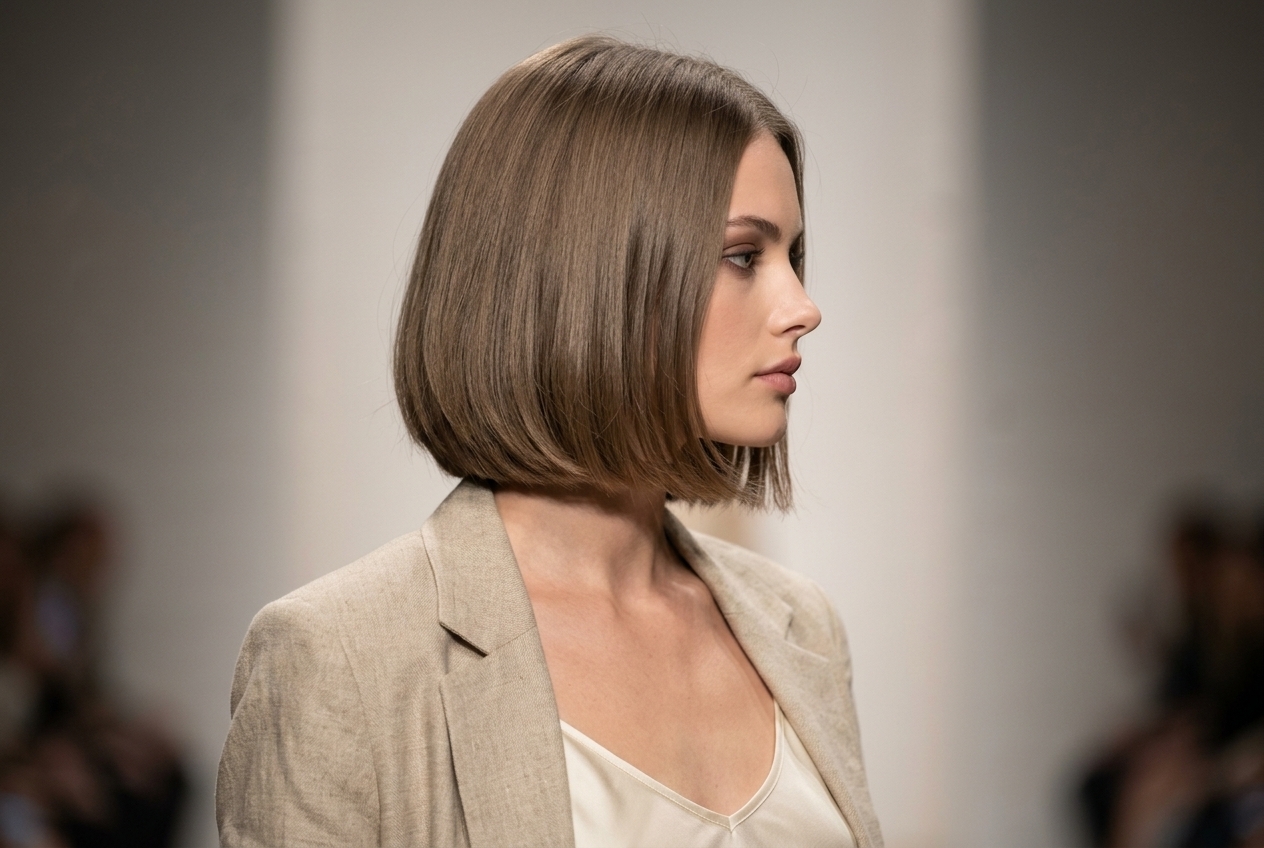
There’s a reason the Italian bob keeps showing up on red carpets, street-style photos, and salon Pinterest boards season after season. It’s not a trend that burns bright and disappears. It’s the kind of haircut that earns a permanent place in your mental style library — the one you keep coming back to when you want to look put-together without putting in much effort.
What makes it stand apart from the standard bob is in the details. The cut typically lands just below the chin or slightly above the shoulders, with blunt, heavy ends that create natural-looking weight and movement. There’s an intentional fullness to it — a soft volume that frames the face without stiffness. Stylist Elliot Bute of Hershesons describes it as “a jaw-grazing haircut defined by its blunt ends, minimal layering, and a deep side or middle part that creates volume at the roots.” Think of the way Italian cinema icons like Sophia Loren and Monica Bellucci carried themselves — that blend of polish and ease is exactly what this haircut channels.
The beauty of this cut is that it doesn’t demand a single approach. From sleek and structured to loose and wavy, there are at least ten ways to wear it — and each one manages to look effortlessly chic. Here are the variations worth knowing about.
- 1. The Classic Blunt Italian Bob
- 2. The Deep Side Part Italian Bob
- 3. The Wavy Italian Bob
- 4. The Italian Bob with Curtain Bangs
- 5. The Flipped-End Italian Bob
- 6. The Sleek, Inward-Curled Italian Bob
- 7. The Textured Italian Bob with Layers
- 8. The Old Money Italian Bob
- 9. The Italian Bob with Wispy Fringe
- 10. The Riviera Bob (The Italian Bob's Evolved Sister)
1. The Classic Blunt Italian Bob
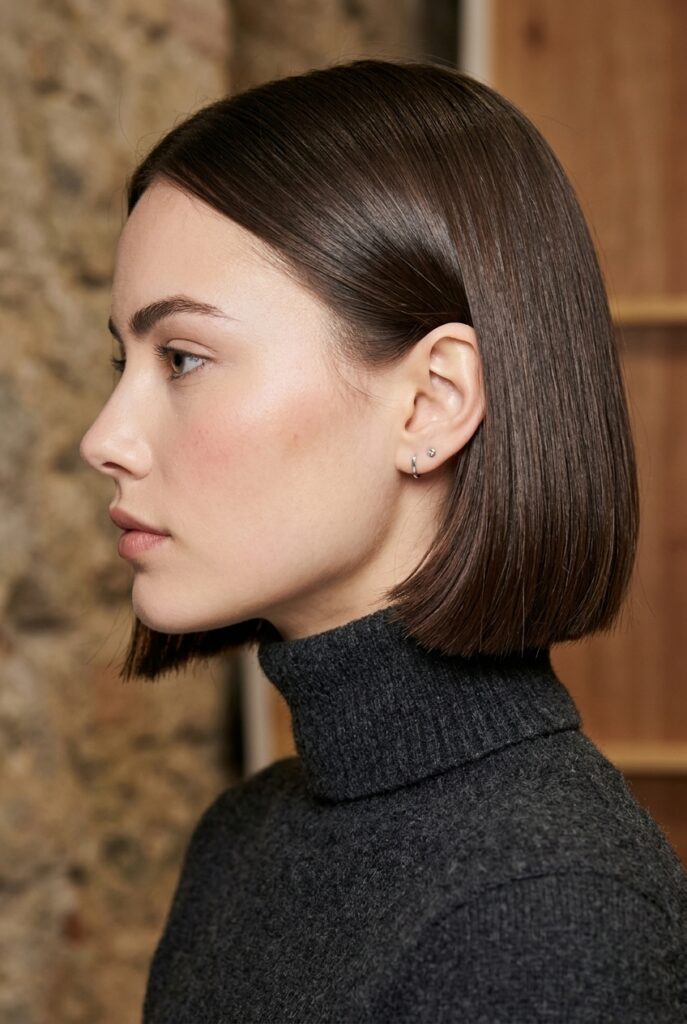
This is the base version — the one most people picture when they hear the name. The hair is cut to a uniform length that grazes the jaw or falls just below it, with no visible layers and heavy, blunt ends. The weight sits at the bottom, which gives the cut its signature fullness.
It looks especially sharp on straight or slightly wavy hair. A flat iron and a light serum are all you need to finish it. Keep the ends smooth and let the bluntness do the work. The result reads as polished without feeling overdone.
2. The Deep Side Part Italian Bob
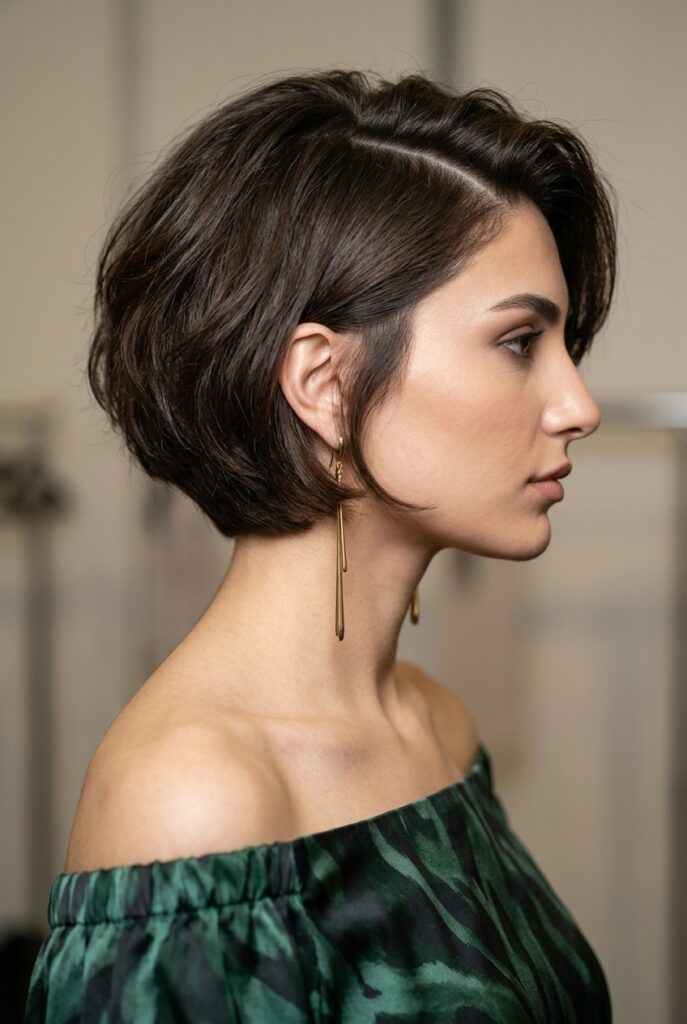
A deep side part changes the entire energy of this haircut. Instead of a symmetrical, even silhouette, the hair falls heavily to one side, creating a sweeping, slightly dramatic effect. It adds root volume naturally and makes the face look longer and more defined.
Celebrity stylist Sarah Potempa calls this one of the most flattering ways to wear the cut — the asymmetry draws attention to the cheekbones and jawline. Smooth the hair down on both sides, and the look lands somewhere between red-carpet ready and quietly sophisticated.
3. The Wavy Italian Bob
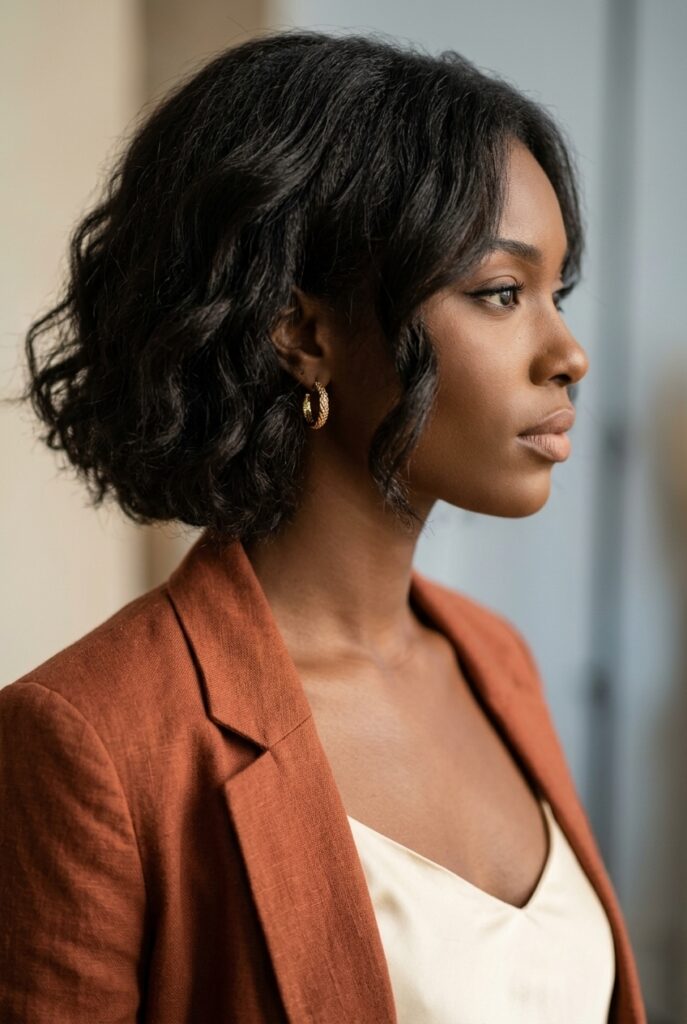
Loose, natural waves transform this haircut into something softer and more lived-in. It’s the version that looks like you did exactly the right amount — enough to look styled, not so much that it feels stiff.
This works especially well for women with naturally wavy or slightly textured hair. A diffuser or a large-barrel curling iron on dry hair gives you the wave without effort. The blunt cut underneath the waves creates structure, so the overall look stays chic rather than messy.
4. The Italian Bob with Curtain Bangs
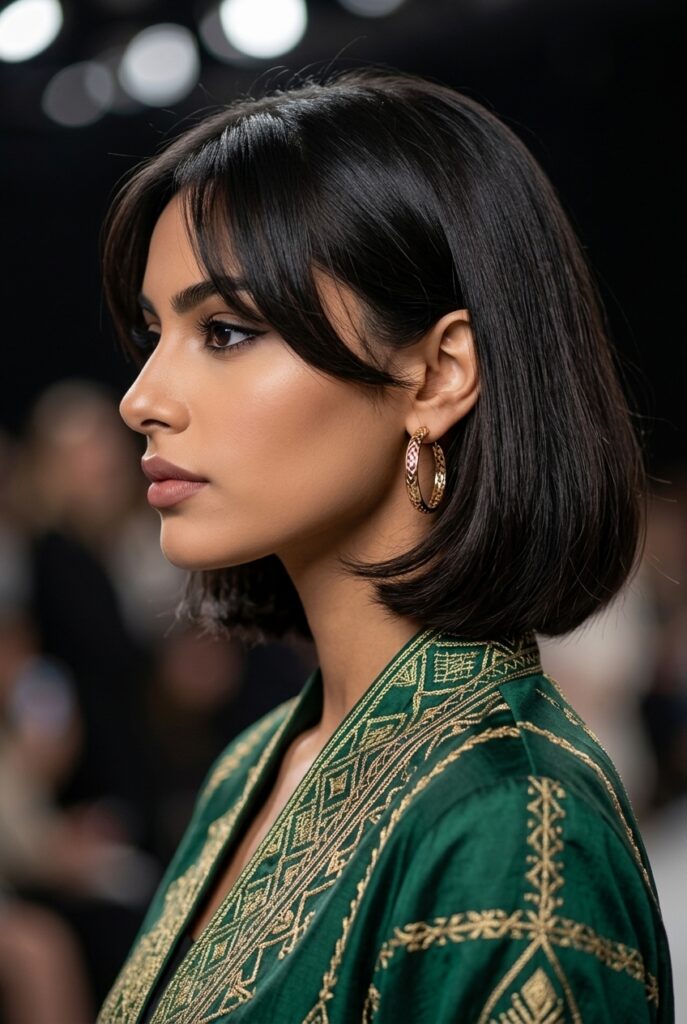
Curtain bangs and this haircut are a natural pairing. The bangs part softly in the middle and sweep to the sides, framing the face in a way that feels romantic without being overly precious. They shorten the forehead slightly and add a gentle, face-framing quality that the cut alone doesn’t always provide.
This variation works across face shapes. Women with longer or oval faces will find the bangs balance things out nicely. To style, blow-dry the bangs in opposite directions using a round brush, then let them fall naturally into place.
5. The Flipped-End Italian Bob
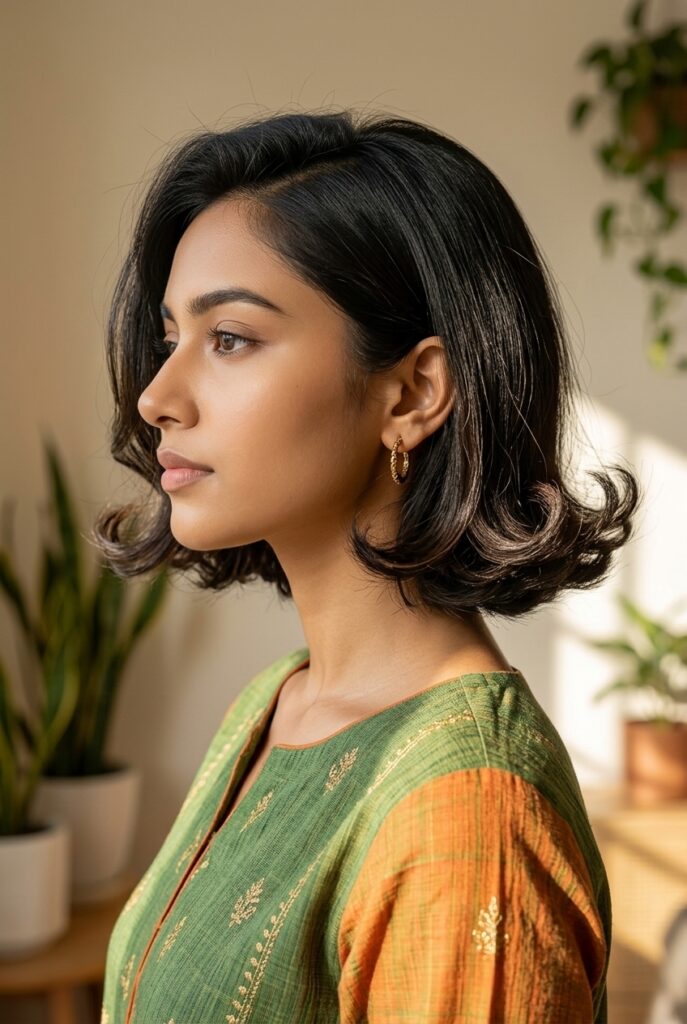
One of the more playful takes on the cut, this version curls the ends outward rather than under. It gives the bob a retro, spirited finish that still reads as polished. Florence Pugh wore a version of this to Cannes, and the combination of the flipped ends with the blunt baseline made it look simultaneously classic and current.
The flip is easy to achieve with a round brush during a blowout or with a medium-barrel curling iron. Just direct the ends away from the face as you wrap, and finish with a light-hold spray to keep them in place throughout the day.
6. The Sleek, Inward-Curled Italian Bob
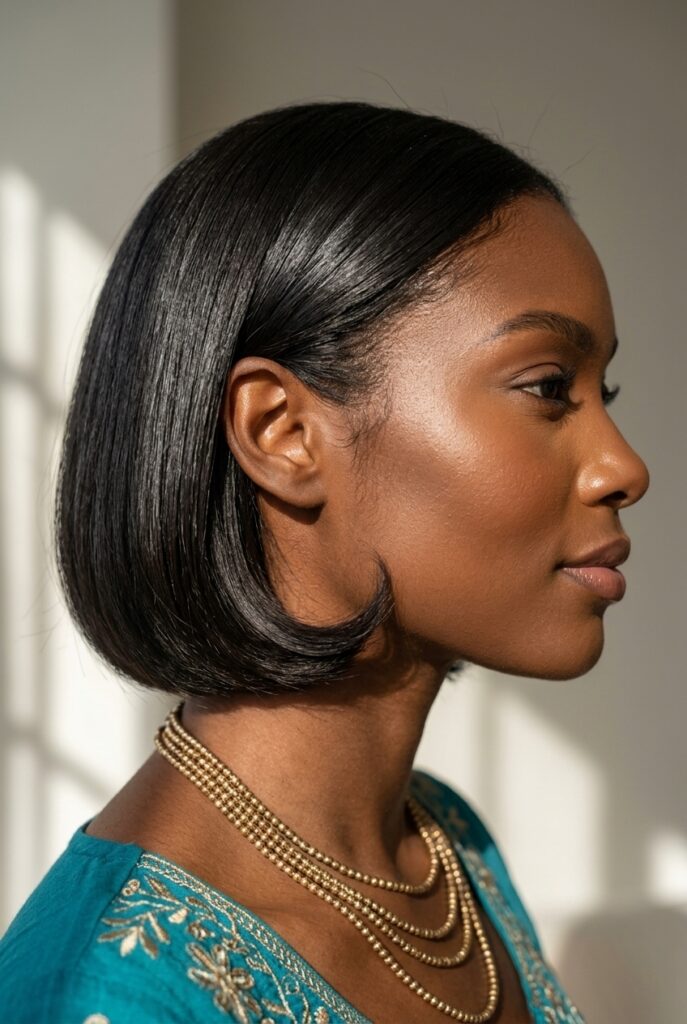
The opposite of the flipped-end version, this one curls the ends inward toward the neck, creating a smooth, rounded silhouette. It’s the most polished of all the variations — the one that looks like it just came out of a high-end salon. Singer Raye is frequently photographed in this exact style, with blown-out roots and ends that curl under in a way that makes the whole cut look bouncy and intentional.
A round brush and blow dryer are the tools for this. Work from the roots down, lifting at the crown for volume and curling under at the ends. Finish with a shine spray for that glass-like effect.
7. The Textured Italian Bob with Layers
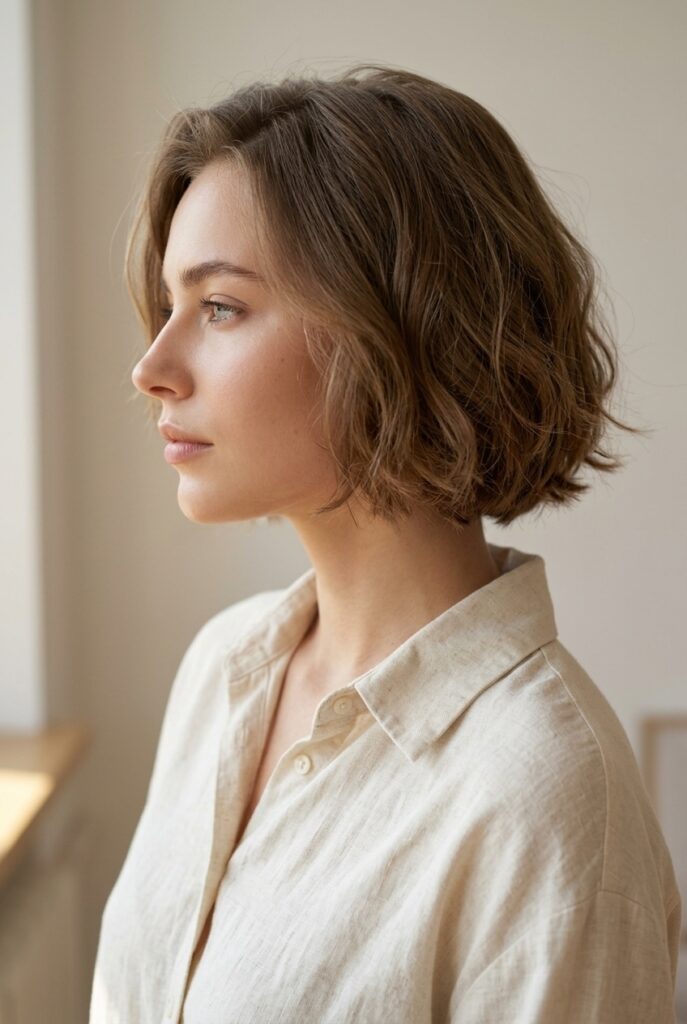
For women who want movement but find the fully blunt version too heavy or one-dimensional, soft interior layers are the answer. They’re not visible layers that disrupt the silhouette — they’re subtle, underneath-only cuts that lighten the weight and allow the hair to move more freely.
Austin Burns, a stylist at Mirror Mirror Salon in Austin, Texas, recommends asking for interior layers specifically — not surface layers that break up the blunt line. The result keeps the look of the classic cut from the outside while giving the hair more natural separation and texture from within.
8. The Old Money Italian Bob
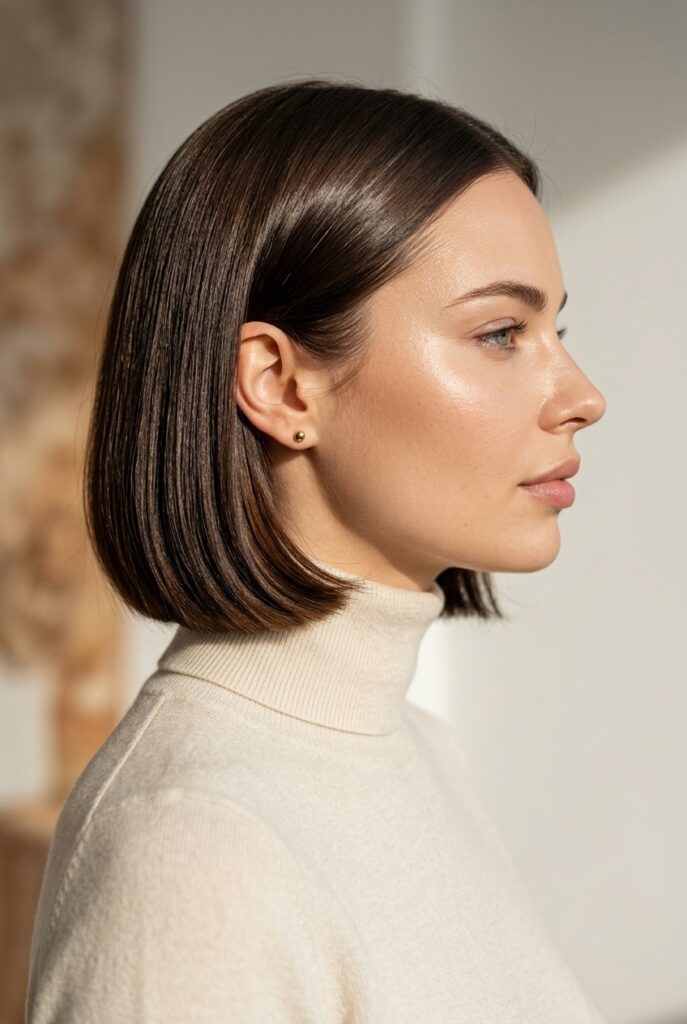
This variation leans into the quiet luxury trend that’s been dominating fashion for a couple of years now. It’s the same blunt, chin-length shape, but styled with a precision that signals effortlessness through expense rather than effort. Think glass-smooth hair, either blown out completely straight or with a single, subtle wave through the mid-lengths. Minimal product, no frizz, perfect shine.
This reads well in darker shades — deep brunette, espresso, or a rich chocolate with subtle warm tones. The contrast between the sharp line of the cut and the flawless finish of the hair is what creates the old-money effect. Women who want to look expensive without looking like they tried will find this version speaks their language.
9. The Italian Bob with Wispy Fringe
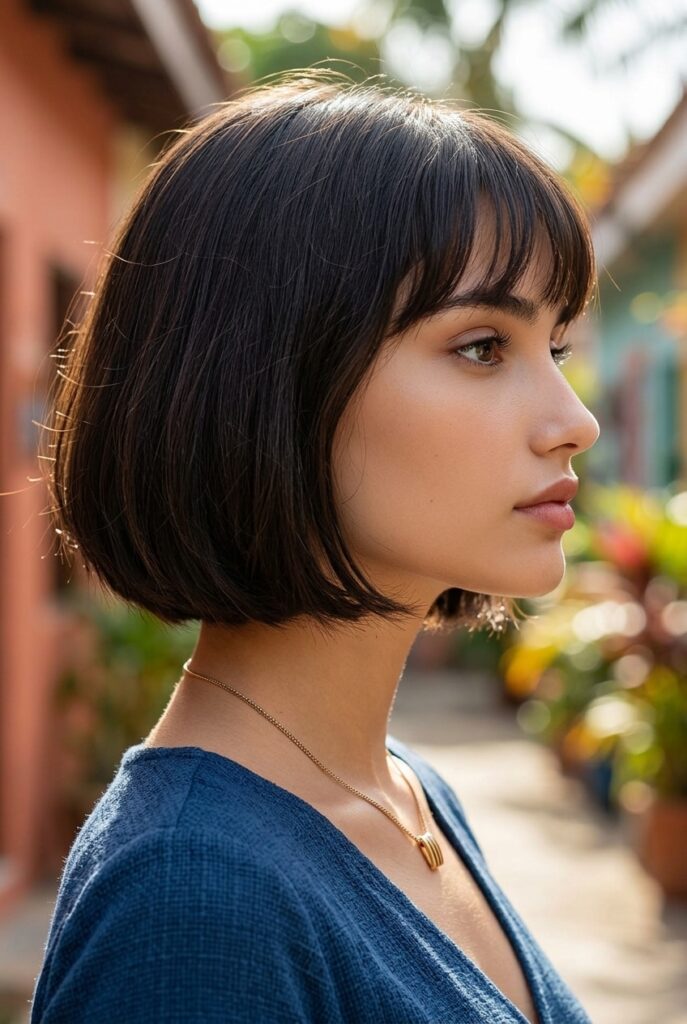
Different from curtain bangs in that the fringe here sits straighter across the forehead — lighter and wispier than a full blunt bang, but still present enough to frame the face. It nods to Audrey Hepburn’s 1960s chin-length cut, which stylist Bute cites as one of the early inspirations for what’s now called the Italian bob.
The wispy fringe softens the overall look of the cut and makes it feel more approachable — less severe, more classic. It works particularly well on women with higher foreheads, and it pairs naturally with either a straight or softly wavy finish on the rest of the cut.
10. The Riviera Bob (The Italian Bob’s Evolved Sister)
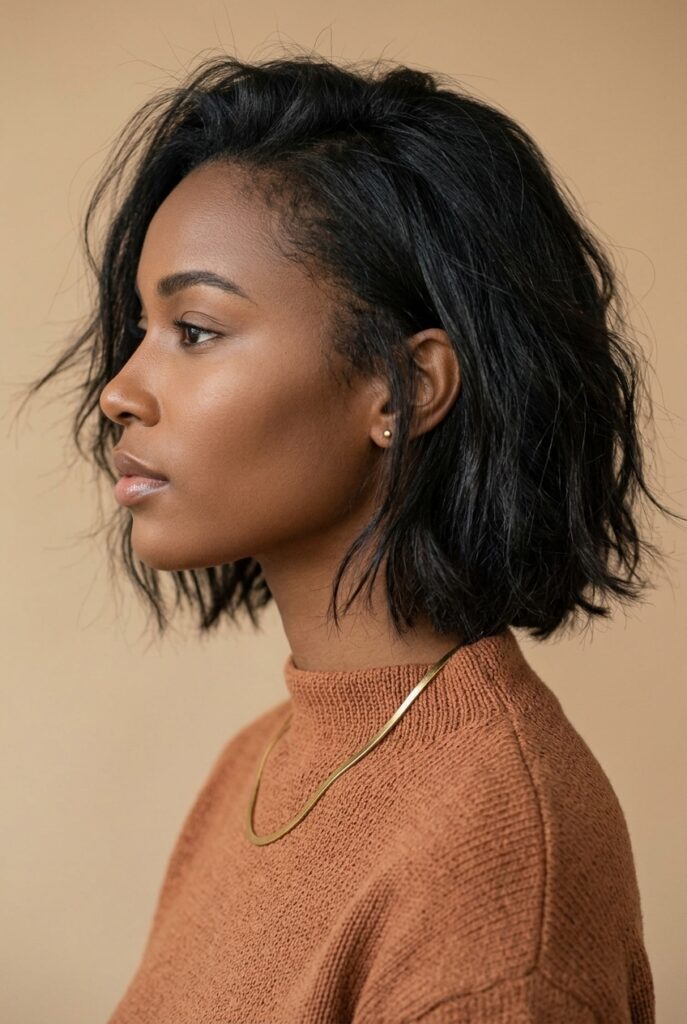
Coined by celebrity hairstylist Tom Smith, the Riviera Bob is what happens when the classic Italian bob gets a little sun and relaxes. The structure stays — the blunt-ish ends, the jaw-to-shoulder length — but the texture becomes looser, more tousled, and intentionally undone. It sometimes falls a touch longer than the traditional version, grazing the collarbone, with more face-framing movement throughout.
Smith describes it as a style that “maximizes volume and lift and the look of luxurious health of the hair” while feeling relaxed enough to have just stepped off a boat. Hailee Steinfeld, Kendall Jenner, and Khloé Kardashian have all been photographed in versions of this cut. It requires the least precision of all the variations, which makes it ideal for women who want low-maintenance without sacrificing chic.
The Right Italian Bob Is Out There for You
What makes all ten of these variations worth considering is that the Italian bob, in any form, is genuinely flattering. The cut elongates the neck, draws attention to the cheekbones, and creates a face-framing effect that most other lengths can’t achieve as naturally. Whether you prefer a sharp blunt finish or a loose, tousled wave, the underlying structure does the heavy lifting.
For thick or wavy hair, the weight of the blunt ends will feel natural and manageable. For finer hair, the blunt cut creates the illusion of density that layers often take away. Either way, what you’re working with is a haircut that was designed — by decades of Italian style tradition — to make women look better than they did before they sat down in that chair.
Frequently Asked Questions
Q: What exactly is the Italian bob, and how is it different from a regular bob? A: A regular bob is typically cut straight across with uniform length. The Italian version adds blunt, heavier ends, more volume at the bottom, and a slightly fuller silhouette with natural movement — think less structured, more chic.
Q: What hair types does the Italian bob work best on? A: It works best on thick or wavy hair because the weight of the cut enhances natural movement. Women with fine hair can still get it — the blunt ends create the appearance of more density — but very curly hair may require more customization from a stylist.
Q: How long does the Italian bob take to style daily? A: Most versions take under 15 minutes. A quick blowout with a round brush or a few passes with a curling iron is usually all it takes. The cut is designed to look good with minimal effort, which is part of its appeal.
Q: Will the Italian bob suit my face shape? A: Yes, for most face shapes. The length — just below the chin to slightly above the shoulder — is universally flattering. Women with round faces benefit from the length adding definition. Those with oval or heart-shaped faces can use bangs or a side part to balance proportions.
Q: What’s the difference between the Italian bob and the French bob? A: The French bob is shorter — often cheekbone to chin length — with a blunter, more precise finish and sometimes full bangs. The Italian version is longer, softer, and more voluminous, with a more sensual, movement-forward quality.
Q: How often do you need to get the Italian bob trimmed? A: Every six to eight weeks to maintain the clean blunt line. If you let it go longer than that, the ends start to lose their weight and the shape becomes less defined.
Q: What products work best for styling the Italian bob? A: A lightweight mousse or volumizing spray at the roots, a round brush for blowouts, and a shine serum or spray to finish. For the wavy version, a sea salt spray or curl cream applied to damp hair and air-dried works well.
Q: Is the Italian bob a high-maintenance haircut? A: No — it’s actually one of the lower-maintenance cuts at this length. The blunt line means you don’t need to baby individual layers, and the volume is built into the cut itself rather than requiring a lot of product or styling time to achieve.

