

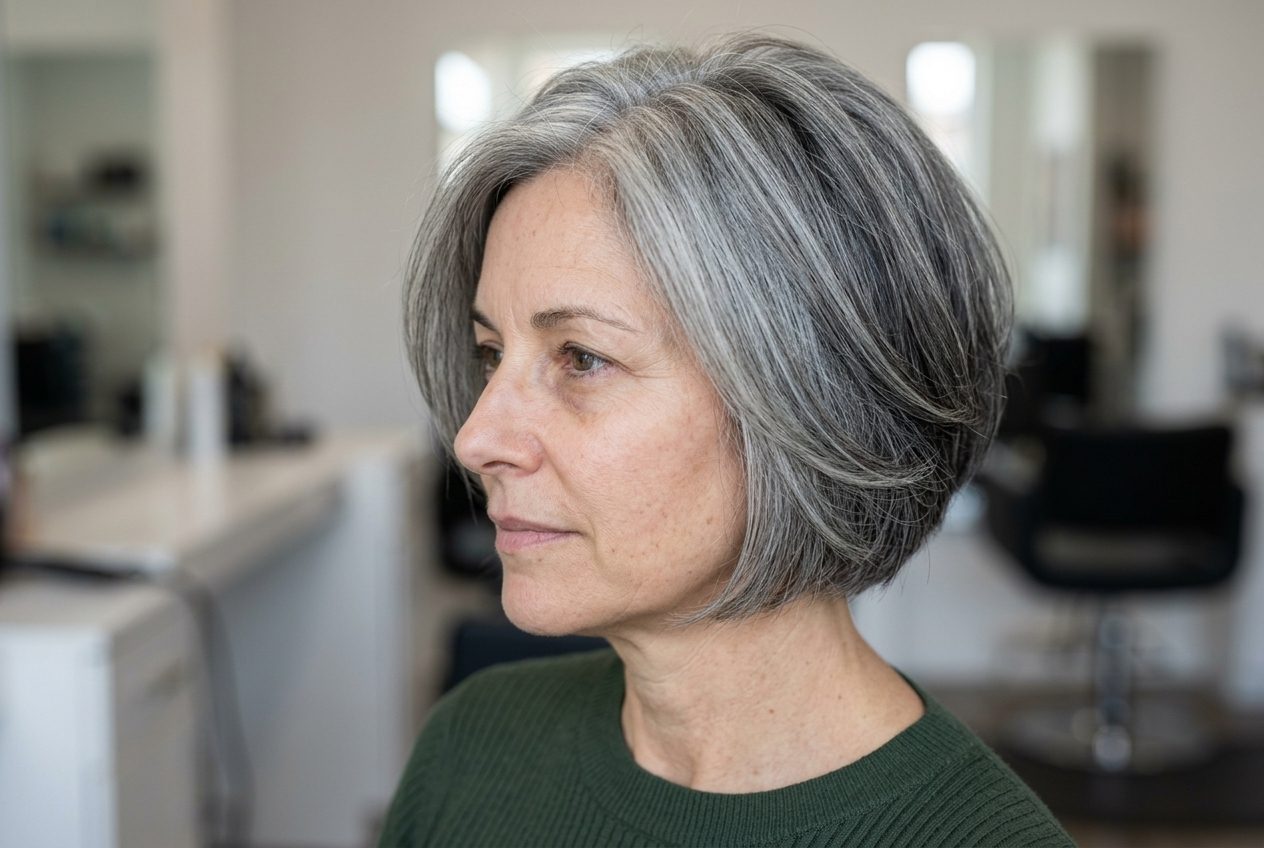
Gray hair used to mean one thing: cut it short, keep it simple, and hope nobody noticed. That mindset is fading fast. Stylists are treating silver strands the same way they treat blonde or brunette hair, which means color techniques, cuts, and finishing touches that add shape, shine, and life instead of flattening everything into one dull tone.
The women getting the most compliments on their gray aren’t the ones who did nothing. They asked for something specific — a cut that moves, a blend that softens the grow-out line, a gloss that catches light. Small requests, big difference.
Below are twelve ways to work with gray hair so it reads as intentional, current, and flattering rather than something you’re simply putting up with.
- 1. Ask for Gray Blending Instead of a Flat, Solid Color
- 2. Add Curtain Bangs to Frame Your Face
- 3. Try a Root Smudge to Ease the Grow-Out Line
- 4. Choose Long, Face-Framing Layers Over an All-Over Chop
- 5. Weave in Charcoal or Dark Gray Lowlights
- 6. Get a Textured Pixie With Movement, Not a Helmet Shape
- 7. Try Silver Balayage With Soft, Hand-Painted Placement
- 8. Use a Gloss or Toner to Control Brassiness and Add Shine
- 9. Switch to a Deep Side Part Instead of a Center Part
- 10. Get a Graduated Bob That Moves at the Ends
- 11. Add Soft Lavender or Silver-Blue Ends for Subtle Dimension
- 12. Try Teasylights for Fine, Natural-Looking Dimension
- Your Gray, Styled on Your Own Terms
- Frequently Asked Questions
1. Ask for Gray Blending Instead of a Flat, Solid Color
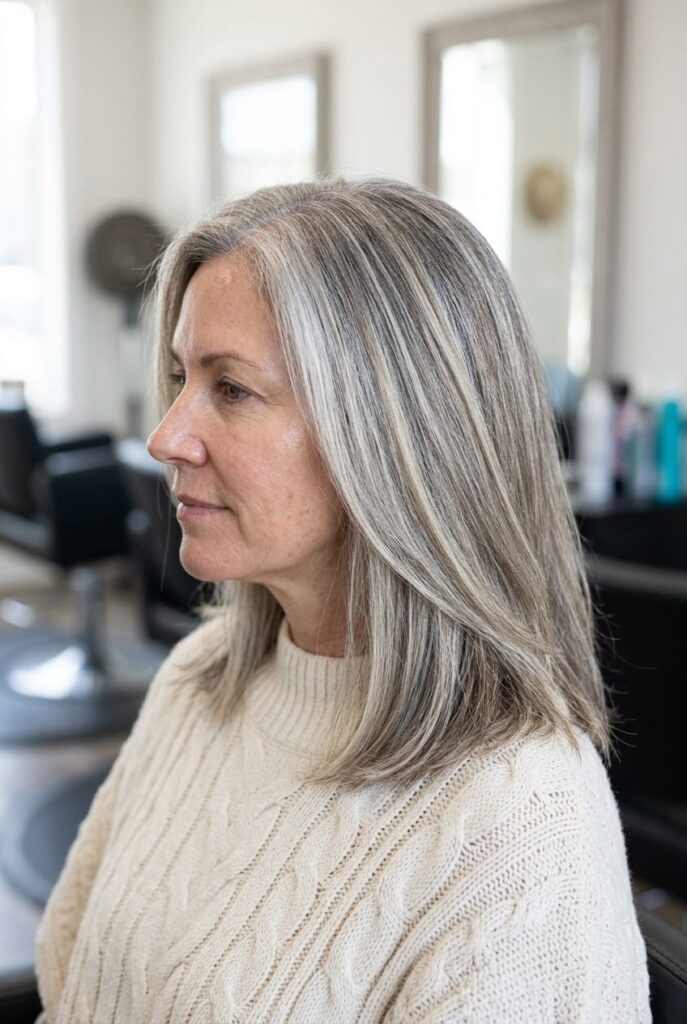
Gray blending uses fine, hand-painted highlights placed close to your natural gray to soften the line between your regrowth and your previous color. Instead of a hard demarcation at the root, the two tones melt into each other. Colorists usually alternate strands of your natural gray with slightly lighter or slightly darker pieces so the eye can’t pinpoint exactly where one shade ends and the next begins.
This works especially well for women transitioning away from dye, since it removes the “skunk stripe” look that scares so many people out of going gray in the first place. It also suits women with fully gray hair who want texture rather than one flat sheet of silver. Ask your stylist for babylights or a gray-blending service specifically — not just general highlights, since the placement and technique differ from a standard foil job.
2. Add Curtain Bangs to Frame Your Face
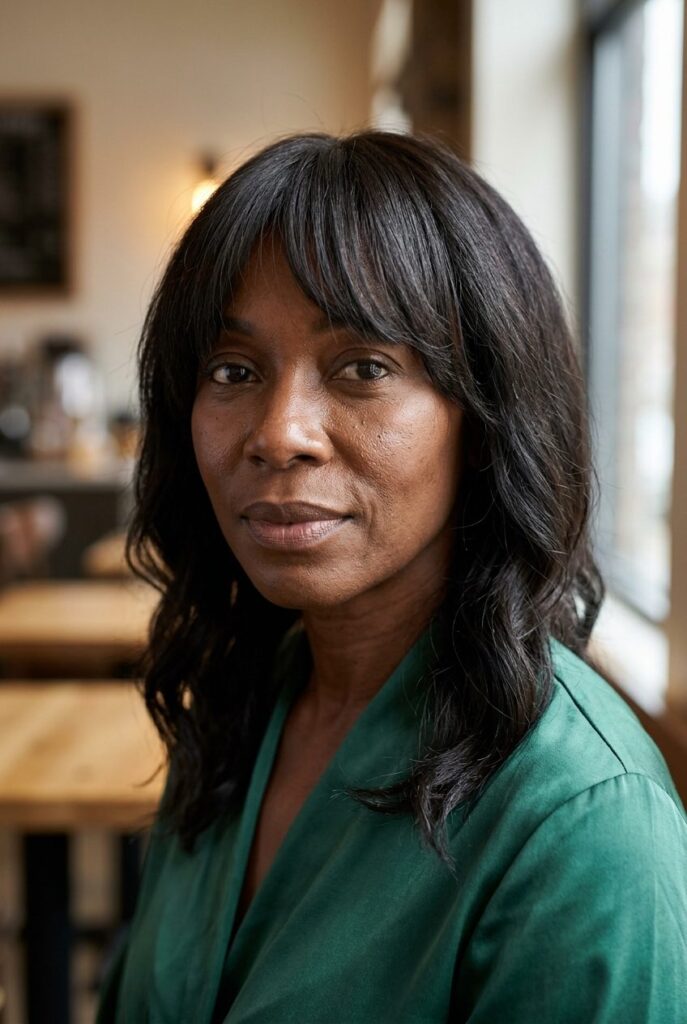
A short curtain bang, cut long enough to sweep to either side, does more for a mature face than almost any other single change. It softens the forehead, draws attention to the eyes, and breaks up a hairline that can otherwise look stark against silver strands. This shape works because it never sits as one blunt piece — it feathers outward and moves with your natural part.
Curtain bangs suit nearly every face shape, though women with rounder faces may want them cut slightly longer to avoid adding width. Ask your stylist to point-cut the ends rather than blunt-cutting them, so the fringe has natural texture instead of a heavy line.
3. Try a Root Smudge to Ease the Grow-Out Line
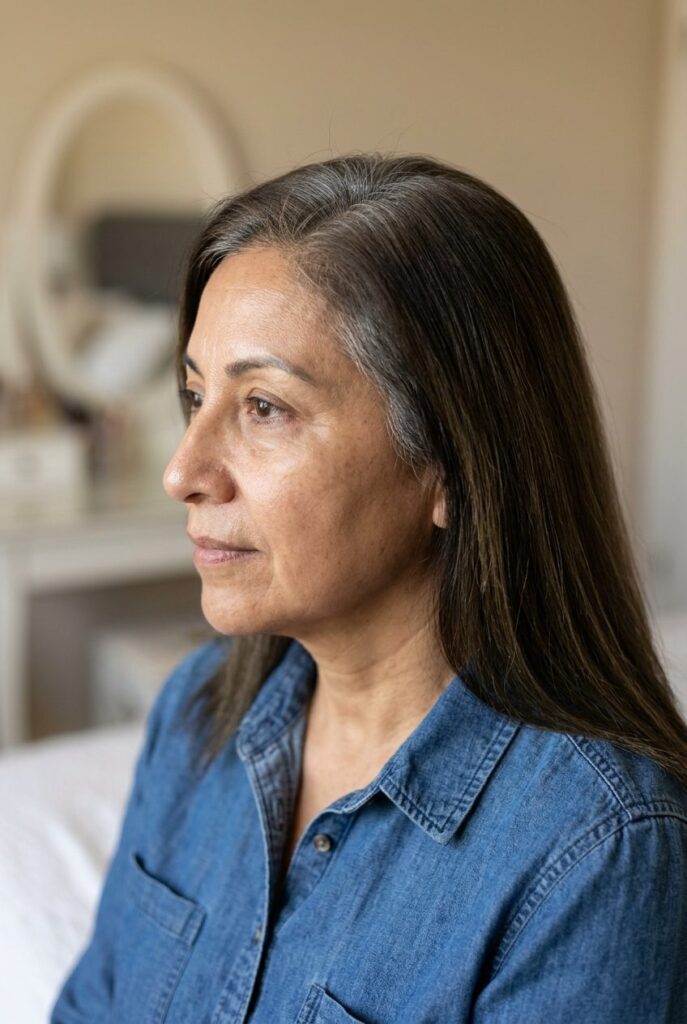
A root smudge is a soft, diffused shadow applied right at the base of the hair, blending seamlessly into whatever comes next — whether that’s your natural gray or a previously dyed shade. Unlike a hard root touch-up, a smudge has no visible edge.
Women who are somewhere in the middle of transitioning, with several inches of gray growth and dyed ends still hanging on, benefit the most from this. It buys time between salon visits since new growth doesn’t create an obvious line.
A root smudge typically lasts six to eight weeks before it needs a refresh, depending on how fast your hair grows.
4. Choose Long, Face-Framing Layers Over an All-Over Chop
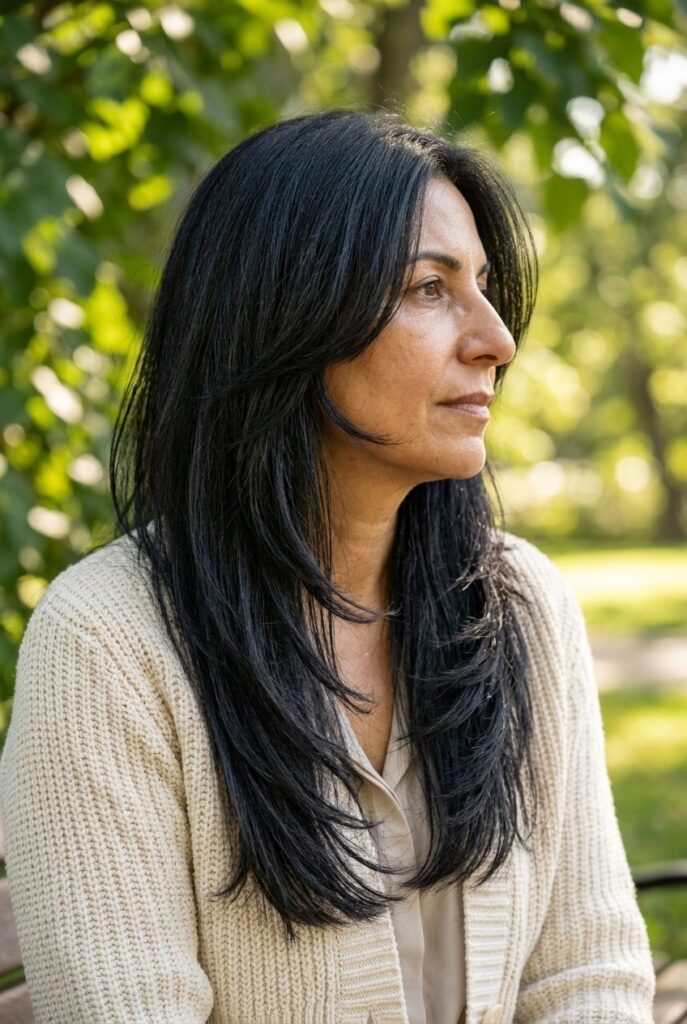
Some tips here:
- Layers cut around the cheekbones and jaw add lift and movement without sacrificing length
- They work on straight, wavy, and curly gray hair alike
- The shorter pieces bounce near the face while the back stays long, giving shape from every angle
- Ask for layers that start at the chin rather than the crown for a softer result
Long hair with the right layering can look just as youthful as a short cut, and it gives you far more styling options day to day.
5. Weave in Charcoal or Dark Gray Lowlights
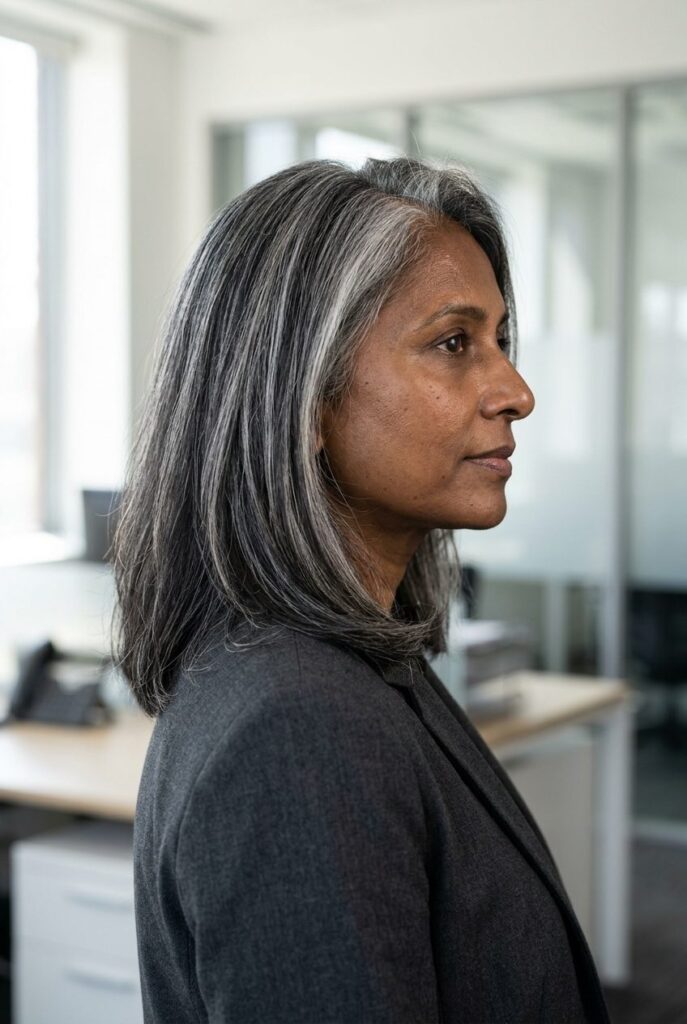
Lowlights add depth by threading darker gray or charcoal strands through lighter silver, creating dimension instead of one uniform tone. The contrast keeps hair from looking washed out under bright light, which flat gray sometimes does.
This technique flatters most skin tones but shows up especially well on women with cooler undertones, since the darker strands echo the same coolness already in their gray. A colorist will typically place lowlights in the underlayers and around the crown, leaving the top pieces lighter so the effect reads naturally rather than blocky.
6. Get a Textured Pixie With Movement, Not a Helmet Shape
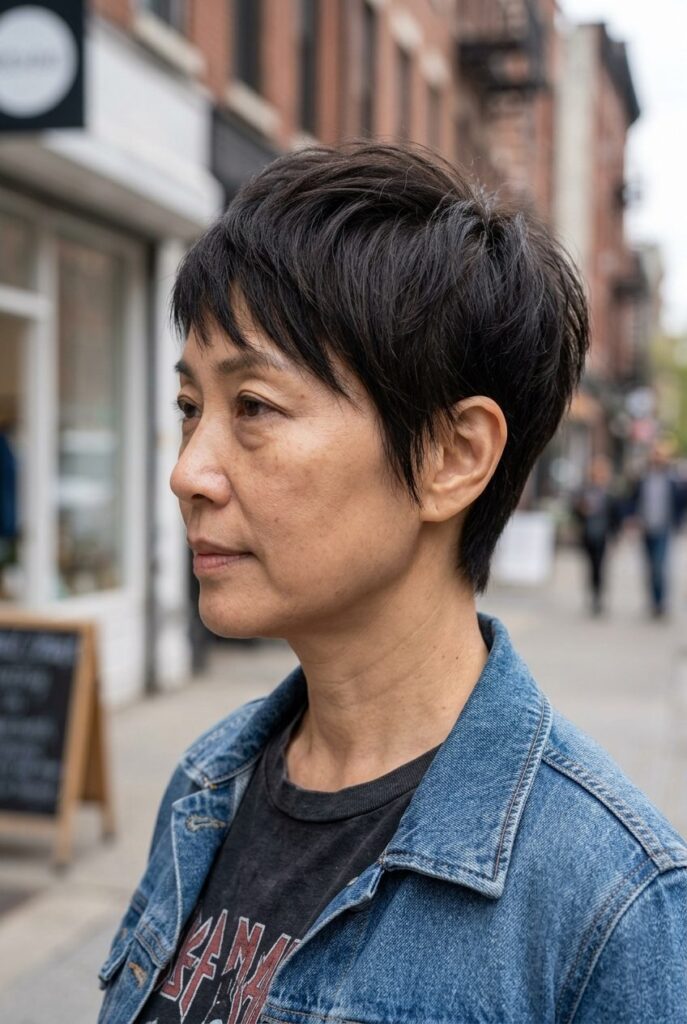
A pixie cut can absolutely work on gray hair, but the difference between a flattering one and a dated one comes down to texture. Ask your stylist to point-cut and thin the ends with a razor or texturizing shears rather than leaving them blunt all over, since a rounded, uniform pixie is exactly the “helmet” look that reads older. Movement at the crown, a slightly longer fringe, and softer sides make the same short length look current instead of severe.
This cut suits women who want low maintenance and have naturally fine to medium hair, since fine gray strands often struggle to hold volume in longer styles. It needs a trim roughly every five to six weeks to keep the shape sharp, and a small amount of texturizing paste worked through dry hair helps separate the pieces so the cut doesn’t fall flat by midday.
7. Try Silver Balayage With Soft, Hand-Painted Placement
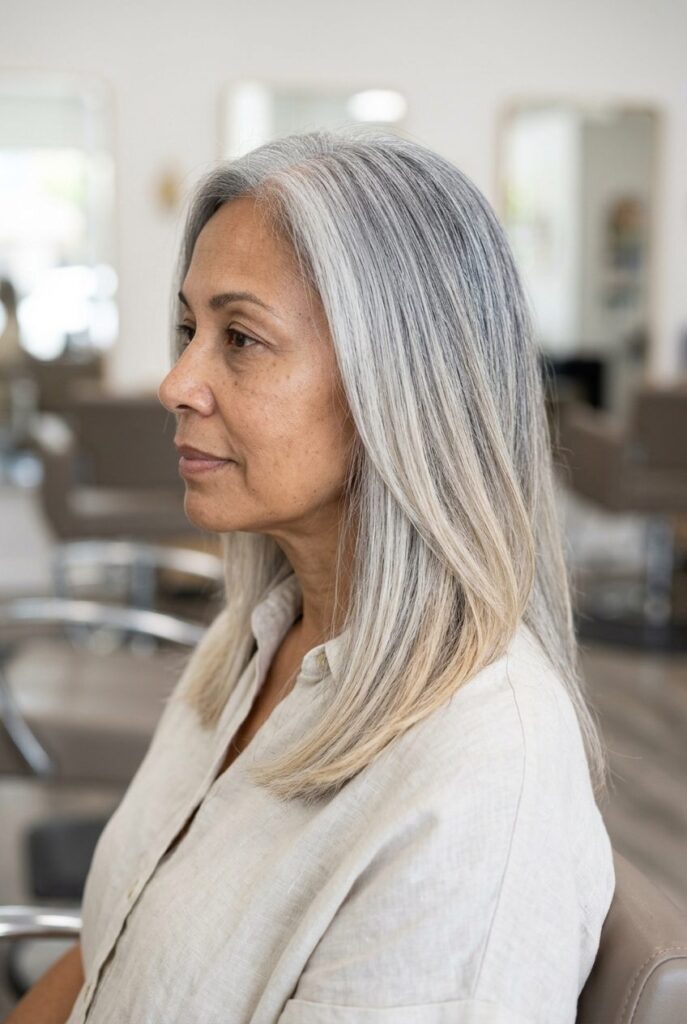
Balayage applied to gray hair means hand-painting lighter silver tones onto the mid-lengths and ends while leaving the roots slightly deeper, which mimics the way hair naturally lightens. The result looks sun-kissed rather than solid.
This differs from foil highlights because there’s no harsh line where color starts — everything fades gradually.
8. Use a Gloss or Toner to Control Brassiness and Add Shine
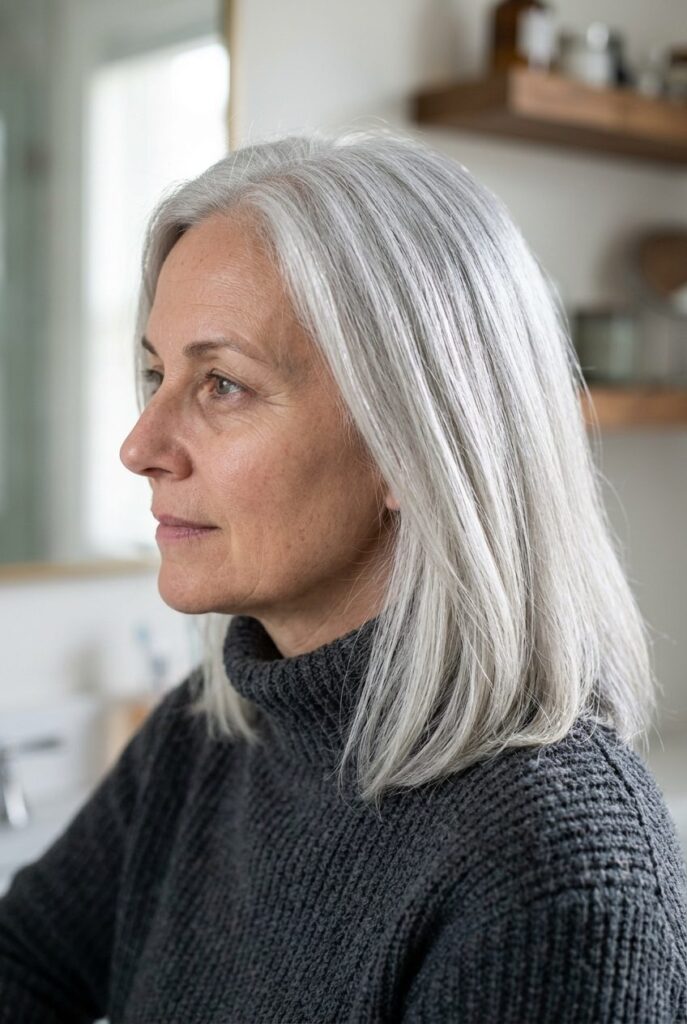
Gray hair, especially hair that started out blonde or light brown, often develops a yellow or brassy cast over time from minerals in water, sun exposure, or certain shampoos. A purple or violet-based gloss neutralizes that warmth and pushes the tone back toward true silver or white. Clear glosses, meanwhile, add shine without changing the shade at all, simply sealing the hair shaft so light bounces off it more evenly.
Most women benefit from a toning treatment every four to six weeks, either at the salon or with a purple shampoo used once or twice a week at home. Skipping this step is one of the fastest ways gray hair starts to look dull instead of luminous, since dullness reads as age far more than the color itself does.
9. Switch to a Deep Side Part Instead of a Center Part
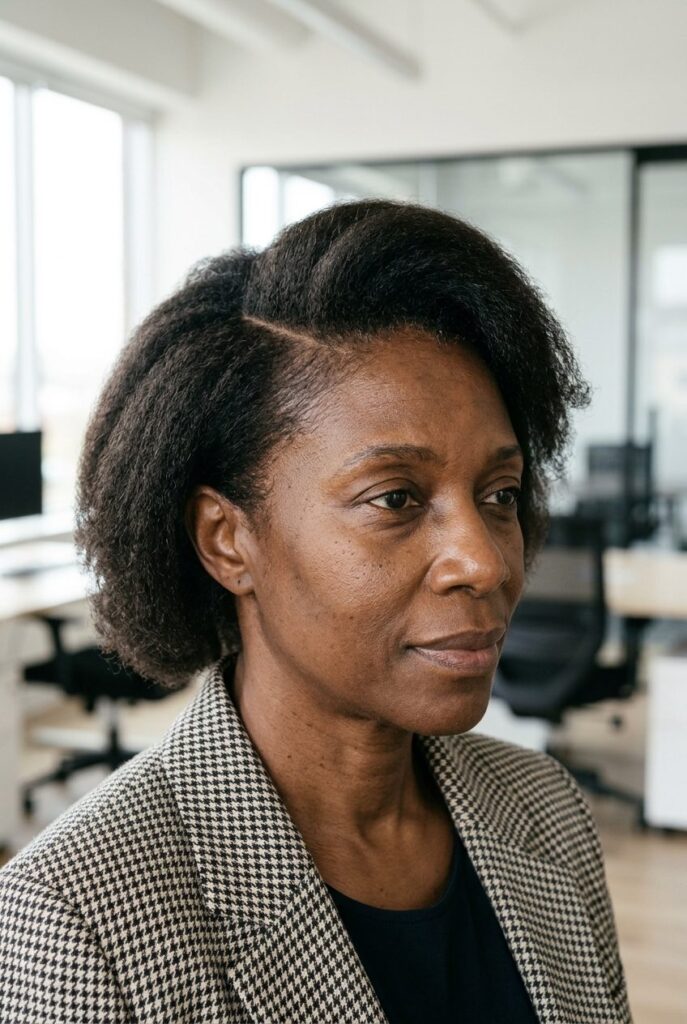
A center part can pull a face down and expose more scalp along a single, harsh line, which is more noticeable on gray hair since the scalp and hair color contrast less than they would with darker strands. Shifting to a deep side part creates asymmetry, adds volume at the root on one side, and softens the whole front hairline. It’s a genuinely free change — no scissors or color required, just a different angle with your comb.
Try parting a couple inches off-center and blow-drying the roots in that direction for a few days before deciding whether it works for you.
10. Get a Graduated Bob That Moves at the Ends
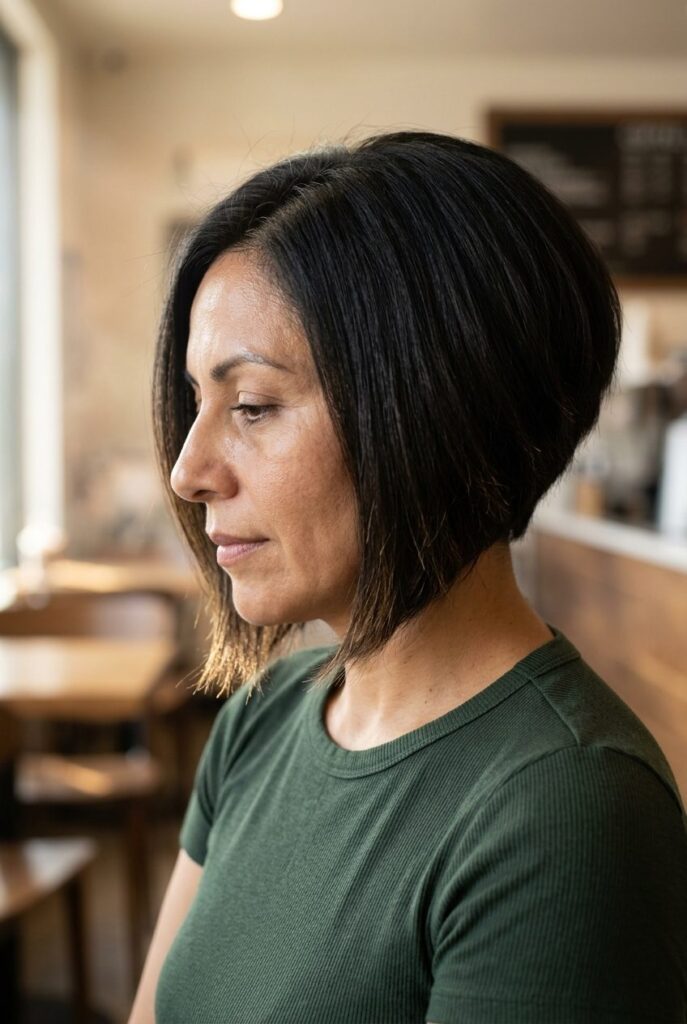
A graduated bob is cut shorter at the back and gradually longer toward the front, creating a rounded, swingy shape rather than one flat line. On gray hair, this graduation adds the appearance of thickness, since the layered ends catch light differently than a blunt cut would.
This length works well for women who want something shorter than shoulder-length but aren’t ready for a pixie. It’s also relatively low-maintenance, needing a trim roughly every eight weeks to hold its shape.
Ask specifically for graduation at the nape, not just layers throughout, since that’s what creates the rounded silhouette.
11. Add Soft Lavender or Silver-Blue Ends for Subtle Dimension
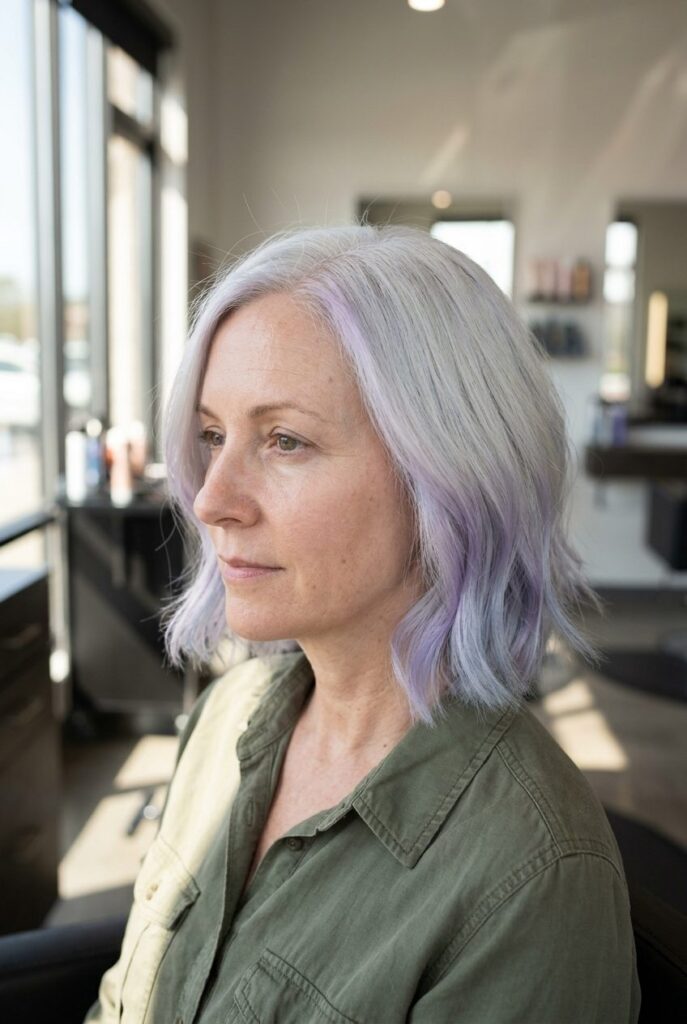
Here’s some important facts:
- A small amount of pastel lavender or icy blue toner applied only to the ends adds a cool, polished finish without looking costume-like
- This works best on hair that’s already light gray or white, since the pastel needs a pale base to show up properly
- The effect fades gradually rather than growing out awkwardly, since it’s applied over an existing light shade
- Best suited for women who already gloss or tone regularly, since the upkeep is similar
It’s a subtle way to signal that your color is a deliberate choice rather than something left untouched.
12. Try Teasylights for Fine, Natural-Looking Dimension
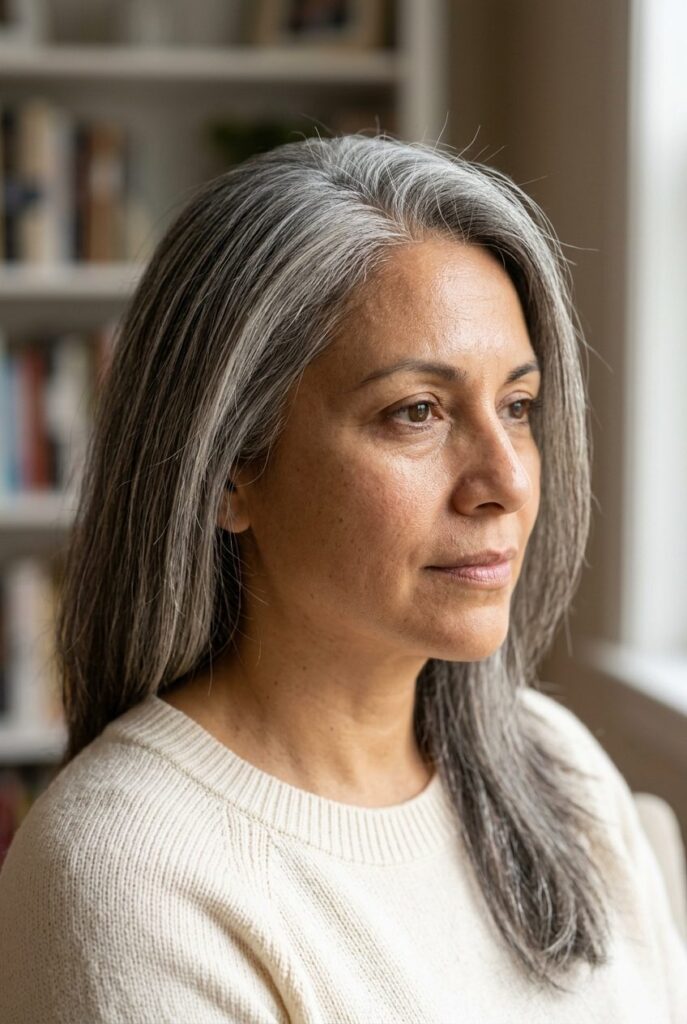
Teasylights are a highlighting method where the stylist backcombs, or teases, small sections of hair before painting in color, which creates finer, more diffused pieces than traditional foils. On gray hair, this technique adds subtle dimension without the chunkiness that can come from wider highlight placement. The finer strands blend more convincingly with natural gray, since real gray hair rarely grows in as one uniform width or tone.
This method takes longer in the chair than standard highlights, often two to three hours depending on hair length and density, but the natural-looking result tends to last longer between appointments because the grow-out is far less noticeable.
Your Gray, Styled on Your Own Terms
Gray hair isn’t a phase to get through or a color to disguise — it’s simply another shade that responds to the same care and technique any other hair color would. The women whose gray looks the most polished aren’t hiding anything. They’re asking for the right cut, the right blend, and the right amount of shine, the same way they would for any color they chose on purpose.
Pick one or two of these techniques rather than overhauling everything at once. A single well-placed set of layers or one good toning treatment often changes more than an entire new cut, and it gives you room to see what actually suits your hair before committing further.
Frequently Asked Questions
Q: Does gray hair need a different haircut than colored hair? A: Not a completely different cut, but texture matters more. Point-cutting, layering, and avoiding blunt, uniform edges tend to look more current on gray hair than the same techniques would on darker shades, since gray shows flatness more easily.
Q: How often should I get a root smudge or gray blending touch-up? A: Most women need a refresh every six to eight weeks, though this depends on how fast your hair grows and how much contrast there is between your natural gray and any remaining dyed color.
Q: Will purple shampoo damage gray hair? A: Used as directed, purple shampoo is safe for gray hair and actually helps by neutralizing yellow tones. Overusing it can leave hair looking slightly lavender, so once or twice a week is usually enough.
Q: Can I add lowlights if my hair is already fully gray? A: Yes. Lowlights on fully gray hair use a darker gray or charcoal shade rather than brown, which adds depth without looking like regrowth or an uneven dye job.
Q: Is a pixie cut the only low-maintenance option for gray hair? A: No. A graduated bob or long layers can be just as easy to maintain, since the key to low upkeep is a good shape that grows out well, not necessarily short length.
Q: What’s the difference between balayage and teasylights on gray hair? A: Balayage is hand-painted directly onto sections of hair for a gradual, sun-kissed effect, while teasylights involve backcombing small pieces first, which creates finer, more blended highlights throughout.
Q: Does a side part really make a difference in how gray hair looks? A: Yes. A deep side part adds root volume on one side and reduces the visible scalp line down the middle, which softens the overall look without any cutting or color involved.
Q: Can lavender or silver-blue tones work on hair that isn’t fully gray yet? A: These pastel tones show up best on hair that’s already light gray or white. On darker or salt-and-pepper hair, the color tends to get lost rather than read as intentional.
Q: How do I know if my gray hair is brassy? A: Brassiness usually shows up as a yellow or gold cast, especially noticeable in natural light or photos. If your gray looks warm rather than cool or neutral, a toning treatment will likely help.

