

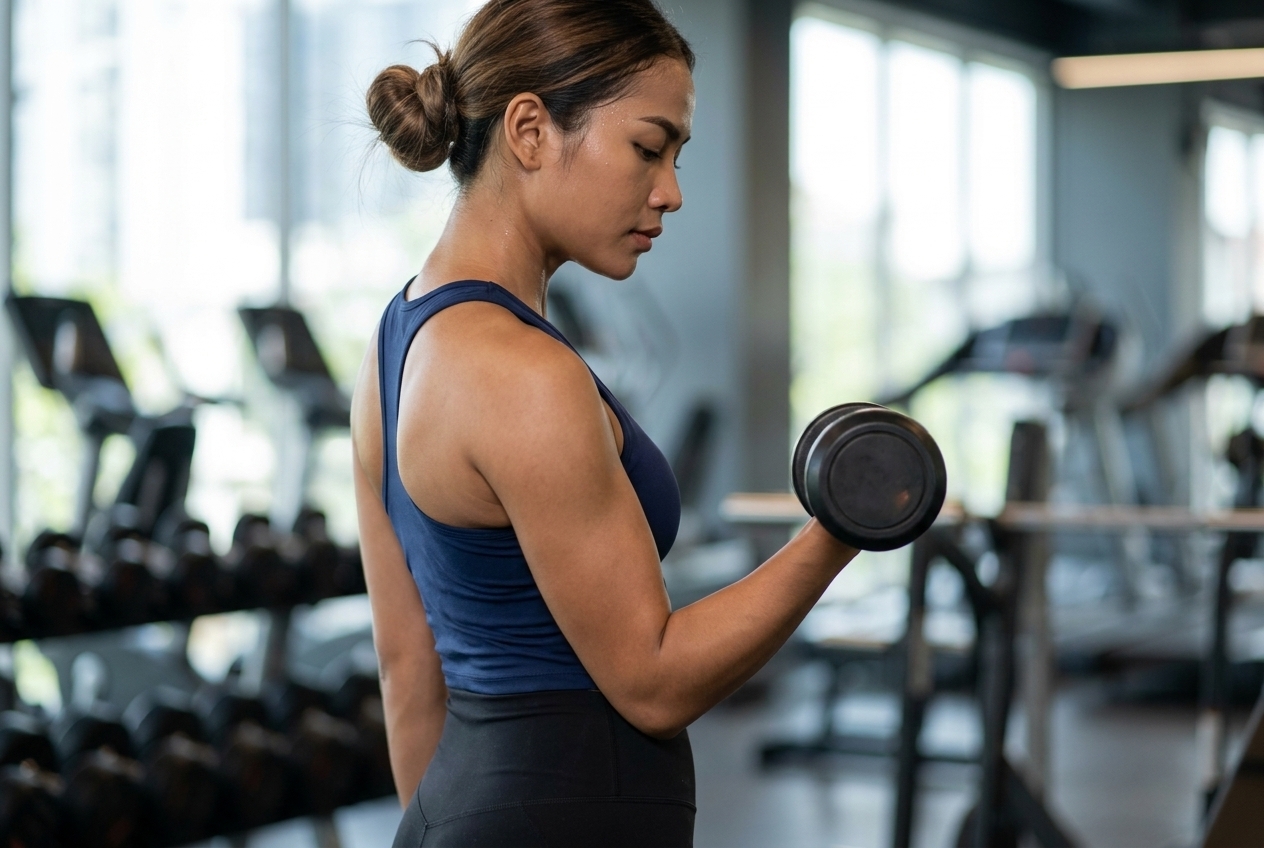
There’s a reason so many women feel like they’re working hard at the gym but not seeing the results they want. It’s not a lack of effort — it’s usually a lack of the right moves. Most generic workout plans weren’t built with a woman’s body, hormones, or goals in mind. Women naturally carry more body fat than men due to higher estrogen levels, and they build muscle differently too. That means the approach has to match the biology.
Fat loss for women comes down to a two-part equation: burning calories during the workout and keeping the metabolism elevated long after. Cardio alone gets you halfway there. Strength training gets you the rest of the way. And when you combine both — through smart, compound-based gym moves — you get results that actually stick.
The following 12 moves are tried, tested, and backed by exercise science. Some will challenge your legs and glutes, others will target your upper body and core. All of them, done consistently, will push your body to burn more fat — both during and after you leave the gym.
- 1. Barbell Hip Thrust
- 2. Romanian Deadlift
- 3. Goblet Squat
- 4. Kettlebell Swing
- 5. Incline Dumbbell Press
- 6. Cable Pull-Down (Lat Pull-Down)
- 7. Dumbbell Reverse Lunge
- 8. Seated Cable Row
- 9. Box Step-Up with Knee Drive
- 10. Dumbbell Bent-Over Row
- 11. Treadmill Sprint Intervals
- 12. Plank with Shoulder Tap
- The Right Moves Make All the Difference
- Frequently Asked Questions
1. Barbell Hip Thrust
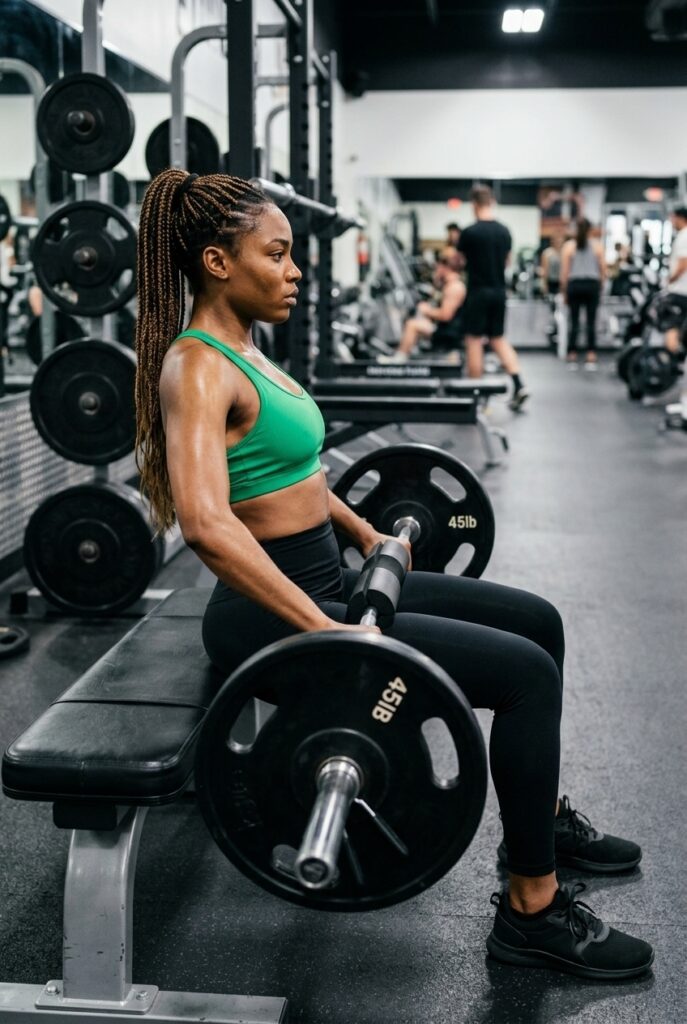
This is one of the most effective lower-body moves you can do, and it doesn’t get enough credit outside of fitness circles. The barbell hip thrust targets the gluteus maximus — your largest muscle — which means it burns a significant number of calories and builds the kind of lean muscle that boosts your resting metabolism.
Sit with your upper back against a bench, feet flat on the floor, and a barbell resting across your hips. Drive your hips up until your body forms a straight line from knees to shoulders. Squeeze at the top for a full second, then lower with control. The key is keeping that squeeze intentional — don’t just go through the motion.
Aim for 3–4 sets of 10–12 reps.
2. Romanian Deadlift
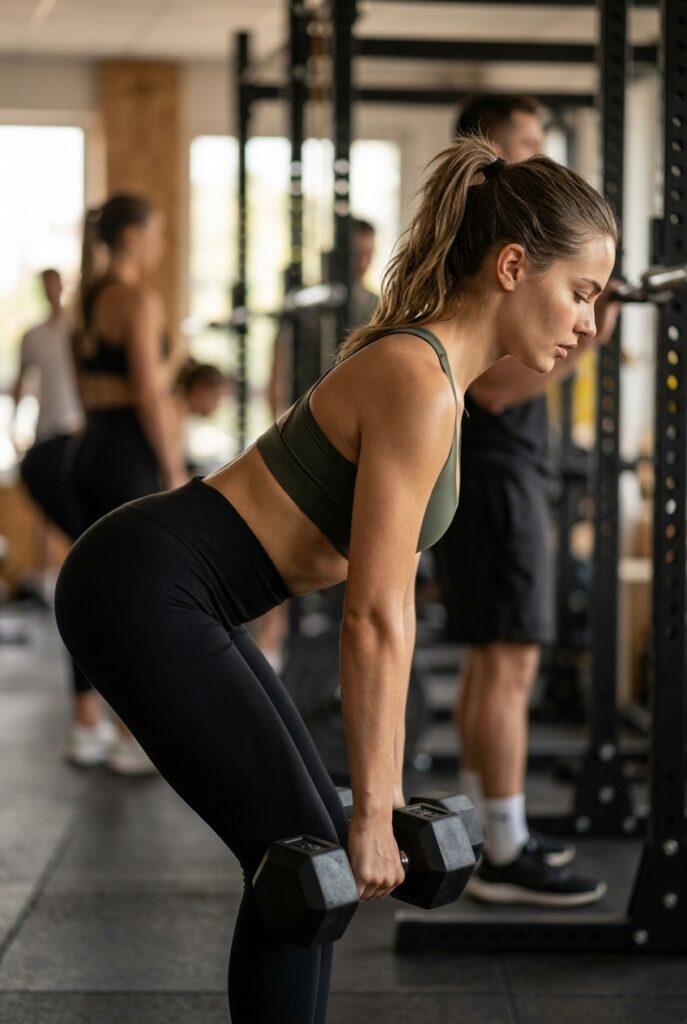
The Romanian deadlift (RDL) is a powerhouse move for the entire posterior chain — hamstrings, glutes, and lower back. Unlike a conventional deadlift, it starts standing and focuses on hinging at the hips with minimal knee bend, which places maximum tension on the back of the legs where most women want to see more definition and strength.
Stand tall holding dumbbells or a barbell in front of your thighs. Push your hips back — think of trying to close a door with your backside — as you lower the weight down your legs. Stop when you feel a solid stretch in your hamstrings, then drive your hips forward to stand back up.
Good form beats heavy weight every time here. Start lighter and build.
3. Goblet Squat
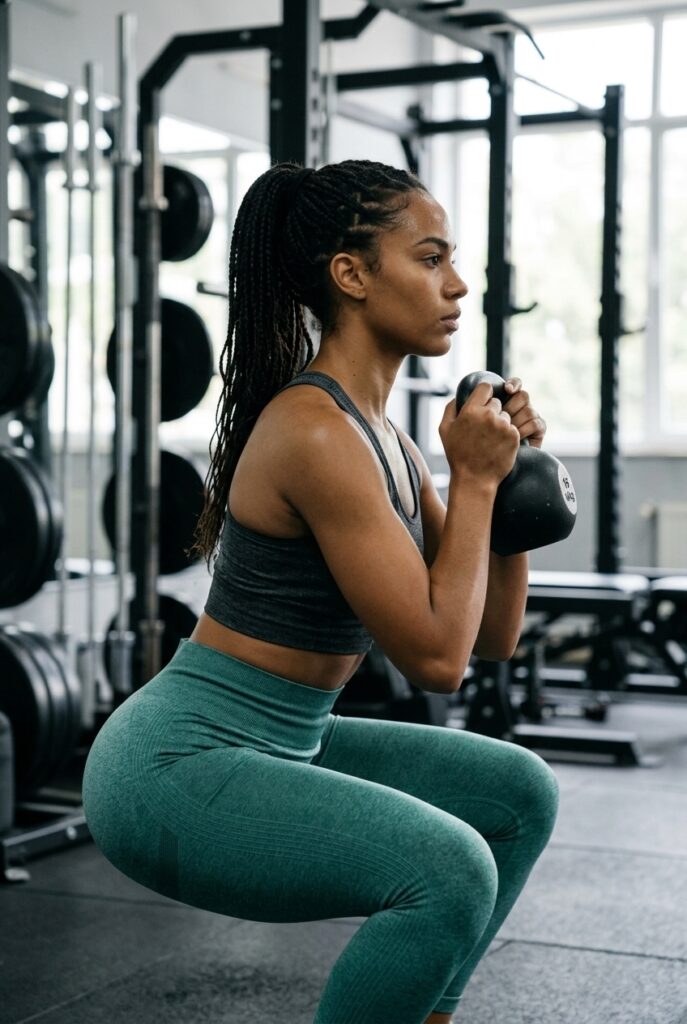
The goblet squat is a squat variation that’s friendlier on your joints, easier to learn than a barbell squat, and surprisingly effective for burning fat. Holding a single dumbbell or kettlebell at chest height shifts your center of gravity forward, which forces your core to stay engaged throughout every rep. You get lower-body strength work and core stability in one move.
Hold a weight vertically at your chest. Feet are shoulder-width apart, toes slightly out. Sit back and down, keeping your chest up and elbows tracking inside your knees. Drive through your heels to stand. The depth of your squat matters — go as low as your mobility allows without compromising your back position.
This one works beautifully as a warm-up or as a high-rep finisher.
4. Kettlebell Swing
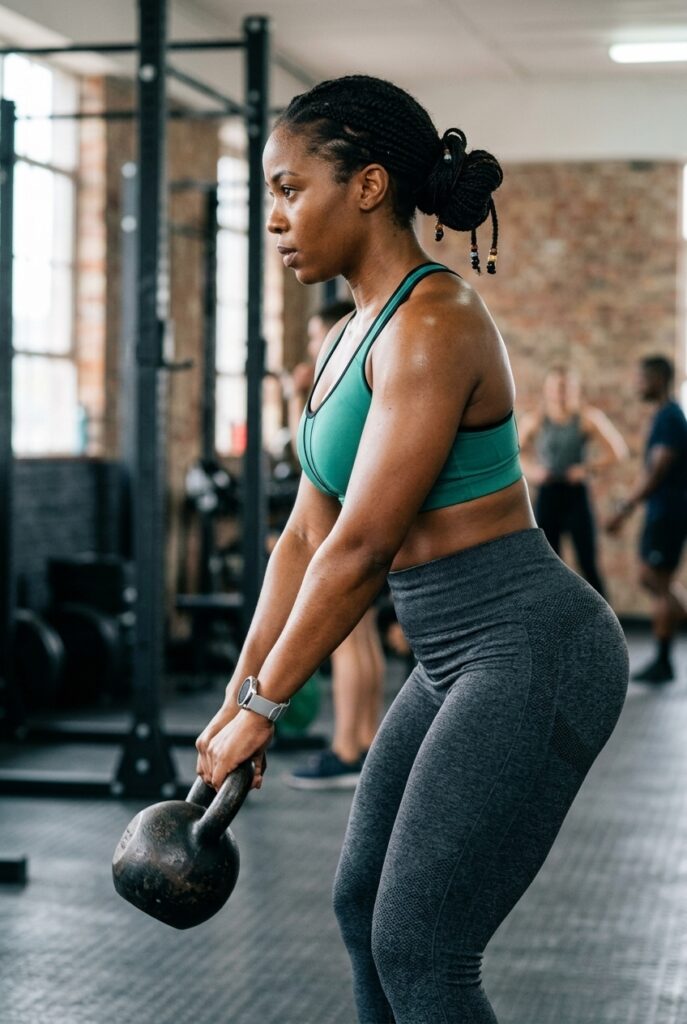
If there’s one move that delivers both a cardio hit and a strength stimulus at the same time, it’s this one. The kettlebell swing is a ballistic hip-hinge movement that fires up the glutes, hamstrings, and core while spiking your heart rate in a way that steady-state cardio simply can’t match.
Stand with feet slightly wider than shoulder-width, holding a kettlebell with both hands. Hinge at the hips, swing the weight back between your legs, then drive your hips forward explosively to swing the bell to chest height. The power comes entirely from your hips — your arms are just along for the ride.
Sets of 15–20 reps with minimal rest between rounds will leave you breathless in the best way.
5. Incline Dumbbell Press
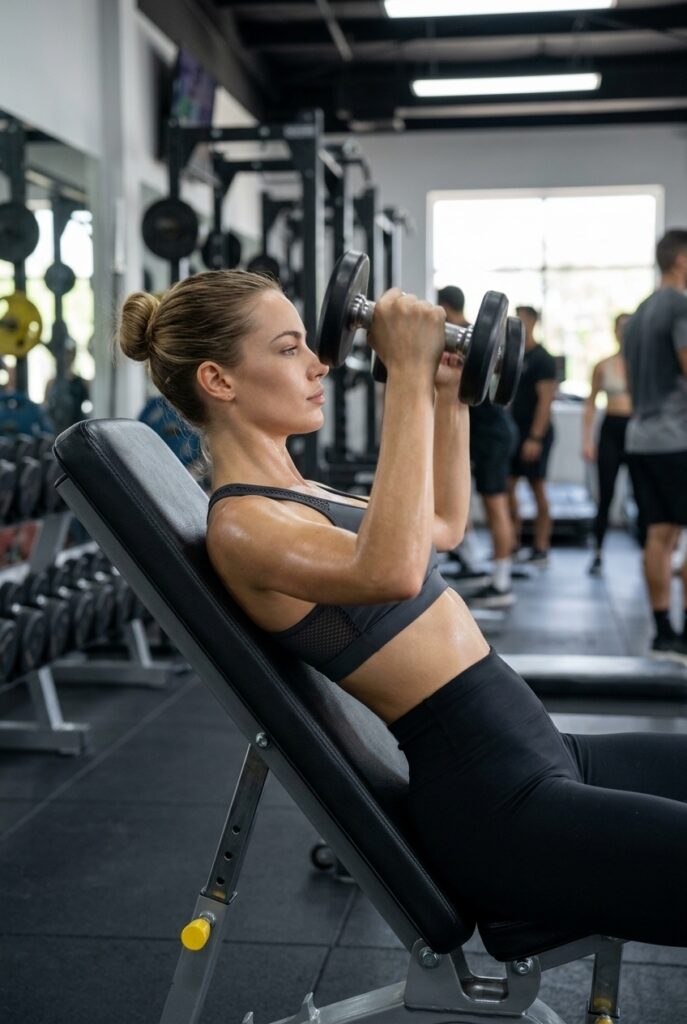
Upper-body work often gets skipped by women who are focused on their lower half, but that’s a missed opportunity. Building lean muscle in your chest, shoulders, and triceps raises your overall metabolic rate, which directly supports fat loss. The incline press is one of the most efficient ways to do that.
Set a bench to about a 30–45 degree incline. Lie back with a dumbbell in each hand at shoulder height. Press straight up until your arms are extended, then lower slowly. That controlled lowering phase — the eccentric portion — is where a lot of the muscle-building happens, so don’t rush it.
3 sets of 8–10 reps is plenty to build real strength without bulking.
6. Cable Pull-Down (Lat Pull-Down)
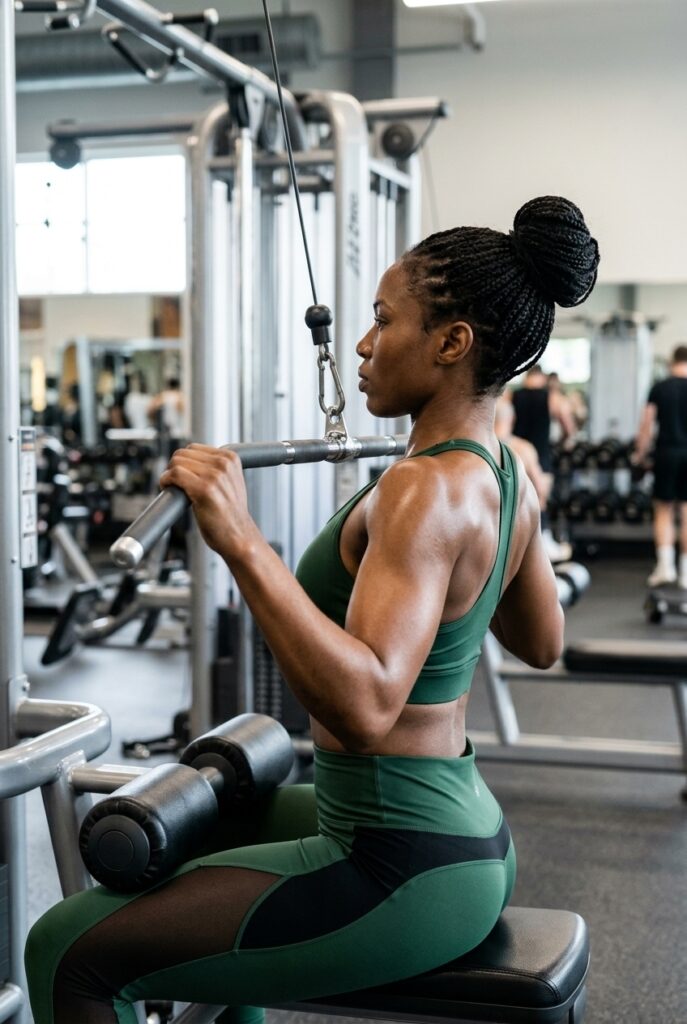
The lat pull-down is a staple for a reason. It targets the latissimus dorsi, the wide muscle that runs down either side of your back, and developing it creates the appearance of a narrower waist — a benefit that has nothing to do with the scale. A stronger back also supports better posture, which affects how you look and feel in everyday life.
Sit at the cable machine with your thighs secured under the pad. Grab the bar slightly wider than shoulder-width, palms facing out. Pull the bar down to your collarbone, squeezing your shoulder blades together at the bottom. Slowly return to the start with control.
Focus on leading with your elbows, not your hands. That mental cue makes a big difference in whether your back is doing the work or your arms are.
7. Dumbbell Reverse Lunge
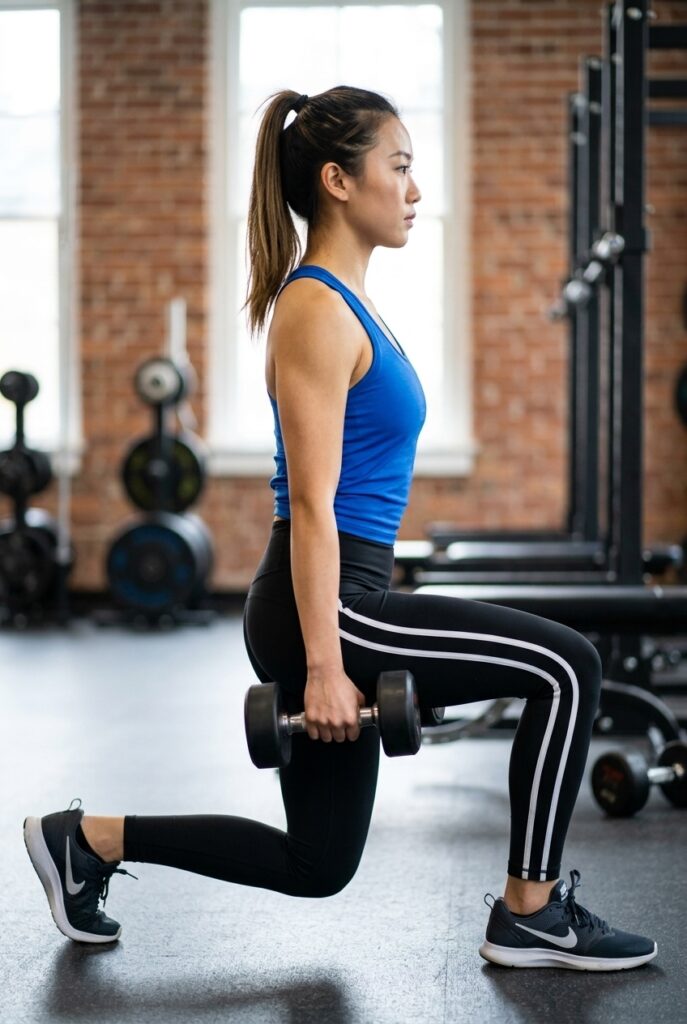
Lunges are excellent for legs and glutes, but the reverse variation is easier on the knees and tends to activate the glutes more effectively than stepping forward. Because you’re working one leg at a time, your stabilizing muscles are constantly switching on — which means your core gets a workout too.
Stand holding dumbbells at your sides. Step one foot back, lowering your back knee toward the floor while keeping your front shin vertical. Push through your front heel to return to standing. Alternate legs.
Walking lunges across the gym floor are another great option if you have the space — the forward momentum adds an extra challenge.
8. Seated Cable Row
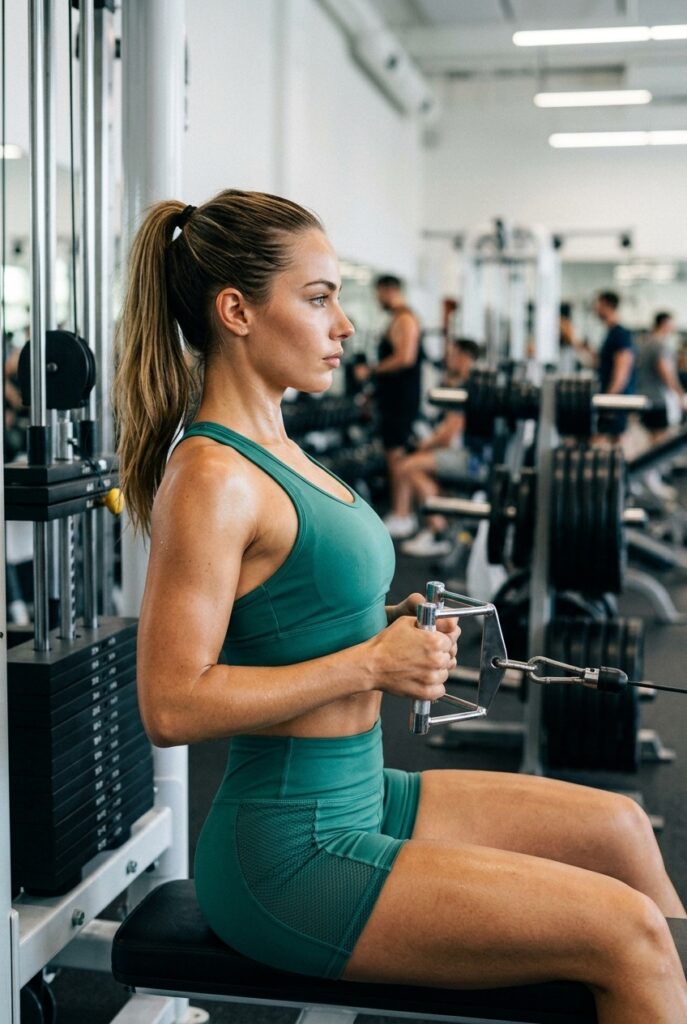
Rows are pulling movements that target your mid-back, biceps, and rear shoulders. Adding them to your routine balances out all the pressing work and helps prevent the rounded-shoulder posture that comes from sitting at a desk all day. From a fat-burning standpoint, back exercises recruit a lot of muscle tissue, which translates to more calories burned per set.
Sit at the cable row machine with your feet on the platform and a slight bend in your knees. Keep your back straight and pull the handle toward your lower ribs, leading with your elbows. Pause for a beat at the full contraction before releasing.
Don’t let your torso rock forward and back — that takes tension off your back and puts it on your lower spine instead.
9. Box Step-Up with Knee Drive
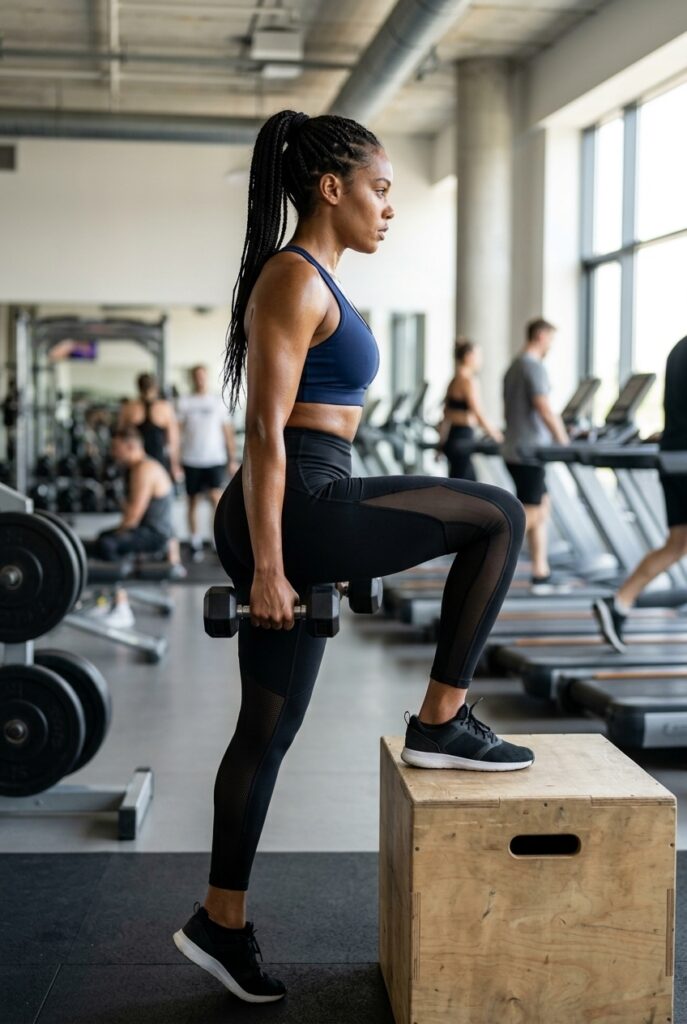
Step-ups are a single-leg strength move that targets the glutes and quads while also challenging your balance and coordination. Adding a knee drive at the top — bringing your trailing knee up toward your chest — makes the move more dynamic and increases the calorie burn.
Stand in front of a sturdy box or step. Hold dumbbells at your sides. Step one foot up, press through that heel to rise, and drive the opposite knee up at the top. Step back down with control. Complete all reps on one side before switching.
The height of the box matters — too low and it won’t challenge your glutes enough; too high and your form breaks down. Hip height is a good starting point.
10. Dumbbell Bent-Over Row
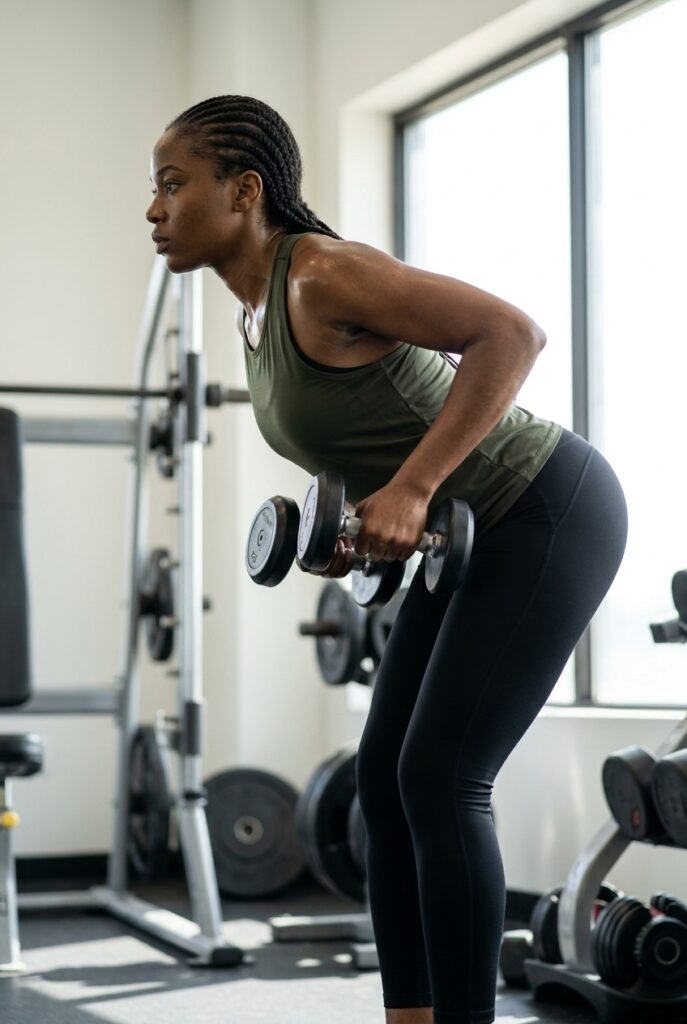
This is a go-to compound move for your upper back, and it’s versatile enough to work with virtually any gym setup. Bending over at the hips adds an element of hip hinge training, so your hamstrings and lower back are working as stabilizers throughout the set.
Hold a dumbbell in each hand. Hinge forward at the hips until your torso is close to parallel with the floor. Let the weights hang in front of you, then pull them up toward your hips, keeping your elbows close to your body. Lower with control.
Keep your core braced throughout. A loose midsection here means extra strain on your spine.
11. Treadmill Sprint Intervals
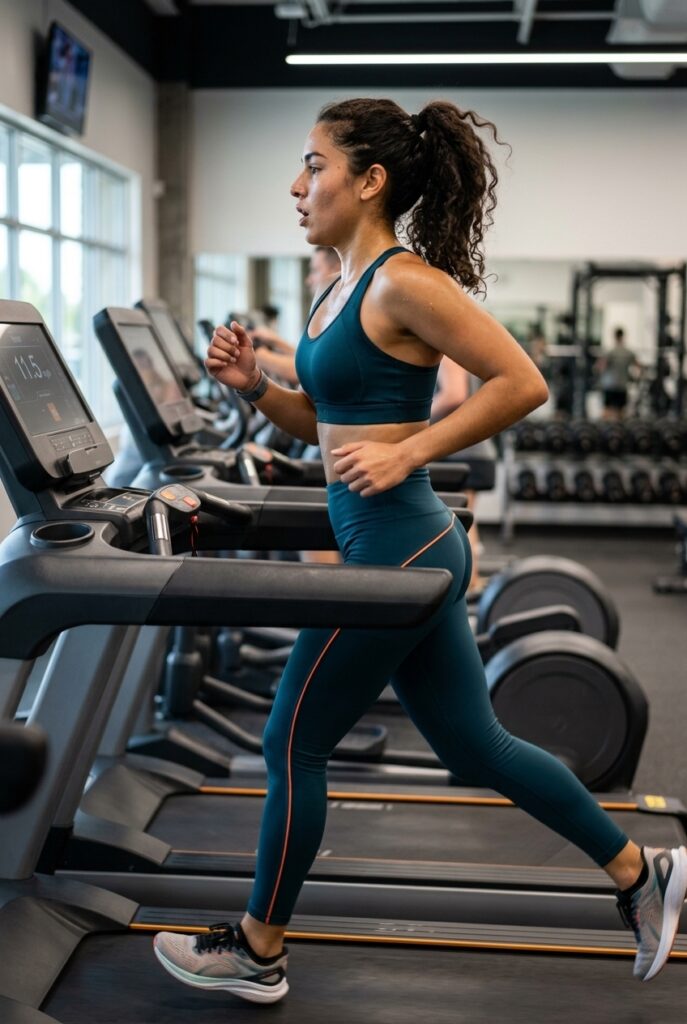
This one earns its place on the list because of what happens after the workout ends. Sprint intervals trigger what’s known as the afterburn effect — technically called excess post-exercise oxygen consumption (EPOC) — where your body continues burning calories at an elevated rate for hours after you’ve finished. Long, slow cardio doesn’t produce that effect to the same degree.
Warm up for 5 minutes at an easy pace. Then alternate 20–30 seconds of all-out sprinting with 60–90 seconds of slow walking. Repeat 8–10 times, then cool down. The whole session takes less than 25 minutes and is far more effective than 45 minutes of steady jogging.
If the treadmill isn’t your thing, the rowing machine or stationary bike works exactly the same way.
12. Plank with Shoulder Tap
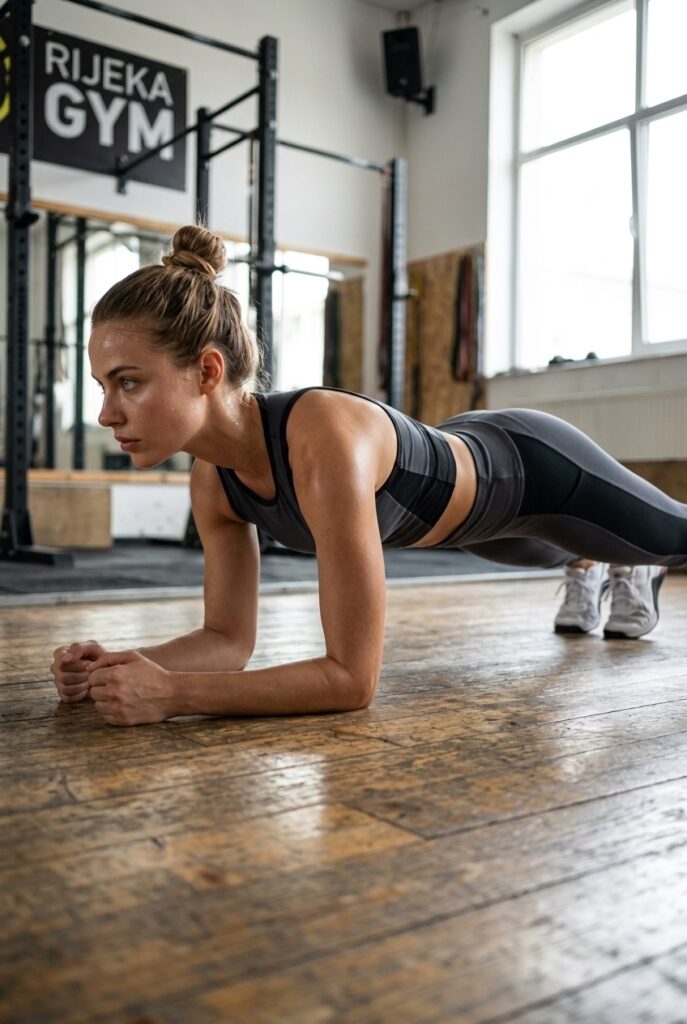
Core training shows up at the end of this list, but it’s no afterthought. A strong core improves your performance on every other move here — squats, rows, deadlifts, presses. The plank with shoulder tap specifically challenges anti-rotation stability, meaning your core has to work to prevent your hips from swaying as you lift each hand.
Start in a high plank position, hands directly under your shoulders. Keeping your hips level and your feet hip-width apart, lift one hand and tap the opposite shoulder. Replace it, then repeat on the other side. The goal is to keep your body as still as possible throughout.
30 seconds to 1 minute per set, 3 sets, is a solid baseline.
The Right Moves Make All the Difference
A gym full of equipment means nothing without a plan that’s actually built around your goals. These 12 moves work because they target multiple muscle groups at once, elevate your heart rate, build lean tissue, and keep your metabolism working long after the session ends.
Women who see the best results from strength training tend to focus on consistent effort over perfect programming. You don’t need to do all 12 moves in every session — pairing 5–6 of them into a well-structured workout, three to four times a week, will get you further than you might expect. Load your weights progressively, rest when your body needs it, and let the compound movements do the heavy lifting — literally.
Frequently Asked Questions
Q: How often should women do strength training to burn fat? A: Three to four times per week is the sweet spot for most women. That frequency gives your muscles enough stimulus to grow and adapt while allowing adequate recovery between sessions. Doing more than five days of intense lifting without proper rest can slow progress rather than speed it up.
Q: Is cardio or strength training better for fat loss? A: Both play a role, but strength training has a longer-lasting effect on your metabolism. Cardio burns more calories during the session itself, while lifting weights builds muscle that keeps your body burning more calories at rest — even hours after the workout ends. A combination of both, like the moves listed here, produces the best results.
Q: Will lifting weights make women bulky? A: No. Women don’t produce enough testosterone to build the kind of bulk commonly associated with male bodybuilders. Strength training for women produces lean, defined muscle rather than size. It also improves bone density, posture, and joint health.
Q: How long before women start seeing fat loss results from gym workouts? A: Most women notice changes in how they feel — more energy, better sleep, improved strength — within the first two to three weeks. Visible physical changes typically appear around the four to six week mark, depending on consistency, nutrition, and individual factors like hormones and sleep quality.
Q: Do women need to eat differently on days they do these workouts? A: On training days, adequate protein intake becomes especially important. Protein supports muscle repair and growth, which is what drives long-term fat loss. Aiming for around 0.8 grams of protein per pound of body weight per day is a reasonable starting point, though individual needs vary.
Q: What’s the afterburn effect and how long does it last? A: The afterburn effect, or EPOC (excess post-exercise oxygen consumption), refers to the elevated calorie burn your body maintains after intense exercise as it recovers and returns to a resting state. After high-intensity workouts like sprint intervals or heavy strength training, this elevated burn can last anywhere from a few hours to nearly a full day.
Q: Can beginners do these exercises? A: Yes, most of these moves are beginner-friendly when started with lighter weights and proper form. Exercises like the goblet squat, dumbbell reverse lunge, plank with shoulder tap, and treadmill intervals are great starting points. A few sessions with a certified trainer to learn the basics of hip hinging and bracing can prevent injuries and accelerate results.
Q: How important is rest between sets? A: Very. Resting 60–90 seconds between sets of strength exercises maintains enough intensity to stimulate muscle growth without fully deflating your heart rate. For circuit-style training or HIIT-based sessions, shorter rest periods of 20–40 seconds keep your heart rate elevated and maximize calorie burn.

