

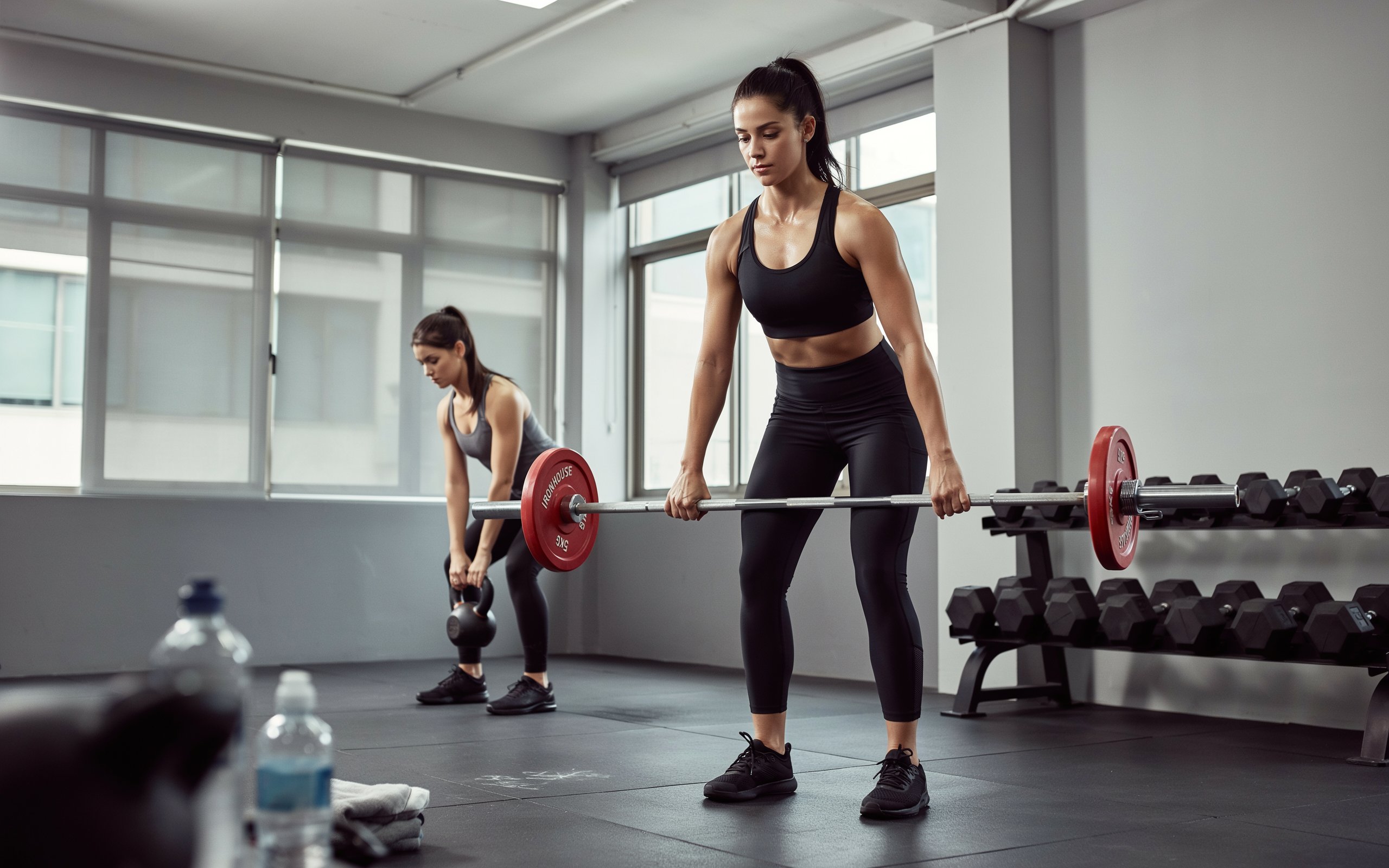
If you’ve spent years doing cardio and wondering why your body isn’t changing the way you want it to, you’re not alone. Plenty of women get stuck in the same cycle — more treadmill time, fewer results. The missing piece, more often than not, is picking up heavier weights.
Strength training isn’t just for bodybuilders or athletes. It’s one of the most effective things a woman can do for her body at any age. It reshapes your physique, builds the kind of lean muscle that keeps your metabolism running high, and strengthens your bones in ways that cardio simply can’t match. And no, you won’t bulk up — women don’t have nearly enough testosterone for that to happen naturally.
What actually changes when you start lifting consistently? Your posture improves. Your clothes fit differently. You feel stronger doing everyday things. The 10 moves below are the ones that produce real, visible results — not just for athletes, but for women who are starting from scratch or looking to get more out of their current routine.
1. Barbell Hip Thrust
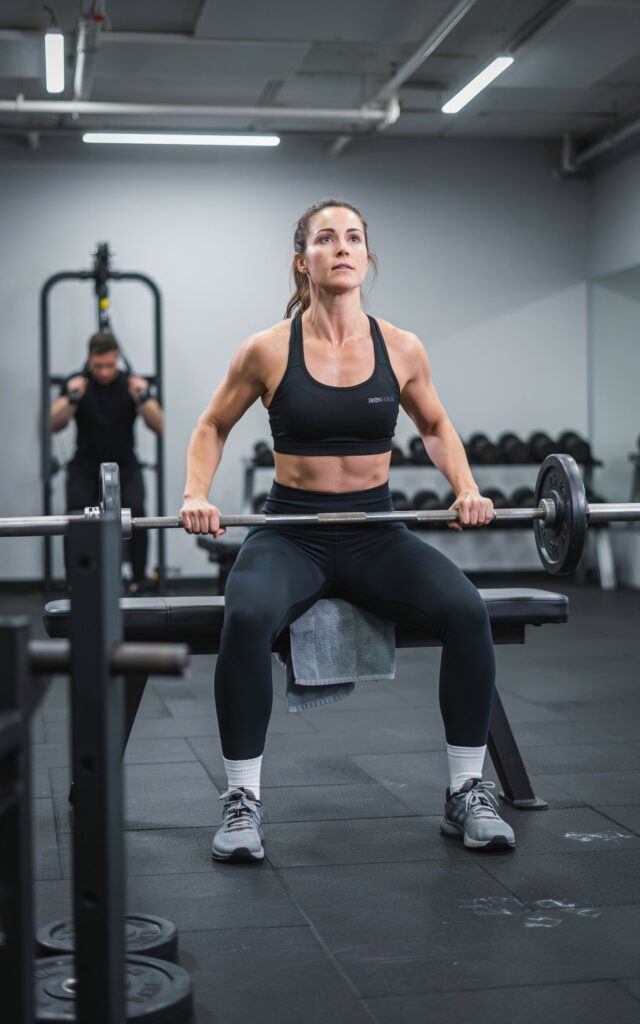
Of all the exercises that target the glutes directly, this one is hard to beat. The barbell hip thrust places the most tension on the gluteal muscles right at the top of the movement — exactly where a squat leaves off.
To do it, sit on the floor with your upper back against a bench, feet flat on the ground, and a barbell across your hips. Drive through your heels to lift your hips until your body forms a straight line from knees to shoulders. Squeeze hard at the top, then lower slowly.
What makes this move so effective is that the glutes are fully contracted under load — something that doesn’t happen to the same degree in most other lower body exercises. For women focused on shaping the backside, this is a non-negotiable.
2. Romanian Deadlift
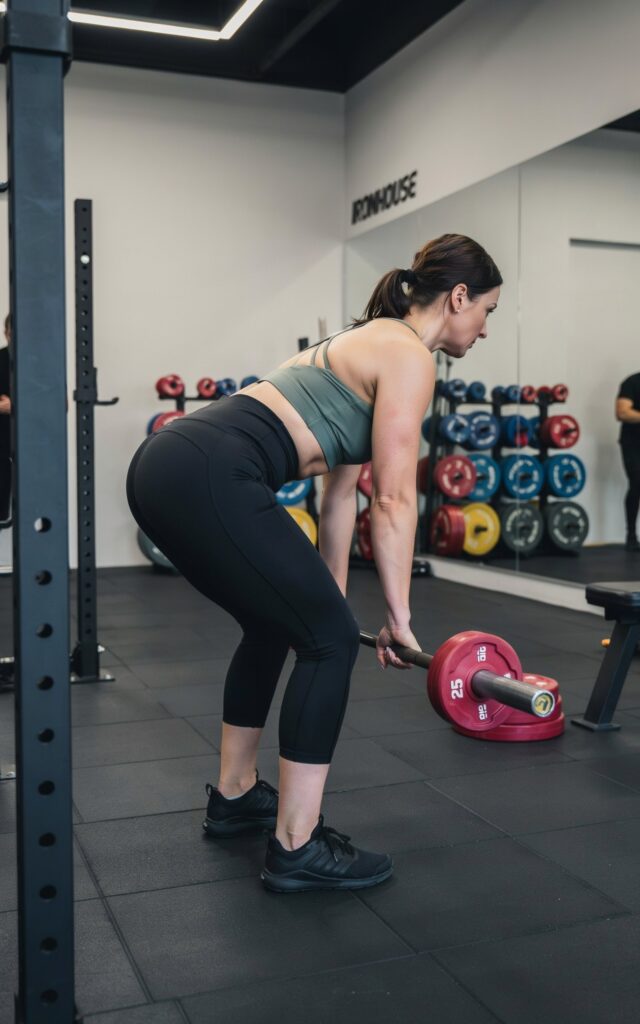
This is the move that does the most for the back of your legs. The Romanian deadlift (RDL) targets the hamstrings and glutes through a long range of motion, and the slow, controlled lowering phase is where most of the work happens.
Stand with a barbell or dumbbells in front of you. Keeping your knees slightly bent and your back flat, hinge at the hips and lower the weight down your legs until you feel a strong pull through your hamstrings. Drive your hips forward to return to standing.
Unlike a conventional deadlift, the RDL keeps constant tension on the posterior chain without the weight touching the floor. It’s also much more forgiving for women newer to lifting, since the movement pattern is easier to learn and the lower back stress is reduced.
3. Bulgarian Split Squat
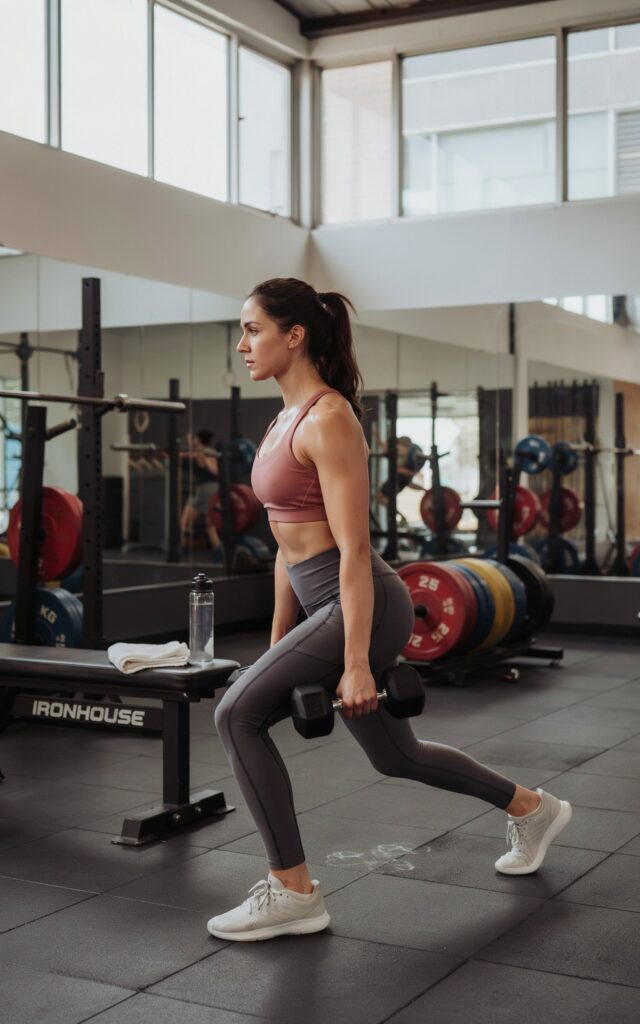
Single-leg work is where most gym-goers fall short — and where serious body composition changes happen. The Bulgarian split squat is a unilateral exercise, meaning each leg works independently, which helps correct strength imbalances that a standard squat won’t catch.
Place one foot on a bench behind you, the other on the floor in front. Hold dumbbells at your sides and lower your back knee toward the ground. Keep your front shin as vertical as possible and your chest tall.
Recent research published in BMC Sports Science, Medicine and Rehabilitation confirmed that Bulgarian split squats produce significant activation across the quadriceps, glutes, and hamstrings — with trunk position playing a big role in which muscles get more emphasis. For women with knee concerns, a slight forward lean reduces anterior knee loading while increasing glute engagement.
4. Sumo Deadlift
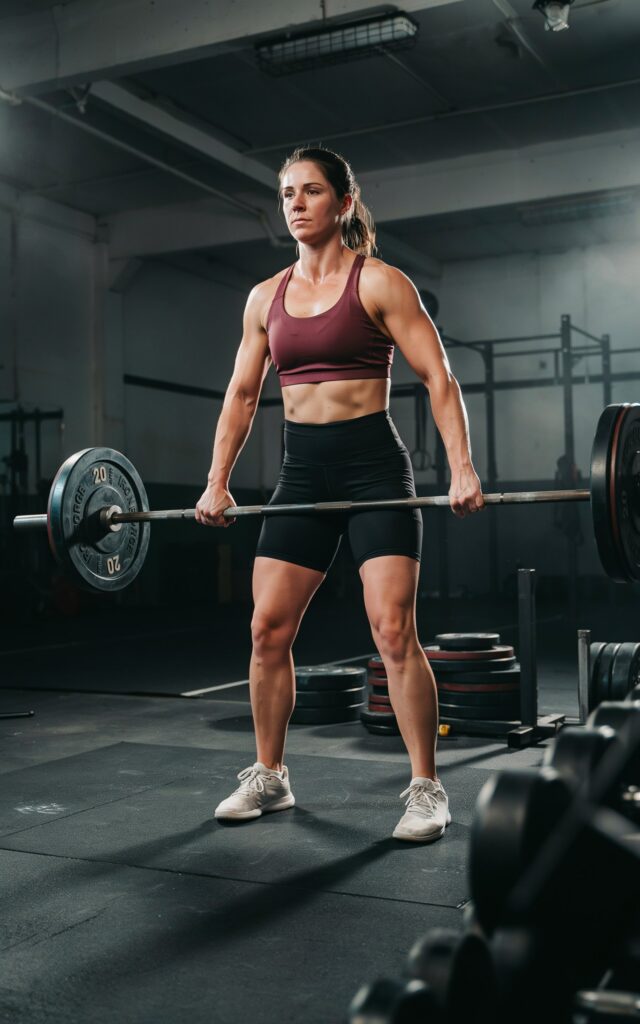
The sumo deadlift uses a wide stance with toes turned out, which shifts the emphasis away from the lower back and toward the inner thighs, glutes, and quads. For women, this often means a more natural foot position and more comfortable mechanics than a conventional deadlift.
Set up with your feet wider than shoulder-width, toes pointed out at roughly 45 degrees. Grip the bar inside your legs, keep your chest up, and pull by pushing the floor away rather than yanking the bar up. Lock out at the top by squeezing your glutes.
This is a great starting point for women who want the benefits of deadlifting but find the conventional version uncomfortable or hard to execute with good form.
5. Goblet Squat
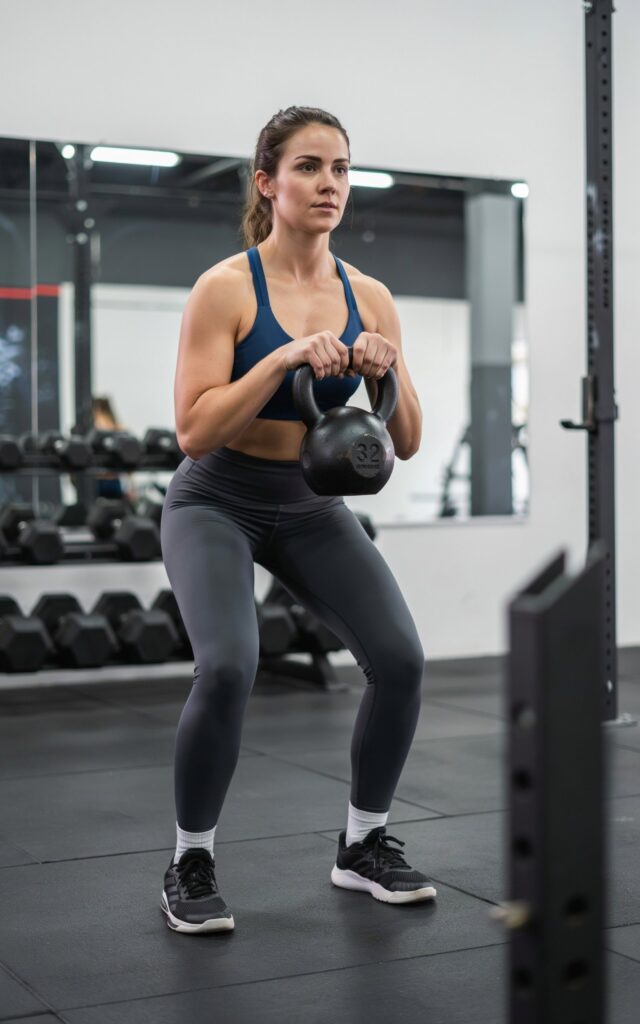
Don’t let the simplicity of this one fool you. The goblet squat — holding a dumbbell or kettlebell at chest height while squatting — is one of the best teaching tools for proper squat mechanics, and it’s also genuinely hard work when loaded appropriately.
The weight in front acts as a counterbalance, making it easier to sit deep into the squat with a tall chest. This is particularly helpful for women who struggle to hit depth in a barbell back squat. The core has to work overtime to keep the weight stable, making it more of a full-body lift than it looks.
As strength improves, you can progress to a barbell back squat — but plenty of advanced women still include goblet squats in their routine because of how well they load the quads and glutes simultaneously.
6. Dumbbell Row (Single-Arm)
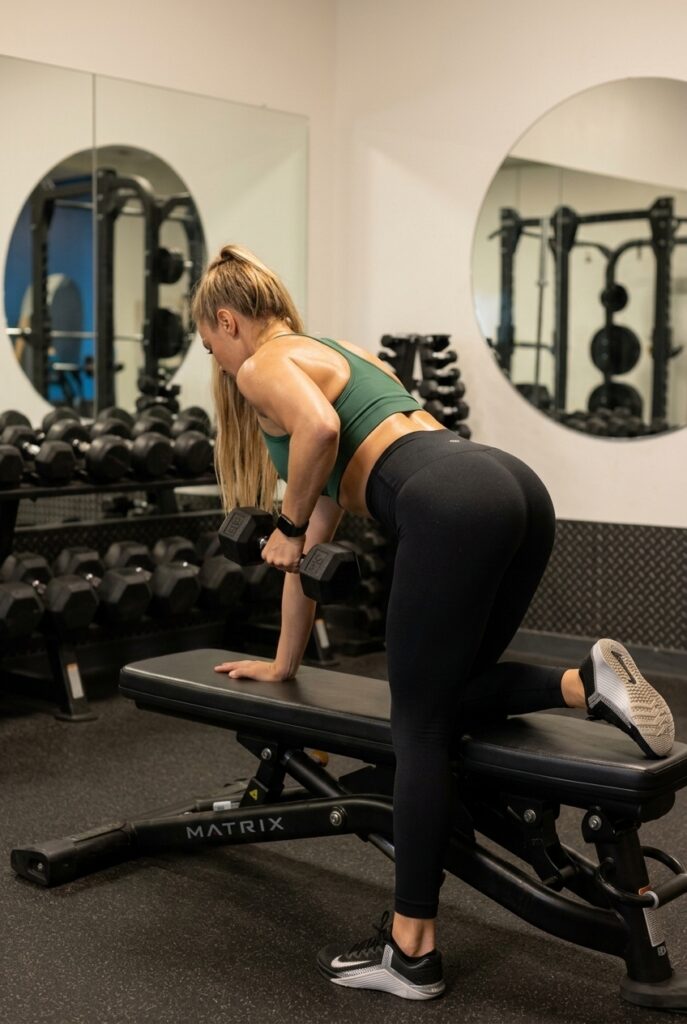
Most women underwork their backs — and it shows in posture. Rounded shoulders, forward head position, and upper back weakness are extremely common, especially among women who spend hours at a desk. The single-arm dumbbell row fixes this directly.
Place one hand and knee on a bench for support. Hold a dumbbell with the other hand, let it hang straight down, and pull it toward your hip while keeping your elbow close to your body. Squeeze your shoulder blade at the top.
A strong upper back creates the appearance of a more defined waist and better posture. It also protects your shoulder joints during other pressing movements. Three sets of 10 to 12 reps per side, two to three times per week, will produce noticeable changes within a few months.
7. Overhead Press
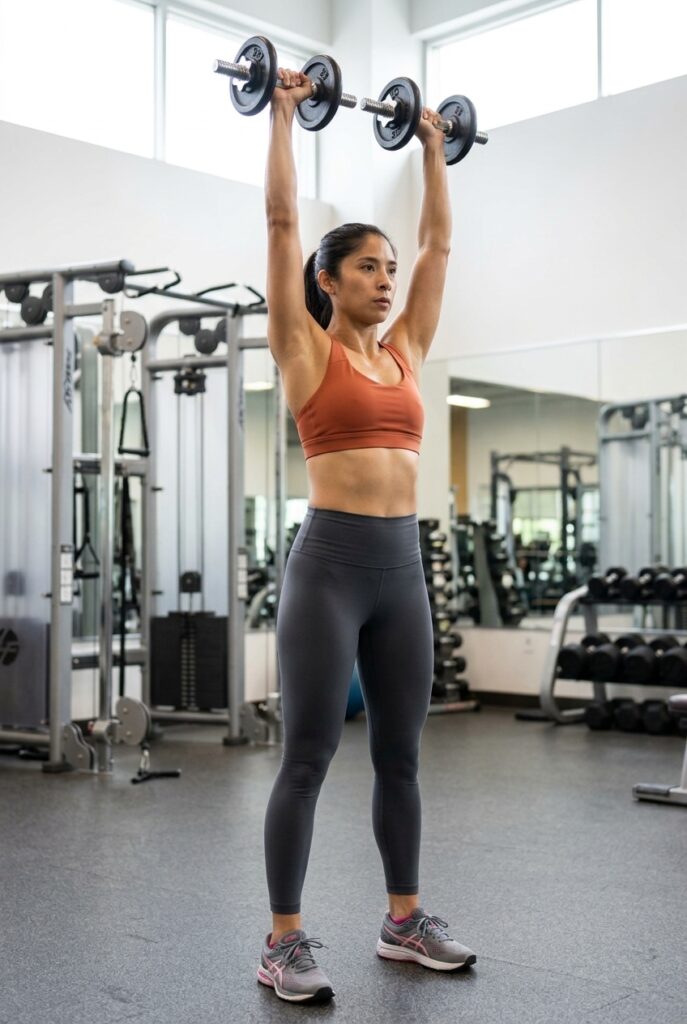
Shoulder definition is one of the things that changes the look of the entire upper body. The overhead press — whether with dumbbells or a barbell — builds the shoulder muscles directly and also requires significant core stability to do correctly.
Stand with dumbbells at shoulder height, palms facing forward. Press straight up until your arms are fully extended, then lower with control. Avoid leaning back or arching your lower spine excessively.
Many women shy away from pressing movements, but the overhead press is one of the most functional things you can train. It carries over to everything from putting luggage in an overhead bin to getting things off high shelves — and it creates that clean, defined shoulder line that no amount of lateral raises alone will build.
8. Cable Pull-Through
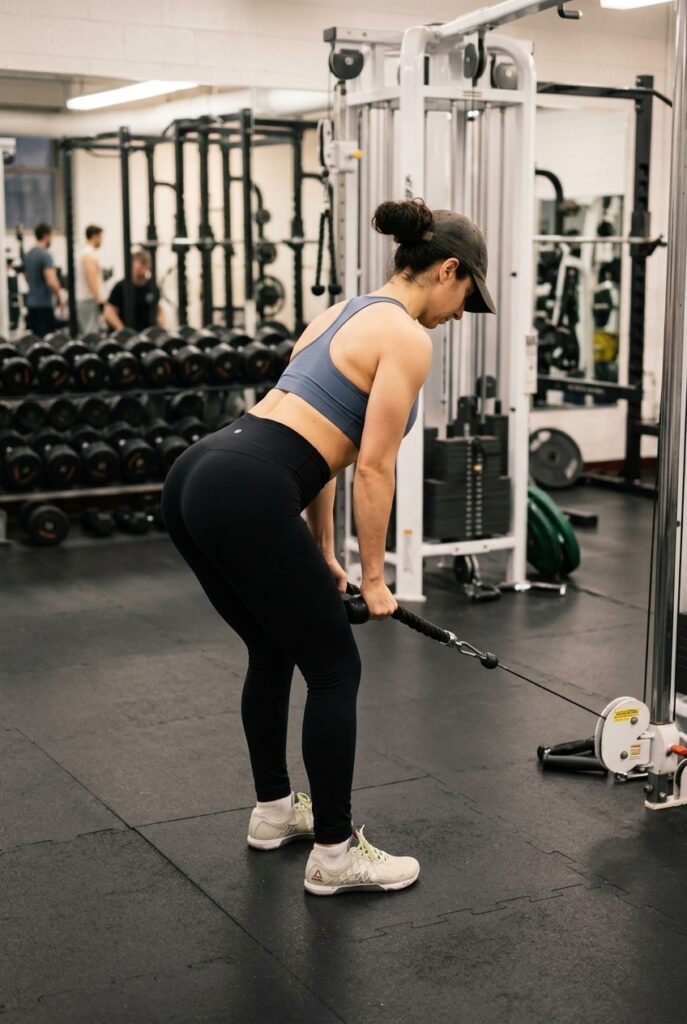
The cable pull-through is a hip hinge exercise that most women haven’t tried — which is a shame, because it’s one of the better tools for building the glute-hamstring connection without loading the spine heavily.
Attach a rope to the low pulley of a cable machine. Stand facing away from the machine, holding the rope between your legs. Hinge at the hips, letting the rope pull your hands back through your legs, then drive your hips forward to return to standing.
The constant cable tension means your muscles are working through the full movement — not just in the stretched position like with free weights. This makes it particularly good as a finisher after heavier compound work, or as a way to learn the hip hinge pattern before progressing to deadlifts.
9. Dumbbell Lateral Raise
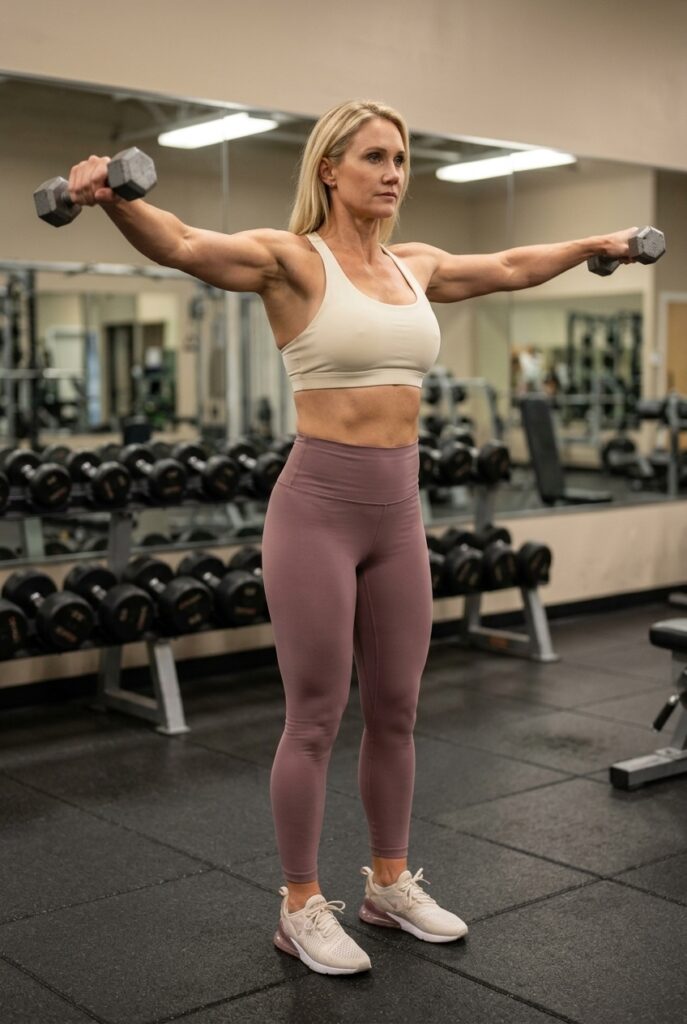
Building width through the shoulders creates the optical illusion of a narrower waist — one of the most sought-after physique changes women talk about. The lateral raise targets the middle portion of the deltoid directly, and no other exercise does it quite as well.
Hold light dumbbells at your sides. Keeping a slight bend in your elbows, raise both arms out to the side until they’re parallel to the floor. Lower slowly — the lowering phase matters as much as the lifting phase.
The key word here is light. Most women (and men) go too heavy and end up using momentum and their traps instead of their delts. Start lighter than you think you need to and focus on keeping the tension in the right place.
10. Dumbbell Overhead Triceps Extension
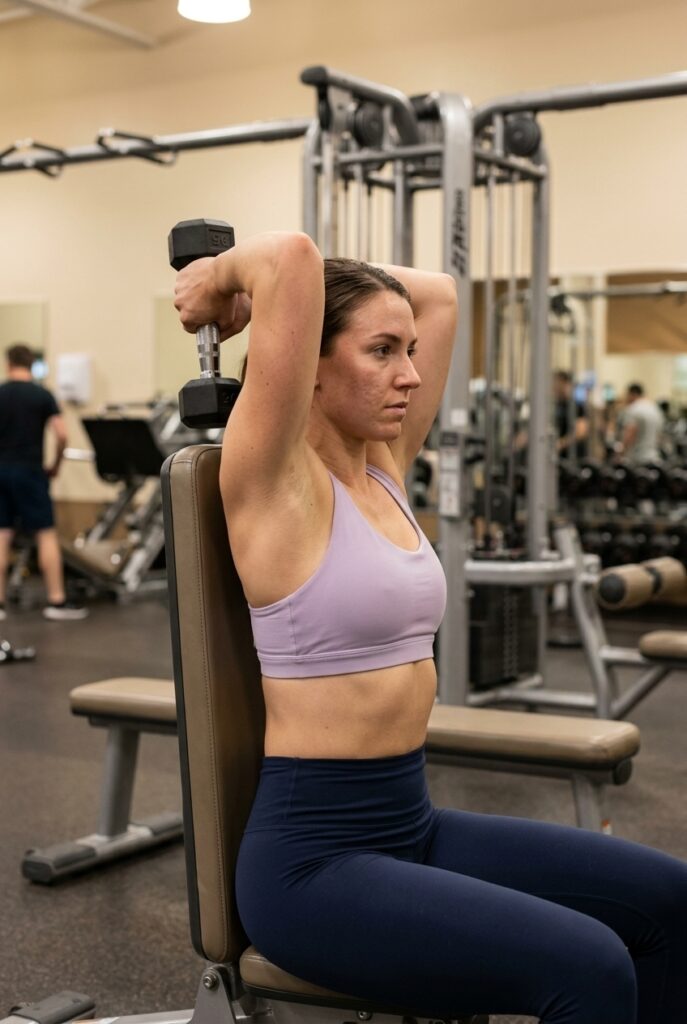
The back of the arm — the triceps — is one of the areas women most commonly want to change. And while you can’t spot-reduce fat, you absolutely can build muscle in a specific area, and the overhead triceps extension is the most effective way to do that for this muscle group.
Sit on a bench with back support, holding one dumbbell with both hands above your head. Lower it behind your head by bending your elbows, keeping them close together and pointing forward. Press back up to the starting position.
The overhead position stretches the triceps to their longest point, which research consistently shows leads to more muscle growth than movements that don’t use the full range. Three sets of 12 to 15 reps, two to three times a week, and you’ll notice the change within six to eight weeks.
Your Body Changes When You Stop Playing It Safe
The ten moves above work because they load the muscles through full ranges of motion, require real effort, and can be progressively made harder over time. That last part — progressive overload — is what actually drives physical change. Adding small amounts of weight each week or each month is how the body keeps adapting.
None of this requires a perfect gym setup or hours of free time. Two to three sessions per week, built around five or six of these movements, is enough to produce results that cardio alone never will. Start with weights that feel challenging by the last two reps, rest well, eat enough protein, and give it at least eight weeks before judging progress. Your body will surprise you.
Frequently Asked Questions
Q: Will lifting heavy weights make me look bulky?
A: No. Women don’t produce enough testosterone to gain muscle at the rate men do. What lifting does is build lean muscle, which tightens and firms the body — the opposite of the bulky look most women are trying to avoid.
Q: How many times per week should I lift?
A: Two to three sessions per week is plenty to see significant changes, especially for women new to strength training. More is not always better — muscles grow during rest, not during the workout itself.
Q: Do I need a gym to do these exercises?
A: Most of these can be done with dumbbells at home, though some — like the barbell hip thrust and cable pull-through — work best in a gym. A pair of adjustable dumbbells covers the majority of the list.
Q: How heavy should I start?
A: Light enough that you can complete the full movement with good form, but heavy enough that the last two reps of each set feel genuinely hard. If you could easily do 20 reps, the weight is too light.
Q: Should I do cardio along with these lifts?
A: Cardio and strength training complement each other well, but if you have limited time, strength work tends to produce more lasting body composition changes. Two to three short cardio sessions per week alongside your lifting routine is a solid balance.
Q: How long before I see results?
A: Most women notice changes in strength within two to three weeks. Visible body composition changes typically take six to eight weeks of consistent training.
Q: Which of these moves is best for the glutes specifically?
A: The barbell hip thrust and Romanian deadlift are the top two for glute development. The Bulgarian split squat and sumo deadlift are strong additions for well-rounded lower body work.
Q: Do I need to eat differently once I start lifting?
A: Protein becomes more important. Aiming for roughly 0.7 to 1 gram of protein per pound of body weight supports muscle recovery and growth. You don’t need supplements — chicken, eggs, fish, Greek yogurt, and legumes all count.
Q: Is strength training safe during menopause?
A: Yes — and it’s actually one of the most recommended forms of exercise during and after menopause. It helps preserve bone density, supports hormonal balance, and maintains lean muscle mass, all of which tend to decline with age.

