

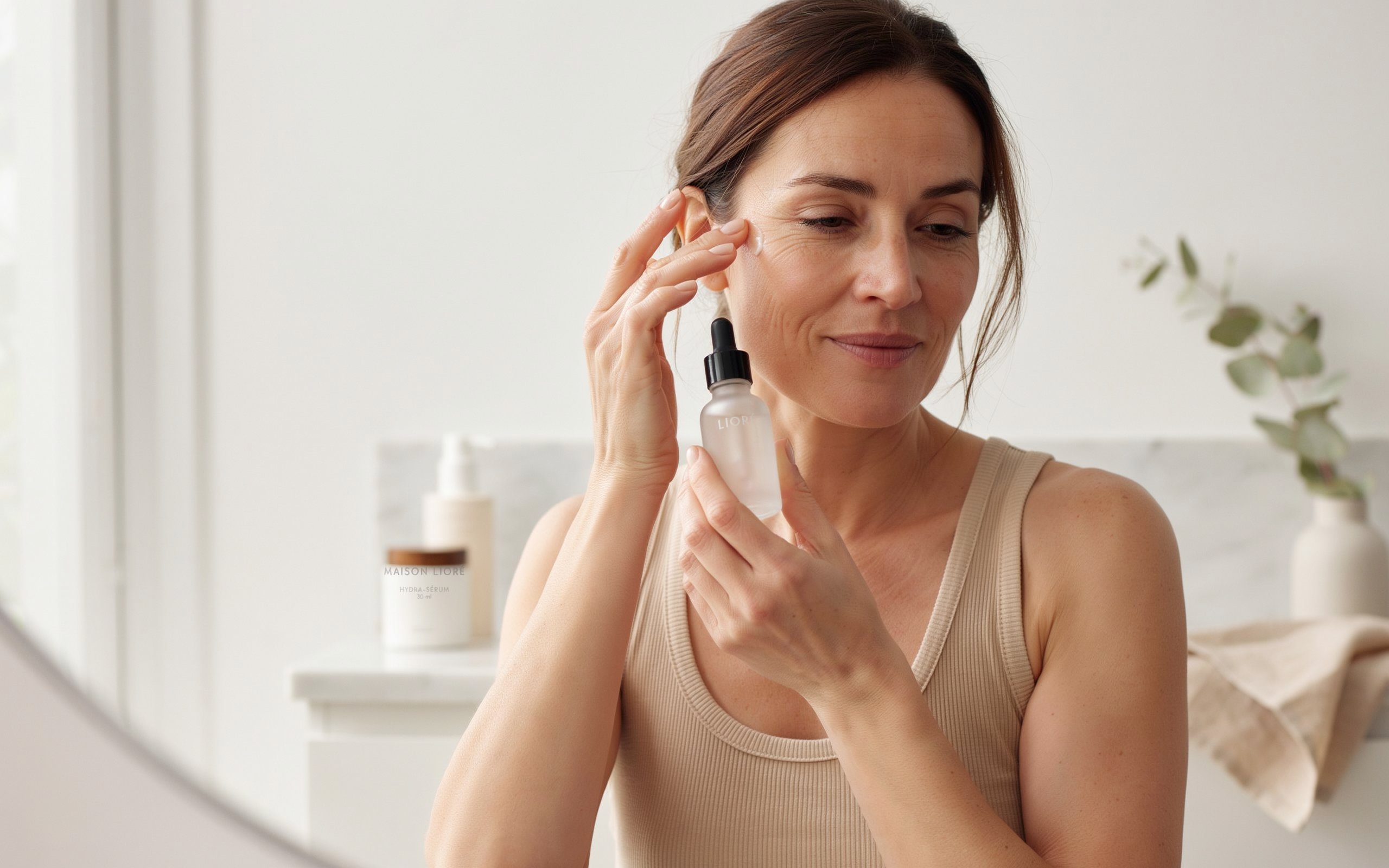
Your 40s mark a turning point — not just in life, but in the way your skin behaves. The moisturizer you swore by in your 30s starts feeling inadequate. Fine lines deepen faster. Your skin looks dull even when you’ve had a decent night of sleep. None of this is in your head.
What’s actually happening is that collagen production begins to slow, cell turnover becomes less efficient, and your skin barrier loses some of its strength. Estrogen levels start to fluctuate, which directly affects how much moisture the skin can hold and how firm it stays. According to the American Academy of Dermatology, collagen production can drop as much as 30% in the first five years of menopause. These changes show up on the surface, and they call for a different approach.
The good news is that you don’t need a complicated 15-step routine or a bathroom counter full of expensive products. You need the right steps, the right ingredients, and some consistency. The following 10 steps cover everything from morning protection to nighttime repair — and they’re designed to work with your skin, not against it.
- 1. Switch to a Gentle, Cream-Based Cleanser
- 2. Use a Hydrating Toner or Essence
- 3. Apply a Vitamin C Serum Every Morning
- 4. Add a Peptide or Hyaluronic Acid Serum
- 5. Treat the Eye Area with a Targeted Eye Cream
- 6. Moisturize with Ceramides and Lipids
- 7. Never Skip SPF 30 or Higher
- 8. Bring Retinol Into Your Nighttime Routine
- 9. Exfoliate — But Only Twice a Week
- 10. Seal in Moisture at Night with a Richer Cream or Face Oil
- The Bigger Picture Matters Too
- Your Skin Knows the Difference
- Frequently Asked Questions
1. Switch to a Gentle, Cream-Based Cleanser

The foamy, gel-based cleansers that worked in your 20s and 30s are often too stripping at this stage. When skin already produces less natural oil, a harsh cleanser worsens dryness, makes fine lines look more pronounced, and weakens the skin barrier.
Look for cream or milk cleansers that are fragrance-free and non-foaming. These remove makeup, sunscreen, and daily buildup without pulling out the moisture your skin is already struggling to hold. If that tight, squeaky feeling shows up after washing your face, your cleanser is working against you.
2. Use a Hydrating Toner or Essence

Most women skip this step, but a hydrating toner or essence placed right after cleansing gives the skin an extra layer of moisture before anything else is applied. At this age, it makes a real difference.
Go for formulas with hyaluronic acid or glycerin — both are humectants that pull water into the skin. Skip the old-school alcohol-heavy toners. Those belong in the past.
3. Apply a Vitamin C Serum Every Morning
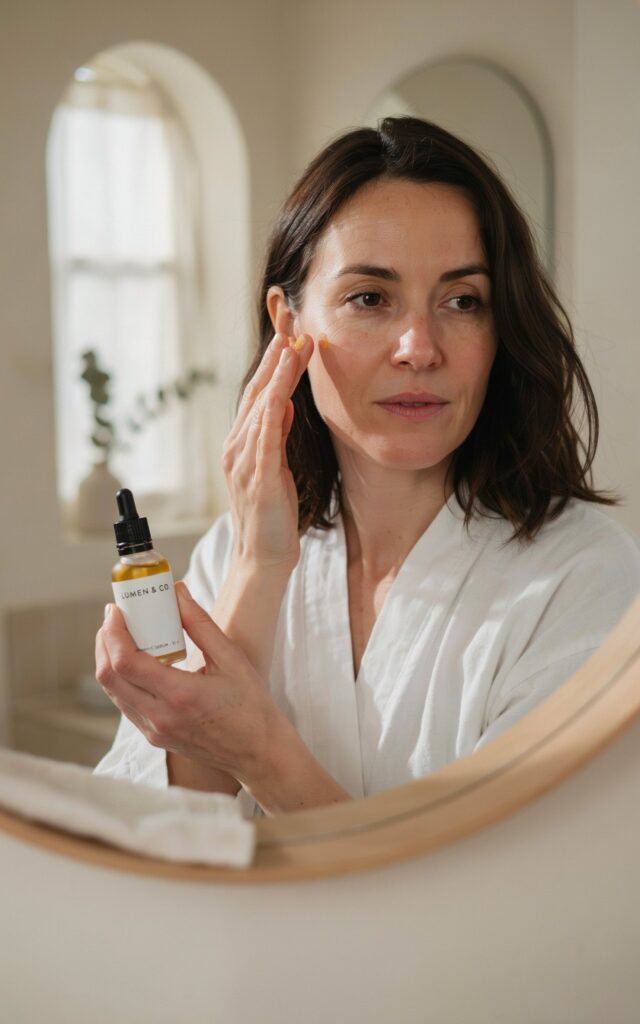
Your skin produces less sebum after 40, which makes it more vulnerable to environmental damage like pollution and UV exposure. A vitamin C serum in the morning acts as a layer of antioxidant protection, helping neutralize free radicals before they can break down collagen.
Beyond protection, vitamin C also helps fade dark spots and brings back some of that brightness that tends to disappear with age. Apply it right after your toner on clean skin, and give it a minute to absorb before moving on. Look for a stable formula — ascorbic acid (L-AA) at around 10–15% concentration is what most dermatologists point to as the most effective.
4. Add a Peptide or Hyaluronic Acid Serum
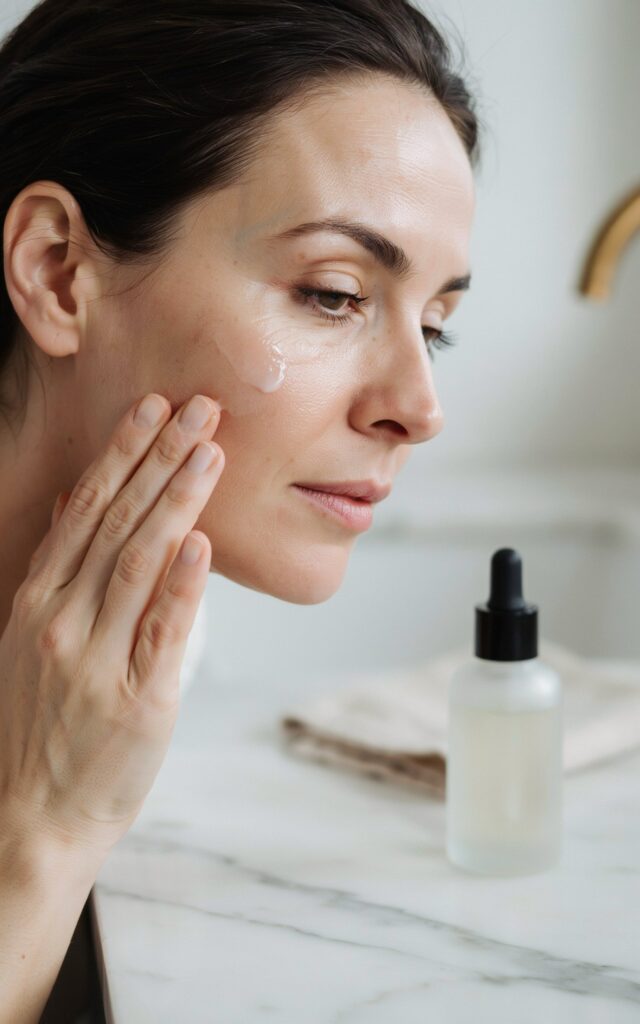
One serum is often enough for a morning routine, but many women find it helpful to layer a peptide serum or a separate hyaluronic acid formula at night — or in addition to vitamin C if their skin is particularly dry.
Peptides signal the skin to produce more collagen. Hyaluronic acid holds up to 1,000 times its weight in water and plumps the skin from the inside out. Neither ingredient irritates, which makes them safe to use daily regardless of skin type.
5. Treat the Eye Area with a Targeted Eye Cream

The skin around the eyes is thinner than anywhere else on the face, and it loses moisture and elasticity faster. Dark circles, puffiness, and fine lines around the eyes are often the first signs of aging women notice in their 40s.
An eye cream with peptides, caffeine, or retinol (formulated specifically for the eye area) makes a visible difference over time. Apply with your ring finger — it naturally applies the least pressure — using gentle tapping motions.
6. Moisturize with Ceramides and Lipids
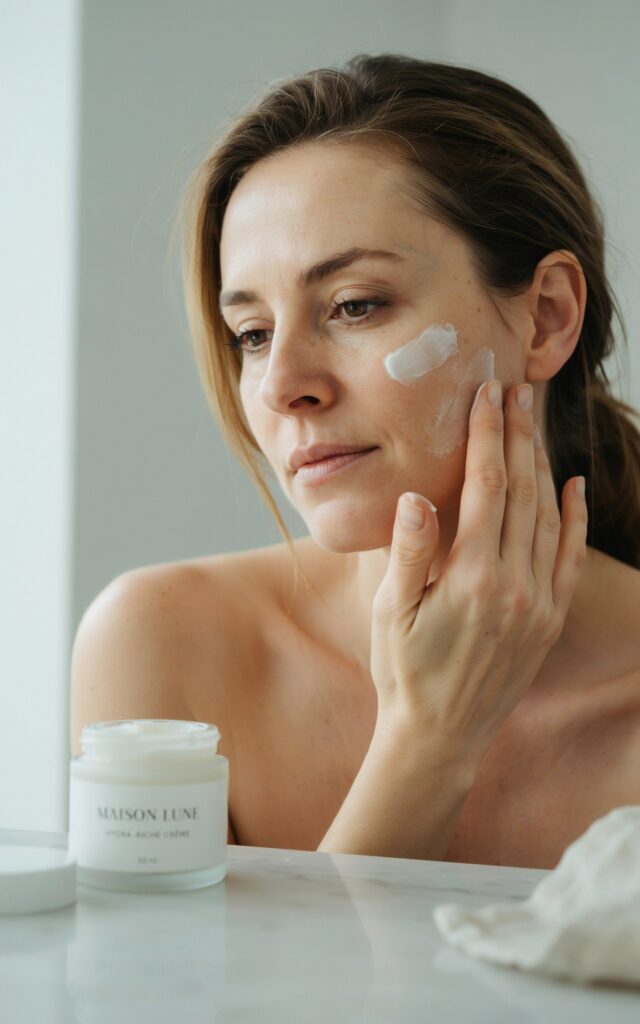
By your 40s, the skin barrier is not as resilient as it used to be. A moisturizer packed with ceramides, squalane, or shea butter does more than hydrate — it repairs and reinforces that barrier, which helps your skin retain moisture throughout the day.
Cream-based formulas generally work better than gels at this stage. Look for labels that list ceramides, niacinamide, or fatty acids among the top ingredients. Think of your moisturizer as the protective seal over everything you’ve applied — without it, your serums and treatments evaporate faster than they can do their job.
7. Never Skip SPF 30 or Higher
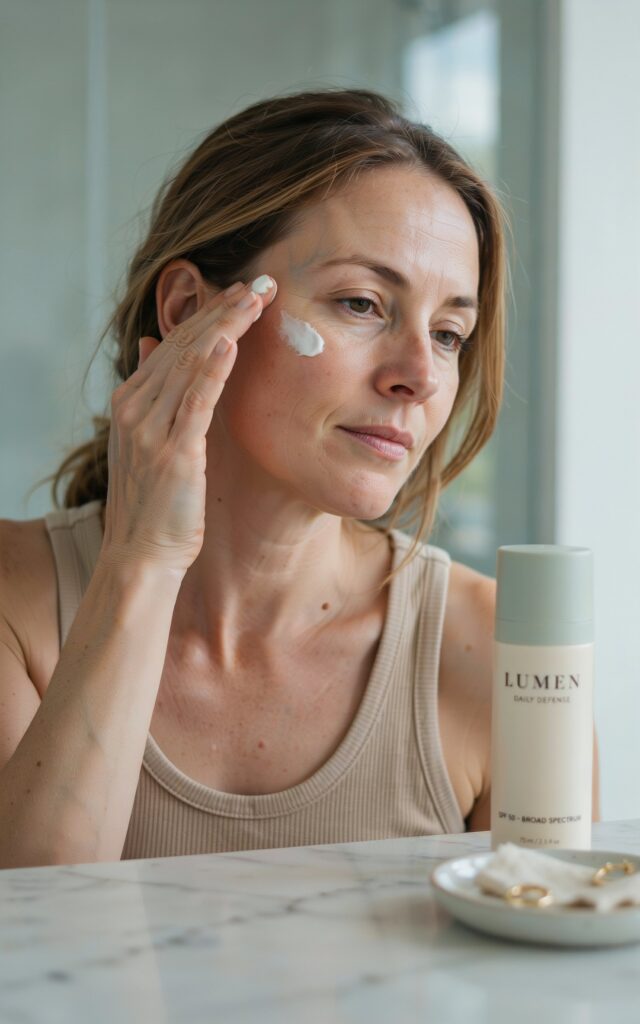
If there’s one step that matters more than all the others, it’s this one. Daily sunscreen is the single most effective anti-aging tool available, and it doesn’t matter how much you spend on serums — UV damage will undo that work if you’re not protected.
SPF prevents fine lines from deepening, stops dark spots from getting worse, and protects skin that is naturally thinning with age. Use SPF 30 minimum every morning, rain or shine, whether you’re going outside or spending the day at your desk near a window. Mineral formulas with zinc oxide tend to be gentler for mature skin.
8. Bring Retinol Into Your Nighttime Routine

Retinol is one of the most well-researched ingredients in skincare, and your 40s are prime time to make it a regular part of your evening routine. It accelerates cell turnover, smooths fine lines, and supports collagen production — all things that slow down naturally with age.
Start slow. Two or three nights a week with a low concentration (0.25–0.5%) is plenty at first. Some redness and flakiness in the first few weeks is normal as skin adjusts. Always apply retinol to clean, dry skin, and follow with your moisturizer. Never use it the same night as an exfoliating acid. And always wear SPF the next morning — retinol increases your skin’s sensitivity to sunlight.
9. Exfoliate — But Only Twice a Week
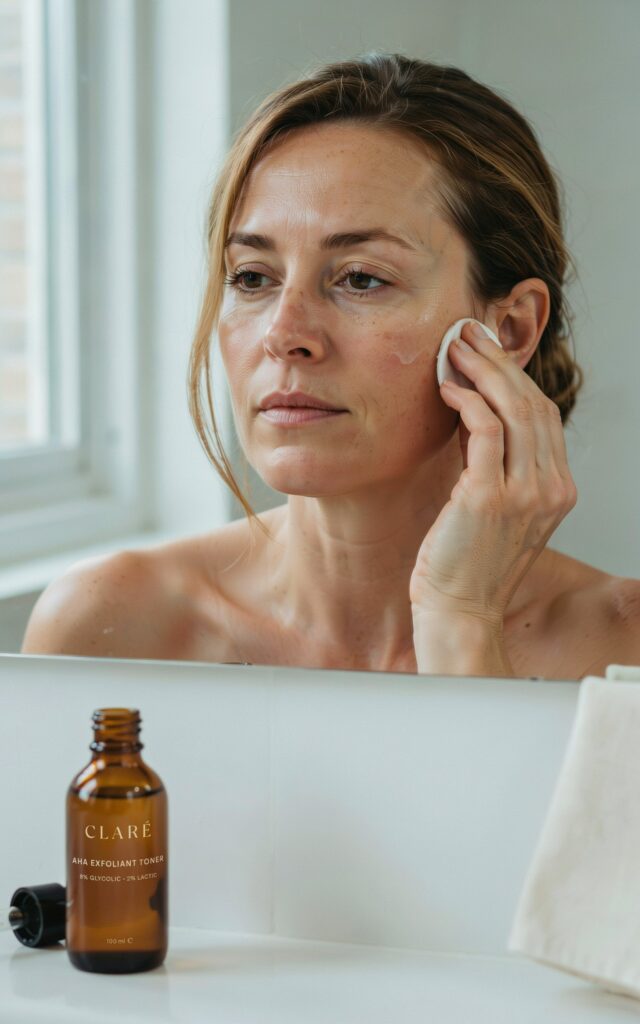
Cell turnover slows in your 40s, which means dead skin cells stay on the surface longer. The result is that texture, dullness, and congestion that no amount of moisturizer seems to clear up. Regular exfoliation solves this — but the key word is regular, not aggressive.
Two times a week is enough. Alpha hydroxy acids (AHAs) like glycolic or lactic acid are good options because they work on the surface without requiring any scrubbing. Lactic acid is particularly well-suited for dry or sensitive skin types because it also adds some hydration. Avoid physical scrubs with rough particles, which can cause microtears in skin that’s already more delicate.
10. Seal in Moisture at Night with a Richer Cream or Face Oil
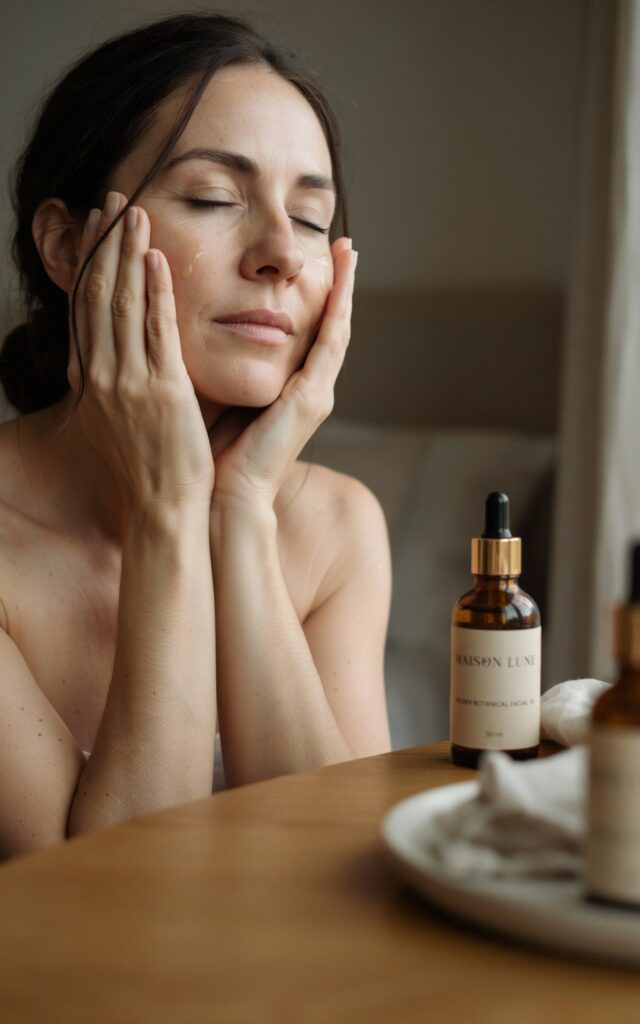
Your skin does its deepest repair work while you sleep, and your nighttime products need to support that process. A richer night cream or a few drops of a face oil applied after your serum and moisturizer creates what’s sometimes called an occlusive layer — it slows down water loss and lets your active ingredients work without evaporating overnight.
Look for night creams with peptides, ceramides, or niacinamide. If you prefer a face oil, options like rosehip, squalane, or sea buckthorn are rich in fatty acids and absorb well without leaving a greasy residue. Apply this as the last step in your evening routine, and let it work while you sleep.
The Bigger Picture Matters Too
No skincare routine, however well put together, can do all the heavy lifting on its own. Sleep quality, hydration, diet, and stress all show up on your skin — and in your 40s, more visibly than before. Chronic stress accelerates visible aging. Poor sleep slows overnight cell repair. Even the water you drink affects how well your moisturizer performs.
Think of your routine as one part of a larger system. The products work harder when you’re also getting enough sleep, eating foods rich in antioxidants and healthy fats, and drinking enough water throughout the day.
Your Skin Knows the Difference
The shift that happens in your 40s isn’t a problem to fix — it’s a signal to pay closer attention to what your skin actually needs. A cream cleanser instead of a foaming one. A richer moisturizer. A retinol a few nights a week. SPF every single morning. These aren’t complicated changes, but they add up to real results over time.
Consistency is what separates a routine that works from one that doesn’t. You don’t need to overhaul everything at once. Start with the steps that feel most accessible — SPF and moisturizer, if nothing else — and build from there. Your skin responds to care, and the earlier you give it what it needs in this decade, the better it holds up in the ones that follow.
Frequently Asked Questions
Q: Do I really need to change my entire skincare routine after 40?
A: Not necessarily an overhaul, but some updates are worth making. The biggest ones are switching to a gentle, non-stripping cleanser, adding a retinol at night, upgrading your moisturizer to something richer with ceramides, and making SPF a daily non-negotiable.
Q: At what age should I start using retinol?
A: Most dermatologists suggest introducing retinol in your late 20s or 30s as a preventive measure, but starting in your 40s still makes a meaningful difference. Begin with a low concentration two to three nights a week and increase gradually as your skin adjusts.
Q: Is vitamin C really necessary, or is it just a trend?
A: Vitamin C has decades of research behind it. It protects against environmental damage, helps fade discoloration, and supports collagen production. It’s one of the more well-supported ingredients for daytime use, and particularly useful after 40 when the skin is more vulnerable to oxidative stress.
Q: Can I use both retinol and an exfoliating acid in the same routine?
A: Not on the same night. Using both together increases the risk of irritation, redness, and a disrupted skin barrier. Alternate them — retinol a few nights a week and your AHA on different nights.
Q: What’s the best type of sunscreen for mature skin?
A: Mineral sunscreens with zinc oxide tend to be gentler and less likely to cause irritation on more sensitive, mature skin. Look for SPF 30 or higher, and choose a formula that layers comfortably under makeup if you wear it daily.
Q: My skin used to be oily, but now it feels dry. Is that normal?
A: Yes, this is very common. Natural oil production decreases after 40, and hormonal shifts during perimenopause can accelerate this change. Products that worked when your skin was oily may now feel too stripping or drying. Switching to a cream cleanser and a richer moisturizer usually helps.
Q: How long before I see results from a new routine?
A: Most dermatologists say to give any new routine at least six to eight weeks before judging results. Ingredients like retinol and vitamin C take time to produce visible changes. The exception is hydration — skin usually looks and feels noticeably better within a few days of consistent moisturizing.
Q: Is an eye cream actually worth it, or can I just use my regular moisturizer?
A: Regular moisturizer can be too heavy for the eye area and isn’t formulated for the specific concerns there — puffiness, dark circles, and fine lines. A dedicated eye cream with targeted ingredients like caffeine, peptides, or a gentle retinol formula tends to perform better for that specific area.
Q: Does diet really affect how my skin ages?
A: It does, yes. Foods high in antioxidants — like berries, leafy greens, and healthy fats from avocado and salmon — support skin health from the inside. Sugar and processed foods, on the other hand, can accelerate a process called glycation, which breaks down collagen. What you eat shows up on your face over time.

