

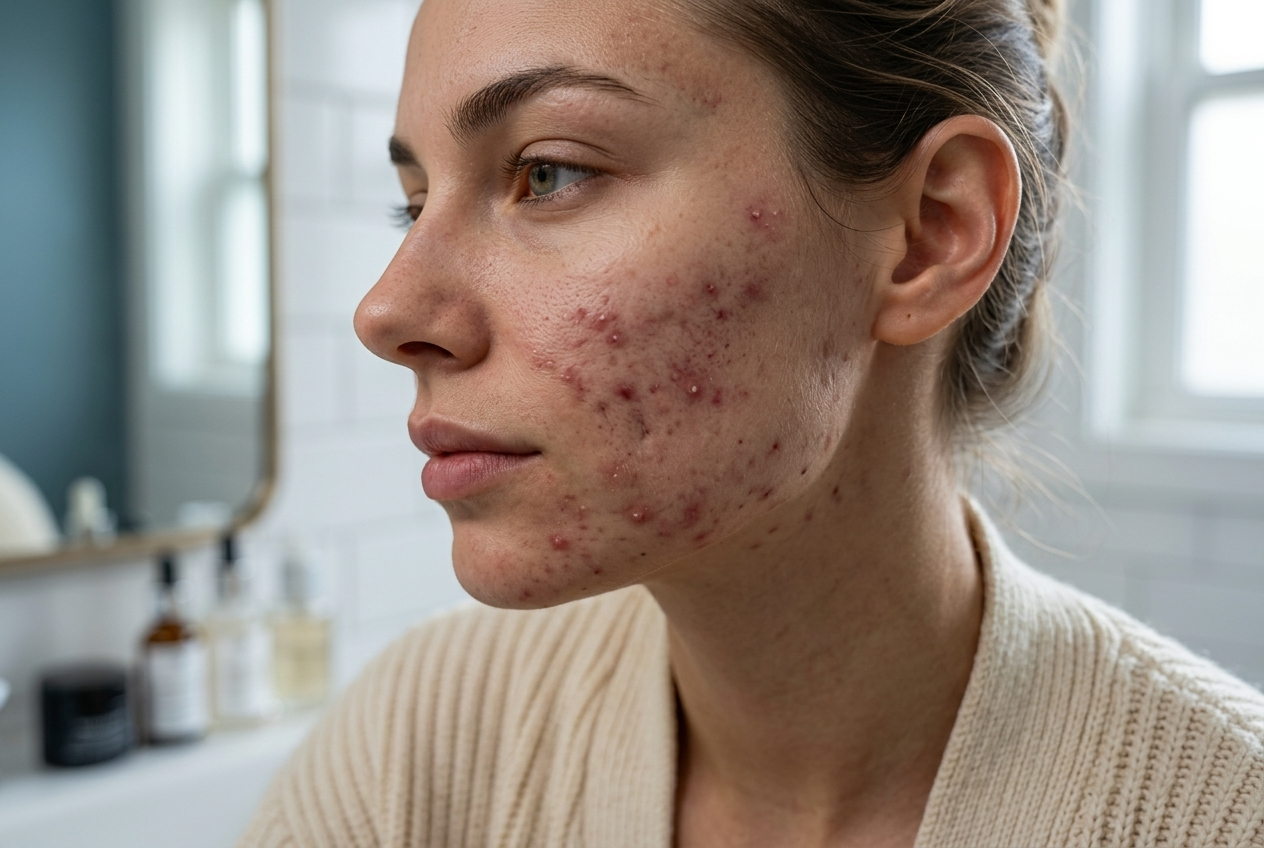
Dealing with acne as an adult woman is a different kind of frustration. It’s not the same as teenage breakouts that come and go with a basic cleanser. Adult acne — especially hormonal acne — is stubborn, unpredictable, and often made worse by the very products marketed to fix it.
What most women don’t realize is that some of the most effective changes have nothing to do with buying something new. They’re about how you cleanse, what you layer, when you exfoliate, and whether you’re accidentally sabotaging your skin barrier every single morning. Your routine may be working against you, and you might not even know it.
Below are 10 skin care moves that are genuinely worth trying — some are ingredient-based, some are habit shifts, and a few might feel counterintuitive at first. Start with what resonates most.
- 1. Double Cleanse at Night (Even If You Don't Wear Makeup)
- 2. Add Niacinamide to Your Routine
- 3. Stop Treating Your Skin Barrier Like the Enemy
- 4. Try a Low-Percentage Retinoid (and Actually Stick With It)
- 5. Switch to Non-Comedogenic Sunscreen (and Actually Wear It Daily)
- 6. Reassess Everything Touching Your Face
- 7. Look Into Azelaic Acid for Hormonal Breakouts
- 8. Use Salicylic Acid Strategically — Not All Over Your Face
- 9. Consider At-Home Red and Blue LED Therapy
- 10. Map Your Breakouts and Track Hormonal Patterns
- Clear Skin Takes Consistency, Not Complexity
- Frequently Asked Questions
1. Double Cleanse at Night (Even If You Don’t Wear Makeup)
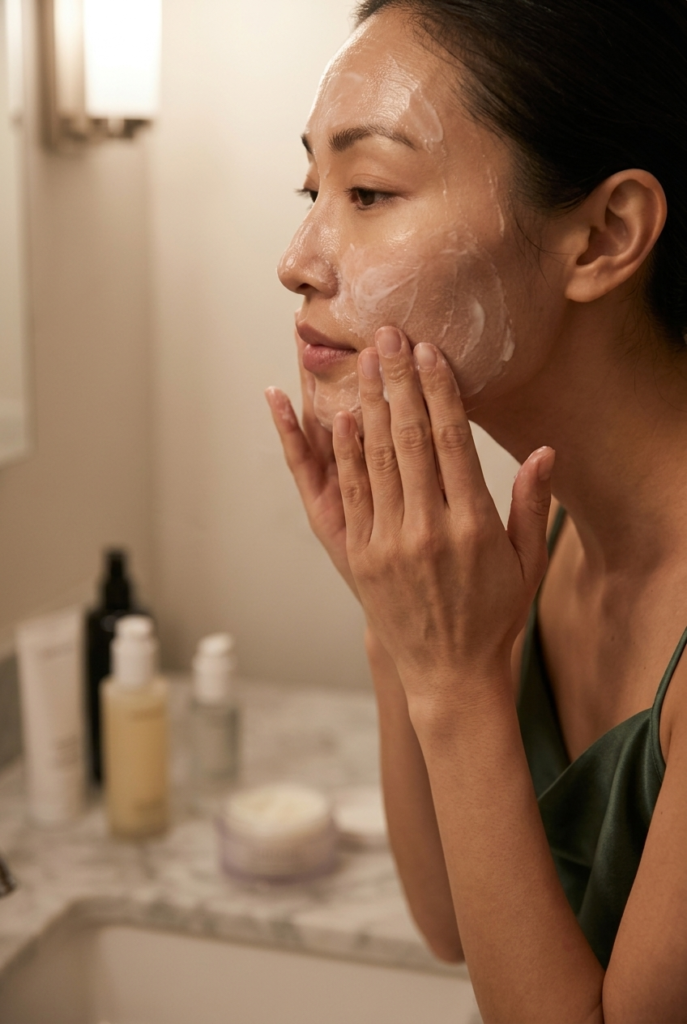
Most women skip this because they assume it’s only necessary on heavy makeup days. But throughout the day, your skin collects sunscreen residue, pollution particles, sebum, and product buildup — and a single water-based cleanser won’t fully cut through all of that.
The process is straightforward: start with a cleansing oil or balm to dissolve oil-based debris, then follow with your regular gel or foaming cleanser to clean the skin itself. This two-step method removes the stuff that sits on top of the skin while giving your actual cleanser a clean surface to work on. Women with oily or acne-prone skin in particular tend to see fewer clogged pores when they adopt this at night.
2. Add Niacinamide to Your Routine
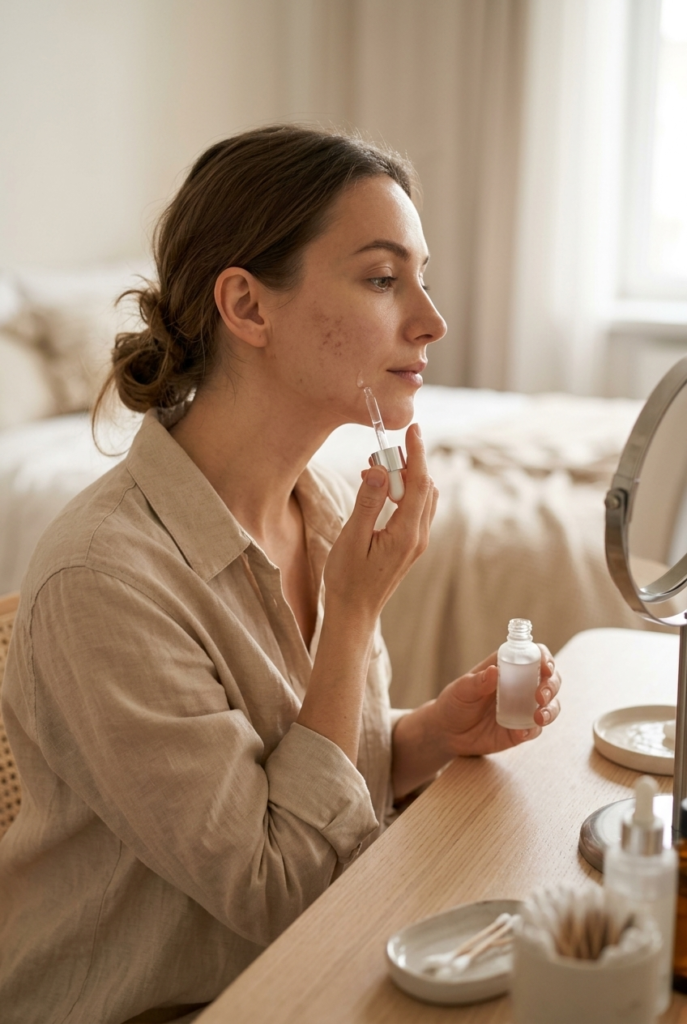
If there is one ingredient worth making permanent shelf space for, it’s niacinamide — a form of vitamin B3 that does a surprisingly long list of things simultaneously. It calms inflammation, regulates oil production, strengthens the skin’s protective barrier, and fades the dark marks left behind after a breakout clears.
Clinical research consistently shows that concentrations between 4% and 5% are effective for most women without causing irritation. It pairs well with nearly everything in a routine — retinol, salicylic acid, moisturizers — and won’t sensitize your skin to the sun the way some active ingredients do. Apply it after cleansing and before moisturizer, morning or night.
3. Stop Treating Your Skin Barrier Like the Enemy
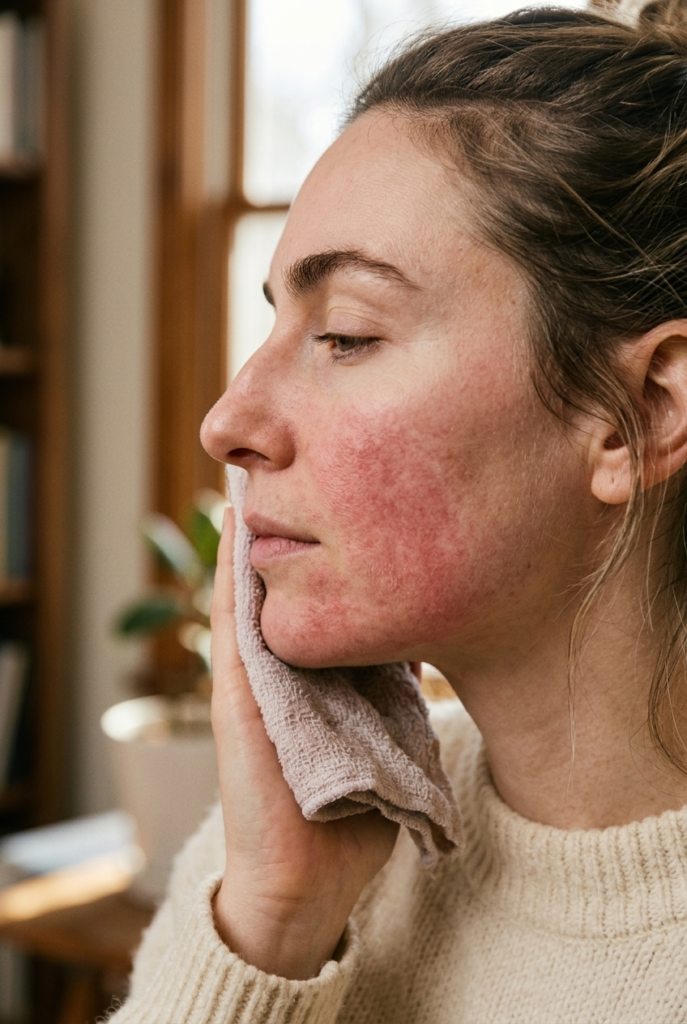
One of the most common patterns in acne-prone women is over-cleansing and over-exfoliating in an effort to “deep clean” the skin. The result is a compromised skin barrier — and when that protective layer breaks down, the skin becomes inflamed, reactive, and ironically, more prone to breakouts.
If your skin feels tight after washing, looks red or irritated after toning, or gets worse the more products you pile on, your barrier is probably asking for a break. Swap out harsh formulas for gentle, fragrance-free alternatives. Add ceramides back in through a simple moisturizer. Give your skin a few weeks to calm down before reintroducing stronger actives. The fix here isn’t a new product — it’s less.
4. Try a Low-Percentage Retinoid (and Actually Stick With It)
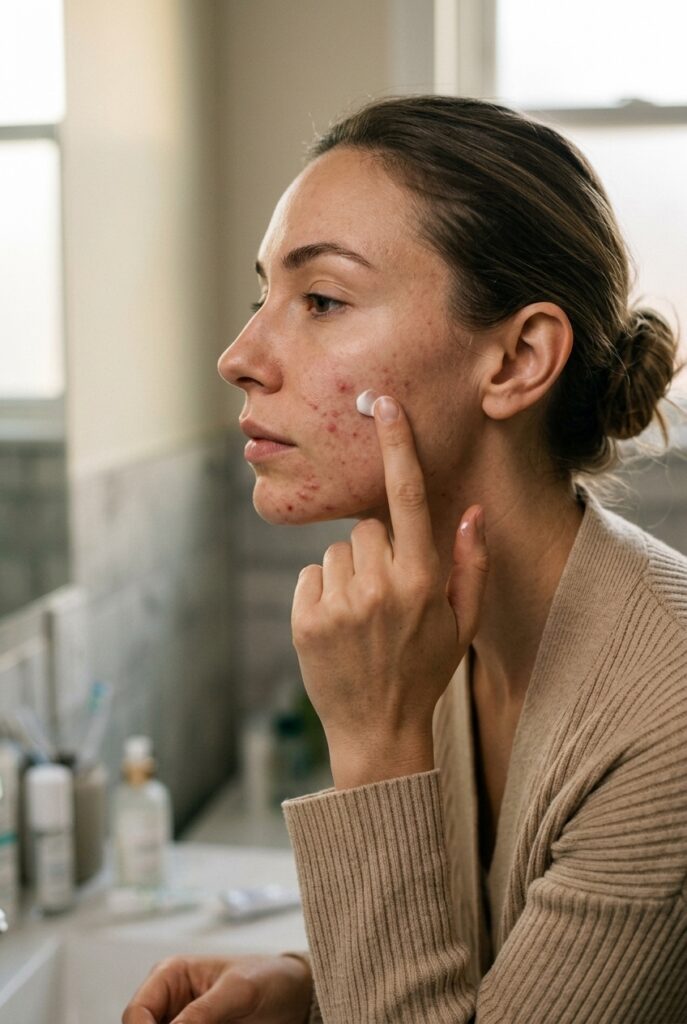
Retinoids are some of the most studied ingredients in dermatology, and their benefits for acne are well-documented. They speed up skin cell turnover, help prevent dead cells from clogging pores, reduce inflammation, and over time, smooth out acne scarring and post-breakout texture.
The reason so many women give up on them is the initial adjustment period — some dryness, flaking, or temporary purging that can last a few weeks. The key is to start with a low concentration (0.025% or 0.03%), use it only a couple nights a week at first, and apply it after moisturizer if your skin runs sensitive. Patience makes the difference here. Women who push through the adjustment phase consistently report clearer skin within two to three months.
5. Switch to Non-Comedogenic Sunscreen (and Actually Wear It Daily)

Skipping SPF because you’re worried it’ll cause breakouts is one of the most counterproductive things a woman with acne-prone skin can do. Sun exposure darkens post-acne marks, makes scarring more visible, and increases inflammation — all of which make acne look far worse over time.
The problem isn’t sunscreen in general; it’s the wrong formulas. Heavy, oily sunscreens do clog pores. But lightweight mineral formulas with zinc oxide, or modern oil-free chemical sunscreens specifically labeled non-comedogenic, sit comfortably on acne-prone skin without issue. Zinc oxide also has mild anti-inflammatory properties, which is a quiet bonus. This is a daily step, not an optional one.
6. Reassess Everything Touching Your Face

Hair products are one of the most overlooked causes of breakouts along the hairline, forehead, and cheeks. Conditioners, styling creams, and dry shampoos are formulated to stay on the hair — which means they’re built to resist water. When those products make contact with skin, they sit there and clog pores in a pattern called acne cosmetica.
The same goes for pillowcases (change them twice a week), phone screens (wipe them down regularly), and unwashed hands that touch the face throughout the day. None of these feel like skincare moves, but they all affect what stays on your skin between washes. Identifying and removing these physical triggers can clear up persistent breakouts that products alone haven’t been able to fix.
7. Look Into Azelaic Acid for Hormonal Breakouts

Azelaic acid doesn’t get the attention it deserves. It’s a naturally occurring acid that kills acne-causing bacteria, regulates the way skin cells turn over in pores, reduces redness, and fades hyperpigmentation — all without the irritation associated with benzoyl peroxide or strong retinoids.
It’s particularly useful for women dealing with hormonal acne along the jaw and chin, because it works at the level of the pore without drying out the surrounding skin. Prescription-strength formulas go up to 20%, but over-the-counter options in the 10% range are effective and widely available. It also works well during pregnancy when other active ingredients are off the table, though always confirm with a doctor first.
8. Use Salicylic Acid Strategically — Not All Over Your Face
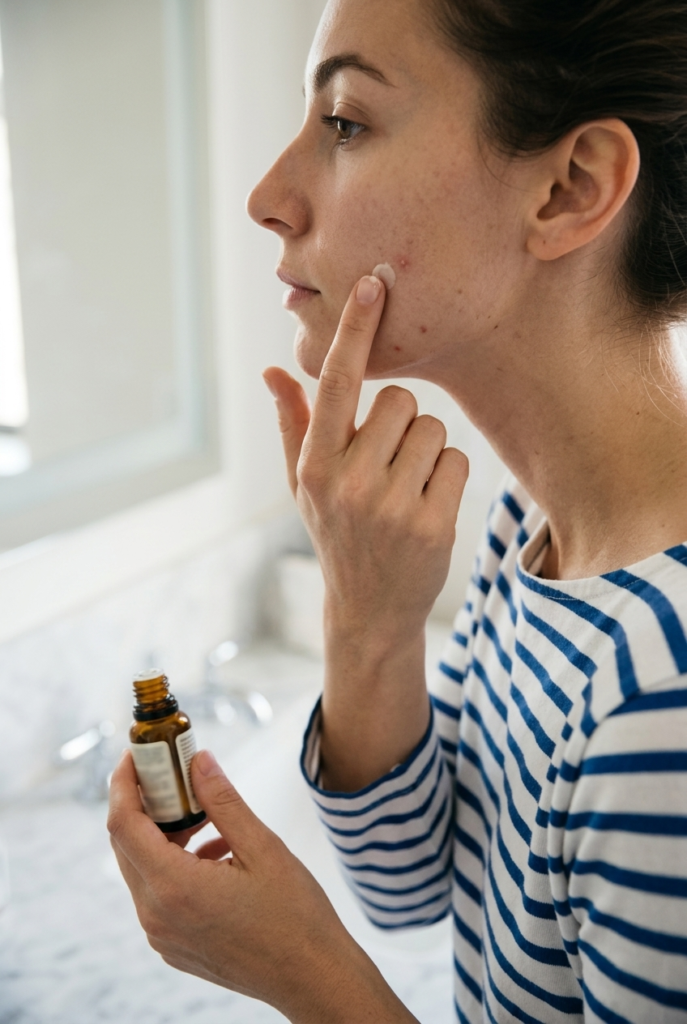
Salicylic acid is a beta hydroxy acid that penetrates into the pore lining and dissolves the oil and debris that cause blockages. It’s one of the most effective ingredients for acne, but women often use it in a way that backfires — applying it all over the face, twice a day, in multiple products simultaneously.
The smarter approach is targeted use: a salicylic acid cleanser once a day, or a spot treatment applied directly to problem areas, rather than layering several products that all contain it at once. Over-use strips the skin and disrupts the moisture barrier, which triggers more oil production and — again — more breakouts. Less is genuinely more with this one.
9. Consider At-Home Red and Blue LED Therapy
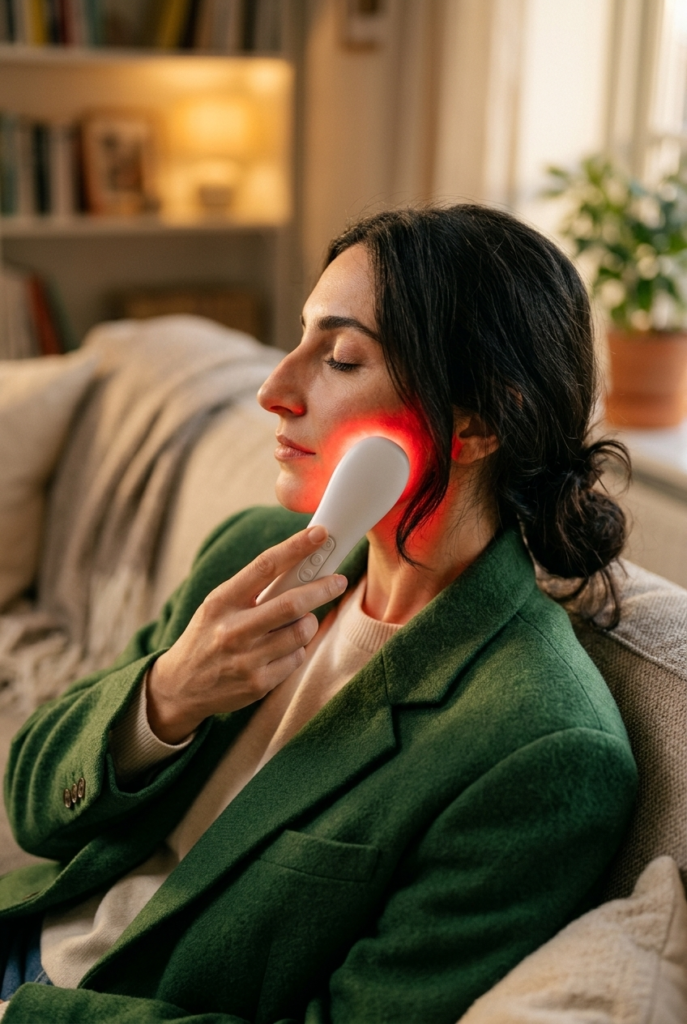
LED light therapy has moved out of the dermatologist’s office and into the hands of women at home, and the evidence behind it is solid enough to take seriously. Blue light (415nm wavelength) targets and kills Cutibacterium acnes, the bacteria responsible for inflammatory acne. Red light works deeper, reducing inflammation and supporting skin healing after breakouts.
At-home devices don’t reach clinical-grade intensity, but consistent use — a few sessions per week — has shown meaningful improvement for mild to moderate inflammatory acne. The catch is consistency: sporadic use produces sporadic results. If you’re already dealing with active breakouts and aren’t ready for prescription treatments, this is a good bridge option that works without any new products going onto the skin.
10. Map Your Breakouts and Track Hormonal Patterns

Hormonal acne in adult women is one of the most frustrating patterns because topical products alone often can’t fully control it. Breakouts that show up predictably around the jaw, chin, and lower cheeks in the week before your period are a hormonal signal, not a skincare failure.
Tracking when breakouts appear in relation to your cycle gives you useful information. You can time the introduction of stronger spot treatments or adjust your routine during the days your skin is most reactive. Some women work with a dermatologist to address the hormonal component directly — options like spironolactone or topical clascoterone (an androgen-receptor blocker) target the oil production that drives this kind of acne at the source, in a way that no serum or cleanser can replicate.
Clear Skin Takes Consistency, Not Complexity
Acne-prone skin doesn’t need a shelf full of products — it needs a routine that’s consistent, thoughtfully built, and genuinely suited to what’s triggering your breakouts. Sometimes that means simplifying. Sometimes it means adding one well-chosen ingredient. And sometimes it means looking at the habits and hormonal patterns underneath the surface.
Start with one or two changes, give them real time to work, and pay attention to how your skin responds. The most effective skincare routine is the one that’s realistic enough to actually stick with — and that starts with understanding your own skin, not following someone else’s.
Frequently Asked Questions
Q: Can adult women really get acne even if they never had it as teenagers? A: Yes. Adult-onset acne is extremely common in women, particularly between ages 25 and 45. Hormonal shifts from menstrual cycles, pregnancy, perimenopause, and stress are major contributing factors. It can appear for the first time well into adulthood.
Q: Is it bad to wash your face more than twice a day if you have oily, acne-prone skin? A: Yes, over-cleansing strips the natural oils from the skin, which signals the sebaceous glands to produce even more oil to compensate. Washing morning and night — with a gentle, non-comedogenic cleanser — is enough for most women.
Q: How long should I give a new skincare ingredient before deciding it’s not working? A: Most active ingredients need at least 8 to 12 weeks of consistent use before the full results become visible. Skin cell turnover takes time, and stopping too early is one of the most common reasons women cycle through products without seeing improvement.
Q: Can my hair products really cause facial acne? A: Yes. Products like conditioners, leave-in treatments, and styling creams that transfer onto the forehead, temples, or cheeks are a well-documented cause of a specific type of acne called acne cosmetica. Washing your hair before cleansing your face and keeping products off the skin helps significantly.
Q: Is niacinamide safe to use with retinol? A: Yes. Niacinamide and retinol are compatible and can actually work well together — niacinamide helps buffer some of the irritation that retinol can cause, while still delivering its own benefits for oil control and barrier support.
Q: What makes hormonal acne different from regular breakouts? A: Hormonal acne typically appears in a predictable pattern along the lower face — jawline, chin, and lower cheeks — and often worsens in the week before menstruation. It tends to be deeper and more cystic than surface-level breakouts, and it’s driven by androgen activity that stimulates excess oil production.
Q: Do I really need to wear sunscreen if my acne is already making my skin sensitive? A: Yes. UV exposure darkens post-acne marks and makes scarring more visible and harder to fade. Non-comedogenic mineral sunscreens with zinc oxide are well-tolerated by most acne-prone women and won’t worsen breakouts.
Q: Is LED light therapy actually effective at home? A: At-home LED devices are less powerful than in-office treatments, but consistent use does show results for mild to moderate inflammatory acne. Blue light kills acne-causing bacteria, while red light reduces inflammation. The key is using the device regularly — a few times per week — rather than occasionally.
Q: Should I ever see a dermatologist for acne, or can I manage it at home? A: If your acne is causing deep, painful cysts, leaving significant scarring, or not responding to over-the-counter treatments after several months, seeing a dermatologist is the right move. Some forms of acne require prescription-strength treatments that topical skincare can’t address on its own.

