

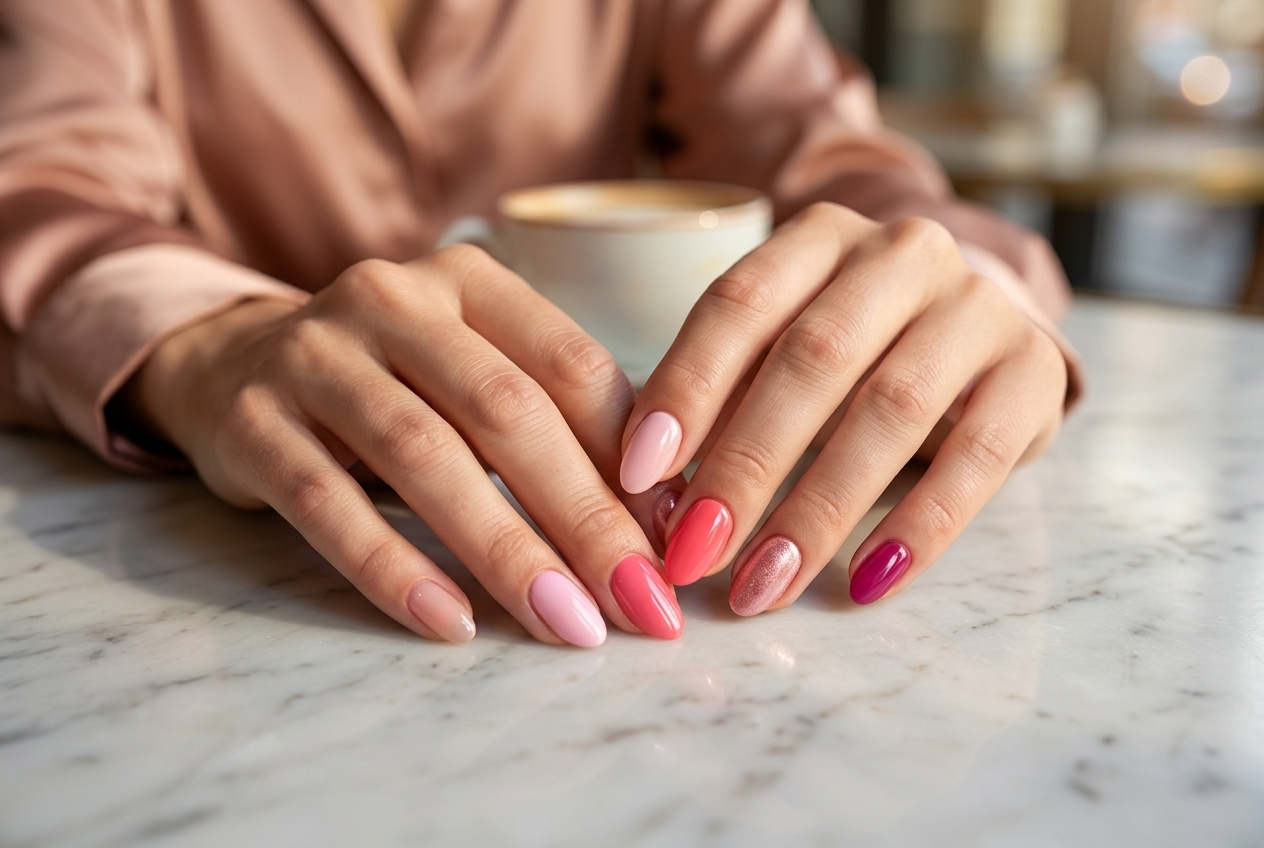
Pink is one of those colors that never really leaves. Season after season, it shows up on nails in some form — soft and barely-there one year, punchy and chrome the next. What makes it stand apart from most nail colors is how much range it actually has. A pale milky blush and a bold magenta might both be “pink,” but they couldn’t read more differently on your fingertips.
That range is also what makes choosing the right shade a little tricky. With so many options out there — from sheer jelly finishes to deep raspberry chromes — it helps to know what each one actually does, how it reads in different lighting, and which skin tones it works best with. Some of these shades are quiet and versatile, the kind you reach for on a Tuesday when you just want polished nails. Others are genuine statement-makers.
Below are 11 pink nail shades that are doing well right now, along with honest guidance on how to wear each one.
1. Milky Sheer Pink

This is the “your nails but better” shade. A milky sheer pink has a soft, slightly frosted quality — it lets the natural nail show through while adding a clean, luminous wash of color. It reads polished without drawing much attention, which makes it incredibly easy to wear every day.
The finish is what makes this one feel fresh rather than dated. Flat, opaque light pinks can look chalky. A milky version, especially in glossy gel or a glazed top coat, gives the nail a healthy, almost glowing quality. Pair it with a sheer base, two thin coats, and a high-gloss top coat to get that frosted-glass effect.
Best for: All skin tones. Works especially well on shorter nails, where it elongates without overpowering.
2. Ballet Pink (Blush)

Ballet pink sits one step warmer than milky sheer — it has more coverage and a soft, dusty rose undertone. Think the inside of a seashell or a pale silk ribbon. It’s one of the most classic shades in the pink family, and it holds up because it’s genuinely flattering on most people.
The French manicure has gotten a major update with this shade. Instead of the traditional bright white tips on a nude base, many women are now asking for ballet pink bases with an even softer, barely-there tip — sometimes in cream, sometimes in pearlescent white. It’s subtle, clean, and a step above the usual.
Wear it glossy for something polished and feminine, or in a satin finish for a more muted, editorial look.
Best for: Fair to medium skin tones. The warm undertone keeps it from washing out lighter complexions.
3. Soft Mauve
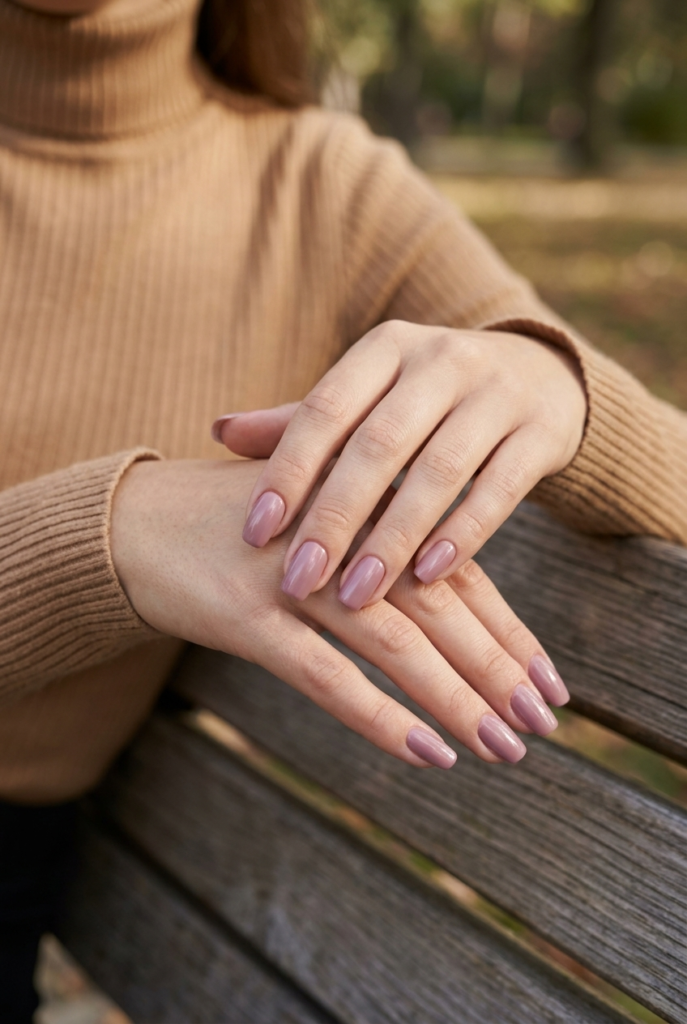
Mauve is having a real moment right now. Dusty rose, soft mauve, and cool-toned blush shades have become the “modern neutral” — the kind of color that looks like you chose thoughtfully without being too much. Rebecca Isa, creative director at ZOYA, describes shades in this family as bringing “subtle depth to the nail” while reading beautifully in natural light.
What separates mauve from plain pink is that cool, slightly muted undertone. It has just enough depth to work in fall and winter without feeling heavy, and just enough softness to wear through spring. A milky mauve — one with a creamy, slightly opaque finish — is particularly popular this year. It’s dreamy and delicate without disappearing entirely.
Try it with earth tones like camel and olive, or with metallics like rose gold. The contrast makes the color pop in a surprisingly chic way.
Best for: Neutral to cool skin tones. Medium and olive complexions also carry this beautifully.
4. Dusty Rose Ombré
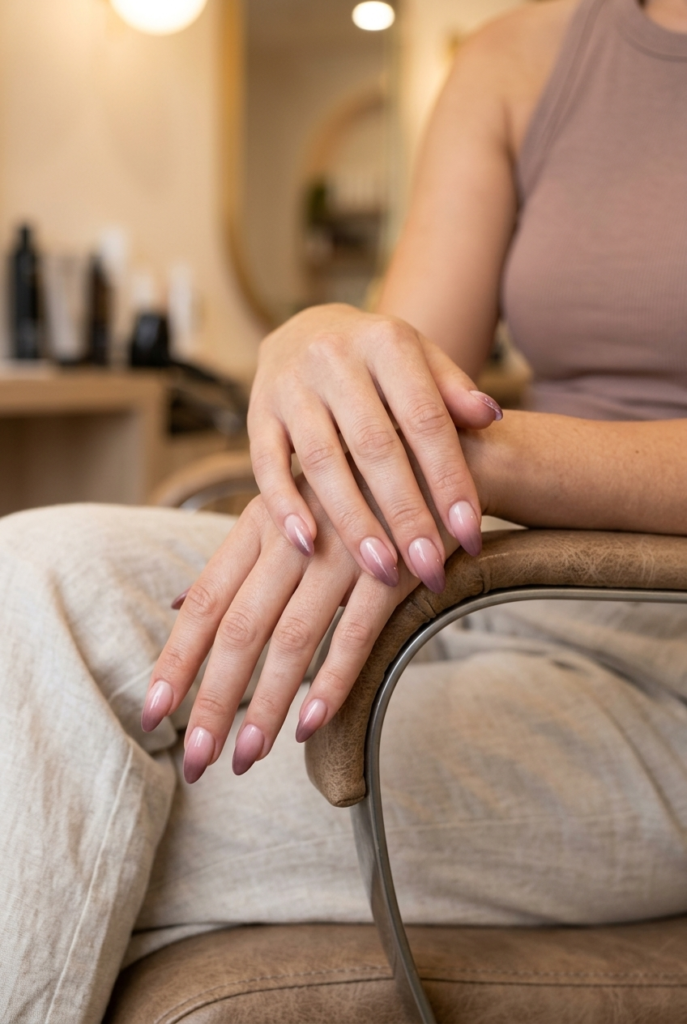
Ombré in pinks is nothing new, but the current version has been refined. Rather than an obvious gradient from white to pink, the trend now leans toward a subtle fade within the pink family — a sheer base that deepens into a smoky, dusty rose at the tips, finished with a glossy top coat.
The result looks almost like a watercolor wash. It has a soft, blended quality that feels effortless rather than heavy-handed. Some women are doing this as a full set; others use it on just a few accent nails over a solid pale pink base.
This works especially well on longer nail shapes — almond and coffin both give the gradient enough canvas to fade naturally.
Best for: Medium to deep skin tones, where the rose tones read as rich and dimensional rather than flat.
5. Jelly Pink
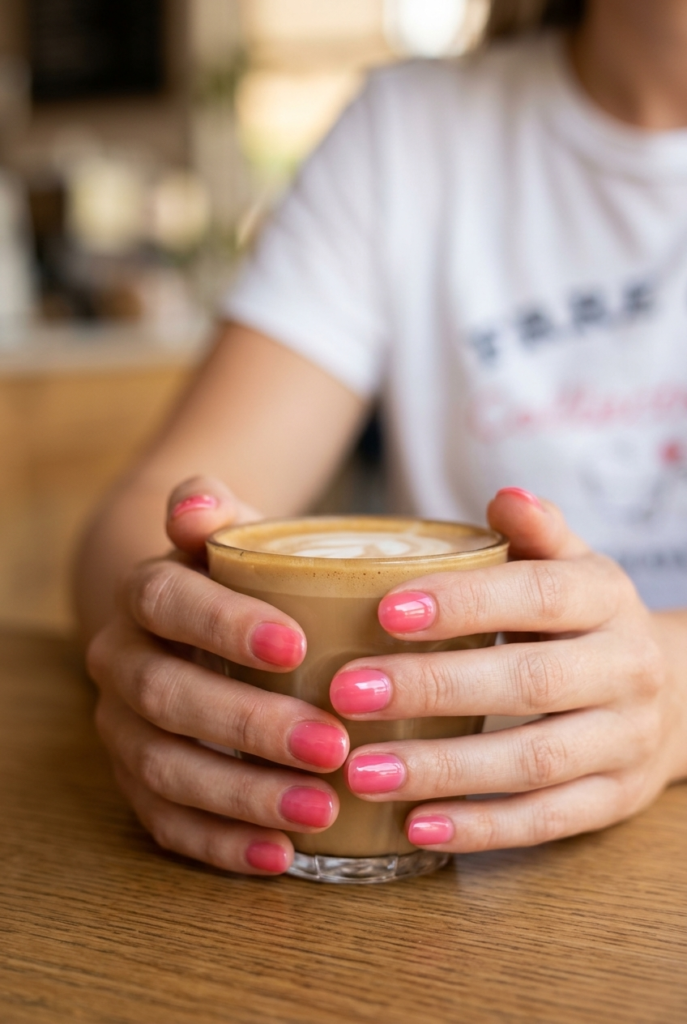
A jelly finish means the polish is slightly translucent — you can see through it, but it still deposits real color. Jelly pink nails have that strawberry-flavored candy quality: bright, glossy, a little playful, and somehow also wearable.
Celebrity manicurist Michelle Humphrey has called jelly pinks a standout choice specifically because of how they interact with light. “If you’re opting for a French, this is the transparent shade that glows the most,” she noted. It gives the nail a luminous, healthy look that works whether you’re layering it over a French tip or wearing it as a full solid.
Build one coat for a barely-there tint. Two to three coats gets you a fuller, more saturated jelly effect. A glossy top coat is non-negotiable — without it, the translucent quality just reads as streaky.
Best for: Fair to medium skin tones. Works across nail shapes, but looks especially fresh on short, rounded nails.
6. Bubblegum Pink
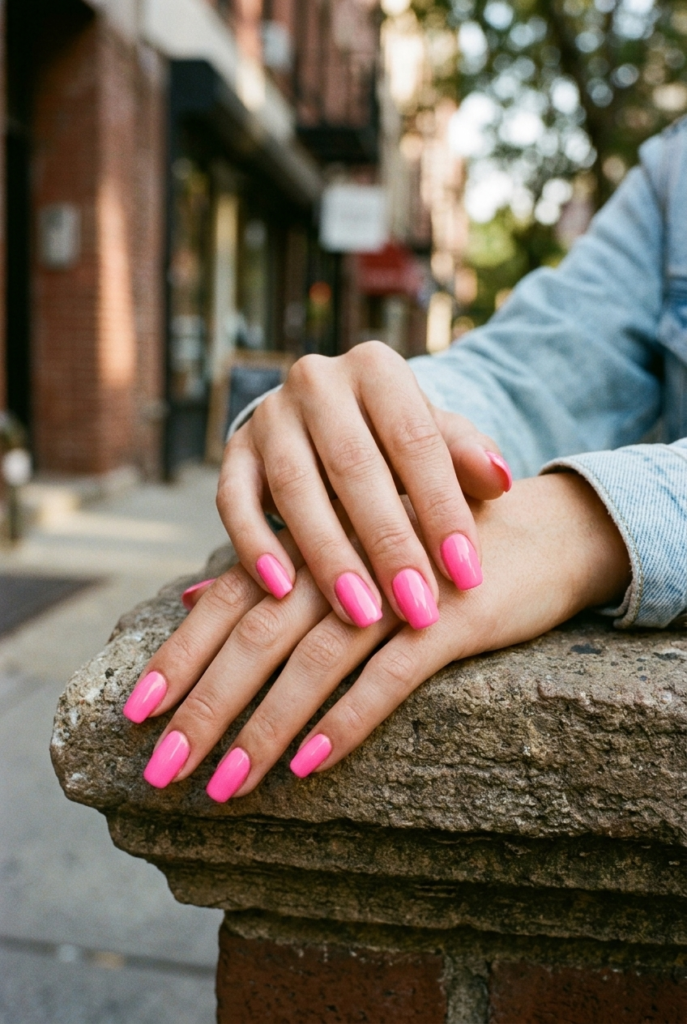
Bubblegum is unapologetically bright. It’s not subtle, it’s not muted, and it’s not trying to be a neutral. It’s a clean, vivid, candy-bright pink that reads cheerful and confident — and it actually looks really good as a solid color, no art required.
Where some bold shades require a specific outfit to land right, bubblegum pink pairs surprisingly well with a wide range of looks. It works with white linen in the summer, denim year-round, and even with neutrals like camel or cream, where it adds a pop of color without clashing.
Keep the finish glossy. Matte bubblegum can read flat or chalky, while glossy gives it that punchy, lacquered quality that makes the color feel intentional.
Best for: Medium to deep skin tones, where the saturation registers as vibrant. It can look a little pale on very fair skin — consider one coat of a warm sheer pink underneath to deepen the base.
7. Hot Pink / Magenta
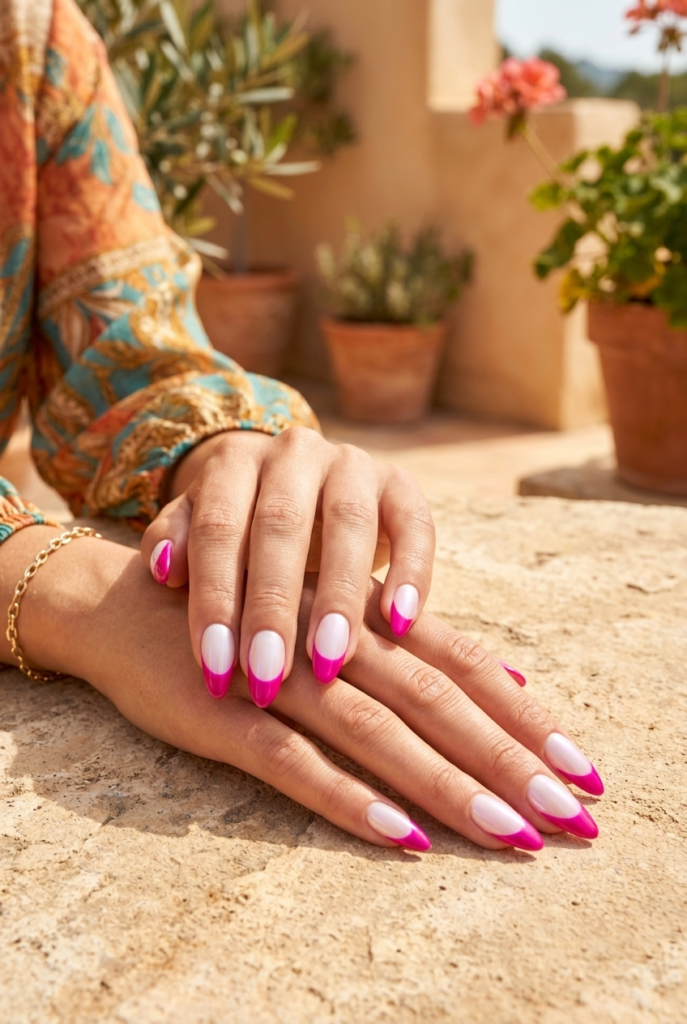
Hot pink crosses into magenta territory — that saturated, electric pink that leans slightly cool and commands attention. It’s what you wear when you want your nails to be the statement, full stop.
This shade has shown up a lot on vacation nail inspo boards for a reason. It photographs beautifully in natural light, it pops against a tan, and it pairs well with bright resort wear as easily as with a simple white T-shirt. French tips in hot pink are also a strong option — particularly on a milky or pearlescent white base, where the contrast keeps things graphic and modern without being heavy.
Go for a high-shine gel finish to get the most out of the depth of color. Matte hot pink can work, but it mutes the color significantly.
Best for: Medium to deep skin tones. The richness of the color sings against deeper complexions.
8. Raspberry Chrome
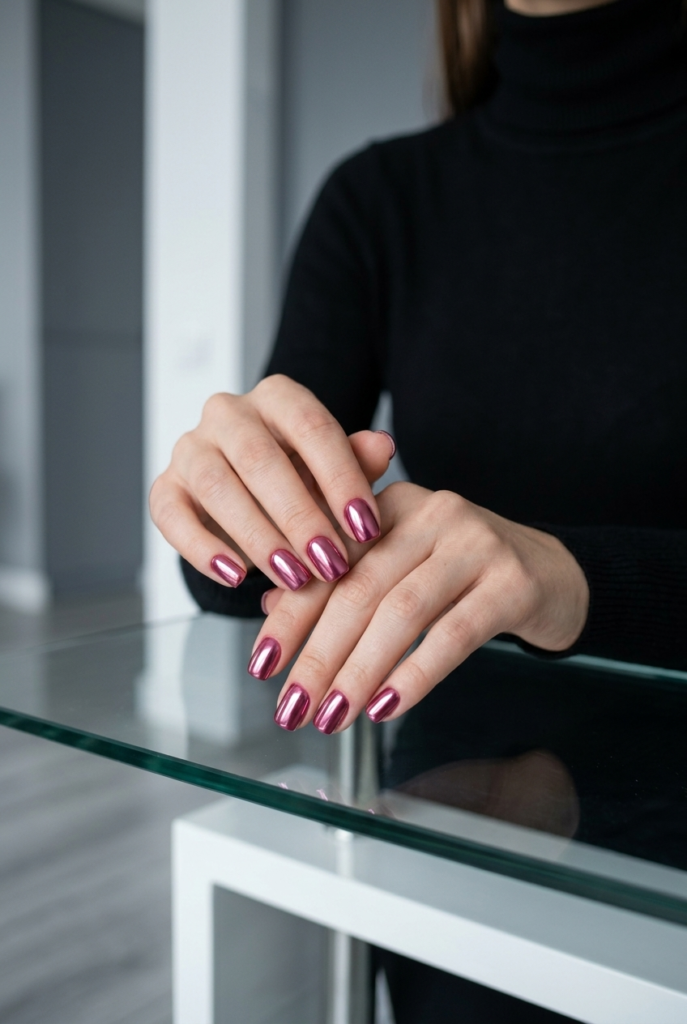
Chrome finishes have been everywhere, and raspberry chrome — a deep, cool pink with a reflective mirror-like surface — is one of the more striking versions in the pink family. It’s for short-nail lovers especially, because the metallic finish makes the nail look polished and finished without needing length or nail art.
The chrome effect transforms the color entirely. What would be a fairly standard deep pink in regular polish becomes something that catches light and shifts slightly in tone depending on the angle. It reads luxurious without being high-maintenance.
Ask for it applied over a gel base in a similar tone — applying chrome powder over a contrasting color will muddy the finish. The base color matters.
Best for: All skin tones. Deep complexions carry it especially well. Short nails, coffin, and almond shapes all work.
9. Rose Gold Chrome
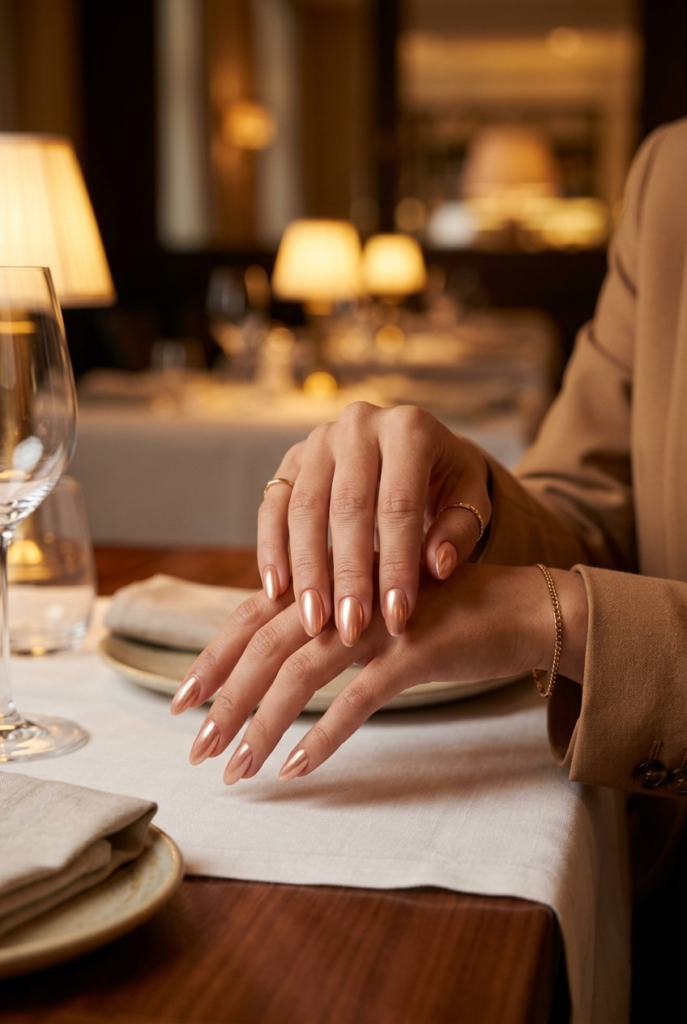
Rose gold chrome sits in a slightly different family than raspberry — it has warm, golden undertones that push it toward a peachy-pink metallic. It’s softer and more subtle than raspberry or hot pink chrome, and it reads as luxurious and feminine without being bold.
This is the chrome shade most likely to cross over from statement to everyday wear. It pairs with gold jewelry naturally, complements warm skin tones particularly well, and looks good from the office to a dinner out. Longer nails make the metallic gradient more visible, but it looks clean on shorter shapes too.
Best for: Warm and olive skin tones, where the gold undertone picks up the warmth in the complexion. Fair skin can wear it, but go for one with a slightly cooler, less orange base.
10. Old Rose / Powdery Pink
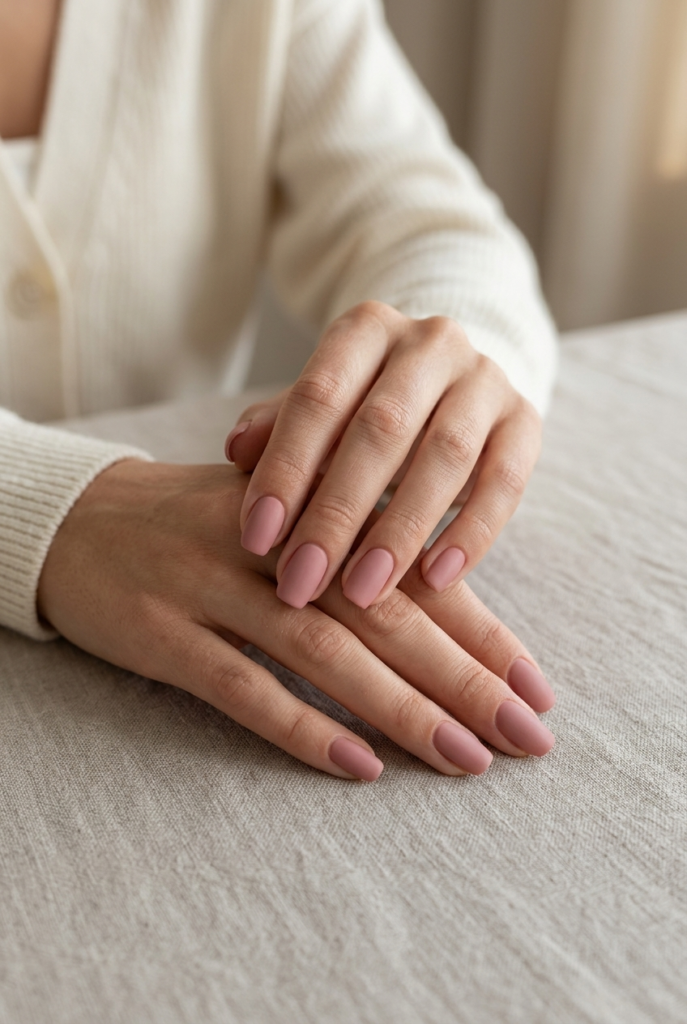
Old rose is the quietest shade on this list. It’s a muted, dusty pink — more powdery than vibrant — with earthy undertones that keep it grounded. It doesn’t pop the way bubblegum or magenta does. Instead, it reads sophisticated and understated, the kind of color that always looks intentional without announcing itself.
This is a strong choice for professional settings where you want a manicure that’s polished but not distracting. It also works beautifully in a satin or velvet finish, which emphasizes the muted, powdery quality of the color rather than flattening it.
Pair it with neutral outfits — beige, ivory, taupe, soft gray — and it has an elevated, put-together effect that glossier shades can’t quite replicate.
Best for: Fair to medium skin tones. Olive and warm complexions can wear it too, especially in a version with slightly more brown or terracotta in the base.
11. Watermelon Pink
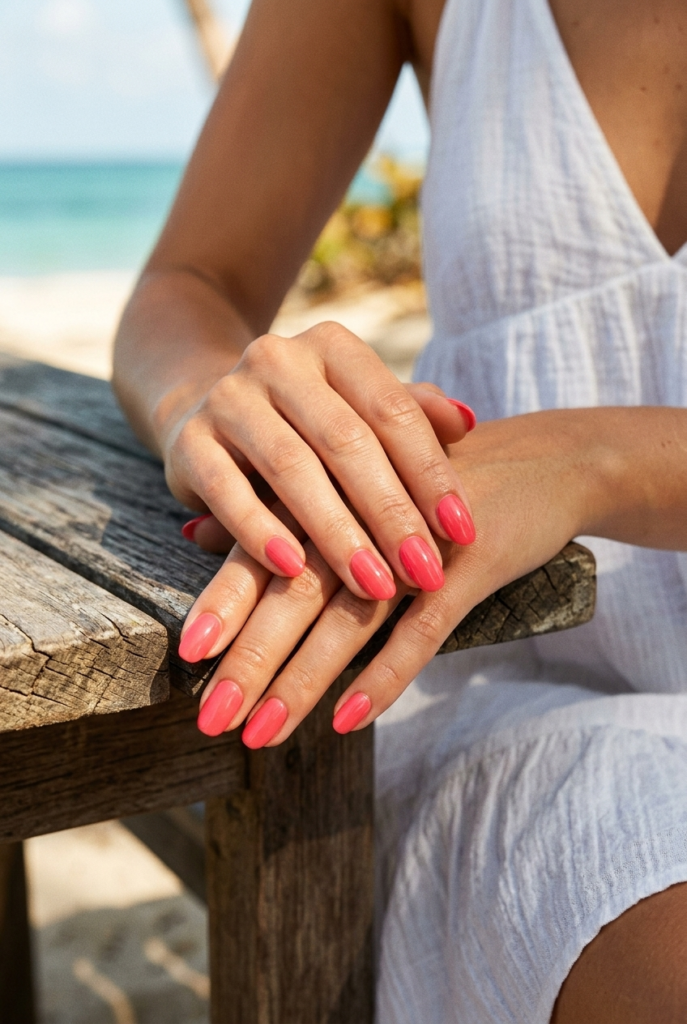
Watermelon pink is exactly what it sounds like — a juicy, saturated pink-coral hybrid that’s brighter than blush and fresher than magenta. It sits in that sweet spot between pink and orange without fully committing to either.
This is a distinctly warm-weather shade. It pairs with white summer outfits, sundresses, beach totes, and anything in a bright citrus palette. Unlike coral, which leans orange enough to clash with certain pinks, watermelon pink plays well with other statement colors and makes a genuinely fun accent.
For those who find straight pink too sweet, the coral undertone adds a little edge. It’s still clearly in the pink family, but there’s more energy to it.
Best for: Medium to deep skin tones, where the richness of the color reads as vibrant. Fair skin can carry it, but a slightly more muted version will be more flattering than a fully saturated one.
The Shade That Fits Every Version of You
Pink isn’t a single color — it’s a spectrum, and knowing the difference between a milky sheer and a dusty rose, or between jelly pink and old rose, changes how you use each one. A quiet powdery pink on a Tuesday lunch meeting and a hot pink chrome for Friday night are both the right call for their moment.
Skin tone, finish, and nail shape all shift how a shade reads. That’s worth keeping in mind before committing to a full set — ask for a swatch or try a press-on in a shade before booking an appointment. The right pink in the right finish on the right shape is genuinely one of the most flattering things you can put on your hands.
Frequently Asked Questions
Q: What pink nail shade works on all skin tones? A: Milky sheer pink and raspberry chrome are the most universally flattering options. The sheer finish of milky pink adds luminosity without clashing, while raspberry chrome’s metallic depth reads well on both fair and deep complexions.
Q: What’s the difference between mauve and dusty rose? A: Mauve has a cooler, purple-leaning undertone, while dusty rose tends to be warmer with slightly more brown or beige in it. Both read as sophisticated, muted pinks — the main difference is whether your complexion leans cool (mauve) or warm (dusty rose).
Q: Which pink nail shades are best for the office? A: Old rose, ballet pink, and soft mauve are the safest choices for a professional setting. They’re polished and clean without being loud or distracting.
Q: What finish should I choose for pink nails? A: For pale or milky shades, a high-gloss or glazed top coat gives the best result. Muted shades like old rose and mauve look great in satin or velvet finishes. Bold shades like bubblegum or magenta benefit from glossy gel. Chrome shades require a gel base for the powder to adhere properly.
Q: What pink nail shade is best for summer? A: Watermelon pink, bubblegum, hot pink, and jelly pink are all strong summer choices. They’re vibrant, photograph well in natural light, and pair easily with warm-weather outfits.
Q: How do I make a pale pink nail shade last longer? A: Start with a clean, dry nail and apply a base coat before the color. Two thin coats of color hold better than one thick one, and always finish with a top coat. Reapply the top coat every two to three days to prevent chipping.
Q: Are chrome pink nails high maintenance? A: Chrome finishes are typically applied in a salon over a gel base, which means you’ll need UV curing and professional application. At home, chrome nail powders exist but require some practice. Once applied, they’re no more fragile than any other gel finish.
Q: What nail shape works best with pink shades? A: Soft pinks look great on short rounded or oval nails. Bold shades like magenta and hot pink benefit from a longer almond or coffin shape. Chrome shades work on any shape, but the reflective finish is especially visible on medium to long nails.
Q: Can I wear pink nails in fall and winter? A: Yes. Dusty rose ombré, old rose, mauve, and raspberry chrome all carry through cooler months naturally. These shades have enough depth and warmth to feel seasonal without abandoning the pink family entirely.

