

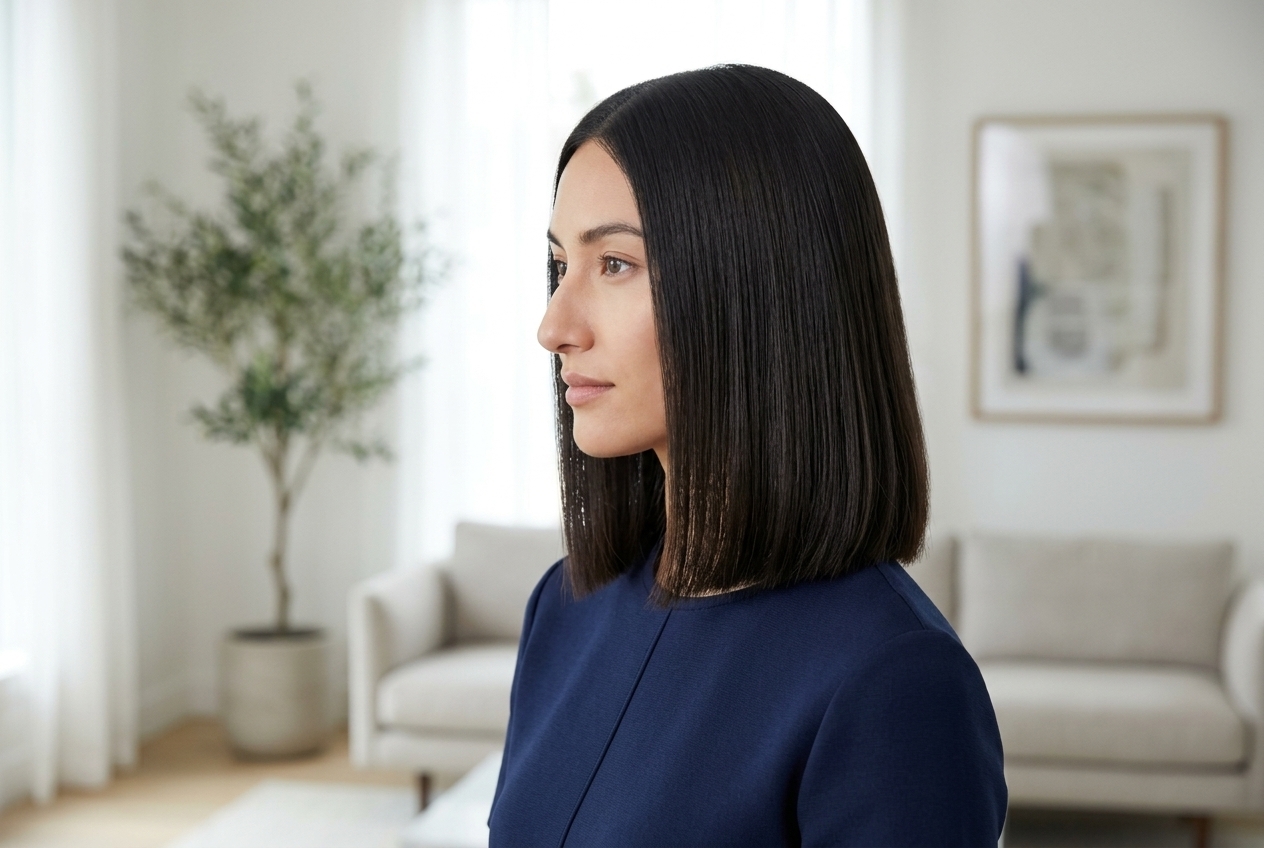
There’s a reason shoulder length blunt haircuts keep showing up on every hair trend list, year after year. They sit right at that sweet spot — not too short, not too long — and they deliver something most cuts can’t: a clean, full, polished look with almost no effort. The straight, even edge at the bottom creates instant visual weight, which means your hair looks thicker, healthier, and more intentional right away.
What makes these cuts stand out from layered or textured alternatives is the simplicity of the shape. The line does all the work. Whether your hair is bone straight, naturally wavy, tightly coiled, or somewhere in between, a well-executed blunt cut at the shoulders adapts to your texture rather than fighting against it. Stylists tend to love this cut for that reason — it’s one of the few shapes that translates across almost every hair type.
Below are 10 of the most flattering and wearable versions of the shoulder length blunt cut right now. From the classic one-length lob to a blunt collarbone cut with curtain bangs, each style here has been chosen because it genuinely works — not just on the right hair type or the right face shape, but across a wide range of women.
- 1. The Classic One-Length Blunt Lob
- 2. The French Blunt Bob
- 3. The Blunt Lob with Curtain Bangs
- 4. The Asymmetric Blunt Cut
- 5. The Blunt Collarbone Cut
- 6. The Blunt Lob with Face-Framing Layers
- 7. The Blunt Shag Lob
- 8. The Blunt Cut with Blunt Bangs
- 9. The Deep Side Part Blunt Lob
- 10. The Blunt Lob with a Color Melt
- The Shoulder Length Blunt Cut Is as Practical as It Is Stylish
- Frequently Asked Questions
1. The Classic One-Length Blunt Lob
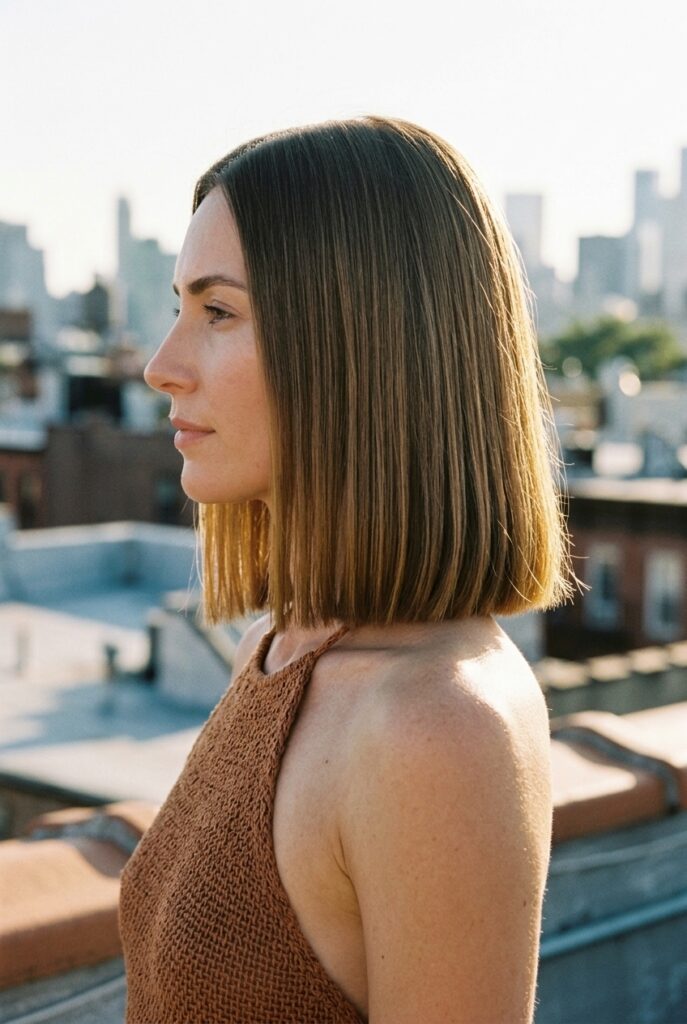
This is the cut most people picture when they hear “blunt shoulder length.” All the hair is cut to a single length — no layers, no graduation — and the ends form a perfectly straight, even line that hits right at or just below the shoulders.
It sounds simple, and it is, but the effect is striking. The weight line at the bottom creates the illusion of fullness and thickness, which makes this cut particularly flattering for women with fine or thin hair. There’s no taper pulling the ends down, so the hair appears to have body even when it naturally doesn’t.
For straight or slightly wavy hair, it can be air-dried or blown out smooth. For curlier textures, the blunt edge sits at a different point once the hair dries and contracts, so ask your stylist to cut it slightly longer if you want it to land exactly at shoulder level.
2. The French Blunt Bob
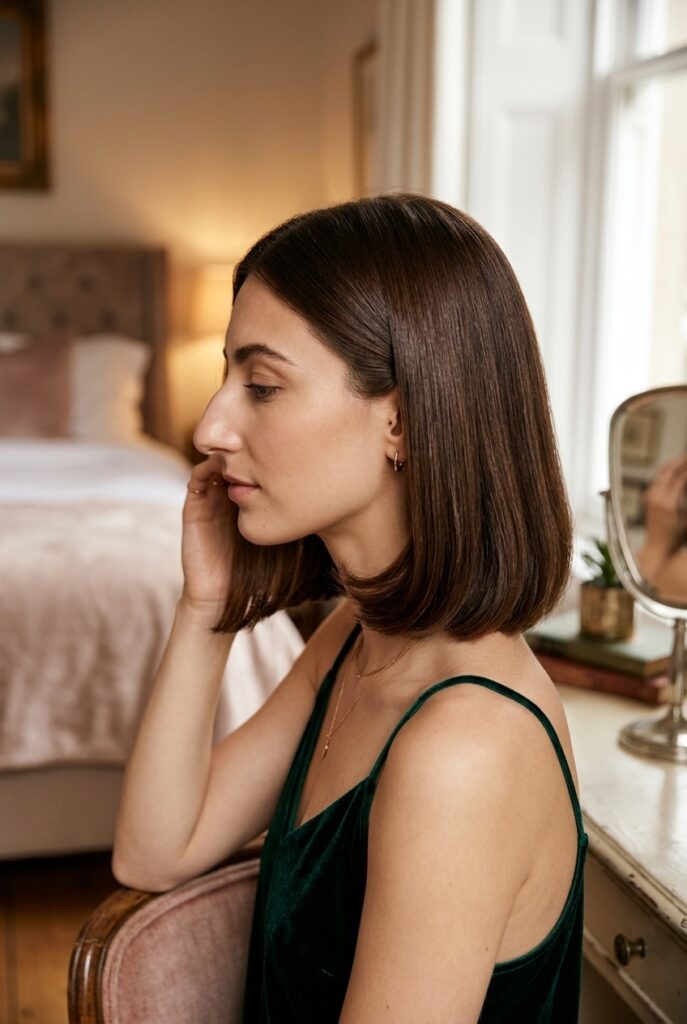
The French blunt is a variation that’s been getting a lot of attention lately, and for good reason. Instead of a completely flat, even cut, the ends are curved very slightly under — not in a visible flip, just enough to give the hair a subtle rounded shape at the bottom. It falls right around the collarbone and reads sleek and sophisticated.
It photographs beautifully and works especially well on straight to slightly wavy hair. Thick hair tends to love this cut because the rounded base keeps volume from going wide at the ends. The overall effect is cool and minimalist — that effortless kind of chic that looks like you’re barely trying.
Styling is easy: a round brush blowout or a pass of a flat iron at the ends is all it takes to keep the curve looking fresh.
3. The Blunt Lob with Curtain Bangs
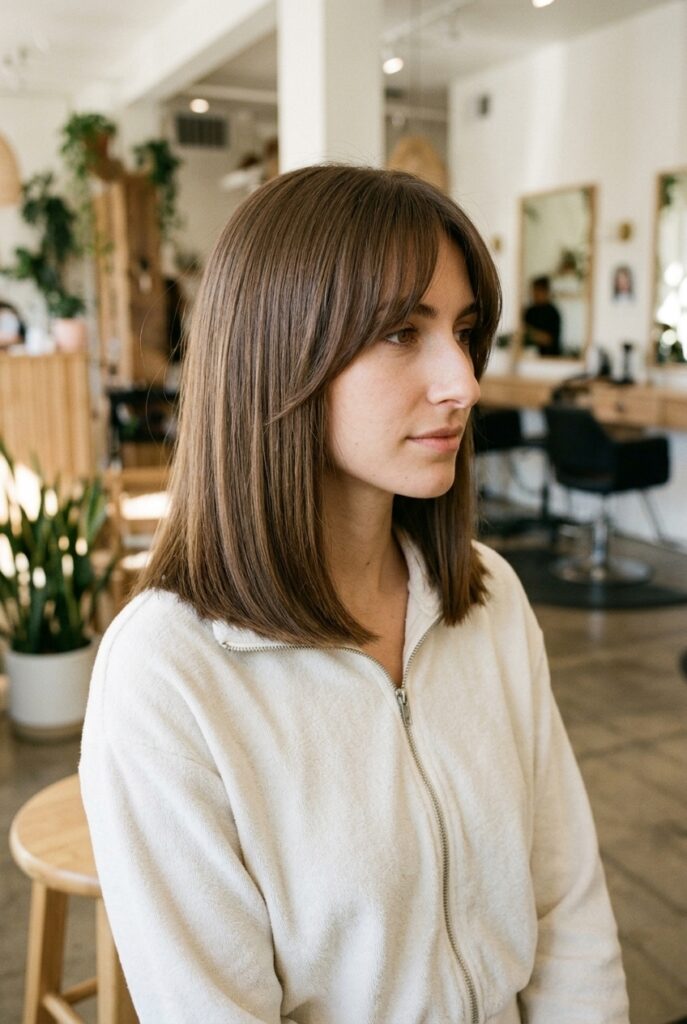
Adding curtain bangs to a blunt shoulder length cut changes the whole mood. The bangs part in the center and sweep gently to each side, framing the face without covering it. Paired with a clean, blunt perimeter, the result is soft but structured — feminine and current at the same time.
This combination works well on fine to medium-thick hair. Women with fine hair especially benefit here because the bangs add visual density at the front of the face, and the blunt line at the ends adds weight below. Together, they make the hair look fuller throughout.
For wavy hair, curtain bangs can be point-cut or razored slightly at the tips so they air-dry with a natural bend rather than sticking straight across. It’s one of those small details that makes a significant difference in how low-maintenance the style actually feels day to day.
4. The Asymmetric Blunt Cut
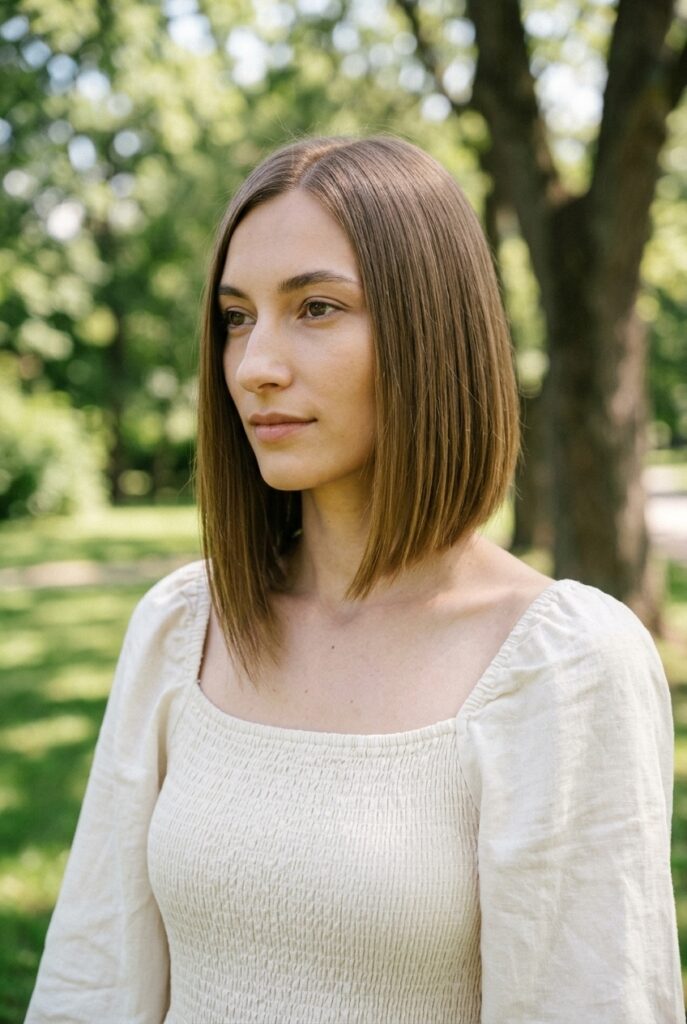
An asymmetric shoulder length blunt cut is cut in a single clean line, just like the classic version, but the line angles slightly — longer on one side, shorter on the other. The difference is usually subtle, an inch or two, but it gives the style personality and movement that a perfectly symmetrical cut doesn’t have.
This variation is particularly good for women with rounder face shapes, because the diagonal line draws the eye across rather than straight across, which creates the impression of more length. It’s also great for women who want a blunt cut but don’t want it to feel too rigid or severe.
Fine and medium hair both carry this cut well. Very thick hair can sometimes make the angle harder to see, so it’s worth discussing with your stylist how pronounced you want the asymmetry to be.
5. The Blunt Collarbone Cut
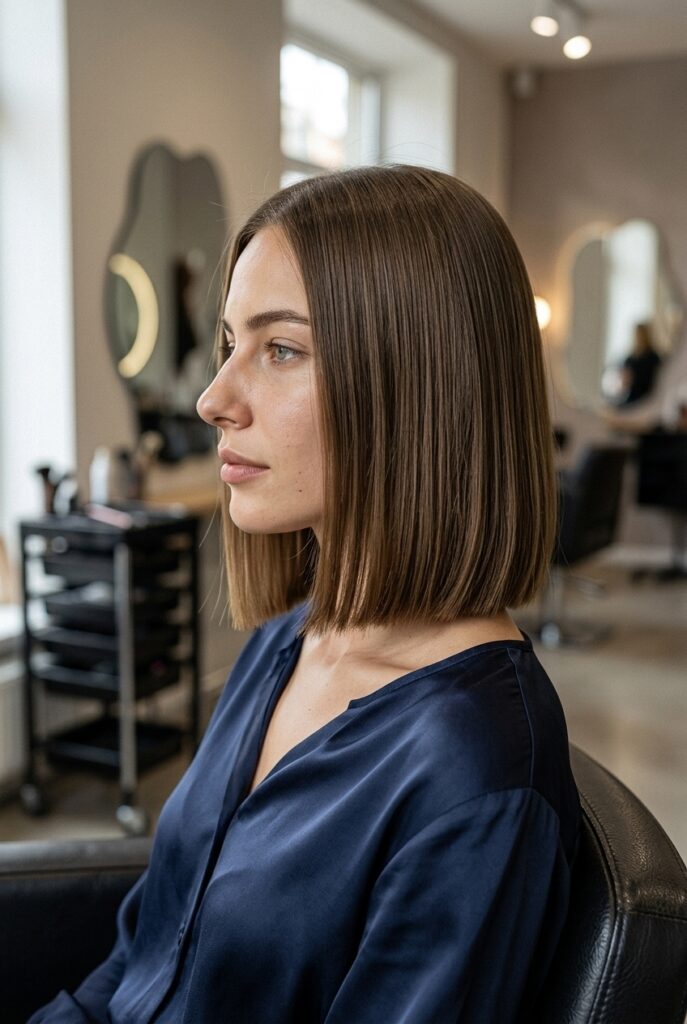
The collarbone cut is technically just a longer lob — hair that lands right at or grazes the collarbone rather than sitting squarely on the shoulder. When cut blunt, it’s one of the most universally flattering lengths around. It’s long enough to pull back, style in waves, or wear sleek, but it’s short enough to feel like a real cut rather than just long hair.
Collarbone-length hair works across nearly every hair texture. Straight hair looks polished and glossy at this length. Wavy hair has enough length to show off its natural movement. Curly hair falls to a flattering place once it contracts. One thing to keep in mind: if you have very curly or coily hair, you’ll want to ask your stylist to cut it longer so it lands where you want it when dry.
This is also a great option if you’re not quite ready to commit to a shorter shoulder cut but want the look of a blunt edge.
6. The Blunt Lob with Face-Framing Layers
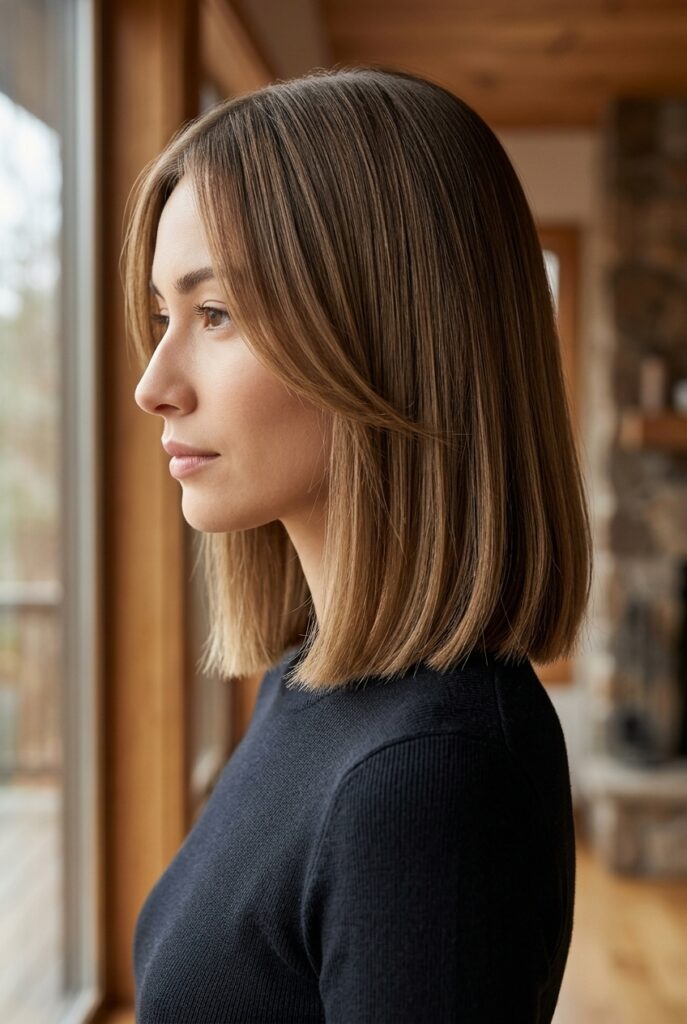
This one asks for a small distinction: the overall shape is blunt — the perimeter line is clean and even — but a few face-framing pieces are left slightly shorter around the front to pull focus toward the cheekbones and jawline. It’s not a layered cut in the traditional sense. The body of the hair stays one length, but the framing detail softens the look.
Women who feel like a completely uniform blunt cut is too severe for their face often find this version much more wearable. The framing layers add just enough softness without sacrificing the clean, full ends that make the blunt cut so appealing in the first place.
This works well on wavy and straight hair. For naturally curly hair, face-framing pieces that are cut too short can spring up in a way that’s hard to control, so it’s worth having a conversation with your stylist about how to approach it for your specific curl pattern.
7. The Blunt Shag Lob

At first glance, a shag lob doesn’t sound like a blunt cut — shags are usually associated with layers and texture. But the blunt shag keeps a clean, even perimeter at the bottom while incorporating choppy, disconnected layers through the crown and mid-lengths. The ends stay blunt; the internal texture is what gives it the shaggy quality.
This cut is especially good for thick hair. The internal layers remove bulk and weight without thinning out the ends, so the hair still looks full and healthy at the bottom. For wavy hair, the combination of layers and a blunt edge is almost unbeatable — the layers enhance the wave pattern while the straight ends keep the style from looking too undone.
Fine hair can also work with a lighter version of this, using minimal layering to create movement at the top while keeping the blunt weight line intact at the ends.
8. The Blunt Cut with Blunt Bangs
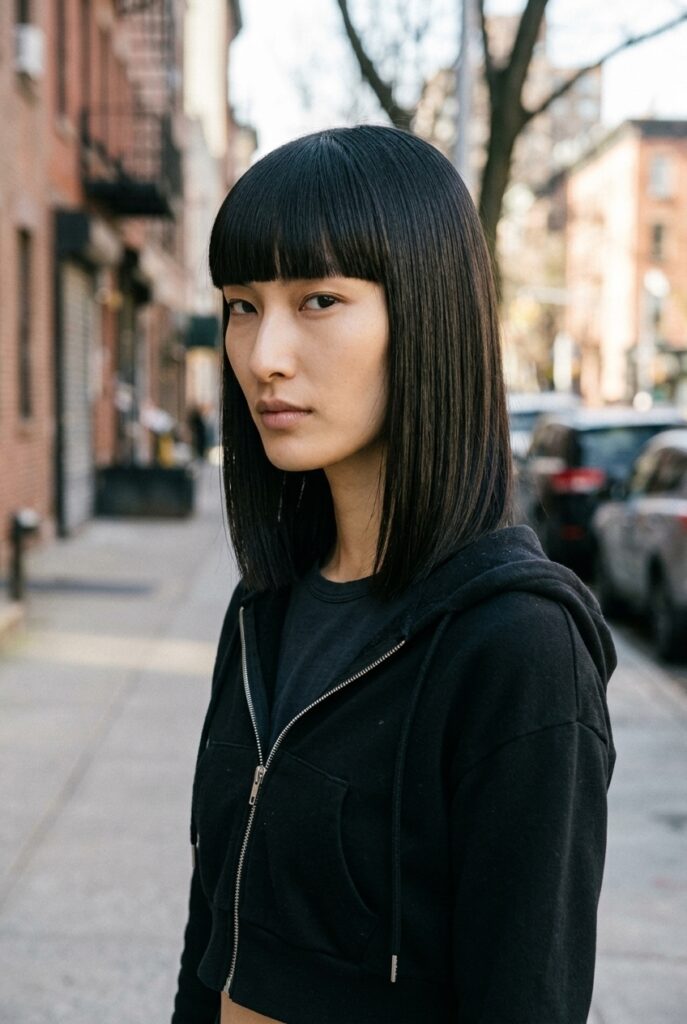
Full, straight-across bangs paired with a blunt shoulder length cut creates a strong, graphic look that’s been having a real moment. The fringe sits at the brow or just below it, and when both the bangs and the ends are cut with precision, the overall shape is bold and clean.
This look suits women who aren’t afraid of a statement style. It also tends to work well for women with oval or oblong face shapes, since the bangs shorten the face proportionally and create balance. Round faces can still pull this off with a slightly longer fringe, one that hits between the brow and the cheekbone.
In terms of texture, this style shows up best on straight to slightly wavy hair. Very curly or wavy bangs require more daily upkeep to keep them flat, which is worth factoring in before committing.
9. The Deep Side Part Blunt Lob

A deep side part changes the entire silhouette of a blunt shoulder length cut. All the hair falls to one side, creating volume and a slight swoop that feels elegant and full. It’s one of the easiest ways to add drama to an otherwise simple cut without changing the length or shape at all.
This is a technique as much as a style — you can ask your stylist to cut your lob as a standard blunt cut and then create the deep side part with styling at home. A blowout with a round brush pulls the hair in the direction of the part and locks in the volume. A lightweight hold spray keeps it in place without making it feel stiff.
The deep side part works on almost any hair texture and any face shape. Women with round faces often find it especially flattering because the swooping diagonal softens the roundness.
10. The Blunt Lob with a Color Melt
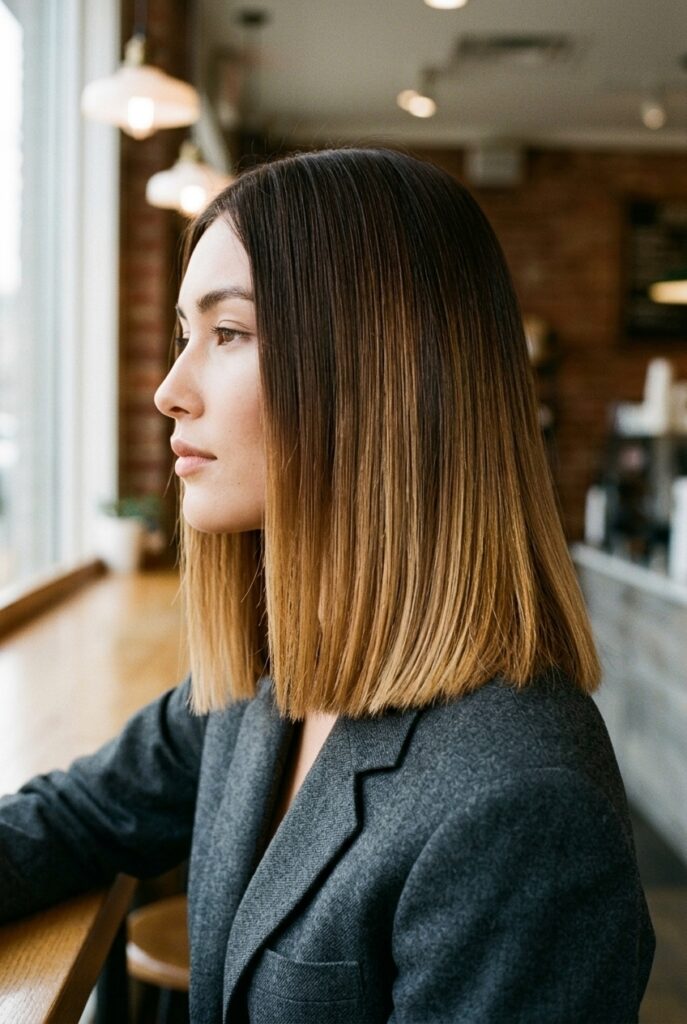
This last option isn’t purely a haircut variation — it’s the blunt lob in combination with a specific color technique that makes the cut look even better. A color melt moves from the natural root color down through the mid-lengths and ends in a seamless, blended gradient. When the ends are blunt and all one color, the line sits there clearly and cleanly. A color melt adds depth and movement to that edge.
Balayage or a root shadow with lighter ends achieves this look. The clean, blunt perimeter shows off the color transition in a way that layered cuts can’t — there’s no graduation to blur where the color falls. The result is very polished and dimensional.
This works on any hair texture, though the color transition tends to show up most clearly on straight and slightly wavy hair. Curly hair can absolutely carry a color melt, but the visual effect is different — the gradient reads more throughout the curl pattern rather than concentrated at a visible line.
The Shoulder Length Blunt Cut Is as Practical as It Is Stylish
There’s a consistency across all ten of these styles: they’re all manageable. Not in the sense that they require zero effort, but in the sense that the cut itself does most of the heavy lifting. A clean, blunt perimeter holds its shape well between trims, looks neat even on second or third-day hair, and works with your natural texture rather than requiring you to fight it.
Regular trims every six to eight weeks are what keep these cuts looking intentional. The blunt edge can start to look uneven as the hair grows, so staying on top of those appointments is what makes the difference between a cut that looks sharp and one that just looks like hair that needs a trim.
If you’ve been debating a change but don’t want to go dramatically short or dramatically long, one of these cuts is probably worth a conversation with your stylist. They’re not trend-dependent — they’ve been around for years precisely because they work.
Frequently Asked Questions
Q: Does a blunt shoulder length cut work on fine hair? A: Yes. The blunt edge actually creates the illusion of thickness and fullness at the ends, which is exactly what fine hair needs. A standard blunt lob without layers keeps all the weight concentrated at the bottom, making thin hair appear much denser than it is.
Q: Can I get a blunt cut if I have naturally curly hair? A: You can, but ask your stylist to cut it longer than you want it to land when dry. Curly hair contracts significantly once it dries, so if you want the hair to sit at shoulder level, it may need to be cut several inches longer while wet. A curl-knowledgeable stylist can help you find the right approach for your specific pattern.
Q: How often do I need to trim a blunt shoulder length cut? A: Every six to eight weeks is the general recommendation. The clean perimeter line is what makes the cut look intentional, and it softens as the ends grow. Regular trims keep the line sharp.
Q: Is a blunt cut the same as a lob? A: Not exactly. A lob (long bob) refers to the length — it hits at the shoulders or collarbone. A blunt cut refers to the technique — the ends are cut in a straight, even line without layering or graduation. Many lobs are blunt cuts, but not all lobs are blunt, and blunt cuts exist at shorter lengths too.
Q: Will a blunt cut make my thick hair look too heavy? A: Possibly, if you go full one-length with no internal texture. The blunt shag lob or the blunt cut with face-framing layers are better options for thick hair — they keep the clean perimeter but remove some bulk through the crown and mid-lengths so the weight feels balanced.
Q: Can wavy hair wear a blunt cut? A: Wavy hair and blunt cuts are a strong combination. The blunt edge gives wavy hair structure at the bottom while the natural wave pattern adds movement above it. You get the best of both — definition and softness.
Q: Do curtain bangs work with every face shape? A: Pretty much. The parted, sweeping shape of curtain bangs is flattering across most face shapes because they widen at the cheekbones without covering the forehead entirely. The exact length of the bangs can be adjusted by your stylist to suit your specific features.
Q: Is the deep side part blunt lob high maintenance? A: Not really. The cut itself is low maintenance — you just need to style the part at home. A blowout or a brief session with a round brush sets the part and the volume. From there, a light-hold spray keeps it in place through the day.

