

Fine hair has a reputation it doesn’t fully deserve. Yes, it can fall flat by noon. Yes, it tends to look thinner as it gets longer. But the truth is, fine hair actually responds beautifully to the right cut — often better than thicker hair types. The problem isn’t the hair; it’s usually the length.
Going short changes everything. Without the weight pulling strands down, fine hair gets to do what it does best: move lightly, catch the light, and hold shape. A well-executed short cut on fine hair reads as polished, intentional, and effortlessly put-together — exactly the kind of look that costs a lot to fake but costs very little to achieve if you know which cut to ask for.
The following 11 cuts are some of the most requested styles right now for women with fine or thin hair. Each one was chosen because it works with the hair rather than against it — adding structure, volume, and the kind of clean finish that makes people wonder who your stylist is.
1. The French Bob

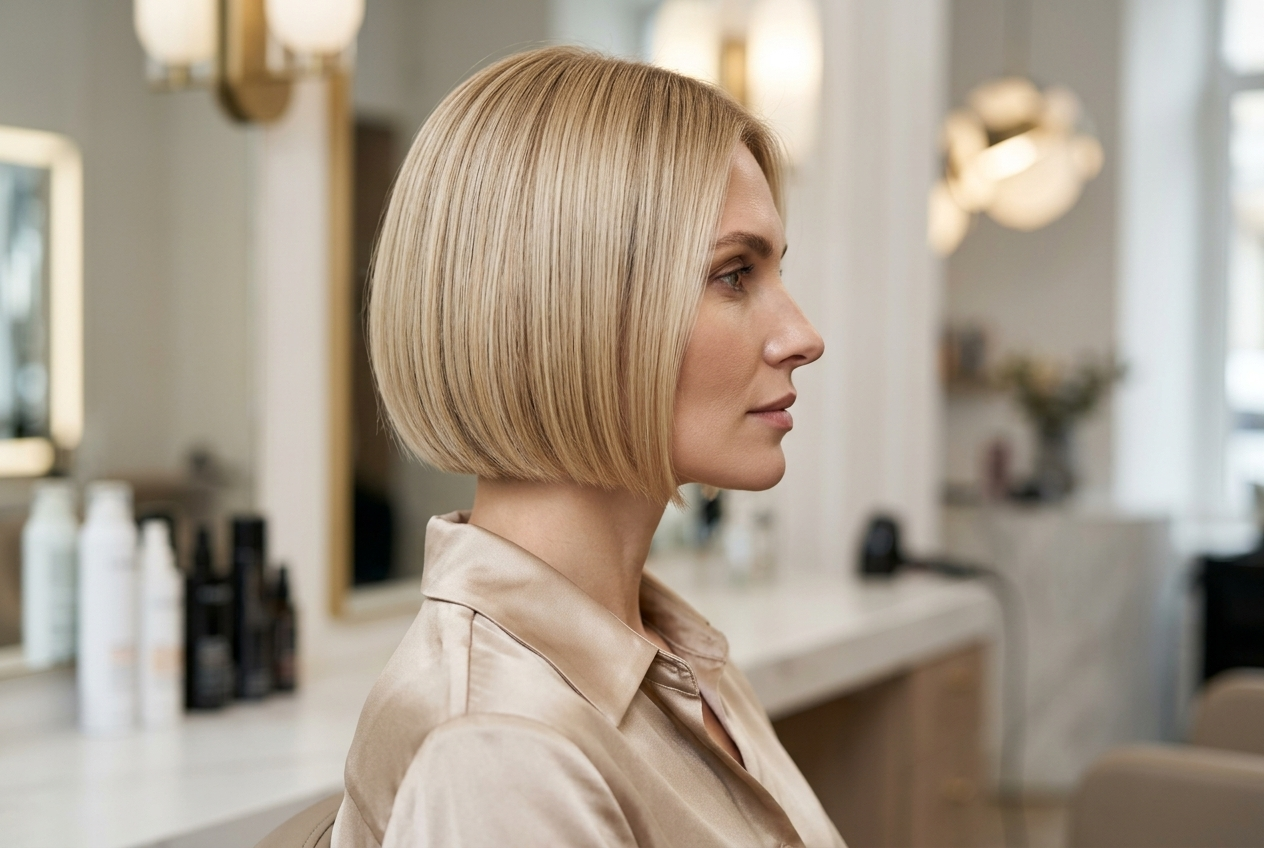
The French bob keeps coming back because it keeps working. It sits right at the chin or just below it, often paired with soft blunt bangs, and it has a quiet confidence that’s hard to manufacture with products alone.
For fine hair, this cut is especially effective. The blunt line at the chin creates the illusion of thickness, and the shorter length means the hair isn’t dragging itself down by its own weight. Stylists describe it as a cut that “makes fine hair appear extremely full and healthy.” The Parisian finish — slightly undone, a little air-dried — is also forgiving, which is a bonus when you don’t have a lot of volume to work with to begin with.
To style, a dry shampoo foam at the roots gives that effortless lift. Skip the heavy serums and go for something lightweight if you want shine without the flatness.
2. The Blunt Bob
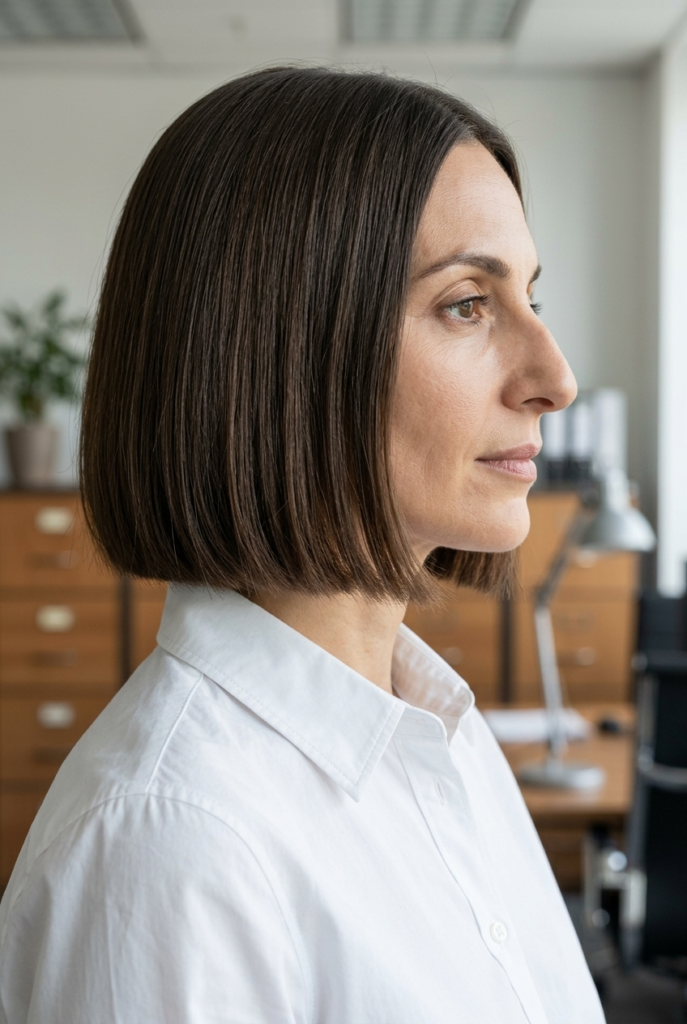
A blunt bob is one of the most reliable cuts for fine hair, and also one of the most underestimated. There are no layers pulling the ends thin. Instead, all the hair falls to a single line, which creates the appearance of density that fine hair otherwise struggles to show.
What makes it look expensive is precision. The cut has to be clean — sharp edges, consistent length. When it’s done right, it photographs beautifully and holds its shape through the day without much intervention.
Stylists note that a one-length, perfectly cut bob in good condition reads as genuinely luxurious. Worn straight or with soft waves, it adapts to most occasions. The maintenance cycle is roughly every six to eight weeks to keep the line sharp.
3. The Bixie Cut
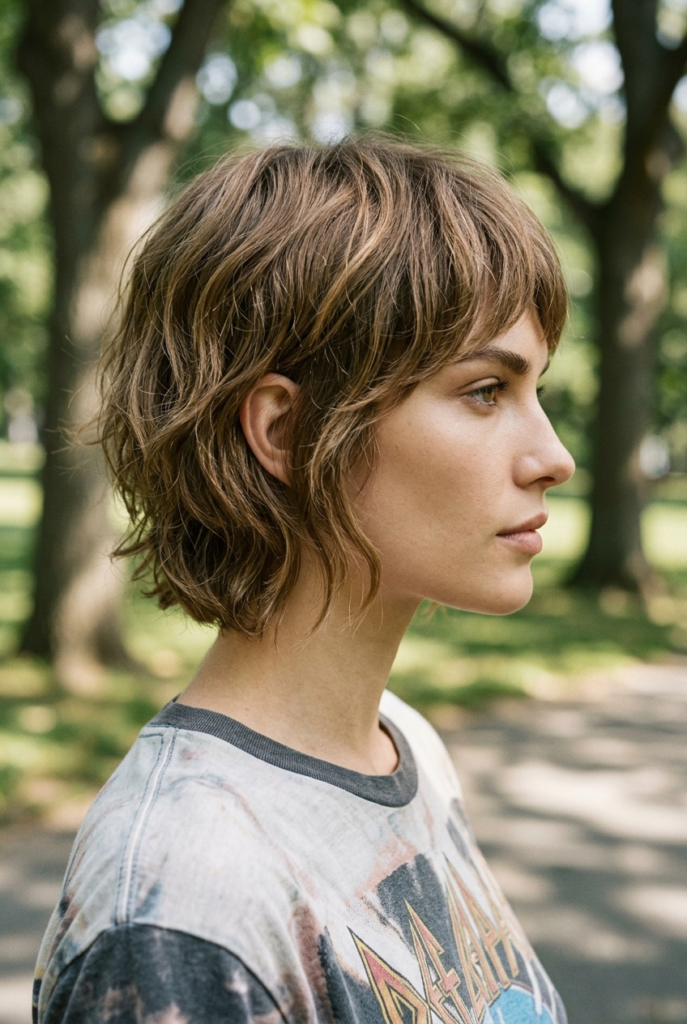
The bixie sits somewhere between a bob and a pixie, and it’s one of the most talked-about cuts going into 2026. For women who want to go shorter but aren’t ready to commit to a full pixie, it hits a sweet spot — shorter than a bob, longer than a classic pixie, with face-framing layers and a naturally textured finish.
Fine hair handles the bixie well because the shorter layers add lift at the crown without needing product to hold them there. The cut has movement built in, which gives the impression of thickness that fine strands don’t always project on their own.
Celebrity hairstylist Ursula Stephen, who cuts Zendaya’s bixie, describes it as the length “when you usually give up on the idea of growing it out.” The styling is low-effort: a blow-dry prep spray and a quick rough dry is usually enough.
4. The Soft Pixie
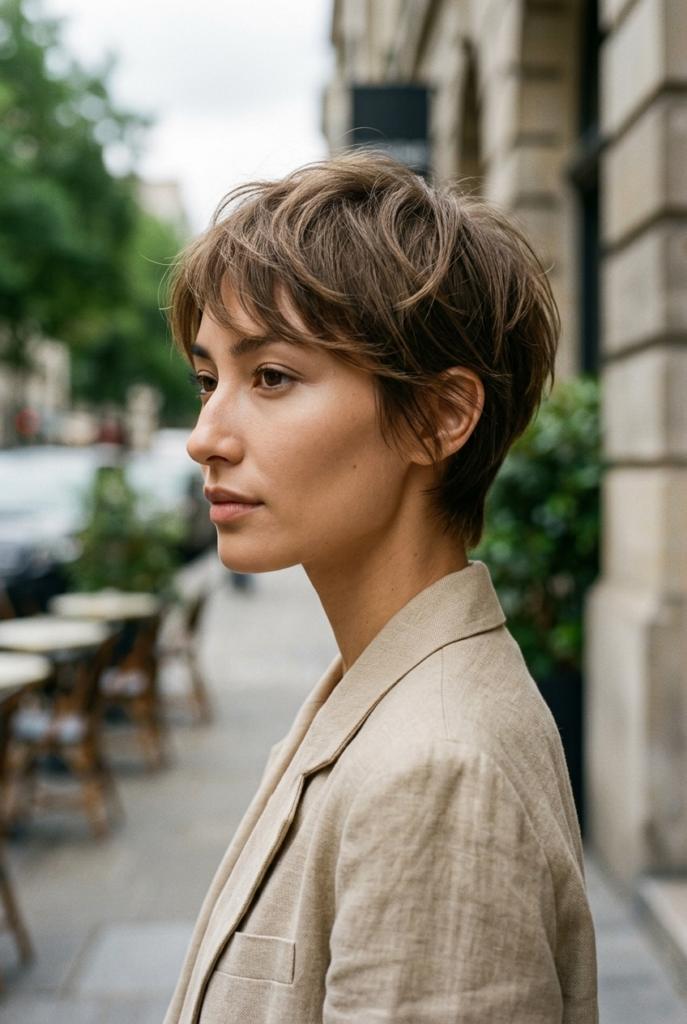
The soft pixie is different from the classic close-cropped version most women picture. Instead of sharp lines and tight edges, it has airy movement, softer framing around the face, and a finish that reads more “undone but polished” than severe.
For fine hair, this is a strong option. Fine strands actually move more naturally at this length, and the reduced weight means the hair sits with a lightness that thicker textures sometimes struggle to achieve. Stylists are calling it “short but not severe — perfect for clients who want something bold while still easy to style in minutes.”
It works on most hair textures and face shapes. The key is asking for softness at the edges rather than a tight clip — that single adjustment changes the entire mood of the cut.
5. The Stacked Bob
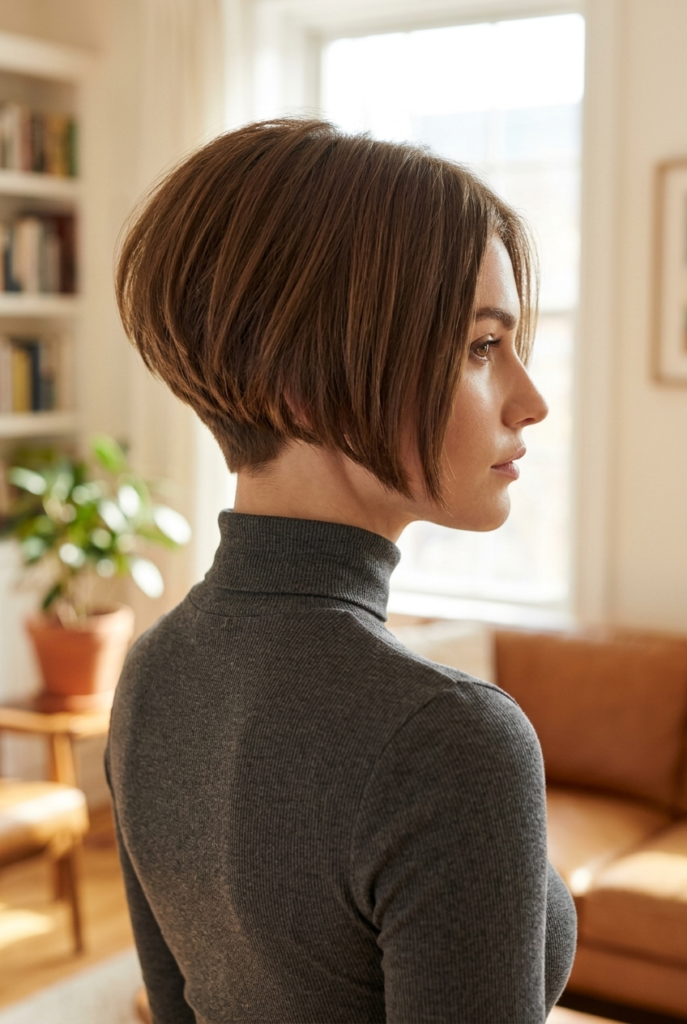
A stacked bob is cut shorter in the back with longer pieces toward the front. The stacking creates a rounded, lifted shape at the back of the head — which is exactly what fine hair needs, since flat back sections are one of its biggest challenges.
The lift at the crown and nape reads as volume even when there isn’t much hair to work with. When the layers in back are cut close and the front pieces are left a little longer, the silhouette becomes full and structured in a way that a simple blunt cut doesn’t always achieve.
Add subtle highlights or a bronde color blend and the depth increases further — color and cut working together to give the appearance of much denser hair.
6. The Textured Pixie

A textured pixie differs from a standard short crop in that the top has visible movement — choppy layers, pieces that point in slightly different directions, a finish that feels deliberate rather than clipped. For fine hair, texture is everything.
Smooth, flat hair with no variation tends to highlight how thin strands are. Add texture and suddenly there’s dimension, shadow, and visual interest. A texturizing spray or lightweight mousse is all that’s needed to define the layers after air drying or a quick rough dry.
This cut also ages beautifully. It doesn’t require constant precision to look intentional, which makes it more forgiving during the grow-out phase than a blunt cut would be.
7. The Trixie Cut
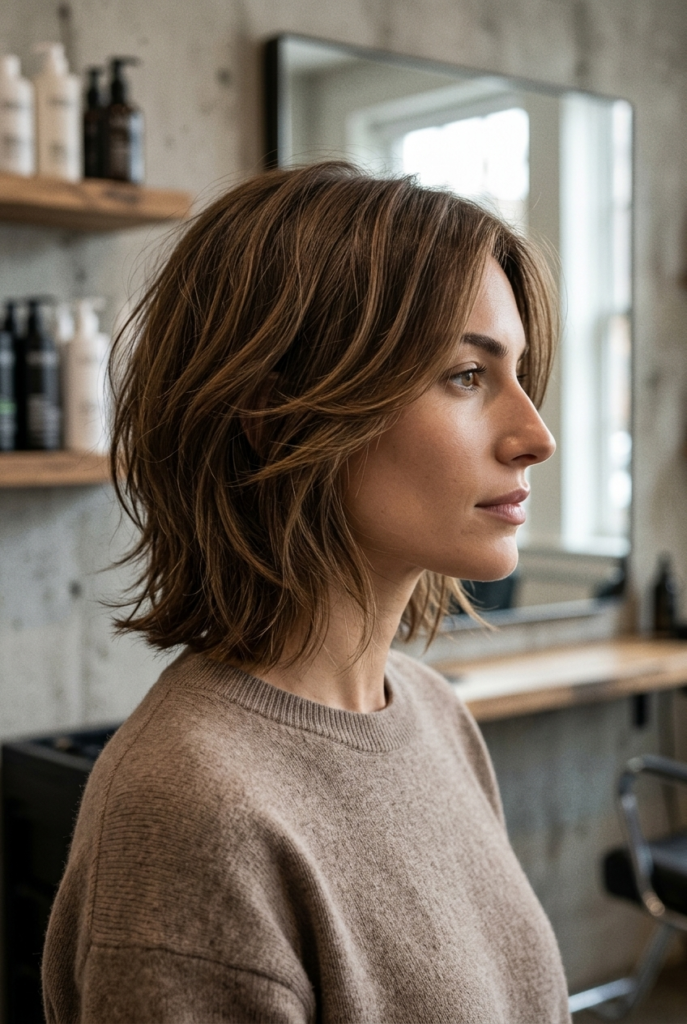
The trixie is a newer name for a cut that blends pixie and bixie elements — a mashup of the two, described by stylists as “short but not severe,” combining the ease of a pixie with the soft definition and movement of a longer bixie.
It sits slightly longer than a traditional pixie but shorter than most bixies, with a layered, slightly lived-in finish. Celebrity hairstylist Adam Reed describes it as a cut that brings “effortlessness” without sacrificing shape.
For fine hair specifically, the trixie avoids the mistake of cutting so short that the hair has nowhere to move. There’s just enough length to create flow, and the layers keep the top from sitting flat.
8. The Layered Pixie Bob
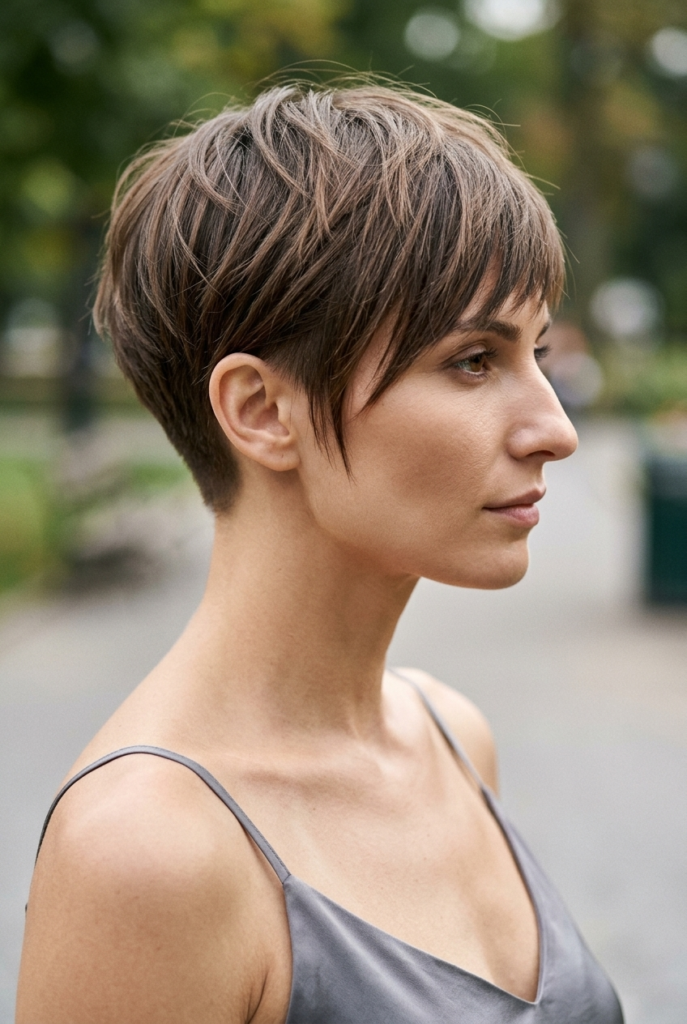
This is a broader category that combines the cropped sides and nape of a pixie with the slightly longer top and front of a bob. The layers are the defining feature — they create movement that fine hair can carry without product loading it down.
The cut works especially well for women with naturally straight fine hair because the layers break up the flatness that often makes straight hair look limp. Long layers at the top and side-swept bangs build volume without requiring a round-brush blowout every morning.
Ask your stylist specifically for “wispy, feathery layers” rather than blunt layers — the difference in finish is significant.
9. The Kicktail Bob
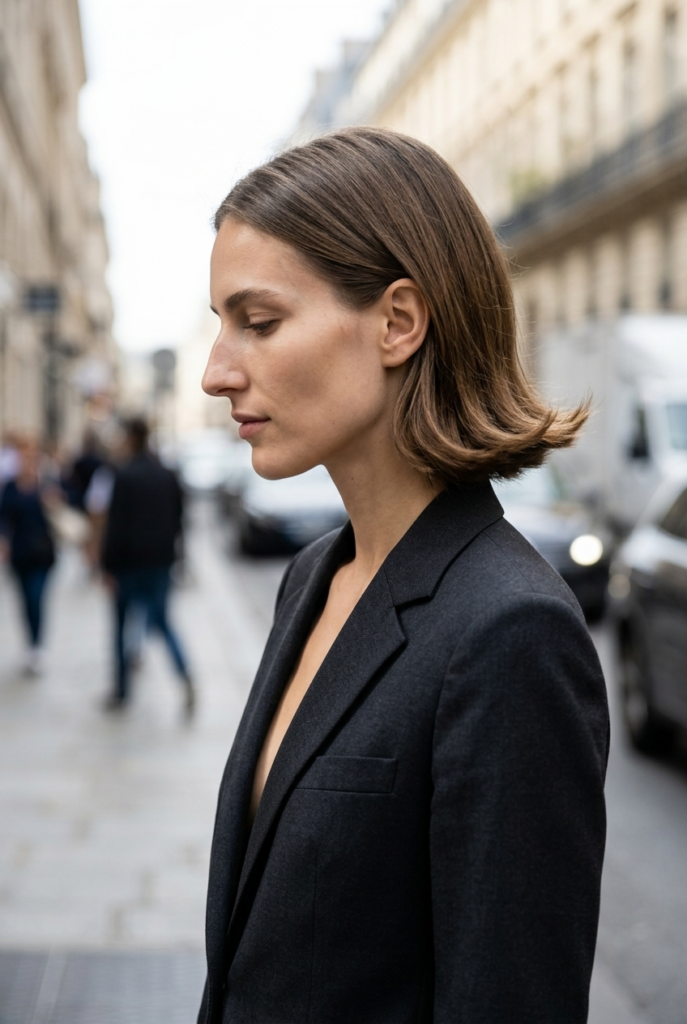
The kicktail bob is a bob cut where the ends are dried or styled to flip slightly outward. It’s a current trend that takes the classic bob and adds personality without adding length or complexity.
For fine hair, the outward flip at the ends actually creates an optical illusion of fullness. The ends appear to take up more space, and the movement keeps the style from looking flat or drooping. What’s particularly useful about this cut is that the flipped ends don’t rely on hair density — they’re achieved through blow-drying technique.
A flat brush dried outward at the ends is all it takes. Lightweight mousse before drying helps hold the flip without weighing the strands down.
10. The Short Shag
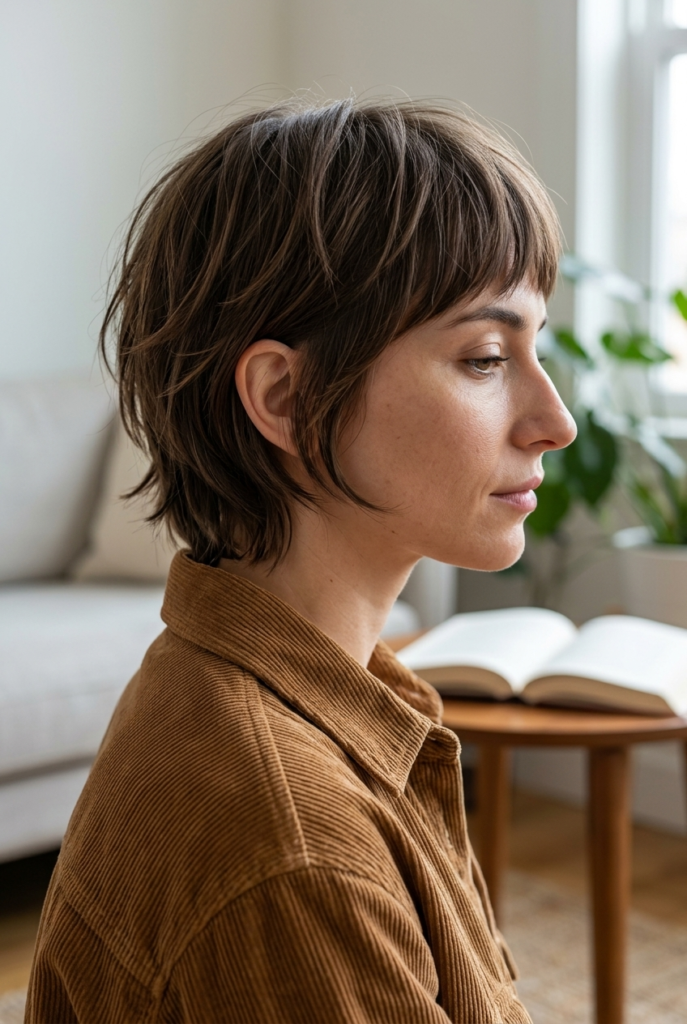
The shag brings in layers, movement, and a little bit of texture that works beautifully on fine hair. Unlike heavier cuts that rely on volume for impact, the shag relies on shape — and shape doesn’t require thickness.
Modern versions of the shag are cleaner than the ’70s original. The layers are less extreme, the fringe is softer, and the finish reads more polished than rock-and-roll. Stylists describe the current iteration as having “choppy layers, lived-in movement, and a fringe that can be shaped to suit every face.”
For fine hair, keeping the shag at a shorter length — just below the ear to chin-length — prevents the weight of longer layers from dragging the top flat.
11. The Asymmetrical Bob
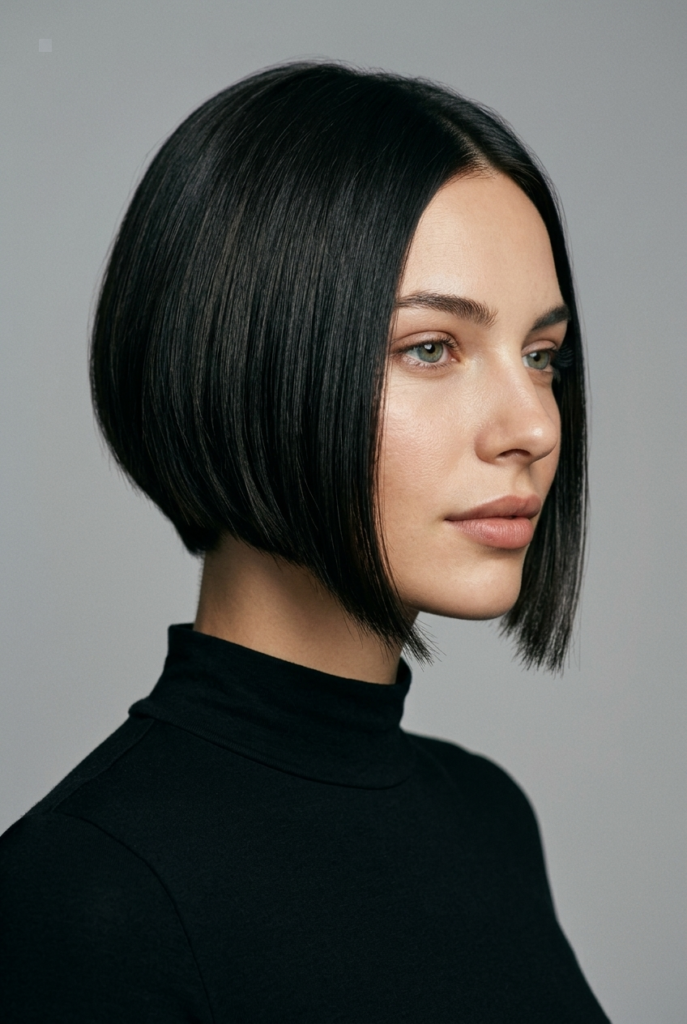
An asymmetrical bob has one side cut longer than the other. The angle creates visual interest and movement, and for fine hair, that contrast is especially useful because it draws the eye to the shape of the cut rather than the density of the hair.
The style works best when the longer side grazes the jaw or just below it, while the shorter side sits above it. The angle creates the appearance of fullness without requiring layers or volume product to do the heavy lifting.
It’s a cut that reads as deliberate — nobody accidentally ends up with an asymmetrical bob. That intentionality is part of what makes it look expensive.
The Real Secret Is Condition, Not Thickness
Every cut on this list works better when the hair is in good condition. Fine hair in poor condition — split ends, dryness, breakage — will look thin regardless of the cut. Fine hair that’s clean, hydrated, and trimmed regularly looks full, shiny, and intentional.
Regular trims every five to eight weeks keep the shape of short cuts sharp. A lightweight volumizing shampoo and a protein-boosting conditioner make a bigger difference than most women realize. And keeping heat styling to a minimum — or always using heat protection when you do — preserves the integrity of fine strands over time.
The goal isn’t to fake thickness. It’s to cut the hair in a way that highlights what fine hair actually does well: movement, lightness, and shine. The right short cut does exactly that.
Frequently Asked Questions
Q: Are short haircuts actually better for fine hair? A: Yes, generally speaking. Fine hair loses volume and looks flatter as it gets longer because the weight of the length pulls strands down. Short cuts remove that weight, which lets the hair sit with more natural lift and movement.
Q: Which short cut gives the most volume to fine hair? A: The stacked bob and the blunt bob are consistently the strongest options for creating the appearance of thickness. The stacked bob adds height at the crown; the blunt bob creates a dense, one-line finish that reads as fuller than layered ends do.
Q: What is a bixie cut? A: A bixie falls between a bob and a pixie in length — shorter than most bobs, longer than a traditional pixie. It features textured, face-framing layers and a finish that’s easy to style with minimal product.
Q: How often do short haircuts need to be trimmed? A: Pixie cuts need trims every four to six weeks to maintain their shape. Bobs and bixies can go six to eight weeks. Going too long between trims causes the shape to blur, which makes fine hair look unpolished rather than intentional.
Q: Will a short haircut work for fine hair that is also straight? A: Yes — straight fine hair responds especially well to blunt cuts, stacked bobs, and soft pixies. The natural smoothness of straight hair actually enhances the sleek, structured look these cuts are designed for.
Q: What products work best for styling short fine hair? A: Lightweight volumizing mousse, dry shampoo foam, and texturizing spray are the most versatile. Avoid heavy serums or oils, which can flatten fine strands. Apply at the roots for lift rather than running product through the ends.
Q: Is the French bob high maintenance? A: Not especially. It needs trims every six to eight weeks to keep the line clean, but the daily styling is minimal — a quick rough dry and a little root product is all it usually takes. It’s one of the more practical cuts for women who want a polished look without a long morning routine.
Q: Can fine hair pull off a pixie cut? A: Absolutely. Fine hair is actually well-suited to pixie cuts because the shorter length removes the weight that would otherwise flatten it. The soft pixie — with airy edges rather than harsh lines — is particularly flattering.

