


Turning 50 doesn’t mean your hair has to play it safe. Hormones shift, texture changes, and what worked at 35 might not sit the same way now — but that just means it’s time for a cut that actually works with your hair instead of against it. The right haircut can add lift where you’ve lost it, soften features that have changed shape, and take real time off your morning routine.
Most women over 50 deal with some combination of thinning strands, drier texture, and more gray coming in. None of that is a problem to hide. Stylists are leaning hard into cuts that build in movement and volume rather than styles that need thick hair to look good in the first place.
Below are ten of the most flattering haircuts women are choosing right now, along with a quick guide on how to pick the one that fits your face shape and hair type.
- The Lob (Long Bob)
- Soft Layered Bob
- Textured Pixie Crop
- Shoulder-Length Shag with Curtain Bangs
- Blunt Bob with Face-Framing Layers
- Curly or Wavy Bob
- Silver and Gray Crops
- Long Layers with Soft Waves
- Voluminous Crown Pixie with Bangs
- Matching the Cut to Your Face and Hair Texture
- A Cut That Works With You, Not Against You
- Frequently Asked Questions
The Lob (Long Bob)

The lob has held its spot as one of the most requested cuts for a reason — it lands between the chin and the collarbone, giving you the shape of a bob without cutting off all your length. It flatters nearly every face shape, softens the jawline, and plays especially well with gray or silver hair, since the length keeps things looking soft rather than severe. It also works with almost any texture, from board-straight to naturally wavy, which is part of why stylists keep calling it a modern classic.
Soft Layered Bob
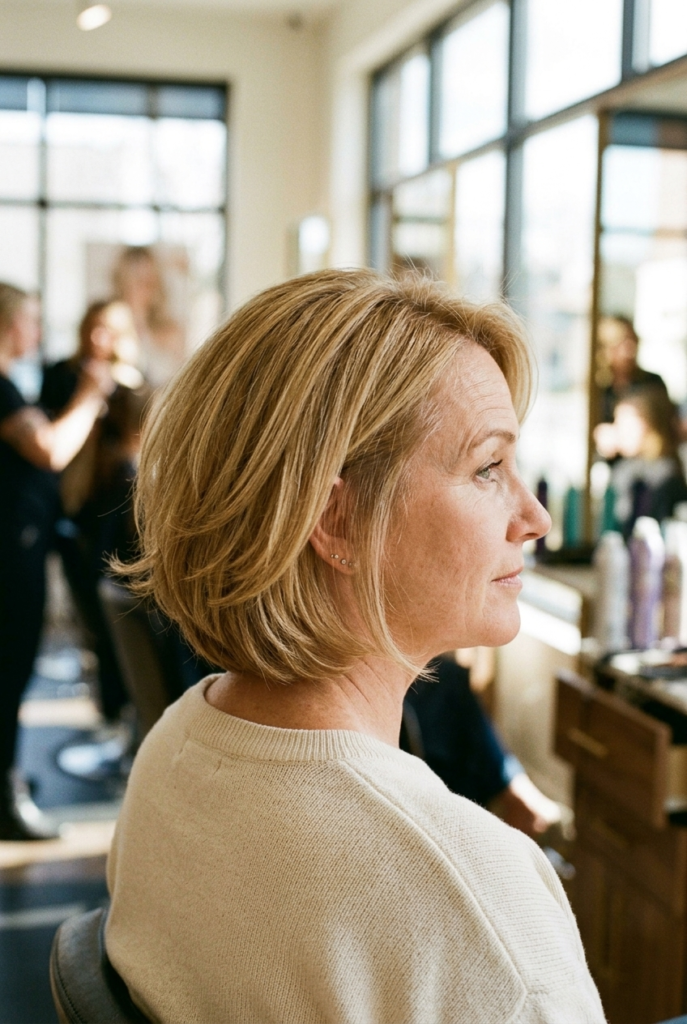
A layered bob solves one of the biggest complaints women have after 50: hair that goes flat by lunchtime. Graduated layers cut into a chin-or-jaw-length bob add lift at the crown and movement through the ends, without the heaviness that can drag fine hair down. The layers also do a nice job disguising thinning at the temples, since they create shape instead of one flat sheet of hair.
This cut behaves well on medium-density hair especially.
If your hair runs very fine, a volumizing spray at the roots keeps the shape from falling flat by afternoon.
Textured Pixie Crop
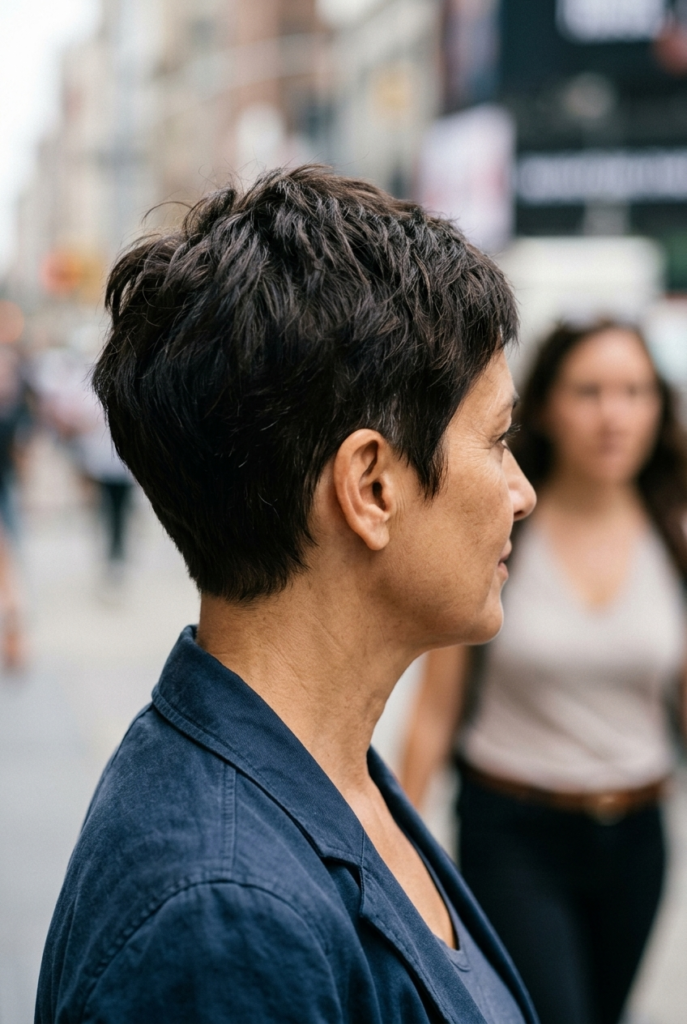
A textured pixie remains one of the boldest, lowest-maintenance choices out there.
Short, choppy layers on top give the illusion of thickness even when hair has thinned, and the cut requires very little heat styling to look finished. A small amount of matte paste worked through dry hair is often all it takes to get definition. Because the length stays short all over, a pixie also tends to need trims every four to six weeks to hold its shape, so it works best for women who don’t mind a bit more time in the stylist’s chair.
Shoulder-Length Shag with Curtain Bangs
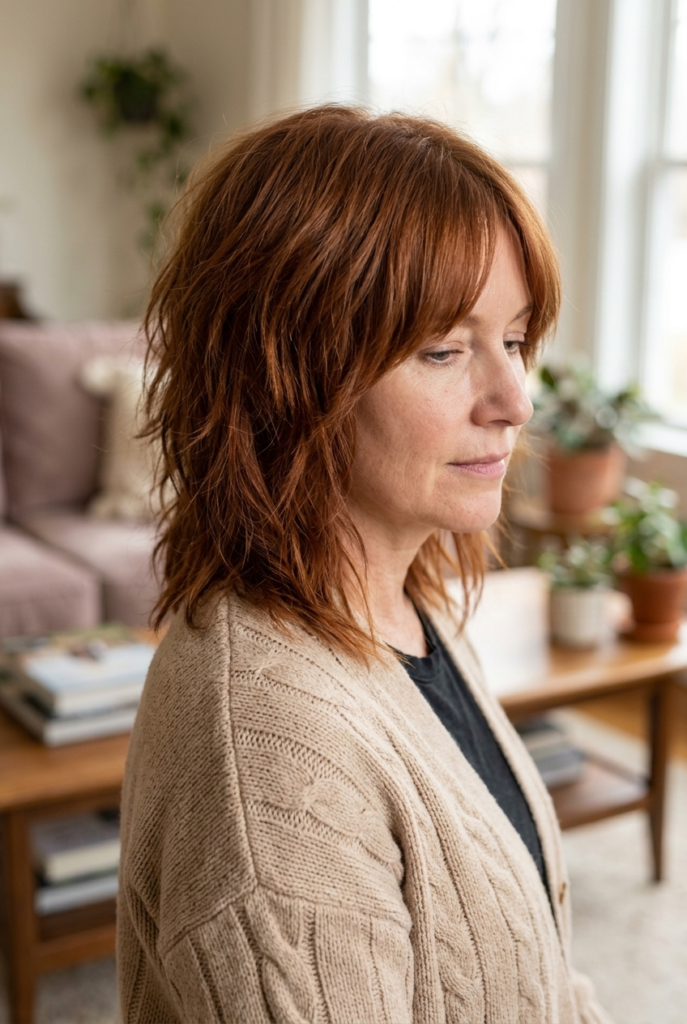
The shag has come back in a softer, more grown-up version, and it happens to be one of the better options for women dealing with fine or thinning hair. Choppy, irregular layers built through the mid-lengths create texture and body without needing a curling iron every morning, and curtain bangs soften the forehead while framing the eyes. The whole look leans effortless rather than styled, which fits a lot of women’s daily routines a lot better than a sleek, polished cut would.
Blunt Bob with Face-Framing Layers
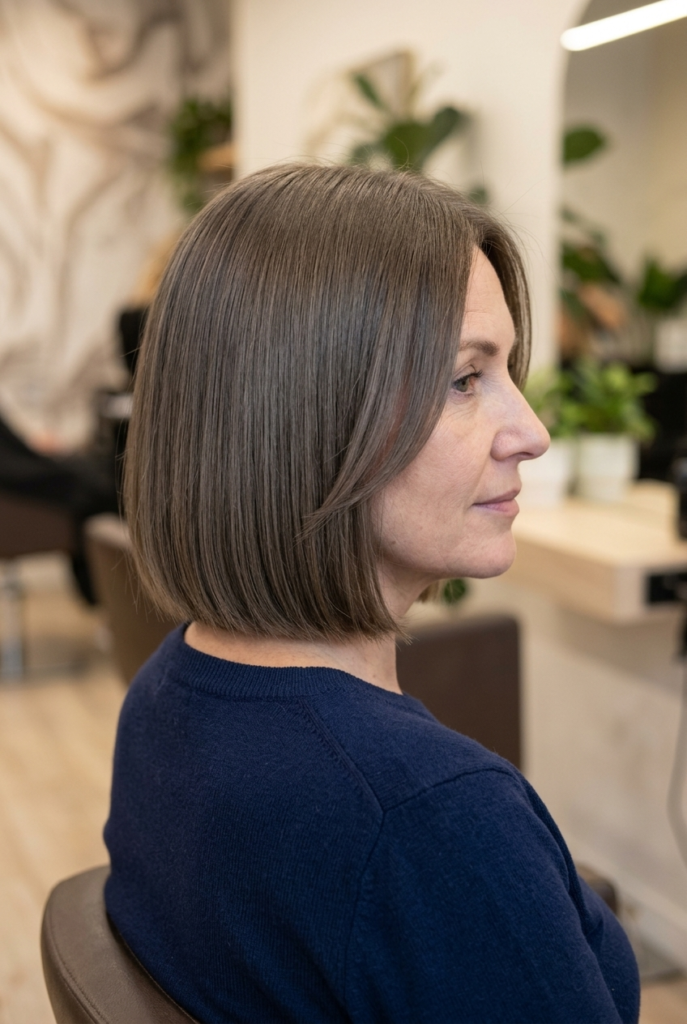
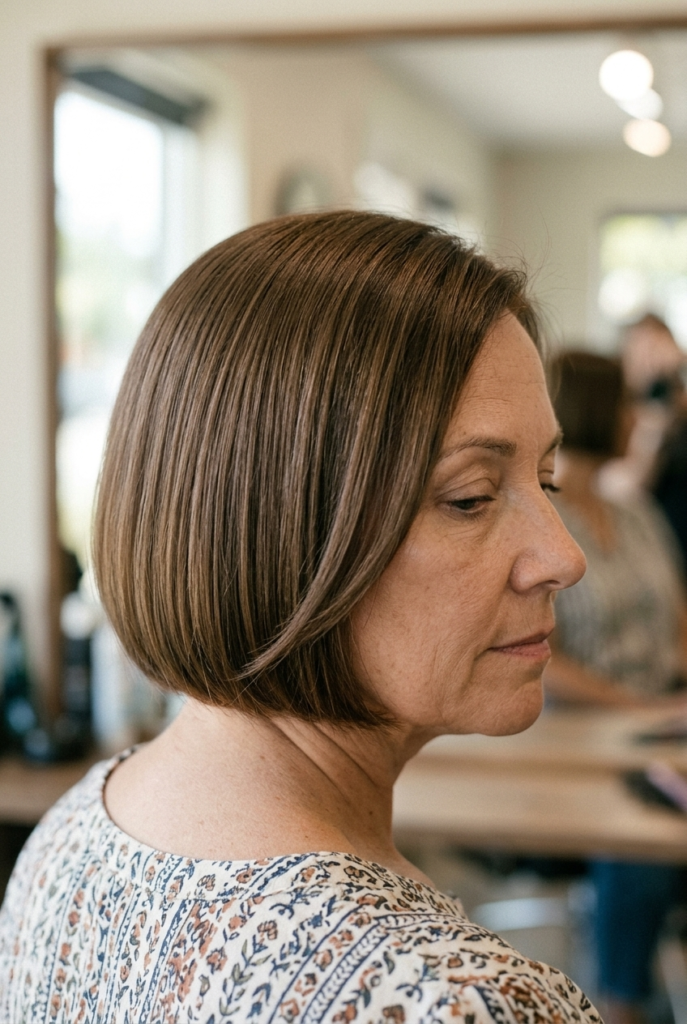
A blunt bob paired with just a few face-framing layers gives a cleaner, more structured look than a shag or a layered bob.
The blunt line at the bottom gives the appearance of thicker, denser ends, which is a welcome trick for hair that has lost some fullness over the years. A couple of angled layers near the cheekbones add softness so the cut doesn’t look too severe.
This version tends to suit women with straighter, medium-to-thick hair best, since the blunt edge holds its shape more cleanly on that texture.
Curly or Wavy Bob
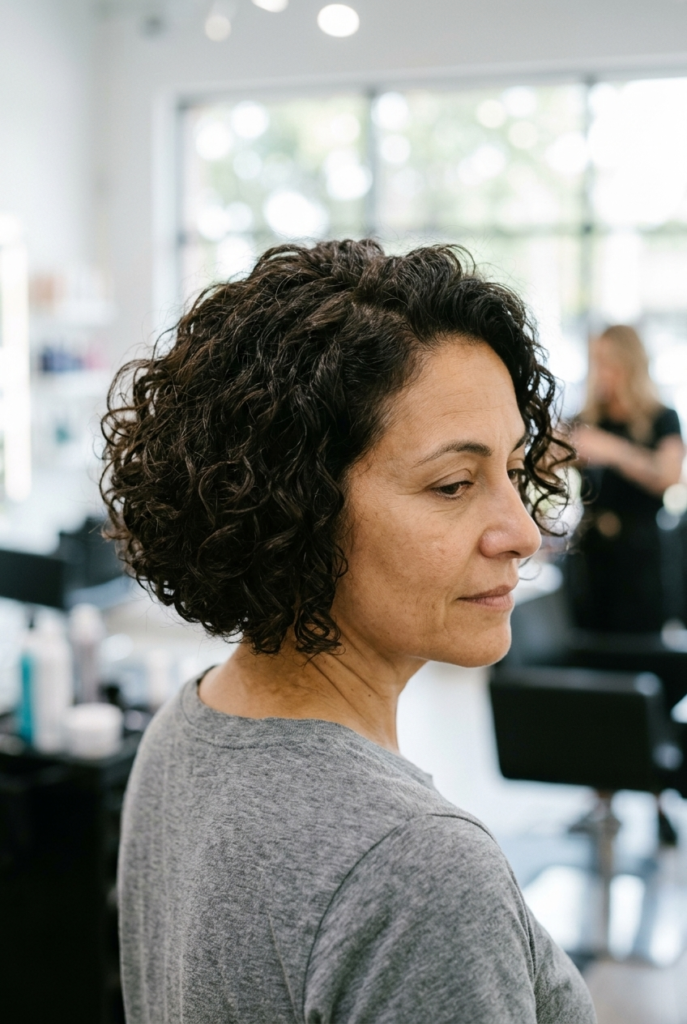
Curly and wavy hair often gets overlooked in these lists, but a curly bob cut specifically for natural texture can look just as polished as any straight style. The trick is having a stylist cut each curl dry, so the shape is built around how your hair actually falls rather than how it looks stretched out and wet. Done well, a curly bob adds volume exactly where gray hair or thinning at the crown tends to show the most.
Silver and Gray Crops
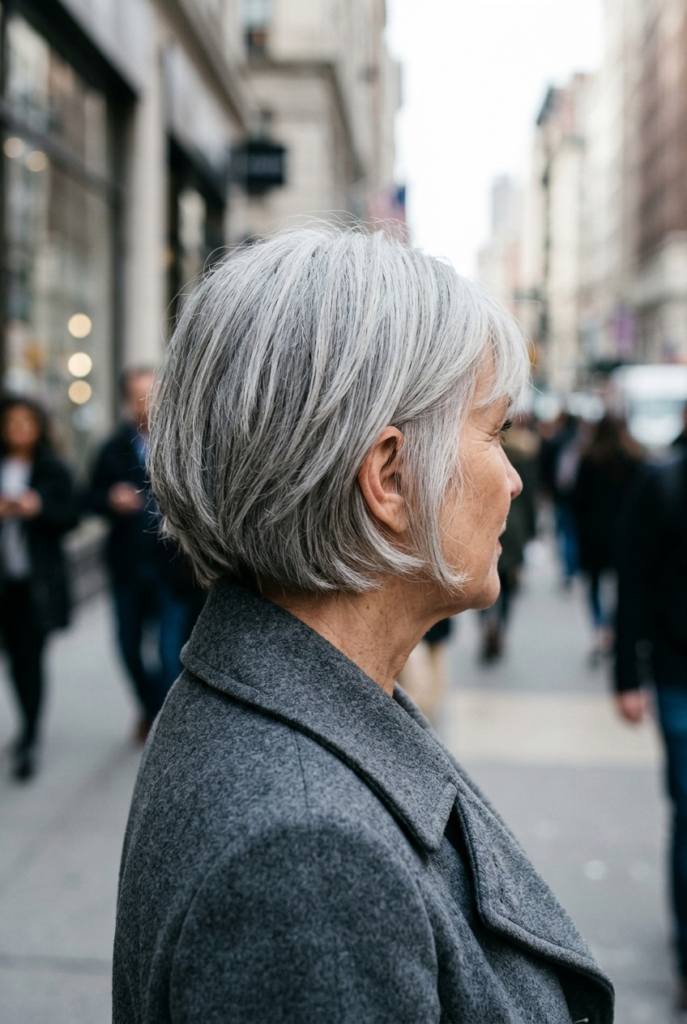
Gray hair has moved from something women covered up to something stylists now cut around and highlight. A shorter crop — anywhere from a pixie to a chin-length bob — tends to show off silver strands better than longer lengths do, since gray can look coarser and heavier the longer it grows. Short layers also break up any uneven gray growth, which is common for women transitioning away from color for the first time.
Stylists often recommend a slightly warmer toner underneath, since gray can occasionally take on a yellow or brassy cast without it.
Long Layers with Soft Waves
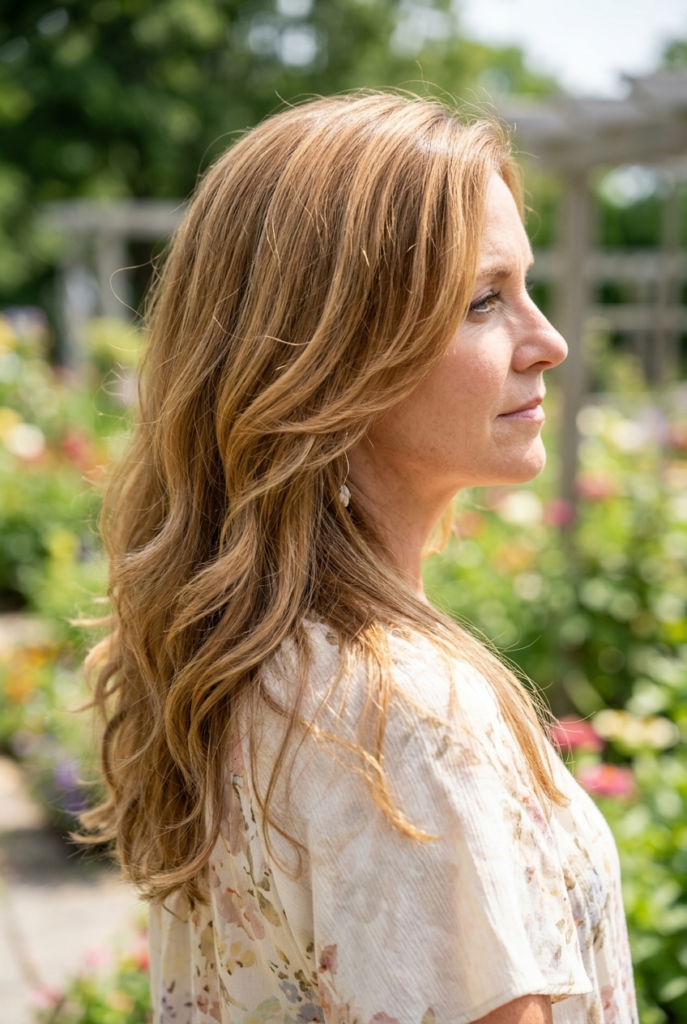
Not every woman wants to cut her hair short after 50, and long layers prove that length and volume aren’t mutually exclusive.
Layers cut starting around the cheekbone remove bulk from the ends while keeping length intact, which helps hair that has thinned look fuller rather than stringy.
A loose wave, done with a large-barrel iron or overnight braids, adds the kind of movement that keeps long hair from looking heavy or one-dimensional on older women.
Voluminous Crown Pixie with Bangs
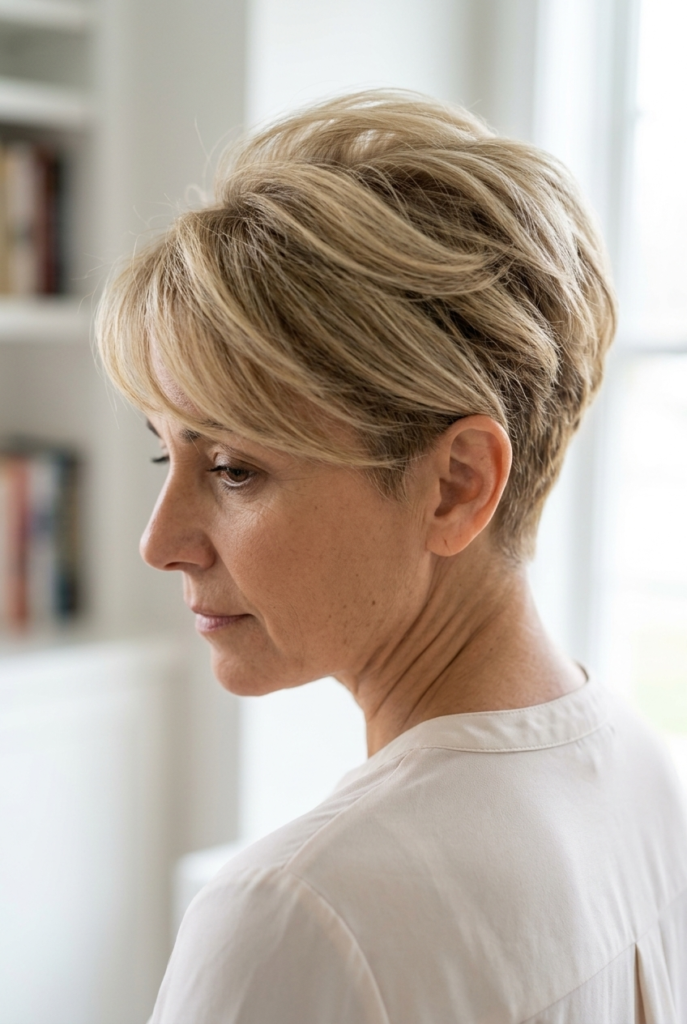
This variation on the classic pixie focuses almost entirely on the crown, where most women notice volume loss first. Extra length and layering are left on top, then blended into a very short back and sides, which creates lift exactly where it’s needed most. Paired with soft, side-swept bangs, the whole style looks fuller through the front without adding bulk anywhere else.
Matching the Cut to Your Face and Hair Texture
Picking a haircut isn’t only about what’s trending — it’s about what actually works with your face shape and the hair you have right now, not the hair you had twenty years ago. A round face generally benefits from length and angles, since a chin-length blunt bob or long layers add the vertical lines that soften roundness. Square faces tend to look best with soft, rounded layers or curtain bangs, which take the edge off strong jawlines. Oval faces have the most flexibility and can wear nearly anything on this list without much adjustment.
Texture matters just as much as shape.
A few starting points to keep in mind before your next appointment:
- Fine or thinning hair does best with blunt lines, short layers, or a pixie — all of which create the appearance of density
- Thick or coarse hair can handle more layering without losing shape or volume
- Curly and wavy hair should be cut dry so the stylist can see exactly how each section falls
- Gray or transitioning hair often looks best in shorter lengths, since gray tends to look heavier the longer it grows
A Cut That Works With You, Not Against You
The best haircut after 50 isn’t the one that’s trending hardest this year — it’s the one that fits how your hair actually behaves and how much time you’re willing to spend on it each morning. Whether that’s a low-maintenance pixie, a shag that thrives on second-day texture, or long layers that keep some length while adding movement, there’s a version of nearly every style here that can work for your hair type and face shape.
Bring a photo or two to your next salon visit, but don’t be afraid to ask your stylist how a cut needs to be adjusted for your specific texture and density. A skilled stylist can take any of these ten ideas and shape it around what your hair is actually doing right now, which matters far more than copying a picture exactly.
Frequently Asked Questions
Q: What’s the most flattering haircut for women over 50 with thinning hair?
A: A blunt bob, a textured pixie, or short layers tend to work best, since all three create the appearance of thickness rather than relying on hair you don’t have.
Q: Is the lob a good choice for women with gray hair?
A: Yes. The lob’s length keeps gray hair looking soft and controlled rather than coarse, which can happen with longer lengths.
Q: How often do I need to get a pixie cut trimmed?
A: Most pixies need a trim every four to six weeks to keep their shape, since the short length grows out noticeably fast.
Q: Can I keep long hair after 50, or should I cut it shorter?
A: There’s no rule that says you have to cut your hair short. Long layers with movement can look just as fresh, as long as the ends are kept healthy and layered so they don’t look heavy.
Q: What haircut works best for a round face shape?
A: Cuts with length and angles, like a chin-length blunt bob or long layers, add vertical lines that soften a round face.
Q: Should curly hair be cut wet or dry?
A: Dry, ideally. Cutting curly or wavy hair dry lets the stylist see exactly how each curl falls and shape the cut around your natural pattern.
Q: Do I need to cut my hair shorter once it turns gray?
A: Not necessarily, but many women find shorter lengths show off silver strands better, since gray hair can look heavier and coarser the longer it grows.
Q: What’s a low-maintenance option for someone who doesn’t want to style their hair daily?
A: A shag with curtain bangs or a textured pixie are both built to look intentional with very little daily styling.
Q: Will layers make my hair look thinner?
A: Done correctly, no — layers cut for volume actually add the appearance of fullness. Too many thin, choppy layers on already fine hair can occasionally backfire, so it’s worth discussing density with your stylist first.

