

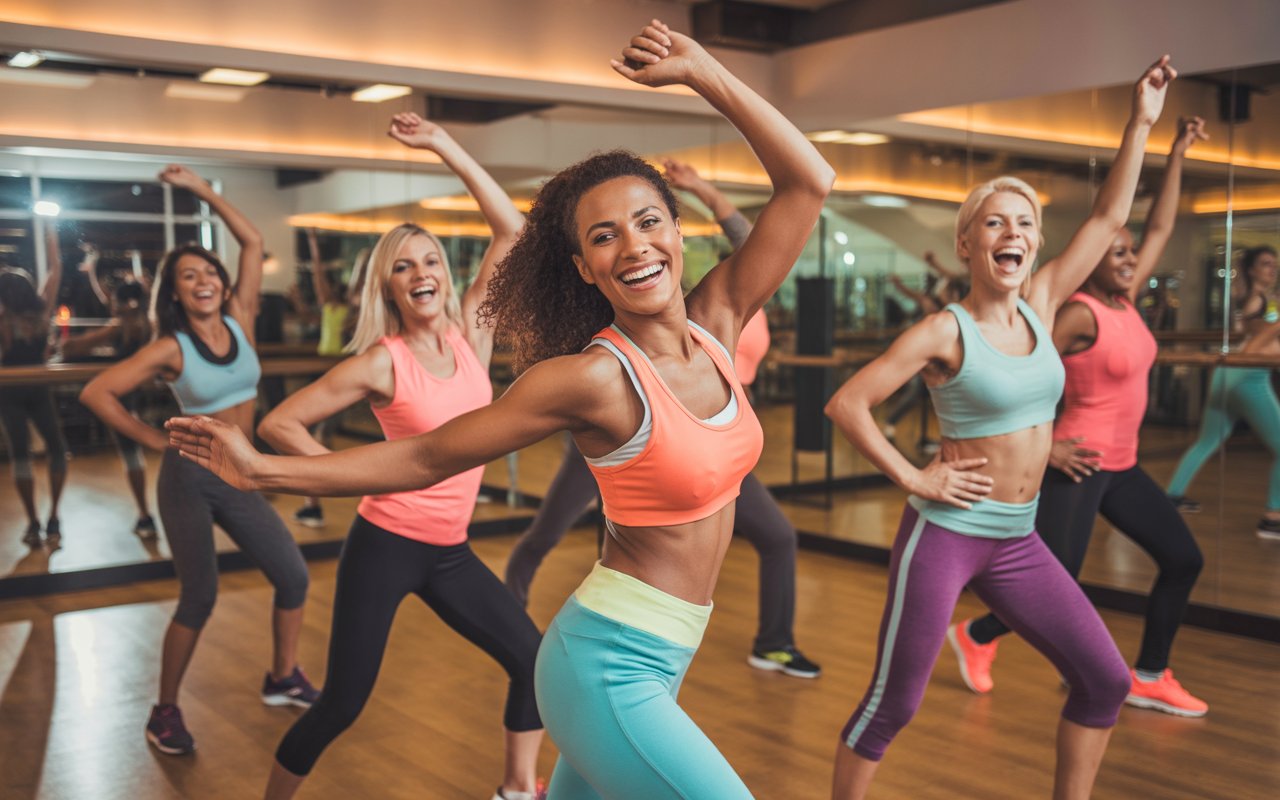
There’s a reason Zumba classes are always packed. Walk into any gym on a Tuesday evening and you’ll hear the music before you even open the door — a mix of salsa, reggaeton, and merengue pumping through the walls while a room full of women laugh, sweat, and move without a care in the world. It doesn’t look like a workout. It looks like a party. And that, honestly, is the whole point.
The good news for anyone standing on the outside of that door, too nervous to walk in, is that nobody in that room started out knowing what they were doing. Every single woman in that class had a first day. A day when she didn’t know the steps, felt completely out of sync, and questioned whether she should have just stayed home. And yet, she kept going back.
If you’ve been curious about giving it a shot but have no idea where to begin, what to wear, or what actually happens in a class, this is where to start. From the basic moves and what a typical session looks like, to how to stay consistent without burning out, here’s everything you need to walk into your first class — or start one at home — with confidence.
- You Don't Need to Know How to Dance
- What Actually Happens in a Zumba Class
- The 4 Basic Moves Worth Knowing Before You Go
- What to Wear and Bring
- In-Person Class vs. Working Out at Home
- Why Your Body Will Thank You
- How Often to Go and How to Build a Routine
- You're Allowed to Be Bad at It — At First
- Give Yourself Time to Find Your Rhythm
- Frequently Asked Questions
You Don’t Need to Know How to Dance
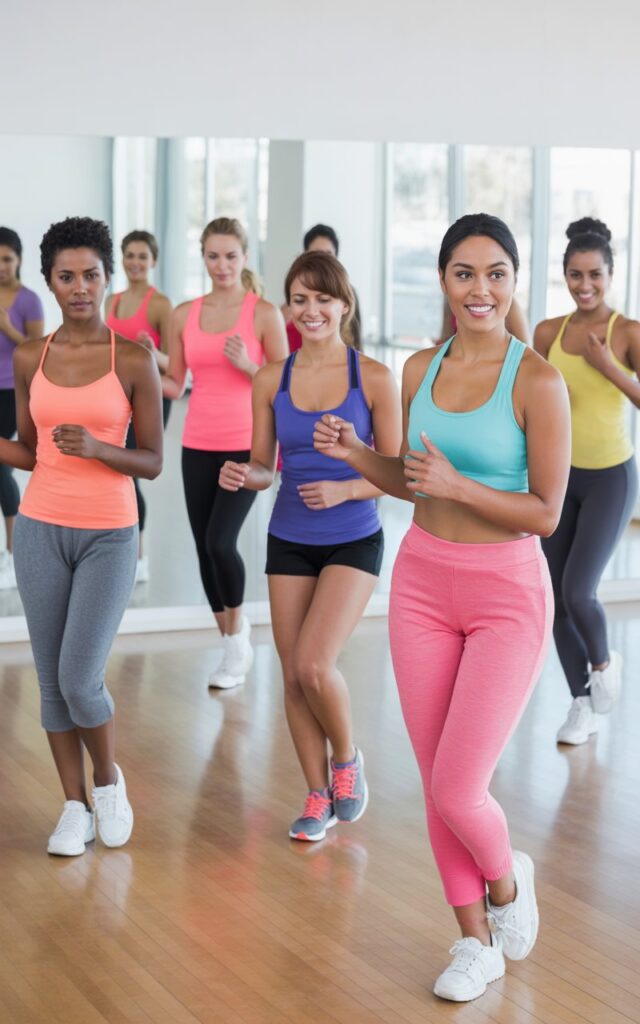
This is the thing most women get wrong before they even begin. They assume that because it’s a dance-based class, they need some kind of background in dancing. They don’t. The official Zumba website says it plainly: all you need is an open mindset and a willingness to give it your best shot.
The class is designed so that moves repeat throughout the session alongside different songs. That repetition is intentional — it’s how you start to recognize the patterns without having to think too hard about them. By your third or fourth class, steps that felt completely foreign will start to click into place on their own.
For your very first class, a useful trick is to focus only on your feet. Don’t try to add arm movements right away. Once your feet know where they’re going, the arms can follow naturally. Trying to coordinate everything at once from day one is what makes women feel overwhelmed and give up too soon.
What Actually Happens in a Zumba Class
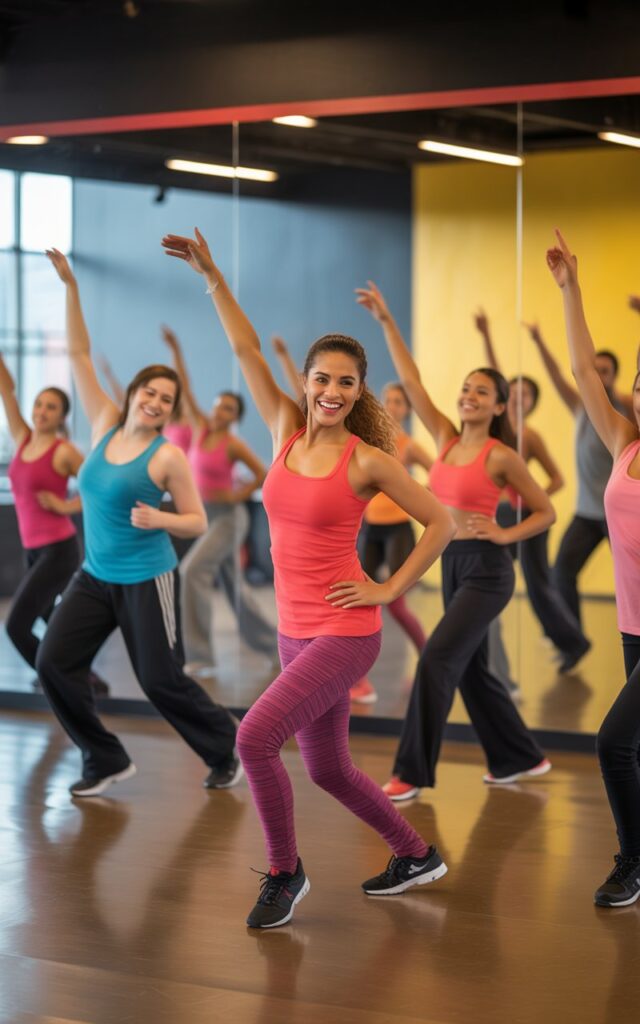
A standard class runs about an hour. It opens with a warm-up — light cardio, marching in place, arm stretches, shoulder rolls — nothing complicated, just enough to get the blood moving. After that, the instructor leads the group through a series of dance sequences set to back-to-back songs, alternating between high-energy tracks and slightly slower ones. The class wraps up with a cooldown and some stretching to bring the heart rate back down.
That alternating structure between fast and slower songs isn’t random. It mirrors interval training, and research from the American Council on Exercise shows this kind of work-and-recovery pattern can burn more calories and build better endurance than staying at one consistent pace the whole time.
The four dance styles you’ll see most often are salsa, merengue, cumbia, and reggaeton. Each one has a distinct feel and rhythm. Merengue, for example, is one of the simpler ones — it’s basically a march with hip movement added in. Salsa requires a little more coordination, but the steps themselves are small and manageable once you slow them down.
The 4 Basic Moves Worth Knowing Before You Go
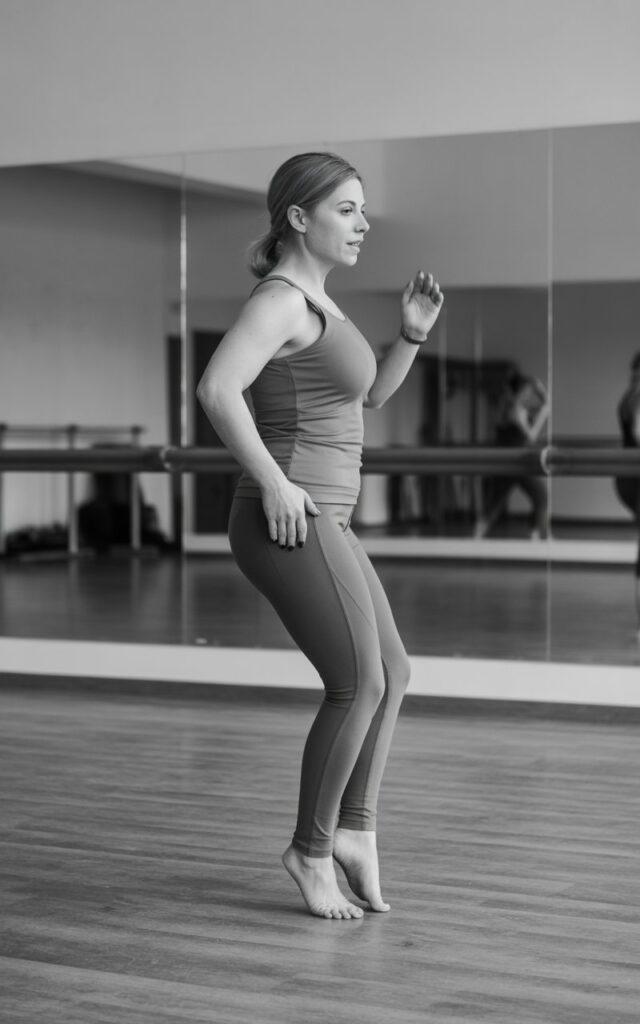
You don’t need to memorize a routine before your first class. But having a rough idea of what the most common steps look like can help you feel less lost when the instructor starts moving.
Merengue March
Stand with feet close together. Shift your weight to the right, lifting the left heel slightly, then switch sides. Add hip movement toward whichever foot has the heel planted. This is the foundation of most beginner sequences.
Salsa Step
Step forward with your left foot, bring your right foot to meet it, then step back with your left. Reverse the pattern. It’s a simple three-step pattern with a weight shift that naturally gets the hips involved.
Cumbia
Step out wide to the left, bring the right foot in and tap it next to the left. Then step wide to the right. The key is in the hip lean — let your body lean into the direction you’re moving, and it starts to feel like a natural groove rather than a march.
Reggaeton Bounce
A low, bent-knee stance with rhythmic hip movement front to back. It looks harder than it is. Once the knees soften and the hips relax, most women pick this one up quickly.
What to Wear and Bring
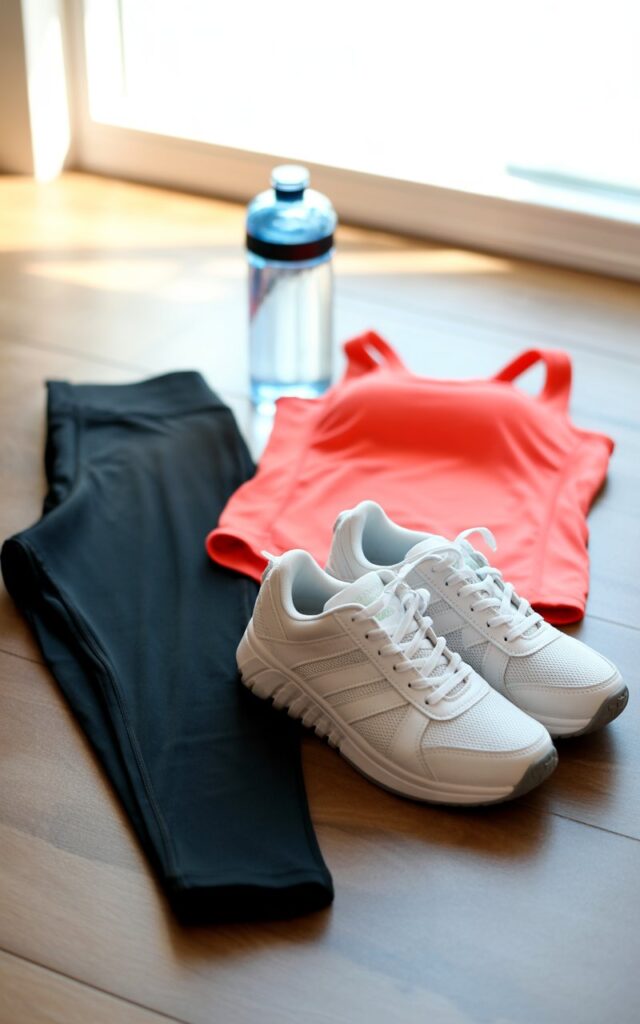
Comfortable, breathable workout clothes are all you need — leggings, shorts, a tank top, whatever lets you move freely. The shoes matter more than most women realize. Cross-trainers or dance sneakers work best because they provide lateral support for side-to-side movements. Running shoes, which are built for forward motion, can actually make pivoting harder and put unnecessary stress on your knees.
Bring a full water bottle. A 40-minute class can burn close to 370 calories on average, according to a study from the Journal of Sports Science and Medicine, and that kind of output means serious sweating. Drinking water before, during, and after the session keeps your energy up and helps prevent the headaches that come with dehydration mid-workout.
In-Person Class vs. Working Out at Home
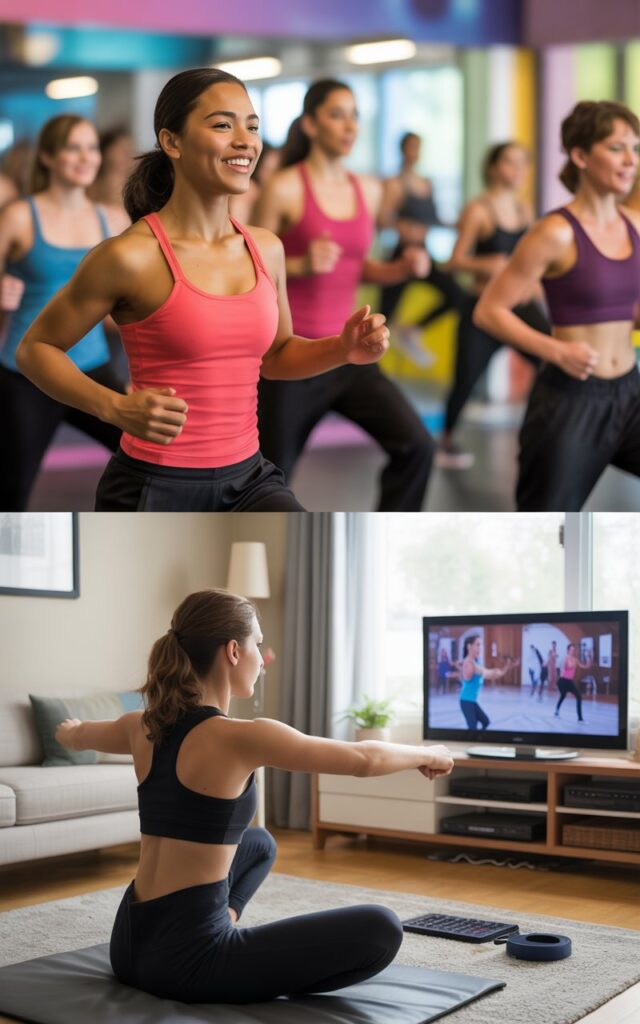
Both options work, and neither one is the “right” choice — it depends on your personality and schedule.
In-person classes give you a live instructor who can offer real-time feedback, a room full of people who create natural motivation, and the kind of energy that’s genuinely hard to replicate on your own. If you go this route, arriving a few minutes early to introduce yourself to the instructor and mention it’s your first time is worth doing. Most instructors will offer simpler modifications during class once they know you’re new.
One practical tip: don’t stand in the very back row. It seems like the “safe” spot, but the songs rotate and what starts as the back can become the front. The middle of the room gives you people on all sides to follow along with, which makes it much easier to pick up moves when you lose track of the instructor.
At-home workouts — through YouTube, on-demand platforms, or the official Zumba website — are a solid starting point if in-person classes feel like too much pressure right now. They let you pause, rewind, and practice steps as slowly as you need to. The structure for a home session should mirror a real class: five to ten minutes of warm-up, twenty to thirty minutes of dancing, and five to ten minutes of cooldown stretching.
Why Your Body Will Thank You
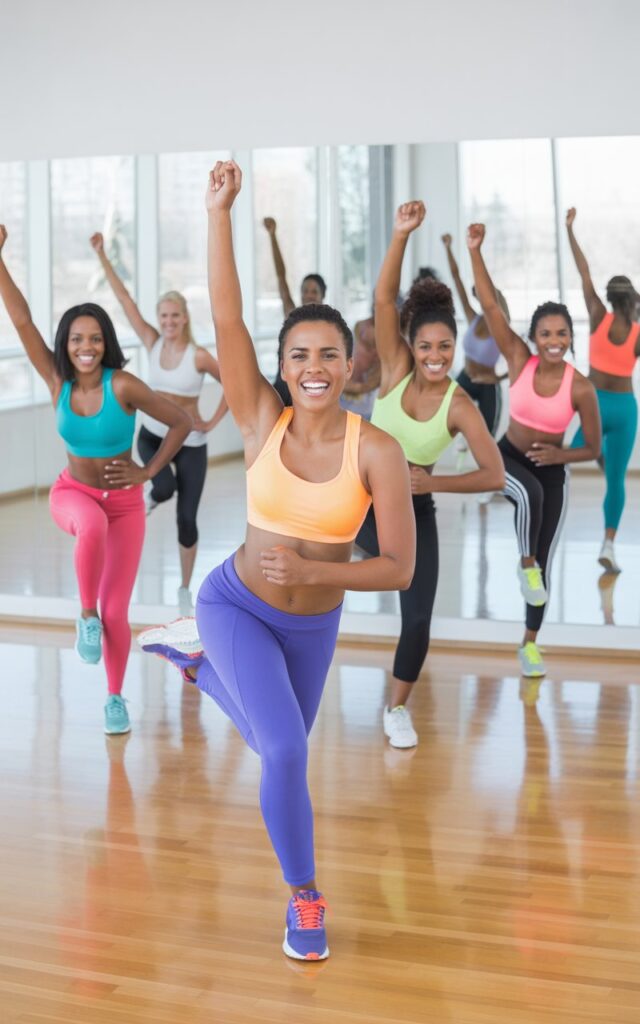
The physical results go well beyond what most women expect when they first sign up.
A study published in the Journal of Sports Science and Medicine found participants burned an average of 9.5 calories per minute during a class — a rate that outpaced cardio kickboxing, step aerobics, and power yoga. That’s meaningful for women focused on weight management. A systematic review published in a peer-reviewed sports medicine journal also noted that consistent participation significantly improves aerobic capacity over time.
The hip-heavy movements work the core muscles without a single crunch involved. Lateral steps, pivots, and hip rotations build balance and coordination that carry over into everyday movement — getting up from the floor, carrying groceries, climbing stairs without losing your breath. After a 12-week program, participants in one study showed measurable decreases in both heart rate and blood pressure, along with notable improvements in endurance.
On top of the physical side, the mental health lift is real. Exercise in general raises endorphin levels, but group exercise specifically has been linked to reduced feelings of stress and anxiety. The social element of a class — even a virtual one — adds a layer of accountability that makes women more likely to show up consistently.
How Often to Go and How to Build a Routine
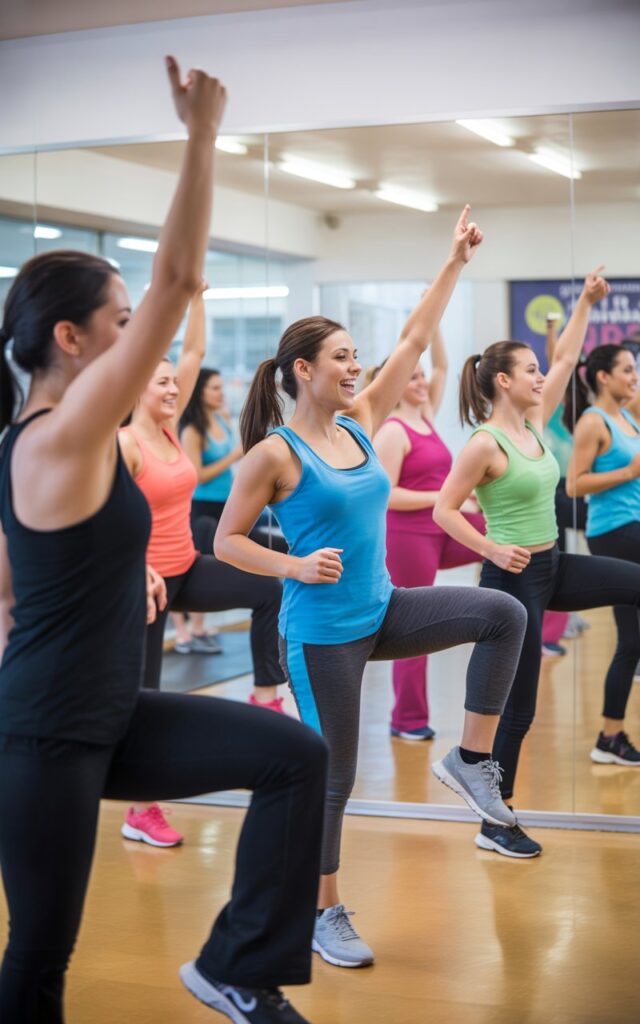
Two to three times a week is a realistic and effective starting point. That frequency meets standard guidelines for building cardiovascular endurance, and it leaves room for your body to recover between sessions. On off days, walking, light stretching, or strength training pairs well with the cardio focus of a dance class.
For at-home practice, setting a specific time — same day, same hour — removes the decision-making that makes it easy to skip. Tracking progress in a journal or fitness app also helps. Not to obsess over numbers, but because women who can see that they’ve kept a consistent streak tend to be more motivated to protect it.
As your fitness improves, you can add intensity by making movements bigger, adding jumps, or trying more advanced class formats like Zumba Toning, which layers in light hand weights to work the arms. There are also low-impact options worth knowing about — Zumba Gold is a modified version designed for lower intensity, which works well for women returning to fitness after time off or dealing with joint concerns. Aqua Zumba, held in a pool, is another option that takes pressure off the joints while keeping the full cardio benefit.
You’re Allowed to Be Bad at It — At First
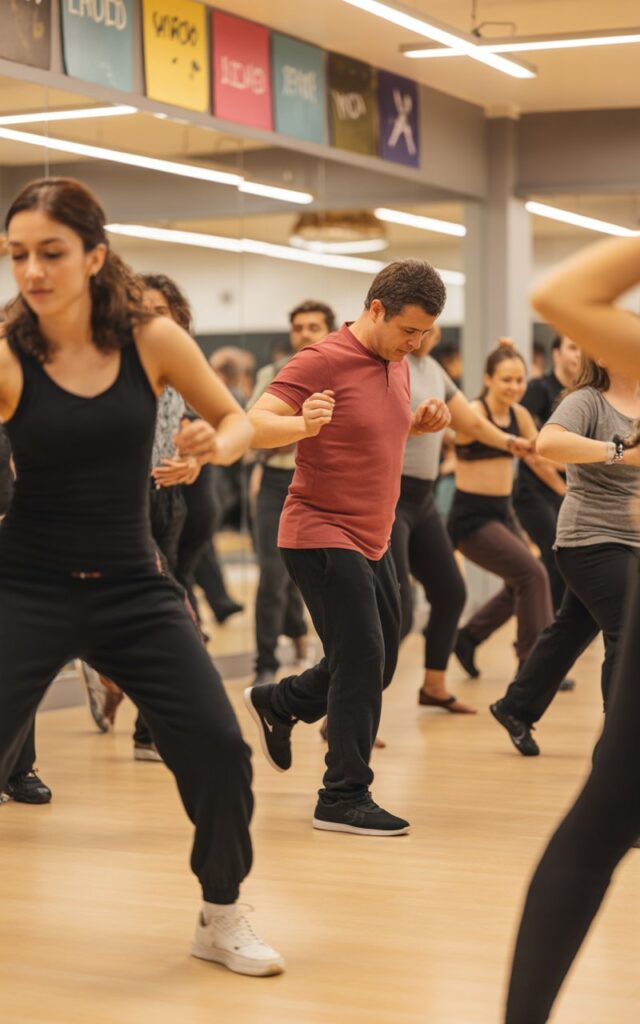
The biggest mental hurdle isn’t the fitness. It’s the fear of looking foolish in front of other people. Here’s the thing about that: everyone in the room is watching the instructor, not you. They’re concentrating on their own feet, their own coordination, their own rhythm. Nobody has time to evaluate yours.
The phrase “dance like nobody’s watching” gets repeated so often in fitness spaces that it’s lost most of its meaning. But in the context of a Zumba class, it’s actually accurate. The music is loud, the moves are fast, and every person in the room is too absorbed in their own experience to notice whether you got the footwork right. The only way to get better is to keep going, even on the days when nothing feels like it’s clicking.
Give Yourself Time to Find Your Rhythm
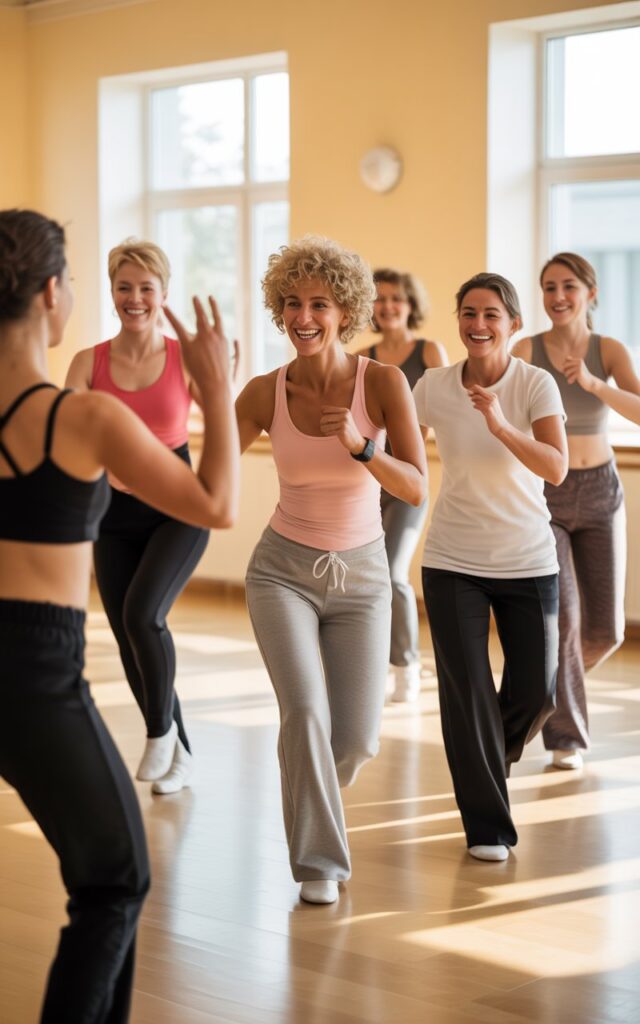
Most women feel out of place in their first two or three sessions, and that’s completely normal. Coordination, rhythm, and muscle memory take time to build. The women who stick around and start genuinely loving it are usually the ones who gave themselves at least four to six classes before deciding how they felt about it. That’s not a long commitment — it’s less than two months if you go once a week.
Once your body starts recognizing the steps, something shifts. The self-consciousness fades, the music takes over, and you stop thinking about whether you’re doing it right and start actually feeling it. That’s when it stops being exercise and starts being something you actually look forward to. And once you’re at that point, showing up stops being a matter of discipline and starts being something you genuinely want to do.
Frequently Asked Questions
Q: Do I need any dance experience to start Zumba?
A: No. The class is built for women with no dance background at all. The moves repeat throughout the session so you pick them up naturally over time. Starting with just the footwork and leaving the arms out at first makes the learning curve much more manageable.
Q: How many calories does a Zumba class burn?
A: A study from the Journal of Sports Science and Medicine found participants burned an average of 9.5 calories per minute, which works out to roughly 369 calories over 40 minutes. The actual number depends on your weight, age, and how hard you push yourself during class.
Q: What shoes should I wear?
A: Cross-trainers or dance sneakers are the best choice. They support the lateral — side-to-side — movement that makes up most of the choreography. Standard running shoes aren’t ideal because they’re designed for forward motion and can make pivoting harder on your knees.
Q: How often should a beginner go to class?
A: Two to three times a week is a solid starting point. That’s enough to build cardiovascular fitness and start learning the moves without overdoing it, and it leaves room for recovery days in between.
Q: Can I do Zumba at home if I’m too nervous for a class?
A: Absolutely. YouTube and the official Zumba on-demand platform both have beginner-friendly videos. Working out at home lets you pause and repeat steps at your own pace. Once you feel more comfortable with the basics, stepping into a live class becomes a lot less intimidating.
Q: Where should I stand in a Zumba class as a beginner?
A: The middle of the room works better than the back. Songs often rotate, so the back row can end up facing the front. Standing in the middle means you have people around you on all sides to follow when you lose track of the instructor.
Q: Is Zumba good for weight loss?
A: It can support weight loss when combined with a balanced diet. The calorie burn per session is significant, and the interval structure — alternating high-energy and slower songs — is particularly effective for burning fat. Pairing it with strength training two or three times a week accelerates results.
Q: What if I can’t keep up with the pace of the class?
A: That’s expected, especially in the first few sessions. Slowing your movements down, skipping jumps, or just marching in place when a sequence feels too fast are all completely acceptable. A good instructor expects beginners to modify as needed. Your body will adapt over time.
Q: Are there different types of Zumba classes?
A: Yes. Standard Zumba is the best starting point. Zumba Toning adds light hand weights. Zumba Gold is a lower-intensity version suited to women returning to fitness or with joint concerns. Aqua Zumba takes the workout to a pool for a zero-impact option with full cardio benefit.
Q: How long before I start to feel comfortable in class?
A: Most women start to feel noticeably more comfortable between sessions four and six. The muscle memory for basic steps builds up faster than most people expect, and that shift from thinking about every move to just moving tends to happen around that mark.

