


A ponytail sounds like the simplest hairstyle there is, but a flat one can make even freshly washed hair look tired by noon. The difference between a ponytail that falls limp against your neck and one that looks full and lifted usually comes down to a handful of small moves before you ever pick up the elastic.
None of these techniques require a salon visit or expensive tools. Most use products you likely already own, and the ones that don’t call for anything fancier than a small clip or a spray bottle. A few extra minutes at the mirror is really all it takes.
Below are ten ways to build height, fullness, and movement into a ponytail, whether your hair is thin, thick, straight, or curly.
- 1. Backcomb the Crown Before You Tie It Up
- 2. Hide a Root-Lift Clip Underneath
- 3. Crimp the Roots for Invisible Volume
- 4. Try the Bubble Ponytail Trick
- 5. Use the Double-Elastic Bump Method
- 6. Reach for a Volumizing Dry Shampoo First
- 7. Wrap a Face-Framing Section Around the Base
- 8. Add a Clip-In Ponytail Extension
- 9. Braid Damp Hair the Night Before
- 10. Finish with a Texturizing Spray at the Roots
- Small Changes, Bigger Volume
- Frequently Asked Questions
1. Backcomb the Crown Before You Tie It Up

This is the classic trick hairstylists reach for first, and it still works better than most modern shortcuts. Section off the top layer of hair at your crown, about two inches wide, and hold it straight up. Using a fine-tooth comb, gently push small sections downward toward the scalp in short strokes. This builds a soft cushion of texture right at the root, which is exactly where a ponytail tends to fall flat.
Smooth just the very top layer back over the backcombed section with a boar-bristle brush before gathering everything into your ponytail.
This one step alone can add noticeable height without a single extra product.
2. Hide a Root-Lift Clip Underneath

A small bump-it style clip, tucked under the top section of hair before you tie your ponytail, creates instant lift at the crown. Slide it in close to the scalp, angled slightly backward, then smooth your hair over it and secure the ponytail as usual. The clip stays hidden the entire day, and it holds its shape far longer than backcombing alone, especially on fine or slippery hair that won’t hang onto texture on its own.
3. Crimp the Roots for Invisible Volume
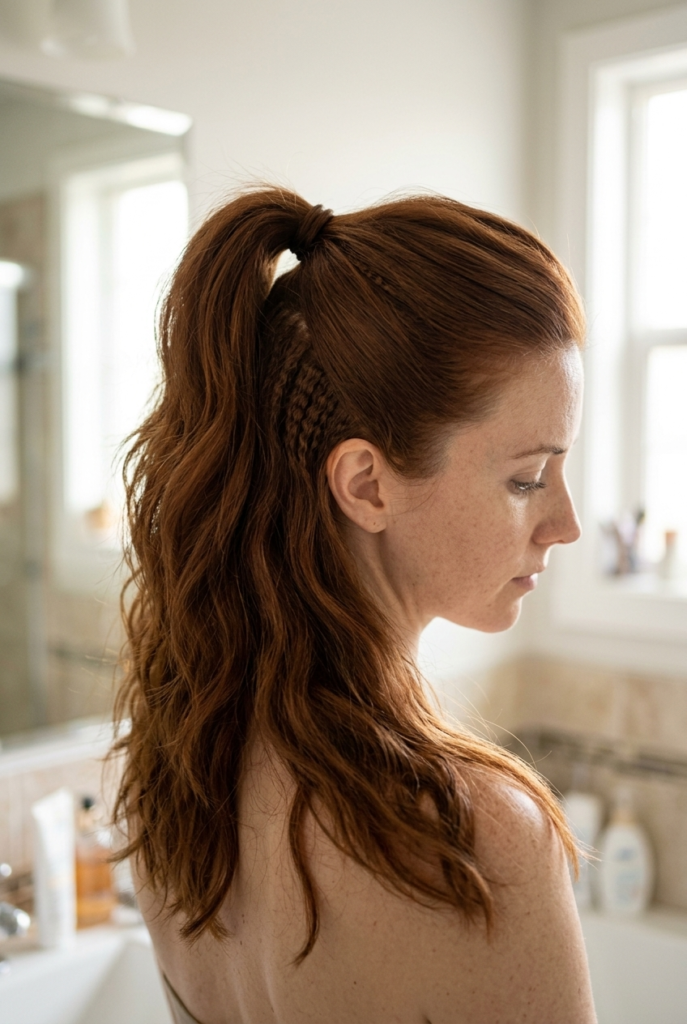
Nobody needs to see a full head of crimped hair to get the benefit of this technique. A mini crimping iron, or even the crimping plate on a two-in-one styling tool, does the real work here. Section your hair the same way you would for backcombing, then run the crimper through just the first inch or two of hair closest to the scalp, all across the top and sides. The crimped texture grips onto itself and creates a base that resists falling flat, even through humidity or a long day.
Smooth the top layer over it once you’re done.
The crimping stays completely hidden inside the ponytail.
4. Try the Bubble Ponytail Trick
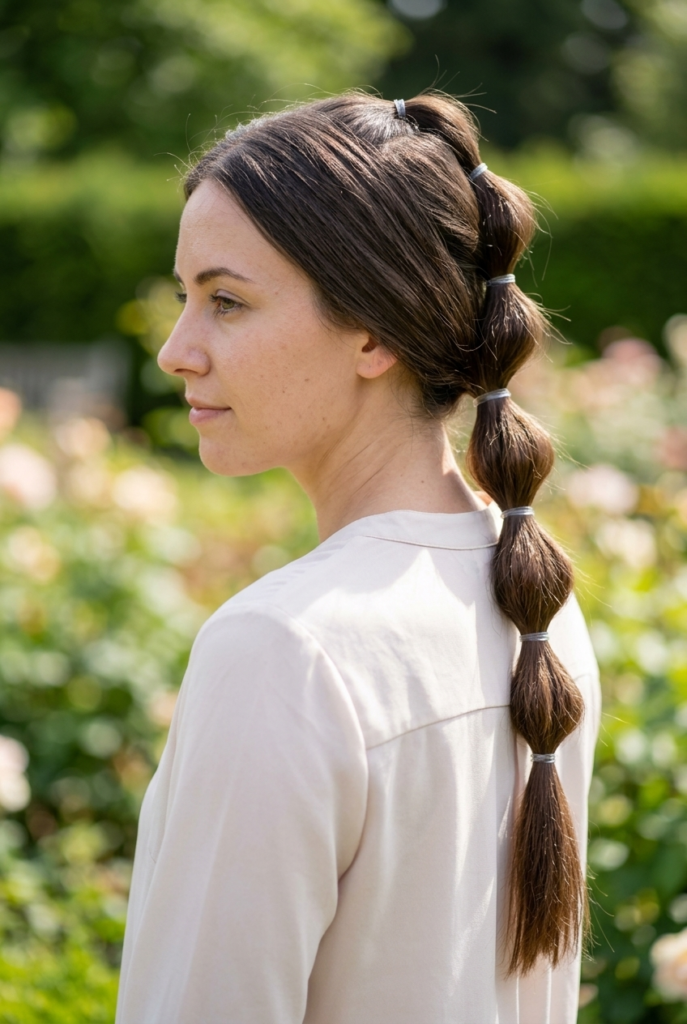
This one turns a single ponytail into several rounded sections stacked down its length, and each section adds its own bit of fullness along the way. Gather your hair into a regular ponytail, then add a second elastic a few inches below the first. Keep going every two to three inches until you reach the ends. Gently pull the hair between each pair of elastics outward on both sides to puff it into a rounded “bubble” shape, working from top to bottom.
The finished look has noticeably more volume and dimension than a plain ponytail, and it photographs especially well from behind.
5. Use the Double-Elastic Bump Method
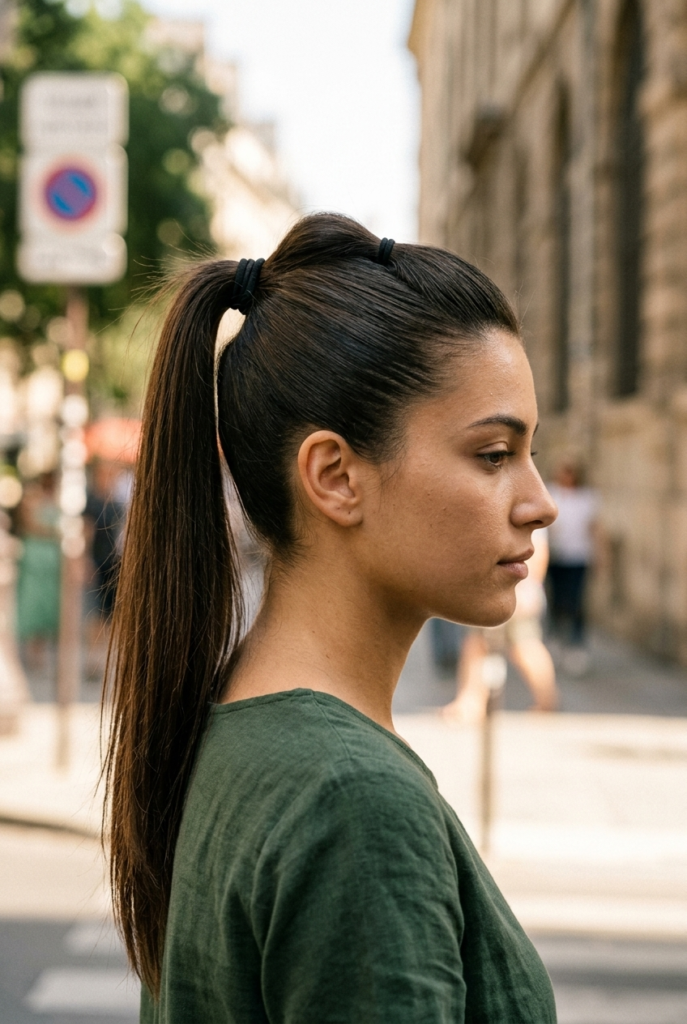
Instead of wrapping your ponytail with one elastic pulled tight against the scalp, secure it loosely with a second elastic placed about an inch above the first. Gently push the hair between the two elastics upward with your fingers to create a small, rounded bump at the base. This is one of the fastest ways to fake height without any backcombing, and it works particularly well on sleek, straight ponytails where a little lift at the crown makes the whole style look more polished.
6. Reach for a Volumizing Dry Shampoo First
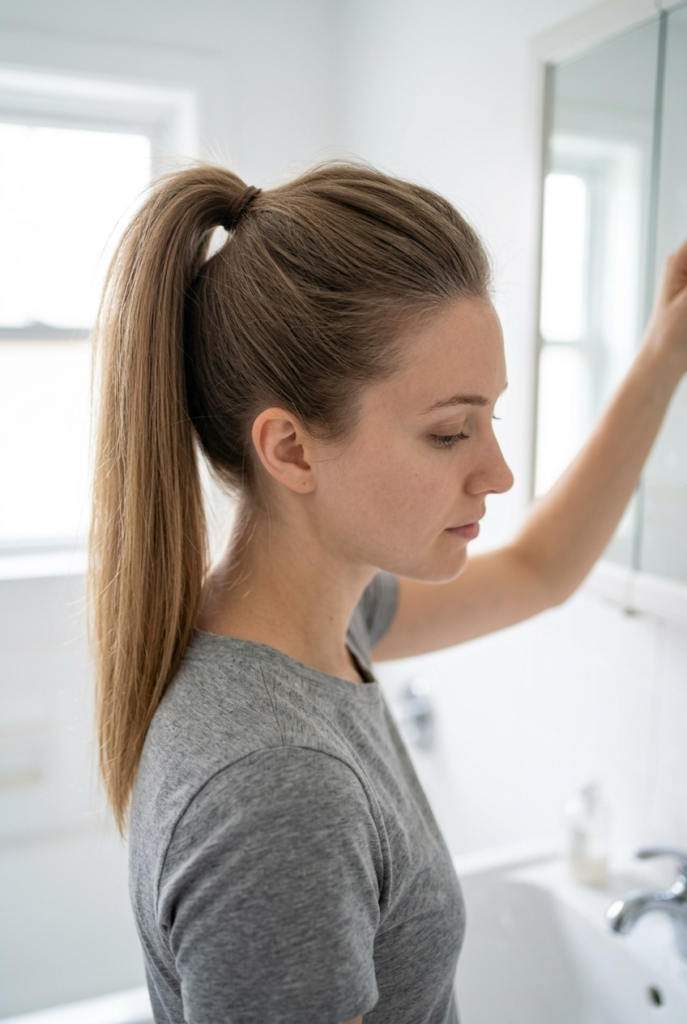
Dry shampoo isn’t only for stretching a wash day. Sprayed at the roots on clean, dry hair, it roughens up each strand just enough to give backcombing and clips something to grip onto.
Focus the spray directly at the scalp, wait about a minute, then massage it in with your fingertips before styling.
This step makes almost every other technique on this list work better and last longer.
Fine, freshly washed hair tends to be the slipperiest kind, so a light layer of dry shampoo at the crown before tying it back can make a bigger difference than people expect, especially paired with backcombing or a root clip.
7. Wrap a Face-Framing Section Around the Base

The elastic itself can flatten a ponytail if it’s wrapped too tightly around a thin section of hair. Instead, before you secure the elastic, pull out a slightly thicker piece of hair from underneath the ponytail.
Wrap that section around the base to cover the elastic completely, then pin the end underneath with a small bobby pin. This adds visible thickness right where the ponytail starts, which is often the area that looks thinnest, and it gives the whole style a more finished, put-together appearance.
8. Add a Clip-In Ponytail Extension
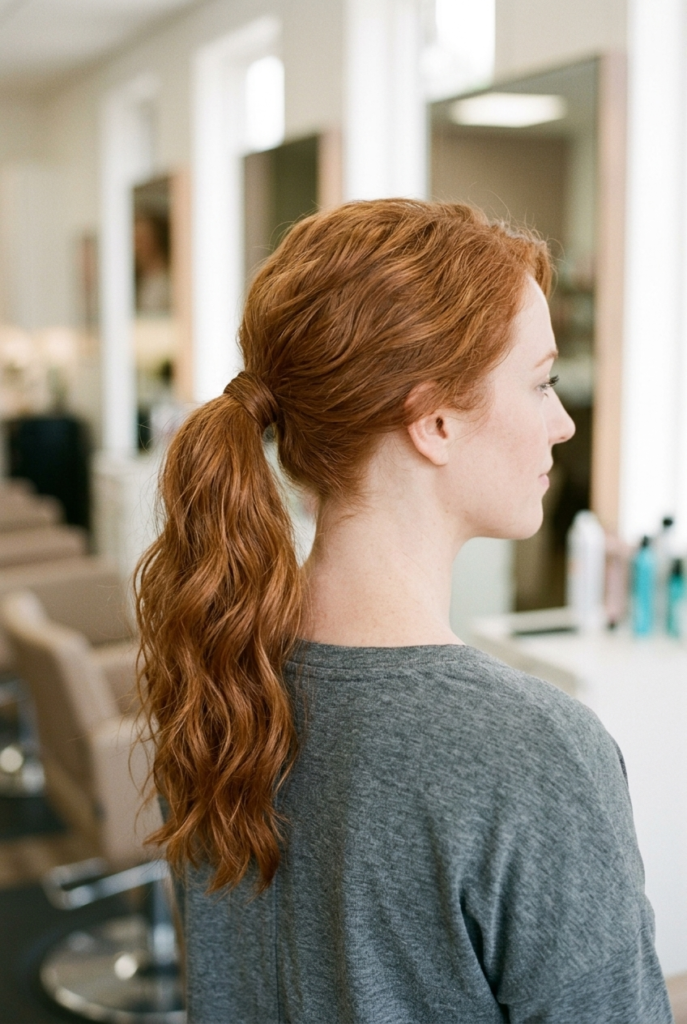
For hair that’s naturally fine or on the shorter side, a drawstring ponytail extension solves the volume problem almost instantly. These attach with a small comb and an adjustable drawstring that blends into your own hair at the base, and most match seamlessly once color-matched correctly. They come in straight, wavy, and curly textures, so the added length and fullness can match whatever style you’re already going for.
9. Braid Damp Hair the Night Before
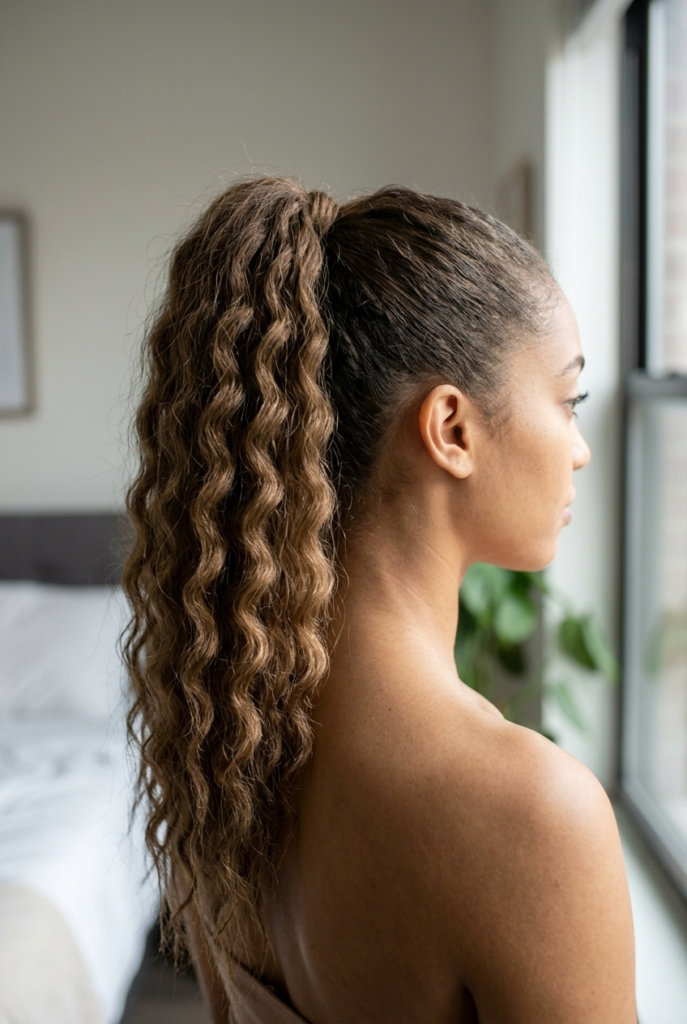
Waves and bends built into the hair overnight add texture that a ponytail can grab onto the next morning, which means less effort and better results. Dampen your hair slightly, then braid it into one or two loose braids and sleep on it. In the morning, take the braids out and run your fingers through the waves without brushing them smooth.
Gather everything into a ponytail while that texture is still intact.
Skip a brush entirely at this stage. A comb or fingers will keep the waves from turning into frizz, which:
- Preserves the bend from the braid
- Adds visible body along the length of the ponytail
- Works especially well on second-day hair
- Cuts down on morning styling time
10. Finish with a Texturizing Spray at the Roots

A texturizing or salt spray applied to the roots right before you tie your hair back gives the same grip benefit as dry shampoo, but with a slightly softer, more natural finish.
Spray it directly at the crown, scrunch lightly with your fingers, then gather your ponytail as usual for a look that holds its shape through the day.
Small Changes, Bigger Volume
A full, bouncy ponytail rarely comes down to one single trick. It’s usually a combination of a little prep at the roots, the right elastic placement, and a technique that fits your specific hair type and length. Fine hair tends to respond best to backcombing, clips, and dry shampoo, while thicker or curlier hair often just needs the right products and a braid-out to show off texture that’s already there.
Try a few of these methods together rather than picking just one, and pay attention to which combination holds up best through your particular day, whether that’s a desk job, a workout, or an evening out. Once you find the right mix for your hair, it becomes a quick, repeatable part of getting ready rather than something to think about every morning.
Frequently Asked Questions
Q: What’s the fastest way to add volume to a ponytail?
A: A root-lift clip tucked under the top section before tying your hair back gives the quickest, most noticeable lift with almost no extra time added to your routine.
Q: Does backcombing damage hair?
A: Occasional backcombing won’t cause lasting damage, but doing it daily on the same section can lead to breakage over time. Brushing it out gently and not repeating it every single day helps protect your strands.
Q: What hair type benefits most from a bubble ponytail?
A: Straight to slightly wavy hair of medium to long length works best for this style, since the sections need enough length to puff out and hold a rounded shape.
Q: Can fine hair actually hold volume in a ponytail?
A: Yes. Fine hair usually needs a texturizing product or dry shampoo at the roots first, since smooth, freshly washed strands have nothing for a clip or backcombing to grip onto.
Q: How do I keep a ponytail from going flat by midday?
A: Start with texture at the roots using dry shampoo or a texturizing spray, then use a root clip or backcombing for structure. A light-hold hairspray at the crown helps the lift last through the afternoon.
Q: Is a ponytail extension noticeable?
A: A well-matched drawstring extension blends in easily once it’s covered by the top layer of your own hair, especially when the color and texture are chosen to match your natural hair closely.
Q: Should I brush my hair before putting it in a ponytail for volume?
A: Brushing too much right before styling can smooth out texture you actually want to keep. A wide-tooth comb or just your fingers preserves more body than a brush does.
Q: How often can I crimp my roots without damaging my hair?
A: A few times a week is generally fine with a heat protectant applied first. Daily heat styling on the same section of hair, even a small one, increases the risk of dryness and breakage over time.

