

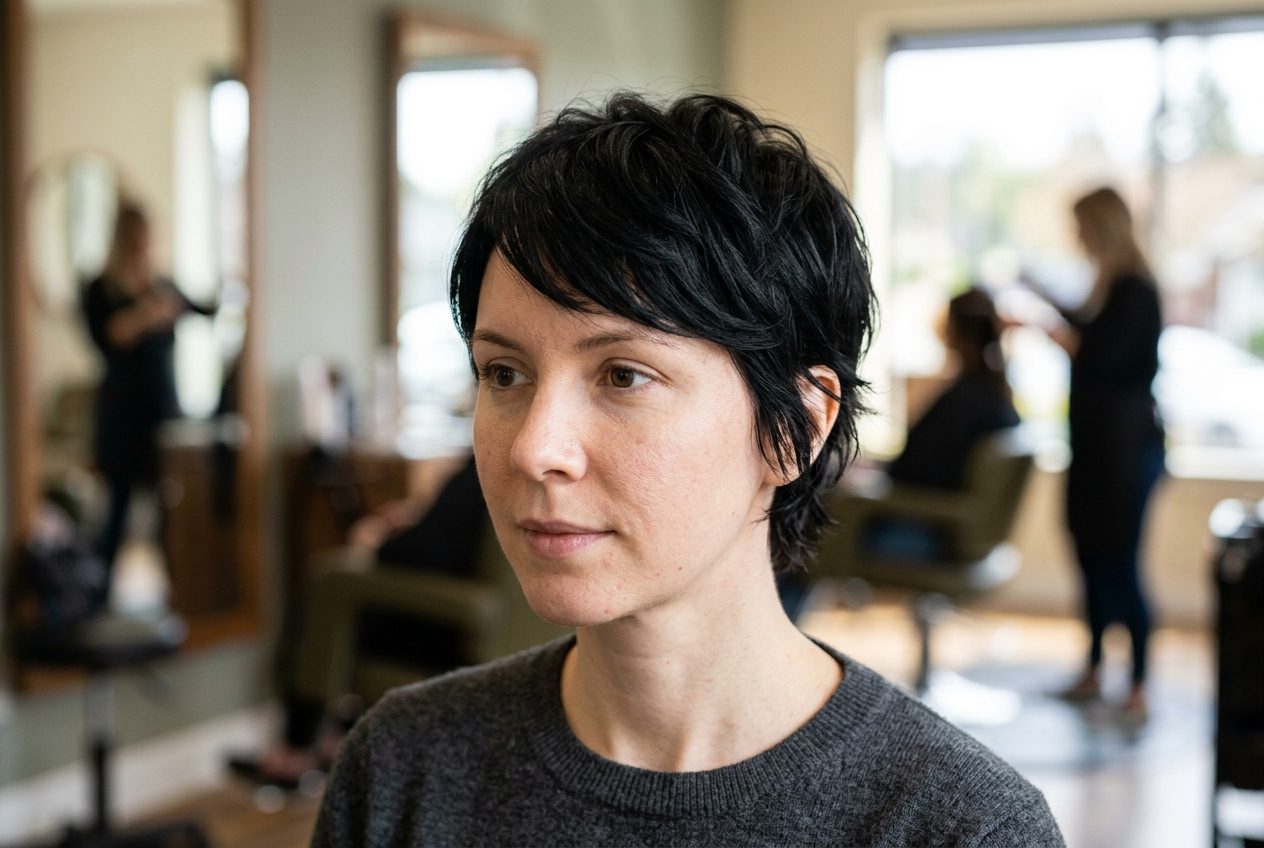
Short hair has a funny way of making a woman feel like herself again. Maybe it’s the lightness, maybe it’s the confidence that comes from doing something a little bold, but there’s a reason so many women describe their first big chop as a turning point rather than just a haircut.
The tricky part isn’t deciding to go short. It’s figuring out which short cut actually fits your face, your hair texture, and the amount of time you’re willing to spend in front of a mirror each morning.
That’s what this list is for. Below are ten short haircut ideas worth bringing to your next salon appointment, along with what makes each one work and who tends to love it most.
1. The Bixie
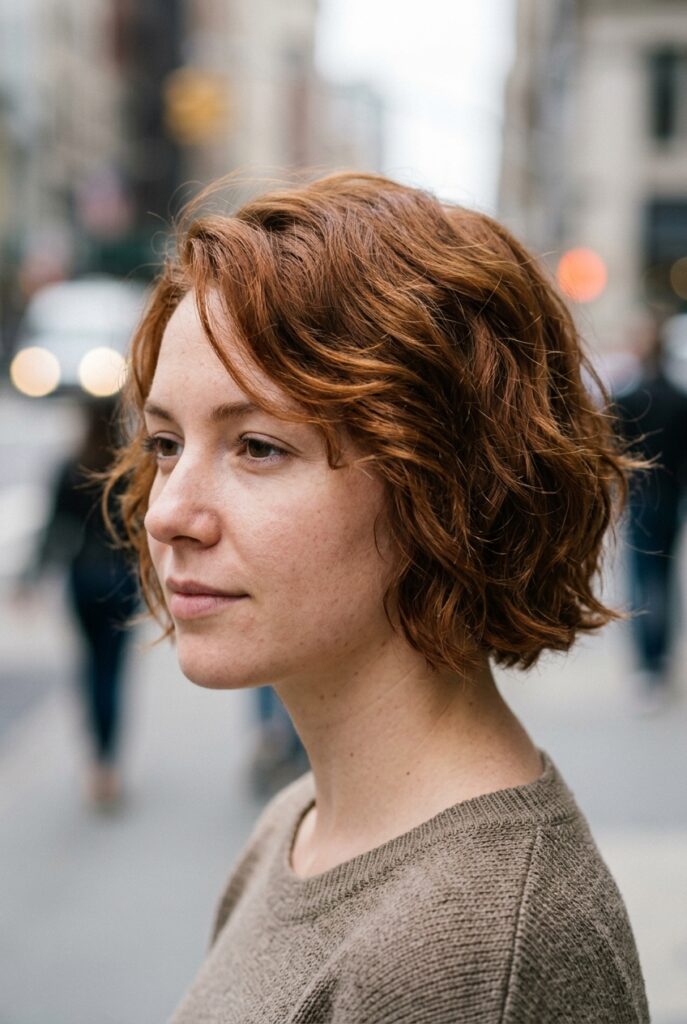
The bixie sits right between a bob and a pixie, which is exactly what makes it so popular right now. It keeps a little more length than a traditional pixie, usually landing around the jaw or chin, while still feeling cropped and easy to manage. Stylists love this cut because it flatters a wide range of face shapes, and it grows out gracefully instead of turning into an awkward in-between stage.
Texture is what makes a bixie feel current. Ask your stylist for internal layering rather than heavy texturizing on the ends, since that keeps the shape soft instead of choppy.
This cut works especially well for women with naturally wavy or slightly curly hair, since the layers pick up movement without any real effort.
2. Textured Pixie Crop
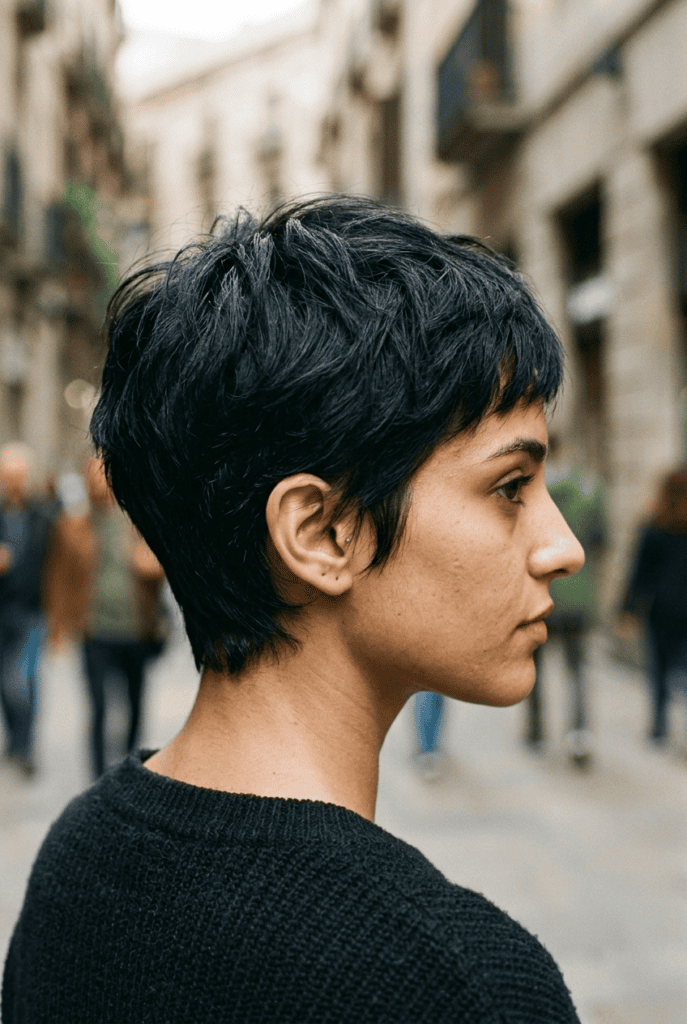
This cut has quietly become one of the most requested short styles among women who want something polished but not stiff. It relies on soft, piece-y layers throughout rather than one uniform length, which gives it built-in texture even on days you skip styling entirely. A little matte paste worked through dry hair is usually all it takes to keep it looking finished.
3. Soft Micro Bob
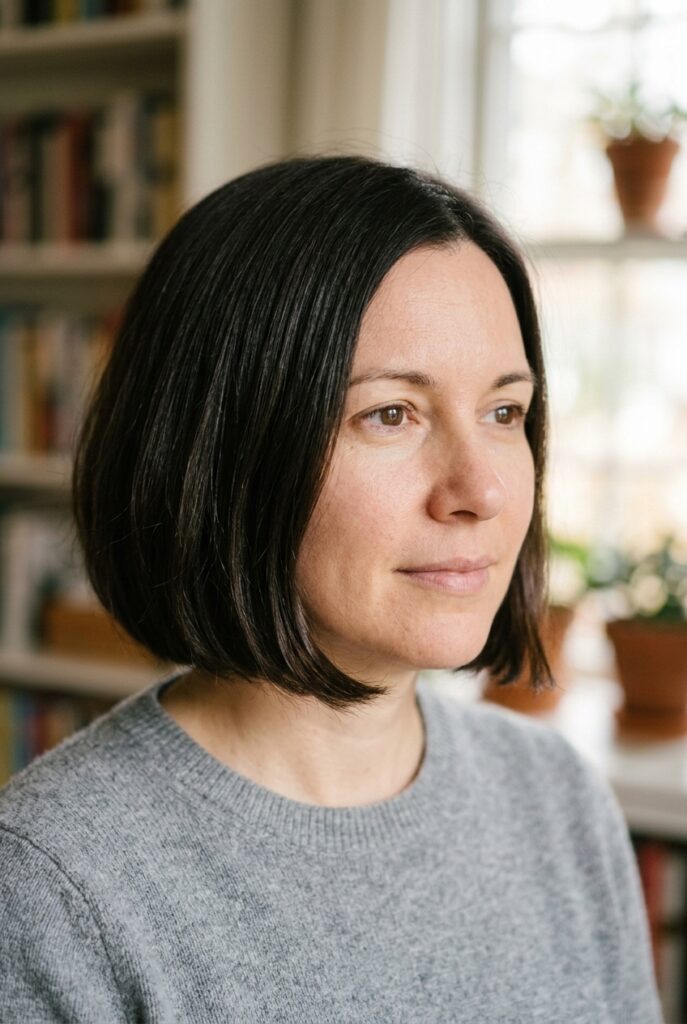
Short, blunt, and a little softer than the classic bob.
That’s the easiest way to describe this cut, which lands right around the chin and skips the razor-sharp edges of older bob styles. Instead, the ends are lightly rounded, which keeps the shape from looking too severe on rounder or fuller face shapes. Women who want the drama of short hair without committing to a pixie tend to gravitate toward this one, since it still gives you enough length to tuck behind an ear or add a slight wave with a curling iron.
4. French Bob
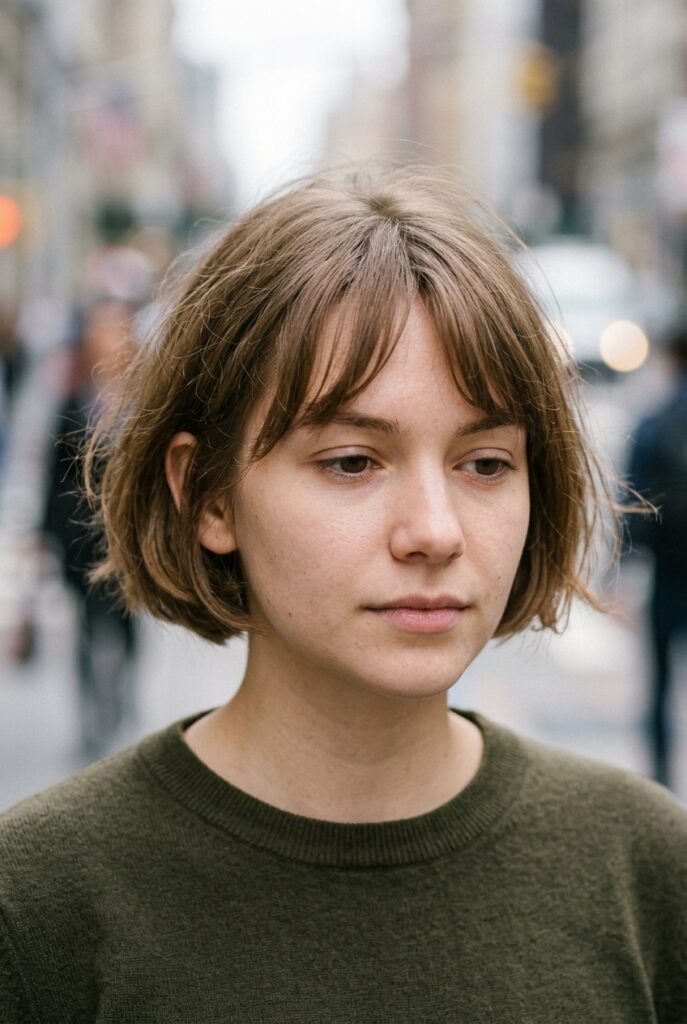
A little shorter and a little rounder than a standard bob.
That’s the French bob in a nutshell, and its popularity has stuck around because it looks effortless in a way that’s actually pretty easy to maintain. The cut typically hits just below the ear and pairs beautifully with soft, curtain-style bangs, though it works just as well without them. What makes this style stand out is how natural it looks even when it’s freshly cut, since the shape doesn’t rely on a sleek blowout to feel intentional.
It suits straight and slightly wavy hair best.
5. Cowboy Bob
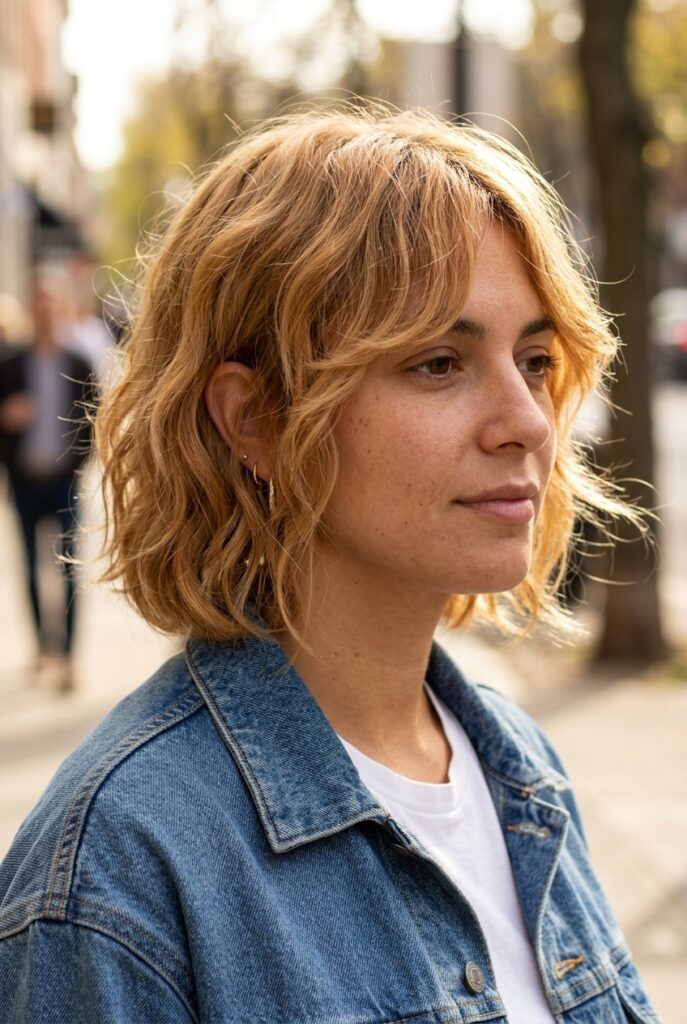
Part shag, part bob, and named for the loose, lived-in movement that feels a little Western without trying too hard, the cowboy bob has become a favorite among women who want short hair with personality. It hits around the chin or just below, with choppy, face-framing layers and a slightly rounded shape that photographs well from every angle. Air-dried texture is the whole point here, so it’s a low-maintenance choice for busy mornings.
6. Sculpted Crop
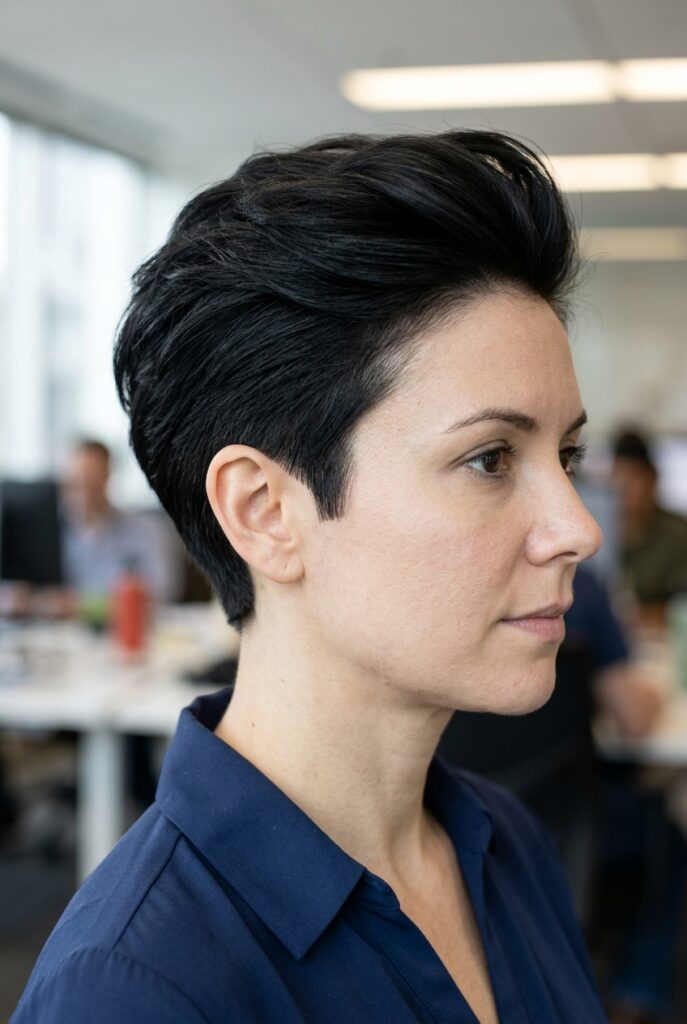
Precise on the outside, soft on the inside.
That contrast is what makes a sculpted crop different from a standard pixie.
The outline stays clean and controlled around the ears and neckline, while the top keeps enough length to style with a little height or a swept-back finish. Women who like structure but still want some flexibility in how they wear their hair each day tend to prefer this cut, since it can look buttoned-up for work or slightly undone on the weekend depending on how it’s styled.
7. Short Shag
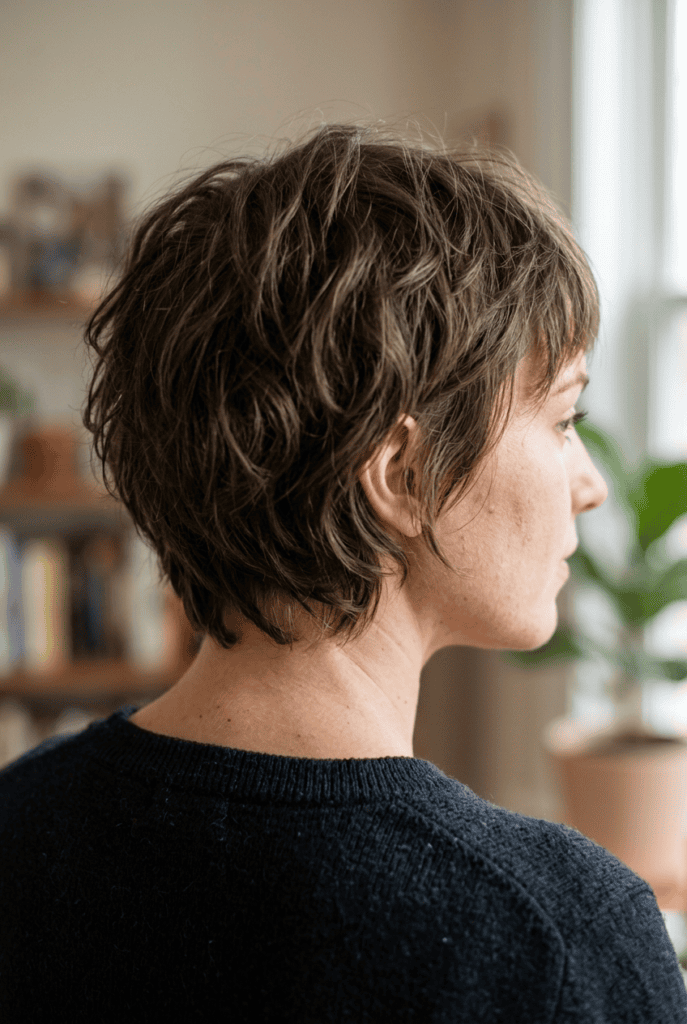
Choppy layers, a little fringe, and zero fuss.
That’s the modern short shag in three words, and it remains one of the easiest short cuts to live with day to day.
8. Trixie
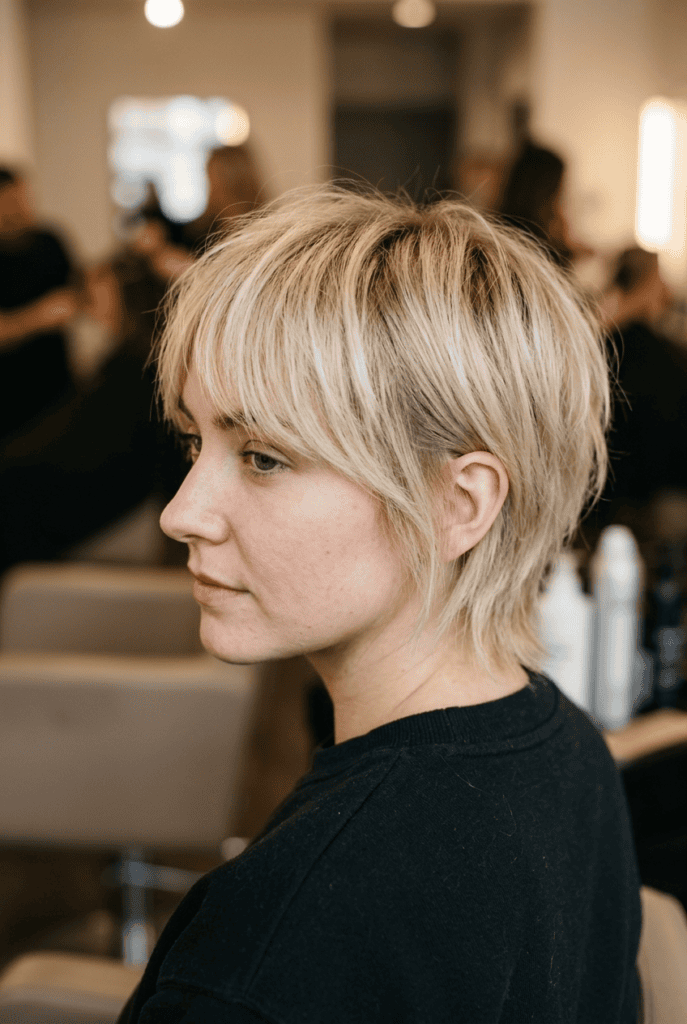
Think of the trixie as a pixie with softer, wispier edges instead of a sharp, defined shape. It works particularly well for oval face shapes, though a skilled stylist can adjust the length around the face to flatter rounder or more angular features too. The cut can be worn slicked back for a sleeker look or pushed forward with a heavier fringe for something more playful, which is part of why it’s gained so much attention lately.
9. Blunt Bob with Fringe
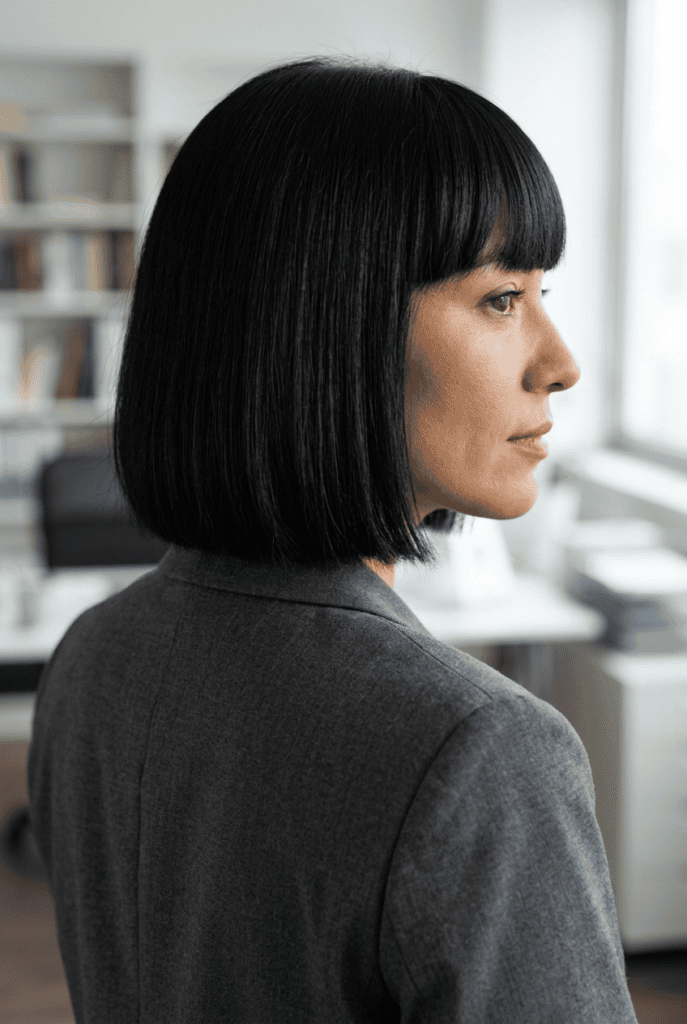
A blunt cut paired with fringe is one of the more dramatic short styles on this list, and it tends to suit women who want a strong, graphic shape rather than something soft and layered. The line is clean, the ends are straight across, and the bangs add a frame around the face that draws attention to the eyes.
Before booking this cut, it helps to know what you’re working with.
A few things worth confirming with your stylist first:
- Your hair’s natural texture, since blunt cuts show frizz more easily
- How much upkeep you’re willing to do, as bangs need regular trims
- Your face shape, since this style is bold and unforgiving of a poor fit
10. Updated Mullet
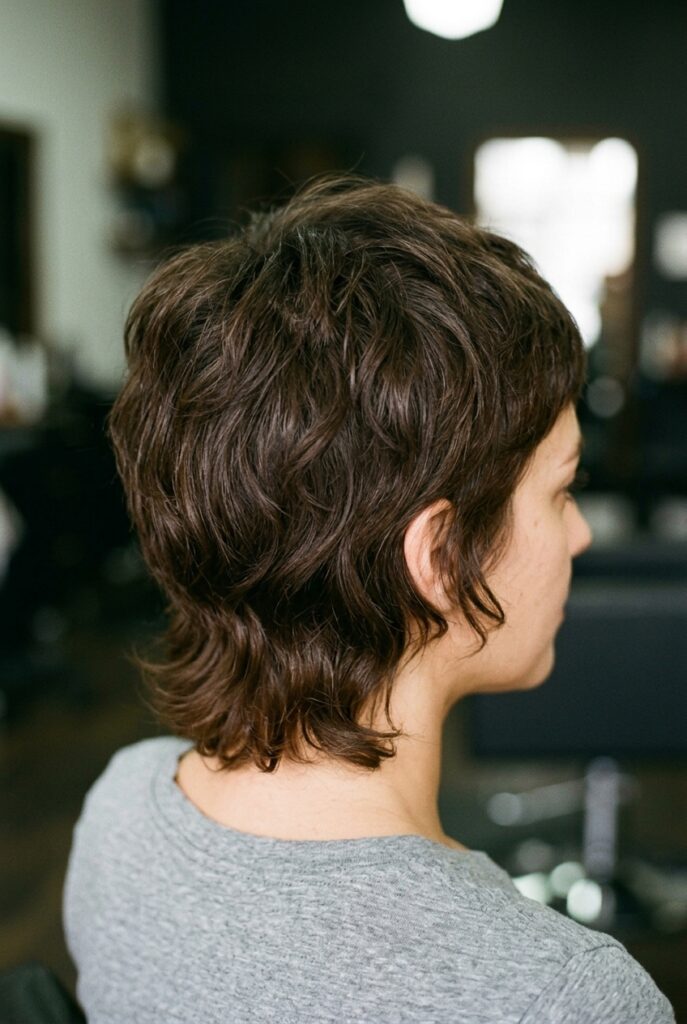
The mullet has come a long way from its exaggerated 1980s version, and the current take is far more wearable for everyday life. Short layers on top blend into slightly longer pieces in the back, creating a subtle contrast rather than the dramatic length difference the original style was known for. It’s a good option for women who already have some natural texture, since waves and curls soften the transition between lengths.
Stylists usually recommend keeping the back layers light rather than heavy, which prevents the cut from looking dated. Regular trims every six to eight weeks keep the shape from growing out unevenly, especially around the crown.
The Short Cut That Actually Fits Your Life
Choosing a short haircut really comes down to two things: how much time you want to spend styling it, and how much change you’re ready for. Some of the cuts above, like the textured pixie crop or the cowboy bob, practically style themselves. Others, like the blunt bob with fringe, ask for a bit more upkeep in exchange for a bolder look.
Bring a few photos to your next appointment, but talk openly with your stylist about your hair type and your daily routine too. The best short haircut isn’t necessarily the trendiest one. It’s the one you’ll still love wearing three months from now.
Frequently Asked Questions
Q: How do I know if a short haircut will suit my face shape?
A: Most stylists look at your jawline and forehead width first. Round or square face shapes usually do well with cuts that add height or angles, like a sculpted crop, while oval faces can wear almost any short style, including a trixie or bixie.
Q: Which short cut requires the least daily styling?
A: The short shag and the cowboy bob are both built around natural texture, so they tend to look good with minimal effort, especially on wavy or curly hair.
Q: Is a bixie the same thing as a pixie?
A: Not quite. A pixie is cropped very close to the head, while a bixie keeps more length around the jaw or chin, giving it a softer, slightly longer shape.
Q: How often do I need trims with a short haircut?
A: Most short styles need a trim every four to six weeks to keep their shape, though structured cuts like the sculpted crop or blunt bob with fringe may need more frequent visits.
Q: Will short hair work with curly or coily hair?
A: Yes. Cuts like the textured pixie crop and the trixie are often adjusted specifically for curl pattern, since the right layering helps curls hold their shape without looking bulky.
Q: What’s the easiest way to add texture to short hair at home?
A: A matte paste or sea salt spray worked through damp or dry hair is usually enough to create movement without extra tools.
Q: Is the French bob high maintenance?
A: Not really. It grows out evenly and looks intentional even a few weeks past your last trim, which makes it one of the lower-maintenance bob options.
Q: How do I keep an updated mullet from looking too dated?
A: Ask your stylist to keep the layers in the back light rather than dramatic, and stick to regular trims so the contrast between the top and back stays subtle.

