

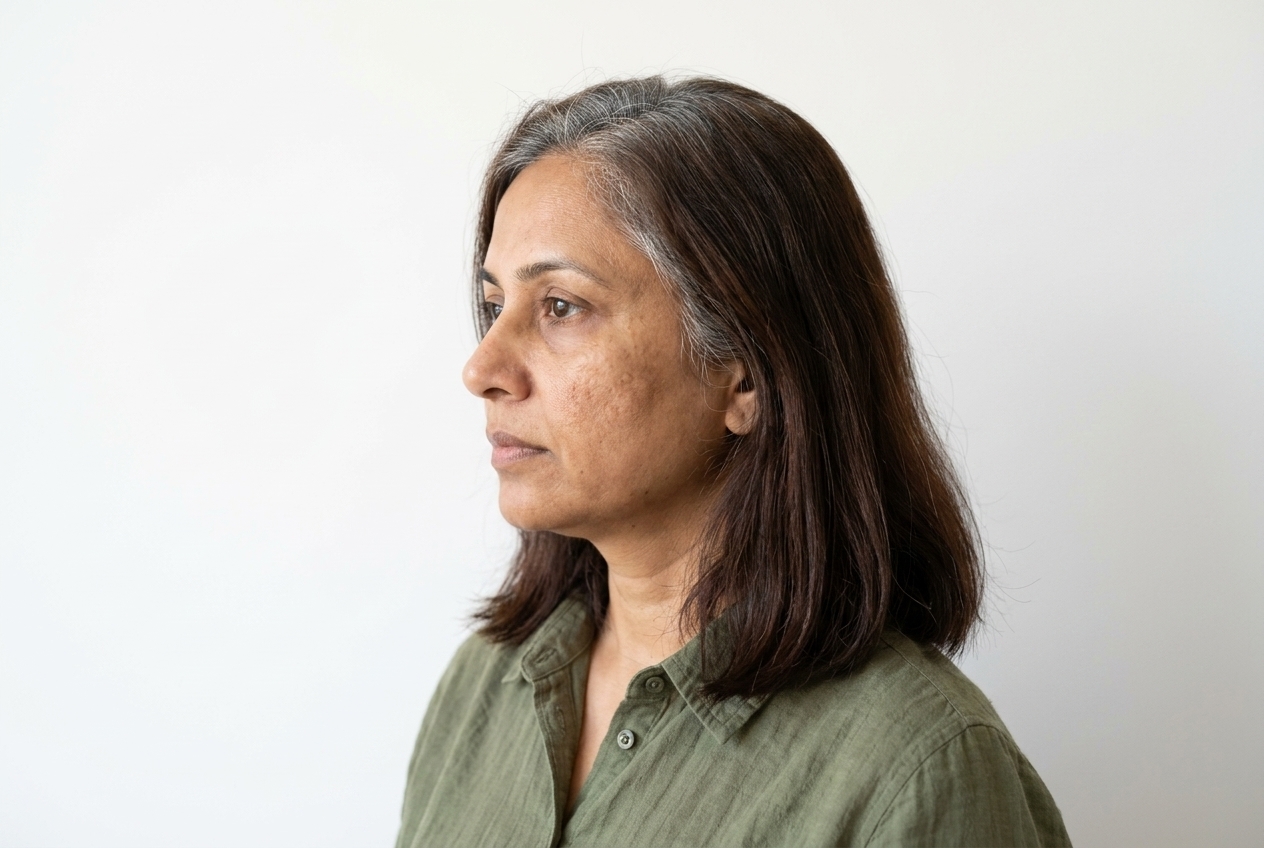
Growing out gray hair is one of those decisions that feels equal parts exciting and nerve-wracking. You’ve made up your mind, you’re done with the every-four-week touch-up appointments, and you’re ready to let your natural color do its thing. But then the roots start coming in, the line of demarcation appears, and suddenly the process feels a lot less glamorous than you imagined.
Here’s the thing — that awkward in-between stage doesn’t have to be part of your story. The grow-out process has come a long way, and today’s techniques make it very possible to go from dyed to natural gray without looking like you forgot your salon appointment. Whether you have two inches of silver roots or you’re barely starting to notice the change, there are real, practical options that can keep your hair looking intentional at every stage.
The eight approaches below cover everything from simple at-home fixes to professional salon techniques, so you can choose what fits your budget, your lifestyle, and how fast you want to get there. Some women prefer a gradual shift that no one notices right away. Others want to get through the transition as quickly as possible. Either way, there’s something here for you.
- 1. Add Highlights and Lowlights for a Multi-Tonal Blend
- 2. Try a Root Smudge
- 3. Use Balayage to Create a Seamless Grow-Out
- 4. Ask for Babylights
- 5. Get a Strategic Cut
- 6. Use a Semi-Permanent Toner or Gloss
- 7. Use Purple Shampoo and Gray-Specific Hair Care
- 8. Adjust Your Part or Try New Styles
- Silver Looks Good on You — Make the Most of Getting There
- Frequently Asked Questions
1. Add Highlights and Lowlights for a Multi-Tonal Blend
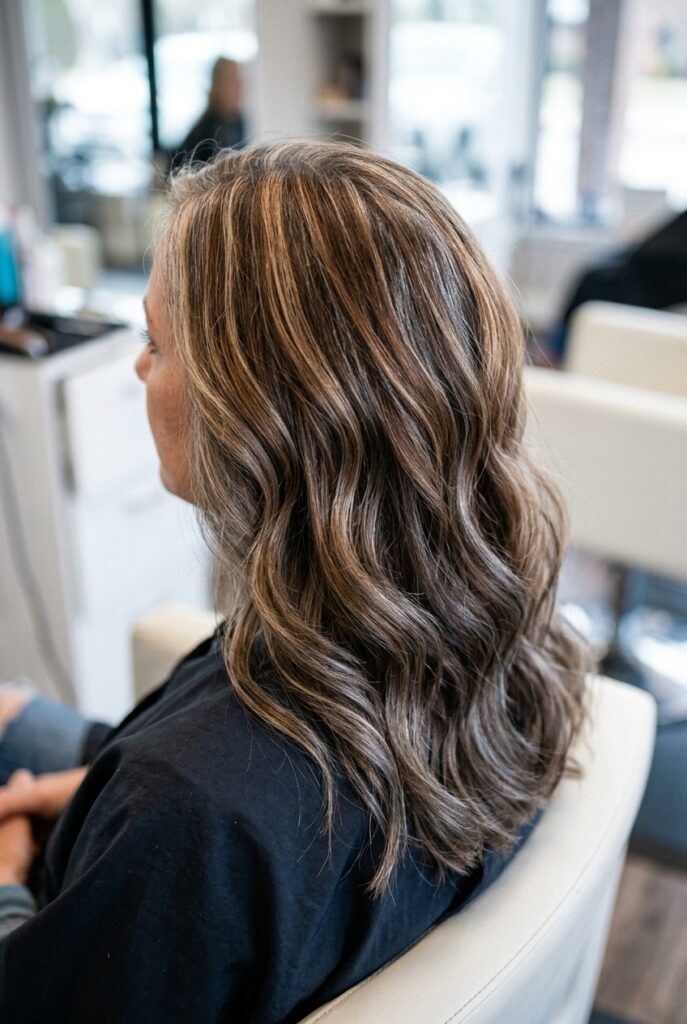
This is one of the most popular and most forgiving methods out there. The idea is simple: by weaving lighter and darker pieces through your hair, you break up the hard line between your gray roots and the dyed lengths. Instead of one clear border between two very different colors, your hair ends up looking dimensional and intentional.
Highlights work to add brightness near the roots so the silver blends in naturally, while lowlights add depth to the lengths so they don’t look flat or obviously dyed by comparison. Used together, they create a multi-tonal effect that makes the gray feel like it belongs — because it does.
For brunettes, warm shades like chestnut and caramel pair well with silver. For those with cooler brown hair, ashier tones tend to blend more naturally with gray. The goal isn’t to cover the gray — it’s to make the whole picture look cohesive. Most women find this method lets them stretch their salon visits to every eight to twelve weeks instead of every four, which is a nice bonus.
2. Try a Root Smudge
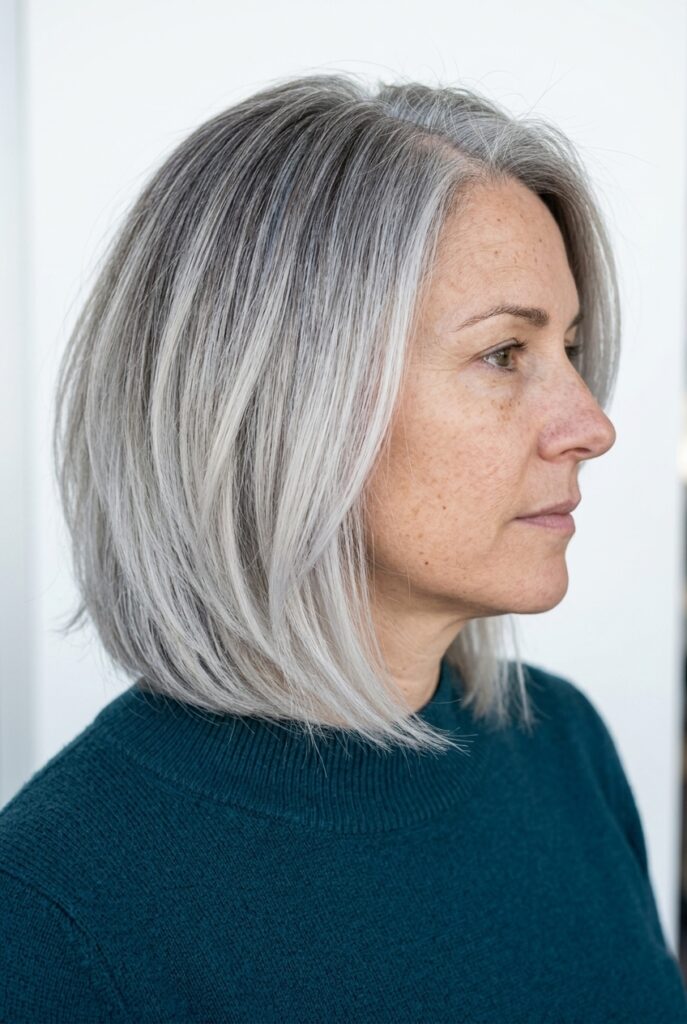
A root smudge is a technique where your colorist applies a toner or demi-permanent color at the roots and feathers it slightly downward, softening the line between your natural growth and the colored ends. It doesn’t dramatically change your color — it just blurs the transition so the grow-out looks soft and intentional rather than neglected.
The shade used is typically a level or two lighter than your natural color, which keeps things looking effortless. Because demi-permanent formulas fade gradually, the result grows out without a harsh line forming behind it. Most women who get a root smudge find they can wait two to three months between appointments instead of the usual four to six weeks.
This technique works well for all hair lengths and is especially popular after a highlighting or balayage service. It’s often done on damp hair so the color blends smoothly into the lengths. If you’re only a few months into your grow-out and the contrast between your roots and ends is bothering you, this is one of the most low-commitment fixes available at the salon.
3. Use Balayage to Create a Seamless Grow-Out
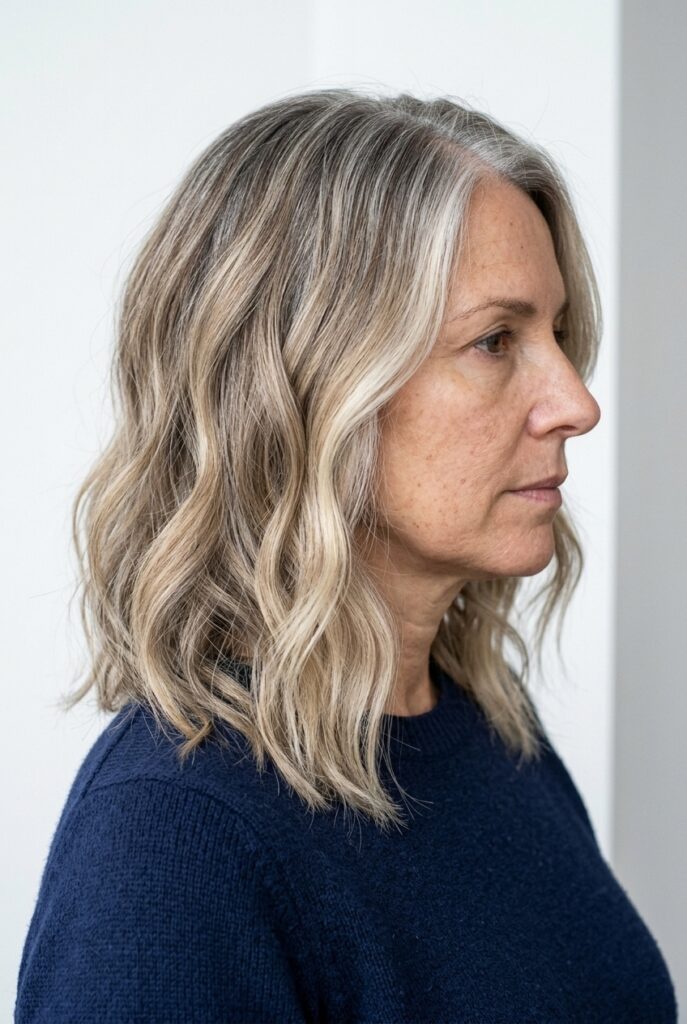
Balayage is a hand-painted highlighting technique, and it’s a natural fit for women growing out gray hair. Because the color is painted on freehand rather than applied with foils from root to tip, it creates a soft, gradual fade that mimics the way hair naturally lightens.
The result is a look that grows out beautifully — there’s no obvious line of demarcation because the color was never placed right at the root in the first place.
For longer and medium-length hair especially, balayage can be customized to match the pattern of your natural gray. If you’re going salt-and-pepper or mostly silver at the crown, your colorist can place lighter pieces near the face and through the top sections to reflect that distribution. The rest of the hair gets depth and dimension, which makes the overall look feel balanced.
Between appointments, a toning gloss can keep the color looking fresh and prevent any unwanted brassiness. Most women on a balayage grow-out find they only need a touch-up every three to four months, which keeps the process low-maintenance while still looking polished.
4. Ask for Babylights
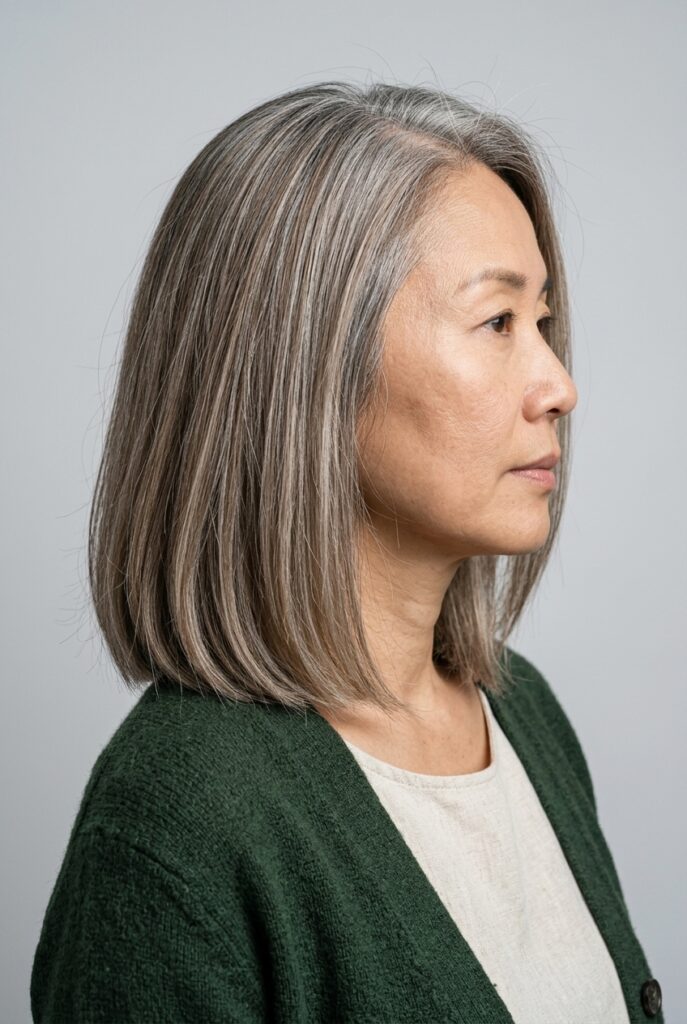
Babylights are ultra-fine highlights — much thinner than traditional foil highlights — that mimic the kind of subtle variation you’d see in naturally sun-kissed hair. Because the pieces are so small and closely placed, the blend they create is incredibly soft. There’s no chunky streak, no obvious stripe — just a gentle, natural-looking lightness woven through the hair.
For women with finer or lighter hair who want a delicate approach to blending their gray, babylights are worth asking about. They work especially well when paired with a root smudge or a toning gloss, which helps marry the highlighted pieces with the natural gray coming in at the roots.
The technique does take longer in the salon chair than standard highlights, and it tends to cost more. But the result is one of the most natural-looking blends available, and it grows out slowly and gracefully — which makes it a smart investment for anyone who’s serious about a smooth, long-term transition.
5. Get a Strategic Cut
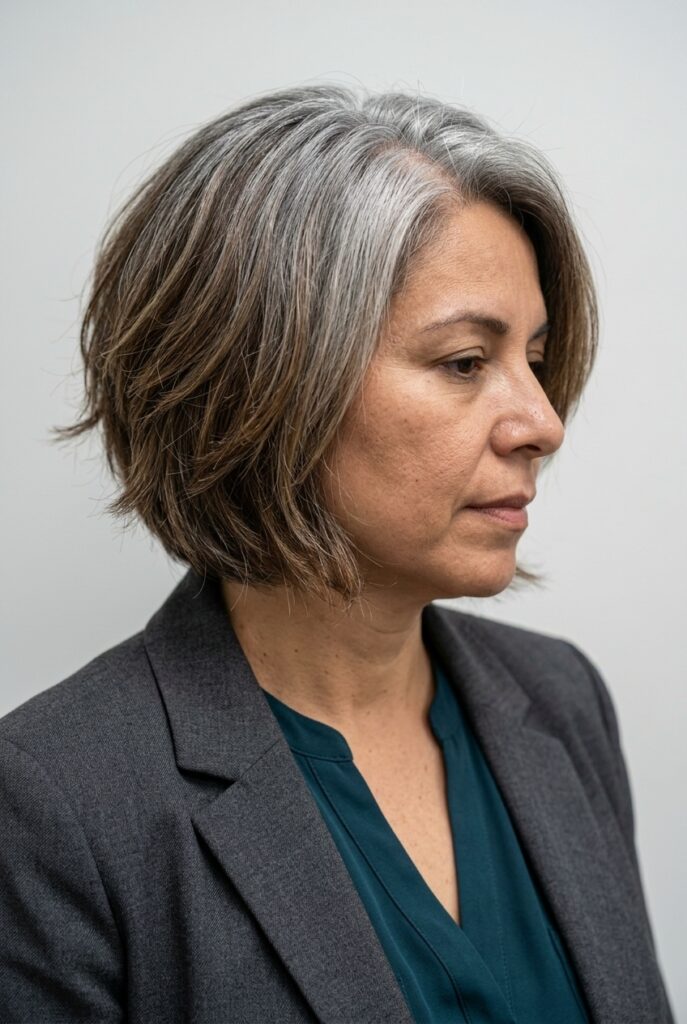
A haircut alone can do a surprising amount of work during a grow-out. Shorter styles remove the most heavily colored lengths faster, which means you reach an all-natural look more quickly. A textured bob, a layered lob, or even a more cropped cut can take months off the transition timeline.
But even if you’re not ready to go short, a cut can still help. Layers break up the line between your natural roots and your colored ends by creating movement. A solid, one-length cut tends to show the line of demarcation more clearly, while layered and textured cuts diffuse it.
Ask your stylist to soften the ends or add some face-framing pieces — small adjustments that make a real difference in how the grow-out reads overall.
If you’re considering a shorter style anyway, this is a good time to make the move. Gray hair often has a beautiful texture to it — a little coarser, sometimes wavier — and shorter cuts can really show that off.
6. Use a Semi-Permanent Toner or Gloss
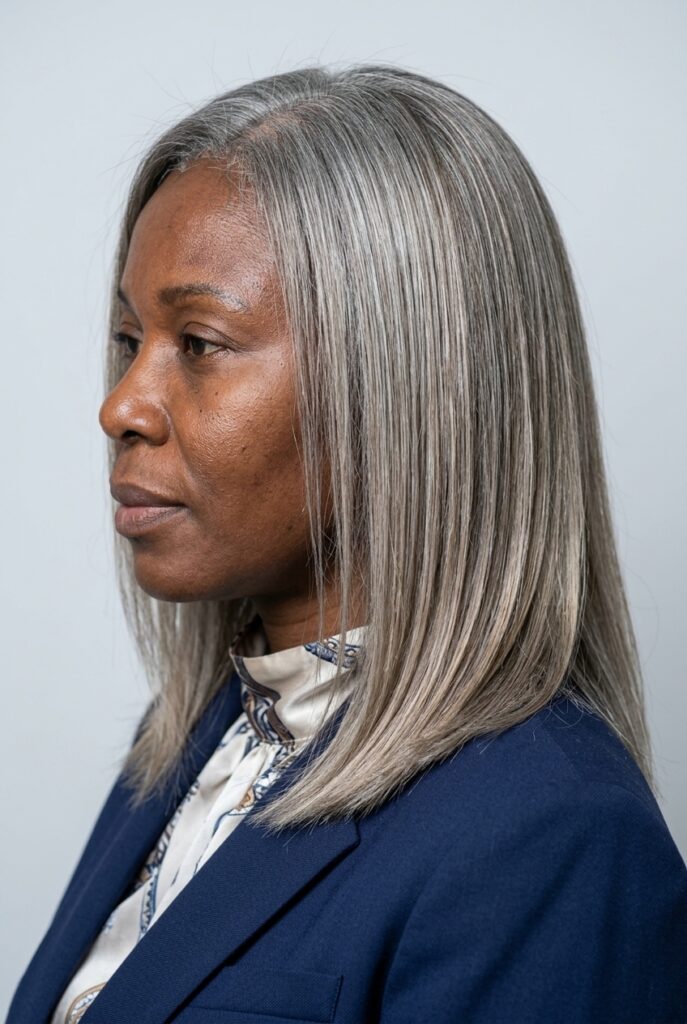
A toner or gloss is not a full color treatment, but it’s one of the most useful tools in a grow-out routine. Applied over your existing hair, a semi-permanent gloss smooths the cuticle, adds shine, neutralizes brassiness, and can even slightly shift the tone of your colored lengths to sit closer to your natural gray.
This is a particularly good option if the colored ends of your hair have taken on a warm or brassy tone over time. A cool-toned gloss can neutralize that warmth and make the difference between your gray roots and your ends less stark. The result is a softer overall look, even without highlights or structural color work.
Glosses are available at salons as add-on services, and some at-home gloss products work reasonably well for maintenance between appointments. They fade gradually over several weeks, so there’s no dramatic line as they wear off. For women who aren’t ready for highlights but want something more than just waiting it out, a gloss is a genuinely low-commitment way to manage the transition.
7. Use Purple Shampoo and Gray-Specific Hair Care
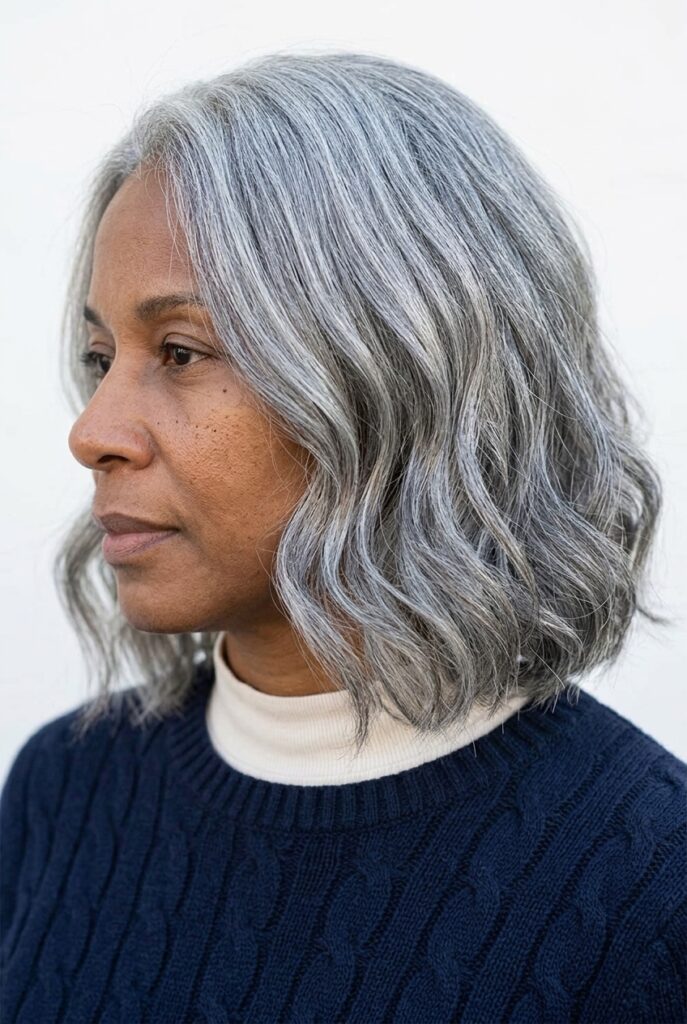
Gray hair has an open cuticle structure, which means it picks up pigment from pollution, minerals in water, and heat styling more easily than pigmented hair does. Over time, this can cause silver strands to look dull or yellowish — which makes the contrast with the colored ends even more noticeable.
Purple shampoo works by depositing a small amount of violet pigment onto the hair, which cancels out yellow and brassy tones. Using it once or twice a week keeps the gray looking clean and cool.
Pair it with a deeply moisturizing conditioner, because gray hair tends to run drier than pigmented hair, and dryness makes it look wiry and dull rather than luminous.
A glossing serum or lightweight hair oil applied before styling adds shine and smooths the texture. Regular deep conditioning treatments — once a week or every two weeks — make a noticeable difference in how the gray looks as it comes in. Well-moisturized gray hair has a silvery, almost reflective quality. Dry gray hair just looks gray.
8. Adjust Your Part or Try New Styles
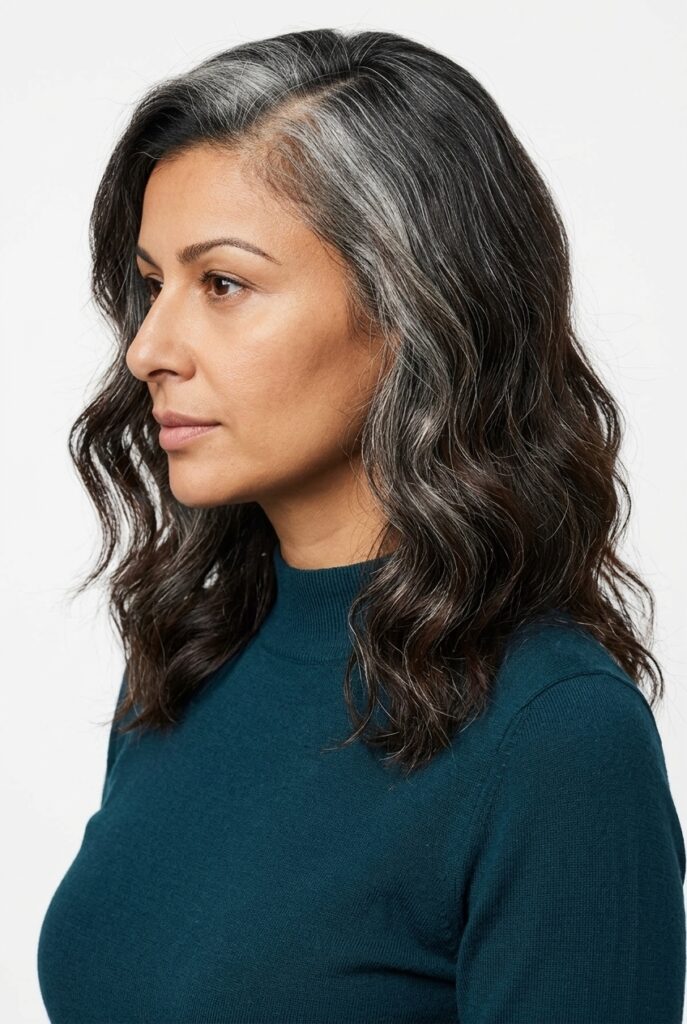
Sometimes the simplest fix is also the most effective. Switching your part to the other side instantly refreshes your look and redistributes where your roots are visible. If your gray is most concentrated at the front hairline or crown, moving your part even an inch or two can shift attention away from the line of demarcation.
Soft, loose waves and texture are also useful during a grow-out. Straight, sleek styles show every color boundary clearly, while waves and texture break up the visual line between shades. A little sea salt spray or a texturizing mousse can create enough movement to make the grow-out stage look like a style choice rather than a waiting game.
Headbands, clips, and scarves work too — not in a way that hides anything, but in a way that adds visual interest that pulls focus. Women who feel like every in-between phase is written all over their hairline often find that a chic accessory changes the whole picture. These aren’t workarounds — they’re part of a smart grow-out strategy.
Silver Looks Good on You — Make the Most of Getting There
The grow-out process doesn’t have to be something you just survive. With the right approach, it can actually be one of the more interesting hair phases you go through — a chance to try techniques and styles you may not have considered before. Whether you go the highlights route, ask your colorist for a root smudge, or simply upgrade your at-home hair care, there are enough options that the in-between stage can look just as good as the finished result.
The most important thing is to choose a method that works for your timeline and your lifestyle. Some women are ready to cut and move fast. Others want to take their time with a low-maintenance color technique. Neither is wrong. Gray hair is worth getting right — and with any of these approaches, you’ll get there looking exactly as put-together as you always have.
Frequently Asked Questions
Q: How long does it take to fully grow out gray hair?
A: It depends on how long your hair is and how fast it grows. On average, hair grows about half an inch per month. For shoulder-length hair, a full grow-out can take anywhere from one to two years. Using blending techniques during this time makes the process much more manageable.
Q: What is the difference between a root smudge and highlights for blending gray?
A: A root smudge softens the line at the root by applying a slightly lighter toner or demi-permanent shade and feathering it downward. Highlights, on the other hand, add lighter pieces throughout the hair to create dimension and break up the demarcation line. Both work well — the right choice depends on how much contrast you’re dealing with and how much coverage you want.
Q: Can I blend my gray hair at home, or does it need to be done at a salon?
A: Some maintenance steps — like using purple shampoo, a glossing treatment, or adjusting your part and styling — can absolutely be done at home. Techniques like highlights, balayage, babylights, and root smudges are best left to a professional colorist, since the wrong placement or formula can make the grow-out look worse, not better.
Q: Will highlights damage my hair during the grow-out process?
A: Some lightening is involved in traditional highlights, which does carry a risk of damage if overdone. Letting a professional colorist handle the placement and formula keeps the risk low. Regular deep conditioning treatments and limiting heat styling during the grow-out help maintain the hair’s health throughout the process.
Q: What is the easiest low-maintenance way to blend gray roots?
A: Balayage and a root smudge are both considered low-maintenance options because they grow out softly without a hard line forming at the roots. Paired with the right at-home care — purple shampoo, moisturizing conditioner, and a gloss treatment — these approaches can stretch salon visits to every three or four months.
Q: Why does gray hair look yellow or dull sometimes?
A: Gray hair has a more porous, open cuticle than pigmented hair, which means it absorbs mineral deposits, pollution, and product buildup more easily. This can make it look yellowish or dingy. Purple shampoo used once or twice a week neutralizes those warm tones, and regular deep conditioning keeps the hair shiny and smooth.
Q: Does cutting my hair shorter really speed up the grow-out?
A: Yes. The more length you remove, the less colored hair is left on your head. For women who are open to a shorter style, a cut can shave months off the transition timeline. Even if you’re not going dramatically short, regular trims remove the oldest, most heavily colored ends and keep the grow-out looking neat.
Q: Can I use a regular shampoo on gray hair?
A: You can, but a shampoo formulated for gray or silver hair will give you noticeably better results. These shampoos are designed to neutralize brassiness, boost shine, and address the dryness that often comes with gray hair. A standard shampoo won’t cause harm, but it also won’t do the extra work that keeps your silver looking its best.

