

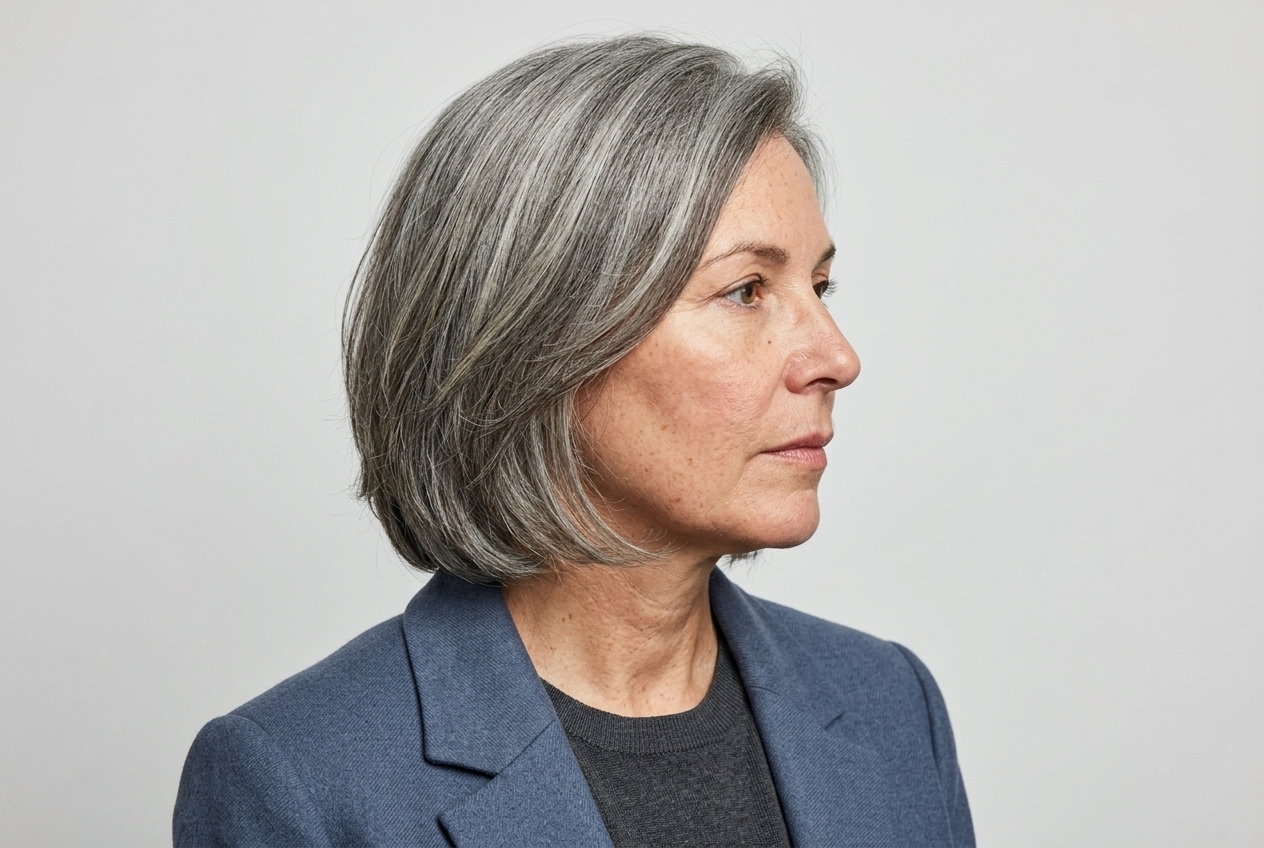
Gray hair doesn’t sneak up on everyone the same way. Some women spot their first silver strands in their 30s, others not until their 50s. And while the timing is different for everyone, the reaction tends to be pretty similar — a long pause in front of the bathroom mirror, followed by a lot of questions. Do you cover it completely? Let it grow? Try something in between?
Here’s what most hair colorists will tell you straight: going too dark is almost always a mistake. As skin tone naturally softens with age, heavy, deep color can look harsh and flat against your complexion. The smarter move is choosing a shade that works with your grays, not against them — something that creates a softer, more dimensional look with less obvious regrowth.
The good news is there are some genuinely flattering options that make blending easy, whether you have a few silvers scattered through your natural color or a full salt-and-pepper situation happening. Below are seven hair colors worth considering, with honest information about how each one works and who it suits best.
1. Cool-Toned Blonde Highlights
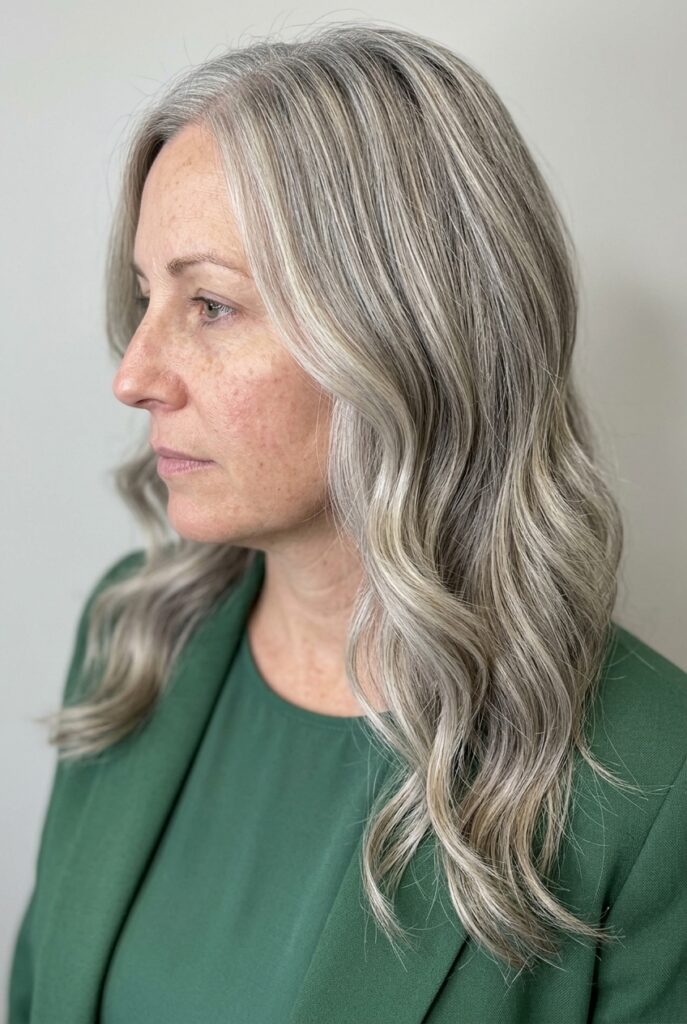
This is consistently one of the most recommended options for women with gray or salt-and-pepper hair — and for good reason. The gap between cool blonde and silver is small enough that gray roots blend in naturally, even weeks after your last salon visit. That makes this one of the more low-maintenance choices on the list.
The key word here is cool-toned. Golden or warm blonde highlights can read as brassy next to gray, especially if your natural silvers have a white or pale hue. Ashy, cool-toned highlights, on the other hand, soften the contrast and give the whole look a more cohesive, intentional finish. Babylights — very fine highlights placed close together — are particularly effective here because they mimic the way natural gray comes in gradually, strand by strand.
This works beautifully on women with light brown, dark blonde, or already-highlighted hair who want to ease the transition without a dramatic change.
2. Caramel Balayage
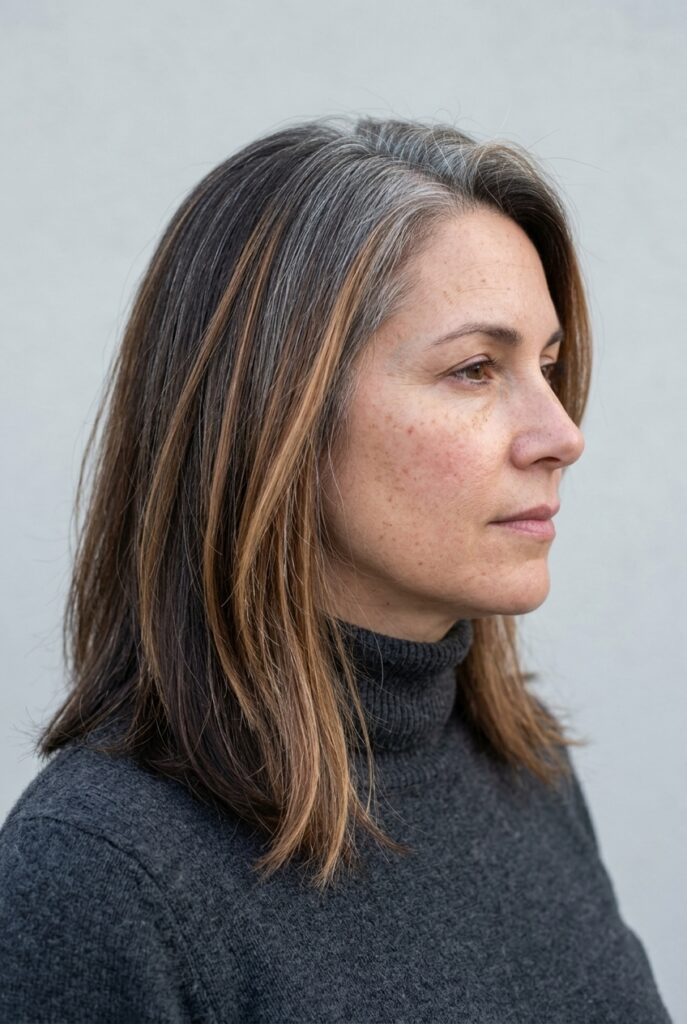
Caramel balayage is one of those colors that photographs well, suits a wide range of skin tones, and somehow always looks intentional — which is exactly what you want when you’re blending gray. The warm, hand-painted technique softens the line between natural roots and colored lengths, making regrowth look like part of the design rather than a sign you missed your appointment.
It works especially well for brunettes. The warm caramel tones add brightness around the face without fully lightening the base, and the gray strands scattered throughout take on a slightly sun-kissed quality rather than a stark contrast. The painted application also means root regrowth is soft and gradual, so you’re not rushing back to the salon every six weeks.
One thing to note: caramel leans warm, so if your grays are on the cooler, more white-silver end of the spectrum, you’ll want to ask your colorist to keep the tones slightly neutral rather than going too golden. Otherwise, you risk that brassy grow-out that’s harder to manage at home.
3. Ash Brown
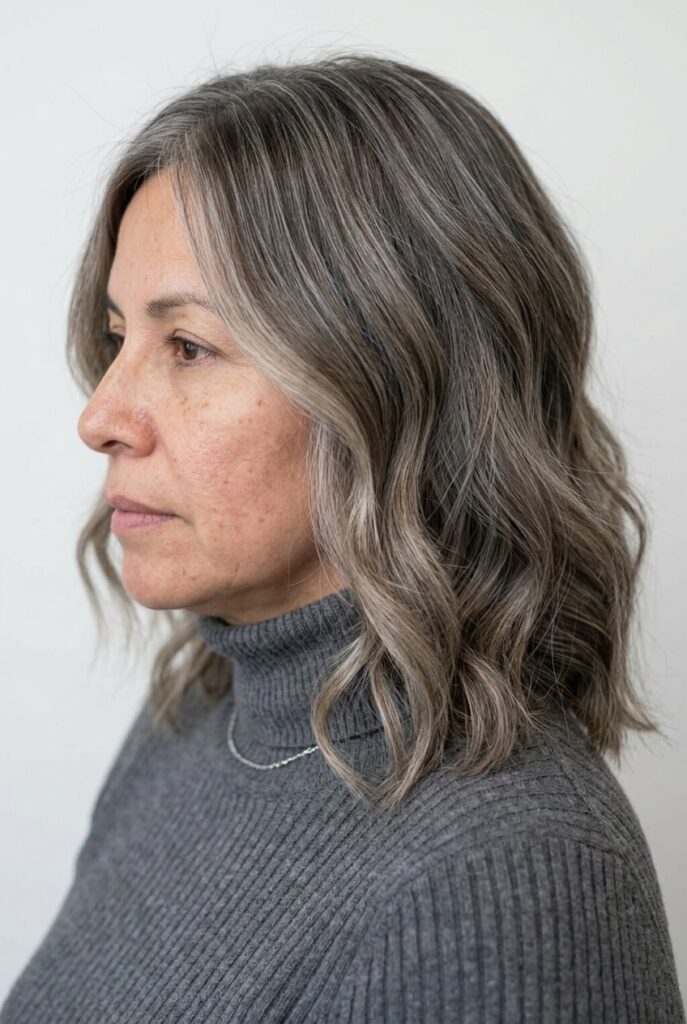
For women who aren’t ready to go lighter but still want something that blends easily, ash brown is a practical and flattering choice. It has cool undertones that sit closer to gray on the color spectrum, which means the grow-out phase is noticeably less jarring than it would be with a warm chestnut or rich chocolate brown.
The trick is to go just one shade lighter than your natural base. Lifting the color slightly reduces contrast and makes new growth less noticeable. Going full coverage with a dark, flat brown tends to highlight exactly what you’re trying to blend — especially at the hairline, where grays often come in first and fastest.
Ash brown paired with a few face-framing highlights gives the best of both: enough coverage to feel polished, with enough dimension to look natural rather than uniform.
4. Silver and Platinum
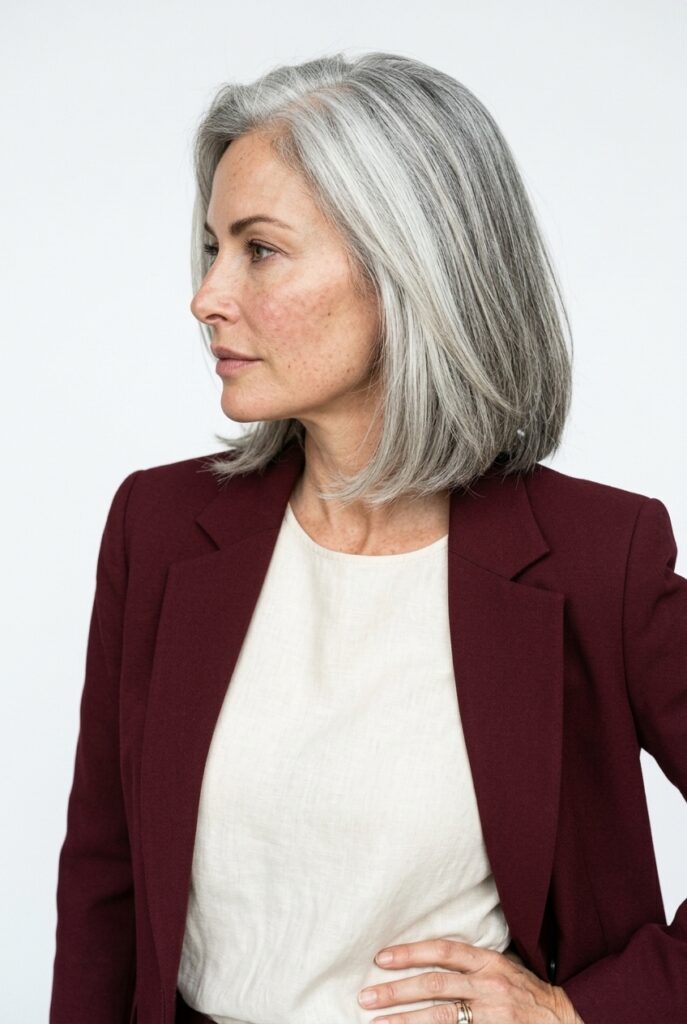
Sometimes the most effective approach is leaning into what your hair is already doing. If you have a significant amount of gray — think more than 50% — going silver or platinum means you’re working with your natural texture and tone rather than constantly fighting it.
Full silver or platinum is also one of the lower-maintenance options once you’ve achieved the shade, since the grow-out blends instead of clashing. The main challenge is getting there: if you’re starting from a medium or dark base, expect a few lightening sessions to lift your hair to the right level without compromising its condition.
Gray hair tends to be more porous than pigmented hair, which means it absorbs and releases color quickly. A good toning shampoo — something purple-based to keep the cool tones bright — becomes part of the regular routine once you’re at this stage. Yellow or brassy tones can creep in from hard water, heat styling, or UV exposure, and a weekly toning treatment keeps things looking crisp.
5. Salt-and-Pepper Blending
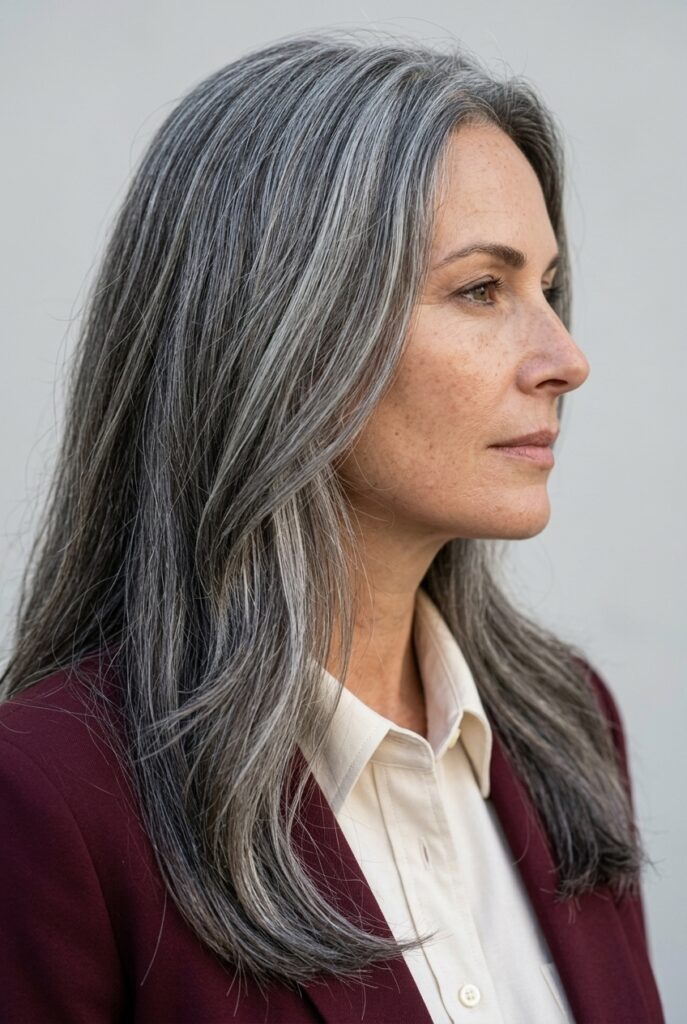
Not every approach to blending involves adding a new color. Salt-and-pepper blending is a technique where your colorist uses highlights and lowlights in shades close to your natural base to integrate your grays rather than cover them. The goal isn’t transformation — it’s refinement.
This works best for women in the earlier stages of graying, where silver strands are scattered rather than concentrated. By weaving in lighter and slightly darker tones close to your natural shade, the gray gets absorbed into the overall texture and depth of the color rather than sitting on top of it as a separate, contrasting element.
The result looks natural, requires minimal upkeep, and tends to be less damaging than full-color services because you’re not processing the entire head of hair every visit. It’s a particularly good fit for women who want to extend time between salon appointments without the regrowth looking obvious.
6. Copper and Auburn
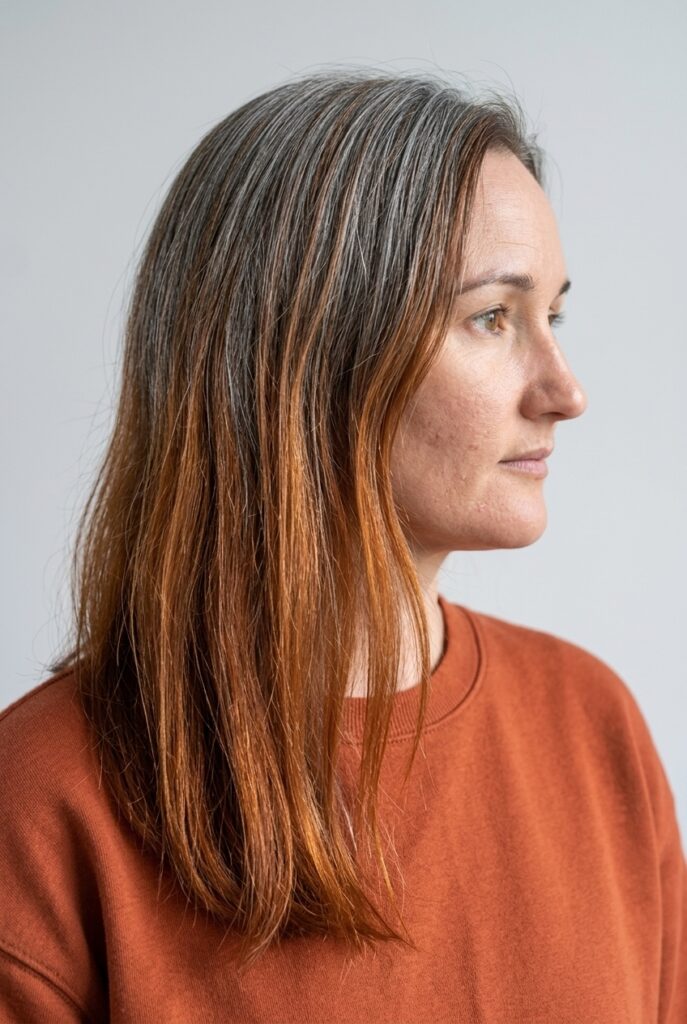
These two don’t get mentioned as often in the context of gray blending, but they deserve a spot on the list. Copper and auburn add warmth and richness that can make grays look less washed out against skin that’s lost some of its natural color with age. The contrast is different from what you’d get with cool tones — warmer, more vibrant — and when done right, it can be incredibly flattering.
Auburn, which has a blue undertone beneath the red-brown base, sits on the cooler side of the warm spectrum and blends more easily with silver strands than a straight copper does. Copper, on the other hand, is bolder and brighter — great for women with warm or olive skin tones who want something with visual impact.
The key with both shades is maintenance. Red and copper pigments fade faster than any other color, so regular gloss treatments and color-safe products are non-negotiable if you want the shade to stay vivid between appointments. If you’re someone who prefers a low-touch routine, this particular color family may require more upkeep than you’re looking for.
7. Rose Silver
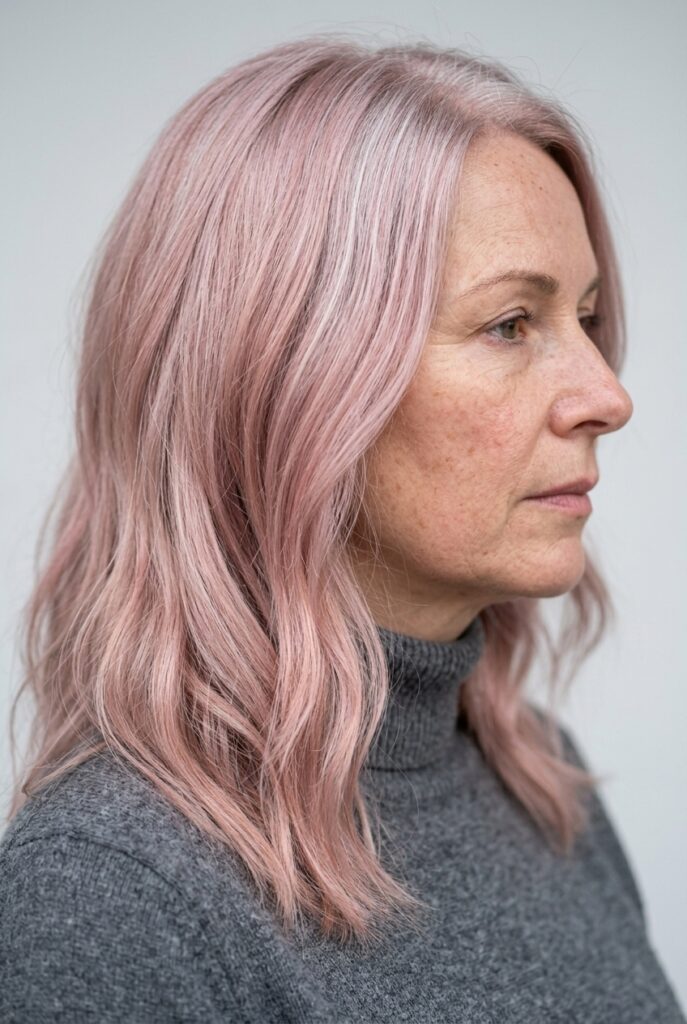
This one is for women open to something a little different. Rose silver sits at the intersection of soft pink and metallic silver — a shimmery, feminine color that looks particularly striking on hair that already has a lot of gray or white in it. Because gray hair is naturally light, it holds pastel and metallic tones differently than pigmented hair does, producing a depth and luminosity that’s hard to replicate on darker bases.
It’s not a high-maintenance color in the traditional sense — you’re not fighting regrowth the way you would with dark coverage — but the rose tone does fade over time and will need to be refreshed. Color-depositing conditioners in pink or violet tones can extend the life of the shade between salon visits.
Rose silver isn’t the most conventional choice, but for women with predominantly silver or white hair who want a polished, modern look that still feels like them, it’s worth discussing with your colorist. The result tends to look far less “bold” in practice than it sounds on paper.
The Color That Works Best Is the One You’ll Actually Maintain
Every shade on this list can look stunning — but the right choice comes down to your lifestyle, how often you want to sit in a salon chair, and honestly, what makes you feel good when you look in the mirror. Some women want full coverage and a clean, polished result every six weeks. Others want something soft and gradual that they can largely leave alone. Both are valid, and your colorist should help you find the approach that fits your actual life, not just the look you saw online.
One piece of advice that applies across the board: go lighter than you think you need to. Most colorists agree that softer shades tend to be more flattering as hair and skin tone both shift with age. A few well-placed highlights or a cooler, slightly lifted version of your natural color can refresh your look without the weight of heavy, all-over coverage. That’s where most women land when they find something they’re genuinely happy with.
Frequently Asked Questions
Q: What is the easiest hair color to blend with gray?
A: Cool-toned blonde highlights are widely considered the easiest option. The difference between cool blonde and silver is minimal, which means regrowth is less obvious and visits to the salon can be spaced further apart.
Q: Should I go lighter or darker to blend my grays?
A: Lighter is almost always the better direction. Going too dark creates a sharp contrast against gray roots and can look harsh next to skin that has naturally softened in tone with age. A shade slightly lighter than your natural base tends to grow out more gracefully.
Q: Is balayage a good option for gray hair?
A: Yes. Balayage is one of the most popular techniques for gray blending because the color is hand-painted and applied gradually, creating a soft grow-out with no harsh demarcation line. It works particularly well on medium to long hair.
Q: Can brunettes blend gray without going blonde?
A: Absolutely. Ash brown is a great option for brunettes who want to stay close to their natural shade. The cool undertones bring it closer to the gray spectrum, making regrowth less noticeable than warm or rich brown shades would be.
Q: How often do I need to touch up gray-blending color?
A: It depends on the technique. Full coverage color typically needs a touch-up every four to six weeks. Techniques like balayage, gray blending highlights, or salt-and-pepper blending can often go ten to twelve weeks or longer before a touch-up is needed.
Q: Does gray hair need special care after coloring?
A: Yes. Gray hair is more porous than pigmented hair, which means it absorbs color quickly but also loses it faster. A color-safe, sulfate-free shampoo helps preserve the color, and a toning shampoo (purple for cool tones, blue for warm) keeps unwanted yellow or brassy hues from developing.
Q: Is rose silver a realistic everyday hair color?
A: It can be. For women who already have mostly silver or white hair, rose silver tends to look softer and more natural in person than photos suggest. It does fade over time, but color-depositing conditioners can extend the life of the tone between salon appointments.
Q: Can copper or auburn hair color work with gray?
A: Yes, especially for women with warm or olive skin tones. Auburn blends a little more easily with gray than copper does because of its cooler blue undertone. Both shades fade faster than most hair colors, so they require consistent maintenance with color-safe products and regular gloss treatments.
Q: What’s the difference between gray blending and full gray coverage?
A: Full coverage uses an all-over color to completely hide every gray strand. Gray blending uses highlights, lowlights, or balayage to integrate grays into the overall look so they become part of the dimension rather than something to conceal. Blending is lower maintenance and typically less damaging over time.

