

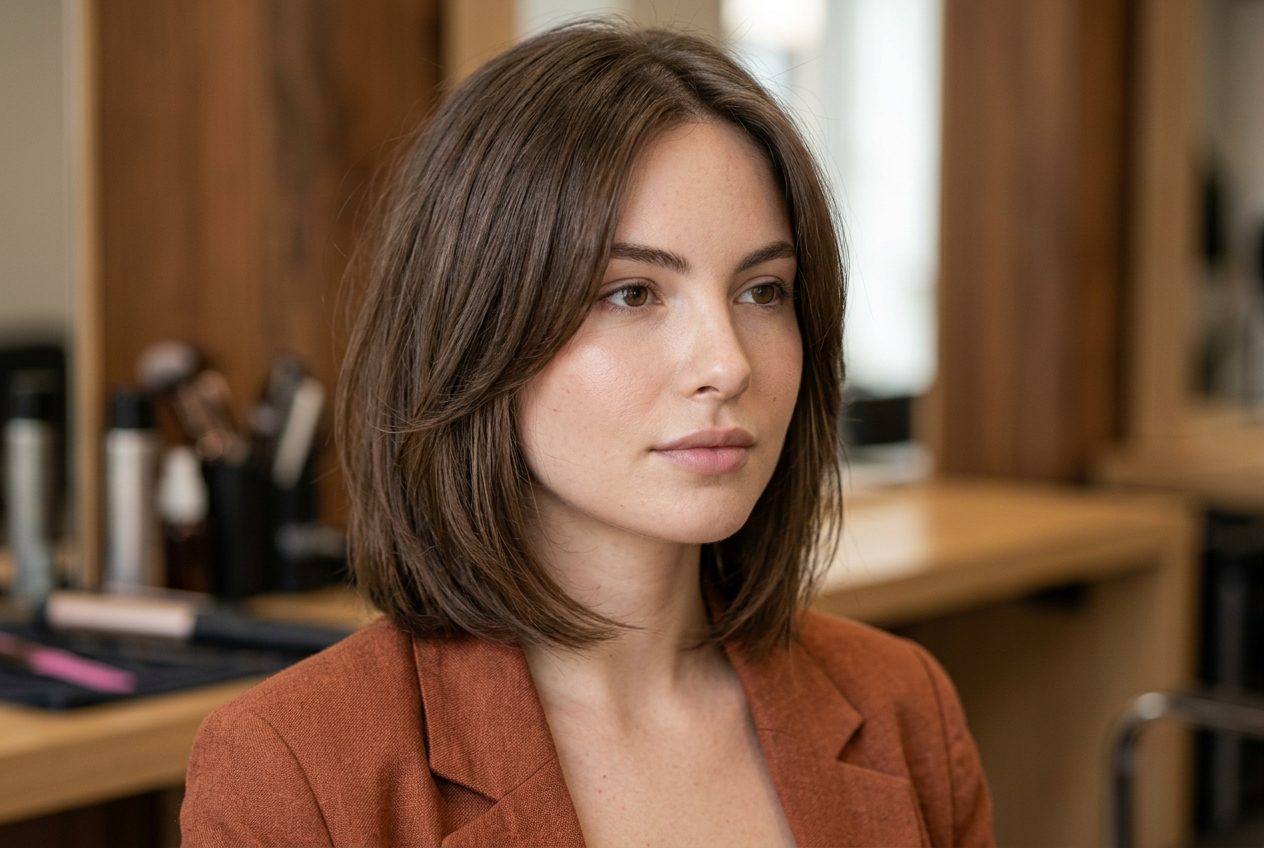
A round face has soft edges and not much of an angle to it — the width and length are close to equal, and the jaw doesn’t have a strong point. That softness is a nice feature on its own, but it also means certain haircuts do more for you than others. The right cut can add shape where the face doesn’t naturally have much, while the wrong one can make the whole face look wider than it is.
Length, layering, and where the hair sits at the jaw all matter more than most women realize. A cut that skims right along the cheeks tends to widen things visually, while one that moves past the jaw or adds height at the crown tends to stretch the face out a little. None of this requires drastic change — small adjustments in where the layers fall can shift the whole effect.
Below are ten haircuts that stylists keep coming back to for round faces, along with why each one works and who it tends to suit best.
- 1. Long Layers That Fall Past the Chin
- 2. Curtain Bang Lob
- 3. Modern Shag With Height at the Crown
- 4. Angled Bob
- 5. Textured Pixie With Volume on Top
- 6. Wolf Cut
- 7. Curved Collarbone Cut
- 8. Side-Swept Long Bob
- 9. Layered Bob With a Deep Side Part
- 10. Hush Cut
- Finding the Cut That Actually Works for You
- Frequently Asked Questions
1. Long Layers That Fall Past the Chin
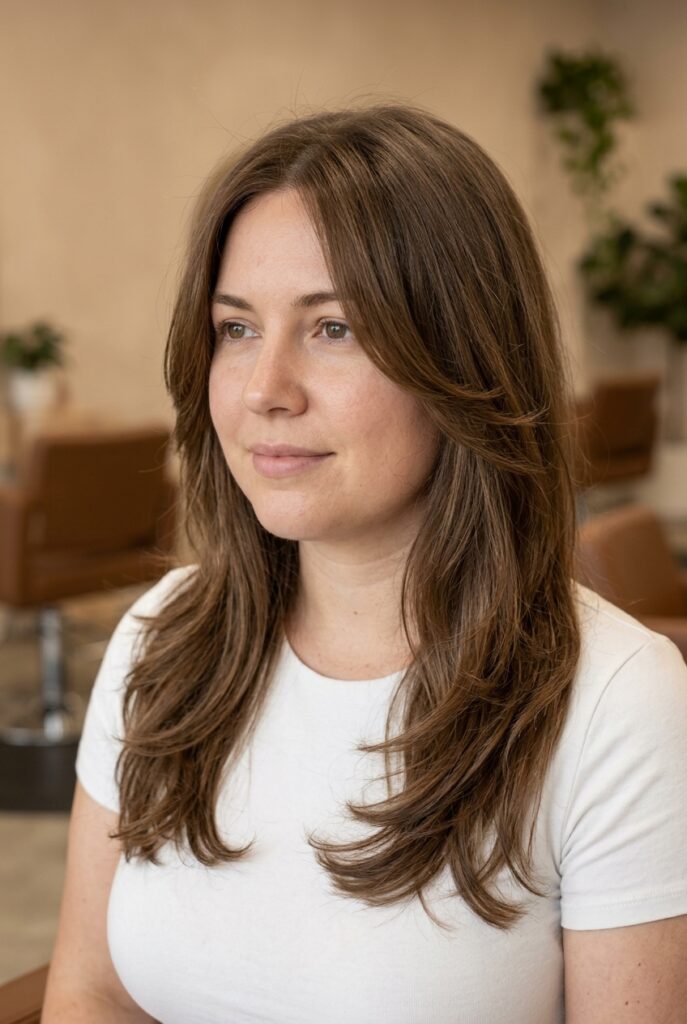
Long layers are the safest bet for a round face, and there’s a reason they show up on nearly every stylist’s list. Layers that start below the chin and move downward pull the eye vertically instead of horizontally, which softens the width through the cheeks. The length itself also helps — hair that stops right at the jaw tends to add bulk exactly where a round face doesn’t need it.
This cut works on straight, wavy, and curly hair alike, since the layering can be adjusted to control volume no matter the texture. For fine hair, fewer layers keep things from looking stringy. For thick hair, more layering prevents the ends from looking heavy.
Ask your stylist to keep the front pieces a bit longer than the back. That small detail keeps the frame close to the face without cutting across the widest part of the cheek.
2. Curtain Bang Lob
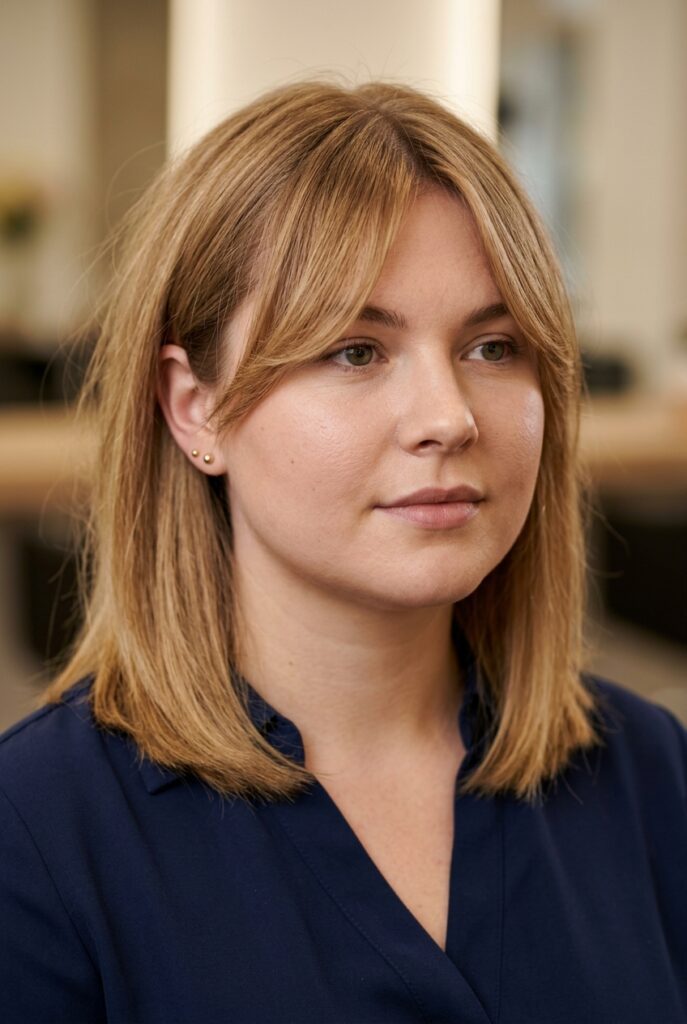
A lob — a bob that lands somewhere between the chin and the shoulders — paired with curtain bangs is one of the more popular combinations right now, and for good reason. The bangs part in the middle and sweep back on both sides, framing the face without a hard line across the forehead. That soft part is what makes them different from a full, blunt fringe, which tends to flatten the shape of a round face rather than balance it.
The lob length itself lands below the jaw, so it avoids widening the lower face the way a chin-length bob can. Combined with the bangs, this cut creates a subtle diagonal movement on both sides of the face.
Curtain bangs also grow out gracefully, which matters if you’re not ready to commit to bangs forever.
3. Modern Shag With Height at the Crown
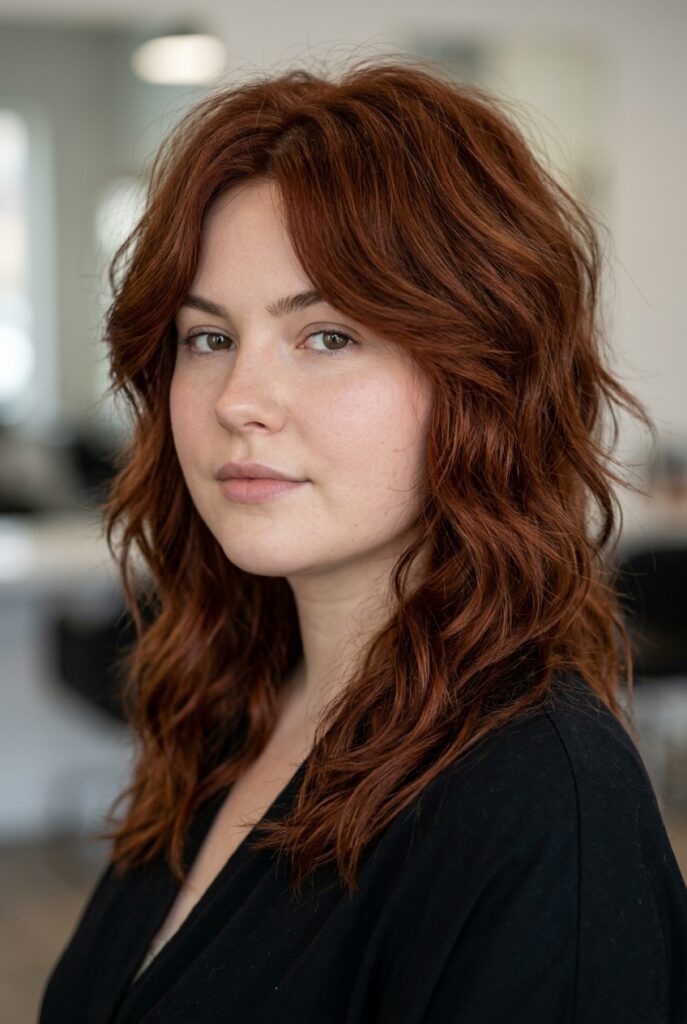
The shag has come back in a big way, and its choppy, uneven layers happen to be particularly good for round faces. The layers are cut with texture throughout, which adds volume at the crown and pulls attention upward and away from the width of the cheeks. A flat crown tends to make a round face look wider, so this lift matters more than it might seem. Shags work best with some natural wave or a bit of texturizing product, since the cut relies on movement rather than a smooth, polished finish, and fine hair benefits especially since the layering creates the appearance of more density. For round faces, ask for the shortest layers to start around the cheekbone rather than higher up, so the shape still elongates rather than adds width at eye level.
4. Angled Bob
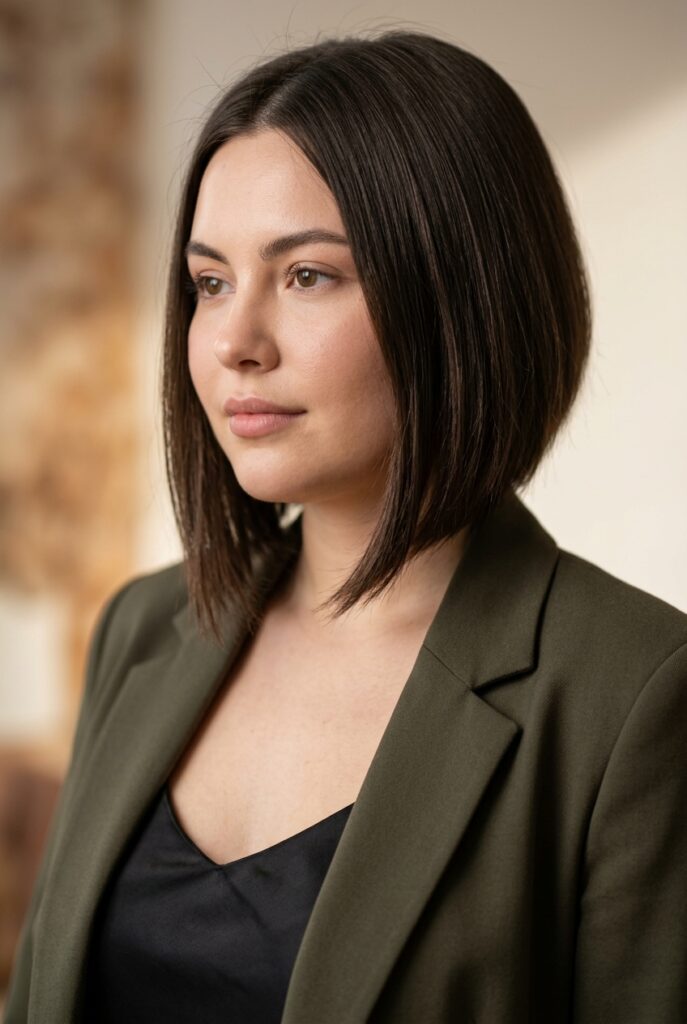
A bob doesn’t have to be off the table for a round face — it just needs an angle. A bob cut shorter in the back and longer toward the front creates a diagonal line along the jaw instead of a straight one, which is the detail that makes the difference. A blunt, one-length bob sits right at the widest part of the face and tends to emphasize roundness, while the angled version breaks that line up.
The forward angle also draws the eye down toward the chin, giving the illusion of more length in the face overall.
5. Textured Pixie With Volume on Top
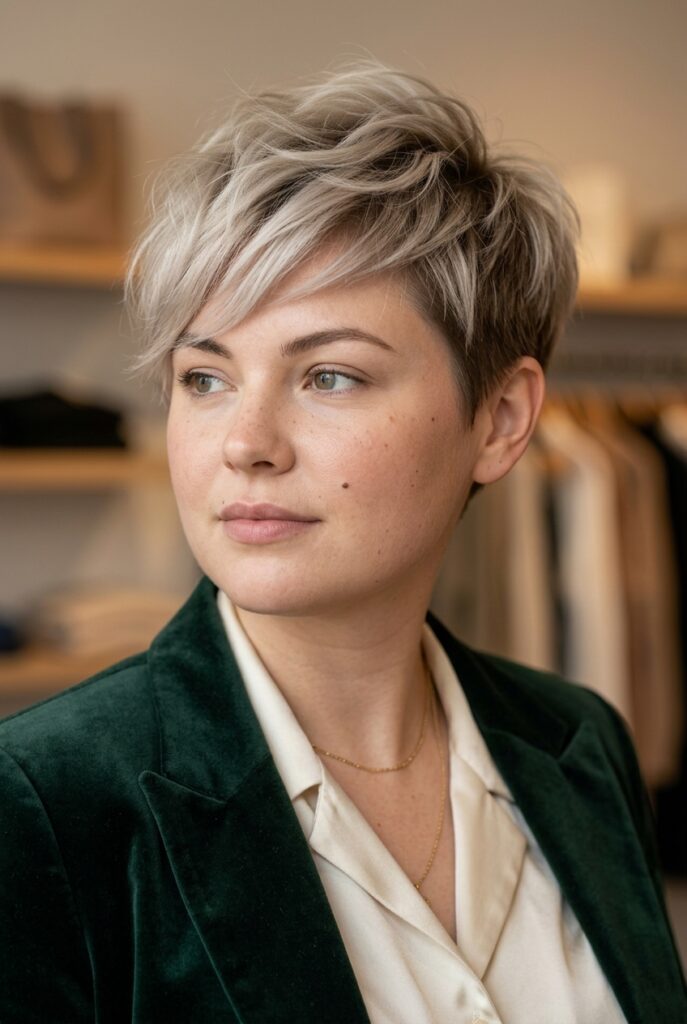
Short hair is often assumed to be off-limits for round faces, but that’s not really true — it just needs the right shape. A textured pixie with extra volume and height on top elongates the face the same way a shag does, just at a shorter length. Keeping the sides close to the head while leaving more length and texture up top creates a vertical line that a round face benefits from.
Side-swept pieces at the front work better than a straight-across fringe here, since they avoid cutting a horizontal line across the forehead.
This cut takes some regular upkeep to maintain the shape, since pixies grow out faster than longer styles. But for women who want short hair, it remains one of the more flattering options available.
6. Wolf Cut
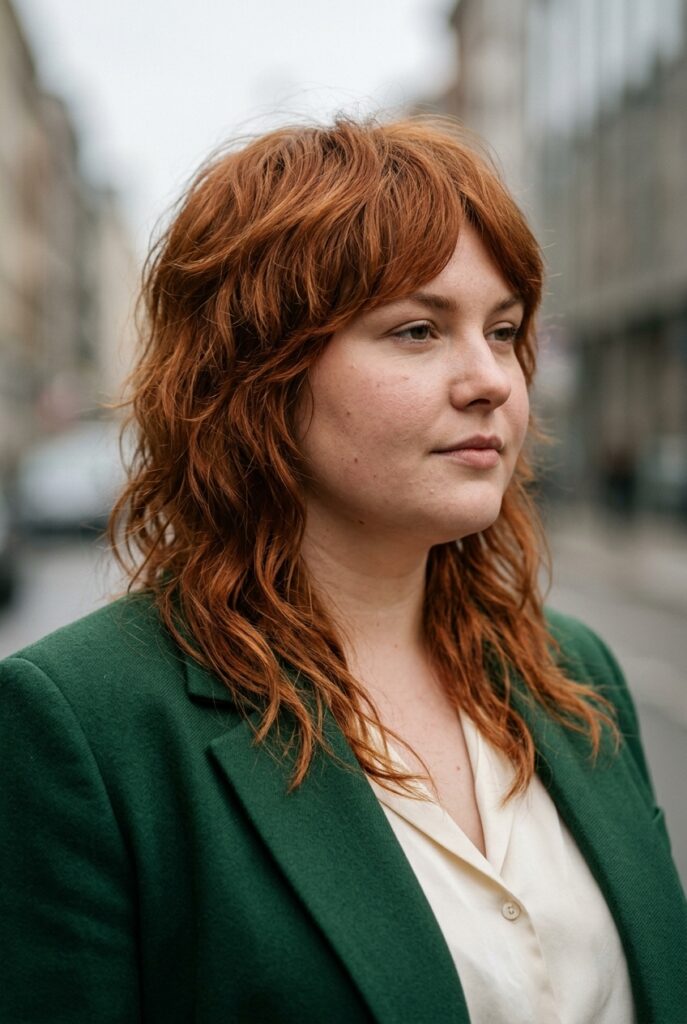
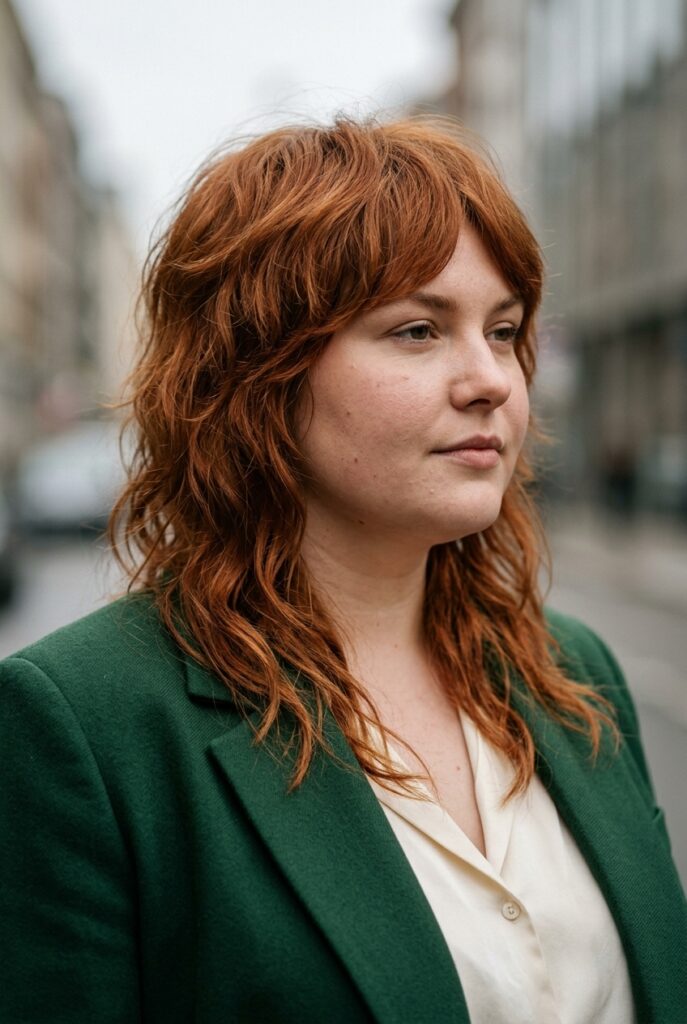
The wolf cut blends the choppy layering of a shag with the shorter crown-heavy shaping of a pixie, and it has become one of the more requested cuts for round faces recently. It’s built around heavy layering at the top that tapers into longer, wispier pieces toward the ends. That structure adds noticeable lift at the crown while keeping enough length at the bottom to avoid the width issue that shorter, blunter cuts can create.
It works particularly well on wavy or curly hair, where the natural texture does a lot of the styling work.
Because the cut relies on movement and texture rather than a clean shape, it also hides some of the visible bulk that heavier round faces sometimes deal with around the jaw.
7. Curved Collarbone Cut
This cut sits right at the collarbone, with the ends curved slightly inward toward the neck rather than cut straight across. That inward curve softens the jawline it passes near and avoids adding width at the point where a round face is already fullest. It’s a quieter cut than some of the others on this list, without heavy layering or dramatic shaping, which makes it a solid choice for women who want something flattering but low-maintenance.
The length lands in a place that works well with both straight and blow-dried styles, and it holds its shape reasonably well between salon visits.
8. Side-Swept Long Bob
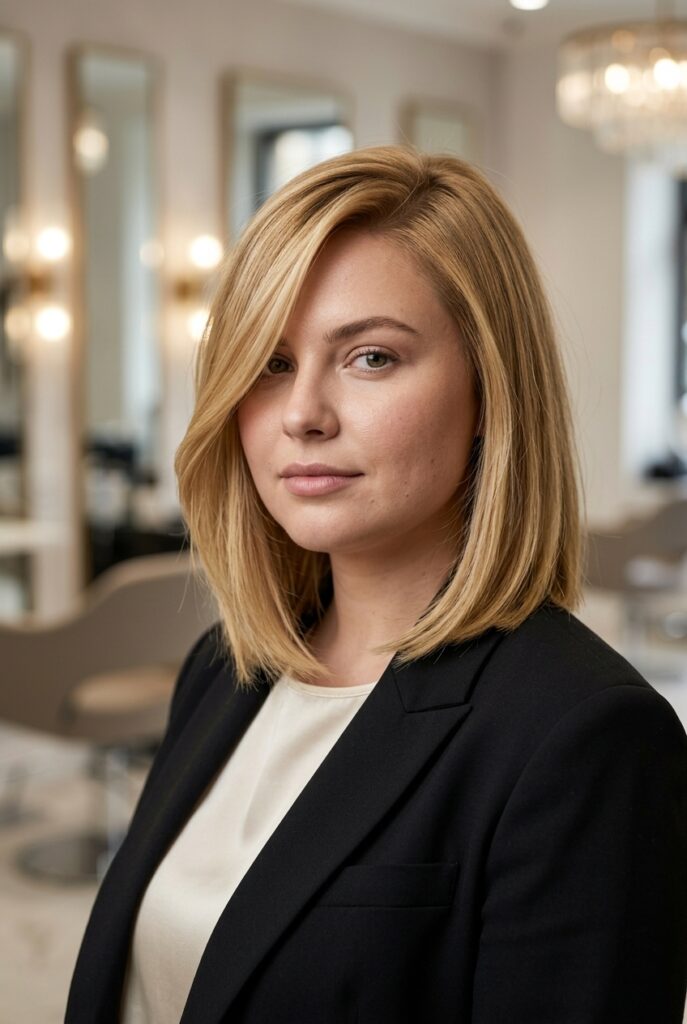
A side part changes more about a haircut’s effect than people expect, and pairing one with a long bob makes a real difference for round faces. The asymmetry created by parting to one side breaks up the symmetry that can make a round face look wider, while the length of the lob itself stays below the jaw. Sweeping the front section across the forehead adds a diagonal line that a center part or a fringe cut straight across doesn’t offer.
This combination also styles easily, since the side part requires nothing more than a comb and maybe a little product to hold it in place.
9. Layered Bob With a Deep Side Part
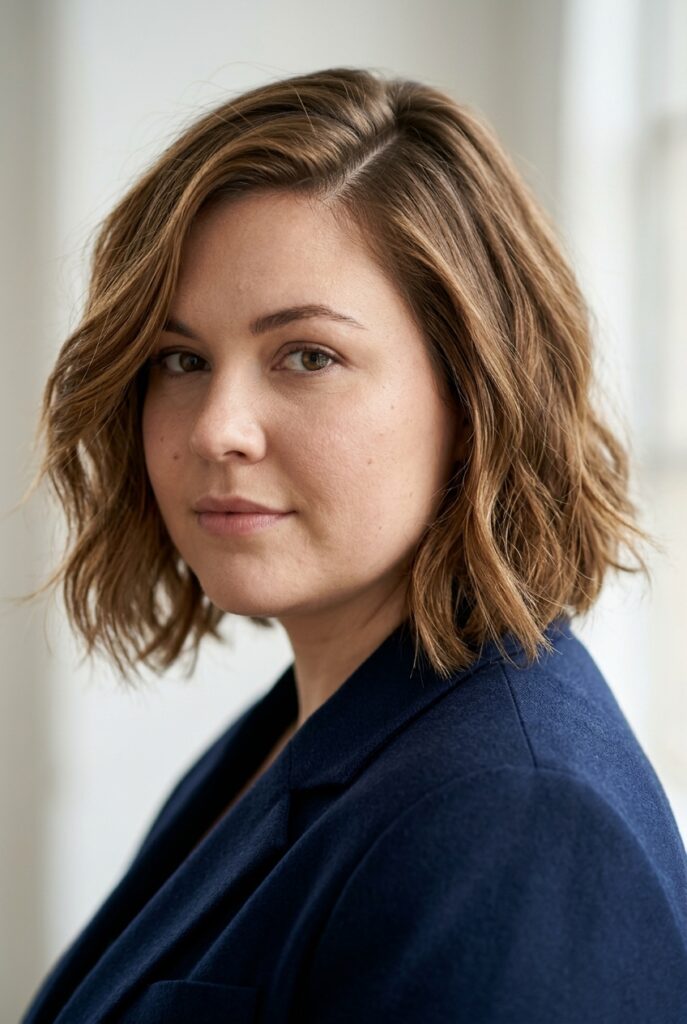
This is a step beyond the classic side-swept lob — a shorter, more heavily layered bob that leans on a deep side part to do most of the visual work. The layers add texture through the length of the cut, and the deep part creates a longer diagonal line across the top of the head than a shallow part would. Together, they counter the natural width of a round face more effectively than a plain bob at the same length.
It suits women with some natural texture or wave especially well, since the layers rely on movement rather than a sleek, flat finish. Fine, straight hair can still work with this cut, but it may need a little extra styling product to hold the shape.
10. Hush Cut
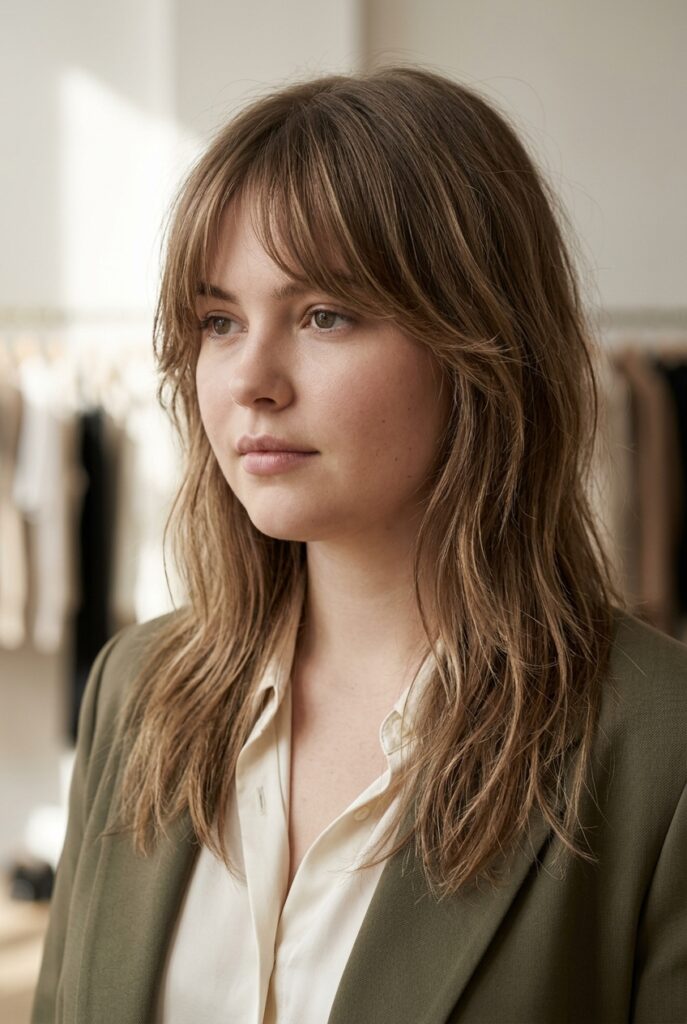
The hush cut is a newer name for a style that blends face-framing layers with a soft, curtain-like fringe, and it has picked up attention recently as an alternative to both the classic shag and the curtain bang lob. It typically keeps more length through the back than a shag while still adding shorter, wispier layers around the face. For round faces, those face-framing pieces do the same job as curtain bangs — softening the forehead and cheeks without a hard line — while the longer length in back avoids adding width.
It’s a flexible cut that works across a range of hair lengths, from shoulder-length to well past the collarbone.
Because it leans on soft layering rather than one dramatic feature, the hush cut tends to age well between salon appointments, growing out without losing its shape too quickly.
Finding the Cut That Actually Works for You
A round face isn’t a limitation — it’s just a shape that responds better to some cuts than others. Length past the jaw, a bit of height at the crown, and layers that move rather than sit flat are the three details that show up across nearly every option on this list, whether the cut is short or long, straight or curly.
The best approach is to bring a photo or two to your next salon appointment and talk through which of these directions fits your hair texture, your daily routine, and how much upkeep you’re willing to put in. A good stylist can adjust any of these ten cuts to your particular features, so don’t be afraid to ask questions before the scissors come out.
Frequently Asked Questions
Q: What haircuts should women with round faces avoid? A: Blunt, one-length bobs that hit right at the jaw, chin-length cuts, and full bangs cut straight across the forehead tend to add width rather than balance it. Layers that stop above the jawline can also emphasize roundness instead of softening it.
Q: Are bangs a good idea for a round face? A: Yes, as long as they’re the right kind. Side-swept or curtain bangs work well because they create a soft diagonal line rather than a straight one. A full, blunt fringe cut straight across tends to flatten the face and isn’t usually as flattering.
Q: Can short hair work on a round face? A: It can, as long as the cut adds height and texture at the crown rather than sitting flat. A textured pixie or a wolf cut with volume on top elongates the face even at a shorter length.
Q: Does a center part or a side part work better for round faces? A: A side part is generally more flattering. It creates asymmetry that helps break up the width of the face, while a center part can emphasize how even and round the face is.
Q: What length is most flattering for a round face? A: Cuts that fall below the chin, such as a long bob, collarbone-length cut, or long layers, tend to work best. Length that stops right at the jaw is usually the least flattering option.
Q: Do layers actually make a difference for round faces? A: They do. Layers that start below the cheekbone and move downward create vertical movement that draws the eye down the face rather than across it, which has a slimming effect.
Q: Is the wolf cut suitable for round faces? A: Yes. Its heavy layering at the crown adds lift and vertical line, while the longer pieces toward the ends keep the cut from adding bulk around the jaw.
Q: How much upkeep do these cuts typically need? A: It depends on the style. Pixies and wolf cuts need more frequent trims to hold their shape, while longer layered cuts and lobs can go longer between salon visits.
Q: Will these haircuts work with curly or wavy hair? A: Most of them do, and several — like the shag and wolf cut — actually rely on natural texture to create their shape. A stylist can adjust the layering to suit curly, wavy, or straight hair.
Q: How do I know which of these cuts will suit me best? A: Consider your hair texture, how much time you spend styling it, and how quickly your hair grows. Bringing reference photos to a consultation and discussing your daily routine with a stylist is the most reliable way to land on the right choice.

