

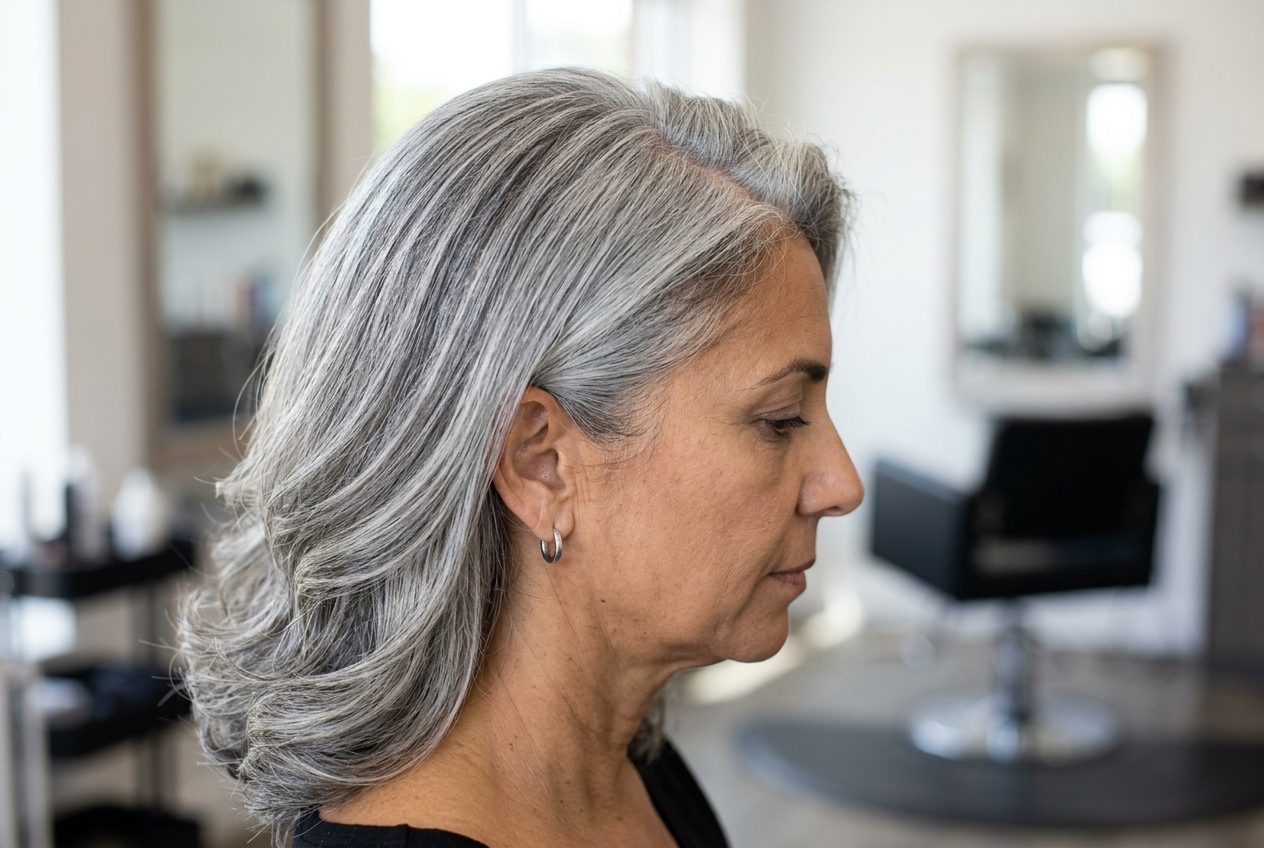
Fifty doesn’t mean you have to choose between looking like yourself and looking put-together. It just means the old rulebook — cover every gray, match your childhood color, book monthly root touch-ups until retirement — doesn’t apply anymore. Colorists are working with silver now instead of against it.
That shift shows up everywhere from red carpets to your neighbor’s kitchen table. Women who once dreaded the sight of a gray root are now asking their stylist to work with it instead of erasing it.
What follows are nine color approaches worth asking your colorist about, based on what’s actually working in salons this year.
1. Gray Blending
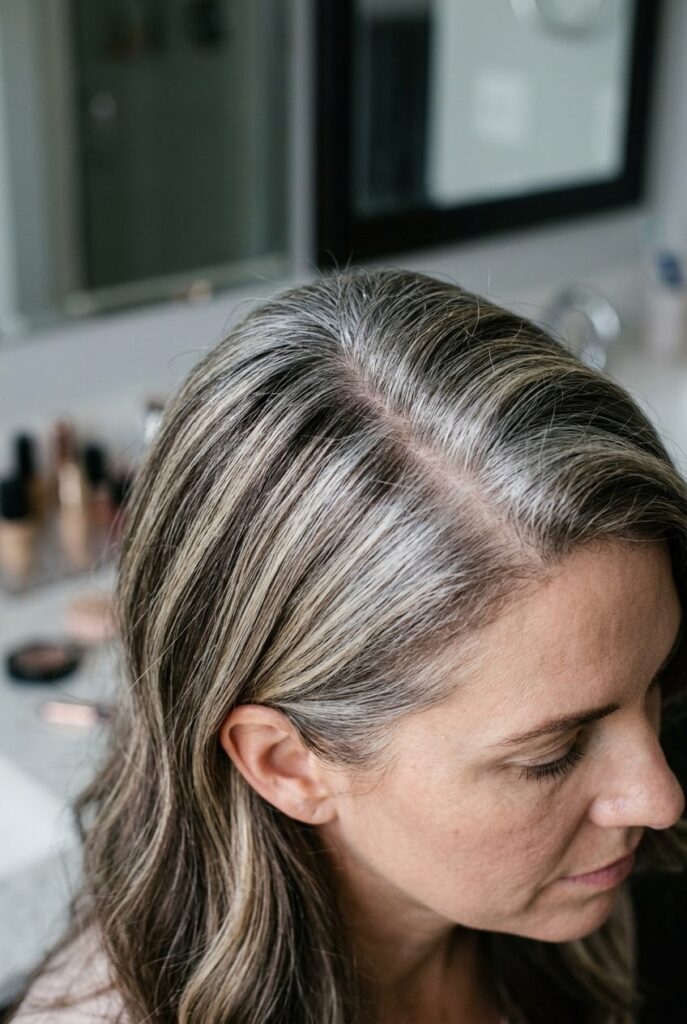
Gray blending is the technique most colorists mention first when a client says she’s ready to stop fighting her roots. Rather than drawing a hard line between dyed hair and what’s growing in naturally, a colorist weaves in highlights, lowlights, or a gloss around your existing gray so the two shades melt into each other. Ogle School cosmetologist Stanley Nolan calls it a solid pick for women who don’t have time for constant salon visits, since it softens regrowth so the transition grows out more naturally instead of creating an obvious two-tone line.
The appeal here is practical as much as it is pretty. You get more weeks between appointments because nothing looks jarring as it grows.
Ask your colorist to build the blend around your natural gray pattern rather than a generic formula — everyone’s silver comes in differently.
2. The Silver Money Piece
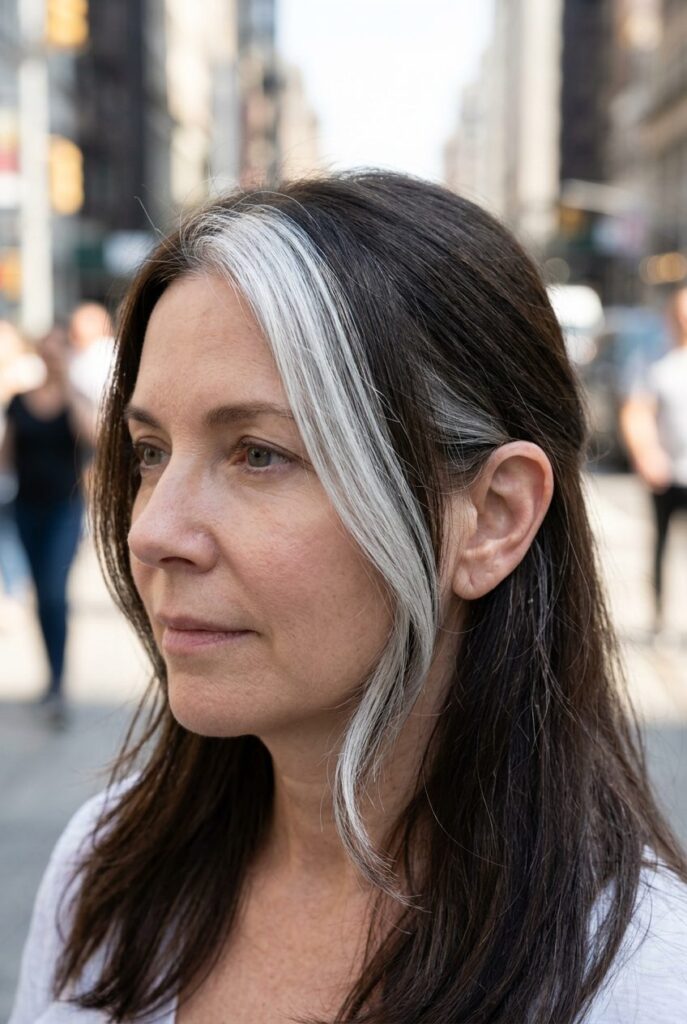
Instead of the classic blond money piece around your face, ask for silver instead. Placed on the strands framing your cheeks, it does double duty: it echoes the gray already coming in near your hairline, and it reads as a deliberate color choice rather than hair that’s simply been left alone too long. Nolan describes the effect as one that creates a modern, intentional look rather than making it feel like you’re growing out your color. It’s a small change with a big visual payoff, and it works whether your base is dark brown or a warm blonde.
3. Foilyage for a Brighter Silver
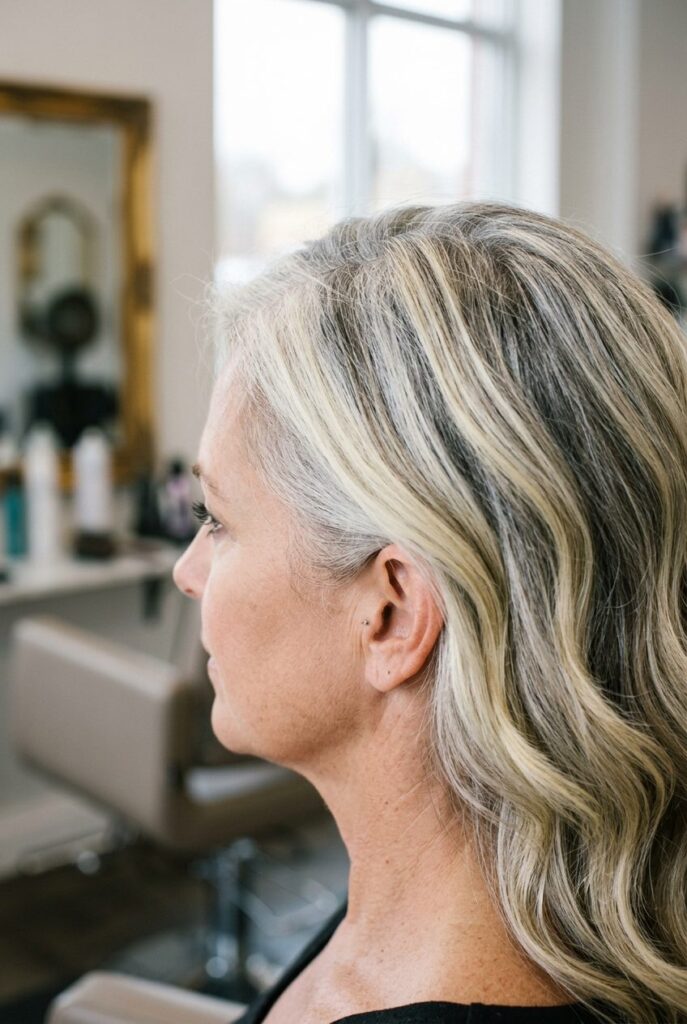
If your goal is a lighter, more luminous finish, foilyage is worth discussing. It borrows the hand-painted placement of balayage but wraps sections in foil afterward, which lifts the color further and gives you a brighter result than balayage alone typically delivers. According to L’Oréal Paris’s hair color guide, foilyage is the technique to request specifically when your goal is to blend grays with a lighter, brighter blonde.
It suits women whose gray is coming in patchy or concentrated in certain spots, since the foil placement can be adjusted section by section.
4. French Gray Gloss
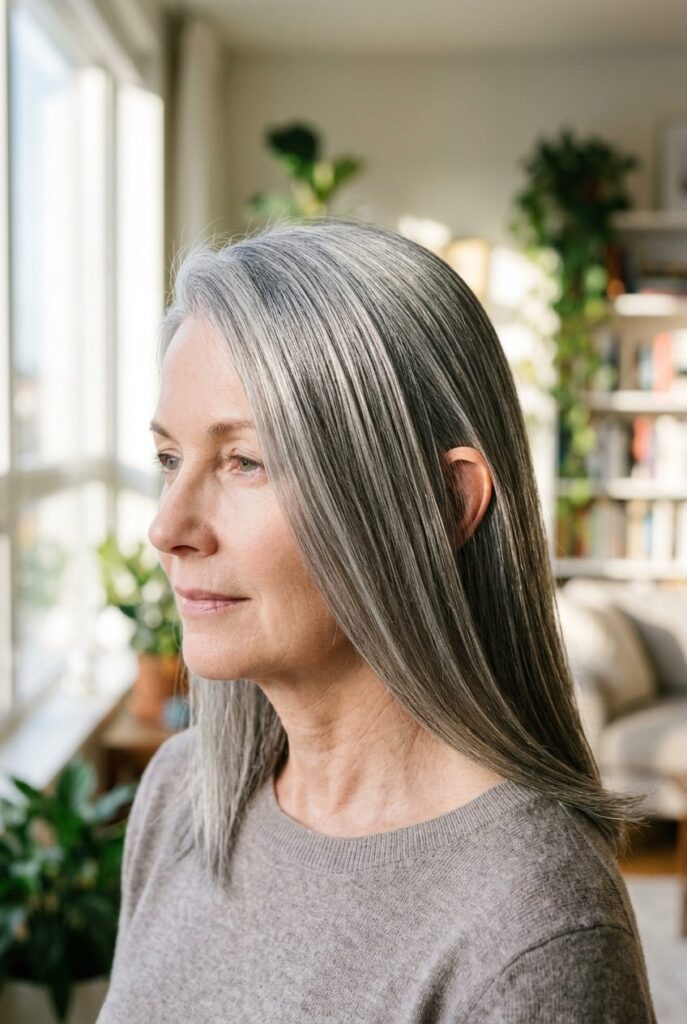
This French approach focuses less on adding color and more on refining the gray you already have. A colorist blends tonal shades into your silver and finishes with a gloss, which smooths the cuticle and adds shine without disturbing the natural highlights already present in your hair. It’s less about transformation and more about polish — a way to make gray hair luminous rather than dull. Think of it as a finishing step rather than a full color service, ideal once you’re mostly gray and simply want it to look healthier.
5. Quiet-Silver, Low-Contrast Color

Some women don’t want visible highlights or a statement money piece at all. For them, there’s a subtler route.
Beauty platform contributor Annabelle Taurua describes a trend she calls “quiet-silver hair,” where subtle grays are blended with low-contrast regrowth and soft greige tones for a result that reads as effortless rather than styled. The idea is to keep everything close in tone — no bright highlights, no dark lowlights competing for attention — so the color delivers a healthier, low-maintenance finish that barely shows a grow-out line at all.
It’s the option to bring up if you’d rather your hair not announce itself as “colored” in either direction.
6. Reverse Ombre
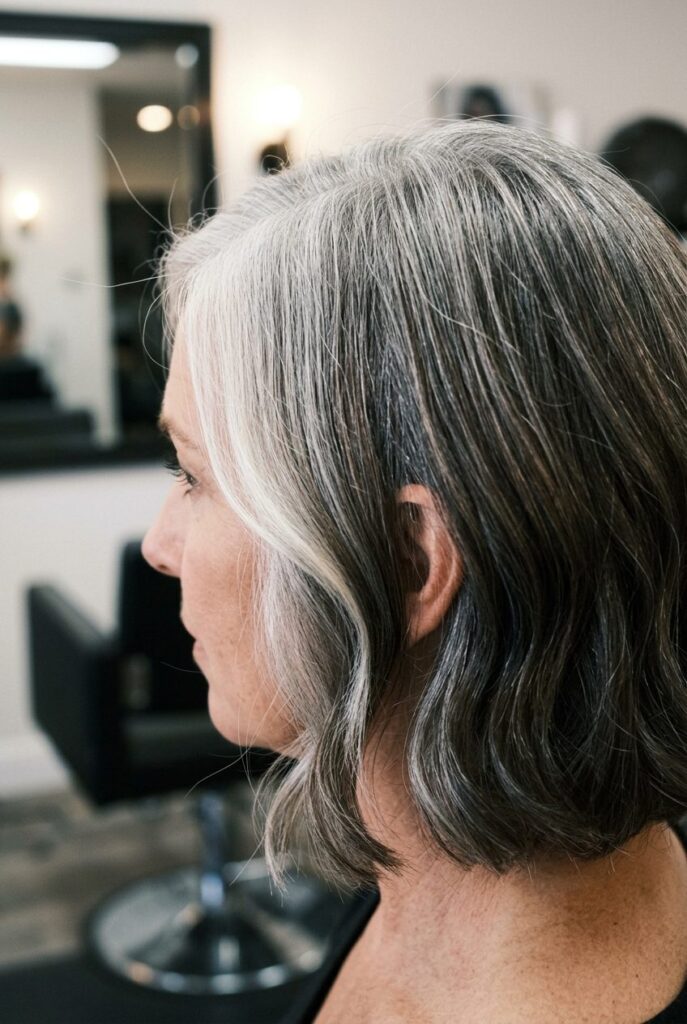
A reverse ombre flips the usual light-to-dark gradient: instead of darker roots fading into lighter ends, you get lighter, silvery tones up top that gradually deepen toward the ends. It’s a striking option if you’re not ready to commit to a full gray-out but want your regrowth to look purposeful rather than accidental.
Paired with an ashy money piece near the face, the look becomes something you’d choose on purpose, not something that just happened while your dark ends grow out and eventually get cut off.
7. Salt-and-Pepper Color Blocking
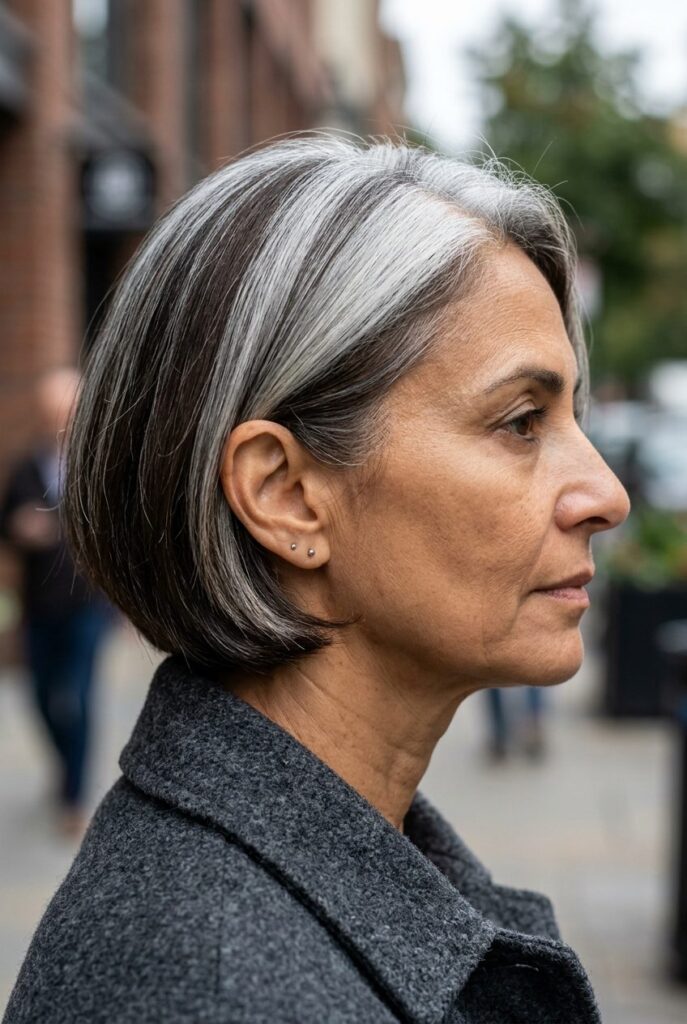
For women who want their gray to feel like a design choice rather than something to camouflage, color blocking is worth a look. A colorist places larger, more defined sections of silver against your natural dark tones instead of blending everything into one soft gradient. Celebrity stylist Guy Tang has described the underlying idea simply: dimension is created through contrast. It’s a bolder pick, best suited to women who already feel confident letting their gray stand out rather than fade in.
8. Face-Framing Babylights
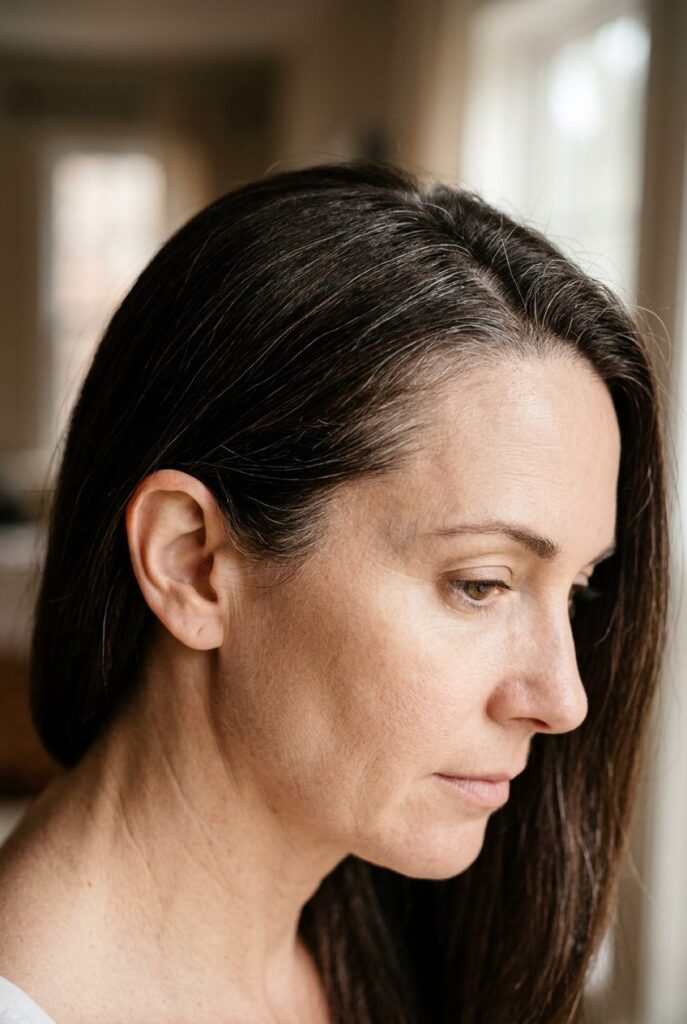
Babylights are the finest, most delicate highlights a colorist can place, and they’re especially useful in the earliest stage of graying — when you’ve only got a few silver strands showing up around your hairline or crown. L’Oréal’s guide notes this technique works best when you have minimal grays around your face or around the crown of your head, since the subtlety of babylights won’t overwhelm hair that isn’t very gray yet.
They’re worth asking about if you fall into one of these situations:
- You’re only seeing a handful of gray hairs so far
- You want the change to be gradual, not dramatic
- You’d rather ease into a gray transition over a year or two
- Your colorist recommends starting light before committing further
9. Root Smudge with a Gloss Refresh
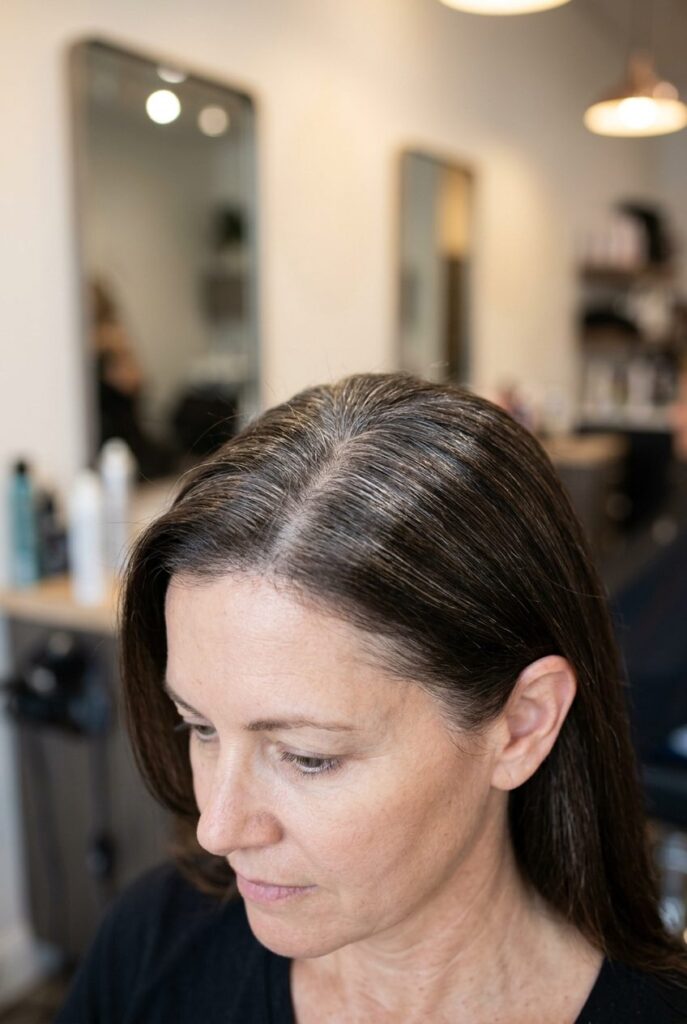
A root smudge softens the line where your color meets your scalp by blending a shadowy, natural tone right at the root before it fades into the rest of your color. It’s a quick add-on to most color services and makes a huge difference in how long your color looks fresh, since regrowth becomes far less obvious week to week.
Add a gloss on top and you get shine along with the camouflage. Together, these two small services stretch the time between full color appointments considerably, which matters if your priority right now is spending less time in a salon chair rather than more.
Your Gray, Your Terms
None of these nine choices require you to go all-in on gray overnight, and none of them require staying fully dyed either. What they have in common is that they treat your natural color as something worth working with, not something to erase as fast as possible.
Bring a few of these terms to your next appointment and let your colorist tell you which fits your current gray pattern, your hair type, and how much salon time you actually want to commit to. The right pick isn’t the trendiest one — it’s the one that looks like you, just with less upkeep.
Frequently Asked Questions
Q: What’s the difference between gray blending and highlights?
A: Gray blending is a broader approach that can use highlights, lowlights, or a gloss — sometimes all three — specifically to soften the line between your natural gray and your existing color. Regular highlights are just one tool within that approach.
Q: How often will I need touch-ups with these techniques?
A: Most of these options, including gray blending, foilyage, and root smudging, are designed to stretch time between appointments since there’s no harsh line to maintain. Many women go eight to twelve weeks instead of four.
Q: Can I use these techniques if I have very little gray so far?
A: Yes. Babylights and a soft root smudge work especially well in the early stages, since they ease you into a transition without a dramatic change.
Q: Will gray blending make my hair look darker overall?
A: Not necessarily. It depends on where the highlights and lowlights are placed. A colorist can lean the blend lighter or darker based on your base color and how much gray you already have.
Q: What is a money piece, exactly?
A: It’s a section of highlighted hair framing your face, usually near your part or temples. Using silver instead of blond ties it into your gray regrowth.
Q: Is French gray the same as going fully gray?
A: No. It’s a glossing technique meant to refine gray hair you already have, adding shine and softness rather than changing your color path.
Q: Which option requires the least salon time?
A: Quiet-silver color and root smudging are both built around low maintenance, since they avoid sharp contrast lines that show regrowth quickly.
Q: Can these techniques work on curly or textured hair?
A: Yes. Placement may shift slightly to account for how curls catch light, but all nine techniques can be adapted by a colorist familiar with textured hair.
Q: Should I go lighter or darker when transitioning to gray?
A: It depends on your natural gray tone and skin undertone. A cooler, ashier gray usually pairs well with lighter blending, while warmer grays often look better with soft brown lowlights mixed in.

