

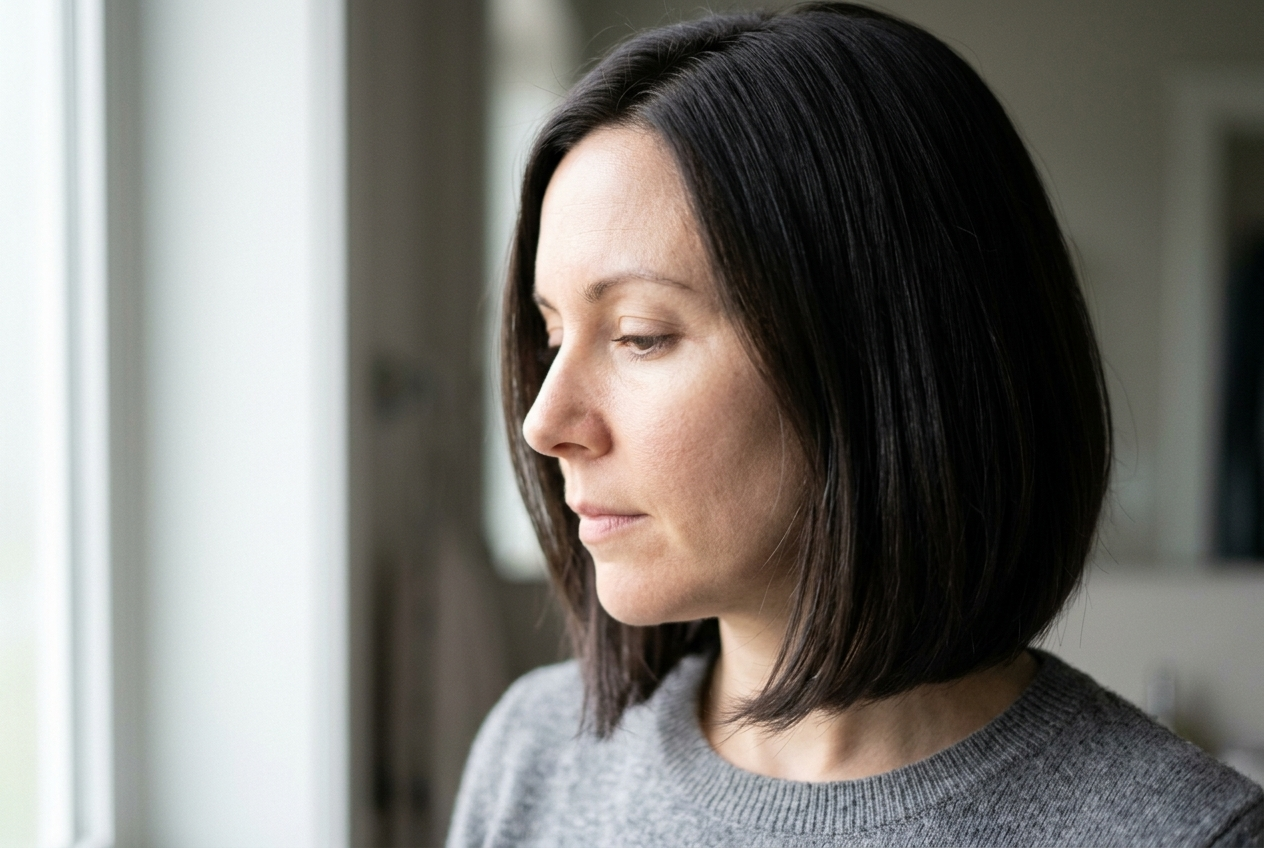
A lot of women spend years chasing the right foundation shade, the most flattering cut of jeans, or a contour trick that actually works — and never once think about what their hair color is doing to the shape of their face. It’s one of the biggest blind spots in beauty, mostly because nobody talks about it outside of a stylist’s chair.
The truth is, hair color isn’t just about looking fresh or covering gray. It changes how light falls around your face, how much contrast sits near your jawline, and where a stranger’s eye lands first. Some shades pull attention inward and downward, which naturally makes a face look longer and leaner. Others do the opposite without you realizing it.
Below are nine hair colors that stylists consistently point to when a woman wants her face to look slimmer, plus why each one works.
- 1. Deep Espresso Brown
- 2. Cool Ash Brown
- 3. Soft Off-Black
- 4. Chocolate Brunette with a Money Piece
- 5. Deep Wine Red
- 6. Chestnut with Face-Framing Lowlights
- 7. Shadow Root Balayage
- 8. Rich Copper
- 9. Cool Caramel Placed Strategically
- The Simplest Change That Makes the Biggest Difference
- Frequently Asked Questions
1. Deep Espresso Brown
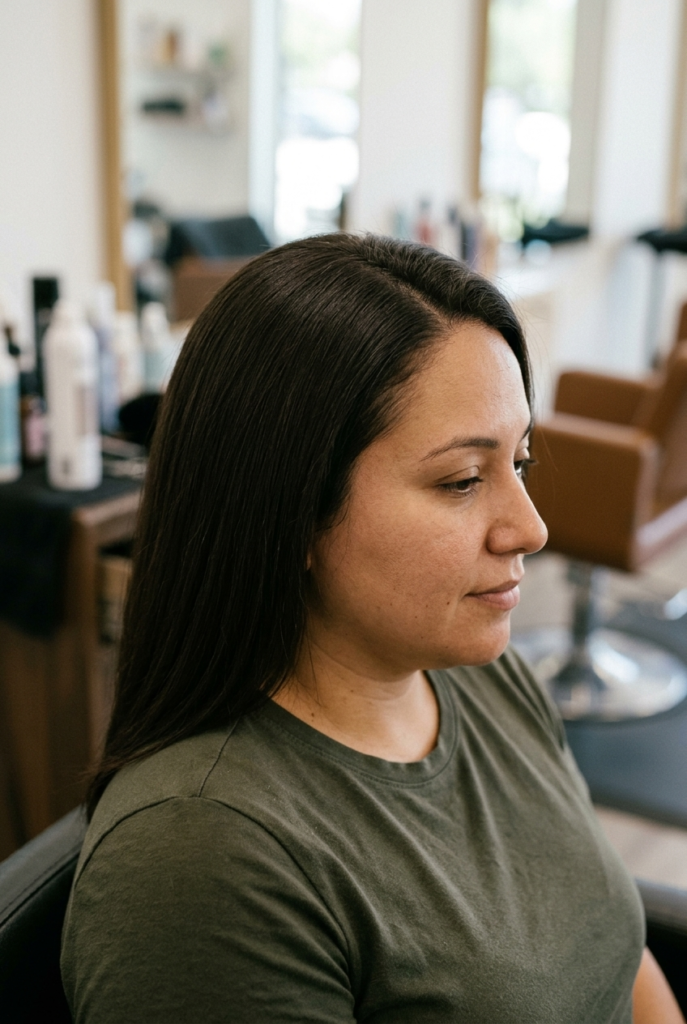
A very dark, cool-toned brown does something simple but effective: it removes the horizontal pull that lighter colors create along the hairline. Because espresso brown sits close to your natural shadow line, it blends into the frame of your face instead of widening it. Stylists often recommend this shade for round or square face shapes specifically because it minimizes bulk at the sides. It also tends to photograph better under harsh light, since there’s less brightness bouncing off the hair to compete with your features.
2. Cool Ash Brown
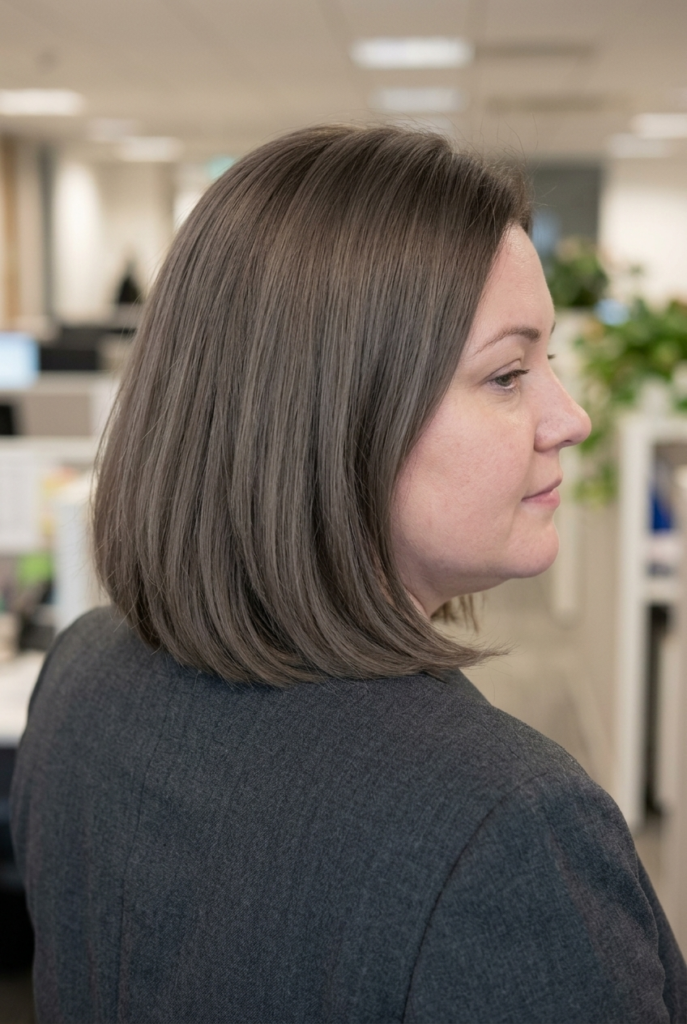
Warm brown tones can add a golden glow, but they also add visual weight, especially around the cheeks. Ash brown strips out that warmth and replaces it with a cooler, more muted base. The result is a softer transition between hair and skin, with far less contrast pulling the eye outward.
This matters most for women with fuller cheeks or a rounder jawline.
Warm, coppery undertones tend to sit right where you don’t want extra attention — right at cheek level.
3. Soft Off-Black
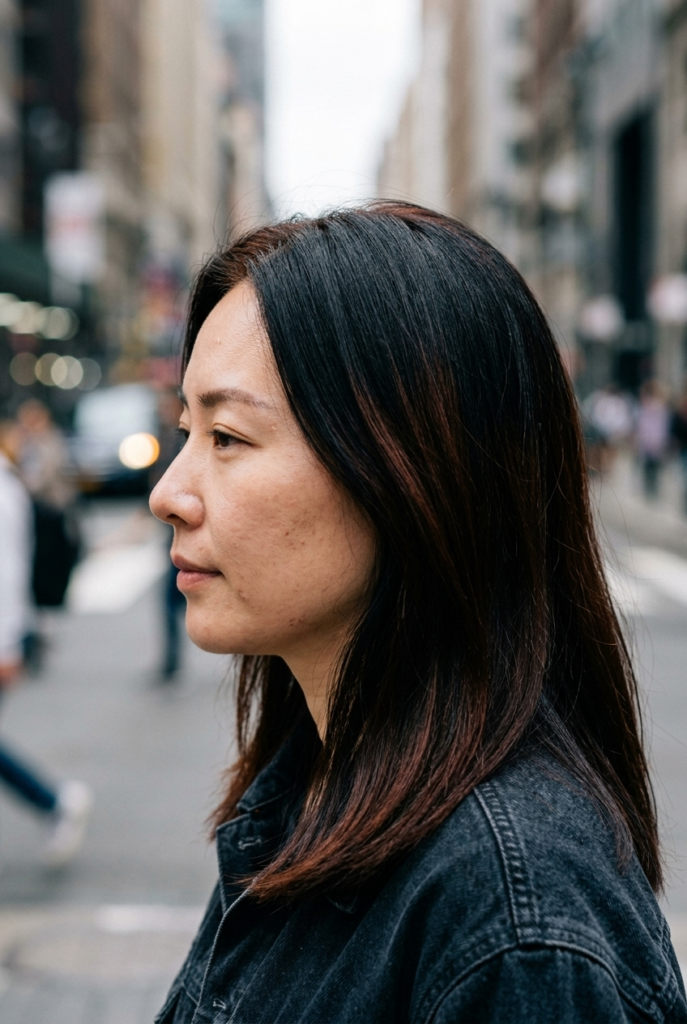
Off-black is different from a flat, blue-black dye job. It has a hint of warmth mixed in so it doesn’t look severe, but it still creates strong contrast against the skin. That contrast draws the eye to the center of the face rather than out toward the hairline, which is exactly the slimming effect most women are after.
It’s a bold shift if you’ve never gone this dark before, so most colorists suggest easing into it with a few root touch-ups rather than an all-over dye in one sitting.
4. Chocolate Brunette with a Money Piece

A single face-framing highlight — often called a money piece — placed against a rich chocolate base creates a subtle vertical line right where you want one. That thin strip of lighter color runs from the part down past the cheekbone, and it tricks the eye into reading length rather than width. It’s a low-maintenance way to get a slimming effect without committing to an entirely different base color.
5. Deep Wine Red
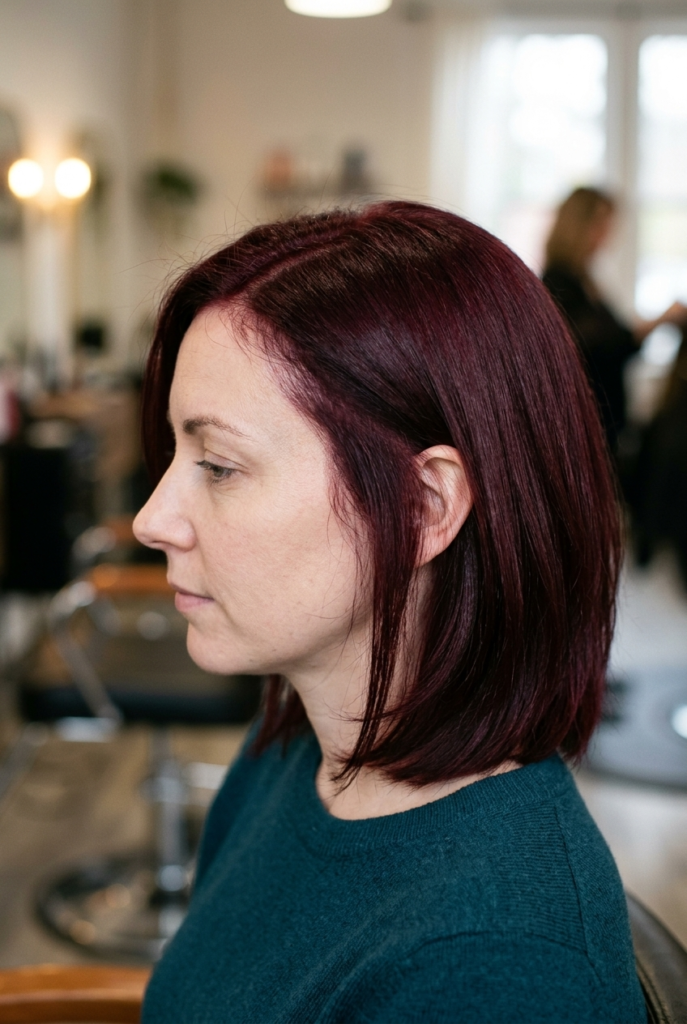
Red isn’t usually the first color women think of for a slimming effect, but a deep, almost burgundy red behaves more like a dark neutral than a bright accent.
It absorbs light the same way espresso or black does, while still giving off warmth that flatters most skin tones. The richness of the shade keeps things looking intentional rather than washed out, and it holds up well through several weeks of washing before it needs a refresh.
Bright copper or strawberry shades don’t have the same effect — they’re closer to a blonde in how much light they reflect.
6. Chestnut with Face-Framing Lowlights
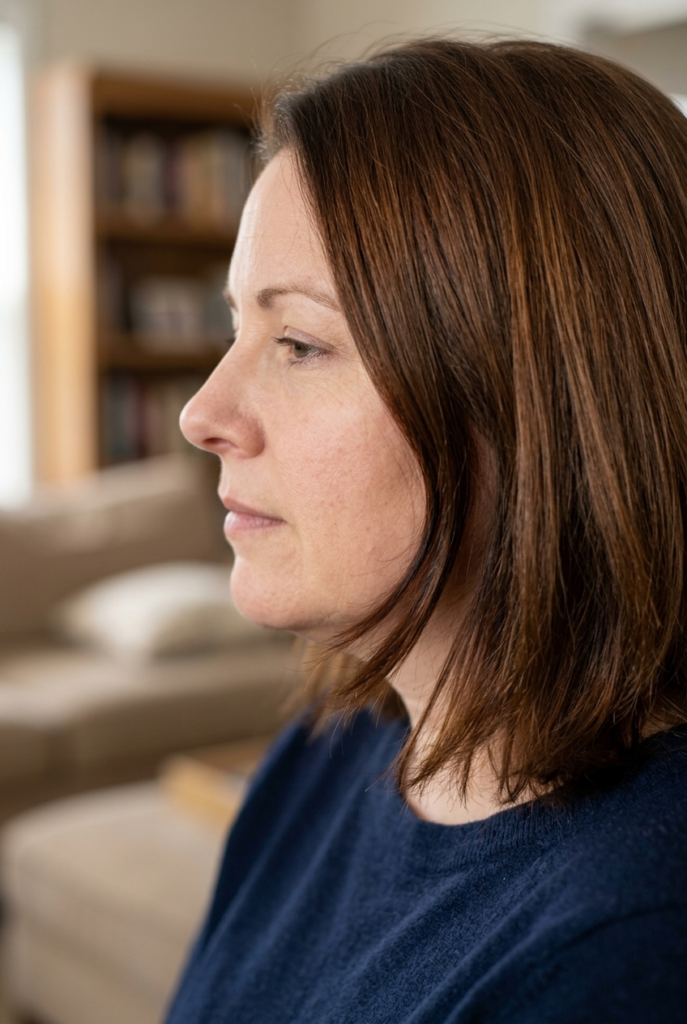
Chestnut brown on its own is a solid, flattering neutral, but adding lowlights instead of highlights is what makes this option worth a mention.
Lowlights work in reverse of highlights: instead of brightening pieces near the face, they deepen them. That deepened section functions almost like a shadow, gently narrowing the visual width of the cheeks. Colorists often place these lowlights just below the cheekbone for the most noticeable effect, since that’s typically the widest point of a round or heart-shaped face.
7. Shadow Root Balayage
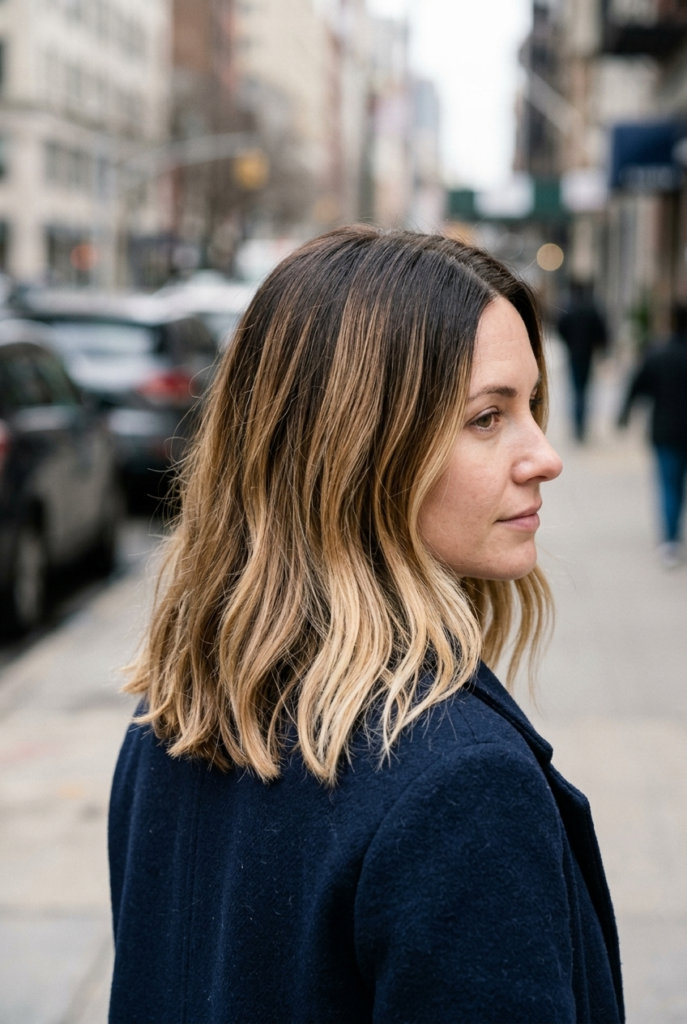
A shadow root — where the color stays dark for an inch or two at the scalp before melting into a lighter shade — creates a built-in gradient that mimics natural depth and shadow. Because the darkest part sits right at the crown and hairline, it frames the upper portion of the face and pulls focus away from the sides. This technique also grows out gracefully, which means fewer salon visits and a longer stretch before the slimming effect starts to fade.
8. Rich Copper
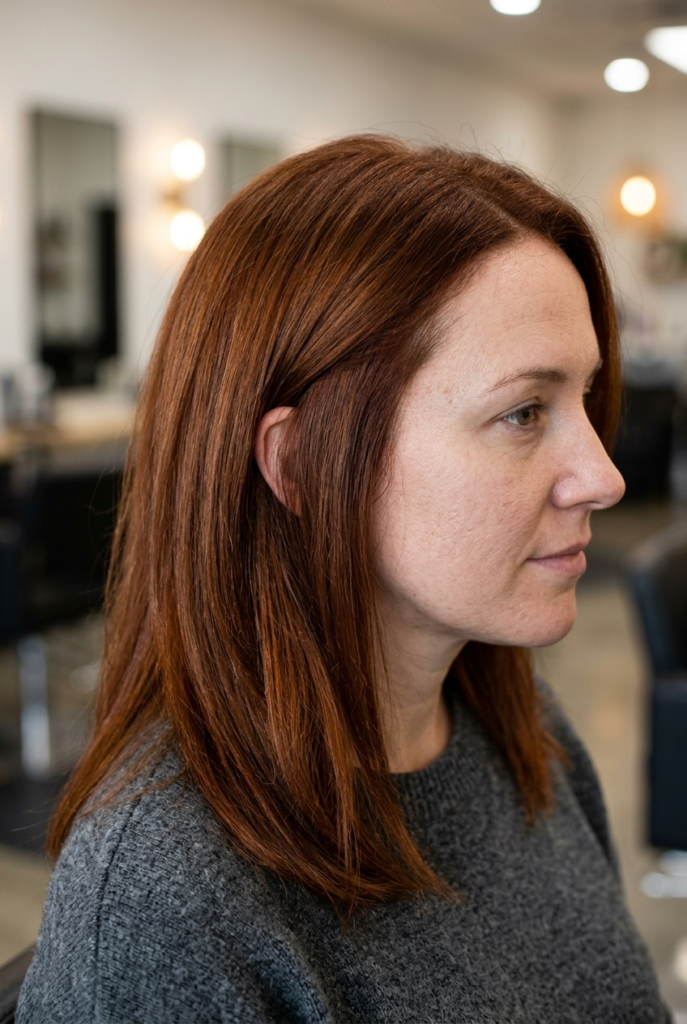
A deep, saturated copper sits in an interesting middle ground: it has more warmth than brown but more depth than a true blonde. That balance keeps it from adding the same width that a bright, reflective color would.
A few reasons this shade keeps showing up in stylist recommendations:
- It reads as rich rather than flat, so it doesn’t need heavy highlights to look dimensional
- The depth of the tone keeps light from bouncing off the sides of the face
- It pairs well with cool or warm skin tones, unlike some narrower red families
9. Cool Caramel Placed Strategically
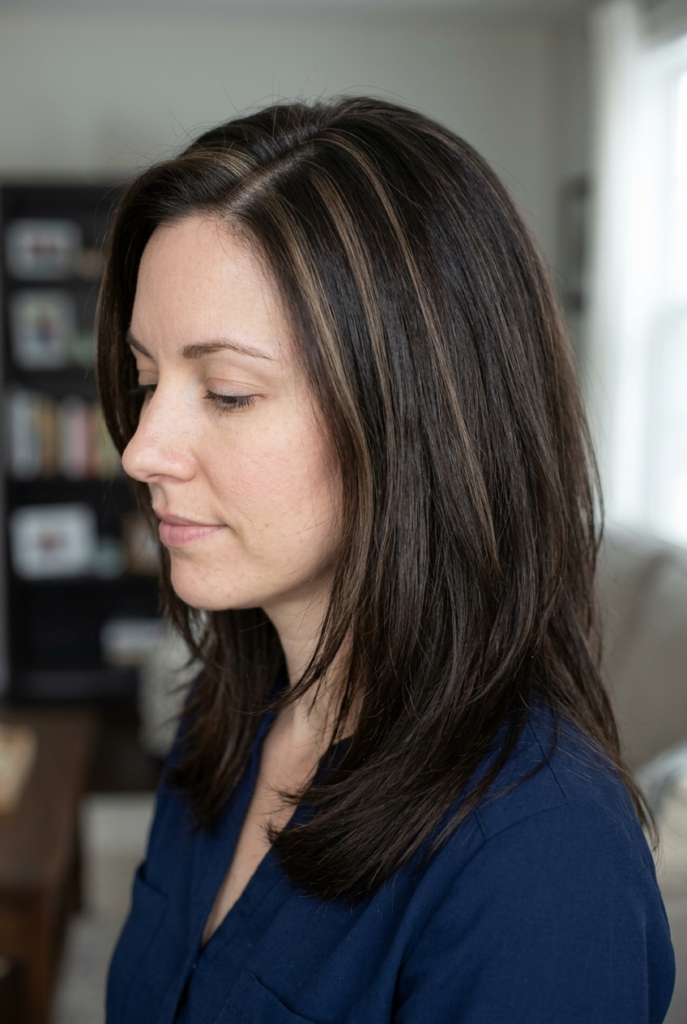
Caramel gets mixed reviews for a slimming effect, and that’s because placement matters more than the shade itself. Cool, muted caramel used sparingly around the face — rather than an all-over color — keeps brightness away from the widest part of the cheeks while still adding warmth near the crown.
Colorists typically avoid packing caramel highlights low near the jaw, since that’s the one spot where extra brightness works against the goal. Kept higher, near the part and temples, it can soften the face without adding visual bulk.
The Simplest Change That Makes the Biggest Difference
None of these nine shades require a dramatic haircut or months of growing anything out. A conversation with your colorist about depth, placement, and contrast can shift how your whole face looks in photos and in the mirror.
The shade you land on should still work with your skin tone and lifestyle — a low-maintenance color that fits your routine will always look better than a high-maintenance one you can’t keep up with. Start with one small change, like a shadow root or a single money piece, before committing to a full-color overhaul.
Frequently Asked Questions
Q: Does darker hair really make your face look thinner?
A: Yes, in most cases. Darker shades absorb more light and create less contrast around the hairline, which visually narrows the face.
Q: Can blonde hair ever have a slimming effect?
A: It can, but only with careful placement. Cooler, muted blonde tones kept away from the cheeks and jaw work better than bright, all-over blonde.
Q: What’s the difference between highlights and lowlights for a slimming look?
A: Highlights brighten and can add width if placed near the cheeks, while lowlights add shadow and depth, which narrows the face when placed strategically.
Q: Is red hair a good option for a slimmer-looking face?
A: Deep, muted reds like wine or burgundy work well. Bright copper or strawberry shades tend to reflect more light and don’t have the same effect.
Q: Will a shadow root work with any hair length?
A: Yes. It works on short, medium, and long hair since the technique focuses on the root area rather than the ends.
Q: How often do these colors need to be touched up?
A: Darker, low-contrast shades like espresso or ash brown typically need touch-ups every six to eight weeks. Shadow roots and lowlights can stretch longer between appointments.
Q: Does face shape affect which color works best?
A: Yes. Round and square faces tend to benefit most from darker, cooler tones, while oval and heart-shaped faces have a bit more flexibility with placement.
Q: Can I get a slimming effect without going darker overall?
A: Yes. A single face-framing piece, like a money piece or lowlights near the cheekbone, can create the effect without changing your overall base color.
Q: Should I ask my colorist specifically about a slimming effect?
A: It helps to mention it directly. Colorists can adjust placement, depth, and contrast in ways that aren’t obvious from a photo alone.

