

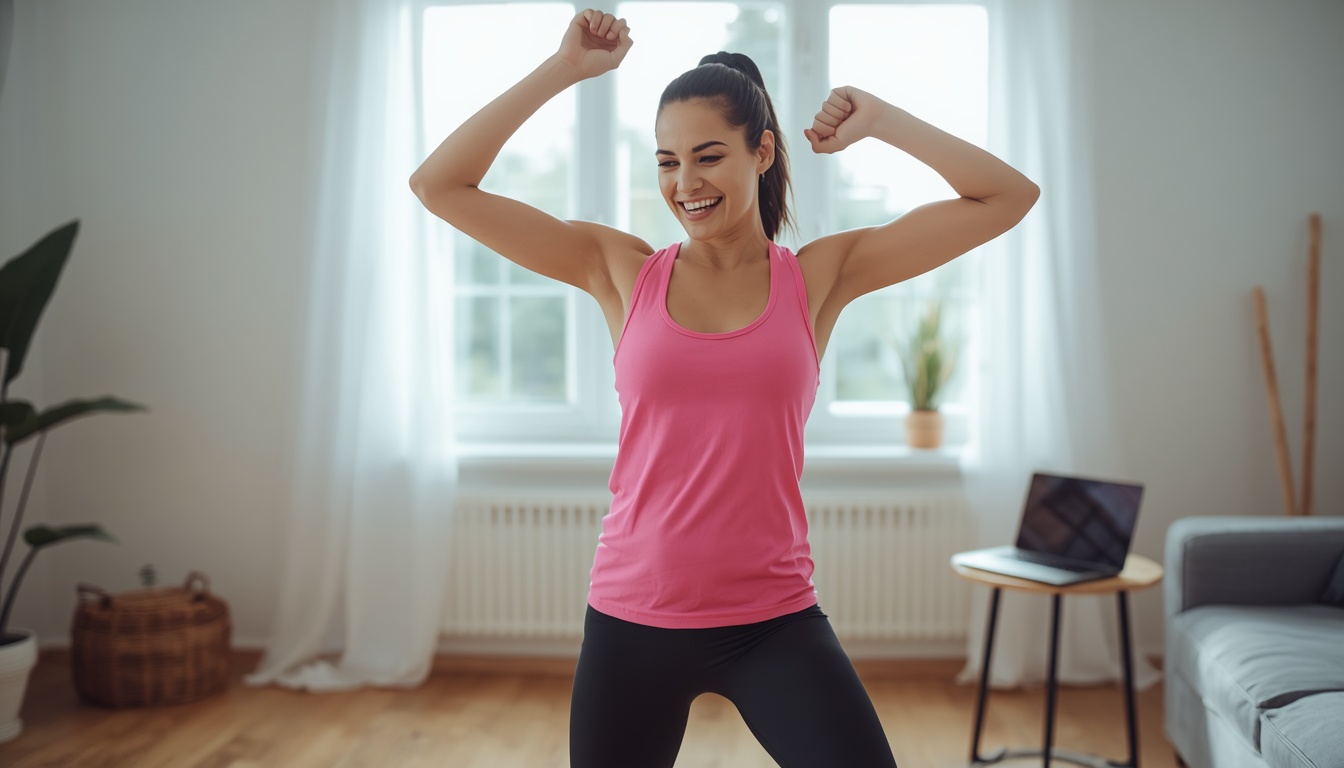
There’s a reason so many women are moving their living room furniture out of the way to make room for a dance workout. Zumba hits differently than a treadmill or a weightlifting circuit — you stop watching the clock, and by the time you realize you’ve been going hard for 20 minutes, you’re already sweating through your tank top. No commute to a gym, no packing a bag, no waiting for equipment. Just you, your living room floor, and some music that makes it nearly impossible to stand still.
The workout itself has roots that go back to the early 2000s, when Colombian dancer and choreographer Beto Pérez improvised an aerobics class using his personal salsa and merengue tapes. What started as a happy accident grew into one of the most popular fitness programs in the world. At its core, it blends Latin-inspired dance styles — salsa, merengue, cumbia, and reggaeton — into an interval-style cardio session that works your legs, glutes, core, and arms all at once. Studies have shown it can burn anywhere from 300 to 600 calories in a single 30-minute session, depending on your intensity level.
The 7-step structure laid out here takes you from a proper warm-up all the way to a cool-down, walking you through each dance style with clear, beginner-friendly instructions. You don’t need to be a trained dancer or even have any prior experience. If you can walk to a beat, you can do this.
- What You'll Need Before You Start
- Step 1: Warm-Up — 3 Minutes
- Step 2: Merengue March — 4 Minutes
- Step 3: Salsa Step — 5 Minutes
- Step 4: Cumbia — 5 Minutes
- Step 5: Reggaeton — 5 Minutes
- Step 6: Combo Section — 5 Minutes
- Step 7: Cool-Down — 3 Minutes
- Tips to Get More Out of Every Session
- Your Living Room Is the Best Studio You Have
- Frequently Asked Questions
What You’ll Need Before You Start
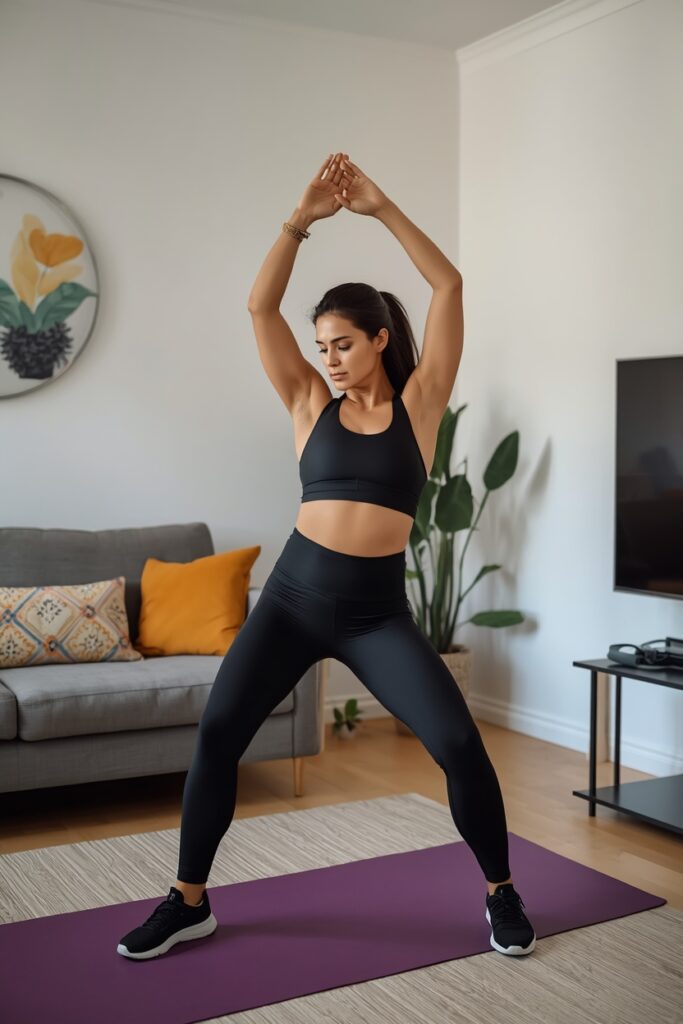
Very little, which is part of the appeal. Clear out enough space to take two steps in any direction — a 6-by-6-foot area works well. Wear supportive athletic shoes with lateral grip, not running shoes with thick soles, as those can catch on the floor during side-to-side movements. Comfortable, breathable clothes that move with you, a water bottle within reach, and a playlist of upbeat Latin music are all you need. If you want, have a small towel nearby. That’s genuinely it.
One important note before starting: if you have any knee, hip, or lower back issues, take the low-impact versions of each step. That means no jumps, smaller range of motion, and slower transitions. Every move in this routine can be modified, and doing so is smart, not weak.
Step 1: Warm-Up — 3 Minutes
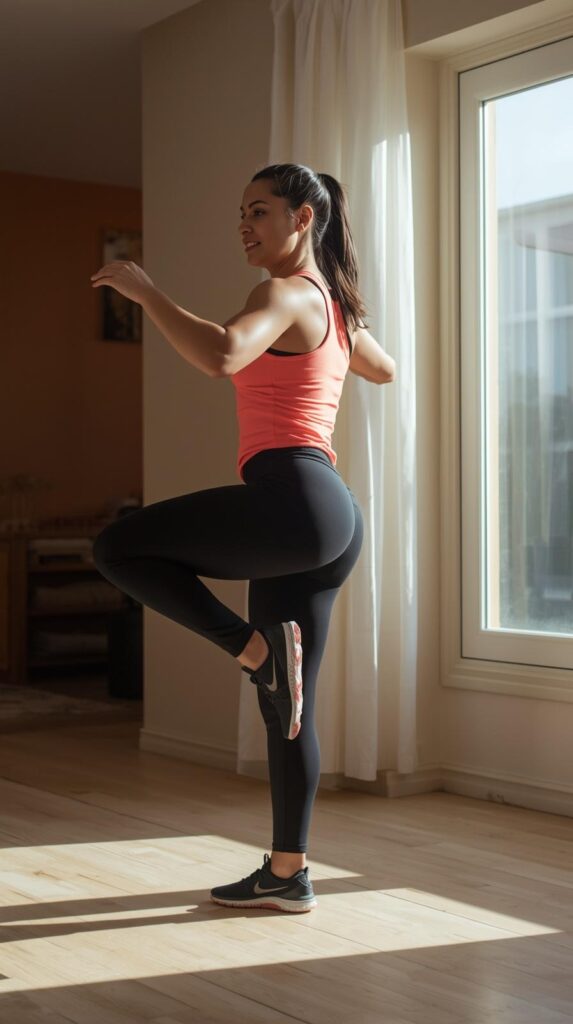
Skipping the warm-up is a mistake that leads to injury and poor performance. A few minutes of light movement increases blood flow to the muscles, loosens your joints, and prepares your body for the intensity that comes next.
Start by marching in place for 60 seconds — lift your knees to about hip height, swing your arms naturally, and breathe. Then move into a side step: step your right foot out to the right, bring your left foot to meet it, then step left and bring your right foot in. Do this for 60 seconds while letting your arms swing or reach out to the sides. Finish with 60 seconds of slow hip circles, hands on your hips, feet shoulder-width apart, knees slightly bent. Make big, slow, controlled circles in both directions. By the end of three minutes, you should feel warm but not winded.
Step 2: Merengue March — 4 Minutes
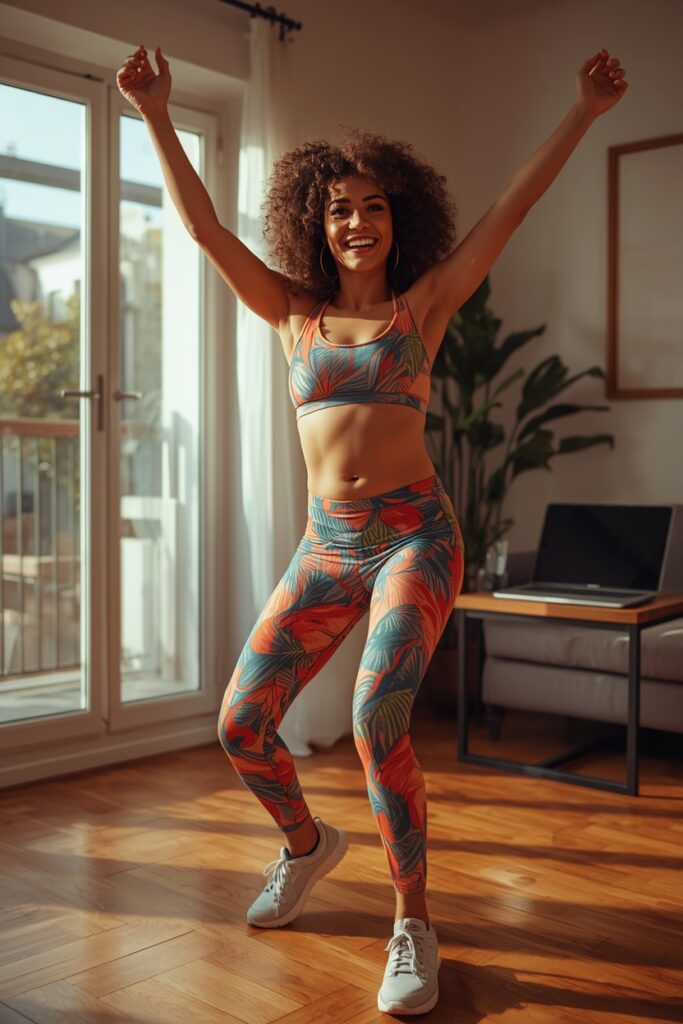
Merengue is the easiest rhythm to start with because the footwork is simple: you’re essentially marching. Originating from the Dominican Republic, it runs at a fast, even pace — roughly 120 to 160 beats per minute — which makes it a perfect heart rate builder.
Start by marching in place, lifting your knees and letting your hips naturally shift from side to side with each step. Once that feels comfortable, exaggerate the hip movement a little. Your hips should drop slightly on the standing leg as you lift the opposite knee. Add your arms: punch them forward alternately, or lift them up and down as you march. Move across the room — step forward four counts, step back four counts, then side to side. Keep the rhythm consistent. The goal here is to get your heart rate climbing while you settle into the groove of moving to music.
Step 3: Salsa Step — 5 Minutes

Salsa is the backbone of almost every Zumba class, and once you get the basic timing down, it becomes second nature fast.
The foundational salsa step works in counts of four. Step your right foot to the right, shift your weight onto it, then bring your left foot to meet it, pause. Then step left with your left foot, shift your weight, bring your right foot in, pause. That’s the basic side-to-side version. From there, you can move forward and back: step forward with your right, replace weight back on your left, step back with your right. Repeat on the other side. Your hips should follow your weight shifts naturally — don’t force them, just let the transfer of weight create the movement. Arms can reach forward, open to the sides, or move in small circles at chest height. Work this pattern for five minutes, mixing the side-to-side and forward-back versions to keep it interesting.
Step 4: Cumbia — 5 Minutes
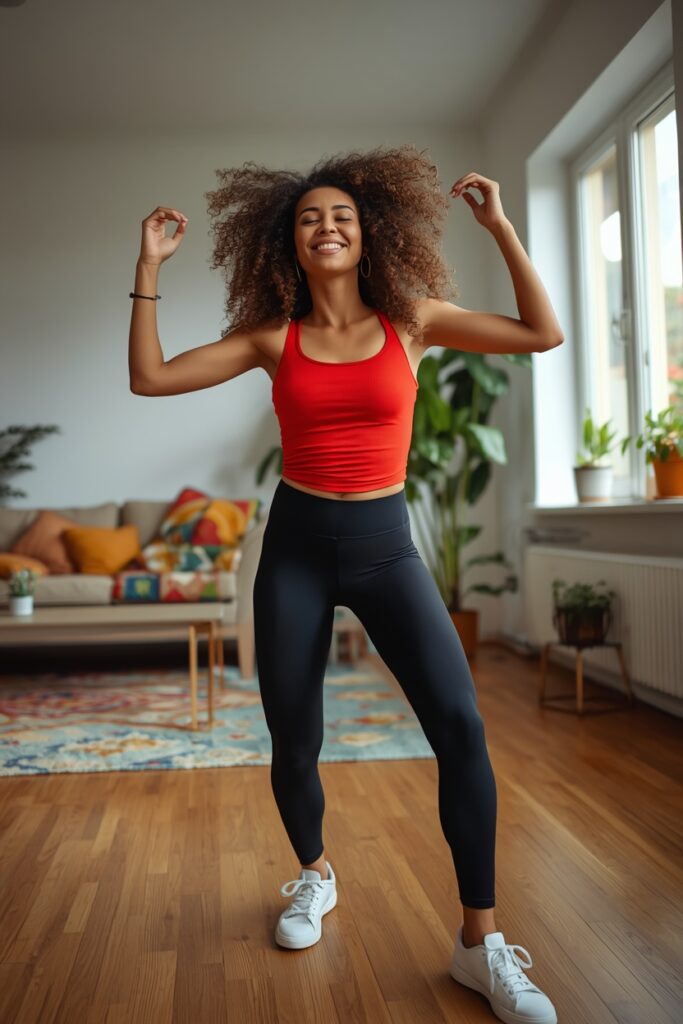
Cumbia has a shuffling, grounded quality that feels different from salsa — a little looser, with a slight bounce on the supporting leg. It originated in Colombia and is one of the most widely recognized Latin rhythms across South and Central America.
The basic cumbia step: start with your feet together. Step your right foot out to the side, tap your left toe to meet it (without fully shifting your weight), then step left foot out, tap your right toe in. It’s a step-tap, step-tap pattern. As you do it, let your hips drop toward the stepping foot and add a small bounce. Once you have the footwork, go forward and back: tap one foot forward while keeping weight on the back foot, then switch. Push your hips out when your foot taps forward. Add arm movements — reach up and out, do slow circles, or make small pumping motions. The cumbia section is a great chance to focus on making the hip movement bigger and more expressive.
Step 5: Reggaeton — 5 Minutes
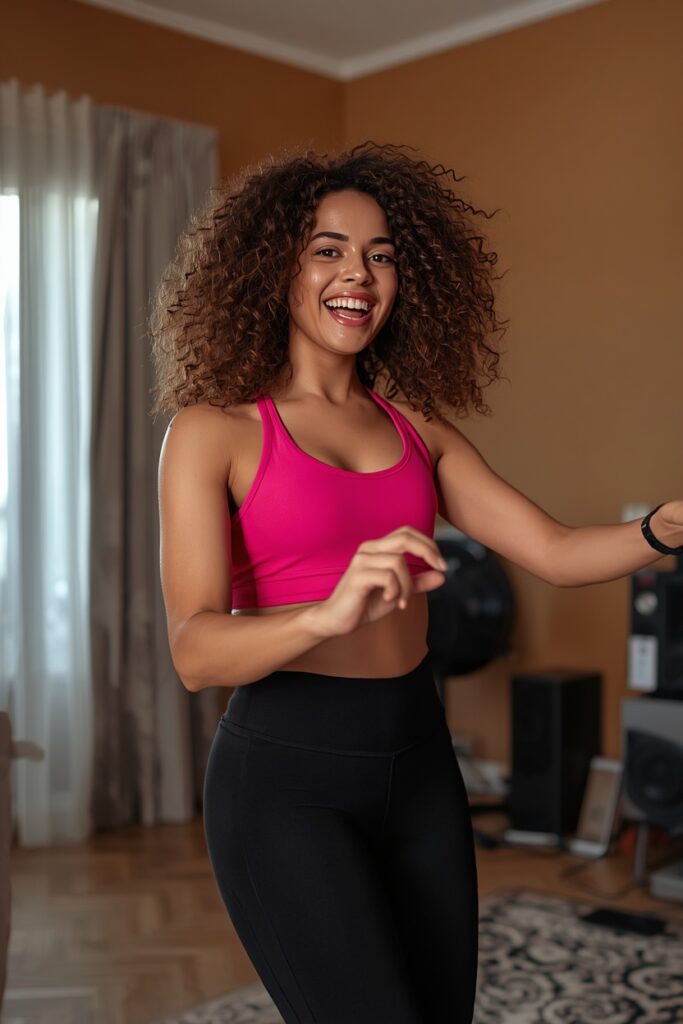
Reggaeton brings more intensity and a heavier beat. It’s a fusion of reggae, hip-hop, and Latin rhythms, and the movement style reflects that — grounded, strong, and driven by the hips and knees.
The basic reggaeton step is a bounce-march: stand with feet hip-width apart, knees bent. Bounce both knees down on the beat — not a jump, just a press. Add a slight hip pop on each bounce. From there, add footwork: step your right foot forward with a knee bounce, bring it back, step left forward, bring it back. Or take it side to side, bouncing on each step. Arms should be active here — roll them forward, punch down, or do a windmill motion at hip level. This is the most high-energy section of the routine. If you want to add a jump on the beat instead of a bounce, go for it — but keep the low-impact bounce version if you have any joint sensitivities.
Step 6: Combo Section — 5 Minutes
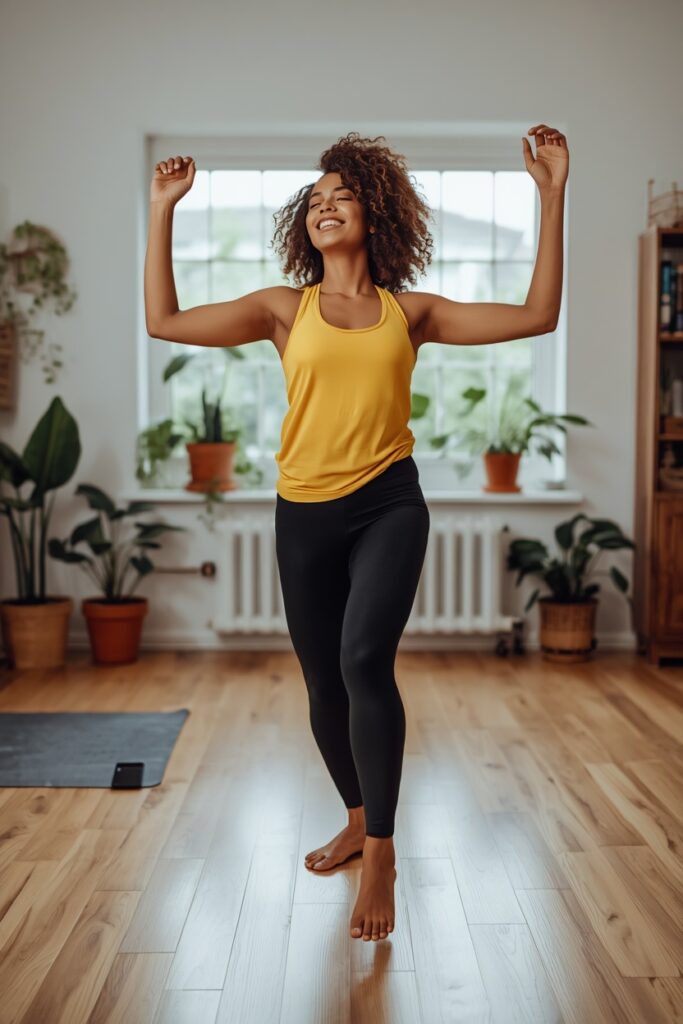
This is where the routine pulls all four styles together into a short, flowing sequence. It sounds more complicated than it is.
Spend one minute on merengue march, then transition directly into salsa for one minute, then cumbia for one minute, then reggaeton for one minute, then back to merengue to finish. The point of this section is to practice moving between rhythms without losing your momentum — because that’s what a real class feels like. The transitions don’t need to be seamless. If you miss a beat switching from salsa to cumbia, just keep moving and find the rhythm again. This section also pushes your cardiovascular output the highest, so don’t be surprised if your heart rate spikes here. That’s exactly what you want.
A simple way to cue yourself: count out 8 beats per style, then switch. 1-2-3-4-5-6-7-8, change. Your body will start to anticipate the shifts with practice.
Step 7: Cool-Down — 3 Minutes
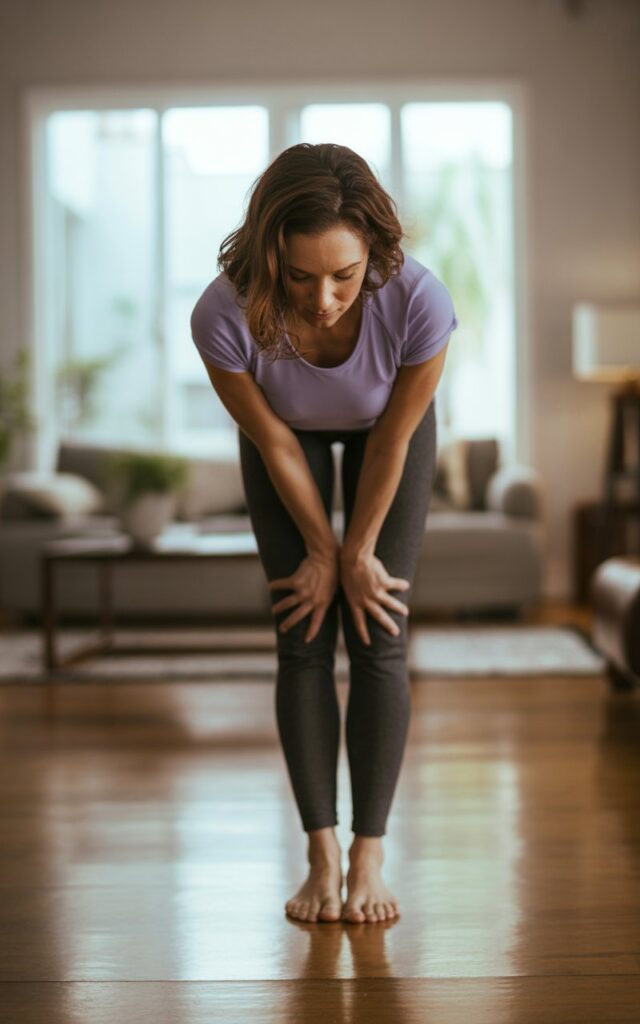
A proper cool-down prevents dizziness, reduces next-day soreness, and brings your heart rate back down gradually. Never stop abruptly after high-intensity movement.
Start with slow side steps for 60 seconds — no rush, just easy weight shifts from side to side. Then hold a standing hip stretch: cross your right ankle over your left knee, sit back slightly into a single-leg squat, hold for 20 seconds, switch sides. Follow that with a quad stretch — stand on one foot, pull the opposite heel toward your glute, hold for 20 seconds each side. Finish with a standing forward fold: feet hip-width apart, hinge forward from the hips, let your arms and head hang heavy for 30 seconds. Breathe slowly and deeply throughout. By the end, your heart rate should feel close to normal and your muscles should feel loose, not tight.
Tips to Get More Out of Every Session
Focus on the legs first, arms later. If you’re a beginner, don’t try to coordinate your arms and legs perfectly from the start. Get the footwork solid, then layer in arm movements once the lower body feels automatic.
Mirror yourself. Practicing in front of a mirror helps you check your posture, make sure your hips are actually moving, and correct any balance issues before they become habits.
Engage your core the entire time. This is the single most important technical note. A braced core protects your lower back during hip-heavy movements, improves your balance, and makes every move more powerful. Pull your belly button gently in and up throughout the session.
Play music you actually love. The right playlist makes an enormous difference. Build one with salsa, merengue, bachata, reggaeton, and cumbia tracks at varying tempos. Spotify and YouTube both have pre-built Latin cardio playlists if you don’t want to start from scratch.
Do it at least three times a week. One session will leave you feeling great, but consistency is what builds cardiovascular fitness, coordination, and strength. Three 30-minute sessions a week is a solid, sustainable starting point.
Your Living Room Is the Best Studio You Have
There’s a lot to be said for a workout that doesn’t require a gym membership, a babysitter, or a commute. The 30-minute structure here gives you a real cardio session — warm-up, four distinct dance styles, a combo challenge, and a proper cool-down — in a format that you can repeat as many times as you want, anytime, in whatever you have on. The fact that it’s fun isn’t a bonus; it’s the reason women actually stick with it long-term, which is what makes any fitness routine worth doing in the first place.
Start with the basics, be patient with yourself on the rhythm, and give it a few sessions before judging how it feels. Most women find that by the third or fourth workout, the steps start to click — and the sweat comes faster than expected. Your living room floor is ready when you are.
Frequently Asked Questions
Q: Do I need any prior dance experience to do this routine?
A: No prior experience is needed. The steps in this routine are broken down simply enough that complete beginners can follow along. The footwork is repetitive and rhythmic, so most women pick it up within the first one or two sessions.
Q: How many calories does a 30-minute Zumba session burn?
A: It varies depending on your body weight, fitness level, and how hard you push. A general range is 300 to 600 calories per 30-minute session. Higher intensity and larger movements burn more.
Q: What kind of shoes should I wear?
A: Cross-training or dance fitness shoes with lateral support work best. Avoid running shoes with thick, cushioned soles — they can make pivoting and side-to-side movements feel sluggish and can increase the risk of ankle rolls.
Q: Can I do this routine if I have bad knees?
A: Yes, with modifications. Remove any bouncing or jumping and keep your range of motion smaller. Stay on flat feet during the reggaeton section instead of bouncing. If there’s pain during any movement, stop that specific motion and use a gentle march or step-touch instead.
Q: How much space do I need at home?
A: A roughly 6-by-6-foot clear area is sufficient. You need enough room to step side to side and take a few steps forward and back without hitting furniture.
Q: How often should I do this routine to see results?
A: Three times a week is a practical starting goal. At that frequency, most women notice improvements in cardiovascular endurance and coordination within two to three weeks. For weight management goals, pairing it with attention to nutrition gives faster results.
Q: Is Zumba good for your core?
A: Yes. Many of the hip-driven movements in salsa, cumbia, and merengue directly engage the abdominals and obliques. Keeping your core consciously engaged throughout the session amplifies that benefit significantly.
Q: Can this replace my regular cardio workout?
A: Absolutely. A 30-minute session at moderate to high intensity qualifies as cardiovascular exercise and offers the same heart health benefits as other forms of cardio. It also works multiple muscle groups simultaneously, which gives it an edge over single-mode cardio like walking or cycling.
Q: Will I get bored doing the same routine repeatedly?
A: The routine structure stays the same, but you can change your music playlist each time, vary how big or small your movements are, and add more complexity to the arm patterns as you get more comfortable. Swapping one of the 5-minute sections for a new style — like bachata or samba — also keeps it fresh.

