

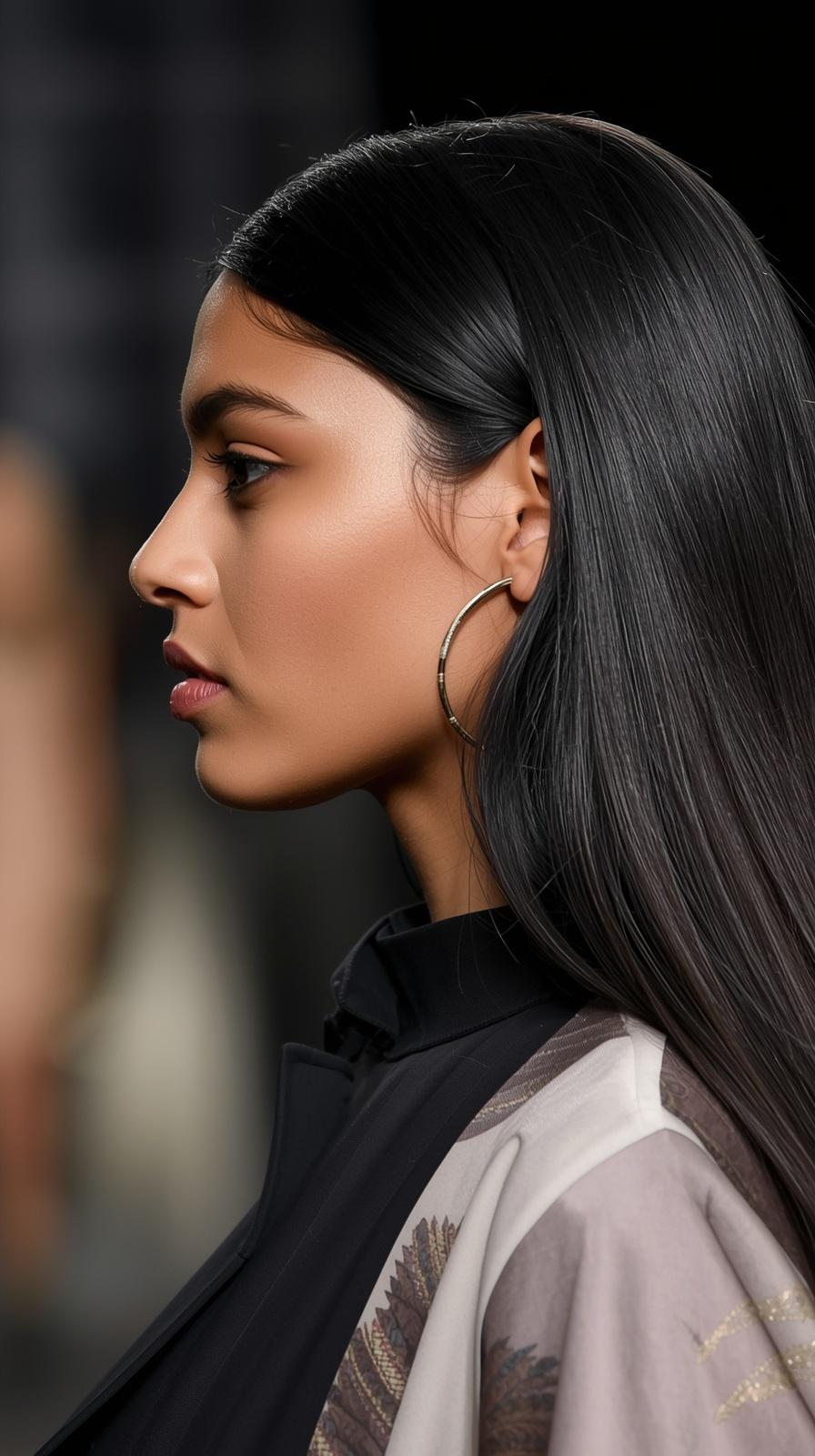
Thin straight hair has a reputation for being difficult to work with, but that’s mostly because the wrong cut makes it look that way. The right haircut, on the other hand, can completely change how your hair sits, how much body it appears to have, and how easy it is to style on a regular basis. The problem isn’t your hair — it’s finding a shape that works with it instead of against it.
Fine, straight strands have one major characteristic: they show everything. Every split end, every flat section, every weight imbalance. But that same quality — the fact that straight hair reflects light so cleanly — is exactly what makes certain cuts look so polished and deliberate on this hair type. The key is knowing which shapes build the illusion of density, and which ones strip it away.
The 10 cuts below are all working well for fine, straight hair right now. Some add volume through structure, others through texture, and a few through strategic length. Whatever your hair length preference or face shape, there’s something here worth taking to your next salon appointment.
1. Blunt Bob
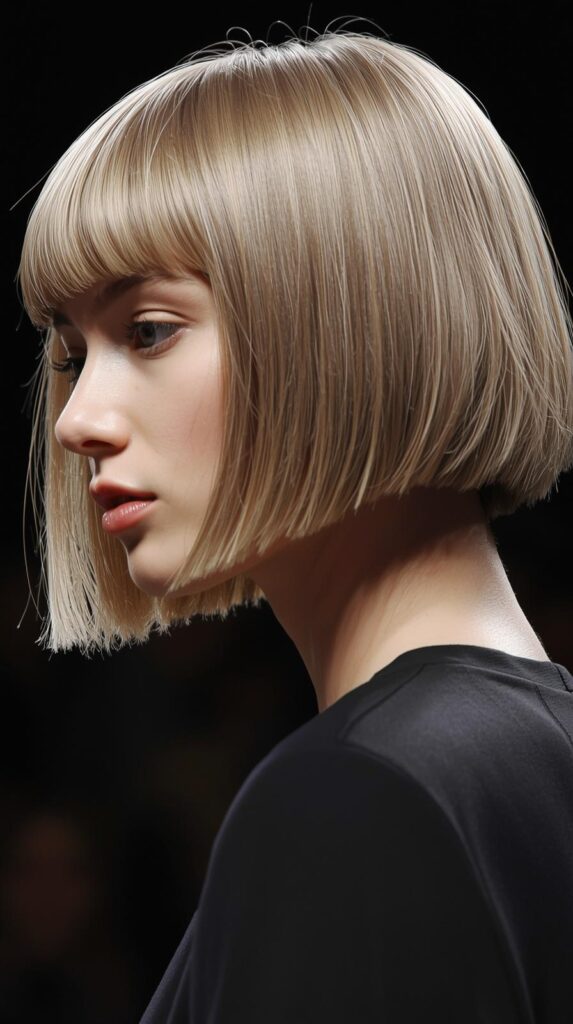
The blunt bob might be the single most effective cut for women with fine, straight strands. By keeping all the hair at one consistent length — typically landing between the chin and collarbone — this style packs the hair together rather than spreading it out into thin, wispy ends. The result is a clean, dense-looking line that reads as full even when your hair is anything but.
It’s also one of the most versatile cuts out there. Worn sleek and straight, it looks sharp and polished. Add a slight bend with a large barrel curling iron, and it softens considerably. The blunt bob has been a staple in salons for years, and it’s showing no signs of slowing down — right now it’s particularly popular in a chin-length version that sits clean and structured.
2. Layered Lob (Long Bob)
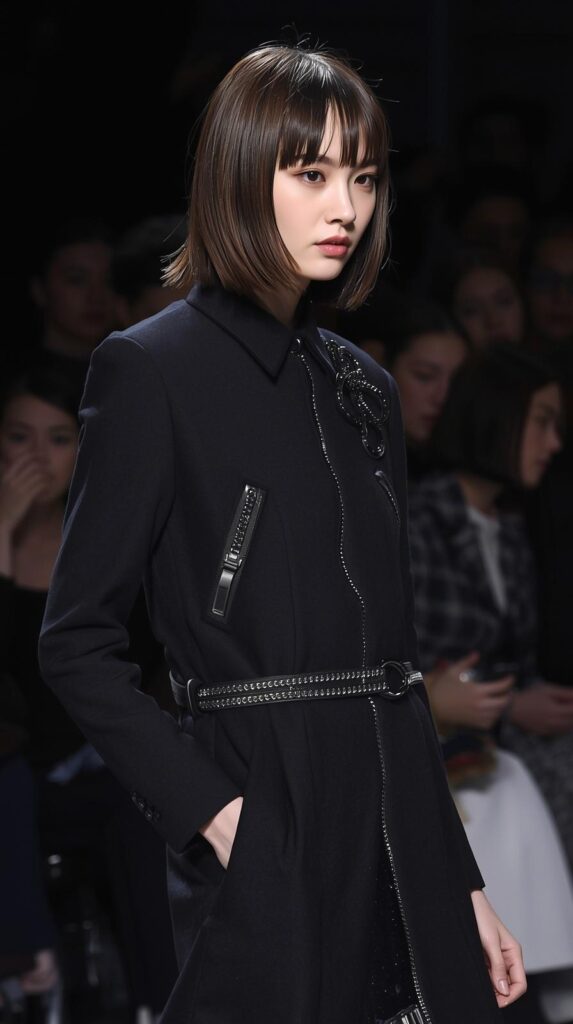
The lob sits at or just below the collarbone and has long been praised as a universally flattering length. For fine hair, the layered version — not the blunt one — is the better call. Lightweight internal layers give the hair movement without thinning out the ends too aggressively, which is exactly what you want when you don’t have a lot of density to spare.
The trick with a layered lob for thin hair is in how the layers are placed. You want them mostly through the interior of the cut, not heavily through the perimeter, so the ends still look full. Ask your stylist for soft, face-framing layers rather than dramatic graduation throughout, and you’ll get movement without sacrificing that sense of thickness.
3. Graduated Bob
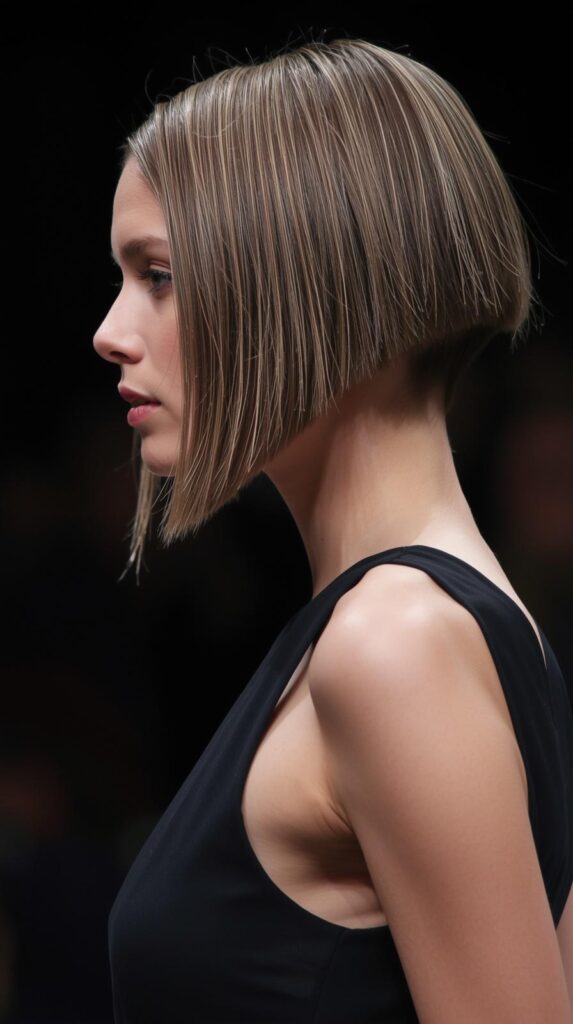
Also called a stacked bob, this cut is shorter in the back and gradually longer toward the front. The stacked layers at the back of the head are what make it so good for thin hair — they build height and volume right where the hair tends to fall flat most. Women with fine straight strands who want something that creates genuine body without a lot of styling effort will find this one hard to beat.
It looks great worn smooth, and it also holds a blowout particularly well. If you tend to rely on a round brush to get your hair off the scalp, the graduated bob gives you a shape that works with that routine rather than demanding something completely different every morning.
4. French Bob
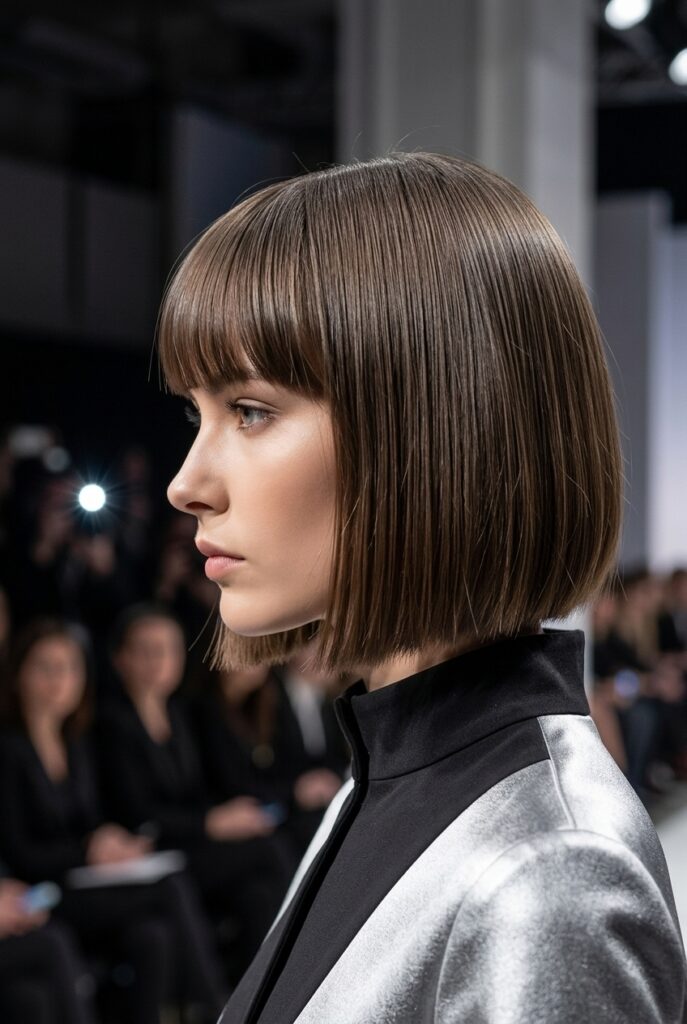
The French bob has had a very strong moment lately, and for good reason. It sits at or just above the chin, often paired with blunt bangs, and it carries a very intentional, directional aesthetic. For fine hair, this length works because it keeps all the hair condensed in a short shape, which naturally makes it look denser.
The blunt fringe that typically accompanies this style is worth considering too. A thicker bang creates the appearance of more hair overall, especially across the front of the face where thinning can be most visible. It’s not for everyone, but if you’ve been curious about bangs and you have fine hair, the French bob is one of the most flattering frameworks for them.
5. Wispy Pixie Cut
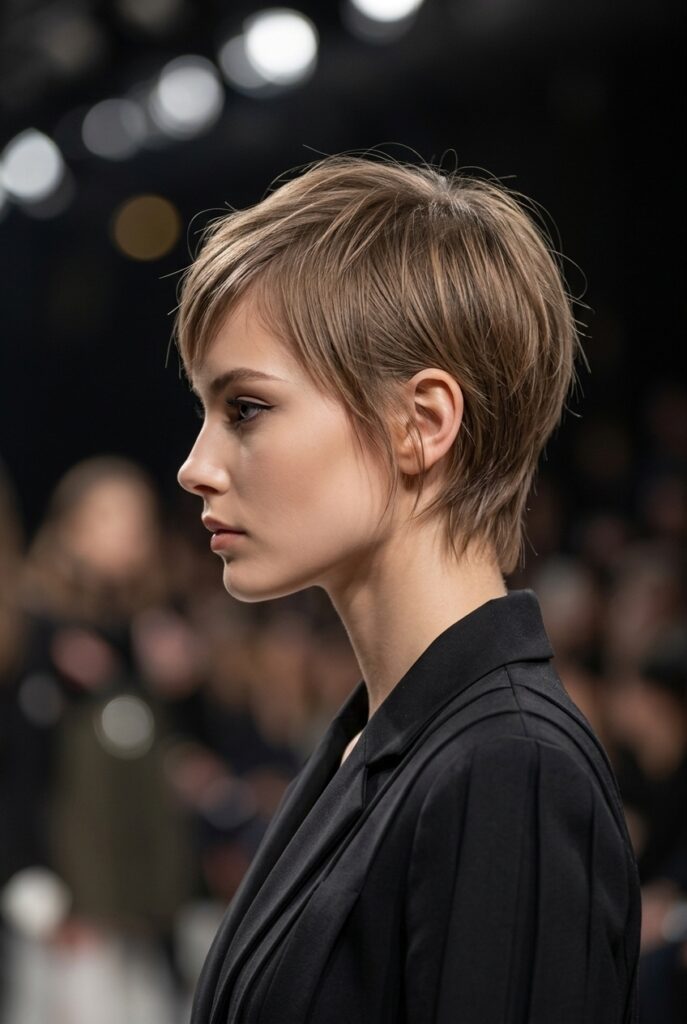
A well-cut pixie on fine, straight hair can look genuinely stunning. The key is asking for a wispy version — one with feathered, soft layers rather than a blunt, helmet-like shape. Wispy layers at the crown create lift, and the lightness of the overall cut means fine hair doesn’t get weighed down by its own length.
Pixies also have the practical advantage of making thin hair appear much denser than longer styles do. When there’s less length pulling the hair down, it naturally sits higher and with more presence. This is one of those cuts where the transformation can feel pretty dramatic — in a good way.
6. Shaggy Lob
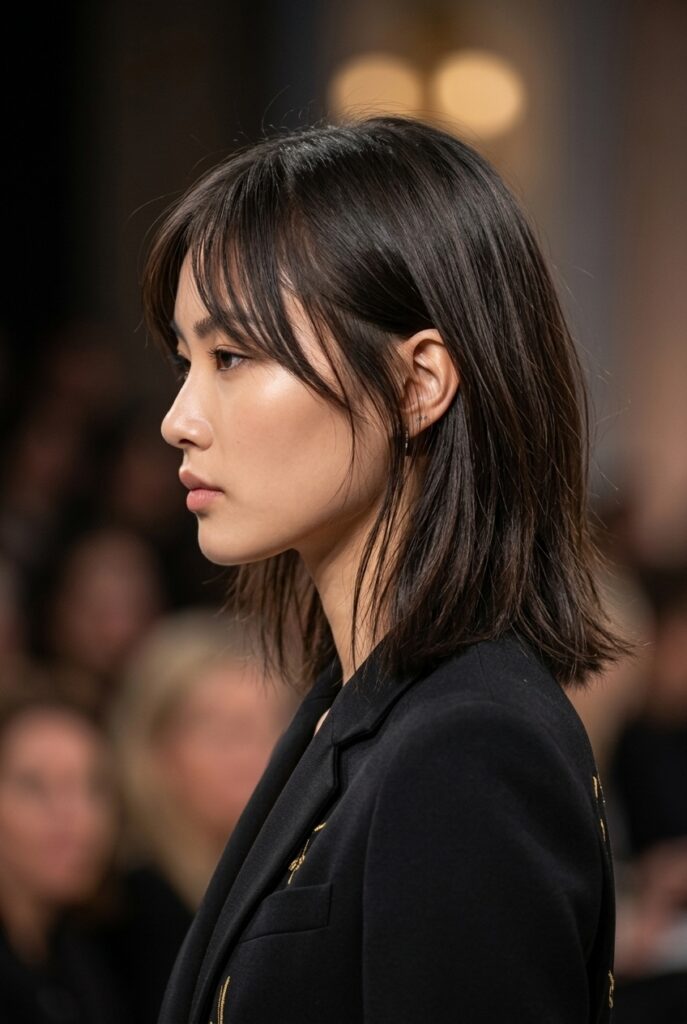
The shag has been a major cut for a few years now, and the lob-length version is particularly well-suited to fine, straight hair. It uses choppy, layered ends and a slightly lived-in texture to create the look of fullness without any single section becoming too sparse. Curtain bangs often accompany this style and help frame the face while adding softness around the hairline.
Styling a shaggy lob on fine hair works best when you start with a volumizing mousse on damp hair, blow-dry with a round brush pushing the layers outward, then finish with a light texture spray. The layered ends do most of the work once the style is set.
7. Curtain Bangs With a Lob or Mid-Length Cut
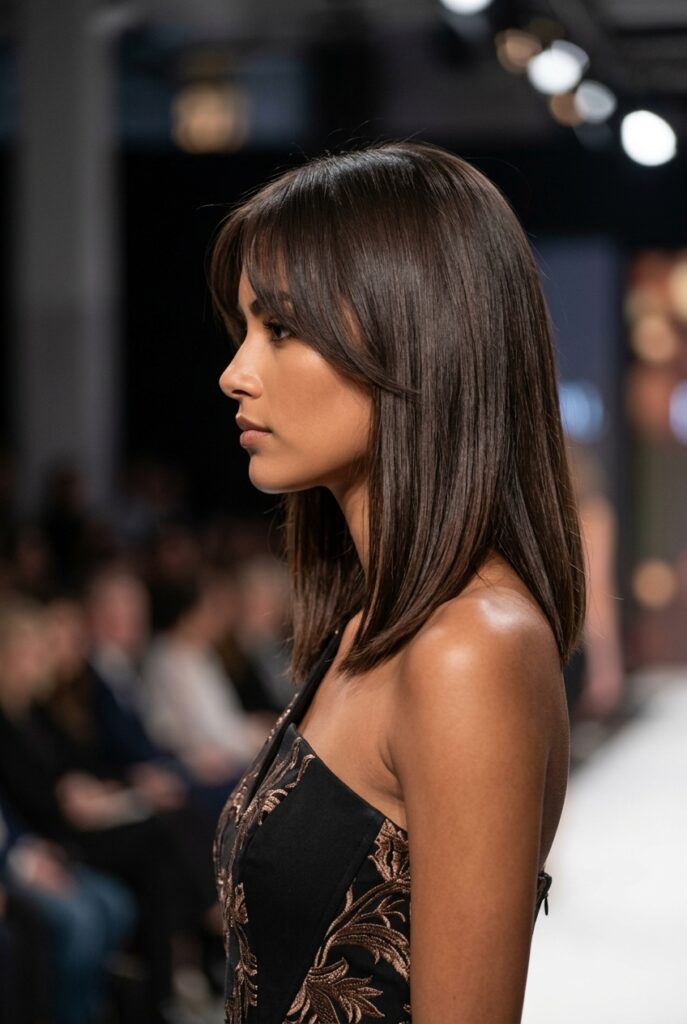
Curtain bangs aren’t a haircut on their own, but adding them to an existing lob or mid-length cut transforms how fine hair reads from the front. They create a soft parted fringe that falls on either side of the face, drawing attention to the eyes and cheekbones while visually filling in any sparseness around the hairline.
They’re also one of the most forgiving bang styles in terms of growing them out — since they’re designed to blend into the rest of the hair, the awkward in-between phase is minimal. For women with thin hair who want a refresh without committing to a full length change, curtain bangs are a low-risk, high-reward option.
8. Collarbone Cut With Side-Swept Layers
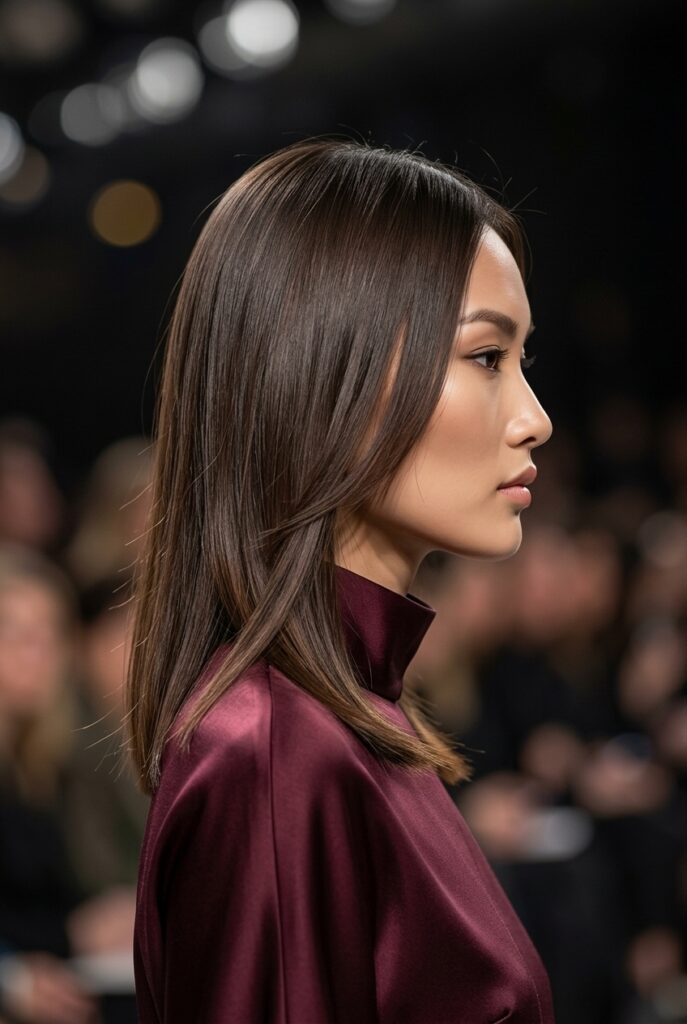
This one sits right at the collarbone and incorporates soft side-swept layers rather than balanced, centered ones. The off-center layering creates asymmetry, which naturally adds visual volume — the hair looks like it has more going on because it isn’t lying in a predictable, flat sheet.
A deep side part pairs beautifully with this style and contributes lift at the crown, which is often the area where thin straight hair falls flattest. If you’ve been wearing a center part for a while and your hair has started looking a little lifeless at the top, switching to a deeper side part alone — before you even touch the cut — can make a visible difference.
9. Mini Shag
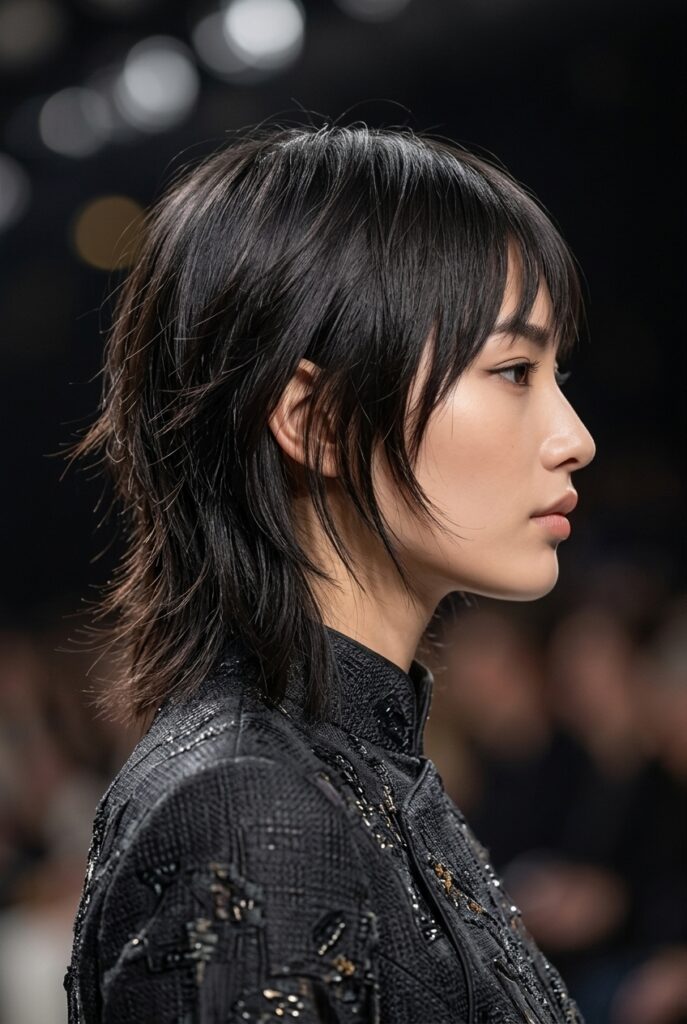
The mini shag is a shorter version of the classic shag and it’s been generating a lot of attention recently. It sits roughly between the chin and collarbone, with choppy layers and a tapered fringe that creates the impression of considerably more density than is actually there. Some stylists have noted it can add up to 40 percent more perceived volume to fine hair — which sounds like a big claim, but the before-and-after effect genuinely can be that pronounced.
It works because it uses texture to break up the flat surface of straight hair, so light hits the strands at different angles instead of sliding off in one uniform sheet. The result is hair that looks fuller, softer, and much more three-dimensional than it actually is.
10. Butterfly Cut With Long Layers
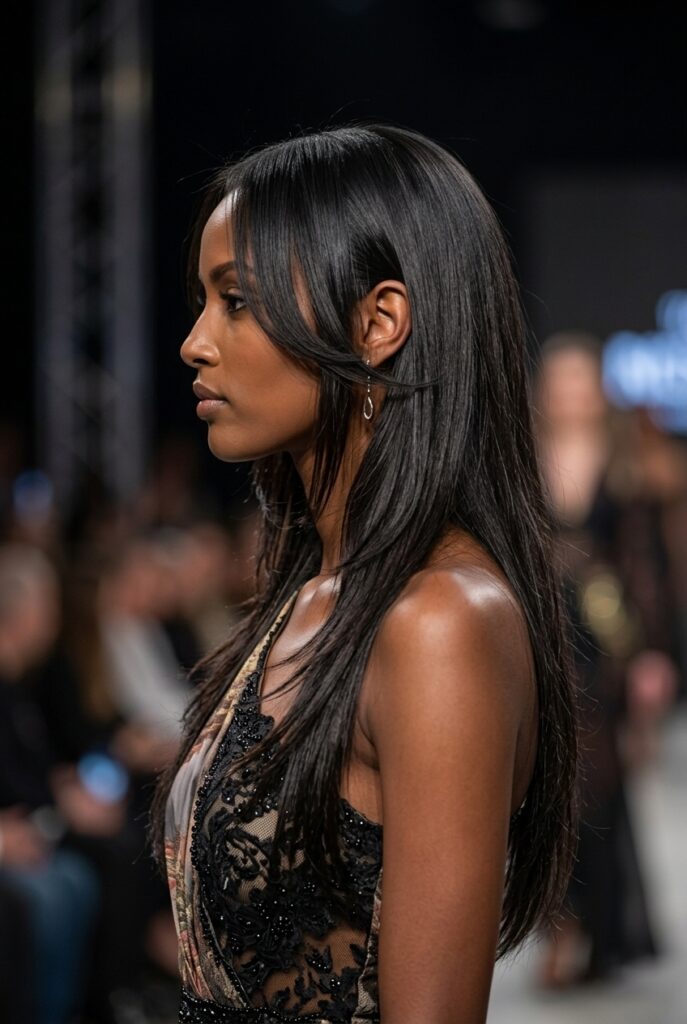
The butterfly cut uses long cascading layers that start shorter around the crown and gradually lengthen toward the bottom, creating the impression of wings when the hair is in motion. It became popular a couple of years ago and continues to hold strong, particularly for women who want to keep their length but still get some genuine movement out of fine, straight strands.
For thin hair, the best approach is a lighter version of this cut — fewer, more strategic layers that add shape rather than heavily thinning the hair out. When done right, the butterfly cut gives fine, straight hair the kind of movement it doesn’t naturally produce on its own, without making the ends look sparse or stringy.
The Cut Is Just the Start
Choosing the right shape is genuinely the most powerful thing you can do for thin straight hair, but it’s worth pairing that with a few easy habits. Regular trims every six to eight weeks keep the ends looking clean and intentional rather than frayed, and a volumizing shampoo and mousse routine on wash days can make any of these cuts perform better.
The other thing worth knowing: color can play a real role too. Subtle highlights or dimension-adding tones give the eye something to follow through the hair, which makes it look less flat. You don’t need a full color transformation — even soft highlights around the face can add enough depth to make a noticeable difference.
The right haircut, maintained well, completely changes how thin straight hair shows up. These ten options are all strong starting points for a conversation with your stylist — and any of them is going to serve you better than a cut that wasn’t designed with your hair type in mind.
Frequently Asked Questions
Q: What is the best haircut for women with thin straight hair?
A: The blunt bob is widely considered one of the best options because it packs the hair into a clean, dense line at one consistent length. Graduated bobs and layered lobs are also strong choices for women who want a little more length.
Q: Will layers make thin hair look thinner?
A: It depends on how the layers are done. Soft, internal layers that preserve the density at the ends actually add movement without thinning the hair out. Heavy graduation through the perimeter, on the other hand, can make fine ends look sparse. Always ask your stylist for lightweight layering rather than aggressive graduation.
Q: Is a pixie cut a good idea for thin straight hair?
A: Yes, especially a wispy pixie with feathered layers. Shorter cuts naturally make thin hair appear denser because there’s less length pulling it flat. A pixie also eliminates the stringy ends that can make longer fine hair look wispy.
Q: What length is best for thin straight hair?
A: Medium to short lengths — from a chin-length bob to a collarbone-length lob — tend to work best. These lengths keep enough weight in the hair to look full without letting it get long enough to fall completely flat.
Q: Do curtain bangs work for thin straight hair?
A: Yes. Curtain bangs add softness around the face and draw attention away from any sparseness along the hairline. They also blend into the rest of the hair easily, which means growing them out isn’t a dramatic process.
Q: How often should women with thin straight hair get a trim?
A: Every six to eight weeks is a good baseline. Fine hair tends to show split ends and fraying more quickly than thicker hair types, and keeping the ends clean is one of the simplest ways to make any cut look its best.
Q: Can styling products make thin straight hair look fuller?
A: Yes. A volumizing mousse applied to damp hair before blow-drying, followed by a light texture spray at the roots, can significantly boost the appearance of fullness. The key is keeping products lightweight so they don’t weigh the hair down.
Q: Does hair color help thin straight hair look fuller?
A: It can. Subtle highlights or dimension-adding tones give the hair visual depth, which breaks up the flat, one-note appearance that fine hair can have. You don’t need a dramatic change — face-framing highlights are enough to make a noticeable difference.

