

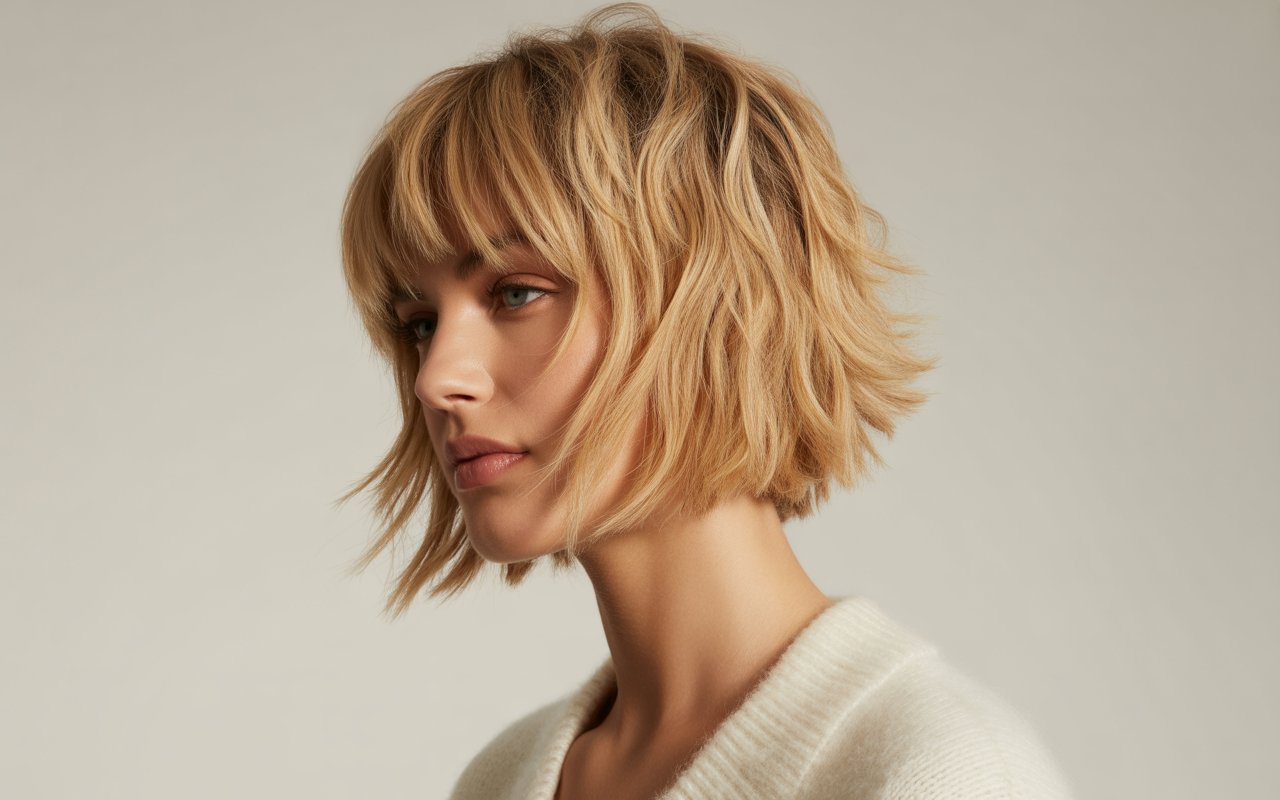
The shaggy bob has made a strong comeback, blending the classic bob structure with choppy, textured layers that create movement and dimension. This haircut works across different hair types and textures, offering versatility that appeals to many women. Adding bangs takes this style further by providing options to balance facial proportions and highlight your best features.
Bangs paired with a shaggy bob can transform how your face shape appears. Curtain bangs elongate round faces, while blunt bangs soften angular features on square faces. Micro bangs add drama to long faces, and side-swept versions create balance for heart-shaped faces. The layered nature of shaggy bobs means you get texture without sacrificing length or requiring excessive styling time.
Different face shapes benefit from specific bang styles and bob lengths. Round faces look great with longer bobs that fall past the jawline. Heart-shaped faces can handle heavier bangs and shorter lengths. Diamond faces need styles that balance narrow foreheads and chins. Below eight shaggy bob variations designed to flatter every face shape, complete with styling guidance and what makes each one work.
- Choppy Shaggy Bob with Curtain Bangs for Round Faces
- Long Shaggy Bob with Wispy Bangs for Oval Faces
- Short Shaggy Bob with Blunt Bangs for Square Faces
- Textured Shaggy Bob with Side-Swept Bangs for Heart-Shaped Faces
- Layered Shaggy Bob with Micro Bangs for Long Faces
- Inverted Shaggy Bob with Face-Framing Bangs for Diamond Faces
- Wavy Shaggy Bob with Bottleneck Bangs for Oblong Faces
- Asymmetrical Shaggy Bob with Textured Bangs for Triangular Faces
- Finding Your Perfect Match
- Frequently Asked Questions
Choppy Shaggy Bob with Curtain Bangs for Round Faces
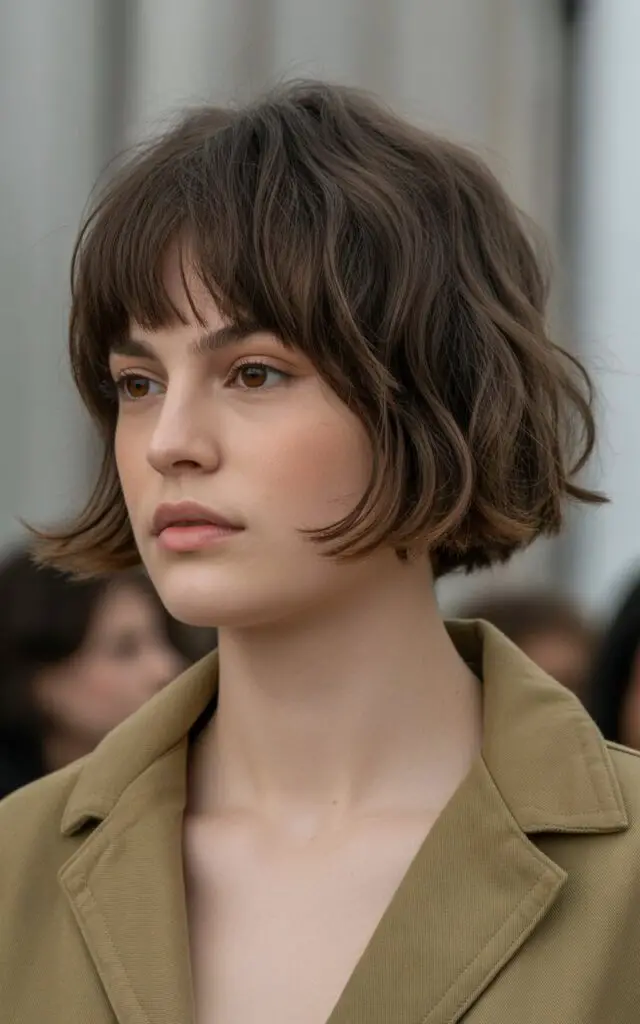
Curtain bangs create a vertical line down the center of your face, which helps counteract the width of round face shapes. This style typically sits at shoulder length or slightly above, with choppy layers throughout that remove weight and add movement. The bangs part naturally in the middle, framing both sides of your face while drawing attention to your eyes.
Why This Style Works
The length matters here. Keeping the bob past your jawline helps elongate your face rather than emphasizing its roundness. Choppy layers prevent the hair from sitting too flat against your cheeks, which could make your face appear wider. The curtain bangs add height at the crown and create angles that round faces naturally lack.
Styling Requirements
You’ll need minimal effort to maintain this look. After washing, apply a texturizing spray to damp hair and blow-dry with your fingers rather than a brush. This keeps the choppy texture visible. The bangs may need quick styling with a round brush to get that swooped-away-from-the-face effect.
Hair Type Considerations
Medium to thick hair works best with this cut because the layers need enough density to create visible texture. Fine hair can work too, but you’ll need to keep the ends somewhat blunt to maintain fullness. Natural waves enhance the choppy layers, though straight hair works fine with the right products. Keep these points in mind:
Volume Needs: Hair needs enough body to support the layers without falling flat
Texture Benefits: Wavy or slightly textured hair makes styling faster and easier
Maintenance Level: Trims every 6-8 weeks keep the layers looking fresh
If your hair is very fine, ask your stylist to avoid over-thinning the ends. This maintains a fuller appearance while still getting the shaggy effect through strategic layering at the crown and mid-lengths.
Long Shaggy Bob with Wispy Bangs for Oval Faces
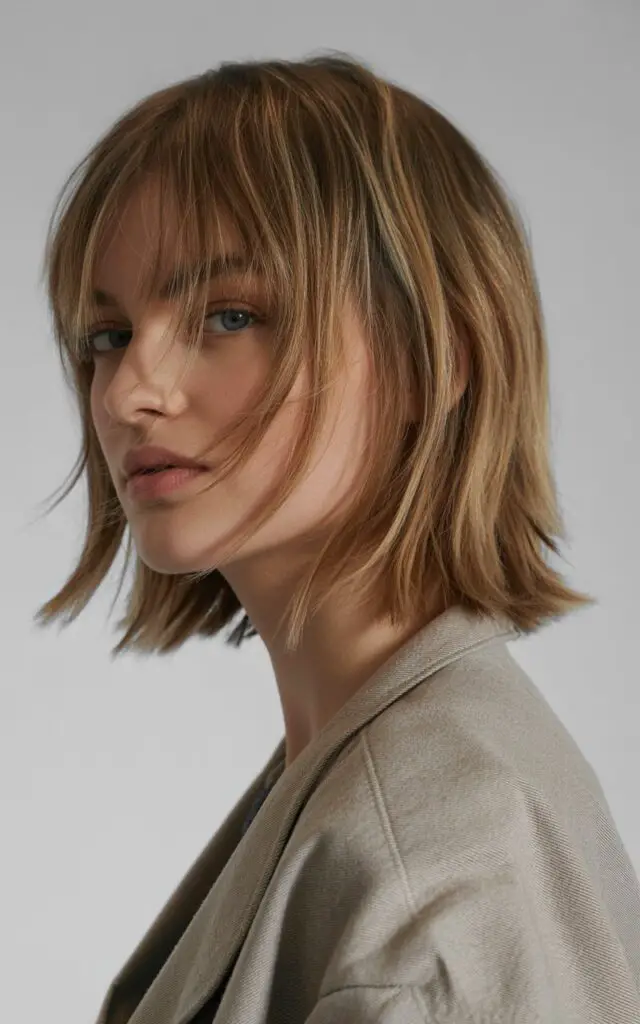
Oval faces have balanced proportions that allow more flexibility with hairstyles. This longer version of the shaggy bob extends to the collarbone or slightly below, creating a relaxed, effortless appearance. Wispy bangs sit just above or at the eyebrows, adding softness without overwhelming your features.
Length and Layer Placement
The extended length maintains the shaggy texture through long layers that start around the cheekbones. These layers create movement without removing too much length. Wispy bangs differ from blunt bangs by having a feathered, see-through quality that feels lighter and less structured.
How does the wispy texture work? Your stylist uses point-cutting or razor techniques to create soft, irregular edges on the bangs. This prevents a harsh line across your forehead and allows pieces to blend naturally with the rest of your hair.
Color Enhancement
This style looks particularly good with dimensional color. Balayage highlights through the layers catch light and emphasize the textured ends. Warm tones like caramel or honey add brightness, while cooler ash tones create a more modern effect. The wispy bangs also benefit from lighter pieces mixed in, which prevents them from appearing too heavy.
Daily Styling
Air-drying works well with this cut if you have natural wave or texture. Scrunch in a salt spray while hair is damp, then let it dry naturally. For straighter hair, use a large-barrel curling iron to add loose waves, focusing on the mid-lengths to ends. The bangs need minimal attention—a quick blast with a dryer and your fingers usually suffices.
Your hair should look lived-in rather than overly styled. Products that add grip and separation work better than smoothing serums. A dry shampoo at the roots gives lift between washes, and a small amount of texture paste on the ends defines the wispy quality of both the layers and bangs.
Short Shaggy Bob with Blunt Bangs for Square Faces
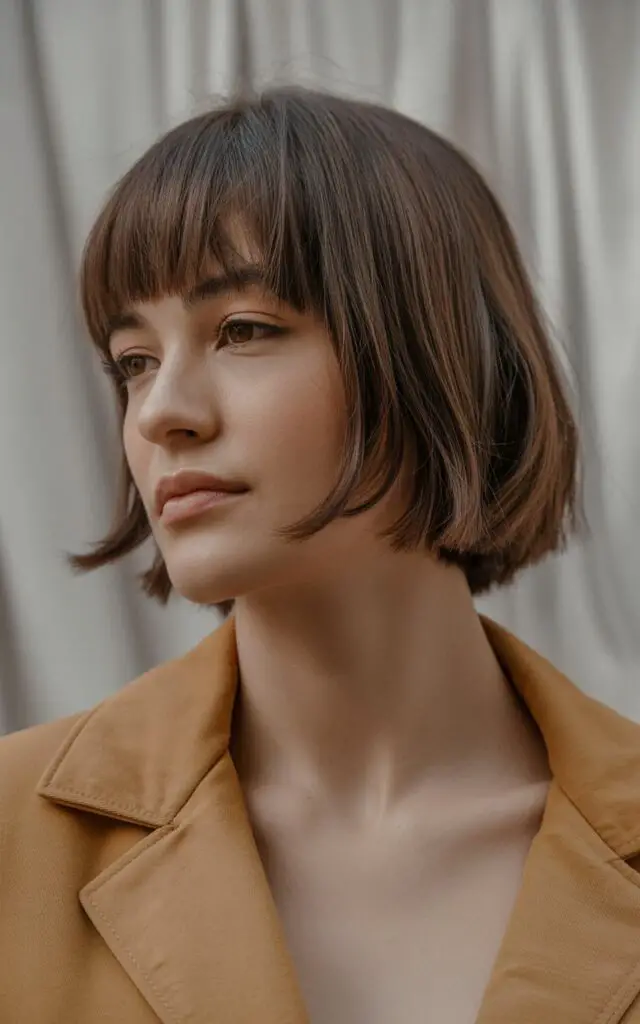
Square faces have strong jawlines and wide foreheads that benefit from softening techniques. This shorter bob typically ends at jaw length or slightly above, with heavy layers creating a rounded shape. Blunt bangs sit straight across the forehead, creating a horizontal line that breaks up the face’s angular quality.
Balancing Angular Features
The shaggy layers throughout this cut curve around your face, reducing the emphasis on sharp corners. Keeping the bob shorter allows the layers to have more impact without weighing down your hair. Blunt bangs draw attention to your eyes and create a focal point away from the jawline.
Cutting Technique Matters
Your stylist should use a combination of point-cutting and slide-cutting to create the shaggy texture. Point-cutting removes weight from the ends while maintaining length. Slide-cutting creates the choppy, separated pieces that define this style. The blunt bangs need regular trims—every 3-4 weeks—to maintain their shape and prevent them from getting too long.
What about styling difficulty? This cut requires more effort than longer versions because the shorter length means less weight to naturally control the layers. You’ll likely need a round brush and blow dryer to direct the layers away from your face and create volume at the crown.
Use these approaches for best results:
Blow-Drying Method: Direct layers outward and upward to create lift and prevent flatness
Product Selection: Volumizing mousse at roots, light pomade on ends for separation
Heat Styling: A small flat iron can flip out the ends for extra texture
Women with thick hair particularly suit this style because the layers remove bulk without creating frizz. Fine hair can work but may need additional volumizing products to achieve the full shaggy effect.
Textured Shaggy Bob with Side-Swept Bangs for Heart-Shaped Faces
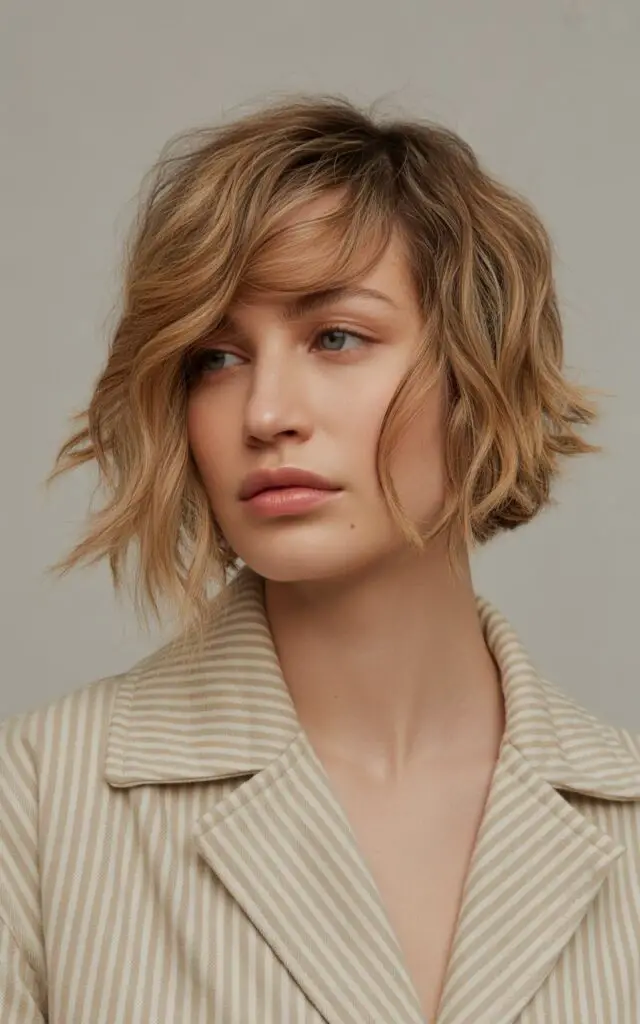
Heart-shaped faces have wider foreheads and narrow chins, creating an inverted triangle shape. Side-swept bangs balance this proportion by covering part of the forehead while adding width at the jawline through textured layers. This bob sits between chin and shoulder length, providing versatility in styling.
Creating Facial Balance
The side-swept bangs reduce the appearance of a wider forehead while drawing attention diagonally across your face. Longer layers at the bottom of the bob add fullness around your jaw and chin area, creating balance with the upper portion of your face. The shaggy texture throughout prevents the style from looking too structured or severe.
Bang Styling Techniques
Side-swept bangs need direction when drying. Use a round brush to pull them to the side while applying heat, which trains them to fall naturally in that direction. The bangs should cover about one-third to one-half of your forehead, depending on how much coverage you want. Too short, and they won’t sweep properly. Too long, and they’ll cover your eyes.
Texture Application
This style benefits from products that enhance natural texture. After washing, apply a curl-enhancing cream if you have waves, or a volumizing spray for straighter hair. Scrunch while drying to encourage the textured look. The ends can be slightly curled under or flipped out, depending on your preference that day.
Adding color dimension makes the texture more visible. Subtle highlights around the face and through the bangs catch light and create depth. Avoid all-over solid color, which can make the shaggy layers look flat. Instead, choose dimensional techniques like foilayage or babylights that work with the layered structure.
Layered Shaggy Bob with Micro Bangs for Long Faces
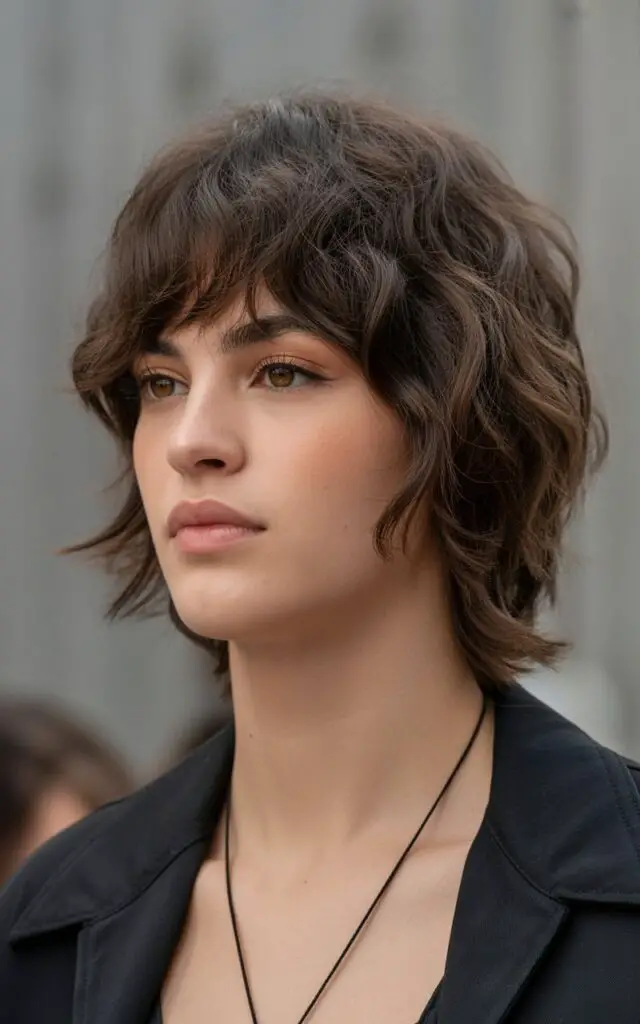
Long faces have more length than width, making them appear narrow. Micro bangs sit well above the eyebrows, creating a horizontal line that visually shortens the face. The bob should fall around chin to shoulder length with heavy layering that adds width and volume.
Understanding Micro Bangs
These very short bangs make a bold statement. They sit one to two inches above your eyebrows, creating a striking contrast with the longer bob length below. Micro bangs work best for long faces because they shorten the vertical line and draw attention to the eyes. This style requires confidence—it’s not for everyone.
Why choose such short bangs? They create instant drama and modernity. They also provide maximum forehead coverage, which helps balance a long face shape. The combination with a shaggy bob softens the boldness somewhat, as the textured layers throughout the rest of the hair add movement and femininity.
Maintenance Demands
Micro bangs grow out quickly and become awkward fast. You’ll need trims every 2-3 weeks to maintain the short length. Between cuts, they may stick up or fall oddly, requiring daily styling. Use a small flat iron or round brush to smooth them down and direct them forward.
The shaggy bob portion needs less frequent trimming—every 6-8 weeks works fine. Focus on maintaining the layered structure and removing any split ends that could make the texture look damaged rather than intentionally shaggy.
Styling Considerations
These elements affect how you’ll style this cut:
Morning Routine: Micro bangs need attention every morning, even if the rest of your hair can skip washing
Product Amount: Use minimal product on the bangs to avoid greasiness or stiffness
Heat Tools: A mini flat iron specifically for bangs makes styling easier
This style suits women with thicker hair because thin hair can make micro bangs look sparse. Straight to slightly wavy hair works better than very curly hair, which can make micro bangs stick out rather than lie flat.
Inverted Shaggy Bob with Face-Framing Bangs for Diamond Faces
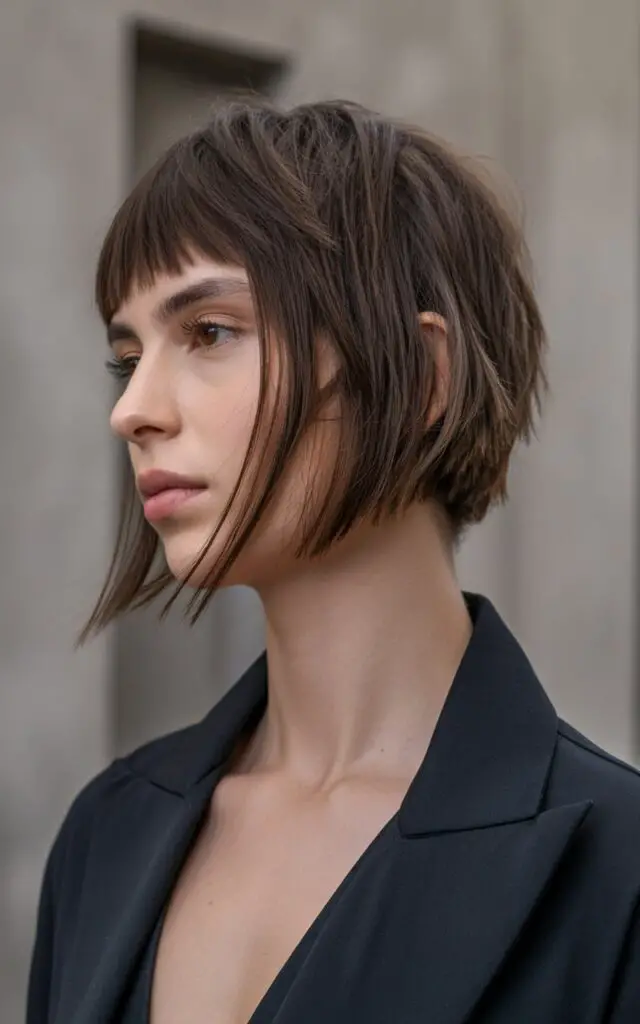
Diamond faces have narrow foreheads and chins with wide cheekbones in between. The inverted bob—shorter in back, longer in front—helps balance this shape by adding width at the forehead and chin areas. Face-framing bangs that angle from short to long create additional balance.
Inverted Structure Benefits
An inverted bob naturally creates an A-line shape that angles forward. The back sits shorter, often at the nape of the neck, while the front pieces extend to the chin or below. This creates width at the top and bottom of your face, counteracting the diamond shape’s narrow points. Shaggy layers throughout add texture and prevent the style from looking too geometric.
Face-Framing Bang Design
These bangs aren’t a straight-across line. Instead, they angle from shorter at the center to longer at the sides, blending seamlessly into the face-framing layers. This creates a soft transition that draws attention to your eyes while the longer sides soften your cheekbones.
How do you style an inverted cut? The shorter back needs minimal effort—it naturally sits close to your head. The longer front sections benefit from a blow-dry with a round brush, pulling them forward and under to create that swooping effect. The face-framing bangs typically fall into place with just a quick brush-through.
Color Strategies
Placing lighter color at the front sections and around the face makes the inverted shape more dramatic. The darker back creates depth, while brighter pieces at the front catch light and draw attention forward. This color placement works with the cut’s structure to flatter diamond face shapes.
You can maintain this style with regular trims to the back section, which grows out first and can lose its shape. The front pieces can go longer between cuts without affecting the overall look significantly.
Wavy Shaggy Bob with Bottleneck Bangs for Oblong Faces
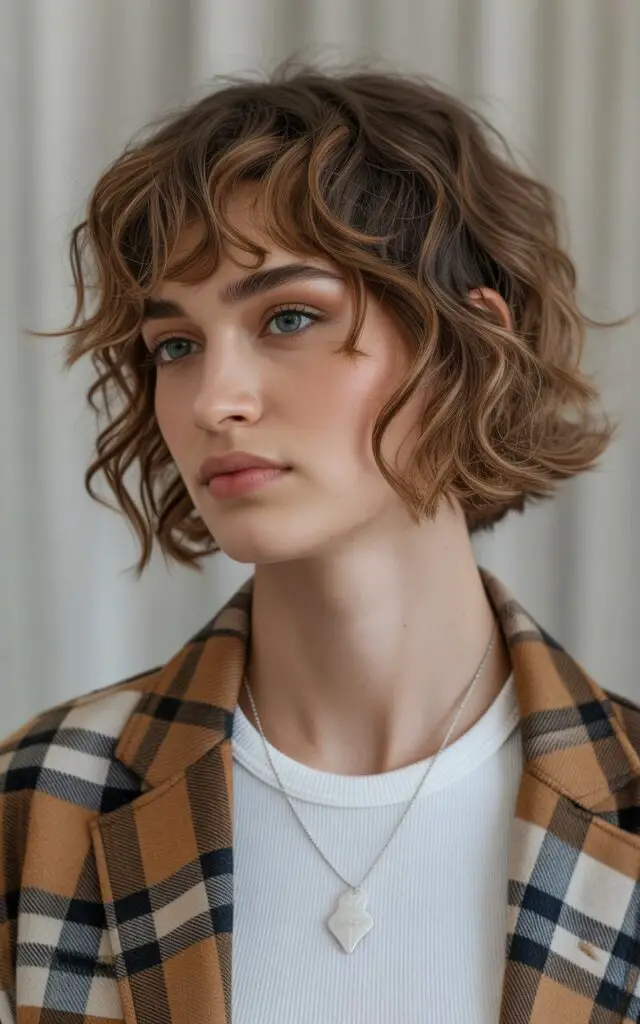
Oblong faces share similarities with long faces but have less width overall, creating a very elongated appearance. Bottleneck bangs—shorter at the cheekbones and longer at the chin—add crucial width where oblong faces need it most. A wavy texture throughout the bob creates horizontal movement that counteracts the vertical length.
Bottleneck Bang Mechanics
These bangs create an hourglass or bottle shape around your face. They start longer near the center, become shorter and fuller at cheekbone level, then extend longer again as they reach your jawline. This shape adds width at the cheeks, where oblong faces typically lack it, while framing your face attractively.
The wavy texture makes bottleneck bangs work better. Straight hair can handle this bang style, but waves help the shorter middle section blend naturally with the longer sides. The movement from waves prevents the bangs from laying too flat, which could negate their width-adding effect.
Creating and Maintaining Waves
Natural waves make this style easier to achieve. If your hair is straight, you’ll need to add waves using a curling iron or wand. Focus on creating loose, undone waves rather than tight curls. The shaggy layers throughout the bob hold waves better than a blunt cut would.
Apply these techniques for the best wave definition:
Curling Direction: Alternate the direction you wrap hair around the iron for a natural look
Product Choice: Wave-enhancing spray or mousse before drying, finishing cream after
Air-Dry Option: Braid damp hair loosely overnight for natural-looking waves
The bottleneck bangs require specific styling. Dry them while pulling the middle section forward with a round brush, and let the longer sides fall naturally. This creates the wider cheekbone area that oblong faces benefit from.
Asymmetrical Shaggy Bob with Textured Bangs for Triangular Faces
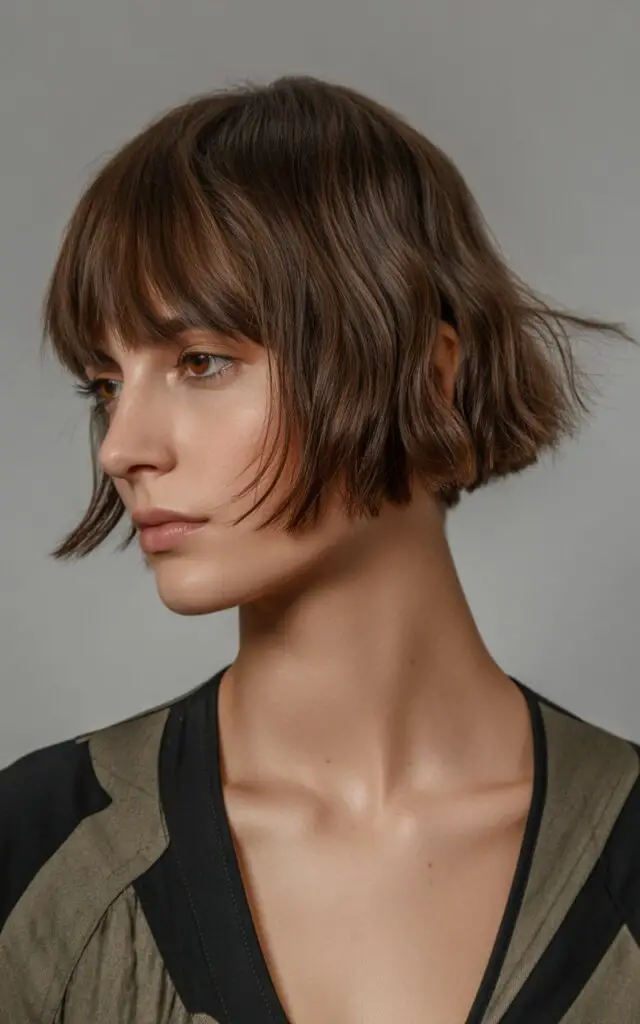
Triangular faces have narrow foreheads and wider jaw areas. An asymmetrical bob—one side longer than the other—creates visual interest that distracts from the jaw width. Textured, piecey bangs add volume at the forehead, balancing the proportions.
Asymmetrical Design Elements
One side of this bob typically sits at earlobe length while the other extends to chin length or below. This diagonal line across your face draws the eye and creates movement. The shaggy layers throughout both sides prevent the asymmetry from looking too harsh or severe. Instead, it appears modern and intentional.
Textured Bang Characteristics
Rather than a solid line of bangs, this style uses choppy, separated pieces that sit at varying lengths. Some pieces might graze your eyebrows while others stop above them. This irregular quality adds volume and width to your forehead area, which balances the wider jaw that triangular faces have.
Why does texture matter so much? Solid, blunt bangs could make your forehead look narrower by creating a harsh horizontal line. Textured bangs create the illusion of more volume and width through their irregular, piece-y nature.
Styling the Asymmetry
The longer side often looks best when styled with a slight bend or wave that curves toward your face. This accentuates the length difference and makes the asymmetry more noticeable. The shorter side can be tucked behind your ear or left to fall forward, depending on your mood.
Use a flat iron or small curling wand to add bends to the longer pieces. The textured bangs benefit from a small amount of pomade or wax worked through them to separate the pieces and prevent them from clumping together. This maintains that choppy, textured appearance throughout the day.
Your stylist should explain which side to make longer based on your natural part and hair growth patterns. Fighting against your hair’s natural tendencies makes styling much harder than working with them.
Finding Your Perfect Match
Choosing the right shaggy bob with bangs depends on understanding your face shape and hair characteristics. Each variation offers specific benefits that either balance proportions or highlight your best features. The beauty of this style lies in its adaptability—the same basic concept works across different lengths, textures, and bang styles.
Your hair’s natural texture influences which version will require the least styling effort. Women with naturally wavy or curly hair find shaggy bobs easier to maintain because the texture does much of the work. Straight hair can achieve these styles too, but you’ll need to add texture through products, heat styling, or both. Consider your daily routine and how much time you’re willing to spend on your hair before committing to a particular style. Some variations, like micro bangs or asymmetrical cuts, need more attention than others.
Frequently Asked Questions
Q: How often do I need to trim a shaggy bob with bangs?
A: The bob itself needs trimming every 6-8 weeks to maintain the layered shape and prevent split ends. Bangs require more frequent attention—every 3-4 weeks for most styles, or every 2-3 weeks for micro bangs. The shaggy texture can tolerate some growth better than blunt cuts, giving you slight flexibility with timing.
Q: Can fine hair work with shaggy bob styles?
A: Fine hair can absolutely work with shaggy bobs, but the cutting technique matters. Ask your stylist to avoid over-thinning the ends, which can make fine hair look stringy. Keep some bluntness at the bottom while creating layers higher up for volume. Fine hair often needs volumizing products at the roots and texturizing spray through the lengths.
Q: What products work best for maintaining the shaggy texture?
A: Texturizing sprays, sea salt sprays, and dry shampoos help create and maintain the piecey, textured look. Avoid heavy oils or smoothing serums, which can weigh down the layers and eliminate the shaggy effect. Light pomades or waxes work well on the ends for definition. Use volumizing products at the roots if your hair tends to fall flat.
Q: Will a shaggy bob work with curly hair?
A: Shaggy bobs work beautifully with curly hair because the curls naturally create texture and volume. The layers help remove weight and prevent the dreaded triangle shape. Ask for dry cutting if you have curls, as this allows your stylist to see how the curls fall naturally and cut them accordingly. Curly-haired women should use moisture-rich products to prevent frizz.
Q: How do I style curtain bangs to fall correctly?
A: Blow-dry curtain bangs while pulling them to the sides with a round brush. The brush should roll under slightly to create a soft bend away from your face. Start at the roots and work down to the ends. Once dry, you can use a flat iron for extra smoothness. Some women find that sleeping with the bangs clipped to the sides helps train them.
Q: Can I grow out a shaggy bob gracefully?
A: Shaggy bobs grow out better than many other cuts because the layers create a gradual transition. As it grows, the style naturally evolves into a longer, shaggier cut. Regular trims to clean up the ends help maintain a polished look during the grow-out phase. The bangs will likely become more of a face-framing layer as they extend.
Q: What’s the difference between a shaggy bob and a regular layered bob?
A: Shaggy bobs have more choppy, textured layers cut throughout the hair, while regular layered bobs tend to have smoother, more blended layers. The shaggy version emphasizes piece-y separation and an undone look, whereas traditional layered bobs aim for polish and sleekness. The cutting technique differs too—shaggy bobs often use point-cutting and razor techniques.
Q: Which face shape should avoid shaggy bobs?
A: Shaggy bobs can work for all face shapes when customized correctly. However, very round faces may want to avoid shorter shaggy bobs that end above the jawline, as this can emphasize roundness. Longer versions with vertical layers work better. The key is choosing the right length, layer placement, and bang style for your specific face shape.
Q: How do I prevent my shaggy bob from looking messy instead of textured?
A: The difference between messy and intentionally textured comes down to hair health and strategic product use. Keep your hair well-conditioned and free of split ends, which can look damaged rather than shaggy. Use texturizing products sparingly—too much makes hair look dirty. Ensure the layers are cut properly by a skilled stylist who understands the shaggy bob technique.

