


The asymmetrical pixie cut represents a bold departure from conventional short hairstyles, offering women a fresh way to express their personal style through deliberate imbalance. This haircut features longer sections on one side while maintaining shorter lengths on the other, creating visual interest that frames the face in unexpected ways. Unlike traditional pixie cuts that follow symmetrical patterns, this modern variation plays with proportions to create movement and dimension that catches the eye.
Women considering this dramatic change often find themselves weighing the excitement of transformation against practical concerns about styling and maintenance. The good news is that achieving and maintaining a stunning asymmetrical pixie cut requires less effort than many assume. With the right approach and understanding of your hair’s natural tendencies, this cut can actually simplify your morning routine while delivering maximum style impact.
The following sections will guide you through everything from understanding the cut’s characteristics to mastering daily styling techniques. You’ll discover how to work with your stylist to achieve the perfect asymmetrical balance for your face shape, learn professional styling methods that work at home, and understand the maintenance required to keep your cut looking sharp. Let’s uncover how this contemporary take on the classic pixie can become your signature look.
What Is an Asymmetrical Pixie Cut?
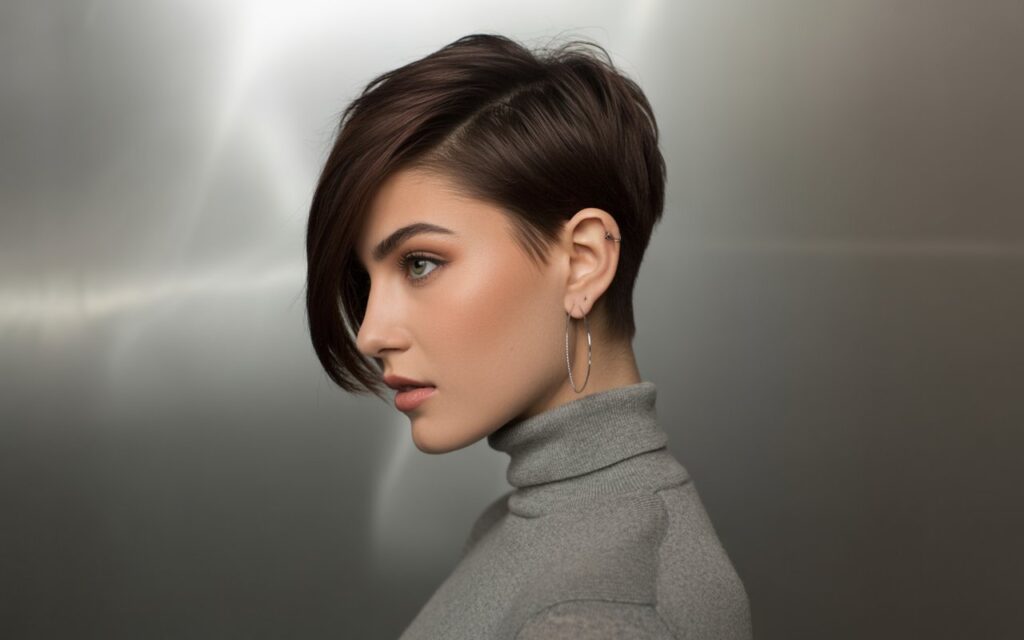
An asymmetrical pixie cut breaks all the traditional rules of balanced hairstyling by intentionally creating uneven lengths that draw attention to your best features. This modern interpretation of the classic pixie typically features one side cut close to the head while the opposite side maintains significantly more length, often sweeping across the forehead or tucked behind the ear. The contrast between these two sides creates dynamic movement that shifts with every turn of your head.
The Defining Characteristics
The most striking element of this cut lies in its deliberate imbalance. One side might be clipper-cut short, revealing the ear and creating clean lines along the neckline. The longer side often features layers that add texture and movement, sometimes extending past the jawline for dramatic effect. This contrast isn’t just about length – it’s about creating visual weight that shifts the eye’s focus.
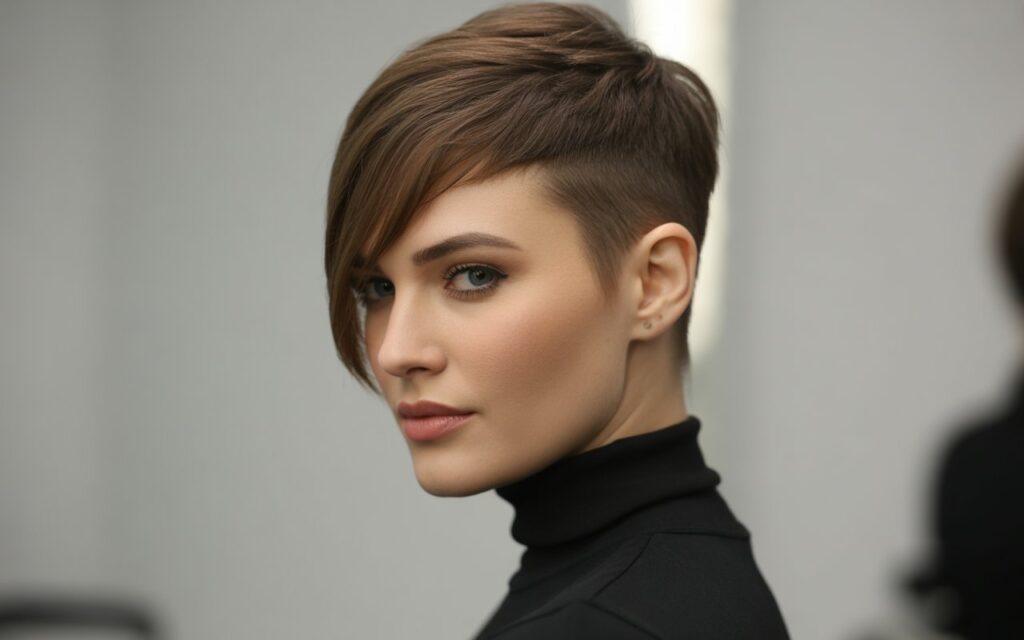
Many stylists incorporate undercut elements into the shorter side, adding another dimension to the overall design. These undercut sections can feature subtle fade work or even creative patterns for those wanting extra personality in their style. The transition between the short and long sides requires careful blending to avoid harsh lines unless that’s specifically part of your desired aesthetic.
How It Differs from Traditional Pixie Cuts
Traditional pixie cuts maintain relatively uniform length around the entire head, focusing on creating balanced proportions that frame the face evenly. The asymmetrical version throws this concept aside, using imbalance as its primary design element. Where a classic pixie might feature gentle layers that follow the head’s natural curve, the asymmetrical style creates angles and lines that challenge expectations.
The cutting techniques also differ significantly between these two styles. Standard pixie cuts rely on point cutting and texturizing to create soft, feminine edges. Asymmetrical versions often combine multiple cutting methods – razor work for the longer sections, clipper work for precision on the short side, and careful scissor work to blend the transition zones.
Face Shapes That Work Best
Oval faces have the flexibility to carry virtually any variation of this cut, from subtle asymmetry to dramatic contrasts. The uneven lengths can help balance round faces by creating vertical lines that elongate the appearance of the face. Square faces benefit from the softening effect of the longer side, which can minimize angular jawlines.
Heart-shaped faces find particular success with this style when the longer section falls near the narrower chin area, creating balance with a wider forehead. Those with long faces might opt for versions where the asymmetry runs more horizontal than vertical, adding width rather than height to their overall appearance.
Your bone structure plays a crucial role in determining the ideal degree of asymmetry. High cheekbones can handle more dramatic contrasts, while softer features might call for gentler transitions between lengths.
Hair Texture Considerations
Fine hair actually performs beautifully in asymmetrical pixie cuts because the varied lengths create an illusion of fullness and movement. The shorter sections eliminate weight that might otherwise drag fine hair down, while the longer portions can be styled to add volume where needed. Strategic layering throughout prevents the style from looking flat or lifeless.
Thick hair requires thoughtful thinning and texturizing to prevent the longer side from becoming too bulky. Your stylist might use thinning shears or a razor to remove excess weight while maintaining the cut’s shape. The beauty of thick hair in this style lies in its ability to hold dramatic angles and maintain structure between salon visits.
Curly and wavy textures bring natural volume and movement to the cut, though they require adjusted cutting techniques. The stylist must account for shrinkage when cutting curly hair, ensuring the asymmetry remains visible once the hair dries and springs back. Some women with very curly hair opt to wear the longer side straight occasionally, creating even more versatility in their style options.
Preparing for Your Asymmetrical Pixie Cut
Taking the leap into an asymmetrical pixie requires more preparation than simply booking an appointment. This dramatic transformation works best when you’ve done your homework and communicated clearly with your chosen professional. Understanding what happens before the scissors come out can mean the difference between loving your new look and experiencing regret.
Finding the Right Stylist
Not every hairstylist excels at creating asymmetrical cuts, making your choice of professional crucial to achieving the look you envision. Start by researching stylists in your area who specialize in short, edgy cuts rather than those known primarily for long hair or traditional styles. Instagram and salon websites offer valuable glimpses into their actual work, not just promotional photos.
When evaluating potential stylists, pay attention to how they handle texture and movement in their cuts. Look for examples where they’ve created clean lines and smooth transitions between different lengths. A skilled practitioner will have a portfolio showing various interpretations of asymmetrical styles on different hair types and face shapes.
Schedule a consultation before committing to the cut. This meeting allows you to gauge the stylist’s understanding of your vision and their ability to translate it into reality. Bring multiple reference photos showing different angles of styles you like, and be prepared to discuss what specifically appeals to you about each image.
During the consultation, a competent stylist will examine your hair’s natural growth patterns, density, and texture. They should honestly discuss whether your hair can achieve the exact look you want or suggest modifications that will work better with your specific characteristics. Red flags include stylists who promise everything without examining your hair or those who seem uncertain about creating asymmetrical designs.
Consultation Essentials
Your consultation conversation should cover more than just the initial cut. Discuss your daily routine and how much time you realistically have for styling each morning. Be honest about your skill level with styling tools and products – there’s no shame in admitting you’ve never used a flat iron or struggle with a blow dryer.
Bring photos of yourself with different hairstyles from your past, particularly any short cuts you’ve had. These images help your stylist understand how your hair behaves at various lengths and what shapes have worked well for your face. If you’ve had disasters with previous short cuts, share those too – knowing what didn’t work is equally valuable.
Hair Condition Assessment
The current state of your hair significantly impacts how well it will adapt to an asymmetrical pixie cut. Damaged or overly processed hair might not hold the clean lines and smooth texture this style demands. Your stylist should honestly evaluate whether your hair needs conditioning treatments or a growth period before attempting the cut.
Consider your recent chemical history when planning this transformation:
- Color treatments: Recently bleached or highlighted hair may be too fragile for aggressive texturizing
- Previous perms: Chemical texture services can create unpredictable results when cut short
- Keratin treatments: These can affect how your hair responds to styling products and heat tools
- Regular heat styling: Excessive damage might show more prominently in a short cut
If your hair needs rehabilitation before cutting, your stylist might recommend a series of protein or moisture treatments. These preparations can take several weeks but result in healthier hair that better holds the style. Some women choose to gradually transition to the asymmetrical pixie through a series of appointments, starting with a longer asymmetrical bob and working shorter over time.
Setting Realistic Expectations
Understanding what your specific hair can and cannot do prevents disappointment when you leave the salon chair. That Instagram photo of a model with an asymmetrical pixie might not translate exactly to your hair if she has fine, straight strands and you have thick, wavy locks. Your stylist should help you visualize realistic outcomes based on your hair’s unique properties.
Discuss the grow-out process during your consultation. Asymmetrical cuts require more frequent maintenance than traditional styles because the deliberate imbalance becomes less defined as hair grows. Plan for touch-ups every 3-4 weeks to maintain the sharp lines and proportions that make this cut striking. Budget accordingly, as these regular visits add up over time.
Weather and humidity in your area affect how this style performs daily. If you live somewhere with high humidity, the longer sections might require anti-frizz products or heat styling to maintain smoothness. Conversely, dry climates might necessitate additional moisturizing products to prevent the shorter sections from looking brittle or flyaway.
Your lifestyle factors into the equation too. Active women who exercise frequently need to consider how sweat and frequent washing will impact their style. The shorter side typically requires minimal adjustment after workouts, but the longer section might need restyling. Some women find dry shampoo becomes their best friend for extending the life of their style between washes.
Styling Techniques for Your Asymmetrical Pixie
Mastering the art of styling an asymmetrical pixie cut transforms a good haircut into a great look that turns heads. The beauty of this style lies not just in the cut itself but in how you manipulate its unique proportions each day. With the right techniques and products, you can create multiple looks from a single cut, shifting from professional polish to edgy weekend vibes with just a few adjustments to your styling approach.
Essential Styling Products
Your product arsenal doesn’t need to be extensive, but choosing the right formulations makes all the difference in achieving the look you want. A lightweight mousse or volumizing spray applied to damp hair provides the foundation for most styling approaches. These products add body without weighing down the hair, particularly important for the longer sections that need movement.
Texturizing products become your secret weapon for creating piece-y, modern finishes. A small amount of texture paste or clay worked through dry hair adds definition and hold while maintaining flexibility. The key is using these products sparingly – start with a pea-sized amount and add more if needed. Too much product in short hair creates an unwanted greasy or stiff appearance.
Heat protectant spray is non-negotiable if you plan to use hot tools regularly. The shorter sections of your cut expose more of each hair strand to potential damage, making protection essential. Look for formulas that offer thermal protection up to 450 degrees Fahrenheit while adding shine without heaviness.
For those days when you want sleek sophistication, a smoothing serum applied to the longer sections tames flyaways and adds glossy finish. Concentrate the product from mid-length to ends, avoiding the roots where it might create unwanted flatness. The shorter side typically needs less serum – just a tiny amount smoothed over the surface creates polish without greasiness.
Daily Styling Routine
Your morning routine can be as simple or elaborate as you choose, but establishing a consistent pattern helps you achieve predictable results. Start with towel-dried hair that’s damp but not dripping. The moisture level affects how products distribute and how effectively you can manipulate the hair’s direction.
Begin styling the shorter side first, as it typically requires less time and effort. Use a small round brush or your fingers to direct the hair in your preferred direction while blow-drying on medium heat. Some women prefer the short side to lie flat against the head, while others add slight volume for balance. A cool shot from the dryer at the end locks in the style.
The longer section offers more creative possibilities. For smooth sophistication, use a paddle brush to pull the hair taut while drying, creating sleek lines that emphasize the cut’s asymmetry. Alternatively, scrunch the hair while diffusing for textured, tousled appeal. The direction you dry this section – forward over the face, swept to the side, or tucked behind the ear – dramatically changes the overall appearance.
Creating Different Looks
The versatility of asymmetrical pixie cuts means you’re not locked into one style. A sleek, polished finish works perfectly for professional settings. Achieve this by flat-ironing the longer sections after blow-drying, creating sharp lines that emphasize the geometric nature of the cut. A light misting of shine spray completes the sophisticated look.
For casual occasions, textured styling adds playful movement. Work a small amount of sea salt spray through damp hair before rough-drying with your fingers. Once dry, use a texture powder at the roots for extra volume and piece-y definition. This undone approach softens the cut’s edges while maintaining its essential shape.
Evening looks call for more drama, which you can achieve through strategic use of styling tools and products. Consider:
- Defined Curls: Use a small curling iron on the longer sections for romantic waves
- Slicked Back: Apply gel to wet hair and comb everything straight back for an edgy look
- Side Swept: Create a deep side part and sweep all longer pieces dramatically across
- Textured Spikes: Use strong-hold wax to create piece-y spikes on the shorter sections
Working with Your Natural Texture
Fighting against your hair’s natural tendencies leads to frustration and excessive styling time. Instead, learn to work with what you have, making small adjustments rather than complete transformations. Straight hair might need texturizing products to avoid looking too severe, while curly hair benefits from defining creams that enhance natural patterns.
Women with wavy hair often find their texture perfectly complements this cut’s asymmetrical nature. Enhancing waves on the longer side while keeping the short side relatively smooth creates beautiful contrast. A curl-enhancing cream applied to damp hair, followed by diffusing, brings out natural movement without frizz.
Those with very curly or coily hair might choose to alternate between natural and straightened styles. When wearing hair natural, the asymmetry shows through varying curl sizes and patterns rather than pure length difference. When straightened, the dramatic length contrast becomes more apparent. This versatility essentially gives you two completely different haircuts from one.
Fine hair responds well to root-lifting techniques that create volume where needed. Apply mousse directly to the roots before blow-drying with your head upside down. Once the roots are dry, flip your head upright and finish styling normally. This technique creates lift that lasts throughout the day without requiring teasing or backcombing that might damage delicate strands.
Maintenance and Care Tips
Keeping your asymmetrical pixie cut looking fresh and stylish requires more attention than longer hairstyles, but the effort pays off in consistently polished appearance. The precise lines and deliberate proportions that make this cut stunning can quickly lose their impact without proper maintenance. Understanding the care requirements before committing helps you maintain that just-left-the-salon look between appointments.
Trimming Schedule
The growing-out process affects asymmetrical cuts differently than balanced styles. As hair grows, the intentional imbalance becomes less defined, and what started as edgy asymmetry can morph into an undefined mess within weeks. Most women find they need professional touch-ups every 3-4 weeks to maintain the cut’s distinctive shape.
The short side typically needs the most frequent attention. Even a quarter-inch of growth can soften the clean lines that make this section striking. Some women learn to maintain this area themselves between salon visits using clippers with guards, though this requires steady hands and good mirrors. If you attempt home maintenance, stick to simple cleanup rather than trying to reshape the entire section.
Your longer sections can go slightly longer between professional attention, perhaps 5-6 weeks, depending on your hair’s growth rate. However, waiting too long compromises the overall balance of the cut. The transition area between short and long sections needs expert attention to maintain smooth blending – this isn’t something to attempt at home.
Product Recommendations
Choosing the right products extends the life of your cut while keeping hair healthy despite frequent styling. Your shampoo and conditioner choices matter more with short hair since there’s less length to hide damage or dryness. Look for sulfate-free formulas that clean without stripping natural oils, particularly important for the exposed shorter sections.
A clarifying shampoo used weekly removes product buildup that can weigh down short hair and make styling difficult. This is especially important if you use styling products daily. Follow clarifying treatments with a deep conditioning mask to restore moisture, concentrating on the longer sections that endure more heat styling.
Leave-in treatments serve multiple purposes in short hair care:
- Protein Treatments: Strengthen hair that undergoes frequent cutting and styling
- Moisture Masks: Combat dryness from regular blow-drying and heat styling
- Scalp Treatments: Keep the exposed scalp on shorter sections healthy and flake-free
- Color Depositing Conditioners: Maintain vibrancy if you’ve colored your hair
Dry shampoo becomes invaluable for extending time between washes. Short hair shows oil more readily than long hair, but daily washing can irritate the scalp and fade color. A light application of dry shampoo at the roots absorbs excess oil while adding texture and volume. Apply it before bed rather than in the morning for better oil absorption and no white residue.
Color Considerations
Adding color to an asymmetrical pixie cut creates even more visual interest, but it also increases maintenance requirements. The shorter sections show root growth more obviously than longer hair would, meaning touch-ups every 3-4 weeks if you’re covering gray or maintaining a different color than your natural shade.
Many women choose to incorporate their natural color into the design rather than fighting against it. This might mean leaving the shorter section natural while coloring only the longer portions, or using highlights and lowlights that blend with natural tones. These approaches reduce the obvious line of demarcation as hair grows.
Fashion colors like pastels or vivids look particularly striking with asymmetrical cuts but require significant upkeep. These shades fade quickly, especially with frequent washing and heat styling. Color-depositing conditioners help maintain vibrancy between salon visits, but expect to refresh the color every 2-3 weeks for optimal impact.
If you’re considering going lighter, remember that bleaching can change your hair’s texture and affect how it styles. Previously straight hair might develop waves after lightening, while curly hair might loosen its pattern. Discuss these potential changes with your colorist before proceeding, as they might affect how your cut performs.
Growing Out Gracefully
At some point, you might decide to grow out your asymmetrical pixie, whether to try a different style or return to longer lengths. This transition requires patience and strategic cutting rather than simply abandoning all maintenance. The asymmetrical nature actually provides some advantages during grow-out, as you can gradually even out the lengths while maintaining style.
The first phase involves growing the shorter side to match the longer section’s length. This typically takes 3-4 months, during which you’ll need regular trims to keep everything shaped. Your stylist might suggest adding layers to the longer side during this phase to reduce the contrast while maintaining some style interest.
Once both sides reach similar lengths, you have options for the next phase. Some women transition into a traditional bob, while others continue growing toward shoulder length or beyond. The key is maintaining regular trims every 6-8 weeks to prevent the awkward, shapeless phase that makes many people give up on growing their hair.
Consider temporary styling solutions during awkward growth phases. Headbands, decorative clips, and creative braiding on the longer sections can disguise uneven lengths while adding personality to your transitional style. Many women find they actually enjoy these intermediate lengths once they learn to style them properly.
Your Journey to Pixie Perfection
The asymmetrical pixie cut stands as more than just a hairstyle – it represents a bold choice that reflects confidence and individuality. Through understanding its unique characteristics, preparing properly for the transformation, mastering styling techniques, and committing to regular maintenance, you can make this dramatic cut work beautifully for your lifestyle. The initial leap might feel daunting, but armed with the right knowledge and realistic expectations, you’ll find this modern take on the classic pixie offers versatility and style impact that longer hair simply cannot match.
Whether you’re drawn to the cut’s edgy aesthetic, tired of lengthy styling routines, or ready for a complete transformation, the asymmetrical pixie delivers on multiple fronts. The key lies not in achieving perfection every day but in finding the techniques and products that work with your specific hair type and personal style. With each passing week, you’ll discover new ways to style your cut, developing the confidence that comes from truly owning your look.
Frequently Asked Questions
Q: How often will I need to visit the salon to maintain an asymmetrical pixie cut?
A: Most women need professional touch-ups every 3-4 weeks to maintain the clean lines and defined asymmetry. The short side loses its sharpness quickly with growth, and the transition areas need expert blending to stay smooth.
Q: Can I achieve an asymmetrical pixie cut if I have very curly hair?
A: Yes, curly hair can look fantastic in an asymmetrical pixie. Your stylist will need to account for shrinkage when cutting and might suggest wearing the longer side straight occasionally for variety. The natural texture adds beautiful dimension to the cut.
Q: What face shape works best with an asymmetrical pixie cut?
A: While oval faces have the most flexibility, this cut can be adapted for any face shape. Round faces benefit from the elongating effect, square faces get softening from the longer side, and heart-shaped faces find balance when the length falls near the chin area.
Q: How long does it take to style an asymmetrical pixie each morning?
A: Styling time varies from 5-15 minutes depending on your desired look. Simple, textured styles using fingers and minimal product take just minutes, while sleek, polished looks requiring flat-ironing might need 15 minutes.
Q: Will I need to buy many new styling products for this cut?
A: You’ll need just a few key products: volumizing mousse, texturizing paste or clay, heat protectant, and possibly a smoothing serum. Quality matters more than quantity with short hair products.
Q: What happens if I don’t like my asymmetrical pixie cut?
A: The shorter side will take several months to grow out, but you can transition relatively quickly to a more traditional pixie or short bob. Strategic cutting during the grow-out phase helps maintain style while evening out lengths.
Q: Is an asymmetrical pixie cut appropriate for professional settings?
A: Absolutely. When styled sleek and polished, this cut looks sophisticated and professional. The key is keeping it well-maintained and choosing styling options that suit your workplace culture.
Q: Can I cut the short side myself between salon visits?
A: While some women successfully do minor cleanup with clippers, it’s risky without experience. One mistake could require professional correction or affect the cut’s overall balance. When in doubt, wait for your stylist.

