

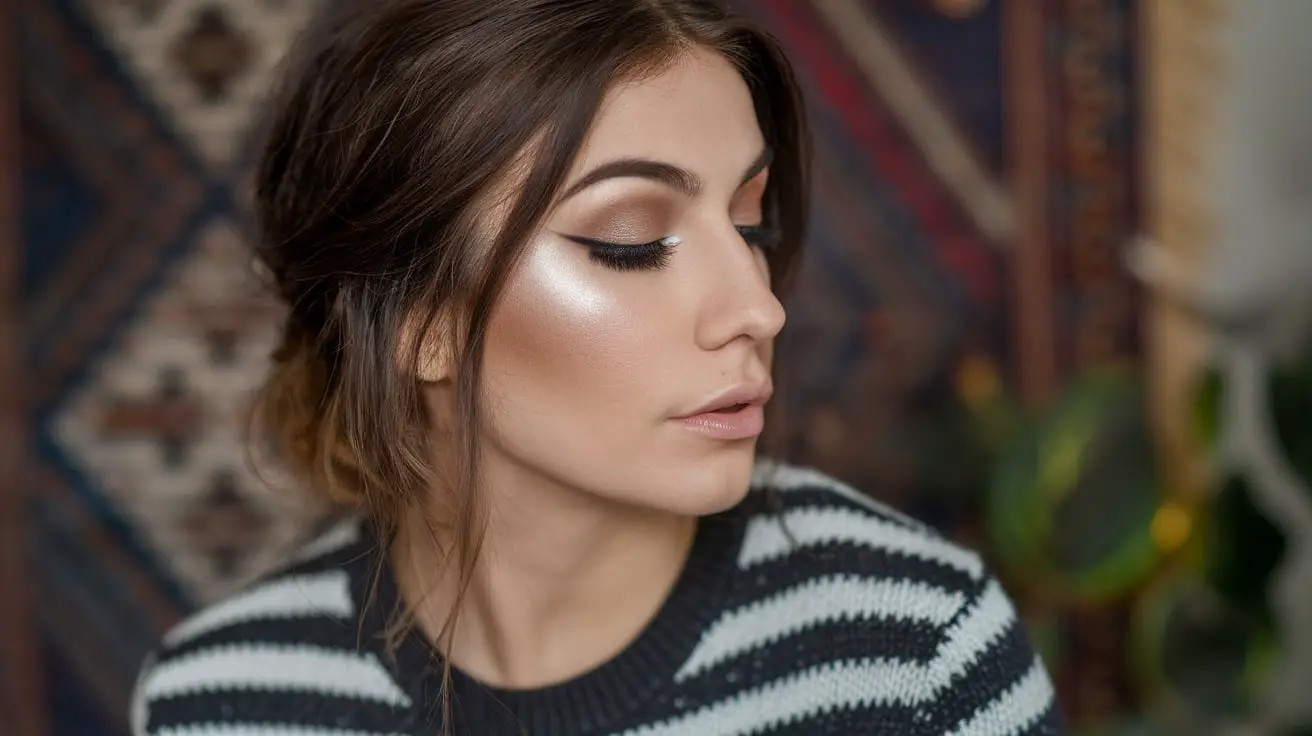
French women have mastered something remarkable with their morning makeup routines – they’ve discovered how to look polished while appearing wonderfully undone. This approach to beauty celebrates your natural features rather than covering them, creating a fresh-faced glow that seems accidental yet utterly sophisticated. The graceful messy morning look captures that just-woke-up radiance combined with subtle enhancements that brighten your complexion and define your features without looking overdone.
This particular style of makeup works because it follows the principle of less is more, but with strategic placement and thoughtful product choices. You’re not trying to achieve Instagram perfection or red-carpet glamour. Instead, you’re creating a lived-in beauty that suggests you rolled out of bed looking naturally gorgeous, even though there’s definite technique behind the apparent effortlessness. The focus shifts from concealing every perceived flaw to highlighting what makes your face interesting and beautiful.
In the following sections, we’ll uncover the techniques French women use to achieve this coveted morning look, from creating the perfect base to mastering that signature smudged eye. You’ll learn how to highlight your features without looking like you tried too hard, plus discover time-saving methods that fit into even the busiest morning schedules. Let’s transform your morning makeup routine into something that feels both graceful and refreshingly uncomplicated.
- What Makes French Morning Makeup Different From Other Styles
- Creating the Perfect Base for Your Morning Look
- Highlighting Your Best Features Without Overdoing It
- Essential Techniques for That Effortless French Finish
- Making This Look Work for Your Morning Routine
- Your Effortless French Morning Awaits
- Frequently Asked Questions
What Makes French Morning Makeup Different From Other Styles
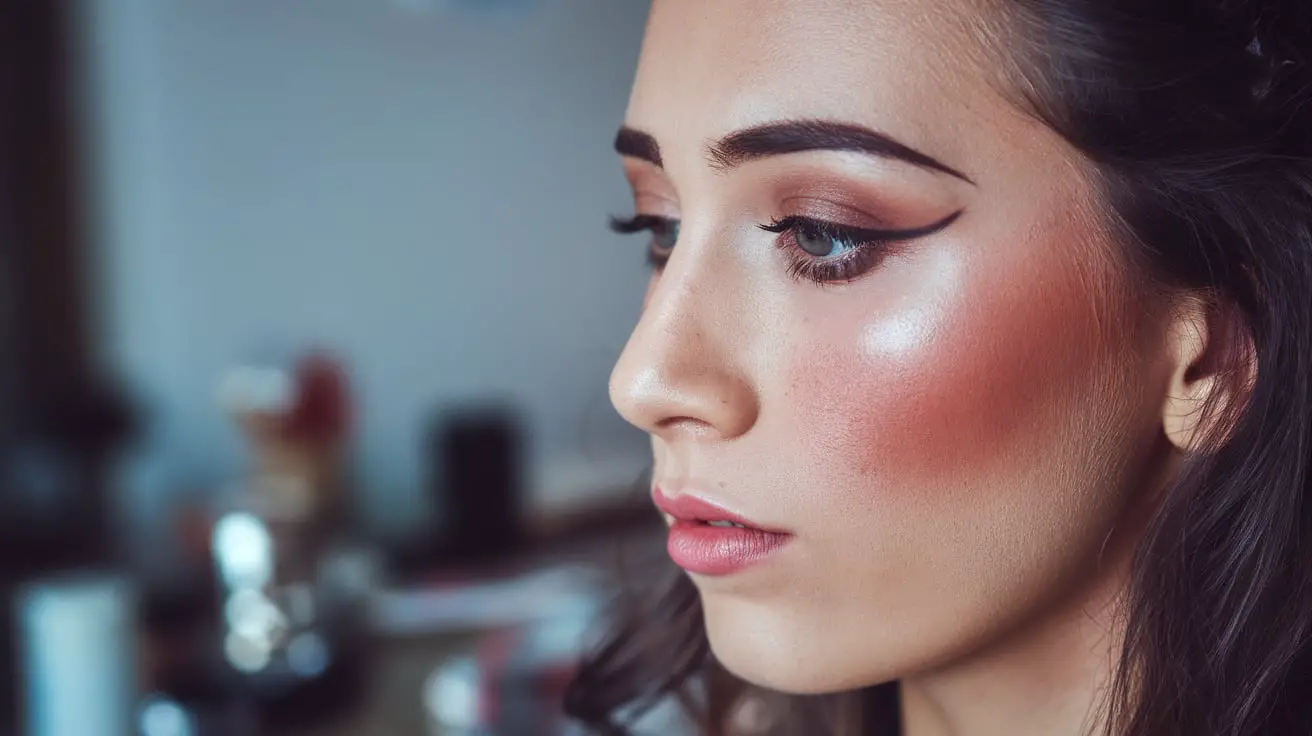
The French approach to morning makeup fundamentally differs from American or Korean beauty standards because it celebrates imperfection as part of the charm. Rather than striving for poreless, airbrushed skin or dramatic transformations, this philosophy focuses on working with what you naturally have and making small adjustments that bring out your best features.
The philosophy behind French beauty
French beauty culture revolves around the concept of “je ne sais quoi” – that indefinable quality that makes someone captivating without obvious effort. This translates into makeup application that looks almost accidental, as if you happened to have rosy cheeks and defined eyes without any cosmetic help. The goal isn’t transformation but rather enhancement that looks so natural, people can’t quite pinpoint what makes you look so good.
Women in France grow up learning that makeup should support their features, not mask them. They view cosmetics as tools for subtle refinement rather than complete coverage. This mindset shift changes everything about how you approach your morning routine.
Natural enhancement versus coverage
Traditional makeup often emphasizes covering every blemish and creating a uniform canvas before adding color back in. The French morning approach flips this concept entirely. Instead of hiding skin texture or minor imperfections, you work with them.
A small blemish might get a tiny dot of concealer, but the surrounding skin remains untouched. Dark circles receive brightening rather than heavy coverage. This selective approach means your skin still looks like skin, complete with natural variation in tone and texture that makes faces interesting.
The products you choose matter tremendously here. Heavy foundations give way to tinted moisturizers or serums with just enough pigment to even out major discoloration. Powder becomes optional rather than mandatory. Your freckles, beauty marks, and even some redness show through, contributing to an authentic appearance that full coverage could never achieve.
Time-saving elements that still look polished
Surprisingly, this seemingly careless style actually requires less time than traditional full-face makeup. You’re not blending multiple shades of concealer or ensuring your foundation matches perfectly at your jawline. The techniques involved take minutes rather than half an hour.
Quick fingertip application replaces careful brush work for most products. Cream formulas that melt into skin eliminate the need for precise blending. You might spend thirty seconds patting cream blush onto your cheeks rather than five minutes layering and setting powder products.
The art of strategic messiness
The “messy” part of graceful messy morning makeup requires intentionality. You’re creating controlled imperfection that flatters rather than random sloppiness. Think of it like tousling your hair in just the right way – there’s method behind what appears effortless.
Eyeshadow gets smudged deliberately along the lash line rather than blended into perfect gradients. Lipstick might be pressed onto lips with fingers for a stained effect rather than applied precisely within lip lines. These techniques create softness and movement that rigid application can’t achieve.
Creating the Perfect Base for Your Morning Look

Your base sets the foundation for everything else in French morning makeup, but it shouldn’t look like foundation at all. The goal is skin that appears naturally healthy and glowing, as if you’ve just returned from a relaxing vacation rather than applied makeup.
Skin preparation techniques
Everything starts with well-hydrated skin. French women typically spend more time on skincare than makeup application, understanding that healthy skin needs less coverage.
Begin with a gentle cleanser that doesn’t strip your skin. Pat your face with a soft towel, leaving it slightly damp. This moisture helps subsequent products absorb better. Apply a lightweight serum targeting your specific concerns – vitamin C for brightness, hyaluronic acid for hydration, or niacinamide for oil control.
Your moisturizer choice depends on your skin type, but it should sink in quickly without leaving residue. Many French women prefer gel-cream textures that provide hydration without heaviness. Give your moisturizer two or three minutes to fully absorb before moving to makeup.
Primer isn’t always necessary with this approach. If you do use one, choose a hydrating or glowing formula rather than mattifying or pore-filling versions. You want to enhance your skin’s natural texture, not create an artificial smooth surface.
Choosing lightweight products
The products you select make or break this look. Traditional foundation is typically too heavy and opaque. Instead, consider these alternatives that provide just enough coverage while maintaining transparency:
Tinted serums offer the least coverage but maximum skin-like finish. They contain skincare ingredients alongside subtle pigments. Mix a drop with your moisturizer for even sheerer coverage.
CC creams work well for those needing slightly more evening out of skin tone. They typically contain SPF and color-correcting properties without the density of foundation. BB creams can work too, though many versions lean heavier than ideal for this style.
Skin tints or tinted moisturizers hit the sweet spot for most people. They provide enough pigment to blur imperfections while letting your actual skin show through.
Blending methods for that lived-in finish
Forget beauty sponges and foundation brushes. Your fingers are the primary tools for creating that French morning base. The warmth of your hands helps products melt into skin seamlessly.
Start with less product than you think you need. Dot your chosen base product onto your forehead, cheeks, nose, and chin. Using your fingertips, press and pat the product into your skin rather than rubbing or swiping. This pressing motion helps maintain coverage while creating a natural finish.
Work in sections, focusing on areas that need more evening out. The center of your face typically needs more attention than the perimeter. Your neck and ears shouldn’t need any product if you’re using the right shade and applying sparingly.
Pay special attention to areas where makeup typically looks obvious – around your nostrils, along your hairline, near your ears. These spots need extra patting to ensure seamless blending. The product should disappear into your skin rather than sitting on top.
Working with your natural skin texture
Instead of fighting your skin’s natural characteristics, incorporate them into your look. Dry patches don’t need to be completely hidden – a drop of facial oil mixed with your base can help them appear dewy rather than flaky. Oily areas can provide natural highlight when managed correctly.
If you have visible pores, don’t try to fill them completely. A light hand with product prevents makeup from settling into them and looking worse as the day progresses. Texture from acne scarring or fine lines becomes less noticeable when you’re not creating a stark contrast with heavy coverage.
Redness can actually contribute to that naturally flushed appearance French women love. Consider leaving some natural color in your cheeks rather than neutralizing everything. This saves you from adding it back artificially with blush later.
Spot concealing takes precedence over all-over coverage. Use a concealer that matches your skin exactly (not lighter) and apply tiny amounts only where absolutely necessary. Broken capillaries, dark spots, or active breakouts might get attention, but minor imperfections remain visible.
Highlighting Your Best Features Without Overdoing It
French morning makeup treats highlighting as an art form where less creates more impact. You’re not going for an Instagram-ready glow that could be seen from space, but rather a subtle luminosity that makes people wonder why you look so refreshed.
Strategic placement for natural enhancement
Highlighting should mimic where light naturally hits your face when you’re healthy and well-rested. This means focusing on areas that would catch sunlight during a morning walk rather than following every highlighting diagram you’ve seen online.
The tops of your cheekbones deserve attention, but only the highest points – not a stripe from ear to eye. A tiny amount of product pressed onto the peaks creates dimension without obvious shimmer. Your nose bridge might get the slightest touch if you want to refine its appearance, but many French women skip this entirely.
The inner corners of your eyes brighten your entire face when touched with luminizer. This one small area makes a remarkable difference in looking awake. Just above your cupid’s bow, a pin-drop of highlight makes lips appear fuller naturally.
Your forehead gets treated differently than typical highlighting suggests. Instead of a broad sweep across the entire area, focus on the center just above your brows. This creates the illusion of naturally glowing skin rather than applied product.
Cream versus powder products
Cream highlighters reign supreme for achieving that French morning glow. They meld with your skin in a way powder products simply cannot replicate. The finish appears to come from within rather than sitting on the surface.
Select cream formulas without obvious glitter or sparkle particles. You want luminosity, not disco ball effects. Many French women actually use a drop of facial oil or a particularly dewy moisturizer as highlighter. These provide glow without any risk of looking overdone.
Apply cream highlight with your ring finger, which naturally applies the gentlest pressure. Tap rather than swipe to maintain the intensity where you want it.
If you must use powder, choose finely milled formulas with subtle pearl rather than chunky shimmer.
The right amount of glow
Determining the perfect amount of highlighting requires honest assessment in different lighting. What looks natural in your bathroom might appear excessive in daylight.
Start with barely any product – you can always add more. A good rule: if you can clearly see where your highlighter begins and ends, you’ve used too much. The effect should be so subtle that people notice you look good without identifying highlighting as the reason.
Your skin type influences how much highlighting you need. Naturally oily skin already has inherent luminosity, so you might skip highlighter entirely or use it sparingly. Dry skin can handle more product without looking overdone.
Consider your environment too. Office lighting tends to be harsh and unflattering, so slightly more highlight helps counteract this. Natural daylight reveals everything, making restraint essential.
Age plays a role in highlight placement and intensity. Mature skin looks best with cream formulas applied to fewer areas. The goal remains the same regardless of age – looking naturally radiant rather than artificially shiny.
Balancing highlighted areas
Creating balance prevents your highlighting from looking spotty or random. If you highlight your cheekbones prominently, your other highlighted areas should be more subtle. Think of it as distributing light across your face rather than creating isolated bright spots.
Some women find success in these highlighting combinations for balanced radiance:
Cheekbone focus: Prominent cheekbone highlight paired with subtle inner corner brightness
Eye-centric glow: Stronger inner corner highlight with minimal cheekbone luminosity
Central radiance: Concentrate glow on nose bridge and cupid’s bow while keeping cheeks matte
All-over dewiness: Use a luminizing primer everywhere instead of targeted highlighting
The French approach often involves choosing just two or three areas maximum for highlighting. This restraint keeps the look sophisticated rather than overdone.
Essential Techniques for That Effortless French Finish
Mastering French morning makeup means perfecting specific techniques that create sophisticated imperfection. These methods might feel counterintuitive if you’re used to precise application, but they’re what give this style its characteristic nonchalance.
The smudged eye approach
French women rarely wear obvious eyeshadow for daytime. Instead, they create definition through strategic smudging that suggests natural shadow rather than applied makeup.
Skip eyeshadow primer and powder shadows entirely. Reach for a brown or taupe eye pencil – not black unless your coloring is very deep. The shade should be just slightly darker than your natural lid color. Draw a thin, imperfect line close to your upper lashes. Don’t worry about making it straight or even. Now comes the important part: immediately smudge this line with your finger or a cotton swab, pulling some color onto your lid.
The result should look like leftover makeup from the night before, in the best possible way. Some color clings to your lash line while a whisper of it creates depth on your lid. This technique takes under thirty seconds but provides enough definition to make eyes appear larger and more awake.
Lower lashes get even less attention. You might smudge the tiniest amount of the same pencil along the outer third, or skip this entirely. French morning makeup never includes obvious lower lash liner.
Lip staining methods
Forget lip liner and precise application. French lips in the morning look bitten, stained, or naturally flushed – never outlined and filled like coloring inside the lines.
Choose a lip product in a shade close to your natural lip color but slightly enhanced. Berry tones, roses, and muted reds work universally well. The formula matters less than the application technique, though tints and stains create the most authentic effect.
Apply your chosen lip color to the center of your lips only, using your finger rather than direct application. Press your lips together to distribute the color, then use your finger to blend edges outward. The result should be most intense in the center, fading naturally toward edges without harsh lines.
Some French women prefer the wine-stained look achieved by applying a deep berry shade, then immediately blotting most of it off. Others dot liquid lipstick onto lips and blend before it sets. The key is avoiding perfect edges or uniform color distribution.
For the ultimate French lip, try this: apply lip balm generously, then press a tissue against your lips. Apply cream blush or lipstick over the tissue, then remove. This creates the subtlest stain that looks completely natural.
Brow texturizing tricks
French brows look full but never painted on. The goal is enhancing what you have rather than creating entirely new shapes.
Start by brushing brows upward and outward with a clean spoolie. This alone might be enough if you have naturally full brows. Notice where hairs naturally want to fall and work with this pattern rather than forcing a different direction.
If you need more definition, choose a brow product one shade lighter than your hair rather than matching exactly. This prevents the artificial look of perfectly matched brows. Use tiny hairlike strokes only where you have sparse areas, not throughout the entire brow.
Brow gel – clear or tinted – helps achieve that perfectly imperfect texture. Apply it against the direction of hair growth first, then brush back into place. This technique creates volume and ensures some hairs stick up slightly for that undone effect.
French women often tweeze only obvious strays below the brow, leaving the top natural. This maintains the brow’s natural arch and prevents that overplucked appearance.
Cheek color placement
Blush placement in French morning makeup differs from traditional application. Instead of precise placement on the apples of your cheeks, you’re creating a natural flush that appears to come from within. This means considering where you naturally flush when warm, embarrassed, or exercised. For most women, this includes not just cheeks but also across the nose bridge and sometimes the temples.
Cream blush works best for this diffused effect, though very sheer powder can work too. Choose colors that mimic your natural flush – usually pink, peach, or rose tones rather than brown or bronze. Using your fingers, tap blush first where you naturally get most color, then blend outward without defined edges. Add a tiny amount across your nose bridge – this small detail makes the flush look genuine rather than applied.
The placement should look slightly haphazard, as if you’ve just come in from the cold. Some color might sit higher on one cheek than the other. The intensity varies across the area rather than being uniform.
Making This Look Work for Your Morning Routine
The beauty of French morning makeup lies in its efficiency. The entire routine should take five to seven minutes maximum. This speed comes from simplified steps and multipurpose techniques.
Keep your products in one place where you do your makeup. Having everything visible and accessible eliminates time spent searching. Many French women keep a small tray with their daily essentials, ignoring the dozens of products that might clutter their vanity.
Develop a consistent order of application that becomes automatic. Most women find this sequence works well: moisturizer, base product, concealer if needed, cream blush, brow gel, mascara, lip color. Notice how few steps this includes compared to traditional full-face makeup.
Use your hands for almost everything. This eliminates time spent cleaning brushes or searching for the right tool. Your fingers warm products for better blending and provide immediate feedback about texture and coverage. Plus, you can rinse your hands quickly between products.
Products that multitask
Streamlining your routine means choosing products that serve multiple purposes. A tinted moisturizer with SPF covers three needs at once. Cream blush can double as lip color. Some women use their lipstick as cream blush too.
Bronzer can work as eyeshadow when you want slightly more definition than usual. Clear brow gel can tame flyaway hairs around your hairline. Lip balm mixed with any powder product creates a cream formula for cheeks or lips.
Look for products designed for multiple uses. Many French pharmacy brands create formulas specifically meant for cheeks and lips. These typically have the perfect texture for both applications and come in universally flattering shades.
Consider investing in one really good illuminating primer that can replace multiple products. Mixed with your base, it adds glow. Applied alone to high points, it works as highlighter. Patted onto lips over color, it creates glossy dimension.
Adapting to different face shapes
While French morning makeup celebrates individual features, certain adjustments help optimize the look for your face shape.
Round faces benefit from keeping blush placement higher on cheekbones rather than the apples. This creates a lifting effect without obvious contouring. Focus any highlighting on the center of your face rather than the perimeter.
Longer faces can carry blush placed more horizontally across cheeks and nose. This creates width and breaks up length. A touch of highlighter on the chin balances proportions.
Square faces soften with blush applied in circular motions, creating roundness against angular features. Avoid highlighting the jawline, focusing instead on cheekbones and brow bones.
Heart-shaped faces look balanced with blush applied to the apples and blended toward temples. This widens the lower face slightly. Subtle highlighter on the chin creates proportion.
Maintaining the look throughout the day
French morning makeup should evolve gracefully throughout the day rather than requiring constant touch-ups. This natural evolution is part of its charm.
Blotting papers handle excess oil without disturbing your base. French women prefer these to powder, which can build up and look cakey. Simply press the paper against shiny areas and move on.
If your lip color fades, reapply using the same finger-pressing technique from morning. The stained effect actually improves as it wears, creating an even more natural appearance.
Mascara might smudge slightly by afternoon – this is fine and even desirable. A quick swipe with a cotton swab cleans up any major smudging while maintaining that lived-in look. Avoid reapplying mascara, which creates clumps.
By evening, your morning makeup has settled into something even more natural than when first applied. This worn-in effect is exactly what you want. Your skin’s natural oils have melted everything together, creating a finish no amount of blending could achieve.
Your Effortless French Morning Awaits
The graceful messy morning French makeup style revolutionizes how we think about daily beauty routines. By focusing on enhancing rather than perfecting, you create a look that’s both sophisticated and approachable. This approach saves precious morning minutes while delivering results that actually improve throughout the day.
The techniques you’ve discovered here – from finger-painting your base to strategic smudging – might feel unusual initially. Yet once you experience the freedom of imperfect beauty, returning to time-consuming, precise makeup application seems unnecessarily complicated. French morning makeup proves that looking polished doesn’t require perfection, just thoughtful enhancement of what makes you naturally beautiful.
Frequently Asked Questions
Q: Will French morning makeup work if I have acne-prone skin?
A: Yes, this style actually works wonderfully for acne-prone skin because it doesn’t require heavy coverage that can clog pores. Use a lightweight, non-comedogenic tinted moisturizer and spot-conceal only where necessary. The natural, breathable approach often helps skin look better over time.
Q: Can I wear French morning makeup to professional settings?
A: Absolutely. This polished yet natural look is perfect for office environments. The subtle enhancement appears professional without being overdone, making it ideal for workplace settings where heavy makeup might seem inappropriate.
Q: What if I’m used to wearing full coverage foundation daily?
A: Transitioning takes adjustment, but start gradually. Mix your foundation with moisturizer to sheer it out, then slowly reduce the foundation ratio over time. Your skin needs time to adjust to less coverage, and you need time to become comfortable with visible texture.
Q: Do I need expensive French beauty products for this look?
A: Not at all. While French pharmacy brands offer excellent options, any lightweight, skin-like products work. Drugstore tinted moisturizers, cream blushes, and clear brow gels can achieve the same effect as luxury versions.
Q: How do I know if I’ve achieved the right amount of messiness?
A: You’ve succeeded when your makeup looks like you’re not wearing much makeup at all. People should comment that you look well-rested or glowing rather than noticing specific makeup elements.
Q: Can mature women wear this style of makeup?
A: This approach particularly flatters mature skin because it doesn’t settle into fine lines or create a mask-like effect. Focus on cream products and hydrating formulas, and you’ll find this style more flattering than heavy coverage.
Q: What’s the biggest mistake people make attempting French morning makeup?
A: Overthinking and overworking the application. The moment you start perfecting and precise blending, you’ve lost the effortless quality. Trust the imperfection and resist the urge to fix every perceived flaw.

