


Long layered haircuts with bangs have become a go-to choice for women seeking both sophistication and practicality in their hairstyle. This versatile combination offers the best of both worlds – the flowing beauty of lengthy locks paired with the face-framing charm of bangs. The result is a hairstyle that adds movement, dimension, and personality without sacrificing length or requiring dramatic changes.
The beauty of this particular style lies in its adaptability. Whether your hair is naturally straight, wavy, or somewhere in between, layers paired with bangs can be customized to suit your specific texture and face shape. From soft, romantic looks to edgy, modern styles, the possibilities are nearly endless. This flexibility means you can refresh your appearance without committing to a drastic cut, making it an ideal choice for women who want change without regret.
In the following sections, we’ll guide you through everything you need to know about achieving and maintaining the perfect long layered cut with bangs. From understanding what makes this combination so flattering to learning professional styling techniques and maintenance tips, you’ll discover how to make this timeless look work for your unique features and lifestyle. Ready to transform your hair? Keep reading to find your perfect match.
- What Makes Long Layered Haircuts with Bangs So Flattering?
- Which Bang Styles Work Best with Long Layers?
- How to Style Long Layered Hair with Bangs
- Customizing Your Long Layered Cut for Your Hair Type
- Professional Tips for Maintaining Your Look
- Your Perfect Long Layered Look Awaits
- Frequently Asked Questions
What Makes Long Layered Haircuts with Bangs So Flattering?

The magic behind long layered haircuts with bangs starts with understanding how each element works to enhance your natural beauty. Layers create movement and prevent hair from appearing flat or lifeless, while bangs draw attention to your eyes and cheekbones. Together, they form a harmonious balance that suits nearly every woman.
How layers add movement and dimension
Layers breathe life into long hair by creating graduated lengths that move independently. This technique removes weight from thick hair while adding body to fine strands. The varying lengths catch light differently, creating visual interest and preventing that heavy, one-dimensional look that can make long hair appear dragged down. When you walk or turn your head, each layer moves gracefully, creating a dynamic effect that static, blunt cuts simply can’t achieve.
The strategic placement of layers matters just as much as having them. Face-framing layers that start around the cheekbones or jawline can soften angular features or add definition to rounder faces. Longer layers throughout the back maintain length while preventing the triangular shape that often plagues growing hair.
The face-framing power of bangs
Bangs act like a natural spotlight for your best features. They can minimize a larger forehead, balance facial proportions, or simply add an element of mystery and sophistication. The way bangs interact with your layers creates a cohesive frame around your face, drawing the eye inward and highlighting your natural beauty.
Different bang styles offer varying degrees of coverage and impact. Full, straight-across bangs make a bold statement and can completely transform your appearance. Softer, side-swept versions provide gentle framing without overwhelming delicate features. The key lies in choosing a bang style that complements both your face shape and the layering pattern in the rest of your hair.
Why this combination works for various face shapes
The versatility of combining layers with bangs means there’s a variation suitable for every face shape. Round faces benefit from side-swept bangs and layers that start below the chin, creating vertical lines that elongate. Square faces look stunning with soft, wispy bangs and layers that begin at the jawline to soften angular features. Oval faces can pull off virtually any combination, while heart-shaped faces shine with curtain bangs and layers that add fullness around the chin area.
The versatility factor
One hairstyle, countless possibilities – that’s the beauty of this combination. You can wear your hair straight and sleek for professional settings, then add waves or curls for evening events. The layers provide natural texture that makes styling easier, whether you’re air-drying for a casual look or creating elaborate updos. Bangs can be styled forward for full coverage, swept to the side for softness, or even pinned back when you want a different look entirely.
This adaptability extends to different life stages and situations too. New mothers appreciate how layers disguise the inevitable lack of styling time, while professional women value the polished appearance this cut provides with minimal effort. The style grows out gracefully, meaning you won’t face awkward in-between phases that require constant salon visits.
Maintenance considerations
Understanding the maintenance requirements helps you make an informed decision about this style. Bangs typically need trimming every 3-4 weeks to maintain their shape, though you can learn to trim them at home between salon visits. Layers generally need refreshing every 8-12 weeks, depending on your hair’s growth rate and how defined you want them to remain.
The good news? This style actually becomes easier to manage over time as you develop your routine. The layers mean you don’t need perfectly straight or perfectly curled hair – the natural texture and movement hide imperfections. Many women find they can reduce their heat styling once they have properly cut layers, as the hair naturally falls into place with minimal effort. Regular conditioning treatments keep the ends healthy, ensuring your layers look intentional rather than damaged, while dry shampoo becomes your best friend for maintaining volume and freshness in your bangs between washes.
Which Bang Styles Work Best with Long Layers?

Selecting the right bang style to complement your long layers can make the difference between a good haircut and a great one. Each bang variation brings its own personality to the overall look, and understanding these options helps you communicate effectively with your stylist and achieve your desired aesthetic.
Curtain bangs with cascading layers
Curtain bangs have earned their popularity for good reason – they’re incredibly flattering and surprisingly low-maintenance. These bangs part naturally in the center or slightly off-center, creating a soft frame that opens up your face rather than covering it. When paired with long layers, they create a seamless flow from the shortest pieces around your face to the longest lengths at your back.
The beauty of curtain bangs lies in their grow-out process. Unlike blunt bangs that require frequent trimming, these gradually blend into your layers as they grow, meaning fewer salon visits and less awkward stages. They work particularly well with layers that start around the cheekbone area, creating a continuous cascade effect.
Styling curtain bangs requires minimal effort. A round brush and blow dryer can create the perfect swoop away from your face, or you can use a flat iron to add a subtle bend. The key is working with your natural part and hair growth pattern rather than fighting against it.
Side-swept bangs for softness
Side-swept bangs offer romance and sophistication while maintaining practicality. They angle across the forehead, typically longer on one side, creating an asymmetrical element that adds interest to symmetrical layer patterns. This style works beautifully with long layers because it creates diagonal lines that guide the eye downward, enhancing the flowing nature of layered hair.
These bangs prove particularly flattering for women with strong facial features or those wanting to soften their look. The sweeping motion naturally follows the direction of face-framing layers, creating cohesion throughout the cut. You can adjust the density and length based on your comfort level – from barely-there wisps to more substantial coverage.
Wispy bangs for a delicate look
Wispy bangs bring an ethereal quality to long layered cuts. Rather than a solid line across the forehead, these feature irregular, feathery pieces that provide coverage without weight. This style pairs exceptionally well with textured layers throughout the length, creating an overall soft, romantic appearance.
Creating and maintaining wispy bangs requires specific cutting techniques. Your stylist will use point-cutting or razor techniques to achieve the light, airy texture. The irregular edge means you have more flexibility with styling – they look equally beautiful worn straight down or slightly piece-y with texture spray.
Women with fine hair often find wispy bangs ideal because they don’t require much hair to be sectioned away from the rest of the style. They also transition beautifully into face-framing layers as they grow, making them a lower-commitment option for bang newcomers.
Full fringe for dramatic impact
A full fringe makes a statement when combined with long layers. This classic bang style creates a strong horizontal line across the forehead, providing maximum coverage and drawing immediate attention to the eyes. The contrast between the geometric line of the fringe and the flowing movement of layers creates visual interest and balance.
Achieving the perfect full fringe requires precision cutting and regular maintenance. The density should be sufficient to provide coverage without appearing too heavy or overwhelming your features. The length typically falls just above, at, or slightly below the eyebrows, depending on your preference and face shape.
Baby bangs for bold statements
Baby bangs, also known as micro bangs, sit well above the eyebrows and create an edgy, fashion-forward look. When paired with long layers, they offer an unexpected contrast – the ultra-short fringe against flowing lengths creates a striking juxtaposition that’s both modern and artistic.
This bold choice works best with certain face shapes and features. Those with smaller foreheads or petite features often find baby bangs overwhelming, while women with oval or heart-shaped faces can carry them beautifully. The key to success lies in ensuring the rest of your layers complement this dramatic element.
Styling baby bangs requires attention to detail since their short length means every piece shows. A small flat iron or mini straightener helps achieve a perfectly smooth finish, while texture paste can create a more piece-y, undone effect. Because they’re so short, these bangs grow out quickly, transitioning into a longer fringe style within weeks if you decide the look isn’t for you. Regular trims every 2-3 weeks keep them at their optimal length, though some women enjoy letting them grow into different bang styles for variety.
How to Style Long Layered Hair with Bangs
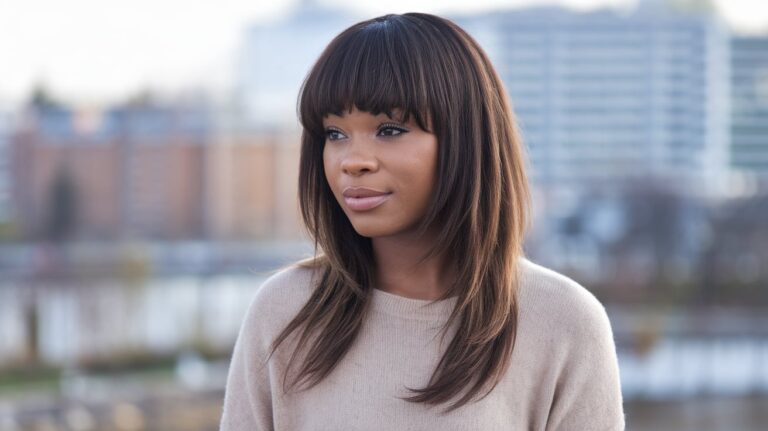
Mastering the styling techniques for your long layered cut with bangs transforms a beautiful haircut into a stunning everyday look. The right approach can mean the difference between spending an hour in front of the mirror and achieving gorgeous results in minutes.
Daily styling techniques
Your daily routine doesn’t need to be complicated to achieve professional-looking results. Start with damp, towel-dried hair and apply a lightweight leave-in conditioner from mid-length to ends, avoiding the roots and bang area. This provides protection and enhances the natural movement of your layers without weighing them down.
For your bangs, the technique varies based on their style. Full or blunt bangs benefit from blow-drying immediately while still quite damp, using a flat brush to direct them straight down, then finishing with a quick pass of a flat iron if needed. Side-swept and curtain bangs require a different approach – blow-dry them in the opposite direction first, then flip them into place for added volume and the perfect sweep.
The key to styling layers lies in sectioning. Work from the bottom layers up, using a round brush to create slight bends at the ends. This technique ensures each layer maintains its distinct shape rather than blending into one mass. Focus on the face-framing pieces last, as these are the most visible and benefit from extra attention.
Tools you’ll need for perfect results
A quality blow dryer with multiple heat settings and a cool shot button forms the foundation of your styling arsenal. The cool shot helps set your style and adds shine by closing the hair cuticle. A medium-sized round brush works wonders for creating movement in layers, while a smaller round brush or flat brush handles bangs more precisely.
Consider investing in a lightweight flat iron with rounded edges. This versatile tool not only smooths bangs but also adds subtle waves to layers when used with a twisting motion. Velcro rollers offer another option for adding volume to layers without direct heat, particularly useful for the crown area where many women want extra lift.
Products that enhance texture
The right products make styling easier and help your look last longer. A volumizing mousse applied to roots before blow-drying prevents layers from falling flat, especially important for those with fine hair. For bangs, a lightweight styling cream provides control without the stiffness that can make them look unnatural.
Dry texture spray becomes invaluable for adding definition to layers on second or third-day hair. A light misting throughout the lengths creates piece-y separation that enhances the layered effect. This product also helps refresh bangs between washes, absorbing excess oil while maintaining movement.
Here are essential products for different hair types and styling needs:
Fine Hair: Use volumizing powder at roots for instant lift without weight
Thick Hair: Apply smoothing serum to control frizz and enhance shine
Wavy Hair: Scrunch in curl-enhancing cream to define natural texture
Straight Hair: Mist with sea salt spray for added texture and grip
Quick morning routines
Not every morning allows for extensive styling. On rushed days, focus on your bangs first – they frame your face and have the most visual impact. A quick blast with the blow dryer and a swipe of the flat iron can refresh them in under two minutes. For the rest of your hair, a low ponytail or loose bun showcases your layers when pulled back, with face-framing pieces left out for softness.
Dry shampoo saves time while adding texture to both bangs and layers. Apply it before bed to allow full absorption, then simply tousle and style in the morning. This technique provides volume and extends the life of your style between washes.
Heat-free styling options
Preserving hair health means incorporating heat-free methods into your routine. Overnight styles work particularly well with layered cuts. Twist damp sections and secure with soft scrunchies for natural waves that enhance your layers’ movement. For bangs, use a silk headband while sleeping to keep them smooth and in place.
Braiding provides another heat-free option that works beautifully with layers. A loose braid created with slightly damp hair produces waves that follow your layer pattern when released. The shorter layers around your face naturally fall out of the braid, creating soft, face-framing pieces. Pin curls offer precision styling for bangs without heat damage – simply wrap damp bangs around your finger, secure with a bobby pin, and allow them to dry naturally or while you complete your morning routine.
Customizing Your Long Layered Cut for Your Hair Type
Your hair’s natural texture and density play crucial roles in determining how your long layered cut with bangs will look and behave. Understanding these factors helps you work with your stylist to create a customized approach that brings out your hair’s best qualities while minimizing daily styling challenges.
Fine hair considerations
Fine hair requires strategic layering to create volume without sacrificing the little density you have. The goal is adding movement and body while maintaining the illusion of fullness. Your stylist should focus on longer layers that start lower on your head, as short layers can make fine hair appear even thinner.
The placement of layers matters enormously for fine-haired women. Instead of layers throughout, concentrate them at the bottom third of your hair length. This approach maintains thickness through the top and middle sections while still providing movement at the ends. Avoid excessive thinning or razoring, as these techniques can make fine hair look stringy.
When it comes to bangs on fine hair, less is more. Opt for lighter, wispier bangs that won’t require sectioning away too much hair from the rest of your style. Side-swept or curtain bangs work particularly well because they can be created with a smaller section of hair while still providing face-framing benefits.
Product selection becomes critical with fine hair. Heavy creams and oils will weigh down your layers, destroying any volume your cut provides. Instead, reach for lightweight mousses, root-lifting sprays, and dry texturizing products that add grip without weight. Apply products sparingly, focusing on roots for volume and ends for definition.
Thick hair management
Thick hair benefits from layers that remove bulk while maintaining shape and style. Your stylist should use techniques like point-cutting and slide-cutting to create layers that reduce weight without creating a choppy appearance. The goal is achieving movement and manageability without sacrificing the luxurious appearance of abundant hair.
With thick hair, you can handle more dramatic layering throughout the length. Shorter layers starting around the crown area help remove weight from the top, preventing the triangle effect that often plagues thick-haired women. These shorter layers also add movement and prevent your hair from appearing like one solid mass.
Bangs on thick hair require careful consideration of density. Your stylist may need to create your bangs from a deeper section to achieve the desired coverage without overwhelming your face. Thinning techniques applied specifically to the bangs help them lie properly without appearing too heavy or helmet-like.
Wavy and curly hair approaches
Natural waves and curls add their own dimension to layered cuts, requiring specialized cutting techniques to enhance rather than fight your texture. The key lies in cutting hair when dry or only slightly damp, allowing your stylist to see how each curl falls naturally. This prevents the common problem of layers that look perfect when straight but become uneven when your natural texture emerges.
For wavy hair, layers should follow your wave pattern rather than disrupting it. Longer layers that start around the collarbone work well, as they allow waves to form naturally without creating excessive volume at shorter points. The weight of longer layers also helps elongate waves, preventing the pyramid shape that poorly cut wavy hair can develop.
Curly hair demands even more consideration. Each curl springs up differently when cut, so your stylist should cut each layer individually, watching how it bounces back. Avoid layers that are too short at the crown, as these can create unwanted volume and frizz. Instead, focus on longer layers that maintain the curl pattern while removing bulk.
Straight hair techniques
Straight hair shows every cut line, making precision essential. Layers in straight hair need to be perfectly balanced to avoid looking choppy or disconnected. Your stylist should use techniques that create soft, blended layers rather than harsh lines that will be visible in your sleek texture.
The advantage of straight hair is its versatility with different layer lengths and bang styles. You can achieve very precise, geometric looks that wouldn’t work as well with textured hair. Full, blunt bangs look particularly striking with straight hair, as do precise, graduated layers that create a waterfall effect.
Adding texture to straight hair through styling helps enhance your layers. Since straight hair doesn’t have natural movement, using tools and products to create subtle waves or bends at the ends of layers prevents them from looking flat. Even a slight bend created with a flat iron adds dimension and shows off the layered cut.
Color-treated hair care
Color treatment affects hair texture and health, requiring adjustments to both cutting and styling approaches. Bleached or heavily highlighted hair often becomes more porous and fragile, meaning your stylist should avoid aggressive thinning techniques that could cause breakage. Instead, focus on clean, blunt cuts for each layer that maintain hair integrity.
The combination of color and layers creates beautiful dimension, with highlights catching light at different points throughout the layered lengths. Work with your colorist to place highlights strategically within your layer pattern. Face-framing highlights in the shorter layers around your face brighten your complexion, while subtle lowlights in under-layers add depth.
Regular deep conditioning treatments become non-negotiable with color-treated layered hair. The varying lengths mean different exposure levels to styling tools and environmental damage. Use protein treatments monthly to maintain strength, alternating with moisture masks to keep hair soft and manageable. Purple shampoo for blondes or color-depositing conditioners for other shades help maintain vibrancy between salon visits, ensuring your layers always look their best.
Professional Tips for Maintaining Your Look
The longevity and beauty of your long layered haircut with bangs depend heavily on proper maintenance. Professional stylists know that a great cut is only the beginning – keeping it looking fresh requires ongoing attention and the right techniques.
Trimming schedules for layers and bangs
Your bangs and layers grow at the same rate, but they require different maintenance schedules due to their varying lengths and visibility. Bangs need attention every 3-4 weeks to maintain their shape and prevent them from obscuring your vision. This frequent timeline might seem demanding, but regular bang trims take only minutes and many salons offer complimentary or reduced-price bang maintenance between full appointments.
Layers throughout the rest of your hair need refreshing every 8-12 weeks, depending on your hair’s growth rate and how defined you prefer them to look. Fast-growing hair might need trimming every 8 weeks to maintain the shape, while slower-growing hair can stretch to 12 weeks. Watch for signs that your layers need attention: when the ends start looking thin and wispy, when your hair loses its shape, or when styling becomes noticeably more difficult.
The timing also depends on your hair goals. If you’re maintaining a specific length, stick to regular 8-week appointments to prevent having to cut off more length later. If you’re growing your hair longer, you can extend appointments to 10-12 weeks, asking your stylist to dust the ends and refresh only the face-framing layers.
At-home bang maintenance
Learning basic bang maintenance saves time and money between salon visits. The key is making small adjustments rather than attempting major changes. Invest in a pair of sharp hairdressing scissors – never use regular scissors, which can cause split ends and uneven cuts.
For straight-across bangs, the point-cutting technique works best. Hold the scissors vertically and make tiny snips into the ends rather than cutting straight across. This creates a softer edge and more forgiving grow-out. Start conservative – you can always cut more, but you can’t add length back.
Side-swept and curtain bangs require a different approach. Twist the bang section before cutting to create a natural angle. Cut less than you think you need, as these styles look best slightly longer. When in doubt, wait for your stylist. A slightly too-long bang can be styled and pinned, while a too-short bang requires weeks of growing out.
Preserving layer definition
Maintaining distinct layers requires both proper cutting and styling techniques. Between salon visits, certain practices help preserve the layered effect. Regular deep conditioning treatments keep ends healthy, preventing the thin, straggly appearance that makes layers look unkempt rather than intentional.
Sleeping habits affect layer preservation more than most people realize. Silk or satin pillowcases reduce friction that can cause tangles and disrupt your layer pattern. For longer hair, loosely braiding or securing hair in a high, loose bun prevents layers from tangling overnight.
Avoid over-brushing, which can blend layers together and eliminate their distinct shape. Instead, use your fingers or a wide-tooth comb to detangle, maintaining the separation between layer sections. When you do brush, work in sections, brushing each layer independently rather than pulling the brush through from root to tip.
Growing out phases
Sometimes you might want to grow out certain aspects of your cut while maintaining others. Growing out bangs while keeping layers requires strategic trimming. Ask your stylist to gradually blend the bangs into your face-framing layers rather than letting them grow without shaping. This prevents the awkward phase where bangs are too long to wear down but too short to tuck behind your ears.
If you’re growing out shorter layers while maintaining length, focus trims on the perimeter only. Your stylist can maintain the bottom length while allowing upper layers to catch up, eventually creating longer, more subtle layers. This process takes patience but results in a more cohesive look than simply abandoning all trimming.
Communication with your stylist becomes crucial during transition periods. Bring photos of your goal style and discuss realistic timelines. A good stylist will create a grow-out plan that maintains style at each phase rather than enduring months of awkward-looking hair.
Seasonal adjustments
Your hair’s needs change with the seasons, affecting how your layers behave and how often maintenance is required. Summer humidity can cause layers to lose definition, especially in naturally wavy or curly hair. Consider slightly shorter layers during humid months to prevent excessive volume and frizz. Anti-humidity products become essential for maintaining the sleek separation between layers.
Winter brings different challenges with dry indoor heating and static electricity. Layers can appear flat and lifeless or stand away from your head with static. During these months, focus on hydration with weekly deep conditioning treatments. Use leave-in conditioners and anti-static sprays to maintain smoothness and layer definition:
Spring: Schedule a refresh cut to remove winter damage and prepare for humidity
Summer: Increase washing frequency but use gentle, sulfate-free products
Fall: Deep condition weekly as hair transitions to drier air
Winter: Trim every 6-8 weeks to prevent split ends from dry conditions
Each season might also inspire different styling approaches for your layers and bangs. Summer calls for easy, air-dried styles that work with natural texture, while winter allows for more heat styling since you’re not fighting humidity. Adjust your product lineup seasonally too, switching from lightweight sprays in summer to richer creams in winter. These adjustments ensure your layered cut with bangs looks intentional and polished year-round.
Your Perfect Long Layered Look Awaits
Long layered haircuts with bangs offer the perfect solution for women wanting to refresh their style without sacrificing length. Through strategic cutting techniques and thoughtful styling approaches, this versatile combination enhances natural beauty while providing endless styling possibilities. Whether you choose romantic curtain bangs with flowing layers or bold baby bangs with textured lengths, the key lies in customizing the cut to suit your unique hair type, face shape, and lifestyle needs.
The journey to maintaining gorgeous long layers with bangs becomes simpler once you establish the right routine. Regular trims, appropriate products for your hair type, and seasonal adjustments keep your style looking salon-fresh between appointments. With the professional techniques and maintenance strategies outlined here, you’re equipped to make this timeless yet modern hairstyle work beautifully for you. Your transformation starts with that first salon consultation, where these insights help you communicate your vision and achieve the stunning results you deserve.
Frequently Asked Questions
Q: How often should I wash long layered hair with bangs to maintain the style?
A: Wash your hair 2-3 times per week to maintain optimal style and health. Bangs may need refreshing with dry shampoo between washes since they get oily faster from forehead contact. This schedule preserves natural oils that keep layers defined and manageable.
Q: Will layers make my already thin hair look thinner?
A: Properly placed layers actually create the illusion of fuller hair when done correctly. The key is working with an experienced stylist who understands how to add movement without removing too much density. Longer layers starting lower on the head work best for thin hair.
Q: Can I still put my hair in a ponytail with layers and bangs?
A: Yes, layered hair creates beautiful ponytails with natural texture and movement. The shorter layers around your face add softness when pulled back, while bangs can be incorporated into the ponytail or left out for face-framing effect.
Q: What’s the minimum hair length needed for long layers with bangs?
A: Hair should typically reach at least mid-back length to achieve true long layers with noticeable movement. Shorter than this, you’re looking at medium-length layers. The bangs can be added at any length, as they’re cut from a separate section.
Q: How do I know if my face shape suits bangs with long layers?
A: Every face shape can wear some type of bang style with layers. Oval faces suit any bang type, round faces look best with side-swept styles, square faces benefit from soft, wispy bangs, and heart-shaped faces shine with curtain bangs. Consult with your stylist for personalized recommendations.
Q: Will having layers damage my hair over time?
A: Layers themselves don’t damage hair when cut properly with sharp scissors. Damage comes from excessive heat styling, chemical processing, or poor maintenance. Regular trims and proper care keep layered hair healthy and prevent split ends from traveling up the hair shaft.
Q: Can I cut my own layers or should I always go to a salon?
A: Always visit a professional for cutting layers, as the technique requires training and proper angles that are nearly impossible to achieve on yourself. You can learn basic bang maintenance at home, but leave layer cutting and shaping to experienced stylists.
Q: What’s the difference between regular layers and long layers?
A: Long layers have more subtle graduation between lengths, creating gentle movement without dramatic steps. Regular layers can be shorter and more defined with obvious length differences. Long layers maintain more weight and length while still providing movement and dimension.

