

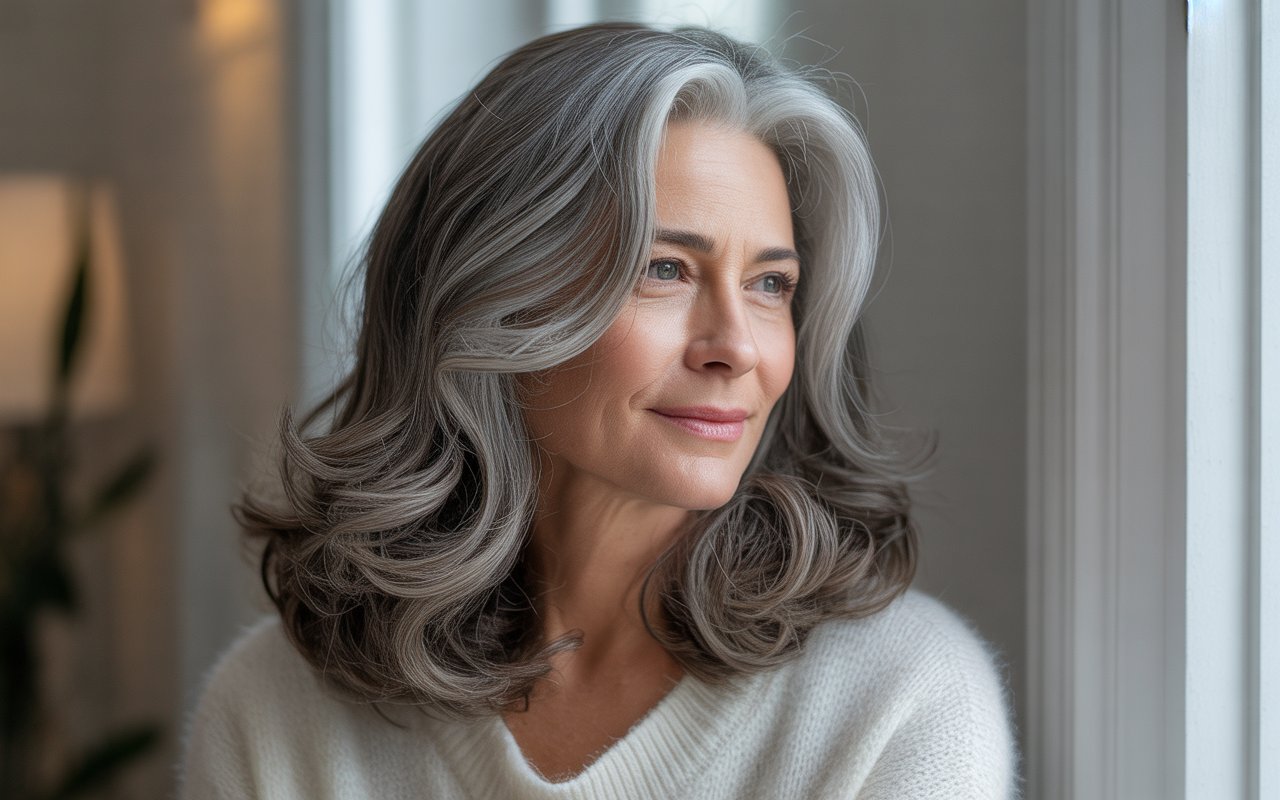
Gray hair appears differently for every woman. Some see their first silver strands in their twenties, while others maintain their natural color well into their fifties. The change happens gradually, creating a mix of gray and pigmented hair that can feel awkward during the in-between phase. Many women want to transition gracefully without the harsh line that comes from letting dye grow out completely.
Blending techniques help soften the contrast between gray and colored hair. These methods work by adding dimension, creating a gradual shift rather than an obvious demarcation line. You can choose temporary solutions that wash out after a few weeks or semi-permanent options that last several months. The right approach depends on your current hair color, how much gray you have, and how quickly you want to complete the process.
Here’s 10 effective techniques that hairstylists use to help women blend their emerging silver strands. Each method offers different benefits, from subtle changes that take months to complete to more dramatic transformations that speed up the process. Here’s what works best for creating a smooth, natural-looking transition that lets you grow out your gray hair with confidence.
- Highlights or Lowlights to Soften the Line
- Babylights for Subtle Blending
- Balayage Technique for Natural Transition
- Root Smudging or Shadow Root
- Silver or Gray Toner Application
- Reverse Highlights (Adding Darker Tones)
- Strategic Haircut with Layers
- Gradual Color Reduction Method
- Temporary Gray Blending Products
- Full Foil Highlights for Maximum Coverage
- Your Path to Beautiful Silver Hair
- Frequently Asked Questions
Highlights or Lowlights to Soften the Line
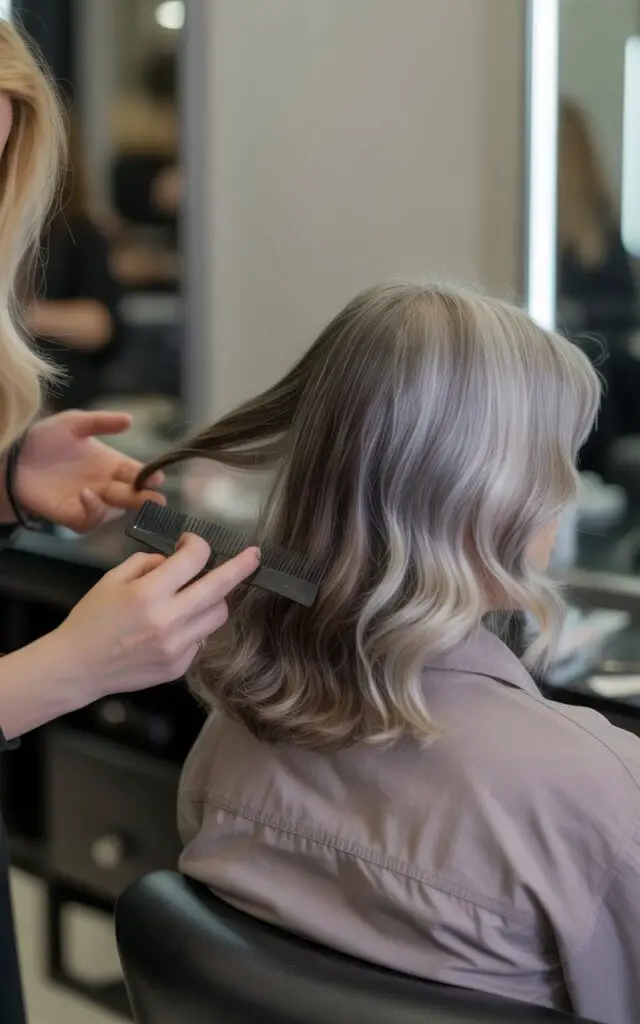
Adding highlights creates lighter pieces throughout your hair that mimic the appearance of natural gray. This technique works particularly well if you have darker hair with scattered silver strands appearing. Your stylist will select thin sections and lighten them to a shade close to your natural gray, creating a blended effect.
How This Method Works
The placement of highlights matters just as much as the color itself. Your stylist should focus on areas where gray naturally appears first, like around your hairline and temples. The lightened sections break up the solid color, making new growth less noticeable as it comes in.
Lowlights serve the opposite purpose. If you already have significant gray coverage and want to add depth, darker tones woven throughout can create dimension. This approach helps if your hair looks flat or one-dimensional after years of coloring.
Maintenance Requirements
You’ll need touch-ups every 8 to 12 weeks as your hair grows. The frequency depends on how fast your hair grows and how much contrast exists between your base color and the added tones. Some women space out appointments longer as more gray comes in, gradually reducing the number of highlights until they’re ready to go fully silver.
Babylights for Subtle Blending
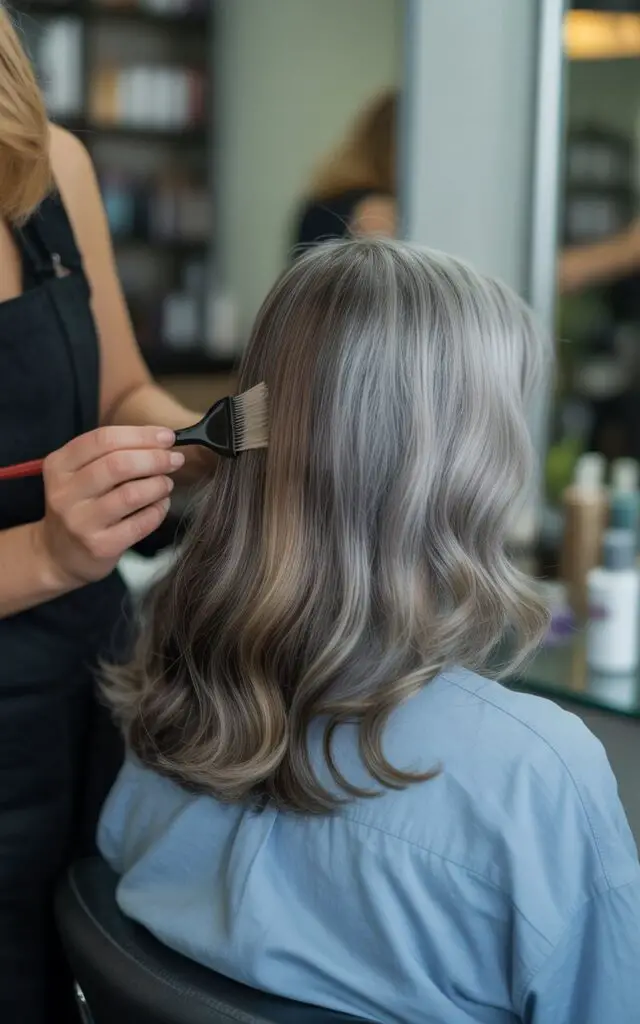
Babylights are extremely fine highlights that create a soft, sun-kissed appearance. Think of the delicate color variations you see in children’s hair. This technique uses ultra-thin sections, sometimes just a few strands at a time, placed strategically throughout your hair.
The application takes longer than traditional highlights because the sections are so small. Your stylist will paint or weave tiny pieces, focusing on the surface layers where light naturally hits. The result is a multidimensional look that makes gray strands blend seamlessly with your existing color.
This method works best if you want minimal maintenance and a gradual shift. The fine placement means regrowth appears softer and less obvious. You can stretch appointments to 12 to 16 weeks without a harsh line appearing at your roots.
Balayage Technique for Natural Transition
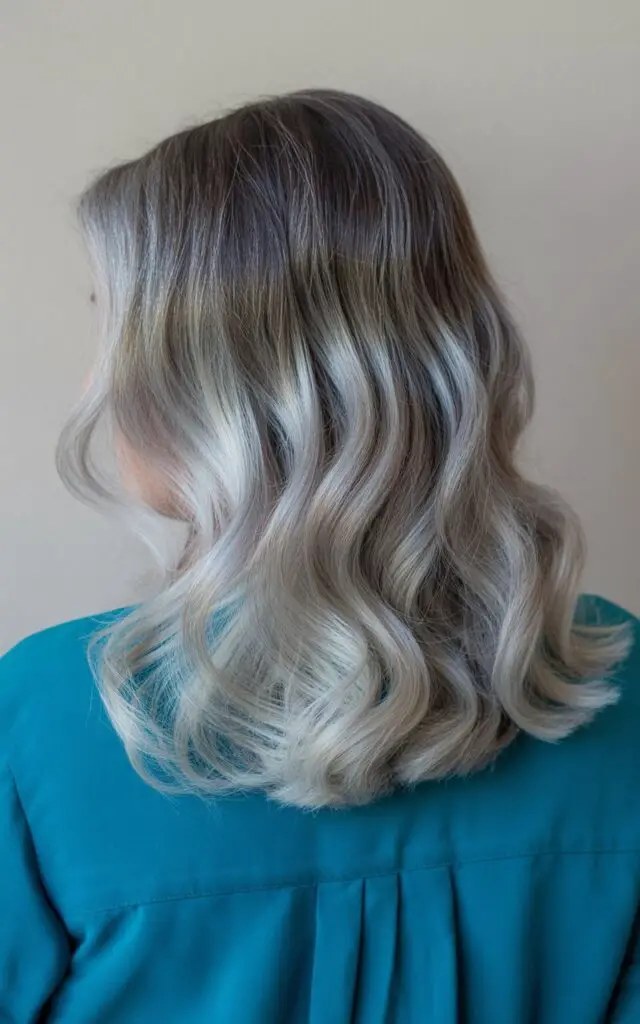
Balayage involves hand-painting color onto your hair rather than using foils. Your stylist will sweep lighter tones through sections, creating a graduated effect that’s darker at the roots and lighter at the ends. This freehand approach allows for customized placement based on where your gray appears.
Why Choose This Approach
The painted application creates soft, natural-looking dimension without harsh lines. As your roots grow out, they blend into the lightened sections rather than creating an obvious stripe. This makes it perfect for women who don’t want frequent salon visits.
Your stylist can adjust the placement each time you visit, gradually increasing the amount of lighter tones. Over several sessions, you’ll transition from your current color to a silver palette without any abrupt changes. The process typically takes 6 to 18 months depending on your starting point and desired end result.
Root Smudging or Shadow Root
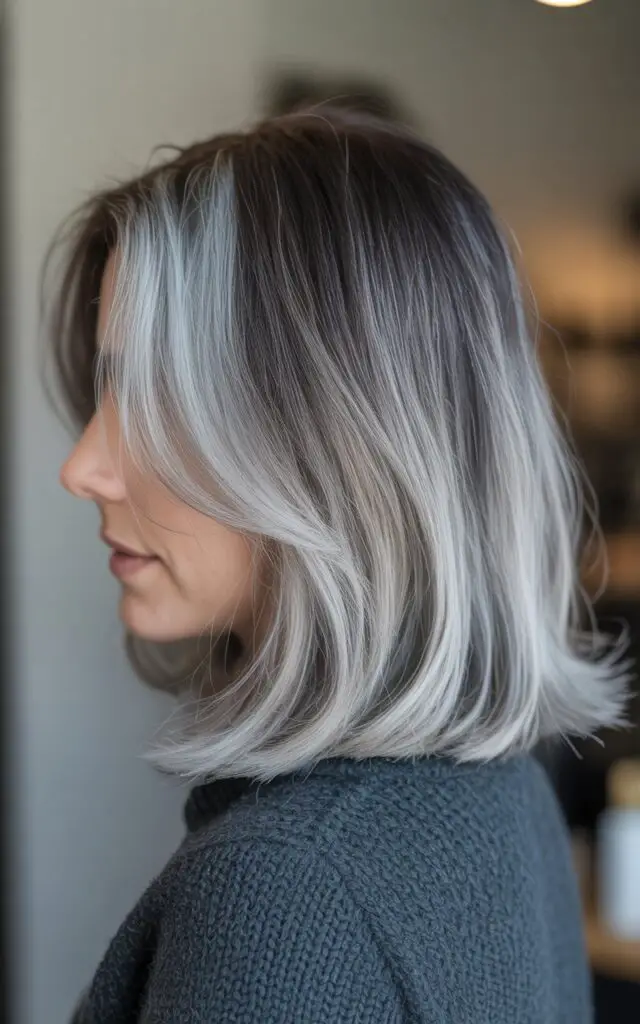
Root smudging blends your natural gray roots with the rest of your colored hair. Your stylist applies a semi-permanent color at your roots that’s slightly darker than your lengths, creating a gradual fade. This technique is often combined with highlights or balayage for maximum blending.
The darker root creates depth and makes regrowth less noticeable. Instead of a harsh line where your gray meets colored hair, you’ll see a soft transition. This is particularly helpful during the early stages of growing out color.
Application Process
Your stylist will apply the smudging color to about one to two inches of your roots, then blend it down into your existing color. The formula used is typically one or two shades darker than your mid-lengths, creating a shadow effect. As your gray grows in, it blends with this darker base rather than creating contrast against lighter hair.
Treatment frequency varies based on your hair growth rate. Most women schedule appointments every 6 to 10 weeks. Some choose to let the smudged area grow out completely as they get closer to their goal of full gray coverage.
Silver or Gray Toner Application
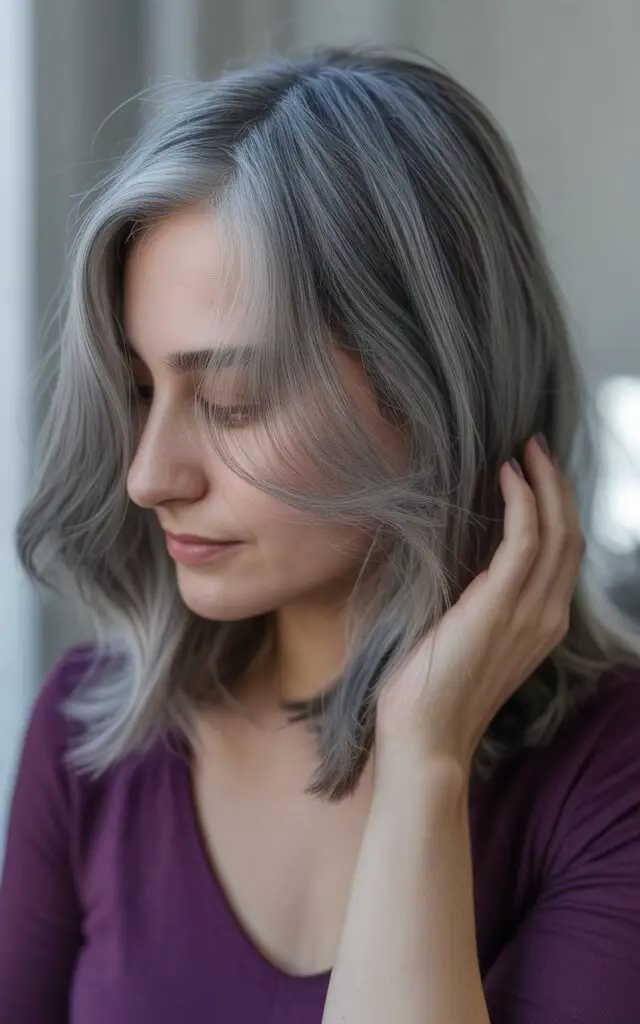
Toners deposit color without lifting or lightening your hair. A silver or gray toner can be applied over pre-lightened sections to match your natural gray more closely. This helps if your emerging silver has a yellow or brassy tone that doesn’t match the rest of your hair.
The process involves lightening sections first, then applying a cool-toned toner to neutralize warmth. Your stylist will choose a shade that complements your natural gray, creating uniformity across all your hair. Some toners are purple-based to cancel yellow, while others are blue-based to combat orange tones.
Expected Results and Upkeep
Toners are semi-permanent and fade with each wash. You’ll need to refresh the color every 4 to 6 weeks to maintain the cool, silvery tone. Many women use purple shampoo at home between appointments to extend the life of their toner and keep brassiness at bay.
This technique works best if you’re committed to regular maintenance. The toner keeps your color looking fresh and intentional rather than grown-out and neglected. As more natural gray comes in, you may need less toner since your own hair provides the silver color you want.
Reverse Highlights (Adding Darker Tones)
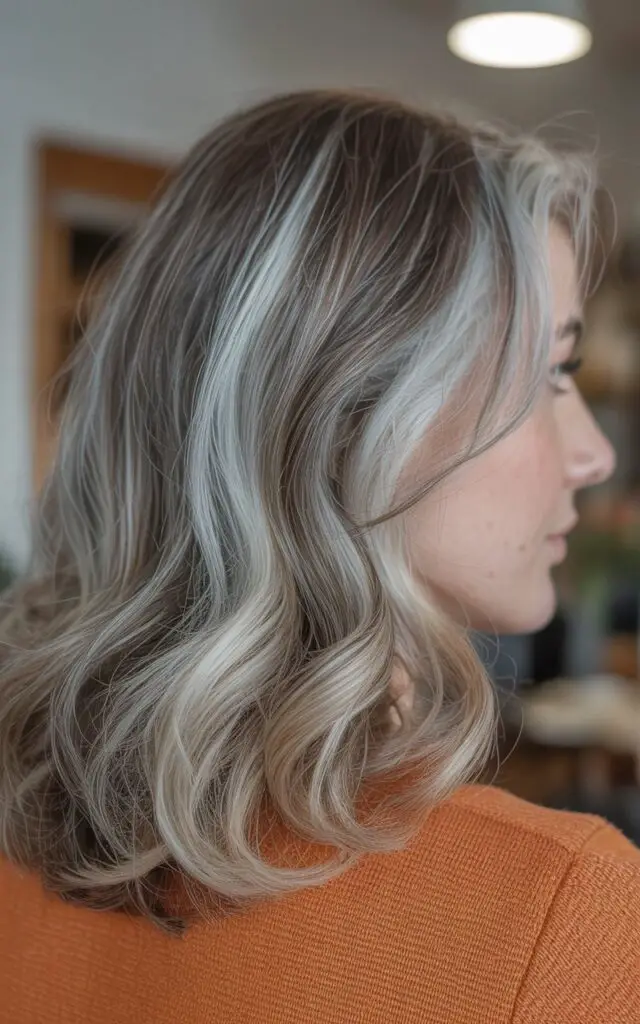
If you’ve been highlighting your hair for years and now want to transition to gray, reverse highlights can help. This technique adds darker pieces back into overly light hair, creating more dimension and making regrowth blend better.
Your stylist will select sections and apply a darker color, usually one to two shades deeper than your current base. The placement should mimic natural depth and shadow, focusing on areas that would naturally be darker. This breaks up an overly blonde or light appearance that makes incoming gray stand out.
The darker pieces create a pattern that your eye follows, making roots less obvious as they grow. You’ll see variation in tone rather than a solid block of color meeting your natural gray. This method is particularly useful if you have a significant amount of gray coming in and need to bridge the gap between very light hair and silver roots.
Strategic Haircut with Layers
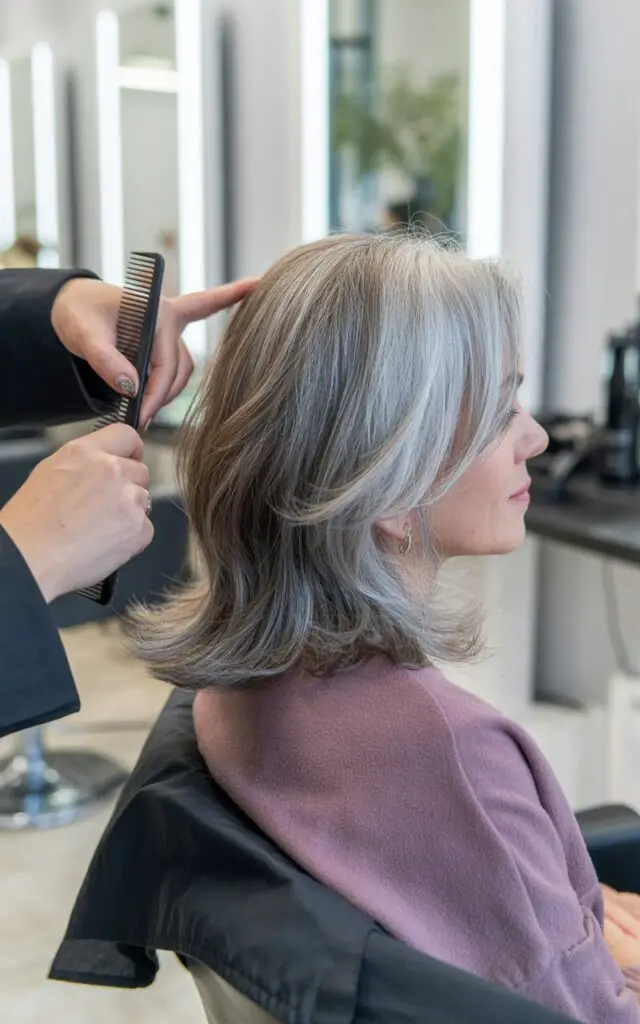
Sometimes the best blending tool isn’t color at all. A well-placed haircut can disguise the transition line and make your hair look intentional during the grow-out phase. Layers create movement and texture that breaks up solid color blocks.
How Layers Help the Process
Shorter layers near your face will grow out faster, showing more gray sooner. Longer layers underneath might still have color, creating natural variation. This staggered approach means you won’t have one harsh line across your entire head.
Your stylist can also remove length strategically, cutting away the most heavily colored sections over time. Each haircut removes a few inches of processed hair, bringing you closer to your natural color without doing anything drastic. Combined with a coloring technique, this accelerates your timeline significantly.
Ask for face-framing layers and texture throughout. Avoid blunt, one-length cuts during this phase, as they emphasize the line between colored and natural hair. The goal is movement and dimension that draws the eye away from any obvious demarcation.
Gradual Color Reduction Method
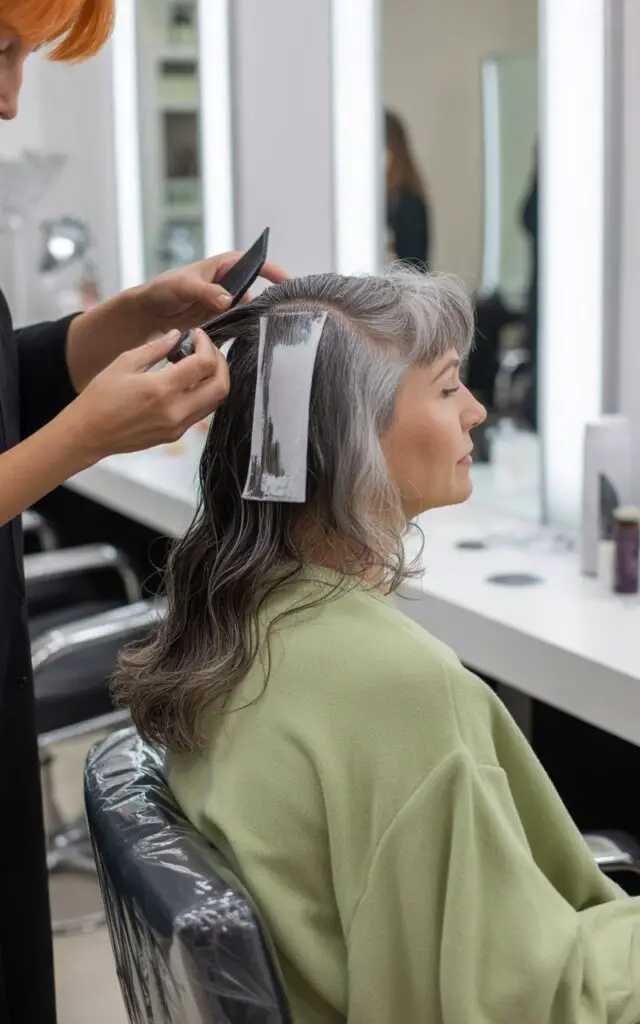
This approach involves slowly reducing the amount of color applied with each salon visit. Your stylist will use a lighter formula or apply color to fewer sections, allowing more of your natural gray to show through over time. The process is gentle and gives you control over the pace.
During your first appointment, you might receive full coverage with a lighter shade. The next visit might involve partial coverage, leaving some gray exposed. By your third or fourth appointment, you could be down to just a few highlights or toner application. Eventually, you’ll stop coloring entirely.
Timeline and Expectations
The gradual reduction method typically takes 12 to 24 months to complete. This extended timeline lets you adjust mentally and emotionally to your changing appearance. It also gives your hair time to recover from years of chemical processing.
You’ll maintain some color throughout the process, which means less shock when you look in the mirror. Friends and colleagues will notice a subtle change over time rather than a dramatic transformation. This makes the method popular among women who want a gentle, almost imperceptible shift to their natural gray.
Temporary Gray Blending Products
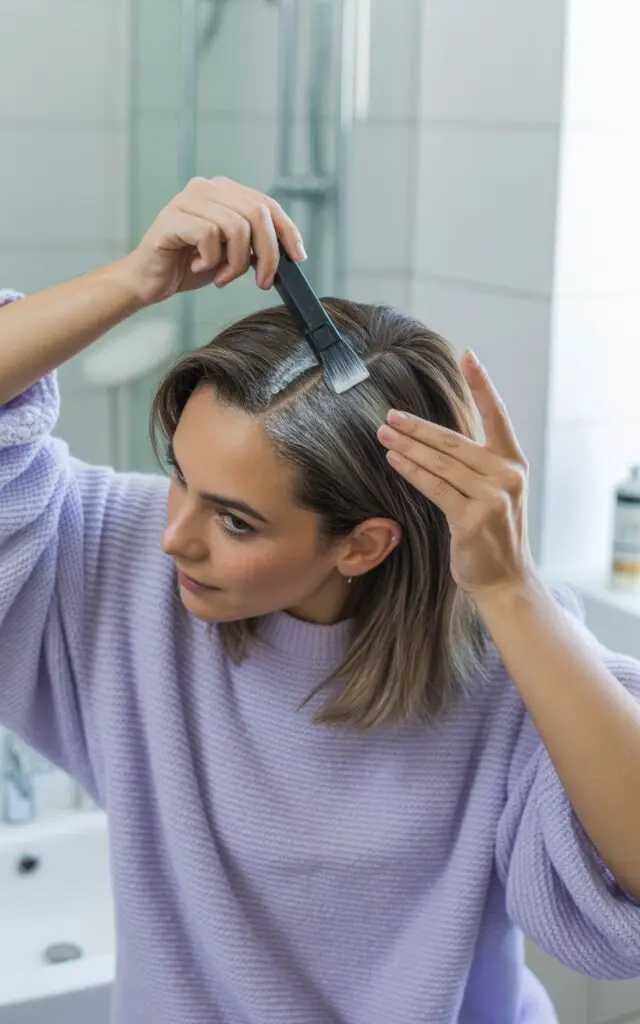
Between salon visits, temporary products can help disguise regrowth and blend your gray. These include root touch-up sprays, color-depositing shampoos, and temporary color sticks. They wash out with your next shampoo, giving you flexibility without commitment.
Root sprays cover small areas of gray along your part or hairline. You simply spray the product onto dry hair, let it dry, and style as usual. The color washes out completely, making it perfect for extending time between appointments.
Color-depositing products work differently. These shampoos, conditioners, or masks contain pigment that gradually builds up on your hair with each use. You can find them in silver, gray, or your current hair color. They help maintain tone and blend different shades together:
Silver Shampoo: Deposits cool tones to match natural gray and prevent yellowing.
Color-Match Products: Add pigment that matches your current color to cover emerging roots.
Gray-Enhancing Formulas: Boost your natural silver while neutralizing unwanted warmth.
These products won’t replace professional coloring, but they help manage your appearance between appointments. They’re particularly useful during the awkward middle phase of growing out color.
Full Foil Highlights for Maximum Coverage
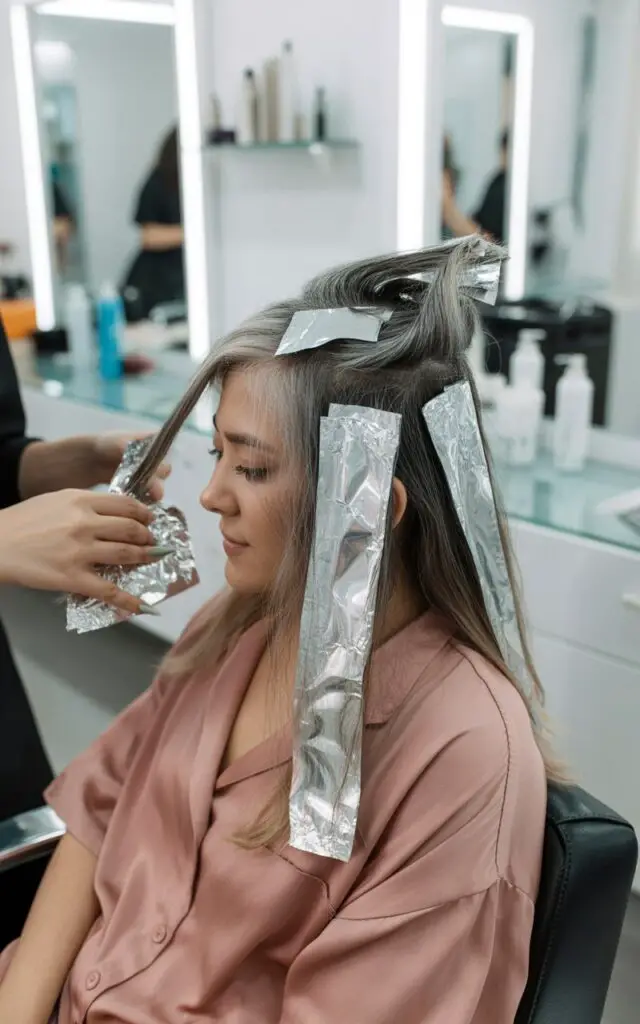
Full foil highlights involve lightening many sections throughout your entire head. This creates the most dramatic blending effect and can speed up your timeline significantly. Your stylist will weave or slice sections from roots to ends, applying lightener to lift your hair several shades.
This method works well if you want to transition quickly or have very dark hair with emerging gray. The highlights bring your overall color closer to silver, making regrowth blend seamlessly as it comes in. You’ll see immediate results rather than waiting months for gradual changes.
Commitment Level Required
Full foils require several hours in the salon and typically cost more than partial highlights or other techniques. You’ll need touch-ups every 8 to 12 weeks to maintain the look, though some women space appointments further apart as more gray appears.
The intensive lightening can be hard on your hair, especially if you’ve been coloring for years. Your stylist should use a bond-building treatment during the process to minimize damage. Deep conditioning at home becomes essential to keep your hair healthy during this aggressive approach.
Despite the commitment, many women choose this method because it creates a cohesive look quickly. Within three to four appointments, you can be fully transitioned to a silver palette that matches your natural gray perfectly.
Your Path to Beautiful Silver Hair
Growing out gray hair doesn’t mean accepting an awkward, unflattering phase. The techniques covered here give you options for every budget, timeline, and hair type. You can choose a slow, gentle approach that takes two years or an aggressive method that gets you to silver in six months.
The right choice depends on your lifestyle and preferences. Consider how often you want to visit the salon, how much you want to spend, and how comfortable you feel with visible roots. Many women combine multiple techniques, starting with highlights and adding toner as more gray appears. Working with a skilled colorist who understands your goals makes all the difference in achieving the smooth, intentional look you want.
Frequently Asked Questions
Q: How long does it take to fully transition to gray hair?
A: The timeline varies from 6 months to 2 years depending on your hair length, current color, and chosen method. Women with short hair who use aggressive highlighting techniques can transition in 6 to 9 months. Those with long hair using gradual methods may need 18 to 24 months. Your starting color also matters—very dark or heavily colored hair takes longer to blend than lighter shades.
Q: Will blending techniques damage my hair?
A: Lightening processes can cause some damage, especially if done frequently or on already-processed hair. Using bond-building treatments during color application helps minimize damage. Deep conditioning treatments at home and limiting heat styling protect your hair during the process. Gentler methods like babylights or root smudging cause less stress than full foil highlights.
Q: Can I blend gray hair at home or do I need a professional?
A: While temporary products like root sprays work well at home, permanent blending techniques require professional application. Highlights, balayage, and toning need precise placement and color formulation to look natural. A stylist can assess your hair’s condition and choose methods that won’t cause excessive damage. DIY attempts often result in uneven color or unwanted tones that cost more to fix professionally.
Q: How much does professional gray blending cost?
A: Prices range from $75 to $300 per appointment depending on your location, salon, and technique chosen. Full foil highlights typically cost more than partial highlights or root smudging. Most women spend between $100 and $200 per visit. Budget for appointments every 8 to 12 weeks during active transition, with costs decreasing as you near full gray coverage.
Q: What if my natural gray has yellow or brassy tones?
A: Yellow or warm-toned gray is common and easily corrected with toner. Purple or blue-based toners neutralize warmth, creating a cooler silver appearance. Purple shampoo used weekly at home helps maintain cool tones between salon visits. Your colorist can adjust toner formulas to match your desired shade, whether you want bright silver or a softer, warmer gray.
Q: Should I cut my hair short to speed up the process?
A: Cutting your hair removes colored ends faster, but it’s not necessary. A strategic haircut with layers helps blend the transition without requiring a dramatic length change. Some women gradually trim their hair shorter over several appointments, removing processed sections bit by bit. Others keep their length and use coloring techniques to blend. The choice depends on your attachment to your current length.
Q: Can I still use heat styling tools during the process?
A: Yes, but with precautions. Always use a heat protectant spray before blow drying, flat ironing, or curling. Keep temperatures below 350°F to prevent further damage to chemically treated hair. Air drying when possible reduces stress on your hair. Consider incorporating heat-free styling methods like braiding for waves or using foam rollers for volume.
Q: Will my gray hair look different than the gray that’s growing in?
A: Professionally toned or highlighted hair is designed to match your natural gray as closely as possible. Your colorist will assess your emerging gray and choose formulas that complement it. Minor variations in tone are normal and actually create dimension. As more natural gray grows in, you may need less toner to maintain a cohesive look.

