

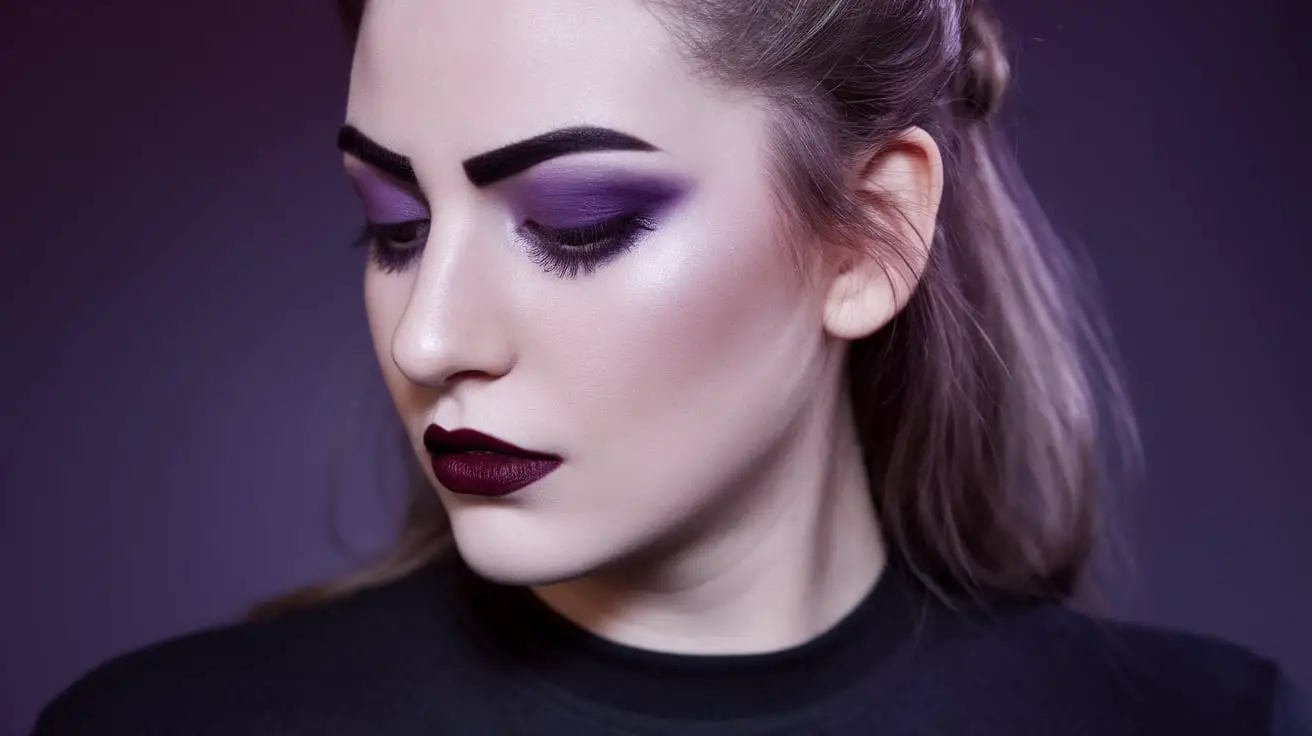
Gothic makeup has evolved far beyond its underground roots to become a sophisticated art form that celebrates individuality while highlighting your best features. This dramatic style doesn’t mask your natural beauty – instead, it uses contrast, depth, and precision to draw attention to your eyes, lips, and bone structure in ways that subtle makeup simply cannot achieve. Whether you’re drawn to the aesthetic for its artistic expression or its bold confidence, goth makeup offers endless possibilities for enhancing what nature gave you.
The beauty of gothic makeup lies in its versatility and adaptability to different face shapes, skin tones, and personal styles. While the classic elements remain consistent – pale skin, dark eyes, and often dramatic lips – the application techniques can be tailored to accentuate your unique features. From soft romantic goth looks that whisper mystery to sharp, geometric styles that command attention, each approach serves to amplify rather than hide your natural attributes.
In the following sections, we’ll walk through five timeless goth makeup looks that have stood the test of fashion trends. Each style focuses on different aspects of your face, teaching you techniques to create depth, definition, and drama while maintaining balance and wearability. Ready to discover how dark beauty can illuminate your best features? Let’s begin this transformation journey.
- The Smoky Eye: Dark Drama That Opens Your Gaze
- Porcelain Perfection: Creating Flawless Pale Skin
- Blood-Red Lips: Making Your Mouth the Focal Point
- Graphic Liner: Sharp Lines That Define Your Eyes
- The Complete Look: Bringing All Elements Together
- Finding Your Gothic Beauty Balance
- Frequently Asked Questions
The Smoky Eye: Dark Drama That Opens Your Gaze

The gothic smoky eye transforms ordinary eyes into mesmerizing focal points through strategic use of shadow and light. Unlike traditional smoky eyes that rely on browns and grays, the goth version incorporates true blacks, deep purples, and rich burgundies to create an otherworldly effect that actually makes eyes appear larger and more defined.
Choosing the right shades for your eye color
Your natural eye color determines which dark shades will create the most striking contrast. Blue eyes pop against warm-toned blacks with hints of brown or burgundy undertones. These colors create a complementary contrast that intensifies the coolness of blue irises. For green eyes, deep purples and plums work magic, bringing out golden flecks you might not have noticed before. Brown eyes have the most flexibility – pure blacks, charcoals, and even deep navy shades all work beautifully to add depth and dimension.
The key lies in understanding that not all black eyeshadows are created equal. Some lean cool with blue undertones, while others contain hidden warmth from brown or red pigments. Testing different blacks against your skin and eye color reveals which formulation makes your eyes truly stand out. Many people discover that a slightly warmer black creates more depth than a flat, pure black shade.
Blending techniques for depth
Creating a gothic smoky eye requires patience and the right tools. Start with a primer to ensure your carefully crafted look stays put throughout the day or night. The classic technique begins with a medium-toned shadow placed in the crease – this acts as your transition shade between the dark drama and your skin tone.
Building intensity gradually prevents the harsh, unblended look that screams amateur application. Work your darkest shade from the lash line upward, using small circular motions with a dense brush. The goal is seamless graduation from intense black at the lash line to softer grays or purples as you move toward the brow bone.
Professional makeup artists recommend working with your eyes open periodically during application. This technique ensures the shadow placement flatters your specific eye shape when your eyes are in their natural position. Hooded eyes benefit from bringing color slightly above the natural crease, while deep-set eyes need lighter shades on the lid to bring them forward.
Adding metallic accents
Gothic makeup doesn’t mean abandoning all shimmer and shine. Strategic placement of metallic shades adds dimension and prevents the look from falling flat. Silver, pewter, or gunmetal shades pressed onto the center of the lid create an eye-opening effect. This technique, borrowed from editorial makeup, draws light to the center of the eye while maintaining the dark, mysterious frame.
Consider these metallic placement options:
- Inner Corner Highlight: A touch of silver or pale gold brightens and opens the eye
- Lower Lash Line: Metallic liner along the lower lashes adds unexpected interest
- Center Lid: Creates dimension and prevents flatness in matte looks
- Brow Bone: Subtle shimmer here lifts the entire eye area
The amount of metallic product matters as much as placement. Too much shimmer overwhelms the gothic aesthetic, while too little fails to add the desired dimension. Finding your perfect balance might take experimentation, but the impact on your overall look makes it worthwhile.
Day versus night intensity
Gothic makeup adapts beautifully from subtle daytime appropriate looks to full theatrical evening drama. Daytime gothic eyes might feature a thin line of black liner with soft gray shadow swept across the lid – enough to maintain the aesthetic without overwhelming professional settings. The focus shifts to precision rather than intensity, with perfectly blended edges and subtle depth.
Evening looks give you permission to push boundaries. Layer multiple shadow shades, add glitter accents, or incorporate colored liners for extra impact. The transition from day to night can happen quickly by deepening existing shadow, adding a wing to your liner, or pressing glitter onto the center of your lid. This versatility makes gothic eye makeup practical for those who want to maintain their aesthetic throughout various daily activities.
The smoky eye technique also works beautifully with glasses. Those who wear frames can actually go darker and more dramatic, as lenses tend to minimize makeup’s impact. Extending shadow slightly beyond the outer corner ensures the look remains visible and impactful even behind frames. Consider your frame color when selecting shadow shades – black frames pair naturally with cool-toned shadows, while tortoiseshell or brown frames complement warmer blacks and burgundies.
Porcelain Perfection: Creating Flawless Pale Skin
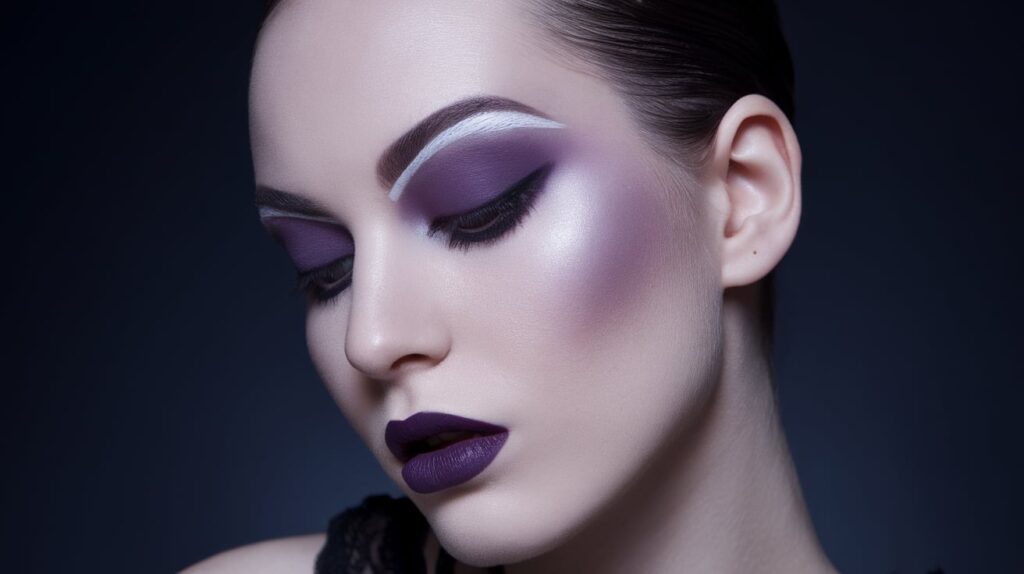
The foundation of any gothic look starts with skin that appears almost ethereal in its paleness and perfection. This distinctive complexion serves as the canvas for all other dramatic elements, creating contrast that makes dark eyes and lips truly pop. Achieving this porcelain finish requires more than simply choosing a light foundation – it demands understanding your undertones, mastering application techniques, and maintaining healthy skin beneath the makeup.
Foundation selection and application
Finding your perfect shade means looking beyond the lightest option on the shelf. Undertones play a crucial role in creating that coveted porcelain finish. Pink undertones suit those with naturally cool complexions, while yellow undertones work for warmer skin. Neutral undertones offer the most flexibility, allowing you to choose based on the overall look you want to achieve.
The application method impacts the final result as much as the product itself. Stippling motions with a damp beauty sponge creates the most natural finish, pressing product into skin rather than dragging it across the surface. This technique prevents streaking and ensures even coverage without disturbing any skincare products underneath. Work in thin layers, building coverage only where needed rather than applying a thick mask across your entire face.
Many gothic beauty enthusiasts mix foundations to achieve their ideal shade and finish. Combining a full-coverage formula with a luminous one creates customizable coverage that photographs beautifully while still looking skin-like in person. Adding a drop of facial oil to your foundation prevents the flat, lifeless appearance that sometimes accompanies very pale makeup. This technique maintains the gothic aesthetic while ensuring skin looks healthy and dimensional.
Contouring for your face shape
Gothic contouring differs from mainstream techniques by emphasizing shadow and structure rather than warmth. Cool-toned contour products create realistic shadows that enhance your bone structure without adding sunkissed warmth that would contradict the pale aesthetic. Taupe, gray-brown, and even purple-toned contour shades work beautifully for this purpose.
Face shape determines optimal contour placement. Round faces benefit from shadow along the temples and below the cheekbones to create angular definition. Square faces need softening at the jaw corners while maintaining the strong bone structure that complements gothic aesthetics. Heart-shaped faces require minimal contouring, perhaps just a touch beneath the cheekbones to enhance their naturally dramatic shape.
The application technique for gothic contouring favors precision over blending into oblivion. While you want seamless edges, maintaining visible shadow creates the dramatic effect that defines this makeup style. Use a small, angled brush to place product exactly where natural shadows fall, then blend edges while preserving the intensity at the deepest point of each shadow.
Setting powders that last
A porcelain complexion requires serious staying power, especially when paired with dramatic eye and lip looks. Translucent setting powders designed for fair skin prevent the white cast that many universal powders create on pale foundation. Look for finely milled formulas that set makeup without adding texture or emphasizing pores.
The powder application method affects both longevity and finish. Pressing powder into skin with a velour puff locks foundation in place for hours. Focus on areas prone to creasing or oil breakthrough – typically the T-zone and around the nose. A light dusting with a fluffy brush over the rest of the face maintains a skin-like finish while ensuring your carefully crafted base stays put.
Some areas benefit from targeted setting techniques. Under-eye concealer requires gentle pressing motions with a small sponge to prevent creasing without disturbing the coverage. The chin and around the mouth need extra attention if you plan to wear bold lip colors, as these areas experience the most movement throughout the day. Setting spray applied after powder adds an extra layer of protection while melting powder into skin for a seamless finish.
Maintaining skin health underneath
Beautiful gothic makeup starts with healthy skin. The pale aesthetic can emphasize texture, dry patches, or blemishes, making skincare especially important. A consistent routine focusing on hydration and gentle exfoliation creates the smooth canvas that makes porcelain makeup look its best.
Daily sunscreen becomes even more critical when maintaining very pale skin. Physical sunscreens with zinc oxide or titanium dioxide offer protection without the chemical filters that can irritate sensitive skin. Many gothic beauty enthusiasts find that mineral sunscreens actually enhance their pale aesthetic, adding a subtle luminosity that works beautifully under foundation.
Hydration makes the difference between makeup that sits beautifully on skin versus makeup that emphasizes every dry patch and line. Layering lightweight hydrating products – essence, serum, moisturizer – creates a plump base that helps makeup apply smoothly. Pay special attention to areas where makeup tends to settle into lines, applying extra hydration to these zones before foundation application.
Weekly treatments keep skin in optimal condition for regular makeup wear. Gentle chemical exfoliants remove dead skin cells without the harsh scrubbing that can irritate and inflame. Clay masks help manage oil production in those who struggle with breakthrough shine beneath their porcelain base. Sheet masks provide intensive hydration before special events when you need your makeup to look especially flawless.
Blood-Red Lips: Making Your Mouth the Focal Point
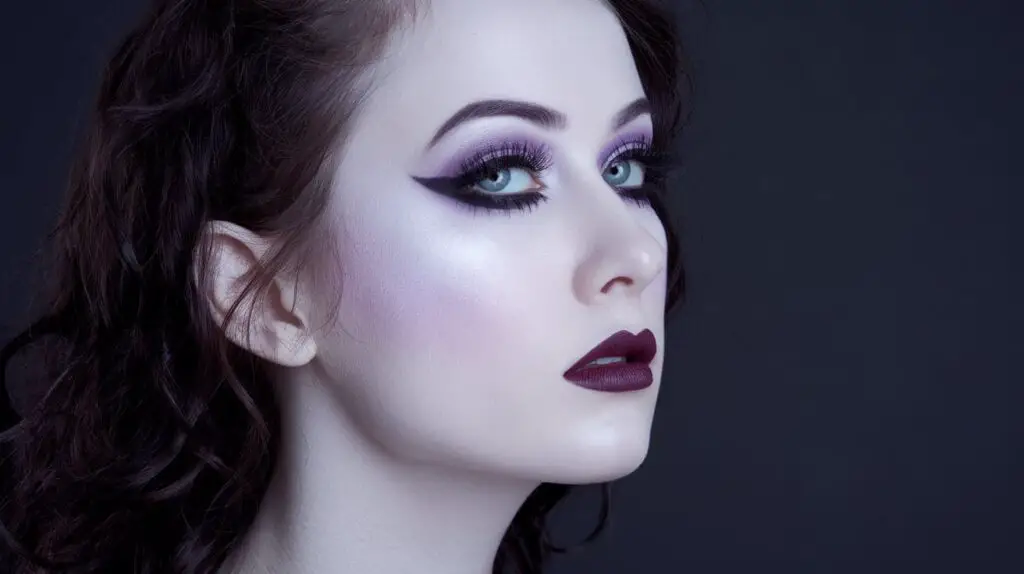
Gothic red lips command attention unlike any other makeup element, transforming the mouth into a powerful focal point that balances pale skin and dark eyes. This classic element of gothic beauty goes beyond simply applying red lipstick – it requires understanding color theory, mastering application techniques, and creating perfect symmetry that photographs beautifully and lasts through your daily activities.
The psychology behind red lips in gothic makeup differs from traditional beauty approaches. While mainstream makeup often uses red lips for romance or glamour, gothic style employs them as a symbol of power, passion, and otherworldly beauty. This shift in intention affects everything from color selection to application style, creating looks that feel deliberately dramatic rather than conventionally pretty.
Finding your perfect shade of red
Not all reds work equally well within gothic aesthetics. The ideal shade depends on your skin’s undertones and the overall mood you want to create. Blue-based reds create the most dramatic contrast against pale skin, delivering that classic vampire-inspired look. These cool reds include burgundy, wine, and true crimson shades that pop against porcelain complexions.
Warmer personalities might prefer orange-based reds that still fit the gothic aesthetic when chosen carefully. Deep brick reds and rusty burgundies offer an unexpected twist on traditional goth makeup while maintaining sufficient drama. These shades work particularly well for daytime gothic looks or when you want a slightly softer approach to the style.
Testing lipstick shades requires patience and proper lighting. Natural daylight reveals the true color and undertones better than store lighting. Apply the shade to your full lips rather than just swatching on your hand – the natural pigmentation of your lips affects how colors appear. Many people discover their perfect gothic red is actually darker or cooler than they initially imagined.
Lip liner techniques for definition
Precise lip liner application separates amateur gothic makeup from professional-looking results. The goal extends beyond preventing feathering – liner reshapes, defines, and perfects your lip shape to create maximum impact. Choose a liner that matches your lipstick exactly or goes slightly darker for added dimension.
Starting at the cupid’s bow allows for the most control when creating symmetry. Work from the center outward on each side, using short strokes rather than attempting one continuous line. This technique provides better precision and allows for corrections as you go. The bottom lip benefits from the same approach, beginning at the center and working toward the corners.
Overlining requires subtlety to avoid obvious fakeness. Focus on enhancing your natural lip shape rather than creating entirely new proportions. The most believable overlining happens at the center of the lips, gradually returning to your natural lip line at the corners. This technique creates fullness without the obvious drawn-on appearance that betrays amateur application.
Long-lasting application methods
Gothic red lips need serious staying power to maintain their impact throughout your day or night. The key lies in proper preparation and layering techniques that lock color in place. Start by gently exfoliating lips with a soft toothbrush or lip scrub to remove any dry skin that might cause uneven application.
Building color in thin layers creates better longevity than one thick coat. Apply your first layer of lipstick, blot with tissue, then powder lightly through the tissue. This old-school technique sets the first layer, creating a stained base that won’t budge. Add a second layer of lipstick for full opacity, skipping the powder this time to maintain comfortable wear.
The final seal makes all the difference for extended wear. Some gothic beauty enthusiasts swear by setting spray applied with a small brush directly onto finished lips. Others prefer a thin layer of translucent loose powder pressed gently onto the lipstick. Both methods work well, so experimentation determines your preference. Avoid glossy topcoats that contradict the matte finish typical of gothic lip looks.
Balancing bold lips with other features
Red lips demand careful balance with the rest of your gothic makeup to avoid overwhelming your features. The classic approach pairs bold lips with more subdued eye makeup – perhaps just winged liner and minimal shadow. This balance creates sophistication while maintaining gothic aesthetics through the dramatic lip color and pale base.
Modern gothic makeup often breaks traditional balance rules by pairing intense lips with equally dramatic eyes. Success with this approach requires strategic color placement and careful attention to proportion. If both features will be bold, consider:
- Monochromatic tones: Using burgundy on both eyes and lips creates cohesion
- Texture variation: Matte lips with shimmery eyes add interest without color clash
- Strategic highlighting: Brightening the center face prevents features from competing
- Defined brows: Strong brows frame and separate dramatic features
Your face shape influences how to balance bold lips with other features. Round faces benefit from keeping cheek color minimal to avoid widening the face further. Long faces can handle more horizontal emphasis, making bold lips paired with extended eye makeup particularly flattering. Square faces look best when red lips are balanced with softly blended eye makeup that doesn’t add more angular lines.
Consider your overall style when deciding how much drama each feature should carry. Romantic goth looks pair deep red lips with softer, smudged eye makeup. Punk-influenced gothic styles might combine bright red lips with graphic liner and minimal shadow. Corporate goth adapts by choosing darker, more muted reds that still provide drama while remaining office-appropriate. Each variation maintains gothic principles while serving different lifestyle needs.
Graphic Liner: Sharp Lines That Define Your Eyes

Precision liner work forms the backbone of gothic eye makeup, creating shapes that range from classic wings to avant-garde geometry. This element more than any other demonstrates technical skill while allowing for personal creativity within the gothic aesthetic. Mastering liner techniques opens endless possibilities for customizing your look while maintaining the sharp, deliberate appearance that defines gothic beauty.
Different liner styles for eye shapes
Understanding your eye shape guides liner placement for the most flattering results. Almond eyes enjoy the most versatility, looking stunning with everything from thin precise lines to thick dramatic wings. The balanced proportions of almond eyes mean most liner styles enhance rather than overwhelm their natural beauty. Experiment freely with different angles and thicknesses to find your signature style.
Round eyes benefit from liner techniques that elongate and add definition. Extending liner past the outer corner in an upward angle creates the illusion of length. Keeping the line thinner at the inner corner and gradually thickening toward the outer edge enhances this elongating effect. Skip lining the entire lower lash line – instead, apply liner only to the outer third to maintain the lifting effect.
Hooded eyes require strategic liner placement to remain visible when eyes are open. The traditional wing often disappears into the fold, so modified techniques work better. Creating the wing with your eyes open ensures proper placement. Thin liner along the lash line preserves precious lid space while still providing definition. Some hooded eye shapes look best with a straight line extending from the lash line rather than an upward wing.
Downturned eyes need liner that counteracts the natural droop. Start your wing from the lower lash line rather than following the upper lash line’s downward trajectory. This technique lifts the eye and creates a more alert appearance. Keep liner thinner at the inner corner and concentrate drama at the outer corner where the lifting effect has maximum impact.
Tools and products for precision
Achieving sharp, precise liner requires quality tools matched to your skill level and desired outcome. Felt tip pens offer the most control for beginners, with firm tips that don’t skip or drag. The consistent flow of product eliminates variables, letting you focus purely on technique. Look for waterproof formulas that dry quickly to prevent smudging during application.
Gel liner with an angled brush provides more flexibility for those with steady hands. This combination allows for varying line thickness within a single stroke and creates the blackest, most opaque lines. The learning curve is steeper, but the payoff includes complete control over your liner’s appearance. Quality brushes make an enormous difference – synthetic bristles cut to a precise angle maintain their shape better than natural hair alternatives.
Liquid liner in a pot with a thin brush offers the ultimate in precision for experienced users. These formulas often provide the most intense black finish and longest wear time. The separate brush allows for replacement when bristles begin to fray, making this option economical for daily liner wearers. Practice with these tools develops the muscle memory needed for consistent results.
Creating symmetry
Perfectly matched wings challenge even experienced makeup enthusiasts. The key lies in breaking the process into manageable steps rather than attempting to create complete wings in one motion. Start by marking where you want each wing to end – small dots placed at identical angles from each eye. These guides ensure both wings aim in the same direction.
Building wings gradually allows for adjustments before committing to thick lines. Create the wing’s outline first with thin strokes, checking symmetry before filling in. This approach means mistakes require minimal cleanup and reduces product waste. Many artists find that creating both wings simultaneously – a stroke on the right, then matching on the left – produces better symmetry than completing one eye entirely before moving to the other.
Understanding that faces aren’t perfectly symmetrical helps manage expectations. Minor differences between eyes mean liner might need slight adjustments on each side to appear balanced. Focus on creating liner that looks symmetrical rather than measuring for mathematical precision. Step back from your mirror periodically to assess the overall effect rather than obsessing over tiny differences only visible up close.
Incorporating color variations
While black remains the gothic standard, strategic color incorporation adds personality without sacrificing edge. Deep purples, forest greens, and midnight blues maintain drama while offering subtle variety. These colors work particularly well as lower liner or when smudged along the upper lash line beneath black liquid liner.
Metallic liners in pewter, bronze, or copper create dimension when used strategically. A thin line of metallic beneath black liner adds depth without overwhelming the look. Inner corner application of metallic liner brightens eyes while maintaining gothic aesthetics. These unconventional metallics feel more authentically gothic than traditional gold or silver options.
Color placement affects the overall impact of your liner look. Consider these applications:
- Dual-toned wings: Black liner with colored shadow blended above
- Gradient effect: Transitioning from black at the lash line to color at the wing tip
- Accent lines: Thin colored liner drawn parallel to black for graphic interest
- Waterline color: Unexpected shades in the waterline while keeping upper liner black
Red liner deserves special mention in gothic makeup for its dramatic impact. Deep burgundy or true red liner creates an otherworldly effect that photographs beautifully. This choice requires confidence but delivers unprecedented drama. Pair red liner with neutral lips to avoid color overload, or match your liner to deep red lips for a monochromatic statement that pushes gothic aesthetics into high fashion territory.
The Complete Look: Bringing All Elements Together
Creating cohesive gothic makeup means understanding how individual elements interact to form a unified aesthetic. The most impactful looks result from thoughtful combination rather than simply applying each technique at maximum intensity. This final stage transforms separate makeup applications into artistry that expresses your personal version of gothic beauty.
Color coordination principles
Successful gothic makeup relies on a sophisticated understanding of color relationships. The traditional palette centers on black, white, and red, but modern interpretations expand into purples, deep greens, and even unexpected metallics. The key lies in maintaining color harmony throughout your look. Cool undertones should remain consistent – if you choose blue-based red lips, your eye colors should also lean cool.
Monochromatic approaches create striking simplicity within gothic aesthetics. Using various shades of the same color family across eyes, lips, and cheeks produces editorial-worthy cohesion. A burgundy theme might include wine-colored shadow, deep red lips, and the faintest touch of berry blush. This technique feels modern while respecting traditional gothic principles.
The 60-30-10 rule adapted from interior design works beautifully for makeup balance. Your dominant color (usually the pale base) comprises 60%, your secondary color (often black liner and shadow) takes 30%, and your accent color (perhaps red lips or colored liner) adds the final 10%. This proportion creates visual interest without chaos, allowing each element to shine without competition.
Texture plays an equally important role in coordination. Mixing matte and shimmer finishes adds dimension, but placement matters. If lips are matte, consider adding subtle shimmer to eyes. Completely matte looks photograph beautifully but can appear flat in person. Strategic shimmer placement – inner corners, cheekbone tops, or cupid’s bow – maintains gothic drama while adding life to your complexion.
Balancing intensity across features
The most sophisticated gothic looks understand that maximum drama doesn’t mean everything at full intensity. Strategic emphasis creates more impact than uniform boldness across all features. Consider your face as a complete composition where each element supports the overall aesthetic without overwhelming the others.
Feature hierarchy determines where to place maximum emphasis. If showcasing intricate eye makeup, lips might wear a deeper nude or soft burgundy rather than bright red. Conversely, statement lips pair beautifully with simplified eyes featuring just perfectly executed liner. This push-and-pull creates visual interest while preventing sensory overload.
Your bone structure influences intensity distribution. Strong features handle more drama across multiple areas, while delicate features benefit from concentrated impact. High cheekbones might wear more contour when paired with bold eyes, while softer face shapes look best with minimal contouring to avoid overwhelming natural curves. Personal preference ultimately guides these decisions, but understanding how intensity affects perception helps create your most flattering looks.
Adapting looks for different occasions
Gothic makeup’s versatility allows adaptation across various settings without abandoning core aesthetics. Professional environments might call for “corporate goth” – perfect base, precise liner, and muted lip colors that suggest rather than scream your style. These refined versions maintain your identity while respecting workplace norms.
Social settings permit fuller expression of gothic beauty. Evening events welcome dramatic wings, intense shadows, and blood-red lips. The key lies in considering lighting conditions – what looks perfect in dim club lighting might appear harsh under bright restaurant lights. Building your look in layers allows for quick adjustments based on your destination.
Special occasions deserve theatrical interpretation of gothic principles. Photography events benefit from slightly heavier application and stronger contrast to ensure features translate on camera. Outdoor events require serious setting spray and waterproof formulas to maintain your carefully crafted look. Understanding how different environments affect makeup appearance prevents disappointment and ensures you always look intentionally dramatic rather than accidentally messy.
Quick touch-up strategies
Maintaining gothic perfection throughout your day requires strategic touch-up planning. The pale base shows oil breakthrough more obviously than darker foundations, making blotting papers essential. Press rather than wipe to remove excess oil without disturbing makeup underneath. Focus on the T-zone where breakthrough typically occurs first.
Liner touch-ups demand precision to avoid making wings progressively thicker throughout the day. Instead of adding more product over existing liner, use a cotton swab dipped in makeup remover to clean up edges first. This technique maintains sharp lines without the buildup that creates uneven wings by evening.
Dark lip colors require specific maintenance strategies. Rather than layering more product over worn lipstick, remove the center portion completely and reapply. This prevents the dreaded dark ring effect where color clings only to lip edges. Pack a small brush for precise reapplication.
Emergency fixes for gothic makeup deserve advance planning:
- Smudged liner: Transform mistakes into intentional smudged looks with strategic blending
- Faded lips: Dark lip stain underneath lipstick provides insurance against complete color loss
- Creased shadow: Fingertip pressing can smooth minor creasing without full reapplication
- Separated lashes: A clean spoolie comb removes clumps and refreshes definition
- Oily breakthrough: Translucent powder applied with a small brush targets shine without cake-up
Time constraints often prevent full touch-ups, making priority areas crucial. Focus on maintaining sharp liner and fresh lip color – these elements most strongly communicate gothic aesthetics. Let shadow naturally soften throughout the day rather than risking patchy reapplication. This evolution from sharp morning application to slightly lived-in evening wear adds appealing dimension to your look while maintaining intentional style.
Finding Your Gothic Beauty Balance
Gothic makeup mastery comes not from following rigid rules but from understanding how dramatic elements work together to enhance your unique features. The journey from experimental application to signature style requires patience, practice, and willingness to adapt traditional techniques to your individual needs. What works beautifully on others might need modification for your face shape, lifestyle, or personal aesthetic.
The five classic looks explored here – smoky eyes, porcelain skin, blood-red lips, graphic liner, and complete coordination – provide a foundation for endless creativity. Mix elements from different approaches to create hybrid looks that feel authentically you. Perhaps you prefer romantic gothic eyes with punk-inspired liner, or traditional techniques with unexpected color choices. This flexibility keeps gothic beauty fresh and personally meaningful rather than costume-like.
Frequently Asked Questions
Q: Will gothic makeup damage my skin if I wear it regularly?
A: Gothic makeup itself doesn’t damage skin any more than regular makeup. The key lies in proper removal and skincare. Always remove makeup thoroughly, especially heavy eye products and long-wearing lipsticks. Follow with a gentle skincare routine focusing on hydration and regular exfoliation to prevent buildup.
Q: How can I make gothic makeup work-appropriate?
A: Focus on one dramatic element while keeping others subtle. Try perfectly winged liner with nude lips, or deep burgundy lips with minimal eye makeup. Choose muted versions of classic colors – charcoal instead of black, wine instead of bright red. Precision and neatness matter more than intensity in professional settings.
Q: What if I have mature skin but want to try gothic makeup?
A: Gothic makeup adapts beautifully to mature skin with slight modifications. Use hydrating formulas and cream products where possible. Focus on defining eyes with liner rather than heavy shadow that might settle into lines. Choose sophisticated wine lips over bright reds. The dramatic aesthetic works at any age when applied thoughtfully.
Q: Do I need special brushes for gothic makeup looks?
A: While specialized brushes aren’t mandatory, certain tools make techniques easier. A precise angled brush helps with gel liner application. Dense packing brushes create intense shadow color. Small detail brushes allow for accurate placement. Invest in quality basics rather than extensive collections – a good liner brush and blending brush handle most gothic techniques.
Q: How do I prevent my pale foundation from looking masklike?
A: Mix a drop of facial oil into foundation for natural luminosity. Apply in thin layers, building only where needed. Use cream highlighter on cheekbone tops, nose bridge, and chin center to add dimension. Set only oily areas rather than powdering your entire face. These techniques maintain gothic paleness while keeping skin looking real.
Q: Can I wear gothic makeup with glasses?
A: Glasses actually complement gothic makeup beautifully. Increase eye makeup intensity since lenses minimize impact. Extend liner slightly past frames for visibility. Consider your frame color when choosing shadow shades. Bold frames pair well with simpler eye looks, while minimal frames allow for more dramatic makeup.
Q: What’s the biggest mistake beginners make with gothic makeup?
A: Applying everything at maximum intensity without considering balance. Start with one statement feature and build your skills gradually. Perfect your base application before adding complex eye looks. Master symmetrical liner before attempting elaborate wings. Building expertise incrementally creates better results than attempting advanced looks immediately.
Q: How do I transition my regular makeup collection for gothic looks?
A: Start with products you own – deepen existing looks with black liner and darker lip shades. Invest first in quality black eyeliner and one perfect red lipstick. Add a truly pale foundation and black shadow palette next. Build your collection gradually based on which techniques you enjoy most.

