

Getting fit doesn’t mean you need a gym membership or fancy equipment. Zumba has become one of the most accessible and enjoyable ways to work out, especially for women who want to move their bodies without the monotony of traditional exercise. It blends music, rhythm, and movement into something that feels less like work and more like a celebration.
For anyone new to fitness, starting can feel intimidating. You might worry about keeping up, getting the steps right, or feeling self-conscious. But here’s the truth: Zumba was designed to be inclusive. The choreography is repetitive, the movements are simple, and the entire concept centers around having fun while you sweat.
Below are 10 routines that work perfectly for women just starting out. Each one is structured to build your confidence, improve your stamina, and introduce you to the basics without overwhelming you. You’ll find options for different moods, energy levels, and musical preferences — all from the comfort of your living room.
- 1. Basic Salsa Steps for Cardio Warm-Up
- 2. Cumbia-Inspired Lower Body Routine
- 3. Merengue March for Full-Body Activation
- 4. Reggaeton Slow Burn for Core Engagement
- 5. Soca-Inspired High-Energy Interval Routine
- 6. Belly Dance Fusion for Flexibility and Control
- 7. Bollywood-Style Dance for Upper Body Strength
- 8. Bachata Basics for Balance and Coordination
- 9. Afrobeat Energy Boost for Stamina Building
- 10. Cool-Down Stretch Routine with Gentle Movement
- Your First Steps Into Fitness
- Frequently Asked Questions
1. Basic Salsa Steps for Cardio Warm-Up
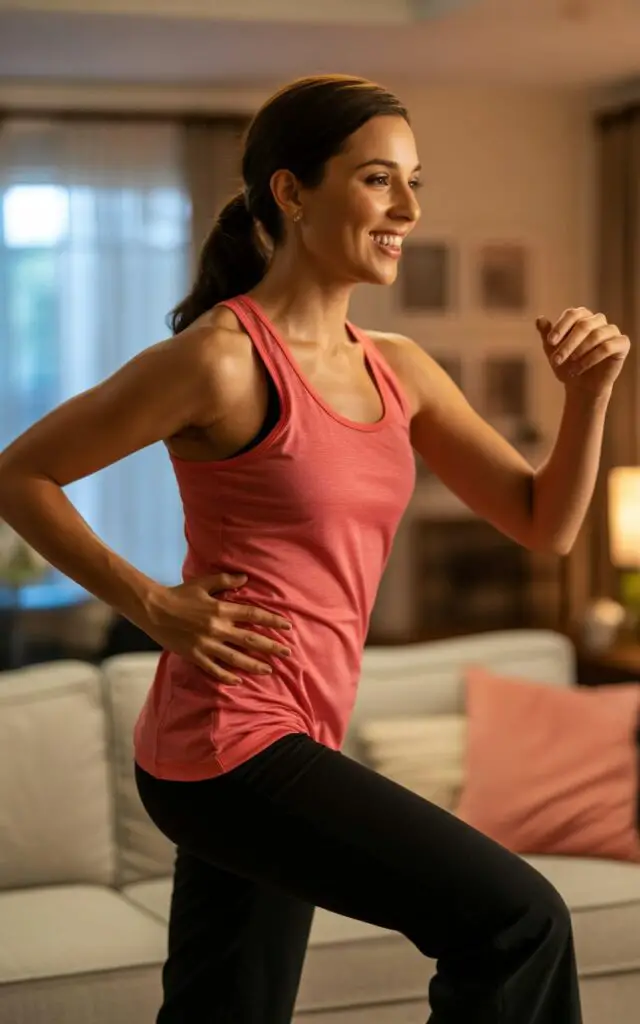
Salsa is one of the foundational rhythms in Zumba, and learning the basic side-to-side step is the perfect way to ease into movement. This routine focuses on simple footwork that gets your heart rate up without complicated choreography.
Start by stepping to the right, bringing your left foot to meet it, then stepping right again. Repeat on the left side. Add a gentle hip sway and arm movement once you feel comfortable. This step builds coordination and warms up your lower body.
Most beginner-friendly salsa routines last between 3 to 5 minutes, making them ideal for the start of your workout. The repetitive nature helps you focus on rhythm rather than memorizing steps, which is exactly what you need when you’re new.
2. Cumbia-Inspired Lower Body Routine
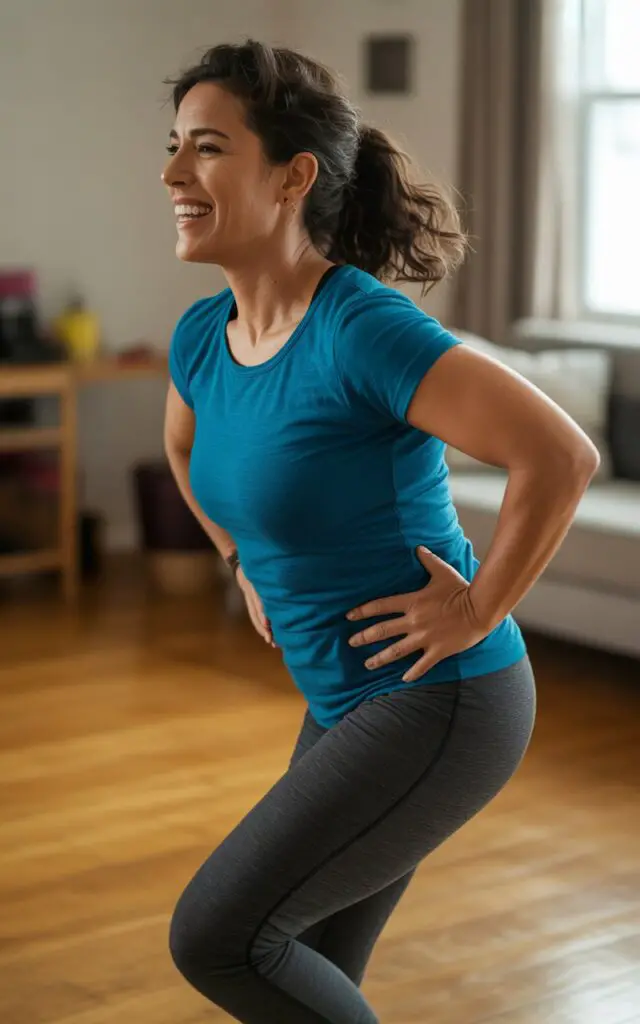
Cumbia is a slower, more grounded rhythm that emphasizes hip and leg movement. This makes it excellent for toning your thighs, glutes, and core while keeping the intensity manageable.
The basic cumbia step involves a side-to-side sway with bent knees, shifting your weight from one leg to the other. Your hips move naturally with the motion, and your arms can follow loosely or stay on your hips for balance.
This routine is particularly good for women who want to focus on lower body strength without high-impact jumping. It’s smooth, controlled, and surprisingly effective at working muscles you didn’t know you had.
3. Merengue March for Full-Body Activation
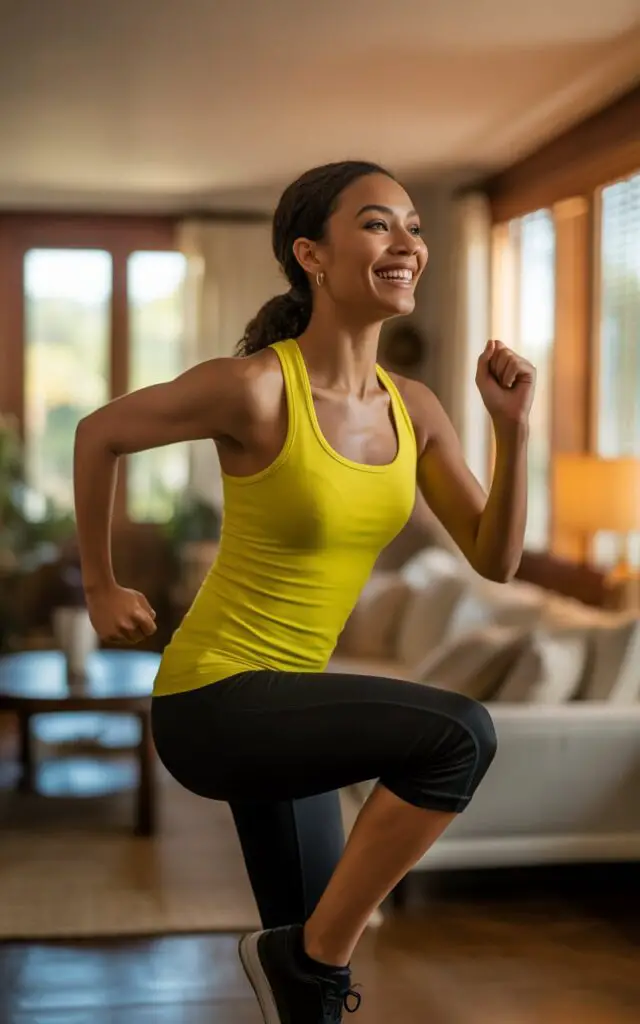
Merengue is one of the easiest Zumba styles to learn. The steps are essentially a march — you alternate lifting your knees while moving forward, backward, or in place. It’s straightforward, but it gets your whole body involved.
Your arms can pump naturally as you march, or you can add simple movements like shoulder rolls or overhead reaches.
The pace is steady, and the rhythm is consistent, so you can focus on moving with confidence rather than worrying about complex patterns.
This routine is perfect for building stamina. A 4 to 6-minute merengue session will get your blood pumping and prepare your body for more dynamic movements later in your workout.
4. Reggaeton Slow Burn for Core Engagement
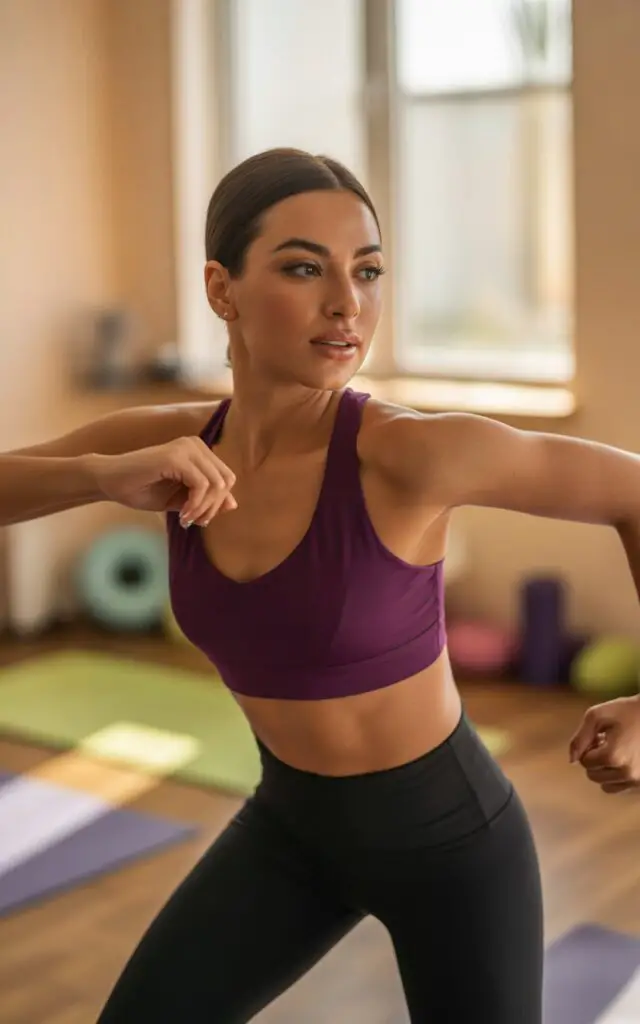
Reggaeton brings a slower, more controlled energy that’s all about engaging your core and hips. The movements are less about speed and more about intentional, fluid motion.
You’ll focus on isolating your hips, rolling your shoulders, and adding small squats or lunges. The music has a strong beat, which makes it easy to stay on rhythm even if you’re moving slowly.
This routine is ideal for women who want to tone their midsection and improve body awareness. It’s also a great way to build confidence in your movement — you’re not rushing, so you have time to feel each step.
5. Soca-Inspired High-Energy Interval Routine
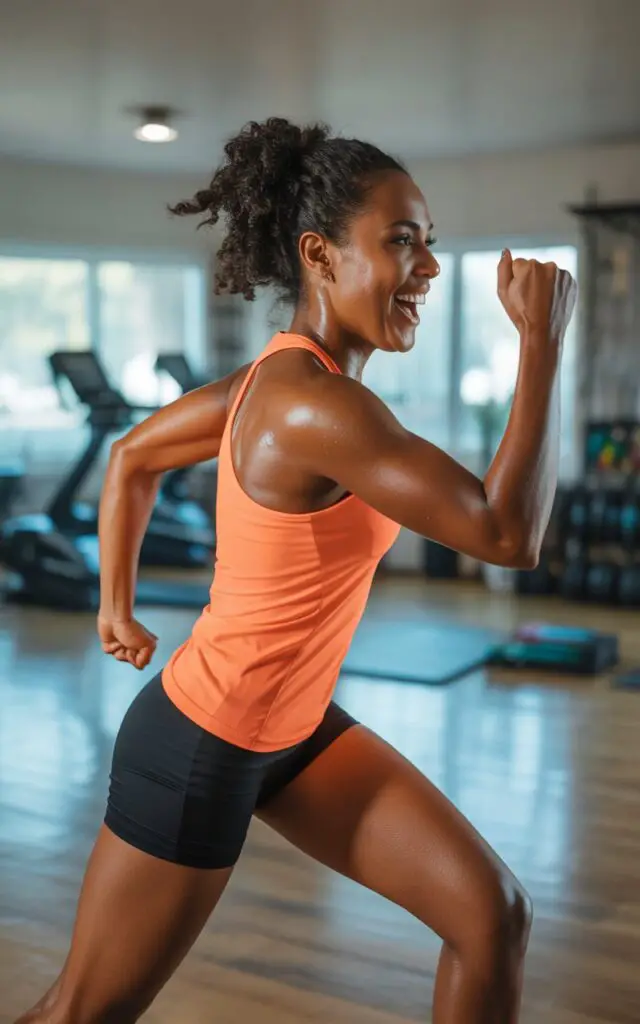
Soca music is upbeat, fast, and incredibly fun. This routine uses short bursts of high-energy movement followed by slower recovery steps, which is a beginner-friendly introduction to interval training.
You’ll do moves like jogging in place, side steps with arm pumps, and quick hip shakes. The high-energy sections last about 20 to 30 seconds, followed by a slower pace to catch your breath.
This type of routine is excellent for burning calories and improving cardiovascular fitness without sustaining high intensity for too long.
It teaches your body to recover quickly, which is a foundational skill for any fitness routine.
6. Belly Dance Fusion for Flexibility and Control
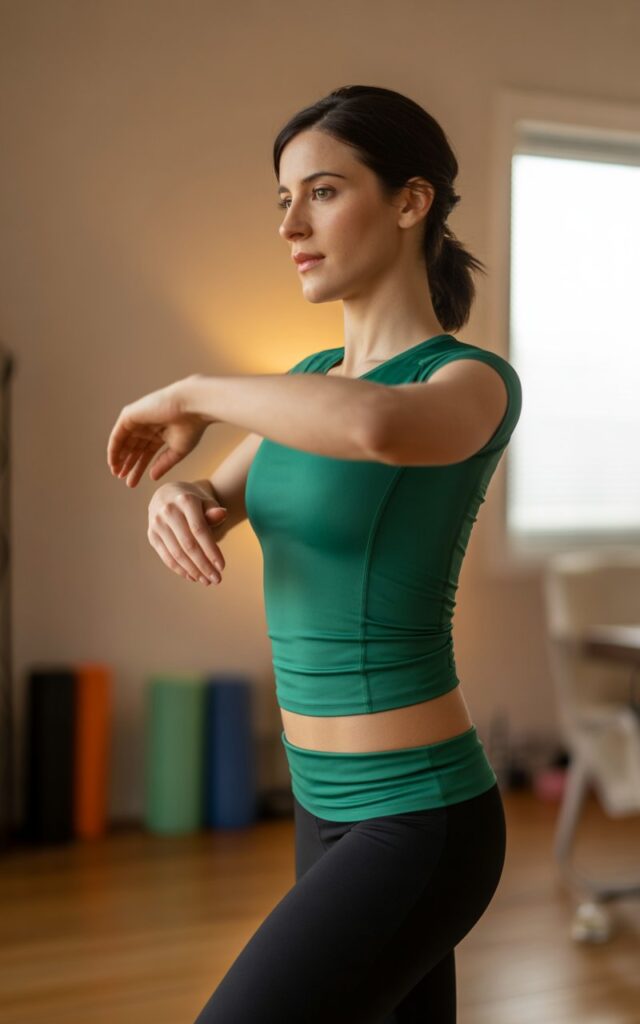
Belly dance elements in Zumba focus on isolating different parts of your body — your hips, chest, and shoulders. These movements are slower and require control, making them perfect for improving flexibility and muscle awareness.
You’ll practice hip circles, figure-eights, and chest lifts. The pace is calm, and the focus is on precision rather than speed. This routine is a nice contrast to the faster styles and gives your body a break while still working important muscle groups.
Women who struggle with coordination often find belly dance fusion helpful because it slows everything down. You have time to think about each movement and adjust as needed.
7. Bollywood-Style Dance for Upper Body Strength
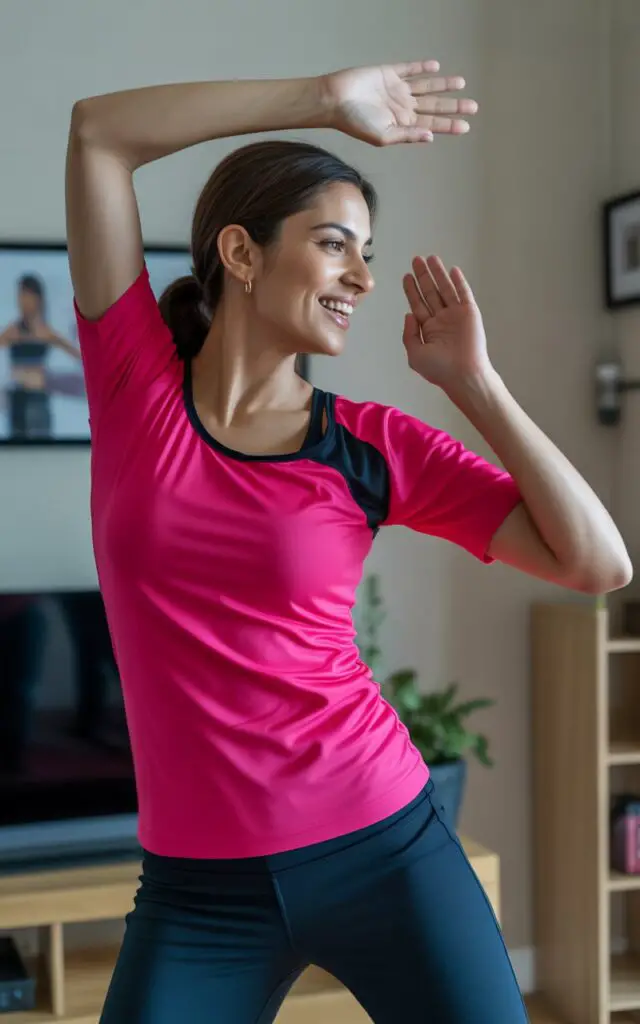
Bollywood routines are colorful, expressive, and incredibly engaging. They incorporate arm movements, shoulder rolls, and hand gestures that work your upper body while keeping the lower body active with simple steps.
The choreography is usually easy to follow — step-touches, grapevines, and basic turns paired with sweeping arm motions. The music is infectious, and the movements feel celebratory rather than strenuous.
This routine is great for women who want to strengthen their arms, shoulders, and back without using weights. The constant arm movement provides resistance, and the upbeat music keeps you motivated.
8. Bachata Basics for Balance and Coordination
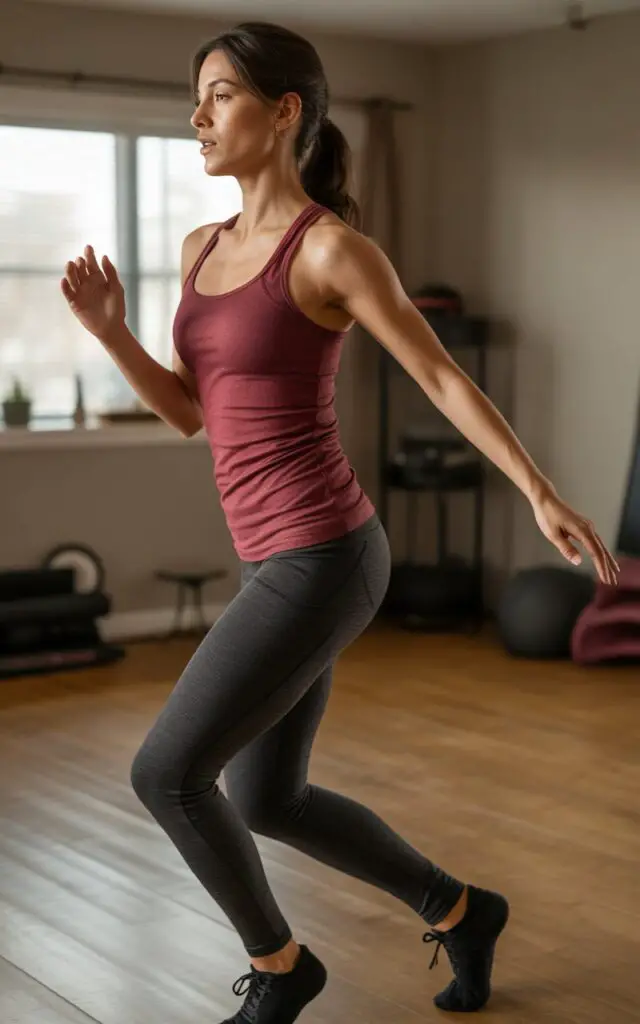
Bachata is a romantic, rhythmic style that emphasizes balance and smooth transitions. The basic step is a four-count pattern: step to the side, together, side, tap (or hip lift). It’s simple, but it requires focus.
This routine helps you develop better coordination between your upper and lower body. Your feet are doing one thing, your hips are doing another, and your arms are adding expression. It sounds complicated, but once you find the rhythm, it flows naturally.
Bachata is also a lower-impact option, making it suitable for women who need to protect their joints or prefer a gentler pace.
9. Afrobeat Energy Boost for Stamina Building
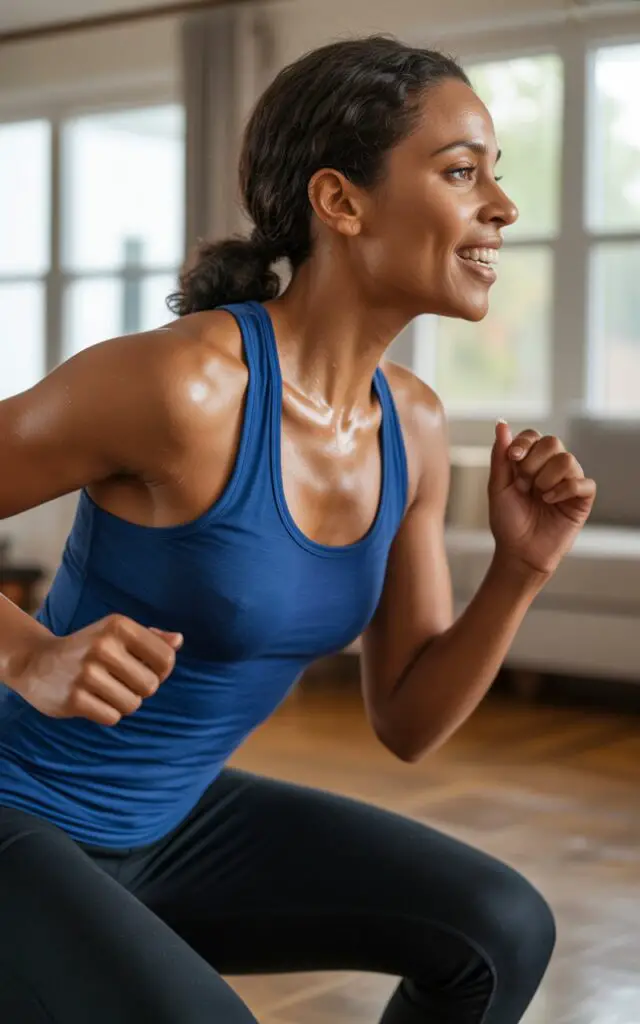
Afrobeat routines are rhythmic, grounded, and full of energy. The movements are earthy — think squats, lunges, and bouncing steps combined with shoulder shakes and arm swings.
This style focuses on building stamina through repetition and sustained movement. You’ll stay active for longer periods, which helps train your body to handle extended cardio sessions.
The cultural richness of Afrobeat music makes this routine feel uplifting and empowering. You’re not just working out — you’re moving to something that feels meaningful and alive.
10. Cool-Down Stretch Routine with Gentle Movement
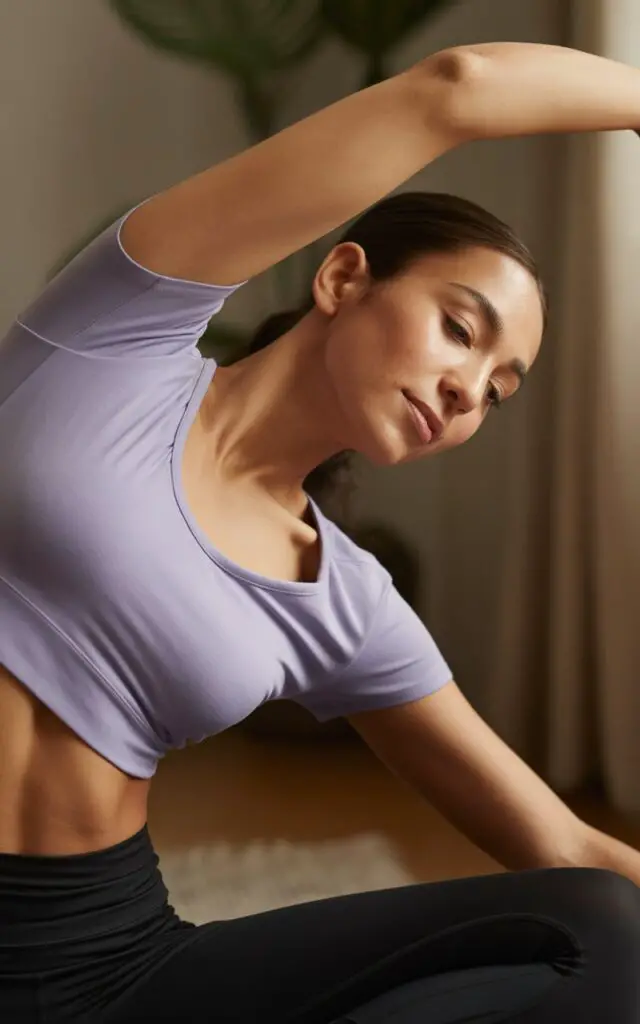
Every workout needs a proper cool-down, and Zumba is no exception. This routine uses slow, flowing movements paired with stretching to bring your heart rate down and prevent muscle stiffness.
You’ll do gentle sways, arm reaches, and deep breathing exercises. Some routines incorporate yoga-inspired stretches or light ballet movements to elongate your muscles and improve flexibility.
This final routine is just as important as the others. It helps your body transition out of exercise mode, reduces soreness, and gives you a moment to appreciate what you just accomplished.
Your First Steps Into Fitness
Starting something new takes courage, and choosing to move your body is a decision worth celebrating. These routines are designed to meet you where you are — no judgment, no pressure, just movement that feels good.
Zumba removes the barriers that often keep women from trying fitness. You don’t need to count reps, track calories, or master complicated techniques. You just need to show up, press play, and let the music guide you. Over time, you’ll notice not just physical changes, but a shift in how you feel about movement itself.
Frequently Asked Questions
Q: How many times per week should I do Zumba as a beginner?
A: Start with 2 to 3 sessions per week, allowing rest days in between. This gives your muscles time to recover while building consistency. As your stamina improves, you can increase to 4 or 5 times weekly if desired.
Q: Do I need dance experience to do Zumba at home?
A: No. Zumba is designed for people of all skill levels, and the steps are meant to be simple and repetitive. You’ll pick up the movements quickly, and it’s perfectly fine to modify or simplify as you go.
Q: What should I wear for a Zumba workout at home?
A: Wear comfortable, breathable clothing that allows you to move freely. Supportive sneakers are recommended to protect your joints, especially during side-to-side movements. Avoid barefoot workouts on hard floors.
Q: How long should each Zumba routine last?
A: For starters, aim for 20 to 30-minute sessions. As you build endurance, you can extend to 45 minutes or an hour. Shorter sessions are still effective if done consistently.
Q: Can Zumba help with weight loss?
A: Yes. Zumba is a cardio workout that burns calories, increases your heart rate, and builds muscle tone. Combined with balanced eating, it can support weight loss goals effectively.
Q: What if I can’t keep up with the instructor?
A: That’s completely normal. Focus on moving to the beat rather than nailing every step. The point is to keep your body active — perfection isn’t the goal. You’ll improve naturally over time.
Q: Is Zumba safe for women with joint issues?
A: Many women with joint concerns do Zumba successfully by choosing low-impact versions and modifying high-intensity moves. Listen to your body, skip jumps if needed, and consider routines that emphasize controlled movement like cumbia or bachata.
Q: Do I need special equipment for Zumba at home?
A: No. All you need is enough space to move side to side, comfortable clothing, and a device to play music or videos. Some women like to use a yoga mat for cool-down stretches, but it’s optional.

