

The short shag haircut has returned as one of the most requested styles. This layered cut offers volume, texture, and movement that flatters many face shapes. What makes this style so appealing is its versatility. You can wear it sleek and polished or go for that lived-in, effortless look.
Finding the right short cut can be challenging. You want something that works with your hair type and lifestyle. The shag solves many of these problems. Its choppy layers reduce bulk for thick hair while adding body to finer textures. The cut grows out gracefully, meaning fewer trips to the salon.
We’ve gathered seven variations of this classic cut that are trending right now. Each style offers something different, from bold and edgy to soft and romantic. You’ll find options for straight hair, wavy locks, and natural curls. Ready to find your perfect match? Let’s get started.
Choppy Pixie Shag
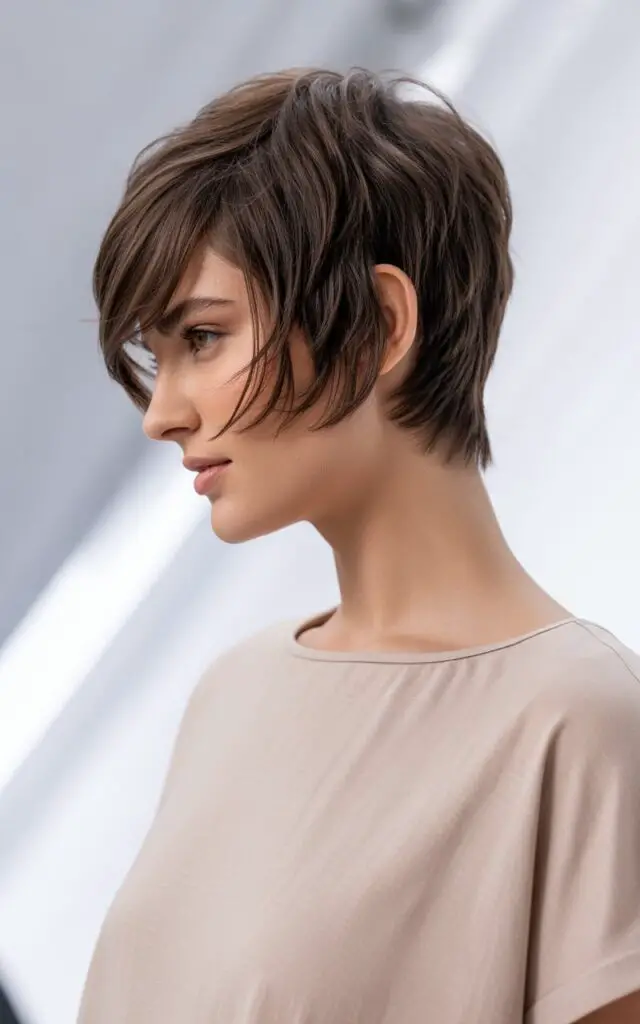
The choppy pixie shag combines the low-maintenance appeal of a pixie with the textured finish of a shag. This cut keeps the sides and back close to the head while leaving more length on top. The result is a style that looks intentionally messy yet polished.
Why This Cut Works
Your hair gets instant volume at the crown without much effort. The choppy layers create separation between strands, preventing that flat look many pixie cuts can have. Women with fine hair especially appreciate this benefit. The texture makes your hair appear thicker than it actually is.
Styling Requirements
Morning routines become quicker with this cut. You’ll need about five minutes and minimal products. A small amount of texturizing paste worked through the top creates that piecey finish. Some women prefer to blow-dry with their fingers for extra lift at the roots.
Does this style work for all hair types? Straight hair shows off the choppy layers best, but wavy hair adds natural movement. Very curly hair might lose the defined pixie shape, though it can still look great with the right stylist.
Maintenance Considerations
You’ll visit the salon every 4-6 weeks to maintain the shape. The sides grow out faster than the top, which can change the proportions. Between cuts, you can trim your own bangs if needed. Many women find this cut liberating because there’s no ponytail option forcing you to style it daily.
Key benefits to consider:
- Time-Saving: Get ready in minutes with minimal styling required.
- Volume Boost: Adds height and fullness to flat or fine hair naturally.
- Modern Edge: Creates a contemporary look that works for various ages.
- Low Product Use: Requires less hairspray, mousse, or gel than longer styles.
This cut works best on oval, heart, and square face shapes. Round faces can wear it too, but ask your stylist to keep some length around the cheekbones for balance.
Curtain Bang Shag
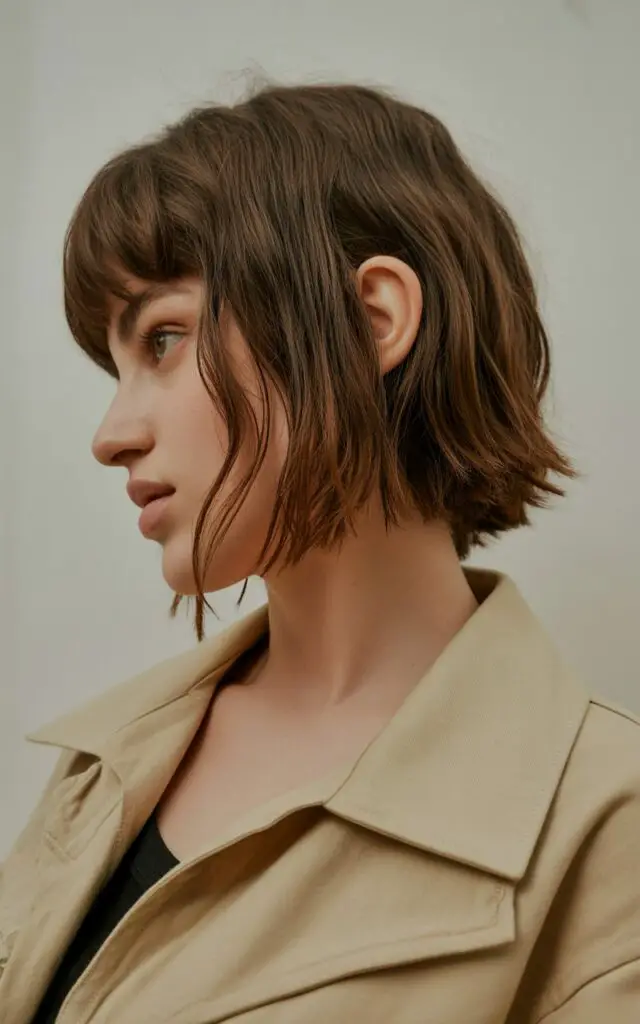
Curtain bangs frame your face while shorter layers add body throughout. This style brings a ’70s vibe that feels current rather than dated. The bangs part naturally in the middle, creating soft movement that opens up your face.
The Face-Framing Effect
These bangs work differently than blunt or side-swept options. They create a curtain effect that draws attention to your eyes. The center part elongates round faces while softening angular features. Your cheekbones get highlighted without harsh lines.
What length should the bangs be? They typically fall at cheekbone level, though you can adjust based on preference. Longer versions graze your jawline for a softer look.
Styling Techniques
A round brush during blow-drying creates that lifted, swept-back effect. You can also let them air-dry if your hair has natural wave. The key is avoiding perfectly straight bangs – you want that slightly curved shape that frames outward.
Hair Type Compatibility
Straight to wavy hair works beautifully with this cut. Very fine hair might need texturizing spray to maintain volume. Thick hair benefits from internal layering to prevent the style from looking too heavy.
Some women worry about the growing-out phase. Curtain bangs actually transition better than other bang styles. As they lengthen, they blend into the side layers naturally. You won’t hit that awkward stage where bangs are too short for a ponytail but too long for your eyes.
Here’s what makes this style practical:
- Versatile Styling: Wear it straight, wavy, or with natural texture easily.
- Face Slimming: Creates vertical lines that lengthen your appearance.
- Easy Grow-Out: Transitions smoothly as your hair gets longer.
The cut requires trims every 6-8 weeks. Between appointments, you can maintain the bangs yourself with proper scissors. Many tutorials online show you how to do this safely at home.
Wolf Cut Shag
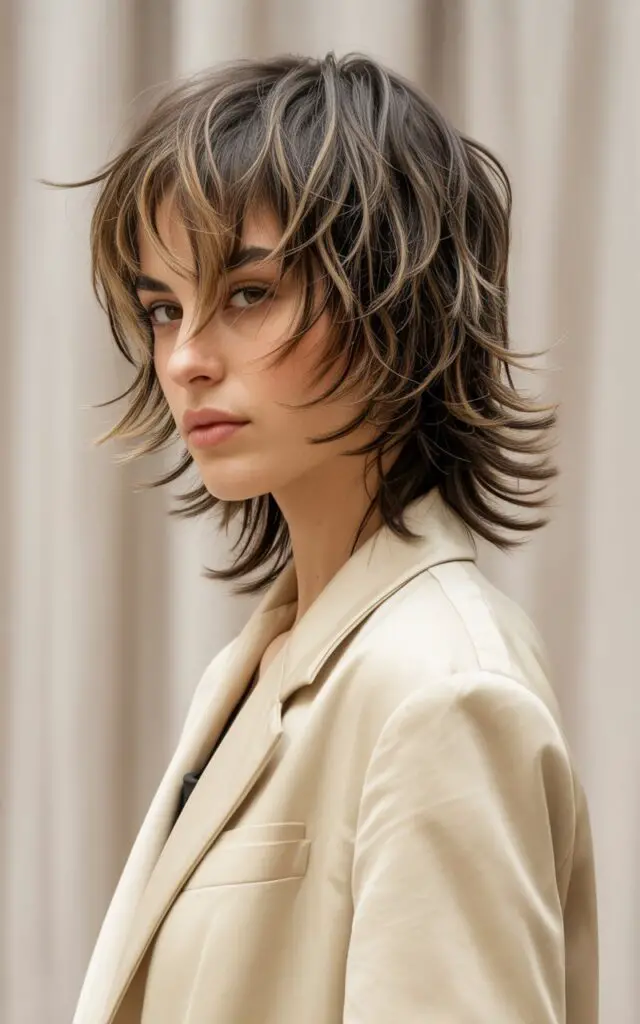
This hybrid combines disconnected layers that create dramatic volume on top with length in the back. The wolf cut has gained massive popularity on social media for good reason. It delivers an edgy, rebellious vibe that still looks put-together.
Understanding the Structure
Think of this as a mullet’s sophisticated cousin. The top layers are heavily textured and short, while the bottom maintains more length. This contrast creates movement that regular shags don’t achieve. Your hair appears fuller without actually being thicker.
Best Candidates
Women with naturally wavy or straight hair see the most dramatic results. The disconnected layers need some structure to show their shape. Very tight curls might blur the defined separation between sections.
How much length difference should there be? Typically, the top layers fall around ear level while the back grazes your shoulders. Your stylist can adjust these proportions based on your preferences.
Styling Options
You have more versatility than you might think. Straightening irons create a sleek, modern look that emphasizes the different lengths. Curling wands add volume and softness. Even air-drying works if you scrunch in some texturizing spray.
The morning routine takes about 10-15 minutes depending on your desired finish. Some women prefer the wash-and-go approach, which this cut absolutely supports. Others enjoy playing with different textures.
Color Considerations
This cut looks amazing with highlights or balayage. The layering shows off dimensional color better than one-length styles. Even all-over color gains depth from the varied lengths catching light differently.
Maintenance needs attention every 5-7 weeks. The top layers grow faster, which can lose that wolf cut definition. If you’re between appointments, you can refresh by curling just the top section for more separation.
Consider these aspects:
- Bold Appearance: Makes a strong style choice that stands out.
- Texture Play: Multiple lengths create natural movement throughout.
- Customizable: Adjust the ratio of short to long based on comfort level.
- Works With Color: Showcases highlights and dimension beautifully.
Textured Bob Shag
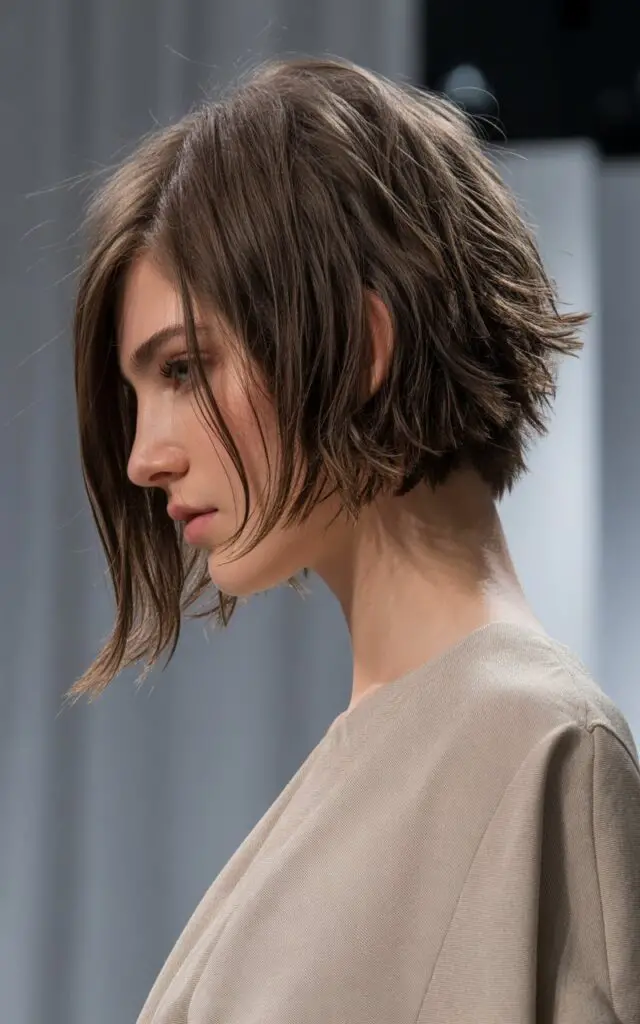
The textured bob shag sits at chin length with heavy layering throughout. This length offers a sweet spot between pixie cuts and longer styles. You get the manageability of short hair with enough length for small ponytails on gym days.
Why Choose This Length
Your neck stays cool while you maintain styling options. The chin-length cut works with most face shapes because it hits at a universally flattering point. The layers prevent the blunt look of traditional bobs, adding movement instead of weight.
Creating the Texture
Razoring techniques give this cut its signature choppy finish. Your stylist will use a razor instead of scissors for certain sections, creating softer, feathered ends. This technique removes bulk without losing volume. Thick hair becomes more manageable while fine hair gains body.
What’s the difference between this and a regular bob? The layering is much more aggressive. You’ll see separation between strands rather than a smooth, uniform length. Some pieces will be noticeably shorter than others, creating that intentionally undone appearance.
Daily Maintenance
Most women wash and style this cut 2-3 times per week. The texture actually looks better on day-two hair. A bit of dry shampoo at the roots refreshes the volume. You can also run a flat iron through random sections for added pieciness.
Products make a difference here. A lightweight mousse applied to damp hair before blow-drying creates lasting volume. Finish with a small amount of pomade on the ends to define the layers.
Here’s what to know about upkeep:
- Moderate Maintenance: Needs trims every 6-8 weeks to maintain shape.
- Styling Flexibility: Can be worn sleek, wavy, or messy depending on mood.
- Works While Growing: Transitions well if you decide to grow it longer.
- Professional Polish: Looks neat enough for office settings but cool for weekends.
Face shapes matter less with this cut because the layers can be adjusted. Round faces benefit from side parts and longer front pieces. Angular faces look great with more volume at the crown.
Color Enhancement
This cut makes any hair color pop. The layers catch light from multiple angles, adding dimension even to single-process color. Balayage looks particularly stunning because you can see the color transition clearly through the different lengths.
Wispy Feathered Shag
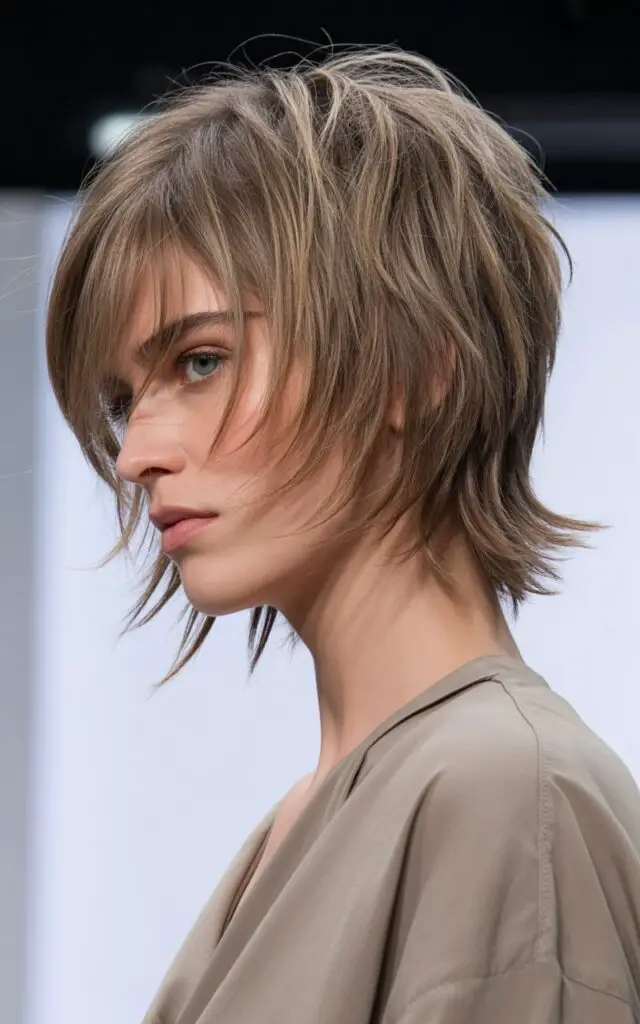
Soft, feathery layers define this romantic take on the shag. The wispy feathered version prioritizes delicate, airy pieces over chunky, choppy sections. This creates a gentler, more feminine finish that still delivers on volume and movement.
The Feathering Technique
Your stylist will use point-cutting scissors to create those feathered ends. This technique thins out the hair at different angles, resulting in pieces that taper naturally. The effect is lighter and softer than razor cutting. Each layer blends into the next seamlessly.
Perfect Hair Types
Fine to medium hair textures work best with this approach. The feathering adds the illusion of thickness without creating actual bulk. Very thick hair might need additional thinning to achieve the wispy effect. Curly hair can work, though the feathering will be less visible.
How short should this style be? Most wispy feathered shags fall between ear and chin length. This range allows enough hair to show off the layering while keeping the style manageable.
Styling Approach
This cut shines with minimal styling. Many women simply scrunch in some leave-in conditioner and let it air-dry. The feathered ends create natural movement without much effort. If you prefer more polish, a round brush during blow-drying adds soft volume.
Growing Out Gracefully
One advantage of this cut is how well it grows. The feathered layers don’t create harsh lines as they lengthen. You won’t see that distinct “I need a haircut” look that happens with blunt styles. Instead, the hair gradually gets longer while maintaining its soft, lived-in appearance.
Coloring considerations matter here. Lighter colors emphasize the wispy quality, making the feathering more visible. Darker colors can create more contrast between layers. Highlights placed throughout show off the dimension beautifully.
Benefits worth noting:
- Soft Appearance: Creates a gentler look than choppy shag variations.
- Flattering Movement: Hair moves naturally with each head turn.
- Minimal Styling: Requires less heat and product than structured cuts.
- Age-Friendly: Works for women in their 20s through 60s and beyond.
Maintenance sits at every 7-9 weeks since the soft layers blend so well. You can stretch appointments longer than with more structured shags. Between cuts, the style remains flattering rather than growing into an awkward shape.
Edgy Razor Cut Shag
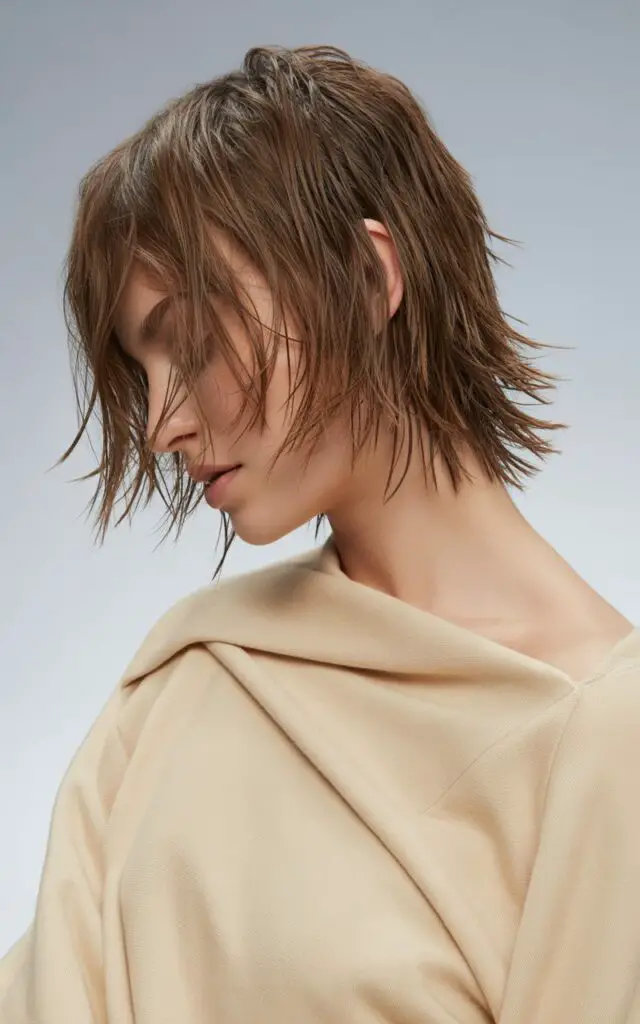
Sharp, razored layers create maximum texture and modern edge. This version pushes the shag into bolder territory. The razor creates irregular, choppy pieces that add serious attitude to your look. It’s perfect if you want something that makes a choice.
The Razor Difference
Traditional scissors create clean, even lines. Razors slice through hair at angles, producing varied lengths and thinner ends. This technique generates more separation between strands. Your hair appears to have more movement because each piece sits differently.
Ideal Candidates
Straight hair shows off razor cutting most dramatically. You’ll see every choppy layer and textured end clearly. Wavy hair works too, though the effect is softer. Fine hair gains volume from the texture, while thick hair loses unwanted bulk.
What face shape suits this cut? The edgy nature works best on oval and heart-shaped faces. Square faces can wear it with longer front pieces that soften the jawline. Round faces should add some vertical elements through styling to balance the horizontal layers.
Styling for Maximum Impact
This cut begs for texturizing products. Sea salt spray on damp hair creates gritty texture that enhances the choppy finish. You can scrunch it while drying for a messy look or straighten it for sharp, defined pieces. Both approaches work beautifully.
The edgy vibe continues through color choices. Bold colors like platinum, deep burgundy, or even vibrant fashion shades complement the cutting technique. The razored layers show off color dimension particularly well.
Here are the style specifics:
- High Impact: Creates a strong, memorable look immediately.
- Texture Rich: Maximizes movement and separation between strands.
- Color Friendly: Works amazingly with bold or contrasting colors.
- Confidence Required: This cut demands owning your look proudly.
Maintenance Reality
You’ll need trims every 5-6 weeks. Razor cuts grow out differently than scissor cuts. The ends can look wispy and thin as they lengthen. Regular maintenance keeps the choppy texture looking intentional rather than grown-out.
Between appointments, you can refresh the style by straightening random sections. This redefines the separation and adds back the edgy quality. Some women also use dry shampoo at the roots and texturizing spray on the ends to revive the cut.
Wavy Shag with Bangs
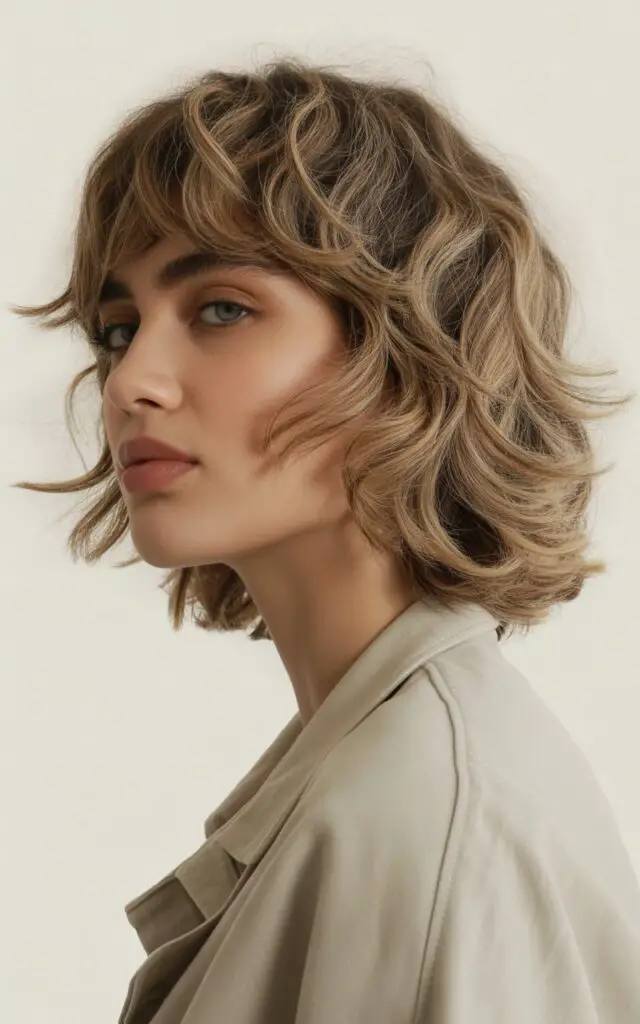
Natural waves meet choppy bangs in this effortlessly cool variation. Your hair’s natural texture does most of the work here. The shag cut enhances whatever wave pattern you already have, making it more defined and intentional.
Working With Your Waves
This style celebrates natural texture instead of fighting it. The layers are cut to follow your wave pattern, not disrupt it. Crown layers add volume where waves tend to fall flat. Lower layers prevent the bottom from looking stringy or separated.
How wavy does your hair need to be? Even slight bends work with this cut. The layering amplifies whatever natural movement you have. Stick-straight hair won’t achieve this look without styling, though you can create waves with heat tools.
The Bang Component
Choppy bangs add personality to the wavy base. These aren’t neat, straight-across bangs. They’re cut at different lengths to create texture that matches the shag layers. The bangs typically fall between eyebrow and eye level, with some pieces longer than others.
Styling Simplified
Air-drying works beautifully with this cut. Scrunch in some curl cream while your hair is wet, then let it dry naturally. The shag cut prevents frizz by removing weight that pulls waves straight. You’ll notice more defined, bouncy waves than before the cut.
What products help? Curl-enhancing mousse or cream gives waves more definition. A light oil on the ends prevents dryness without weighing down the style. Many women skip heat styling entirely with this cut.
Versatility Options
Straight days are possible too. A flat iron smooths the waves when you want a different look. The choppy layers create movement even when straightened. You can also enhance the waves with a curling wand for special occasions.
Consider these factors:
- Natural Texture: Works with your existing wave pattern instead of against it.
- Low Maintenance: Air-drying produces great results without effort.
- Versatile Finish: Can be worn wavy, straight, or extra curly as desired.
- Bang Interest: Choppy fringe adds character without much styling needed.
Maintenance happens every 6-8 weeks. The waves hide growth better than straight styles, so you can stretch appointments when needed. The bangs might need trimming between full cuts, which you can handle at home or ask your stylist to do quickly.
Color adds another dimension here. Balayage or highlights on wavy hair create beautiful depth. The waves show off the color variation as they move. Even subtle lowlights add richness that straight hair doesn’t display as well.
Your Next Hair Move
Short shag haircuts offer something for every woman. These seven variations prove you don’t have to settle for one standard look. Your hair type, face shape, and personal style all factor into which version works best. The choppy pixie suits bold personalities while the wispy feathered option appeals to those wanting softness.
Each cut requires different maintenance levels and styling commitments. Consider your morning routine realistically before choosing. Some women love spending time on their hair. Others need wash-and-go options. Both approaches work with shag cuts – you just need to pick the right variation. Talk to your stylist about your lifestyle and expectations. They can customize any of these styles to fit your specific needs and hair characteristics.
Frequently Asked Questions
Q: How often should I get my short shag haircut trimmed?
A: Most short shags need trims every 5-8 weeks depending on the specific cut. Razor cuts and choppy pixie shags grow out faster and need more frequent maintenance around 5-6 weeks. Wispy feathered shags can stretch to 7-9 weeks between appointments.
Q: Can I wear a short shag if I have thin hair?
A: Yes, thin hair actually benefits from shag cuts. The layers create the illusion of fuller hair by adding volume and texture. The choppy pixie shag and textured bob shag work especially well for fine hair types.
Q: What’s the difference between a shag and a wolf cut?
A: A wolf cut is a specific type of shag with more dramatic disconnection between layers. The top layers are much shorter while the back maintains length, creating a mullet-like effect. Traditional shags have more gradual layering throughout.
Q: Will my short shag work with curly hair?
A: Curly hair can absolutely work with shag cuts. The wavy shag with bangs is perfect for natural curls. However, very tight curls might blur the defined layers that make shags recognizable. Consult with a curly hair specialist for best results.
Q: How do I style a short shag on day-two hair?
A: Dry shampoo at the roots refreshes volume. Texturizing spray throughout the lengths revives the piecey texture. You can also dampen random sections and re-scrunch them with product to reactivate the style without a full wash.
Q: Can older women wear short shag haircuts?
A: Absolutely. Short shags work beautifully on women of all ages. The wispy feathered shag is particularly flattering for mature women as it softens facial features. The style also disguises thinning hair that often comes with age.
Q: What products do I need for a short shag?
A: Basic products include texturizing spray, lightweight mousse, and either pomade or paste for definition. Sea salt spray works great for edgy razor cut shags. Curl cream benefits the wavy shag with bangs. Most women need only 2-3 products total.
Q: Is a short shag easy to maintain at home?
A: Maintenance difficulty varies by cut style. Choppy pixie shags need the most professional upkeep. Textured bob shags and wavy shags with bangs are easier to manage between salon visits. Most women find shags less demanding than blunt cuts that show growth obviously.
Q: Can I put my short shag in a ponytail?
A: This depends on the length. Textured bob shags at chin length can usually make a small ponytail or clip. Choppy pixie shags and very short versions won’t have enough length. The wolf cut shag can often pull the back section into a tiny ponytail.
Q: What face shape looks best with a short shag?
A: Oval and heart-shaped faces work with nearly all shag variations. Round faces should choose versions with vertical elements like curtain bang shags or wolf cuts. Square faces benefit from soft, wispy layers around the jawline. Your stylist can adjust any shag to flatter your specific face shape.

