

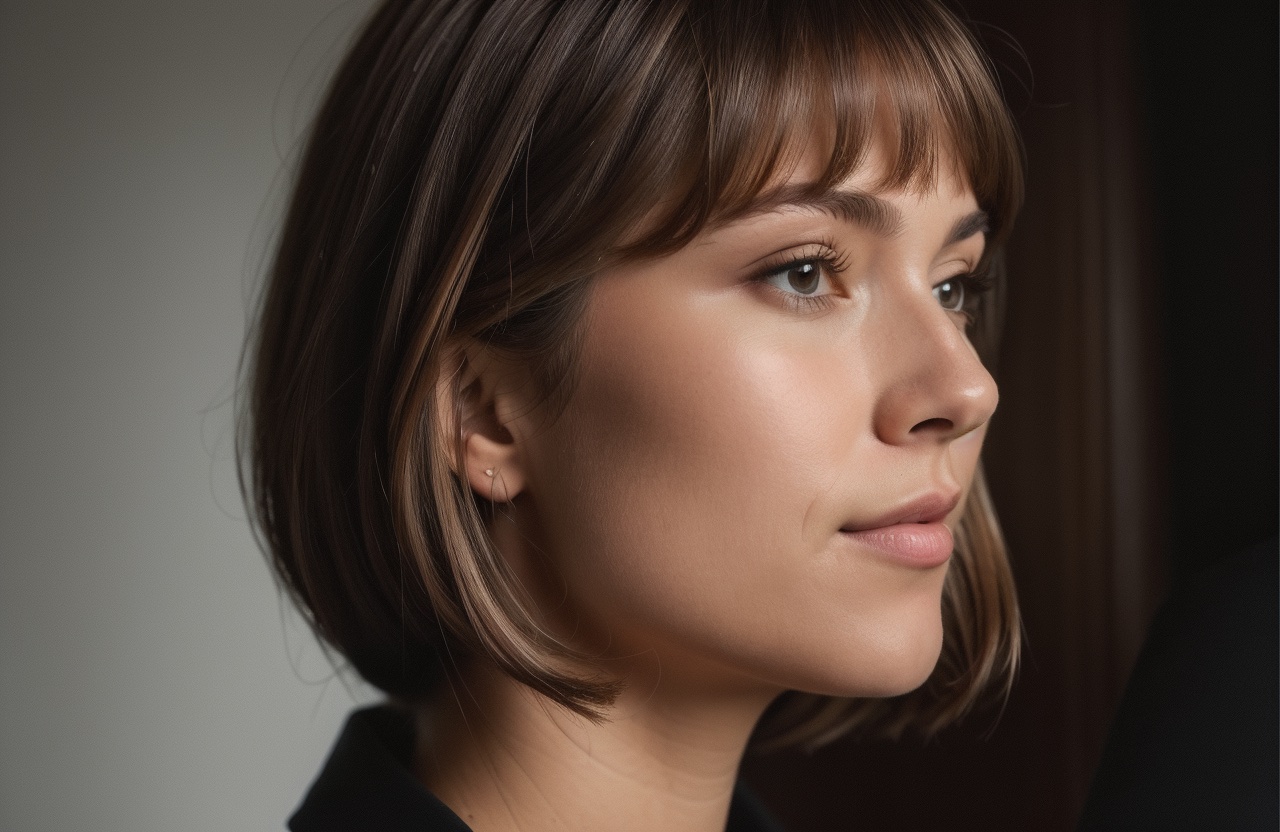
Medium length hair paired with bangs creates one of the most versatile and manageable hairstyles you can choose. This combination offers the perfect balance – enough length to pull back into ponytails or updos, yet short enough to maintain easily without spending hours on daily styling. Whether you prefer curtain bangs that frame your face or bold straight-across styles that make a statement, this hair length provides endless possibilities for customization.
The beauty of this hairstyle lies in its adaptability to different face shapes, hair textures, and personal styles. You can transform your entire look simply by changing how you style your bangs each morning – swept to the side for a professional meeting, tousled for weekend brunch, or pin-straight for an evening out. This flexibility makes it an ideal choice for women who want variety without committing to dramatic cuts or color changes.
Throughout the following sections, we’ll explore everything from selecting the perfect bang style for your face shape to mastering daily styling techniques that actually work. You’ll discover which tools and products deliver professional results at home, plus maintenance tips that keep your style fresh between salon visits. Let’s unlock the full potential of your medium length hair with bangs and help you achieve salon-worthy results every single day.
What Makes Medium Length Hair with Bangs So Versatile
Medium length hair with bangs offers something special that shorter and longer styles simply cannot match. This particular combination hits right at the sweet spot – typically falling between your shoulders and collarbone – giving you enough hair to work with while avoiding the weight and maintenance demands of longer locks. The addition of bangs transforms the entire dynamic, creating opportunities for styling creativity that wouldn’t exist otherwise.
The perfect balance of length and manageability
Finding the right hair length often feels like choosing between style and practicality, but medium length solves this dilemma beautifully. You have sufficient length to create various updos, braids, and ponytails, yet washing and drying takes half the time required for longer hair. This length also distributes natural oils more evenly from roots to ends, keeping your hair healthier with less effort.
The weight distribution at this length prevents excessive strain on your roots while still providing enough substance for voluminous styles. Your hair maintains its shape throughout the day without requiring constant touch-ups or excessive product use.
How bangs transform your face shape
Bangs act like a frame for your face, instantly changing your overall appearance without altering your hair length. They can minimize a large forehead, balance facial proportions, or add youthful softness to angular features. The way they interact with medium length hair creates a harmonious look that neither overwhelms nor underwhelms your natural features.
Strategic bang placement can highlight your best features while subtly downplaying areas you’d prefer to minimize. For instance, side-swept styles draw attention to your eyes, while straight-across cuts can make your cheekbones appear more prominent. The key lies in understanding how different bang styles interact with your unique facial structure.
Different bang styles for medium length hair
The variety of bang options available for this hair length surpasses what works with very short or very long styles. Curtain bangs blend seamlessly with shoulder-length layers, creating movement and dimension. Wispy bangs add softness without overwhelming your features, while blunt bangs make a bold fashion statement.
Consider these popular options that work particularly well:
Curtain Bangs: Part in the middle and sweep outward, framing your face beautifully
Side-Swept Bangs: Create asymmetrical interest while remaining low-maintenance
Wispy Bangs: Add texture without commitment to heavy fringe
Micro Bangs: Make a dramatic statement while keeping the rest simple
Choppy Bangs: Provide an edgy, modern look with built-in texture
Maintenance requirements
Unlike the high-maintenance reputation of some hairstyles, this combination requires surprisingly reasonable upkeep. Your bangs need trimming approximately every three to four weeks, but many women learn to do minor touch-ups at home between professional appointments. The medium length itself typically needs professional shaping every eight to twelve weeks, depending on your hair’s growth rate and desired precision.
Daily maintenance becomes routine rather than burdensome once you establish good habits. A quick blow-dry focused on your bangs takes mere minutes, and the rest of your hair often air-dries beautifully with minimal intervention. This efficiency makes the style practical for busy lifestyles without sacrificing polished appearance.
Seasonal adaptability
Weather changes affect how your hair behaves, but this versatile length adapts well to seasonal shifts. During humid summer months, you can easily pull everything into a messy bun while letting your bangs frame your face. Winter static becomes manageable with the right products, and the shorter length means less hair getting caught in scarves and coat collars.
Spring and fall transitions feel seamless when your hair hits this sweet spot of length. You can add layers for movement during breezy spring days or keep things sleek and controlled for crisp autumn weather. The bangs provide consistent style regardless of how you choose to wear the rest of your hair, maintaining your signature look year-round.
How to Choose the Right Bang Style for Your Face Shape
Selecting bangs that complement your face shape can feel overwhelming with so many options available. The secret lies not in following rigid rules but understanding how different cuts interact with your natural bone structure. Your perfect bang style enhances what you love about your face while creating visual balance where you want it most.
Oval face considerations
Women with oval faces won the genetic lottery when it comes to bang versatility – nearly every style works beautifully with these balanced proportions. Your face length measures about one and a half times its width, with gently rounded edges that accommodate various fringe styles without throwing off your natural harmony.
Blunt, straight-across bangs showcase your symmetrical features wonderfully, while side-swept versions add a touch of asymmetrical interest. Even bold micro bangs work well, as your proportions can handle the dramatic shortening of facial length they create. The only consideration might be avoiding extremely heavy, thick bangs that could overwhelm your delicate balance.
Since you can experiment freely, focus on factors beyond face shape. Consider your hair texture, lifestyle demands, and personal style preferences. Your forehead height might guide you toward longer or shorter options, while your daily routine might make low-maintenance curtain bangs more practical than high-maintenance blunt cuts.
Round face styling tips
Round faces benefit from bang styles that create the illusion of length and angles. Your goal isn’t to hide your face shape but to add visual elements that elongate and define. Side-swept bangs work magic here, creating a diagonal line that naturally lengthens your face while adding asymmetry.
Long, layered bangs that hit around your cheekbones help slim the face’s appearance. Avoid very short or rounded bang shapes that mirror your face’s natural curves – these can emphasize roundness rather than balance it. Instead, opt for textured, piece-y bangs that break up the circular shape.
A deep side part combined with sweeping bangs creates particularly flattering results. This combination draws the eye vertically rather than horizontally, instantly creating a more oval appearance. Keep the sides of your bangs longer to frame and narrow your face at its widest point.
Square face softening techniques
Square faces possess strong, angular jawlines that benefit from softer bang styles. Your goal involves adding curves and movement to balance those beautiful sharp angles. Wispy, textured bangs work exceptionally well, as their irregular edges contrast nicely with your defined bone structure.
Long, side-swept bangs that graze your eyebrows create a softening effect without completely hiding your striking features. The key lies in avoiding severe, straight lines that echo your natural angles. Instead, choose styles with movement and gradation that introduce curved elements to your overall look.
Curtain bangs particularly flatter square faces by creating a gentle frame that softens the forehead area. Their center part and outward sweep add vertical length while the curved edges provide the softness you’re seeking. Layer these bangs slightly to prevent them from appearing too heavy or blocky against your structured features.
Heart-shaped face balance
Heart-shaped faces feature wider foreheads and narrower chins, making bangs an ideal tool for creating balance. Side-swept bangs work brilliantly by visually reducing forehead width while maintaining the delicate charm of your tapered chin. The diagonal line they create helps even out proportions beautifully.
Chin-length curtain bangs offer another excellent option, as they add width to the lower portion of your face while partially covering your broader forehead. These longer bangs can be styled various ways – tucked behind your ears for casual days or blown out for more formal occasions.
What you’ll want to avoid: very short bangs that emphasize forehead width or extremely heavy, straight-across styles that create a harsh horizontal line. Instead, focus on creating soft, graduated layers that blend seamlessly with the rest of your hair, drawing attention to your eyes and cheekbones rather than the width differential.
Long face proportions
Long faces benefit tremendously from bangs that create horizontal lines and visually shorten facial length. Full, straight-across bangs work wonderfully here, creating a strong horizontal element that balances vertical proportions. Unlike round faces that should avoid this style, your face shape actually thrives with this bold choice.
Heavy, thick bangs that hit right at or slightly below your eyebrows provide ideal proportional adjustment. They effectively “cut” your face length while adding width perception. Side-swept styles can work too, but ensure they’re full enough to create substantial horizontal presence rather than thin wisps that might elongate further.
Consider these specific techniques for maximum impact:
Eyebrow-Skimming Length: Creates the perfect horizontal break
Full Coverage: Don’t go too wispy – you need substantial fringe
Slight Curve: A gentle arc rather than ruler-straight can add softness
Layered Ends: Prevents the heavy, helmet-like appearance
Extended Width: Let bangs extend slightly beyond your natural hairline
Essential Tools and Products for Styling Success
Creating professional-looking styles at home requires the right arsenal of tools and products. While you don’t need to invest in every trendy gadget, certain essentials make the difference between mediocre and magnificent results. Understanding which items deserve your investment helps you build a styling kit that delivers consistent, beautiful results without breaking your budget.
Must-have heat styling tools
Your blow dryer serves as the foundation of any good styling routine, particularly when managing bangs that need daily attention. Look for models with multiple heat and speed settings, plus a cool shot button for setting your style. The concentrator nozzle attachment proves invaluable for directing airflow precisely where you want it, preventing frizz while creating smooth, polished bangs.
A quality flat iron becomes your secret weapon for taming unruly bangs and creating various looks. Choose one with adjustable temperature settings to avoid unnecessary heat damage – your bangs don’t need the same high heat as coarser back sections. Ceramic or tourmaline plates distribute heat evenly, reducing the risk of hot spots that can damage delicate front pieces. Rounded edges allow you to create subtle flips or curves when desired.
The right brushes for bang perfection
Round brushes transform limp bangs into voluminous masterpieces when used correctly with your blow dryer. A small to medium-sized round brush – approximately 1 to 1.5 inches in diameter – provides optimal control for bang styling. Natural boar bristles mixed with nylon pins grip hair effectively while distributing natural oils for added shine.
For everyday maintenance, a paddle brush or cushion brush helps smooth and detangle without creating unwanted volume. These work particularly well for women who prefer sleeker, straighter bang styles. The wide surface area covers more ground quickly during morning rush routines.
Don’t overlook the humble rattail comb either. Its pointed end becomes invaluable for creating precise parts and sections, while the comb portion helps distribute product evenly through your bangs. This inexpensive tool often makes the biggest difference in achieving salon-quality precision at home.
Product selection for hold and texture
The products you choose can make or break your styling efforts. Lightweight mousse or volumizing spray applied to damp bangs before blow-drying creates lift without heaviness. Focus application at the roots where you need support most, working just a small amount through the lengths to avoid greasiness.
Texturizing spray adds the piece-y separation that prevents bangs from clumping together in an unflattering mass. These products work especially well for women with very straight or fine hair that tends to fall flat. A light misting after styling helps maintain that perfectly imperfect texture throughout the day.
Dry shampoo deserves special mention as the ultimate bang refresher. Even when the rest of your hair looks fine, bangs often need extra attention due to their proximity to facial oils. A quick spray at the roots, followed by gentle brushing, revives greasy bangs instantly.
Avoid these common product mistakes:
Over-Application: Less is more – you can always add but can’t subtract
Wrong Placement: Focus on roots for volume, mid-lengths for control
Heavy Formulas: Thick creams and serums weigh down bangs quickly
Skipping Heat Protectant: Essential before any thermal styling
Mismatched Hold Level: Choose based on your hair type and desired style
Protective products for healthy hair
Heat protectant spray or serum forms your first line of defense against styling damage. Since bangs require frequent heat styling, this step becomes non-negotiable for maintaining healthy hair. Apply before blow-drying and again before using any hot tools, focusing on the areas that receive the most heat exposure.
Leave-in conditioner helps maintain moisture balance in your bangs without weighing them down. Look for lightweight formulas specifically designed for fine to medium hair textures. These products also help combat static during dry winter months when bangs tend to misbehave most.
Weekly hair masks or deep conditioning treatments keep your overall hair health optimal, though you might want to avoid applying heavy masks directly to your bangs. Instead, focus these treatments on your lengths and ends where damage accumulates most, using excess product very sparingly on your fringe area.
Budget-friendly alternatives
Professional-quality results don’t always require professional-level spending. Many drugstore heat protectants perform just as well as high-end versions – the key ingredients remain largely the same across price points. Focus your splurges on tools that you’ll use daily for years rather than products you’ll replace monthly.
Multi-purpose products stretch your budget while simplifying your routine. A good leave-in conditioner can double as a heat protectant and frizz fighter. Some texturizing sprays also provide light hold, eliminating the need for separate hairspray. Coconut oil serves as an intensive treatment, frizz controller, and shine enhancer.
DIY alternatives can supplement your professional products effectively. Apple cider vinegar rinses remove product buildup that makes bangs look greasy. Cool water rinses after washing add shine and help seal the hair cuticle. Even something as simple as changing your pillowcase to silk or satin can reduce friction and maintain your style overnight.
Daily Styling Techniques That Actually Work
Mastering daily bang styling separates those who love their fringe from those who constantly fight with it. The techniques you use each morning determine whether your bangs enhance your look or become a source of frustration. With the right approach, you can achieve consistent results in minutes rather than struggling for half an hour with mediocre outcomes.
Your styling routine should adapt to your hair’s behavior on any given day rather than forcing it into submission. Some mornings your bangs cooperate beautifully, while others require more strategic intervention. Having multiple techniques in your repertoire ensures you’re never stuck with unmanageable fringe.
Morning bang refresh routine
Not every day requires starting from scratch with wet hair. Often, a quick refresh delivers better results than complete rewashing. Start by lightly misting your bangs with water – not soaking them, just adding enough moisture to reactivate yesterday’s products and make the hair pliable.
Take your blow dryer on medium heat with the concentrator nozzle attached. Using a small round brush or even just your fingers, redirect your bangs in the desired direction while applying heat. The key lies in not overdoing it – too much heat on barely damp hair can create frizz. Finish with a blast of cool air to set the style.
For particularly stubborn cowlicks or weird sleep bends, try this trick: spray the problem area with water, then blow-dry in the opposite direction of the cowlick first. Once it’s mostly dry, switch to styling in your preferred direction. This technique breaks the hair’s natural pattern before setting it where you want it.
The blow-dry method for volume
Creating volume in your bangs starts when they’re soaking wet. Apply a volumizing product at the roots, then flip your bangs in the opposite direction from how you want them to lay. Rough-dry them in this position until they’re about 60% dry. This initial step builds lift from the root that lasts all day.
Now comes the shaping phase. Switch your bangs to their final position and use a round brush to smooth and direct them. Roll the brush away from your face for side-swept styles or straight down for blunt bangs. The trick involves keeping tension on the hair while maintaining consistent heat distribution.
Important details that make all the difference include keeping the dryer moving constantly to prevent heat damage and pointing the airflow down the hair shaft to smooth the cuticle. Many women make the mistake of pointing the dryer directly at their forehead, which not only feels uncomfortable but creates frizz by roughing up the hair cuticle.
Flat iron tricks for sleek looks
Your flat iron can create more than just pin-straight bangs. The technique starts with completely dry hair – any moisture creates damaging steam when it meets the hot plates. Run the iron from roots to ends in one smooth motion rather than clamping and pulling repeatedly, which can create unsightly dents.
For a subtle bend at the ends, slow down as you reach the tips and gently curve the iron. This creates that expensive-looking polish without the severity of completely straight bangs. The temperature matters too – start at the lowest setting that gives results, typically between 300-350°F for most hair types.
Want side-swept perfection? Run the iron through your bangs at a diagonal angle in the direction you want them to sweep. The heat sets this directional pattern more effectively than blow-drying alone. Just remember to use that heat protectant first.
Creating texture without damage
Texture adds interest and prevents that helmet-hair effect nobody wants. Instead of reaching for the curling iron, try these gentler methods that deliver beautiful results. Twist small sections of damp bangs, blow-dry them twisted, then release for natural-looking waves that aren’t too perfect.
Another approach involves braiding slightly damp bangs loosely, letting them air dry or hitting them quickly with the dryer, then unraveling for subtle crimps. This works particularly well for women who want to add grip to very straight, slippery hair without using excessive product.
Pin curls offer another heat-free option. Section your bangs, wrap each piece around your finger, and secure with a bobby pin while damp. Once dry, remove the pins and gently separate with your fingers. The result? Soft movement that looks effortless and expensive.
Quick fixes for bad bang days
Sometimes despite your best efforts, your bangs simply won’t cooperate. Rather than fighting a losing battle, employ these emergency strategies. The twisted side pin works wonders: twist your bangs to one side and secure with a decorative bobby pin or small barrette. This looks intentional rather than desperate.
When all else fails, the mini pompadour saves the day. Brush bangs straight back, add a little volumizing powder at the roots, and create a small pouf before pinning in place. This sophisticated look works for both casual and formal occasions.
These quick-fix strategies can transform bang disasters:
The Headband Hide: Position a wide headband just behind your bangs to push them back stylishly
Braid Integration: French braid your bangs into a crown braid for bohemian charm
The Twist-Back: Divide bangs in half, twist each section back and pin behind ears
Accessories Save: Strategic use of clips, pins, or scarves disguises problem areas
The Fake Curtain: Part straight bangs in the middle and pin each half to blend with side layers
Remember that practice improves your speed and results dramatically. What takes twenty minutes today might take five minutes after a few weeks of repetition. Your hands develop muscle memory for the movements, and you learn your hair’s particular quirks and preferences.
How to Maintain Your Style Between Salon Visits
Keeping your medium length hair with bangs looking fresh between professional appointments requires strategic maintenance rather than constant salon visits. With the right techniques and timing, you can extend the life of your cut while saving both time and money. The difference between women who always look polished and those whose style deteriorates quickly often comes down to these between-visit habits.
Professional stylists typically recommend appointments every 6-8 weeks for medium length maintenance, but your bangs need attention much sooner. Learning to handle minor upkeep yourself bridges this gap, ensuring you never reach that awkward, overgrown phase that ruins your entire look.
Trimming techniques at home
Bang trimming at home feels intimidating initially, but with proper technique, you can manage minor touch-ups successfully. The golden rule: never cut straight across in one snip. This creates a harsh, uneven line that screams “home haircut.” Instead, hold scissors vertically and make tiny snips upward into the hair, creating a softer, more professional-looking edge.
Start with dry hair styled as you normally wear it – wet hair appears longer and can lead to cutting too much. Invest in proper hair-cutting scissors rather than using regular household scissors, which can damage hair ends. Section your bangs away from the rest of your hair using clips, ensuring you’re only working with the hair that needs trimming.
The conservative approach prevents disasters. Remove less than you think necessary, then reassess. You can always cut more, but you can’t glue it back on. Most women find that trimming just the very tips every two weeks maintains their shape without requiring professional intervention for 6-8 weeks.
Washing frequency for bangs
Bangs get oily faster than the rest of your hair due to constant contact with facial skin and products. This creates a dilemma – your bangs look greasy while your lengths remain fresh. The solution involves targeted washing that addresses just your fringe without overwashing everything else.
On non-wash days, lean over your sink and shampoo only your bangs using a small amount of product. This targeted approach takes mere minutes and keeps your fringe looking fresh. Pat them dry gently with a towel, then style as usual. This technique extends your overall wash cycle while maintaining polished-looking bangs.
Dry shampoo becomes your best friend for in-between maintenance. Apply it before bed rather than waiting until morning when oil is already visible. This preventive approach absorbs oil as it forms overnight. In the morning, simply brush through and style normally.
Overnight protection methods
How you sleep affects how your bangs look in the morning. Silk or satin pillowcases reduce friction that causes frizz and strange bends. If you can’t invest in special pillowcases, wrap your bangs in a silk scarf before bed. This might feel silly initially, but waking up with manageable hair makes it worthwhile.
For women with particularly unruly bangs, try the roller trick. Before bed, wrap slightly damp bangs around a large velcro roller in the direction you want them to lay. Secure gently with bobby pins if needed. You’ll wake up with bangs that have shape and direction, requiring minimal morning styling.
Another effective method involves the wrap technique:
Step 1: Apply a tiny amount of leave-in conditioner to bangs
Step 2: Smooth them in your desired direction
Step 3: Wrap a silk scarf around your hairline like a headband
Step 4: Remove in the morning for smooth, directed bangs
Step 5: Quick touch-up with heat if needed
Dealing with cowlicks and growth patterns
Cowlicks in your bang area can sabotage even the best styling efforts. Understanding your hair’s natural growth patterns helps you work with them rather than against them. Map your cowlicks by observing which direction your wet bangs naturally fall – this shows their true growth pattern.
The earlier you address cowlicks in your styling routine, the better your results. Starting with soaking wet hair gives you maximum control. Apply product directly to the cowlick area, then blow-dry in the opposite direction first. Once it’s nearly dry, switch to your desired direction. This breaks the cowlick’s hold before setting your preferred style.
For stubborn cowlicks that resurface throughout the day, keep a small spray bottle with water and leave-in conditioner mixed together. A quick spritz and blow-dry touch-up takes less than a minute but maintains your style all day. Some women find that training their cowlicks over time – consistently styling against them – gradually weakens their strength.
When to seek professional help
Certain situations require professional intervention rather than DIY solutions. If you’ve accidentally cut your bangs too short or created an uneven line, resist the urge to “fix” it yourself. Additional cutting usually makes things worse. A professional can often salvage mistakes through strategic layering and texturizing.
Major style changes always warrant professional consultation. Switching from side-swept to straight-across bangs involves more than just cutting a different line. Your stylist considers your hair’s weight distribution, growth patterns, and how the new style integrates with your overall cut. These nuanced decisions require trained expertise.
Schedule professional maintenance when you notice any of these signs: your bangs no longer lay properly despite proper styling, the shape has grown out beyond simple trimming fixes, or you’re spending significantly more time achieving acceptable results. Regular professional shaping every 4-6 weeks keeps your bangs in optimal condition, making your daily styling routine much easier.
Your Hair, Your Rules
Medium length hair with bangs offers the ultimate combination of versatility and manageability, giving you countless options for expressing your personal style. From choosing the perfect bang shape for your face to mastering daily styling techniques, you now have the knowledge to make this classic cut work beautifully for your lifestyle. The tools, products, and techniques we’ve explored aren’t rigid rules but rather a toolkit you can customize based on your hair’s unique characteristics and your daily routine.
The journey to perfect bangs doesn’t happen overnight, but with consistent practice and the right maintenance habits, you’ll find yourself spending less time fighting with your hair and more time enjoying how great it looks. Whether you prefer sleek and polished or textured and effortless, your medium length hair with bangs can adapt to any occasion or mood. The key lies in understanding your hair’s natural tendencies and working with them rather than against them, creating a sustainable routine that fits seamlessly into your life.
Frequently Asked Questions
Q: How often should I wash my bangs compared to the rest of my hair?
A: Bangs typically need washing every 1-2 days while the rest of your hair might only need it 2-3 times per week. You can wash just your bangs over the sink on non-shampoo days to keep them fresh without overwashing your lengths.
Q: Can I cut my own bangs between salon visits?
A: Yes, minor trimming every 2-3 weeks helps maintain your bang shape. Use proper hair scissors, cut vertically rather than straight across, work with dry hair, and always cut less than you think you need to.
Q: What’s the best way to grow out bangs if I change my mind?
A: Start by transitioning to side-swept bangs, then gradually blend them into face-framing layers. Regular trims to maintain shape during the growing process actually help them grow out more attractively. Bobby pins and headbands become essential accessories during the awkward phase.
Q: Why do my bangs separate in the middle even though I don’t want a part there?
A: This usually happens due to natural growth patterns or cowlicks. Combat this by blow-drying bangs forward first before sweeping them to your desired direction, using a stronger hold product at the roots, or training them over time with consistent styling in one direction.
Q: How do I prevent my bangs from looking greasy by midday?
A: Apply dry shampoo before bed as a preventive measure, avoid touching your bangs throughout the day, use oil-absorbing sheets on your forehead, and consider using lighter styling products specifically designed for fine or oily hair.
Q: What’s the ideal length for medium hair to make styling with bangs easier?
A: Hair that falls between your collarbones and shoulders provides the most versatility. This length is heavy enough to maintain shape but light enough to style easily, and it works well with virtually every bang style.
Q: Should I blow-dry my bangs even on air-dry days?
A: Yes, bangs almost always look better with at least minimal blow-drying to set their direction and smooth the cuticle. Even if you air-dry the rest of your hair, spending 2-3 minutes on your bangs makes a significant difference in your overall appearance.
Q: How can I add volume to flat, thin bangs?
A: Use volumizing mousse at the roots when bangs are wet, blow-dry them in the opposite direction initially, switch to a round brush for final styling, and finish with dry texture spray for grip and lift.

