

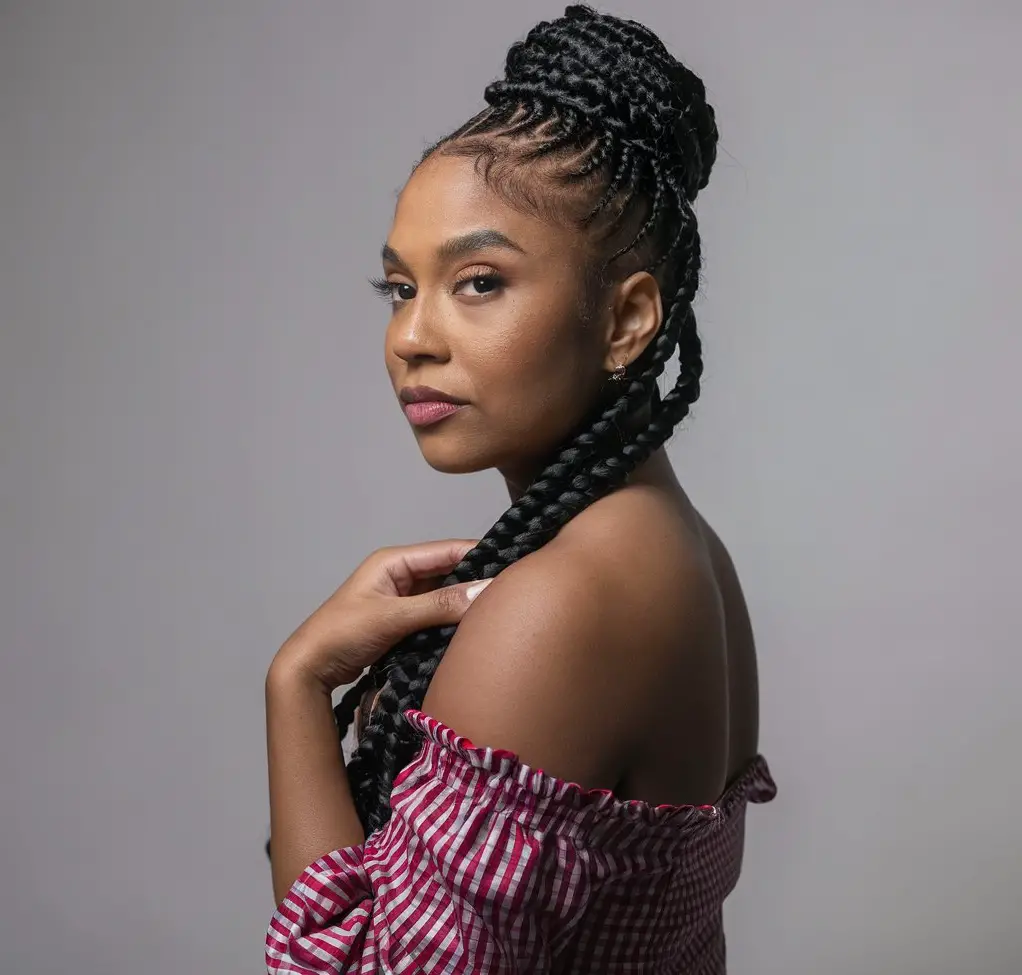
Fulani braids have become one of the most requested protective styles in salons across the country, combining intricate patterns with cultural heritage and modern flair. These distinctive braids, characterized by their central cornrow and side patterns adorned with beads and cowrie shells, traditionally take hours to complete in professional settings. Yet busy schedules and morning rushes demand faster alternatives without sacrificing the style’s signature beauty.
The assumption that creating authentic-looking Fulani braids requires extensive time investment keeps many women from attempting this protective style at home. Professional braiders often spend three to five hours perfecting every detail, leading to the misconception that quick versions look sloppy or incomplete. However, with the right techniques and strategic shortcuts, you can achieve stunning results in just half an hour.
In the following sections, you’ll discover time-saving methods that maintain the integrity of this traditional style while fitting into your hectic schedule. From preparation tricks that cut braiding time in half to simplified patterns that still turn heads, these techniques transform this intricate hairstyle into something achievable before work or school. Ready to master the art of speed braiding? Let’s uncover the secrets to creating gorgeous Fulani braids in record time.
- What Makes Fulani Braids Quick-Styling Friendly?
- Essential Tools and Products for Speedy Fulani Braiding
- Step-by-Step Speed Techniques for Perfect Fulani Braids
- How to Prep Your Hair for Faster Fulani Braiding?
- Quick Fulani Braid Variations Perfect for Busy Mornings
- Your Time-Saving Fulani Braid Journey
- Frequently Asked Questions
What Makes Fulani Braids Quick-Styling Friendly?
The structure of Fulani braids naturally lends itself to time-saving modifications that don’t compromise the overall aesthetic. Unlike box braids or micro braids that require uniform precision throughout the entire head, this style concentrates detailed work in specific areas while leaving room for simpler techniques elsewhere. This inherent flexibility makes it possible to create stunning variations in a fraction of the usual time.
Traditional patterns and modern adaptations
Classic Fulani patterns feature a central cornrow running from forehead to nape, accompanied by side cornrows that create geometric designs. Modern interpretations have simplified these patterns while maintaining their visual impact. Instead of five to seven side braids on each side, contemporary quick versions often use three to four strategically placed cornrows that create similar visual interest with less work.
The traditional beading and shell placement has also evolved for speed. Rather than adorning every single braid, you can focus embellishments on the face-framing sections where they’re most visible. This selective decoration cuts styling time significantly while preserving the style’s distinctive character.
Pre-planning for speed
Mapping out your braid pattern before starting saves precious minutes during the actual styling process. Use a rattail comb to lightly mark where each section will go, creating a roadmap that eliminates hesitation and redoing sections. This preliminary step takes two minutes but saves at least ten during braiding.
Consider which areas of your head are most visible in your daily life. If you typically wear your hair to one side or pulled back, focus your detailed work on those zones. The back sections, often hidden or less noticeable, can feature simpler patterns or larger braids that work up quickly.
Essential features for fast styling
Certain elements define Fulani braids regardless of how quickly they’re created. The central cornrow remains non-negotiable – it’s the foundation that identifies the style. Side cornrows that sweep toward the ears create the characteristic silhouette. These core features take priority in quick versions, while additional decorative braids become optional based on available time.
Size variation speeds up the process considerably. Combining medium-sized cornrows for the main pattern with slightly larger braids for fill-in areas reduces overall braiding time. This graduated approach looks intentional rather than rushed, creating visual interest through proportion rather than sheer quantity.
The feeding technique used also impacts speed. Traditional feeding involves adding small amounts of extension hair gradually for seamless blending. Quick versions can use slightly larger feed-in portions, reducing the number of additions needed while still achieving smooth, natural-looking braids.
Right hair texture and preparation
Your starting texture dramatically affects braiding speed. Stretched natural hair braids faster than freshly washed, shrunken hair. Blow-dried or banded hair provides length and manageability that can cut your styling time by a third. If your hair is particularly thick or coily, stretching becomes even more crucial for achieving that 30-minute goal.
Product application matters too. Hair that’s properly moisturized but not overly slippery braids more efficiently. Too much product causes hands to slip and braids to loosen, requiring constant retightening. Too little leaves hair tangled and difficult to manage. Finding your optimal product amount through practice makes each subsequent styling session faster.
Essential Tools and Products for Speedy Fulani Braiding
Having the right arsenal at your fingertips transforms a potentially lengthy braiding session into a streamlined process. Professional braiders know that tool selection can make or break timing goals, and this principle applies even more strongly when racing against the clock. Every item in your styling kit should serve a specific purpose in accelerating your braiding without sacrificing neatness or longevity.
Must-have braiding tools
A quality rattail comb becomes your best friend during rapid sectioning. Look for one with a metal tail rather than plastic – it creates cleaner parts in less time and won’t bend under pressure. Keep two combs ready: one for parting and another as backup, since hunting for a misplaced tool wastes valuable minutes.
Hair clips deserve more credit than they typically receive in braiding tutorials. Butterfly clips or duck bill clips that firmly grip without creating dents work best for managing sections you’re not actively braiding. Color-coding your clips (using red for completed sections, blue for pending work) creates a visual system that prevents confusion and backtracking.
Edge control brushes with firm but flexible bristles smooth baby hairs faster than toothbrushes or fingers. Double-sided versions with different bristle densities handle both laying edges and smoothing the braiding sections. Investing in a quality brush means fewer passes needed for each section.
Rubber bands might seem basic, but the right type makes a difference. Small, snag-free elastics in colors matching your hair or extensions secure braid ends quickly without the wrapping required by traditional methods. Keep them on a dispenser or your wrist for instant access.
Time-saving products
Braiding gel with the right hold-to-slip ratio enables faster, cleaner braids. Products that provide grip without excessive stickiness allow your fingers to move swiftly while maintaining control. Avoid gels that dry too quickly or leave white residue – both require time-consuming fixes.
A spray bottle filled with water mixed with a lightweight leave-in conditioner keeps hair manageable throughout the process. Instead of stopping to re-moisturize dry sections, a quick spritz maintains optimal braiding conditions. Set the nozzle to a fine mist rather than a stream to avoid oversaturating.
Here are products that significantly reduce styling time:
Foam Wraps: Lightweight foams that provide hold without the heaviness of gel, allowing faster hand movement through sections
Braid Spray: Specialized sprays that reduce friction and prevent frizz, minimizing the need for re-smoothing
Quick-Dry Serum: Products that set styles faster, letting you move between sections without waiting
Multi-Purpose Cream: All-in-one products that moisturize, define, and hold, eliminating multiple application steps
Gel and edge control selection
Not all styling gels work equally well for speed braiding. Thick, heavy gels might provide strong hold but slow down your fingers and require more smoothing. Lighter, more fluid formulas spread quickly and evenly, shaving seconds off each braid that add up to significant time savings.
Your edge control should glide on smoothly without requiring excessive brushing or warming between fingers. Products with a creamy, whipped texture typically work faster than thick, waxy formulas. Some edge controls now include ingredients that provide instant tack, eliminating the waiting period for the product to become tacky enough to hold.
Temperature affects product performance more than most people realize. Room-temperature products apply more smoothly than cold ones straight from a bathroom cabinet. Keeping your styling products in a warm spot (but not hot) ensures they’re ready to perform when you are.
Quick-dry solutions
Traditional air-drying can extend your total styling time well beyond the actual braiding. Quick-dry products formulated specifically for braids help set your style faster, letting you head out the door sooner. These products typically contain alcohol or other evaporative ingredients that speed moisture loss without causing excessive dryness.
Setting sprays designed for braided styles lock in your hard work while accelerating the drying process. A light misting immediately after completing each section helps that area set while you work on others. By the time you finish the entire head, the first sections are already dry and secure.
Some braiders swear by cool-shot hair dryer techniques for ultra-fast drying. Using a dryer on the cool setting for 30 seconds per section sets the style without causing frizz or heat damage. This method works particularly well for edges and smaller braids that need immediate hold.
Step-by-Step Speed Techniques for Perfect Fulani Braids
The difference between a three-hour braiding session and a 30-minute success story lies in technique refinement and strategic shortcuts. Each movement should serve a purpose, eliminating unnecessary motions that don’t contribute to the final look. Professional speed braiders have perfected methods that maintain quality while dramatically reducing time investment.
Sectioning shortcuts
Traditional sectioning involves creating perfect parts for every single braid before starting any actual braiding. This methodical approach ensures precision but eats up valuable time. Speed sectioning focuses on creating main anchor points first – the central braid and primary side braids – then filling in remaining sections as you go.
Start with your central part from hairline to nape, securing each side with clips. Next, create your main side parts that will frame your face, typically two or three on each side. These primary sections establish your pattern framework. The remaining hair can be sectioned more casually as you braid, using your fingers to grab appropriately sized portions.
The “grip and go” method eliminates obsessive parting for hidden sections. For braids that will sit under others or toward the back, simply grasp a reasonable amount of hair and begin braiding. These sections won’t be scrutinized closely, so perfect parts become unnecessary time drains.
Working in zones rather than completing one full side before moving to the other maintains symmetry while building momentum. Braid the first two sections on the right, then mirror them on the left. This approach ensures balanced results even if you need to rush through the final sections.
Rapid braiding methods
The three-strand braid forms the foundation of Fulani styles, but your hand positioning determines speed. Keeping your hands close to the scalp reduces arm fatigue and increases control. Wider hand positions might feel faster initially but lead to looser braids requiring time-consuming adjustments.
Tension consistency eliminates the need for re-braiding loose sections. Maintain firm, even pressure throughout each braid rather than starting tight and loosening as you progress. This uniform tension creates professional-looking results on the first attempt.
The continuous feed technique saves significant time over stopping to add hair with each crossover. Pre-position extension hair along the section you’re braiding, picking up portions as you go without pausing. This fluid motion can cut braiding time for each section nearly in half once mastered.
For longer lengths, switch to a looser braiding pattern once you pass the ears. The top portion near the scalp receives the most visual attention, while lower sections can be braided more quickly without sacrificing the overall appearance. This graduated tension approach prevents arm fatigue while maintaining style integrity.
Pattern simplification strategies
Complex geometric patterns look impressive but require time-intensive precision. Simplified alternatives create similar visual impact with far less effort. Instead of intricate zigzag parts, opt for clean diagonal lines that suggest movement without the complicated sectioning.
The rule of odd numbers creates visual interest without complexity. Five braids (one center, two per side) often look more dynamic than four or six. This principle applies to bead placement too – three beads per braid appears more intentional than two or four.
Asymmetrical designs actually save time while looking deliberately artistic. Creating a detailed pattern on one side and a simpler mirror on the other suggests thoughtful design rather than rushed execution. This approach works particularly well when you wear your hair swept to one side regularly.
Combining thin and thick braids strategically reduces overall braid count while maintaining fullness. Two or three ultra-thin braids surrounded by medium-sized ones create contrast and interest. The eye focuses on the variation rather than counting individual braids.
Finishing touches that save time
Traditional finishing involves meticulously sealing each braid end, often with hot water or burning. Quick alternatives provide security without the time investment. Clear elastic bands pre-soaked in oil slip on easily and hold firmly without damaging hair ends.
Beading becomes faster with pre-threaded options. Thread multiple beads onto elastic string beforehand, then slide entire decorated sections onto completed braids. This batch approach beats threading individual beads and saves several minutes per braid.
Edge styling often becomes a time trap at the end of braiding sessions. Instead of intricate baby hair designs, opt for simple, sleek edges that complement the braids. Two or three swoops on each side look polished without requiring artistic precision.
Setting spray applied immediately after completing all braids eliminates the separate setting step. A thorough misting while braids are still fresh and tightly done helps them maintain their shape without additional manipulation. This final step takes 30 seconds but extends style longevity by days.
How to Prep Your Hair for Faster Fulani Braiding?
Preparation determines whether you’ll meet that 30-minute deadline or find yourself still braiding an hour later. The state of your hair when you begin braiding impacts every subsequent step, from sectioning ease to braid smoothness. Smart preparation routines performed hours or even the night before create optimal conditions for speed braiding success.
Night-before preparation
Washing and deep conditioning the night before provides clean, moisturized hair without morning rush pressure. Your hair has time to partially dry overnight, reaching the perfect slightly damp state that braids beautifully. Soaking wet hair slows braiding and creates frizz, while bone-dry hair resists smooth braiding.
Detangling thoroughly before bed prevents morning snags that derail timing goals. Work through your hair in sections with a wide-tooth comb, removing every knot and tangle. This investment of 15 minutes the night before saves 30 minutes of frustrated detangling during braiding.
Stretching techniques performed overnight eliminate shrinkage without heat damage. Large twists or braids, African threading, or banding methods all lengthen hair while you sleep. Stretched hair sections faster and feeds into braids more smoothly than shrunken coils.
Pre-sectioning major divisions the night before jump-starts your morning routine. Create your central part and primary side sections, securing each with soft scrunchies that won’t leave dents. Waking up with these main sections ready eliminates decision-making time when you’re racing against the clock.
Product application works better with time to absorb. Applying leave-in conditioner and light oil the night before allows products to penetrate rather than sitting on hair surface. This deep conditioning effect creates hair that’s moisturized but not slippery – perfect for fast braiding.
Morning-of shortcuts
If you’re starting fresh in the morning, certain shortcuts compensate for limited time. Blow-drying on cool with tension stretches hair quickly without heat damage. This five-minute investment makes the remaining 25 minutes of braiding significantly easier.
A light refresher spray instead of rewashing maintains moisture without introducing excess water. Mix water with a small amount of leave-in conditioner in a spray bottle for quick moisture restoration. This approach revives hair without the drying time full washing requires.
Sectioning spray or foam applied to each area right before braiding provides grip and control without overall product application. This targeted approach means you’re not waiting for product to dry or dealing with over-saturated sections.
Working with slightly damp hair actually speeds braiding for most textures. A quick spritz of water on dry hair provides just enough moisture for smooth braiding without the soaking that slows everything down.
Detangling hacks
The right detangling tools make a significant difference in speed. Detangling brushes designed for natural hair remove knots faster than traditional combs. Their flexible bristles bend around tangles rather than ripping through them.
Finger detangling before using tools removes major snags without breakage. This gentle first pass makes tool detangling faster and less damaging. Your fingers can feel knots that tools might miss, preventing surprise tangles during braiding.
Section-by-section detangling maintains organization while preventing re-tangling. Clip away completed sections immediately to avoid them mixing with unfinished portions. This systematic approach means you detangle each piece of hair only once.
Detangling products specifically formulated for braiding prep provide slip without residue. These lightweight formulas differ from regular conditioners that might leave hair too soft for firm braids. Look for products mentioning “braid prep” or “pre-braid treatment” on labels.
Moisturizing for smooth braiding
The moisture level in your hair directly impacts braiding speed and final appearance. Over-moisturized hair feels mushy and won’t hold braid patterns firmly. Under-moisturized hair feels rough and creates frizzy, uneven braids.
The baggy method performed for just 30 minutes provides intense moisture without oversaturation. Apply a moisturizing cream, cover with a plastic cap for half an hour, then remove excess with a microfiber towel. This controlled moisture infusion creates ideal braiding conditions.
Different hair porosities require adjusted moisturizing approaches for optimal results:
Low Porosity: Light, liquid-based moisturizers that won’t sit on the hair surface
Medium Porosity: Balanced cream-based products that absorb steadily
High Porosity: Heavier butters and creams that fill in gaps and smooth the cuticle
Mixed Porosity: Section-specific treatment with appropriate products for each area
Protein-moisture balance affects how well hair holds braided styles. Hair that’s too soft from over-moisturizing won’t maintain clean parts or tight braids. A light protein treatment 2-3 days before braiding provides structure without brittleness.
Hot oil treatments the morning of braiding provide moisture and slip simultaneously. Warm (not hot) oil applied for five minutes before braiding creates smooth, manageable hair that sections easily. Coconut, olive, or specially formulated braiding oils work best for this purpose.
Quick Fulani Braid Variations Perfect for Busy Mornings
Not every Fulani-inspired style requires the same time investment. Strategic variations maintain the cultural beauty and protective benefits while adapting to realistic morning schedules. These modifications prove that time constraints don’t mean settling for boring hairstyles.
Mini Fulani styles
Shorter overall length reduces braiding time significantly. Shoulder-length Fulani braids take half the time of waist-length versions while still providing full coverage and protection. The shortened length also means less weight and tension on your scalp throughout the day.
Creating mini sections only in the front creates the illusion of intricate all-over braiding. Five to seven small braids framing your face paired with larger braids toward the back delivers visual impact efficiently. Observers focus on the detailed front sections while the simpler back portions go unnoticed.
The half-braided approach leaves the back section in a simple bun or ponytail. Braid only from the hairline to the crown, then gather the remaining hair into a sleek style. This method works especially well for medium to long natural hair that looks beautiful when partially displayed.
Partial feeding techniques reduce time without sacrificing the fed-in appearance. Instead of feeding hair from the very beginning of each braid, start with your natural hair for the first inch, then begin adding extensions. This approach works particularly well for those with sufficient hair density at the roots.
Half-up variations
The classic half-up Fulani style naturally requires less time than full-head braiding. Focus your detailed work on the top section that remains visible, while the lower portion stays in twists or braids from previous styling. This approach gives you a fresh look without starting from scratch.
Strategic placement of just three to five braids creates a complete style when combined with natural hair. One central braid, two side braids, and perhaps two additional accent braids provide enough structure for a recognizable Fulani aesthetic. The remaining hair can be styled in a complementary but simpler manner.
Combining Fulani braids with other quick styles maximizes impact while minimizing effort. Pair your front Fulani braids with space buns, a high puff, or sleek low ponytail. These combinations look intentionally creative rather than unfinished.
The crown-only approach concentrates braiding where it’s most visible. Create your pattern from ear to ear across the crown, leaving the lower sections free. This style works beautifully with naturally textured hair that provides volume and movement below the braided section.
Side-swept patterns
Asymmetrical designs cut braiding time nearly in half while looking deliberately stylish. Create an elaborate pattern on one side, then sweep all braids in that direction. The non-dominant side requires minimal braiding since it won’t be visible in the final style.
Diagonal patterns that naturally sweep to one side eliminate the need for additional styling. Start your braids angled toward your preferred side from the beginning. This built-in direction means you won’t spend extra time arranging braids after completion.
The deep side part variation concentrates braids on one side of a dramatic part. This approach requires braiding only about 60% of your head while still achieving full coverage appearance. The deeper your part, the less braiding required on the smaller section.
Pin-back options allow you to braid fewer sections while maintaining versatility. Create enough braids to establish the style, then pin them to one side. Throughout the day, you can switch sides or let them hang freely for different looks from the same base style.
Accessory shortcuts
Pre-decorated braiding hair eliminates time-consuming bead threading. Some extension hair comes with beads, shells, or metallic thread already attached at intervals. Using these pre-styled options cuts decoration time to zero while ensuring evenly spaced embellishments.
Cuff application takes seconds compared to traditional beading methods. Hair cuffs simply squeeze onto completed braids without threading or tying. Keep a small container of varied cuffs nearby for instant decoration as you finish each section.
Wrapped sections create visual interest faster than intricate braiding patterns. Use colorful thread or thin ribbon to wrap sections of completed braids. This technique adds cultural authenticity and visual appeal in much less time than creating additional braided designs.
Strategic bead placement maximizes impact with minimal pieces:
Face-Framing Focus: Concentrate beads on the braids closest to your face where they’re most noticeable
Asymmetrical Accent: Heavily decorate one side while leaving the other minimalist
End-Only Enhancement: Place decorations only at braid ends for movement and sound without extensive threading
Crown Concentration: Decorate only the braids at your crown for a regal effect with less effort
Your Time-Saving Fulani Braid Journey
Mastering quick Fulani braids opens up a world of protective styling possibilities that fit into real-life schedules. The techniques covered throughout this guide prove that cultural appreciation and beautiful results don’t require salon-length time commitments. With practice, these methods become second nature, allowing you to achieve increasingly polished results within your 30-minute window.
The key to success lies in combining smart preparation with efficient execution. Your night-before routine sets the stage, while simplified patterns and strategic shortcuts make morning braiding achievable. Whether you choose mini variations for super-quick styling or focus your detailed work on visible sections only, each approach maintains the distinctive beauty that makes Fulani braids so special. Start with the simplest variations as you build speed and confidence, gradually adding complexity as your technique improves.
Frequently Asked Questions
Q: Can I achieve neat Fulani braids in 30 minutes if I’m a complete beginner?
A: Beginners typically need 45-60 minutes initially while learning the techniques. With practice over 2-3 weeks, most people can achieve the 30-minute goal for simpler variations.
Q: Will quick Fulani braids last as long as professionally done styles?
A: Properly executed quick versions can last 2-3 weeks with good maintenance. Professional styles might last 3-4 weeks, but the time saved often makes more frequent restyling worthwhile.
Q: What’s the minimum number of braids needed for an authentic Fulani look?
A: Five braids create a recognizable Fulani style: one central braid and two on each side. This minimal approach still captures the essential pattern while maximizing time efficiency.
Q: Should I use synthetic or human hair for faster braiding?
A: Pre-stretched synthetic braiding hair generally works faster than human hair because it’s lighter, more uniform, and doesn’t require additional preparation.
Q: How can I speed up the beading process without skipping decoration entirely?
A: Use pre-beaded extension hair, clip-on decorations, or thread multiple beads on elastic beforehand to slide onto completed braids all at once.
Q: What’s the best way to maintain quick Fulani braids to extend their life?
A: Sleep with a satin bonnet or pillowcase, apply light oil to your scalp every 3-4 days, and avoid excessive manipulation to maintain neatness longer.
Q: Can I convert my existing braids into a Fulani style without starting over?
A: Yes, you can add a few strategic face-framing braids and decorative elements to regular braids to create a Fulani-inspired look in under 15 minutes.
Q: Which hair type responds best to speed braiding techniques?
A: Stretched 4a to 4c hair typically braids fastest, but all hair types can achieve quick results with proper preparation and product selection.

