

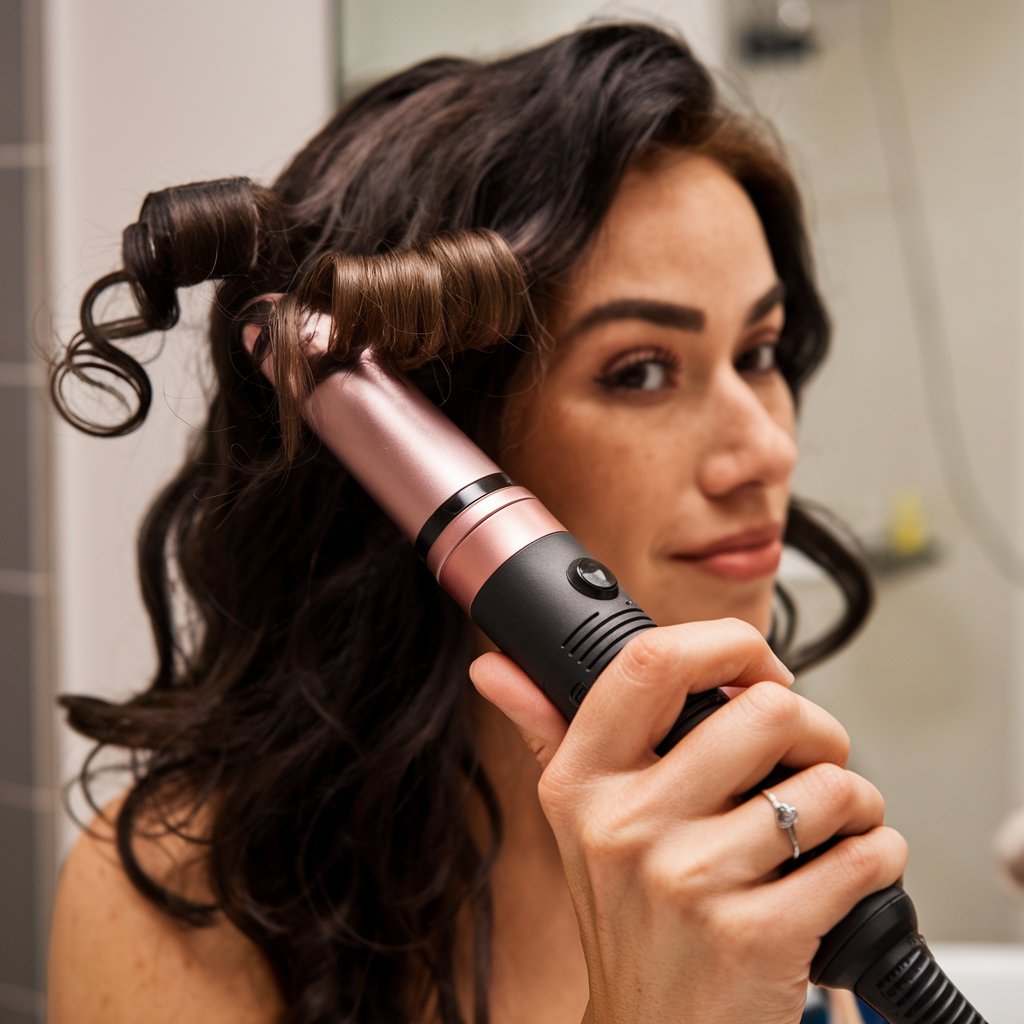
Learning to curl your hair with a wand might feel intimidating at first, especially if you’ve never used heat styling tools before. The good news is that with the right techniques and a bit of practice, anyone can achieve gorgeous, bouncy curls that look professionally styled. Whether you want loose beachy waves or tight spiral curls, a curling wand can become your go-to tool for transforming straight or slightly wavy hair into a head-turning style.
Unlike traditional curling irons with clamps, wands offer more versatility and create more natural-looking curls without the dreaded crease marks. The barrel heats up evenly, allowing you to wrap your hair around it in various directions for a more organic, effortless appearance. Plus, wands typically heat up faster and distribute heat more evenly than their clamped counterparts, making them ideal for beginners who want consistent results without spending hours in front of the mirror.
In the following sections, we’ll walk through everything you need to know about using a curling wand successfully. From selecting the right tools and preparing your hair properly to mastering different wrapping techniques and making those curls last all day, you’ll discover practical tips that take the guesswork out of wand curling. Ready to transform your hair game? Let’s get started!
What You Need Before Starting with a Curling Wand
Gathering the right tools and products before you begin makes a world of difference in your curling results. Just like a painter needs quality brushes and canvas, successful wand curling requires specific items that work together to protect your hair while creating beautiful, lasting curls.
Essential tools and products
Your curling wand is obviously the star of the show, but several supporting players deserve equal attention. A heat-resistant glove protects your fingers from accidental burns – trust me, you’ll appreciate this safety measure when wrapping hair close to the barrel. Wide-tooth combs help with initial detangling, while fine-tooth combs create precise sections. Hair clips or sectioning clamps keep unused hair out of your way, preventing tangles and ensuring even curl distribution.
Don’t forget about your workspace setup either. A heat-resistant mat or silicone pad provides a safe place to rest your hot wand between sections. Good lighting matters more than you might think – position yourself near a window or bright vanity mirror where you can clearly see what you’re doing. Having a hand mirror nearby helps check the back sections you can’t see directly.
Hair preparation products
The products you apply before curling determine whether your style lasts two hours or two days. Start with a lightweight volumizing mousse or foam applied to damp hair – this creates grip and body without weighing down your curls. For fine hair, look for alcohol-free formulas that won’t dry out delicate strands. Those with thicker hair might prefer a smoothing cream that tames frizz while providing hold.
Setting sprays designed specifically for heat styling offer dual benefits. They protect your hair from damage while helping curls maintain their shape longer. Apply these products section by section rather than spraying your entire head at once. This ensures even coverage and prevents product buildup in certain areas.
Heat protection essentials
Never skip heat protectant – consider it non-negotiable for healthy hair. Modern formulas do more than just shield strands from high temperatures. They often contain conditioning ingredients that smooth the hair cuticle, reducing frizz and adding shine to your finished curls. Spray versions work well for fine to medium hair, while serums or creams better suit thick or coarse textures.
Apply heat protectant to completely dry hair immediately before curling. Why dry hair? Water conducts heat, so any moisture left in your strands can literally boil when touched by the hot wand, causing severe damage. If you notice steam or hear sizzling sounds while curling, stop immediately – your hair isn’t dry enough.
The temperature setting on your wand matters just as much as protective products. Fine or damaged hair should stay between 250-300°F, while medium hair can handle 300-350°F. Thick, coarse, or hard-to-curl hair might need 350-400°F, but start lower and increase only if necessary.
Choosing the right wand size
Wand barrel size directly impacts your curl pattern, so selecting the right diameter for your desired look is crucial. Smaller barrels (3/4 to 1 inch) create tighter, more defined curls perfect for adding volume to shorter hair or creating retro-inspired ringlets. Medium barrels (1 to 1.5 inches) produce classic curls that work on most hair lengths – think romantic waves or polished spirals.
Larger barrels (1.5 to 2 inches) give you those coveted loose, beachy waves that look effortlessly tousled. These work best on medium to long hair since shorter lengths won’t wrap around the barrel enough times to hold a pattern. Some wands feature tapered barrels that create varied curl sizes in one pass – wider at the base for looser roots and narrower at the tip for tighter ends.
Consider your hair length when selecting barrel size too. Shoulder-length hair looks great with any barrel size, giving you maximum versatility. Very short hair benefits from skinnier barrels that can grab smaller sections effectively. Extra-long hair might need a longer barrel to accommodate the full length of each section without overlapping, which can create uneven results.
Hair texture plays into barrel selection as well. Fine hair often holds curls better with smaller barrels since the tighter pattern provides more staying power. Thick hair can handle larger barrels without losing definition. If your hair is naturally curly or wavy, a larger barrel helps reshape your existing texture into more uniform waves.
How to Prepare Your Hair for Wand Curling
Proper preparation sets the foundation for curls that look fresh hours after styling. The steps you take before even plugging in your wand determine how well your hair accepts and maintains its new shape. Think of this phase as creating the perfect canvas – rushing through it only leads to disappointing results later.
Washing and drying techniques
The journey to perfect wand curls actually begins in the shower. Use a clarifying shampoo once weekly to remove product buildup that might prevent curls from forming properly. On regular wash days, opt for volumizing or smoothing shampoos depending on your hair’s needs. Skip heavy conditioners that can weigh down curls – instead, focus conditioner on your mid-lengths and ends only.
After washing, gently squeeze excess water from your hair rather than rough toweling, which creates frizz and disrupts the hair cuticle. Microfiber towels or old cotton t-shirts work better than traditional terry cloth for maintaining smoothness. Apply your chosen styling products while hair is still damp for even distribution.
Blow-drying technique impacts how well your hair curls later. Point the dryer down the hair shaft to smooth cuticles and reduce frizz. Use a round brush to create slight tension and smoothness, but don’t worry about making hair perfectly straight – a bit of natural texture actually helps curls hold better. The goal is completely dry hair with minimal frizz.
For those with naturally textured hair, consider blow-drying with a diffuser first, then smoothing with a flat iron before curling. This extra step might seem counterintuitive, but starting with a uniform texture helps achieve more consistent curl patterns with the wand.
Sectioning methods
Strategic sectioning transforms a potentially chaotic process into a methodical, manageable routine. Start by creating a horizontal part from ear to ear across the back of your head. Clip the top portion up and out of the way. This lower section becomes your starting point, ensuring you don’t miss any pieces in hard-to-see areas.
Within that bottom section, create vertical subsections about 1-2 inches wide – smaller for tighter curls, larger for looser waves. The thickness of each section matters too. Grabbing too much hair at once prevents even heat distribution, resulting in limp curls that fall quickly. Thin to medium sections ensure every strand contacts the barrel for consistent results.
Work systematically from one side to the other, maintaining uniform section sizes throughout. As you complete the bottom layer, release another horizontal section about 2 inches above the first. Continue this pattern until you reach your crown area. This methodical approach might take longer initially, but it prevents the frustration of finding straight pieces mixed among your curls later.
Pay special attention to your hairline sections. These frame your face and remain most visible, so take extra care with sizing and placement. Many stylists recommend slightly smaller sections around the face for more defined, polished results in this crucial area.
Heat protection application
Even if you applied heat protectant earlier, a second light layer immediately before curling provides extra insurance. Focus this application on your ends, which are oldest and most fragile. Hold each section taut and mist lightly from mid-length to ends, avoiding roots that don’t need extra product weight.
Some heat protectants double as finishing products, offering hold alongside protection. These multi-taskers work especially well for fine hair that can’t handle multiple product layers. Read labels carefully to understand what each product offers – some provide humidity resistance, others add shine, and many now include strengthening ingredients.
Let any freshly applied product dry for a few seconds before wrapping hair around the wand. Wet product hitting hot metal creates steam that can damage hair and dilute the product’s protective benefits. A quick blast of cool air from your blow dryer speeds this process if you’re impatient.
Creating the ideal texture
Your hair’s texture immediately before curling significantly impacts the final result. Completely smooth, slippery hair often struggles to hold curls, while overly textured hair might look frizzy or undefined. The sweet spot lies somewhere between these extremes.
If your hair feels too silky after blow-drying, add texture with a volumizing powder or texture spray at the roots. These products create grip without heaviness, helping curls last longer. Work the product through with your fingers, lifting sections to ensure even distribution. Just remember – a little goes a long way with texturizing products.
For naturally textured or frizzy hair, the opposite approach works better. A smoothing serum or lightweight oil applied sparingly helps create more uniform curls. Focus on areas that tend to frizz most, usually around the hairline and crown. The goal isn’t poker-straight hair but rather controlled, smooth texture that curls predictably.
Consider your environment too. High humidity days call for anti-humidity products that create a barrier against moisture. Dry climates might require extra hydrating products to prevent static and flyaways. Adjusting your prep routine based on weather conditions helps maintain beautiful curls regardless of what Mother Nature throws your way.
Some women find that day-old hair curls better than freshly washed locks. The natural oils and slight texture provide grip without appearing greasy. If you prefer this approach, refresh your roots with dry shampoo before curling to absorb excess oil and add volume. This technique works particularly well for fine hair that tends to go limp when overstyled.
What’s the Best Technique for Wand Curling?
Mastering wand technique separates mediocre results from salon-worthy curls. While the basic concept seems simple – wrap hair around hot barrel, wait, release – the nuances of positioning, timing, and movement create dramatically different outcomes.
Holding and positioning the wand
Your grip and wand angle affect both safety and results. Hold the wand with your dominant hand, keeping your wrist relaxed to allow smooth movement. Point the barrel downward at roughly a 45-degree angle – this position works with gravity rather than against it, creating more natural-falling curls.
The direction you point the wand tip matters too. Pointing it toward your face while working on front sections helps curls frame your features beautifully. For back sections, angle the tip away from your head for easier maneuvering. This might feel awkward initially, but muscle memory develops quickly with practice.
Never grip the wand too tightly or lock your wrist. Fluid movement creates more natural-looking curls than rigid positioning. Think of it like conducting an orchestra – graceful, controlled movements yield better results than tense, jerky motions.
Your non-dominant hand plays an important supporting role. Wear that heat-resistant glove and use this hand to guide hair onto the barrel and hold the ends in place. This two-handed approach provides better control and protects your fingers from accidental burns.
Wrapping methods for different curl types
The way you wrap hair around the barrel determines your curl pattern. For classic spirals, start near your roots and wrap hair flat against the barrel, overlapping slightly as you work toward the ends. Keep tension consistent but not too tight – hair needs room to heat evenly.
Beachy waves require a different approach. Leave about an inch of roots uncurled and wrap hair more loosely around the barrel. Don’t overlap sections; instead, let them lie beside each other. Most importantly, leave the last inch or two of ends out of the curl. This creates that effortless, undone texture associated with beach waves.
For vintage-inspired curls, wrap hair flat and tight against the barrel, maintaining even spacing between wraps. Start closer to the roots and wrap all the way to the ends. The key difference lies in how you release the curl – catch it in your palm and let it cool in a coiled position before gently pulling it loose.
Mixed-direction curling creates the most natural look. Alternate wrapping sections toward and away from your face. This variation prevents curls from clumping together into one uniform mass. Front face-framing pieces typically look best curled away from the face, while alternating directions work well for the rest.
Timing for different hair textures
How long you hold each section on the barrel directly impacts curl tightness and longevity. Fine hair needs less time – usually 5-8 seconds suffices. Holding too long can damage delicate strands or create curls that look unnaturally tight and crimped.
Medium-textured hair typically requires 8-12 seconds for optimal results. This timing allows enough heat penetration to reshape the hair structure without causing damage. If curls seem loose immediately after release, resist the urge to rewrap – they’ll often tighten as they cool.
Thick or coarse hair might need 12-15 seconds, especially if you’re working with larger sections. These hair types require more heat penetration to overcome their natural resistance to curling. Start with shorter times and increase only if curls fall out quickly.
Here’s a useful timing guide based on various factors:
Fine Hair: 5-8 seconds on medium heat
Medium Hair: 8-12 seconds on medium-high heat
Thick Hair: 12-15 seconds on high heat
Damaged Hair: 5-7 seconds on low-medium heat
Virgin Hair: Can handle slightly longer times at higher heat
Environmental factors affect timing too. Humid conditions might require slightly longer hold times to set curls firmly. Cold, dry weather could mean reducing time to prevent over-drying. Pay attention to how your hair responds in different conditions and adjust accordingly.
Common technique mistakes to avoid
Even experienced users occasionally fall into bad habits that compromise their results. One prevalent mistake involves pulling the curl straight down immediately after releasing it from the barrel. This stretches out the pattern you just created. Instead, cup the warm curl in your palm for a few seconds, allowing it to cool in its coiled state.
Another frequent error is wrapping hair too tightly around the barrel. While it might seem logical that tighter wrapping equals tighter curls, excessive tension actually prevents even heat distribution. Hair needs slight breathing room to heat properly. Aim for firm but not stretched wrapping.
Starting with sections that are too large ranks among the top technique mistakes. Thick sections don’t heat evenly, resulting in limp curls that fall within hours. When in doubt, go smaller – you can always brush curls together later for a looser look, but you can’t fix inadequately curled sections without starting over.
Speed matters more than most beginners realize. Wrapping too slowly allows some parts to overheat while others barely warm. Conversely, rushing through sections prevents adequate heat transfer. Find a steady rhythm that allows smooth wrapping without dawdling or racing.
Many women forget to maintain consistent tension throughout each section. Starting tight at the roots then loosening near the ends creates uneven curls. The opposite problem – tight ends with loose roots – looks equally unbalanced. Practice maintaining steady, moderate tension from root to tip.
Ignoring your natural growth patterns leads to curls fighting against your hair’s tendencies. Hair grows in specific directions, especially around the crown and hairline. Work with these patterns rather than against them for curls that fall more naturally and last longer.
The cooling phase deserves as much attention as the curling itself. Disturbing curls while they’re still warm undoes much of your hard work. That seemingly solid curl remains moldable until completely cool. Patience during this crucial phase pays off with longer-lasting results. Some women clip each curl to their head while cooling for maximum longevity, though this adds significant time to the overall process.
How to Make Your Curls Last All Day
Creating beautiful curls is only half the battle – making them last through your entire day (or night) requires specific strategies. The longevity of your style depends on decisions made before, during, and after the curling process.
Setting techniques
The moment you release each curl from the wand determines its staying power. Instead of letting curls drop and hang immediately, catch each one in your cupped palm. Hold this coiled position for 5-10 seconds while the hair cools. This simple step can double your style’s lifespan by allowing the hydrogen bonds in your hair to set in their new curved formation.
For maximum hold, try the pin curl method. After releasing each section from the wand, coil it back up against your head and secure with a bobby pin or clip. Leave all sections pinned while you finish curling your entire head, then do your makeup or get dressed while curls cool completely. This technique works especially well for special events when you need guaranteed longevity.
Some sections need extra attention during the setting phase. Face-framing pieces, which often fall first due to touching, tucking behind ears, and general movement, benefit from longer cooling times. The crown area, where hair tends to be finest and most resistant to holding curl, also deserves extended setting time.
Once all sections have cooled completely – this takes at least 10-15 minutes – you can begin the finishing process. Resist any urge to touch or style before full cooling occurs. That impatience leads to premature curl dropping that no amount of hairspray can fix later.
Product recommendations
The right finishing products lock in your hard work without creating helmet hair. Start with a flexible hold hairspray applied in light, even layers. Hold the can 10-12 inches from your head and mist gently rather than dousing each section. This distance prevents wet spots that can weigh down curls.
For added insurance, consider using a setting spray designed specifically for curls. These formulas often contain humidity-blocking ingredients that prevent moisture from relaxing your pattern. Apply before and after curling for double protection. Just ensure products are completely dry before heat styling to prevent damage.
Texture sprays add grip between curl layers, preventing them from falling into one shapeless mass. These work particularly well for fine hair that struggles with longevity. Spray at your roots and mid-lengths, avoiding ends that don’t need extra product weight.
Anti-humidity products deserve special consideration in damp climates. These create an invisible shield against moisture that would otherwise penetrate the hair shaft and relax your curls. Look for lightweight formulas that won’t leave residue or stickiness. Apply as your final step, focusing on the outer layer of hair most exposed to elements.
Touch-up strategies
Even well-set curls might need refreshing throughout the day. Carrying a travel-size texture spray allows quick revival without starting over. Spray lightly on drooping sections, scrunch gently, and twirl around your finger to reactivate the pattern.
For more dramatic dropping, keep a mini wand or cordless styling tool in your desk or car. Touch up only the pieces that have completely fallen – over-styling the entire head leads to damage and uneven results. Focus on face-framing pieces and the crown area, which typically lose curl first.
Sometimes curls just need redistribution rather than re-curling. Flip your head upside down and shake gently at the roots. This adds volume while separating curls that have merged together. Follow with a light hairspray mist to lock in the refreshed shape.
Bobby pins offer discrete touch-up options for problem areas. If one section keeps falling flat, pin it in a lifted position for 10-15 minutes. The slight tension and repositioning often restore bounce without heat. This trick works especially well for reviving crown volume.
Overnight preservation methods
Want to wake up with decent curls? The right nighttime routine preserves much of your style for next-day wear. Start by gathering curls very loosely at your crown – think pineapple placement but barely secured. Use a silk scrunchie or soft fabric tie that won’t leave creases.
Silk or satin pillowcases reduce friction that causes frizz and flattening. If you can’t switch pillowcases, wrap your hair in a silk scarf or bonnet. The smooth fabric allows hair to glide rather than catch and tangle during sleep movements. This investment pays off in extended style longevity and overall hair health.
For tighter curl patterns, try the Medusa clip method. Separate curls into 6-8 sections and clip each one loosely to your scalp using small claw clips. This prevents crushing while maintaining each section’s distinct pattern. Remove clips in the morning and shake out gently.
Some women prefer protective styling overnight. Loosely twist two sections of hair rope-style and pin at the nape of your neck. This preserves curl pattern while preventing tangles. Untwist carefully in the morning and finger-style back into position.
Morning revival techniques can restore overnight losses:
Light Refresh: Dampen hands slightly and scrunch curls upward
Medium Refresh: Mist with curl refresher spray and retwirl droopy pieces
Heavy Refresh: Use steam from your shower to reactivate curls, then diffuse briefly
Emergency Fix: Rewrap completely fallen sections on wand for 3-5 seconds
Volume Boost: Flip upside down and mist roots with texture spray
The key to overnight success lies in protecting without over-manipulating. Too-tight securing methods create dents and odd angles. Too-loose approaches allow curls to flatten completely. Finding your personal sweet spot might require experimentation, but the payoff in time savings makes it worthwhile.
Weather plays into overnight preservation too. Humid nights call for tighter securing methods and possibly anti-humidity products before bed. Dry winter air might mean adding a light leave-in conditioner to prevent moisture loss overnight. Adjust your routine seasonally for best results.
Which Common Mistakes Should Beginners Avoid?
Understanding what not to do often teaches as effectively as learning proper techniques. These common missteps trip up even experienced users, but awareness helps you sidestep frustration and achieve better results from the start.
Temperature settings errors
Using excessive heat ranks as the number one mistake beginners make. That maximum temperature setting might seem like a shortcut to longer-lasting curls, but it often backfires. Damaged hair can’t hold curl properly, creating a vicious cycle where you use more heat trying to achieve results that keep getting worse.
Start with the lowest temperature that effectively curls your hair type. You can always increase if needed, but you can’t undo heat damage. Fine or previously processed hair rarely needs temperatures above 300°F. Even thick, coarse hair often responds well to 350°F with proper technique.
Watch for warning signs of temperature excess. If hair feels unusually dry or brittle after curling, reduce heat immediately. Seeing smoke or smelling burning? That’s hair damage happening in real-time. No curl is worth compromising your hair’s health.
The opposite extreme causes problems too. Using temperatures too low for your hair type means holding sections on the barrel longer, potentially causing more cumulative damage than shorter exposure at appropriate heat. Find your optimal temperature through careful experimentation.
Consider temperature variation throughout your styling session. Your wand might need several minutes to heat evenly after initial warm-up. Those first few sections might not curl as well if you start too quickly. Conversely, wands can overheat during extended use, requiring temperature adjustments partway through.
Sectioning problems
Grabbing random chunks of hair without systematic sectioning creates multiple issues. Uneven section sizes produce inconsistent curl patterns – tight ringlets next to loose waves looks messy rather than intentionally tousled. Proper sectioning takes time initially but saves frustration later.
Horizontal sections that are too thick prevent upper layers from curling properly. Hair nearest the barrel heats adequately while outer layers barely warm. This creates weak curls that fall within hours. Stick to sections no thicker than the barrel diameter for even heat distribution.
Forgetting to section the back properly leads to missed straight pieces discovered hours later. Use clips to create clear divisions you can work through methodically. Having a hand mirror helps check progress in hard-to-see areas. Don’t assume you’ve caught everything without visual confirmation.
Width matters as much as thickness. Sections wider than 1-2 inches become unwieldy to wrap smoothly. Narrow sections create more defined curls but take longer. Find the balance that gives you desired results within reasonable time constraints.
Product application mistakes
Overloading hair with products before curling seems protective but actually inhibits curl formation. Heavy leave-ins, oils, or creams create a barrier between hair and heat, requiring higher temperatures or longer exposure. Use products sparingly, focusing on truly necessary items.
Applying products unevenly causes some sections to curl differently than others. That generous amount at your roots combined with barely-there coverage at ends creates top-heavy curls that look unbalanced. Distribute products methodically for consistent results throughout.
Wrong product types for your hair texture compound curling challenges. Volumizing mousses that work beautifully on fine hair might make thick hair unmanageably poufy. Rich creams perfect for coarse textures weigh down delicate strands. Match products to your specific needs rather than following generic recommendations.
Timing of product application affects outcomes significantly. Heat protectant applied to damp hair and left to air dry often distributes unevenly. Styling products layered immediately before curling might not have time to properly set. Plan your product routine to allow appropriate drying and setting time.
Skipping heat protectant entirely remains surprisingly common despite widespread awareness of heat damage. No excuse justifies this omission – modern formulas work for every hair type and budget level. Consider heat protectant as essential as the wand itself.
Styling technique issues
Moving too quickly through sections prevents adequate curl formation. That race against time results in limp waves that disappear within hours. Slow down and give each section proper attention. Better to style half your head properly than rush through everything poorly.
Pulling curls straight immediately after release stretches out the pattern you just created. Curls need time to cool and set in their coiled position. Patience during this phase dramatically improves longevity. Touch curls only after they’ve cooled completely.
Brushing through curls with a traditional brush destroys their structure, creating frizzy volume instead of defined patterns. If you must loosen curls, use fingers or a wide-tooth comb very gently. Often, simply shaking curls out provides enough separation without sacrificing definition.
Starting at the wrong section leads to arm fatigue and awkward angles later in the process. Begin with lower back sections while your arms feel fresh. Save easily accessible front sections for last when you might be tired. This strategic approach maintains consistent quality throughout.
Curling in only one direction creates an artificial, wig-like appearance. Natural hair shows variation, so alternate curl directions for realistic results. This also prevents all curls from merging into one mass. Generally, curl front pieces away from your face and alternate directions elsewhere.
Forgetting to adjust technique for different head areas causes inconsistent results. Hair at your crown often needs different handling than thick hair at the nape. Hairline sections might require smaller portions or adjusted angles. Adapt your approach to each area’s unique characteristics.
Perhaps the biggest technique mistake involves expecting perfection immediately. Professional-looking curls require practice to achieve consistently. Those gorgeous styles on social media often represent years of experience. Give yourself grace during the learning process and celebrate gradual improvements. Document your journey with photos to track progress – you’ll be amazed how quickly your skills develop with regular practice.
Mastering the Curling Wand
Mastering the curling wand opens up endless styling possibilities for transforming your look. From bouncy ringlets for special occasions to effortless beachy waves for everyday wear, this versatile tool becomes more valuable as your skills improve. Every head of hair responds differently to heat styling, so treat these guidelines as starting points for discovering what works best for your unique texture and lifestyle needs.
The path to perfect curls isn’t always smooth – expect some less-than-stellar results while learning. Those early attempts with uneven sections, drooping curls, or slight kinks teach valuable lessons about timing, temperature, and technique. Within a few weeks of regular practice, muscle memory develops and what once felt awkward becomes second nature. Soon you’ll style your hair while getting ready for work without even thinking about hand positions or section sizes. Your investment in learning proper wand techniques pays dividends in confidence, versatility, and hair health for years to come.
Frequently Asked Questions
Q: Can I use a curling wand on wet or damp hair?
A: No, always ensure your hair is completely dry before using a curling wand. Any moisture in your hair will turn to steam when it contacts the hot barrel, causing severe damage and potentially burning your hair. If you hear sizzling or see steam, stop immediately and dry your hair thoroughly.
Q: How often can I safely curl my hair with a wand?
A: This depends on your hair’s health and the temperature you use. With proper heat protection and moderate temperatures, most people can curl 2-3 times per week without significant damage. If you notice increased dryness, breakage, or difficulty holding curls, reduce frequency and focus on deep conditioning treatments.
Q: Why do my curls fall out after just a few hours?
A: Several factors affect curl longevity: using sections that are too large, insufficient hold time on the barrel, skipping heat protectant, not allowing curls to cool properly, or using the wrong temperature for your hair type. Fine hair often needs setting spray and cooler temperatures, while thick hair might require higher heat and stronger hold products.
Q: What’s the difference between a curling wand and a curling iron?
A: The main difference is that wands don’t have a clamp. This means you manually wrap hair around the barrel, giving more control over tension and placement. Wands typically create more natural-looking curls without creases, while traditional irons with clamps work better for precise, uniform curls.
Q: Should I curl my hair in layers starting from the bottom or top?
A: Always start from the bottom layers and work your way up. This prevents you from disturbing already-curled sections and ensures you don’t miss any pieces underneath. Create horizontal sections from ear to ear, completing each layer before moving to the next.
Q: How do I prevent burning my fingers while using a wand?
A: Always use a heat-resistant glove on the hand that holds and guides your hair. Keep fingers at least an inch away from the barrel, and use the cool tip of the wand (if available) for support. Practice your grip and wrapping motion with the wand unplugged until you feel comfortable with the movement.
Q: Which direction should I curl my hair – toward or away from my face?
A: For the most flattering look, curl front face-framing pieces away from your face. For the rest of your hair, alternate directions (some toward, some away) to create natural-looking volume and prevent all curls from clumping together.
Q: Can I use hairspray before curling for extra hold?
A: It’s better to use hairspray after curling, not before. Hairspray contains alcohols and polymers that can cause hair to stick to the barrel or create uneven heat distribution. Use heat protectant and styling products before curling, then set with hairspray once curls have cooled.
Q: What size wand should I buy if I can only afford one?
A: A 1 to 1.25-inch barrel offers the most versatility for most hair lengths and desired styles. This medium size can create both tighter curls (by using smaller sections) and looser waves (with larger sections and varied techniques).

