

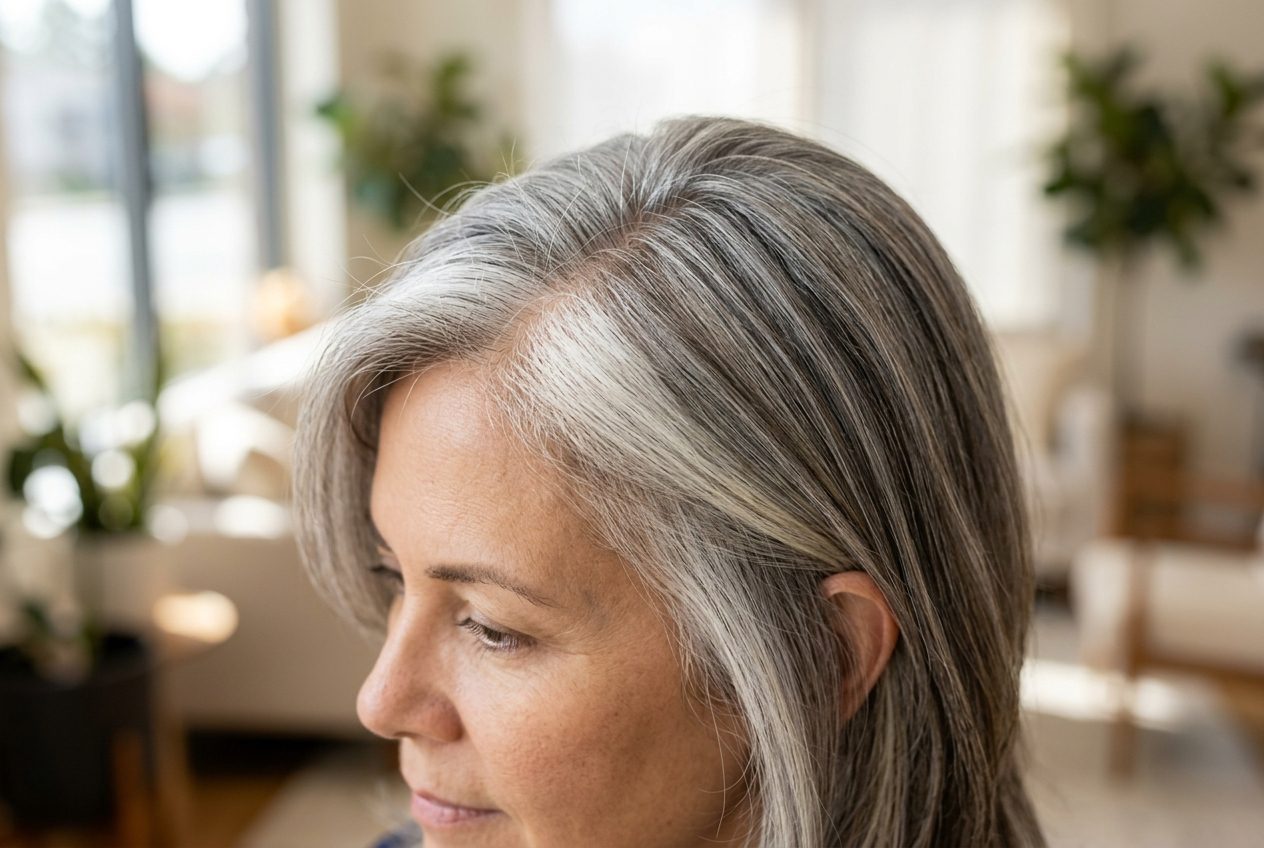
Natural gray hair does not come in one shade. Some women grow in bright white at the temples, while others see a mix of charcoal, taupe, silver, and their original color. That variety is exactly why a one-color dye job can sometimes look flat or make new growth stand out more than it should.
A softer approach usually works better. Gray blending uses carefully placed highlights, lowlights, glosses, or demi-permanent color to reduce contrast instead of covering every silver strand. The result can be more forgiving between appointments, especially compared with permanent root coverage that often needs refreshing every four to six weeks.
These 21 color ideas offer practical ways to work with white and gray strands rather than fight them. Some are best for women who are growing out old color, while others are simple options for adding dimension to hair that is already mostly silver.
1. Soft Silver Blonde With Shadowed Roots
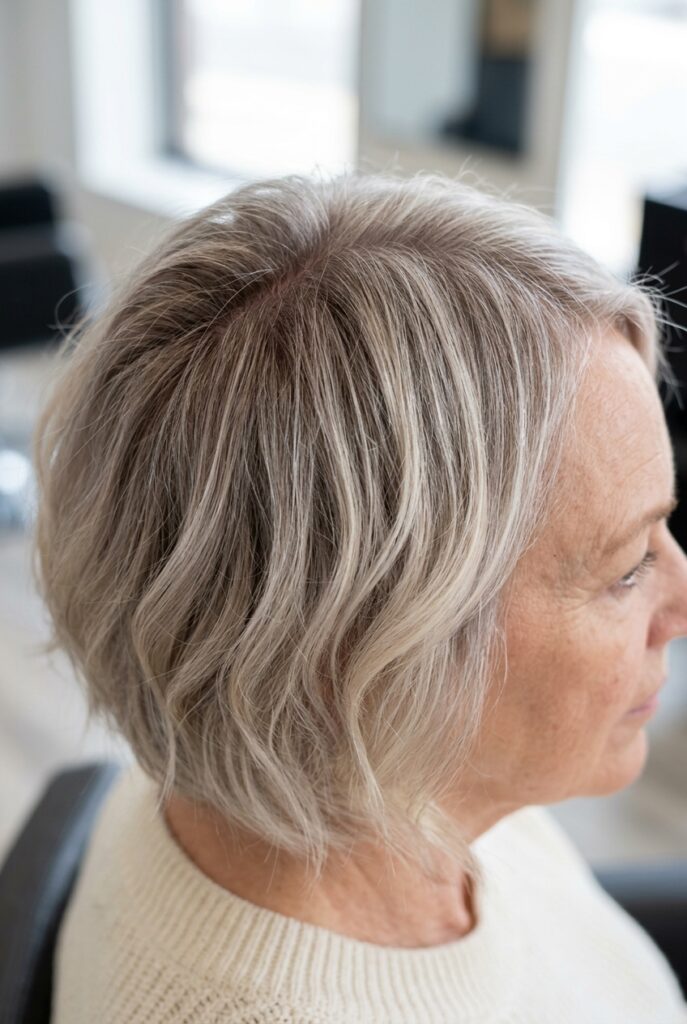
Soft silver blonde is a flattering choice for women whose gray comes in light around the hairline and crown. A slightly deeper root—usually an ash blonde or soft taupe—keeps the color from looking washed out and helps the new growth blend in naturally. Through the lengths, pale beige, pearl, and silver tones create movement without turning the hair blue or overly icy. It works especially well on women who used to be blonde, though darker blondes can get there gradually with fine highlights. Ask for a root shadow that is close to your natural base, then keep the rest light enough to connect with the gray coming in.
2. Mushroom Brown With Fine Ash Ribbons
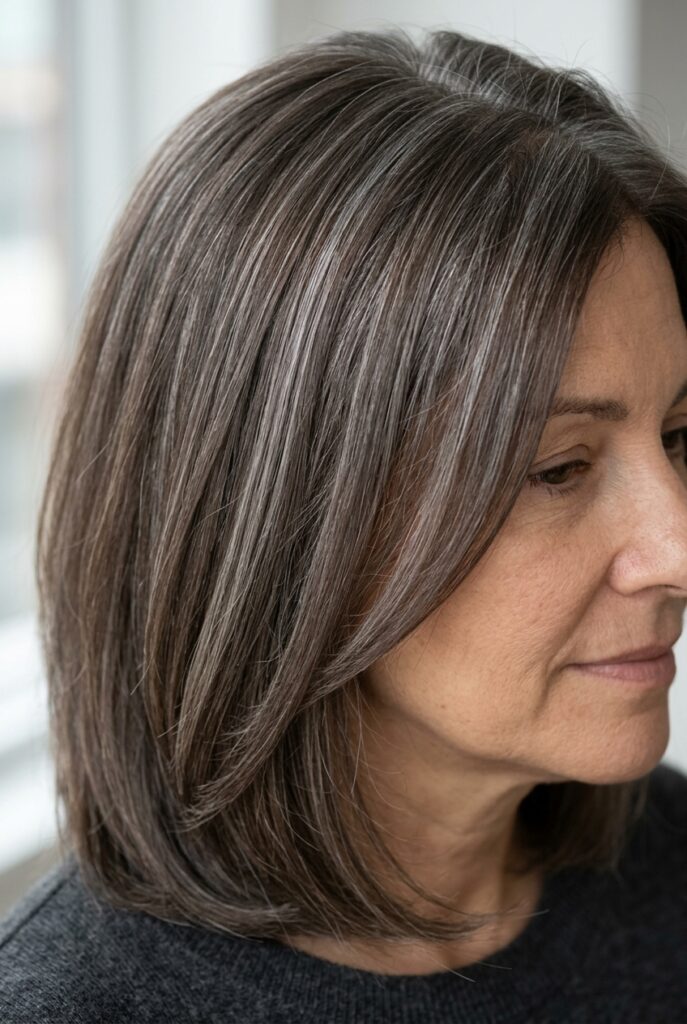
Mushroom brown sits between brown and gray, which makes it a smart middle ground for women who are not ready to go fully silver.
The base has a muted, cool brown tone rather than obvious warmth. Fine ash ribbons placed around the face and through the crown break up a solid color and help incoming gray blend into the rest of the hair. The overall effect looks soft, expensive, and natural, especially on medium to dark brown hair. A demi-permanent formula can be useful here because it fades gradually instead of leaving a sharp root line as it grows out. Professional color guidance commonly recommends cooler shades such as ash or mushroom blonde for softer blending with gray regrowth.
Keep the highlights fine. Thick pale stripes can look disconnected against a brown base.
3. Pearl Gray Gloss Over Natural White
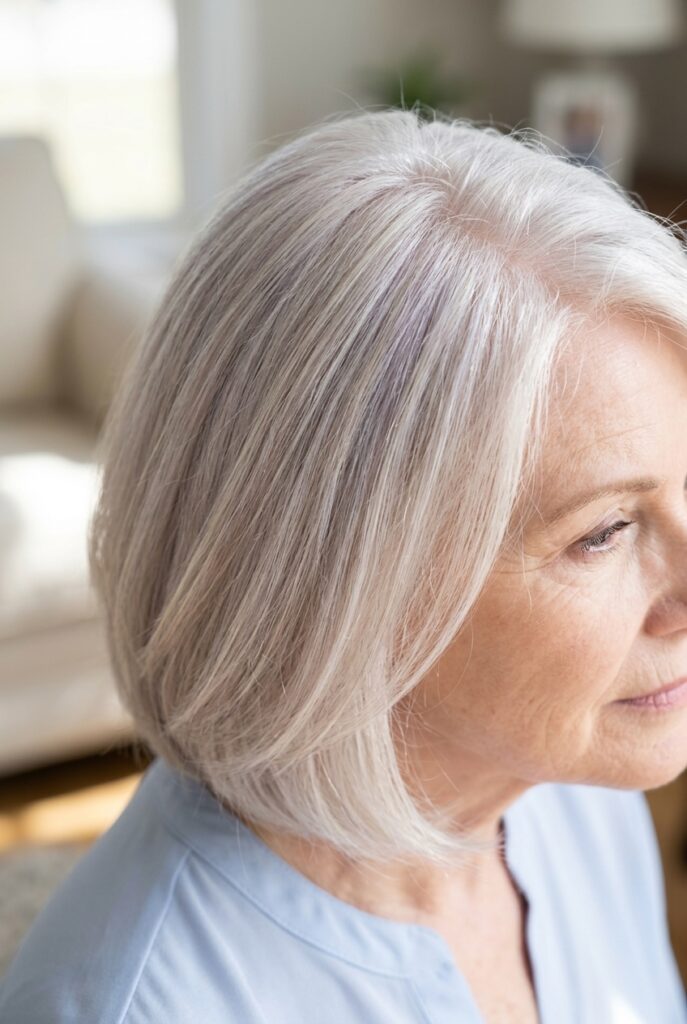
If your hair is already mostly white or pale gray, a pearl gloss may be all you need. This translucent service adds a sheer veil of cool shine rather than changing your natural color, helping white sections look brighter and softer. Pearl tones usually combine silver, faint violet, and cool beige, so they can reduce dullness without making the hair look purple. A gloss is also a nice choice for women who want a polished finish but do not want the upkeep of permanent dye. Use moisturizing, color-safe products afterward, since gray hair can feel drier and look less reflective than pigmented strands.
4. Salt-and-Pepper Lowlights for Brunettes
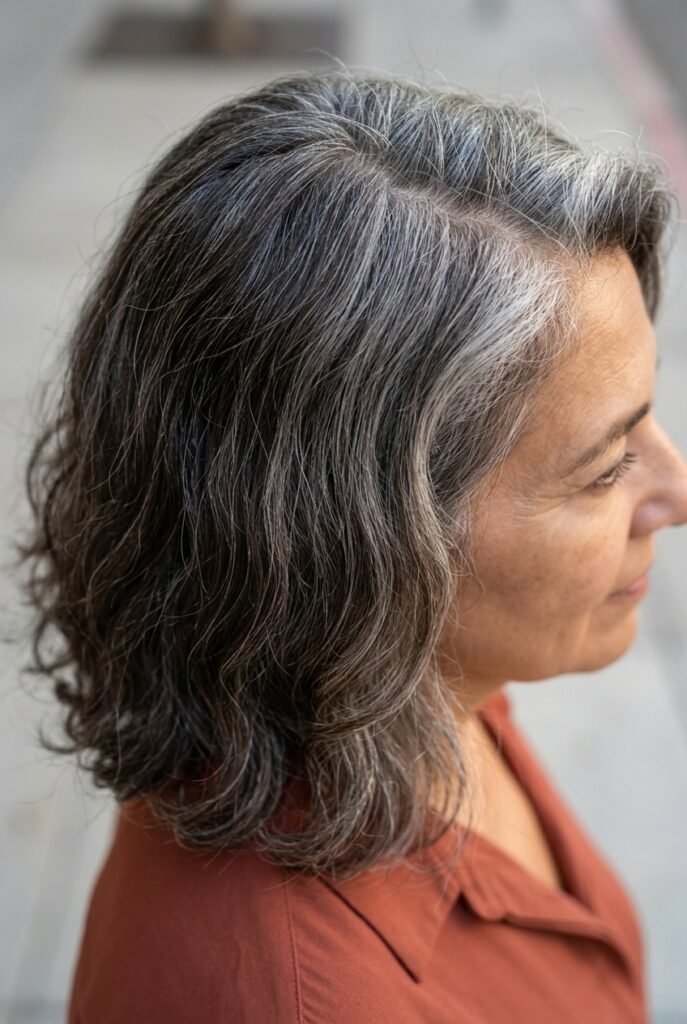
Salt-and-pepper lowlights are made for brunettes with a visible mix of dark strands and silver roots. Instead of trying to cover the white completely, a colorist adds soft charcoal, taupe, or cool brown pieces through the lighter areas. That brings the hair closer to the varied pattern that naturally grows from the scalp.
The gray becomes part of the color story rather than something that has to disappear.
5. Icy Platinum With a Soft Root Melt
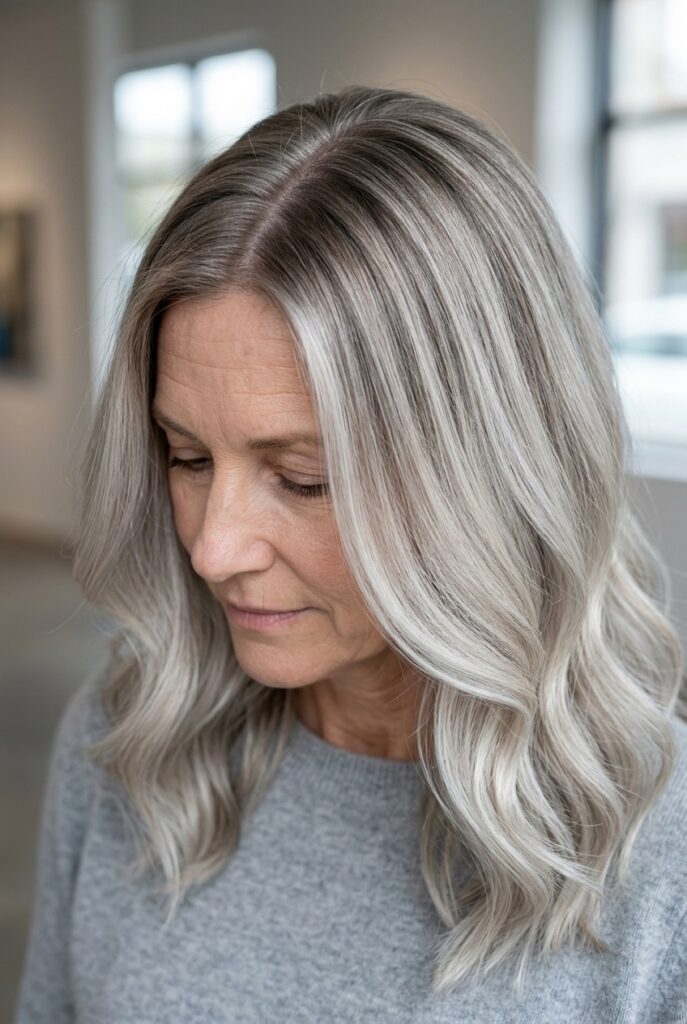
Icy platinum can work with gray hair, but it needs softness at the root to avoid looking severe. A root melt uses a deeper cool shade close to the scalp, then fades into pale blonde and silver through the mid-lengths and ends. It is particularly helpful if your natural hair is medium brown or darker and your gray is concentrated near the temples.
The lightest pieces should not be pure white from root to tip. A little depth makes the color look more believable.
Expect this option to need regular toning and conditioning. Bleached hair and naturally gray strands both benefit from moisture, heat protection, and gentler styling.
6. Cool Beige Blonde for Early Grays

Cool beige blonde is one of the easiest choices for women with just a scattering of gray around the part or hairline. It is softer than a sharp ash blonde and less yellow than a classic golden blonde, so white hairs can blend in without looking like separate stripes. A few fine highlights, mainly around the face and through the top layer, can make the shift feel gradual. This color is especially useful if you want to stretch time between touch-ups and do not want every new silver strand to show at once. Keep the beige tone neutral-cool, not brassy, and let a little natural depth stay near the roots.
7. Smoky Ash Brown With Silver Highlights
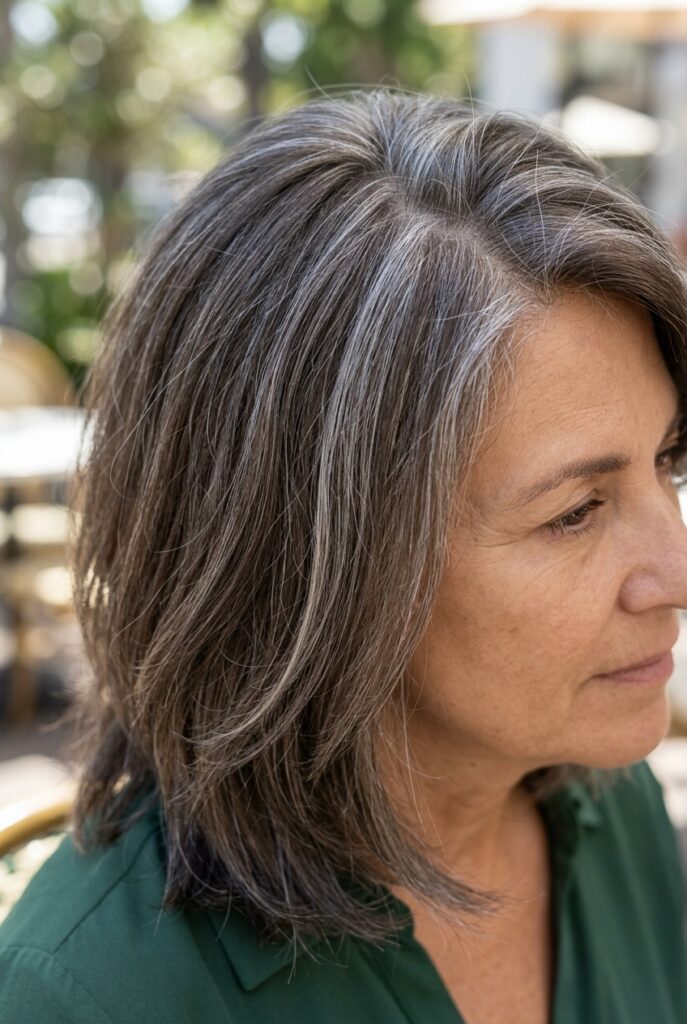
Smoky ash brown has enough depth to flatter darker hair while still making room for silver.
It is a good fit for women whose gray is spread through the part, temples, and crown instead of appearing in one solid patch.
The base stays cool and muted, while delicate silver highlights bring light to the upper layers. The goal is not to make every strand match. A blend of smoky brown, ash, and gray gives the hair the uneven, dimensional finish that natural color has. Ask for fine placement rather than a heavy foil pattern, particularly if your hair is thick or very dark. The softer the contrast, the easier the grow-out tends to be.
8. Creamy White With Dimensional Lowlights
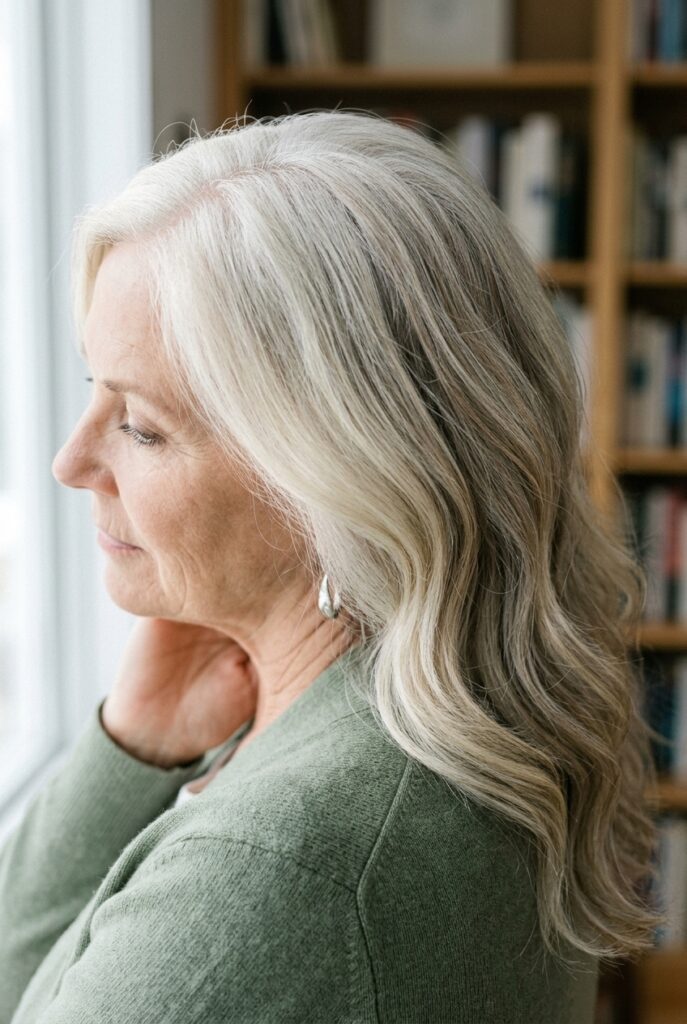
Creamy white works beautifully once the natural silver has become mostly white, but a solid white shade can sometimes make long hair look flat. A few lowlights in pale mushroom, soft silver, or light ash blonde give it shape without taking away the brightness.
Place the deeper pieces underneath and around the back, then keep the hairline and top layers lighter. The result has more depth in daylight and more movement when the hair is curled or worn in a layered cut. This approach is often easier to maintain than repeatedly coloring the whole head, since the lowlights can fade softly while your white strands stay visible.
9. Charcoal Gray for a Stronger Contrast
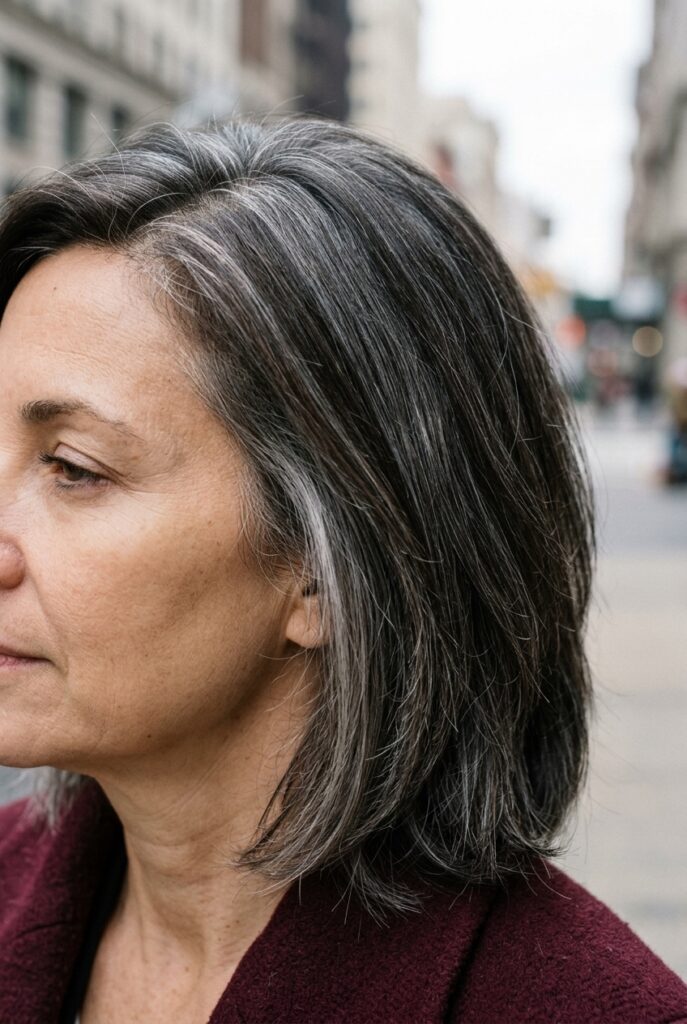
Charcoal gray is deeper and moodier than silver, making it a good option for women with naturally dark hair who want to blend gray without going light blonde. The color usually combines cool dark brown, graphite, and muted gray tones, with a few lighter pieces around the face to keep it from looking heavy. It is particularly attractive on bobs, lobs, and textured layers because movement keeps the darker shades from looking solid. If your silver is bright white, ask for a gradual transition near the roots so the difference does not look harsh. A gloss can refresh the smoky tone between larger color appointments.
10. Silver Balayage on Dark Brown Hair
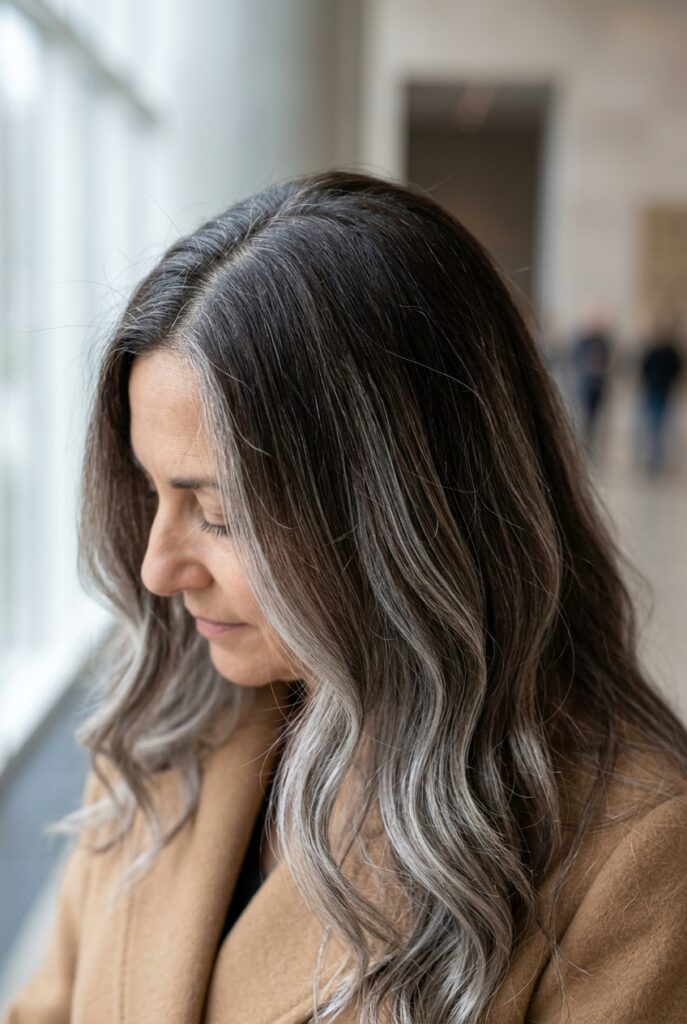
Silver balayage offers a gradual way to move away from dark root coverage. Instead of coloring every section from the scalp, the lightened pieces are painted mainly through the middle and ends, with lighter accents around the face. Natural gray at the root then has a place to blend into the design.
The first appointment may not get very dark, previously dyed hair all the way to silver. A careful transition is healthier than pushing the hair too far in one visit.
For a more natural result, ask for:
- Fine gray-blonde pieces near the temples
- Soft ash-toned ribbons through the ends
- A cool brown root area that connects to your natural regrowth
11. Champagne Gray for Warm Complexions
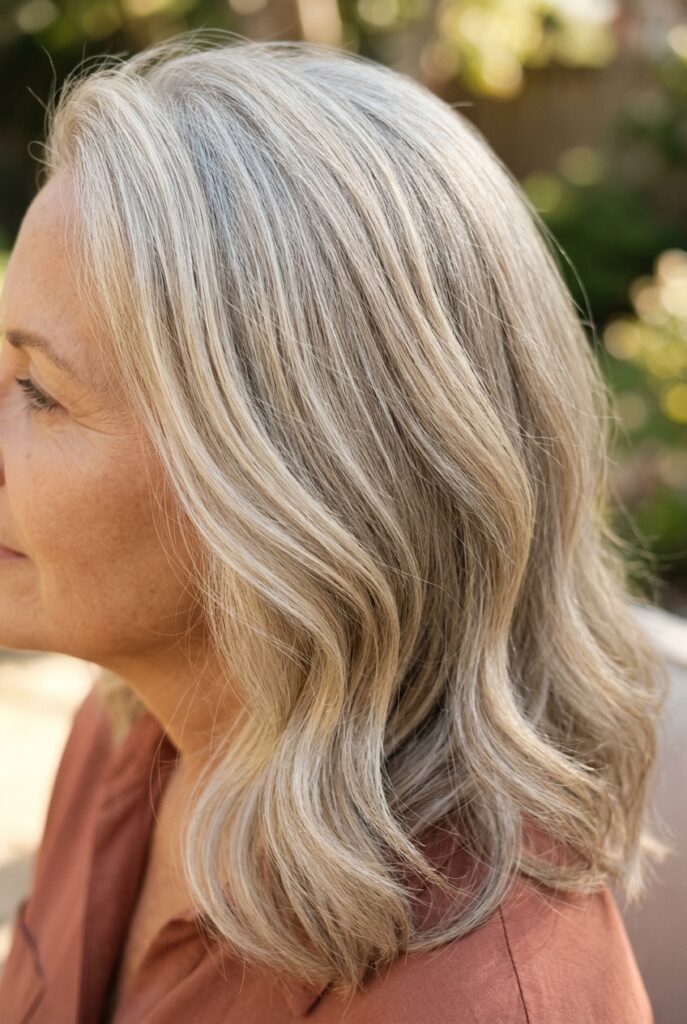
Champagne gray is a softer alternative to blue-based silver. It mixes pale gray with creamy beige and a hint of warmth, which can be especially flattering on women who feel that icy tones make their skin look tired. The color still looks gray, just less stark. It can work over a naturally light silver base or as fine highlights through blonde hair. Keep the warmth subtle; too much gold can make gray strands look yellow rather than luminous. A beige toner or clear shine gloss can help maintain that gentle, expensive-looking finish between salon visits.
12. Soft Black With Pewter Streaks
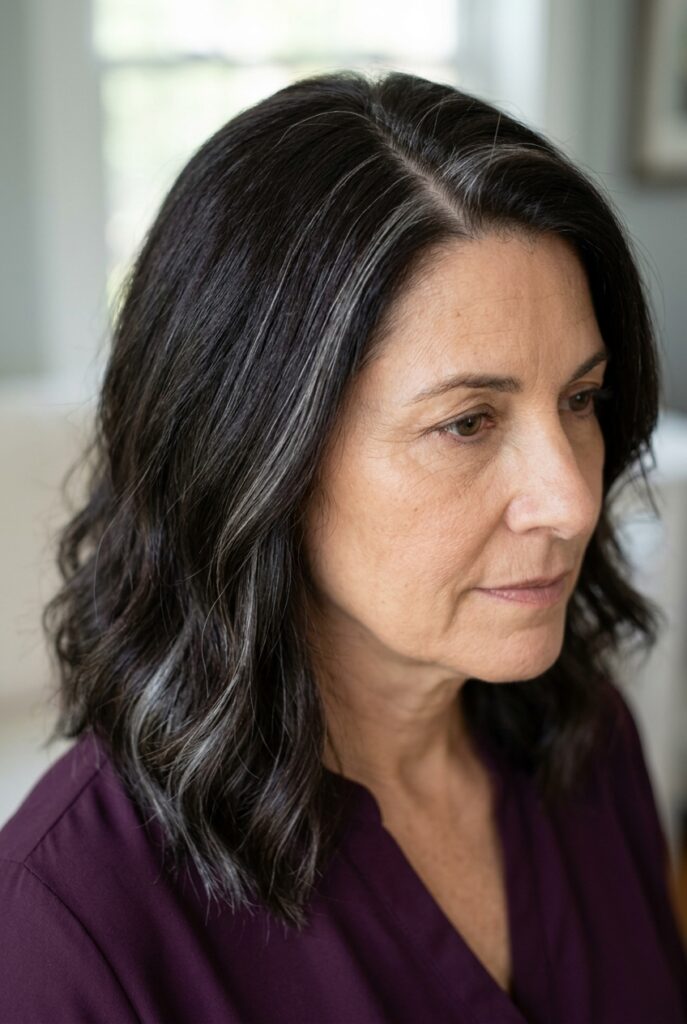
Soft black with pewter streaks keeps the drama of dark hair while making gray look intentional. Choose a black-brown or espresso base instead of an inky blue-black shade, which can create a hard line against pale roots. Then add narrow pewter pieces along the part, at the temples, and through a few lower layers.
This approach works best if your natural gray already appears in small clusters. The lighter strands echo what is growing in, while the dark base still gives the hair depth and definition. It also suits women who prefer a darker look but are tired of covering every root on a strict schedule. Gray blending is generally more forgiving than complete coverage because the grow-out is softer and less uniform.
For home color, be cautious with very dark box dye. It can be difficult to lift later if you decide to go lighter.
13. Steel Gray With Face-Framing Brightness
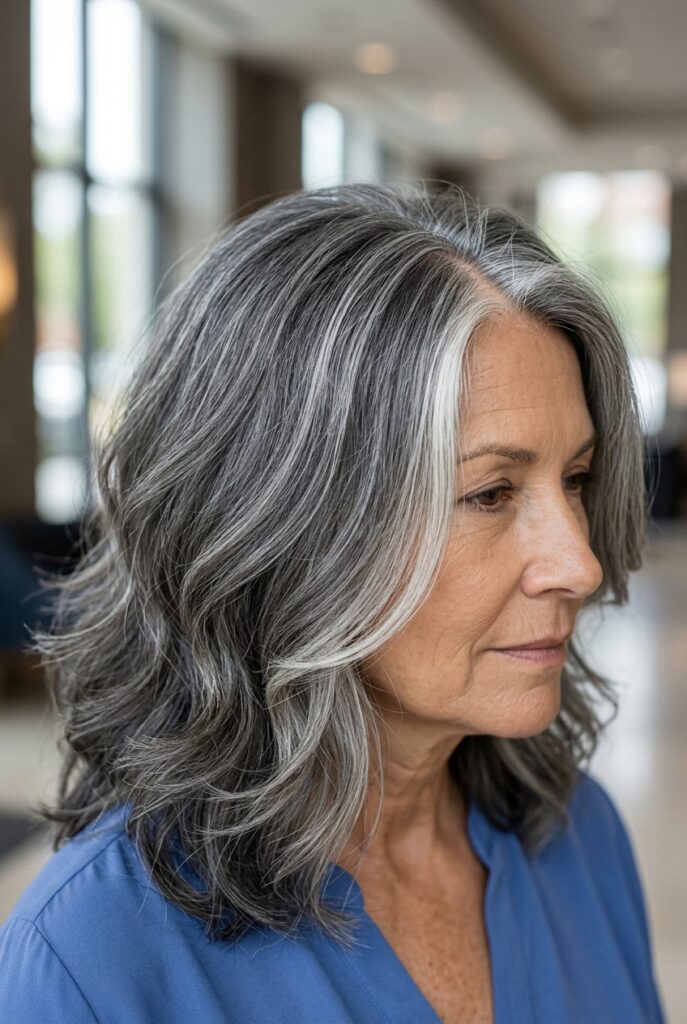
Steel gray has a polished, cool finish that works well with naturally medium-to-dark gray hair.
A few brighter white or silver pieces at the front keep the color from looking dull near the face. Those lighter areas can also make the cut look fresher without requiring a full lightening service.
The rest of the hair should stay a little deeper—more graphite than platinum. This contrast creates dimension and makes the brighter front pieces look purposeful. It is a strong choice for women with thick hair, layered cuts, or a naturally bold salt-and-pepper pattern. If you wear your hair in a center part, add a few fine bright strands along both sides of the part for balance.
14. Ash Blonde Babylights Through Medium Brown Hair
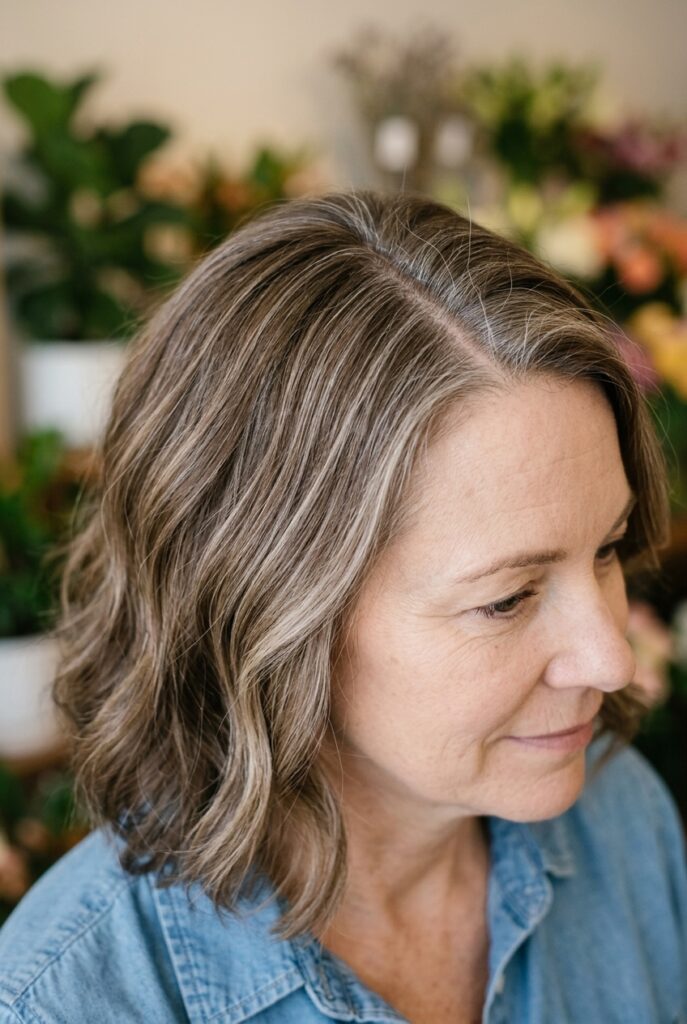
Ash blonde babylights are tiny, delicate highlights that soften medium brown hair with early gray. Because the sections are so fine, they can mimic the way silver hairs naturally scatter through the crown and around the face. This is a good choice for women who want a lighter overall look without committing to broad highlights or a full blonde transformation. Keep the tone cool enough to connect with gray, but not so pale that every highlighted strand stands apart. A few lowlights can be added later if the hair starts to look too light. The finished color has more movement and a much gentler grow-out than one flat brown shade.
15. Frosted Gray Pixie Color
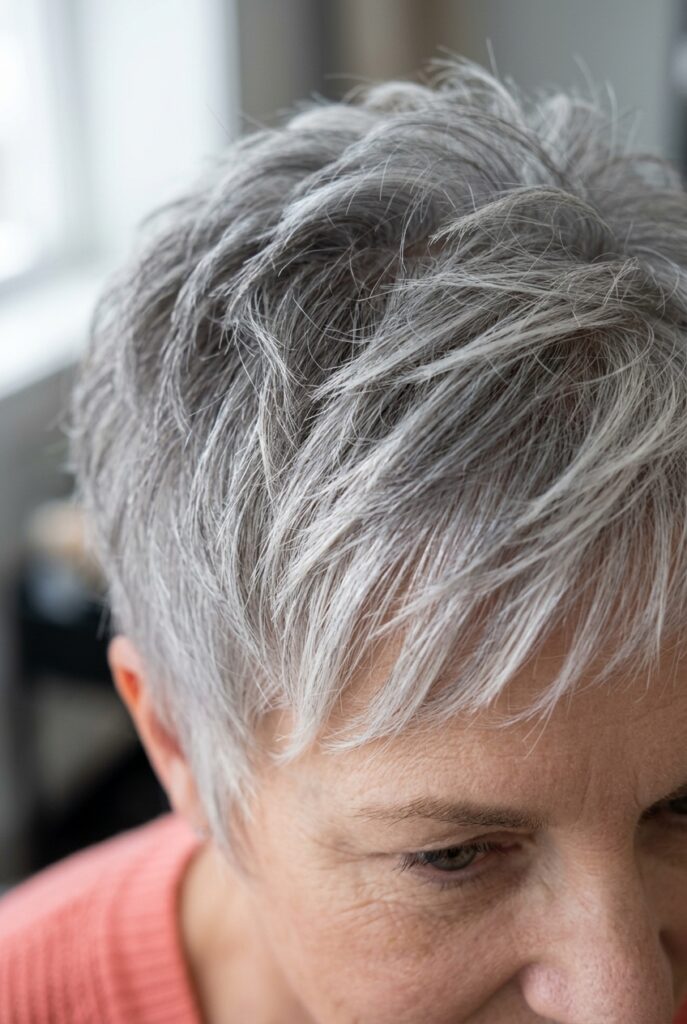
A cropped cut gives gray color plenty of character because the texture is visible from every angle.
For a frosted effect, keep the base a medium silver or soft charcoal, then brighten the top layers and fringe with pale white-gray pieces.
The contrast should be subtle, not striped. On short hair, even a small difference in tone can show clearly, so the colorist can place the brightest shades where the cut has movement—usually at the crown, around the face, and on the ends. A texturizing paste can help those lighter pieces stand out without making the hair stiff. This look is ideal for women who are growing out years of color and want a fresh cut that makes the transition feel deliberate.
16. Cool Mocha With Blended Silver Roots
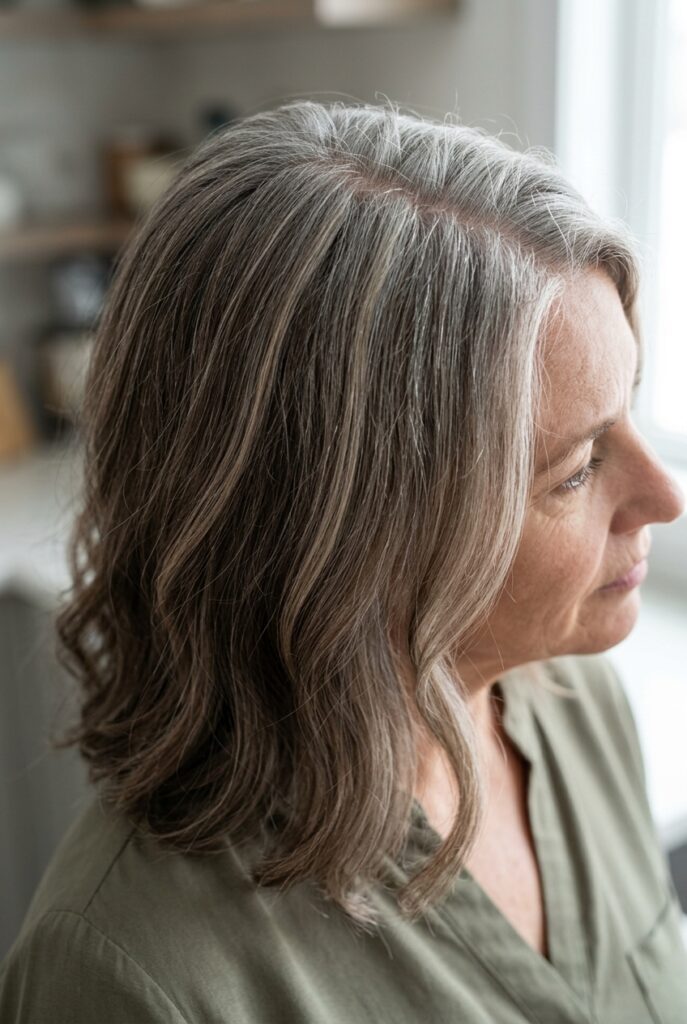
Cool mocha is a practical option for women who like brunette hair but want less obvious maintenance. The color is softer than deep chocolate and less warm than a traditional brown, so it pairs well with silver roots. A stylist can blend fine cool beige, ash brown, and gray-toned highlights through the upper layers, then leave some natural white visible near the scalp. That keeps the line of regrowth from looking abrupt. A demi-permanent color is often a good match for this type of service because it can fade gradually while softening contrast. Semi- and demi-permanent blending is widely used to create a more natural transition than full permanent coverage.
17. Lavender-Tinted Silver for a Subtle Twist
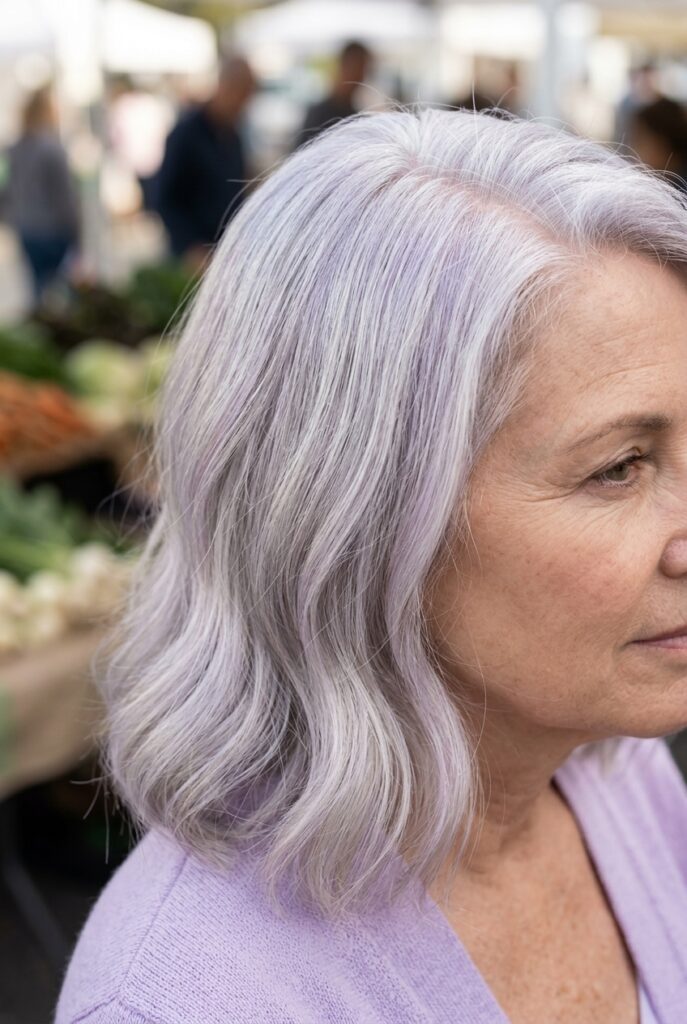
A faint lavender tint can make naturally silver hair look cleaner and more modern without turning it into a fashion color.
The key is restraint. The violet should be barely visible in most light, acting more like a toner than a strong dye.
A pale purple tone can help cancel yellow warmth that sometimes shows up in white or gray hair. Sun exposure, heat styling, mineral buildup, and chlorine can all contribute to brassiness, which is why toning products are often used sparingly on silver hair. Ask for a soft lavender gloss rather than a saturated shade, and use purple shampoo only as needed. Too much can leave pale hair looking dull or tinted.
18. Sandy Blonde With Natural White Highlights
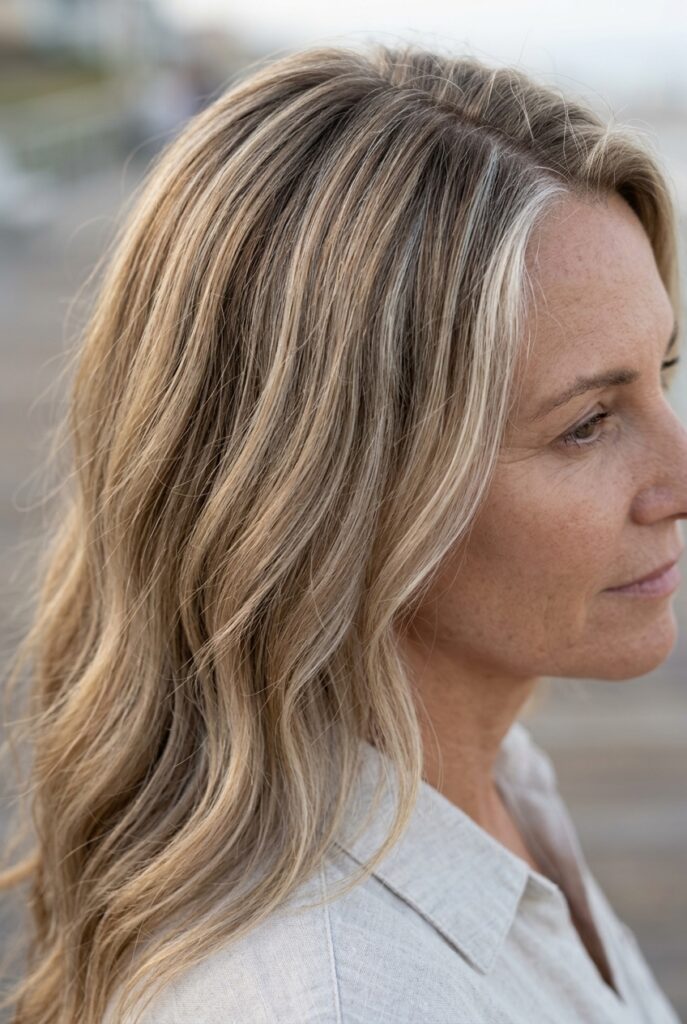
Sandy blonde is an easygoing choice for women with warm-neutral skin and a mix of blonde, light brown, and white strands. It combines beige blonde with a little ash so it does not fight against the natural silver coming in. White hairs can serve as built-in highlights, while the colorist adds a few sandy pieces where the hair needs more brightness. This works well for long layers, beachy waves, and shoulder-length cuts because the blended tones show best with movement. Keep the roots slightly deeper than the ends, especially if your original color is dark blonde or light brown. That bit of depth helps the whole color look more natural over time.
19. Espresso Brown With Delicate Gray Blending
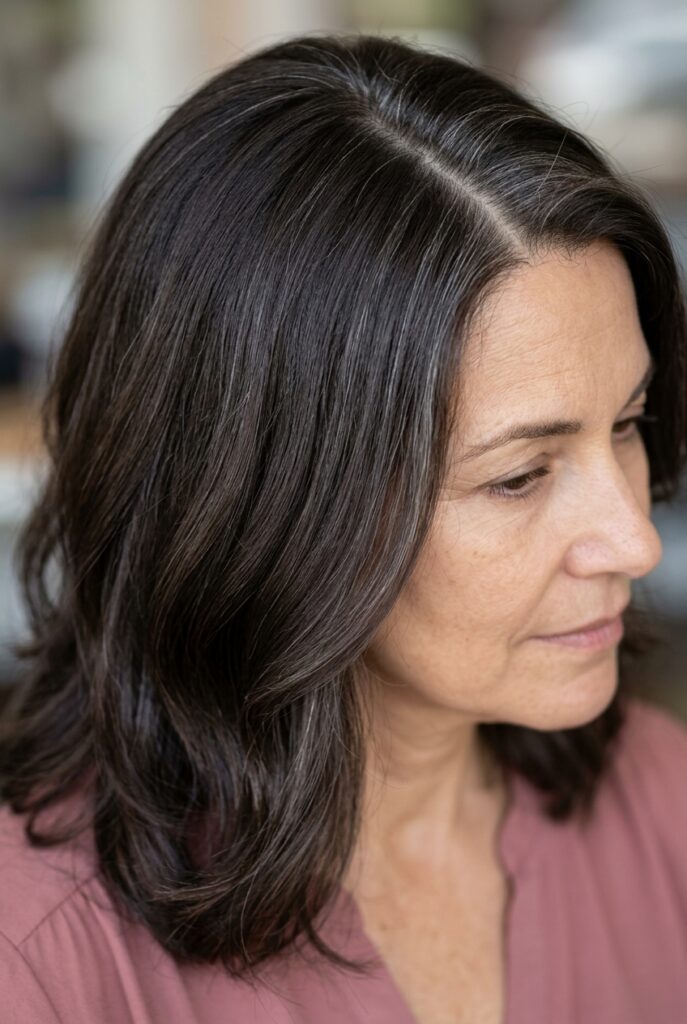
Espresso brown can still look natural with gray hair if it is softened with the right tones. Avoid a flat, opaque formula that covers every strand from root to tip. Instead, use a deep brown base with narrow ash-brown and pewter accents placed around the grayest areas.
The color should look deep without looking black. This is especially useful for women whose silver appears mostly at the temples and along the part.
For lower-maintenance upkeep:
- Choose a gloss or demi-permanent root blend instead of heavy permanent coverage
- Ask for subtle lighter strands around the hairline
- Refresh the tone only when contrast starts to bother you
20. Soft Pewter on Naturally Gray Hair
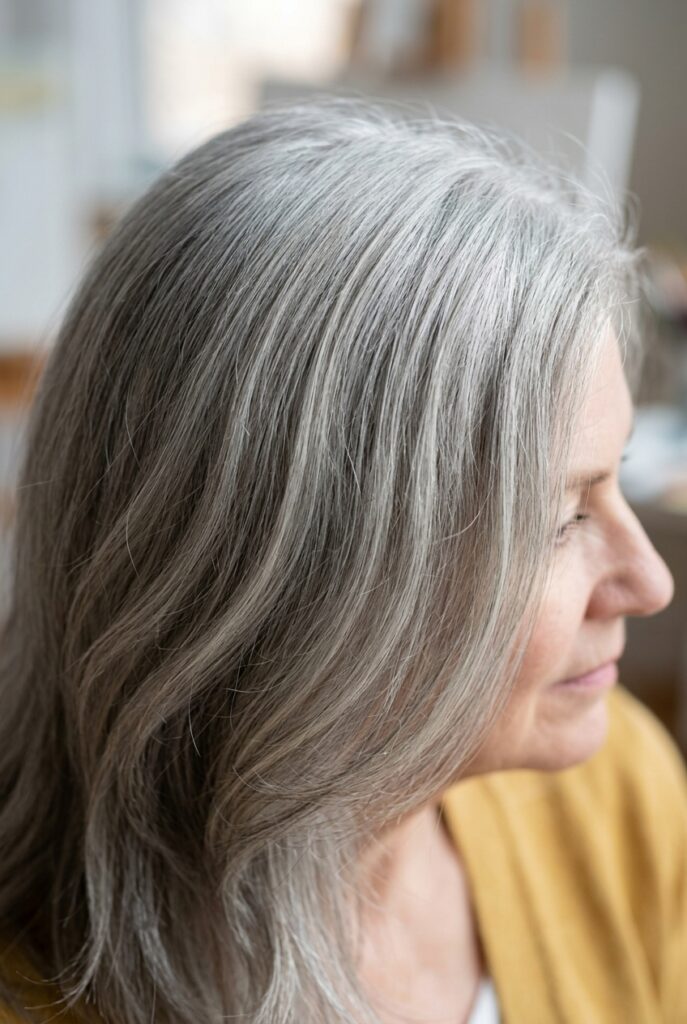
Soft pewter is a refined choice for women who have already gone mostly gray but want more depth than bright white alone provides. It sits between silver and charcoal, with a muted metallic finish that gives gray hair a more even appearance. A colorist may add a sheer toner and a few deeper lowlights under the top layer, especially if the hair is long or fine. This keeps the color from looking one-dimensional while still allowing the natural gray to lead. Regular moisture matters here, since dry gray hair can lose shine quickly. Use a hydrating mask once a week and protect the hair from heat before blow-drying or curling.
21. Full Silver With Bright White Pieces
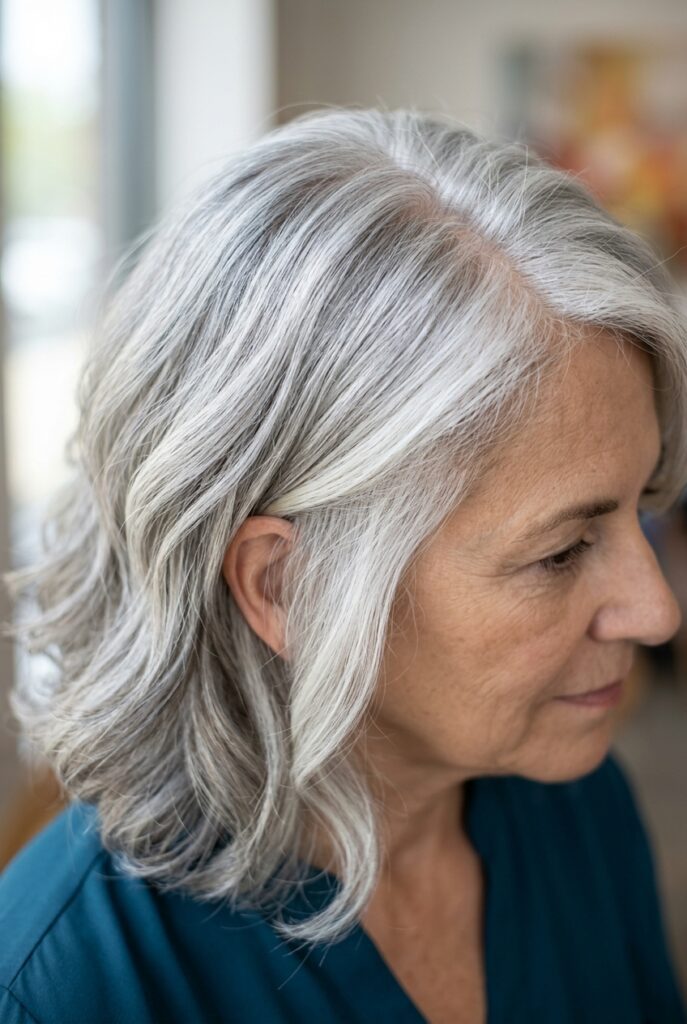
Full silver is for women who want to let their gray take center stage. It works best when the natural growth is already substantially gray or when a gradual salon transition has lightened old color enough to match it. The base should be a true silver—neither too blue nor too beige—with brighter white pieces placed around the face and on the top layers.
The bright areas make the color look lively, especially in a layered cut or loose waves. A few soft gray lowlights underneath can add depth if your hair is thick or all one length.
This is not a zero-maintenance option, but it can be far easier to live with than covering dark roots every month. Gray-blending services commonly allow more time between appointments than traditional full coverage, though exact timing depends on your haircut, color history, and how quickly your hair grows. Keep brassiness away with occasional purple shampoo, do not overuse it, and add moisture often so the silver stays glossy rather than dry.
A Color Plan That Lets Gray Look Intentional
The most natural-looking option is usually the one that respects what is already growing from your scalp. You may prefer a soft beige blend, smoky brunette ribbons, bright white pieces, or a full silver finish, but each works best when it includes more than one tone. A conversation with a colorist should cover your natural root pattern, old color, hair condition, desired upkeep, and whether you want to blend the gray or conceal it.
Protect your hair while making the change. The FDA advises doing a skin patch test every time you dye, following package directions, wearing gloves, avoiding dye on an irritated scalp, and waiting at least 14 days after bleaching, relaxing, or perming before coloring. With a realistic plan and tones that suit your natural pattern, gray can look polished, soft, and completely at home in your hair.
Frequently Asked Questions
Q: What hair color looks most natural with gray hair?
A: Cool, muted shades usually blend best, including mushroom brown, ash blonde, soft silver, pewter, taupe, and cool beige blonde. The right choice depends on your natural base color and the amount of white growing in.
Q: Is gray blending better than full gray coverage?
A: Gray blending is often better if you want softer roots and fewer obvious touch-ups. Full coverage may suit women who prefer a uniform color and want every gray strand hidden.
Q: Can I go gray without cutting all my hair off?
A: Yes. Highlights, lowlights, balayage, glosses, and demi-permanent color can help blend old dye with incoming silver over time. A shorter cut can speed up the process, but it is not required.
Q: What is the best color for gray roots on dark brown hair?
A: Ash brown, smoky brown, mushroom brown, charcoal, pewter, and fine silver highlights are all useful choices. They reduce the contrast between dark lengths and pale roots without forcing the hair to become fully blonde.
Q: How often should gray-blended hair be touched up?
A: Many women can go about six to eight weeks between appointments, while full gray coverage often needs attention every four to six weeks. Your schedule may vary based on haircut, root contrast, and how fast your hair grows.
Q: Will purple shampoo turn my gray hair purple?
A: It can leave a lavender cast if you use it too often or leave it on too long, especially on very white hair. Use it only when yellow or brassy tones appear, then follow with conditioner or a moisturizing mask.
Q: Is demi-permanent color a good choice for gray hair?
A: Yes. Demi-permanent color can soften the difference between gray and pigmented hair while fading more gently than permanent dye. It is especially useful during a transition to natural silver.
Q: Why does gray hair sometimes look yellow?
A: Heat tools, sun, chlorine, mineral buildup, pollution, medications, and product residue can contribute to yellow or brassy tones. A gentle clarifying routine, moisture, heat protection, and occasional toning can help.
Q: Should I do a patch test before using hair dye?
A: Yes. The FDA recommends a patch test every time you use hair dye, even if you have used the product before. Do not color your hair if your scalp is irritated, damaged, or sunburned.

