

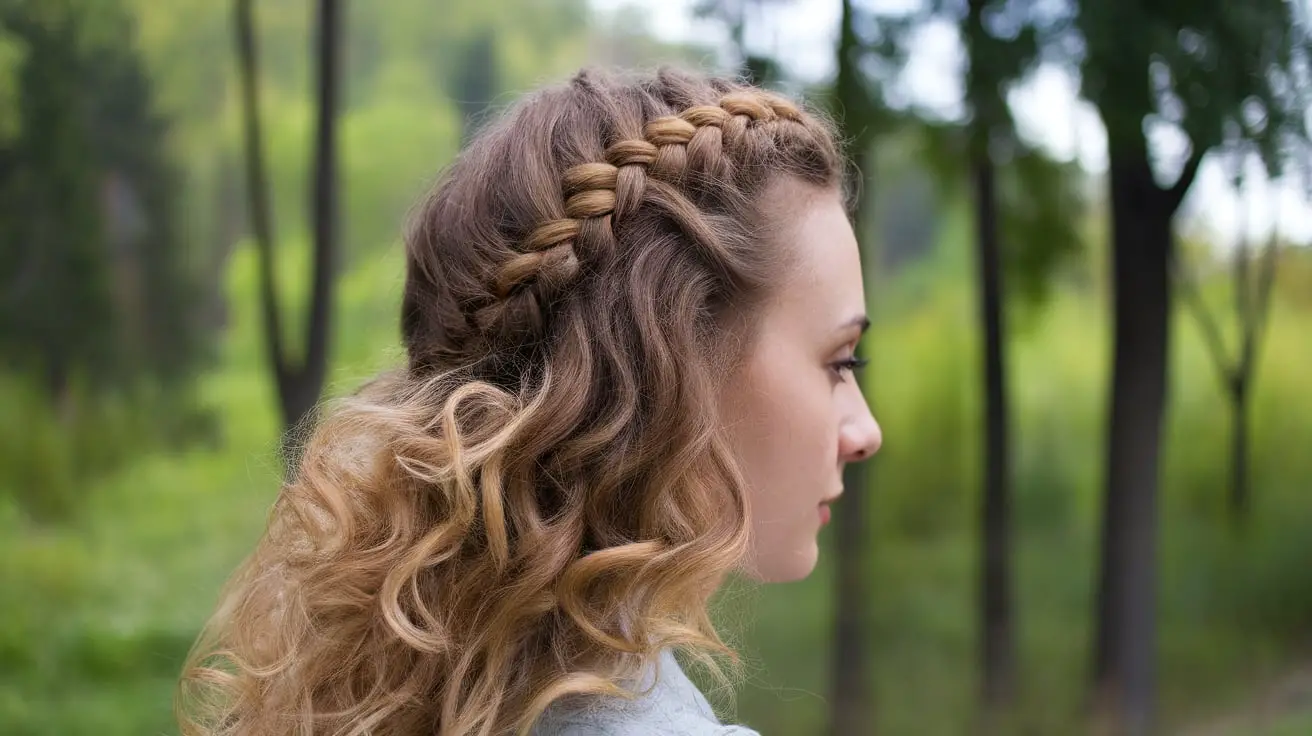
French braiding curly hair often feels like trying to solve a puzzle with missing pieces. The natural texture and volume of curls create challenges that straight-haired tutorials simply don’t address. Many women with curly hair have given up on French braids entirely, believing their hair type just isn’t compatible with this classic style.
The truth is that curly hair can absolutely rock a French braid – it just requires a different approach than what most tutorials teach. Traditional braiding methods were developed with straight hair in mind, which explains why they often result in frizzy, loose, or unflattering outcomes for those with curls. The key lies in understanding how curly hair behaves differently and adapting the technique accordingly.
This guide will walk you through a game-changing hack specifically designed for curly hair textures. We’ll explore modified techniques that work with your curls rather than against them, share preparation tips that make all the difference, and reveal styling secrets that keep your braid looking fresh for days. Let’s transform your French braiding experience from frustrating to fabulous.
Understanding the French Braid Challenge with Curly Hair

Curly hair operates by its own set of rules, which becomes particularly apparent when attempting traditional braiding techniques. The spiral structure of each strand creates natural resistance to being smoothed and incorporated into a braid. This fundamental difference in hair structure explains why so many curly-haired women struggle with French braids.
Texture differences between straight and curly hair
The shaft of curly hair has an elliptical shape rather than the round shape of straight hair. This creates multiple points where the hair naturally wants to bend and curl back on itself. When you try to pull curly hair taut for a traditional French braid, you’re fighting against its natural structure. The result? Strands that pop out, sections that refuse to stay smooth, and a braid that loosens within hours.
Additionally, curly hair tends to be more porous than straight hair. This increased porosity means it absorbs and loses moisture more quickly, leading to texture changes throughout the day that can affect your braid’s appearance.
Common struggles with traditional French braiding
One of the biggest challenges comes from the tension required in standard French braiding. Pulling curly hair tight enough to create a neat braid often stretches out the curl pattern temporarily. As the hair relaxes back to its natural state, the braid loosens and becomes messy-looking.
Section size presents another hurdle. Traditional French braiding calls for small, uniform sections. But curly hair naturally clumps together in varying sizes based on curl pattern. Forcing these natural curl families apart can create frizz and disrupt the hair’s structure.
The angle at which hair is incorporated also matters more with curls. Straight hair can be pulled in any direction without much consequence. Curly hair, however, has a preferred direction based on how each curl spirals. Working against this natural direction leads to bumps, gaps, and an overall untidy appearance.
Why standard techniques often fail
Most French braiding tutorials assume you’re starting with smooth, detangled hair. For curly hair, aggressive detangling destroys curl pattern and creates frizz. Yet skipping this step in traditional braiding leaves you with tangles that make clean sections impossible.
Standard techniques also typically suggest braiding on completely dry hair. While this works for straight hair, dry curly hair lacks the moisture and slip needed for smooth braiding. The friction created can rough up the hair cuticle, leading to immediate frizz and a braid that looks messy from the start.
The need for specialized approaches
Curly hair requires techniques that honor its unique properties rather than trying to force it into straight-hair methods. This means rethinking every step of the braiding process, from preparation through finishing.
The specialized approach considers factors like moisture retention, curl clumping patterns, and the hair’s natural spring. It works with the hair’s texture to create a braid that’s both beautiful and long-lasting. Understanding these needs sets the foundation for mastering the curly hair French braid hack.
What Makes This Hack Different?
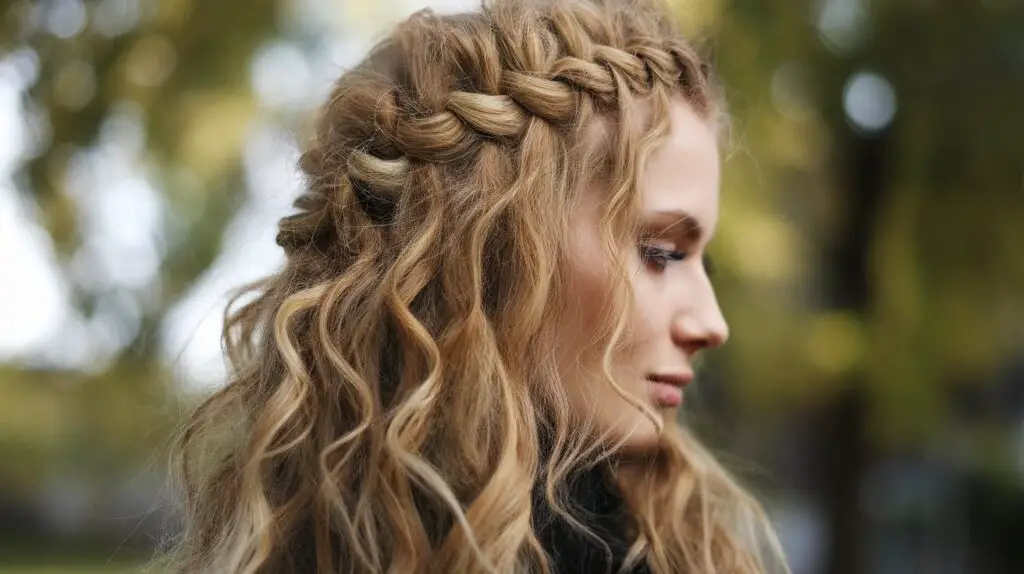
This revolutionary approach flips traditional French braiding on its head by working with curly hair’s natural tendencies instead of against them. The technique acknowledges that curls have their own logic and beauty that shouldn’t be suppressed but rather incorporated into the braid’s structure.
The modified technique explained
The core difference lies in how sections are gathered and incorporated. Instead of pulling hair taut and smooth, this method allows curls to maintain some of their natural shape within the braid. Think of it as creating a French braid that’s more like a controlled curl arrangement than a traditional tight plait.
Tension plays a completely different role here. Rather than maintaining consistent tightness throughout, the technique uses variable tension – firmer at the roots where needed for structure, looser through the lengths where curls want to spring. This creates a braid that looks intentionally textured rather than accidentally messy.
The incorporation angle also changes. New sections are added following the natural fall and direction of the curl pattern. This prevents the bumps and gaps that occur when curls are forced into unnatural positions. Each section flows into the next, creating a seamless yet textured appearance.
Key adjustments for curl patterns
Different curl types require slightly different modifications. Looser waves might need less product and can handle slightly more tension. Tighter coils benefit from generous moisture and very gentle handling. The hack adapts to work with waves through kinky coils.
Sectioning follows curl clumps rather than creating arbitrary divisions. This means some sections might be slightly larger or smaller than others, but they’ll hold together better because you’re working with how the hair naturally groups itself.
Tools and products that help
Success starts with the right tools. A wide-tooth comb or denman brush helps define sections without destroying curl pattern. Spray bottles keep hair at optimal moisture levels throughout the braiding process. Sectioning clips designed for thick hair prevent tangling while you work.
Product selection makes a huge difference. Leave-in conditioners provide slip for easier braiding. Curl creams help define sections while adding hold. Light-hold gels can smooth edges without creating crunchiness. The key is finding products that provide control without weighing down your natural texture.
Preparation steps that matter
Proper preparation can make or break your braiding experience. Start with hair that’s about 80% dry – damp enough for flexibility but not soaking wet. This moisture level provides the perfect balance of manageability and structure.
Section your hair while it’s still damp and your curl pattern is defined. This lets you see exactly how your hair naturally wants to fall and group together. Apply products section by section rather than all over, ensuring even distribution without oversaturation.
Timing considerations
Unlike traditional braiding that can be done anytime, this hack works best at specific points in your curl routine. The ideal window is during the styling phase of wash day, after products are applied but before hair is fully dry.
This timing allows you to work with defined, product-enhanced curls that haven’t yet set into their final shape. The braid then dries in place, creating a style that lasts longer because it was formed during the hair’s most moldable state.
Step-by-Step Guide to the Curly Hair French Braid Hack

Creating a successful French braid on curly hair requires patience and a systematic approach. Each step builds on the previous one, so taking time to get each phase right pays off in the final result.
Starting with properly prepped hair
Begin with freshly washed and conditioned hair. Apply your leave-in conditioner while hair is still soaking wet, using the prayer hands method to encourage curl clumping. Follow with your preferred curl cream or gel, distributing evenly through sections.
Let your hair air dry or diffuse until it reaches that crucial 80% dry stage. The curls should be formed and defined but still flexible when touched. If your hair dried completely, lightly mist sections with water as you work.
Create a rough center part from forehead to nape. This doesn’t need to be perfectly straight – following your natural part often works better with curly hair. Clip one side away to prevent tangling while working on the first braid.
The sectioning method
Start at your hairline with a section about 2-3 inches wide. Instead of creating a rectangular section like traditional braiding suggests, follow the natural curve of your hairline. This creates a more flattering shape that works with your curl pattern.
The section should include several curl clumps rather than breaking them apart. If you notice individual curls trying to separate into different sections, keep them together. This maintains the integrity of your curl pattern within the braid.
Divide this initial section into three parts, but don’t pull them apart completely. Keep them loosely separated while maintaining the curl formation. This is where the technique really diverges from traditional methods.
The braiding technique itself
Begin with one crossing motion to establish your braid base. Keep movements smooth and controlled rather than quick and tight. As you prepare to add hair, look for natural curl groupings along your part line.
When incorporating new hair, lift sections gently from the scalp without disturbing surrounding curls. Add these sections to your existing strands by wrapping rather than pulling. This preserves curl integrity while building your braid.
Important braiding tips to remember:
- Keep hands moisturized: Dry hands create friction that leads to frizz
- Work in sections: Focus on small areas rather than rushing through
- Maintain loose tension: The braid should feel secure but not tight
- Follow curl direction: Let the hair guide your movements
- Pause and adjust: Stop periodically to ensure even tension
Securing and finishing touches
As you reach the nape of your neck, transition to a regular three-strand braid. This portion can be slightly tighter since it’s less visible and helps anchor the entire style. Continue braiding to your desired endpoint.
Secure with a silk or satin scrunchie rather than a regular elastic. These materials prevent breakage and indentations in your curl pattern. If using an elastic, wrap it loosely and cover with a decorative hair tie.
For added hold and smoothness, lightly apply a curl refresher spray or diluted gel to any pieces that seem unruly. Use your fingers to gently coax them into place rather than trying to smooth them down completely.
Common mistakes to avoid
The biggest error is starting with hair that’s too dry. This leads to excessive frizz and difficulty incorporating sections smoothly. If your hair dried completely while braiding, stop and remist before continuing.
Another frequent mistake involves pulling too tightly at the crown. This area tends to loosen first, so the instinct is to braid it extra tight. Instead, maintain consistent moderate tension and accept that some loosening is natural and actually looks better with curly hair.
Trying to create perfectly smooth, uniform sections represents a fundamental misunderstanding of curly hair. Texture variation is part of the beauty. Work with it rather than spending excessive time trying to achieve an unrealistic smoothness.
Styling Variations and Maintenance Tips
Once you’ve mastered the basic technique, a world of styling possibilities opens up. The curly French braid hack serves as a foundation for numerous looks, each celebrating your natural texture in different ways.
Different looks you can create
The classic double French braid remains a favorite, but consider trying a single side braid for an asymmetrical look. Start at one temple and braid diagonally across your head, incorporating hair as you move toward the opposite shoulder. This creates a romantic, swept-over effect that frames your face beautifully.
For formal occasions, try a French braid crown. Begin at one ear and braid across the front of your head, following your hairline. Continue around to the other ear, then pin the end underneath for a seamless finish. This style showcases your curls while keeping them elegantly controlled.
A French braid mohawk offers an edgier option. Create a series of small French braids running from forehead to nape, leaving the sides free. This works particularly well with tighter curl patterns and creates impressive height and dimension.
The half-up French braid provides the perfect balance between control and freedom. Braid only the top section of your hair, allowing the rest to flow freely. This style works for any curl type and transitions easily from day to night.
How to make it last longer
Longevity starts with the initial braiding. Hair that’s properly moisturized and styled with appropriate products holds its shape better. Don’t skip the preparation steps in hopes of saving time – they’re crucial for a long-lasting style.
Sleep protection makes a significant difference. Wrap your braids in a silk or satin scarf, focusing on the edges where frizz typically develops first. Alternatively, use a satin pillowcase or bonnet to minimize friction throughout the night.
Avoid touching or adjusting your braids unnecessarily during the day. Each manipulation loosens the structure slightly. If you must smooth flyaways, use a tiny amount of gel on your fingertips rather than repeatedly running your hands over the braid.
Nighttime preservation methods
The pineapple method adapts well for braided styles. Loosely gather your braids at the very top of your head, securing with a silk scrunchie. This prevents them from being crushed while you sleep and maintains volume at the roots.
For longer braids, try the rope method. Gently twist your braids together and clip them on top of your head. This prevents tangling and reduces the weight pulling on your scalp throughout the night.
Consider applying a light oil to the ends before bed. This prevents moisture loss overnight and keeps the tail of your braid from becoming crispy or undefined. Focus on the last few inches where natural oils from your scalp don’t reach.
Refreshing techniques for multiple days
Morning refresh starts with assessing what needs attention. Often, only the edges and crown require touching up. Mix water with a small amount of leave-in conditioner in a spray bottle for targeted refreshing.
For frizzy sections, spray lightly and smooth with damp hands. Don’t oversaturate – too much moisture causes the braid to loosen. Focus on defining individual curls that may have escaped rather than trying to smooth everything flat.
If the braid itself has loosened significantly, try the pancaking technique. Gently tug on the curved sections of the braid to create fuller, more voluminous shapes. This disguises any looseness while creating an intentionally textured look.
When to take it down
Most curly hair French braids last 3-5 days with proper care. Signs it’s time to remove include excessive frizz that won’t smooth down, visible buildup at the roots, or an itchy scalp. Don’t push past these signals – healthy hair is more important than extending a style.
Pay attention to how your hair feels. If sections feel dry or brittle, it’s time for a moisture treatment. The braid has done its job, and your curls need refreshing. Planning your braid schedule around wash days creates a sustainable routine.
Weather also impacts longevity. High humidity might mean shorter wear time, while dry conditions could extend it. Learn how your hair responds to different conditions and adjust expectations accordingly.
Troubleshooting Common Issues
Even with the best technique, challenges arise. Understanding how to address common problems helps you achieve better results and prevents frustration from derailing your braiding efforts.
Dealing with frizz during braiding
Frizz often signals insufficient moisture or too much manipulation. If frizz develops while braiding, stop and assess your hair’s condition. Lightly mist the frizzy section with water and apply a small amount of curl cream with prayer hands.
Environmental factors contribute significantly to frizz. Braiding in a humid bathroom immediately after showering creates different challenges than working in an air-conditioned room. Adjust your product application accordingly – more hold for humidity, more moisture for dry conditions.
Sometimes frizz indicates you’re working against your curl pattern. Step back and observe how the hair naturally wants to fall. Adjust your braiding direction to follow this natural movement rather than forcing a different path.
Managing different curl patterns
Mixed textures within one head of hair require strategic planning. Start with the tightest curl pattern areas first, as these typically need more moisture and gentler handling. Looser sections can wait without significant change.
When one section seems significantly different from others, adjust your technique rather than your products. Tighter curls might need smaller sections and looser tension. Waves might tolerate slightly larger sections and firmer handling. Let each area tell you what it needs.
Bridge areas where textures meet by overlapping techniques gradually. Don’t switch abruptly from one method to another. This creates a more cohesive overall appearance despite texture variations.
Fixing loose sections
Looseness typically appears first at the crown and around the ears. These areas experience the most movement throughout the day. Instead of redoing entire braids, target just the problem areas.
For minor loosening, use bobby pins that match your hair color. Slide them into the braid at an angle, catching both the loose piece and the stable braid structure. This invisible fix maintains the overall look while addressing specific issues.
When sections loosen significantly, create small accent braids or twists with the escaped hair. Pin these decoratively across the main braid. This transforms a problem into an intentional design element.
Working with varying hair lengths
Layers present unique challenges in French braiding. Shorter pieces pop out no matter how carefully you work. Instead of fighting this, plan for it. Use a texturizing spray on shorter layers before braiding to help them grip.
Face-framing layers often refuse to stay put. Create small twists with these pieces and pin them along the braid’s edge. This frames your face prettily while solving the technical challenge of too-short pieces.
For very short sections that won’t reach the braid, consider leaving them out entirely. Style these pieces separately with gel or mousse to create intentional face-framing curls. This looks more polished than random pieces sticking out.
Solutions for stubborn areas
The nape area often proves most challenging, especially with shorter or broken hairs. Apply extra product here before starting your braid. Edge control products designed for baby hairs work well for stubborn nape sections.
Temple areas might resist incorporation due to different growth patterns. Work more slowly here, taking smaller sections. Sometimes braiding slightly looser through this area prevents pain and creates better longevity.
If certain sections consistently cause problems, consider your overall hair health. Breakage or damage in specific areas might require different handling. Treat these sections with extra moisture and protein treatments between styling sessions.
Mastering the French Braid on Curly Hair
Mastering this specialized technique transforms French braiding from a frustrating impossibility into an achievable, beautiful style for curly hair. The key lies in respecting your hair’s natural texture while applying modified techniques that work with curls rather than against them. Every curl pattern can successfully wear French braids – it simply requires the right approach and patience during the learning process.
Your unique curl pattern might need slight adjustments to these techniques. Pay attention to how your hair responds and modify accordingly. What works perfectly for one person’s 3B curls might need tweaking for another’s 4A coils. This personalization process helps you develop your own signature braiding style that consistently delivers beautiful results.
Frequently Asked Questions
Q: How long should my curly hair be to try this French braid hack?
A: Your hair should be at least shoulder-length for comfortable French braiding. Shorter hair can work but requires more patience and possibly more product to keep shorter pieces in place.
Q: Can I do this hack on blown-out or heat-styled curly hair?
A: The technique works best on hair in its natural curl state. Heat-styled hair lacks the texture and grip that makes this method successful. Save this style for your natural curl days.
Q: What’s the best way to remove the braids without damaging my curls?
A: Start from the bottom and work up slowly. Apply oil to your fingers for slip. Gently separate the sections rather than pulling. Once unbraided, don’t immediately wash – let your curls rest for a few hours first.
Q: Should I braid my hair wet or dry for this technique?
A: The sweet spot is about 80% dry – damp enough for flexibility but not soaking wet. Completely wet hair takes too long to dry and may develop mildew, while fully dry hair lacks manageability.
Q: How do I prevent the braid from giving me a headache?
A: Keep tension moderate throughout, especially at the crown and temples. If you feel pulling while braiding, you’re going too tight. The braid should feel secure but never painful.
Q: Can I swim with French braids in my curly hair?
A: Yes, but protect them first. Apply a leave-in conditioner before swimming and wear a swim cap if possible. Rinse with fresh water immediately after swimming and reapply leave-in conditioner.
Q: What if my curl pattern is different on each side of my head?
A: Adjust your technique for each side based on that area’s specific needs. One side might need more product or looser tension. This is completely normal and creates perfectly imperfect, beautiful results.
Q: How often can I wear French braids without damaging my curls?
A: Wearing French braids 1-2 times per week is generally safe if you’re gentle and maintain proper moisture. Always give your hair rest days between protective styles to prevent tension damage.

