

Starting to work out for the first time can feel like a lot. There’s no shortage of advice out there — intense programs, complicated routines, and gear lists that cost a small fortune. But the truth is, you don’t need any of that to get moving and start seeing real results. A clear space in your living room and your own bodyweight are honestly all you need.
Home fitness has quietly become the preferred choice for most women in the US. Research shows that women who work out at home are more likely to stay consistent than those who depend on gym access — and consistency, more than anything else, is what actually changes your body and energy over time. No commute. No judgment. No waiting for machines. Just you, your space, and a routine that fits your life.
The ten workouts below are specifically chosen for women who are just getting started. Each one is low-impact, equipment-free, and simple enough to do in under 30 minutes. Whether you have 10 minutes before work or a full half hour on a weekend morning, there’s something here that works for your schedule.
- Before You Start: Two Things That Matter More Than the Workout Itself
- 1. Bodyweight Squats
- 2. Glute Bridges
- 3. Knee Push-Ups
- 4. Forward Lunges
- 5. Plank Hold
- 6. Marching in Place
- 7. Wall Sit
- 8. Standing Side Leg Raises
- 9. Superman Hold
- 10. Dead Bug
- How to Put It All Together
- Your Body Will Thank You
- Frequently Asked Questions
Before You Start: Two Things That Matter More Than the Workout Itself
The single biggest mistake first-timers make is going too hard, too fast. A 20-minute workout done three times a week beats one brutal session followed by days of soreness and zero motivation to go back. Start with a brief warm-up — two minutes of marching in place, arm circles, and light leg swings is all it takes. This gets blood flowing and loosens your joints before they need to do any real work.
Form matters more than reps. Five clean squats are worth more than twenty sloppy ones — both in results and in keeping your knees and back safe. Read through the form notes for each exercise before you start, and don’t rush. Controlled movement is the point.
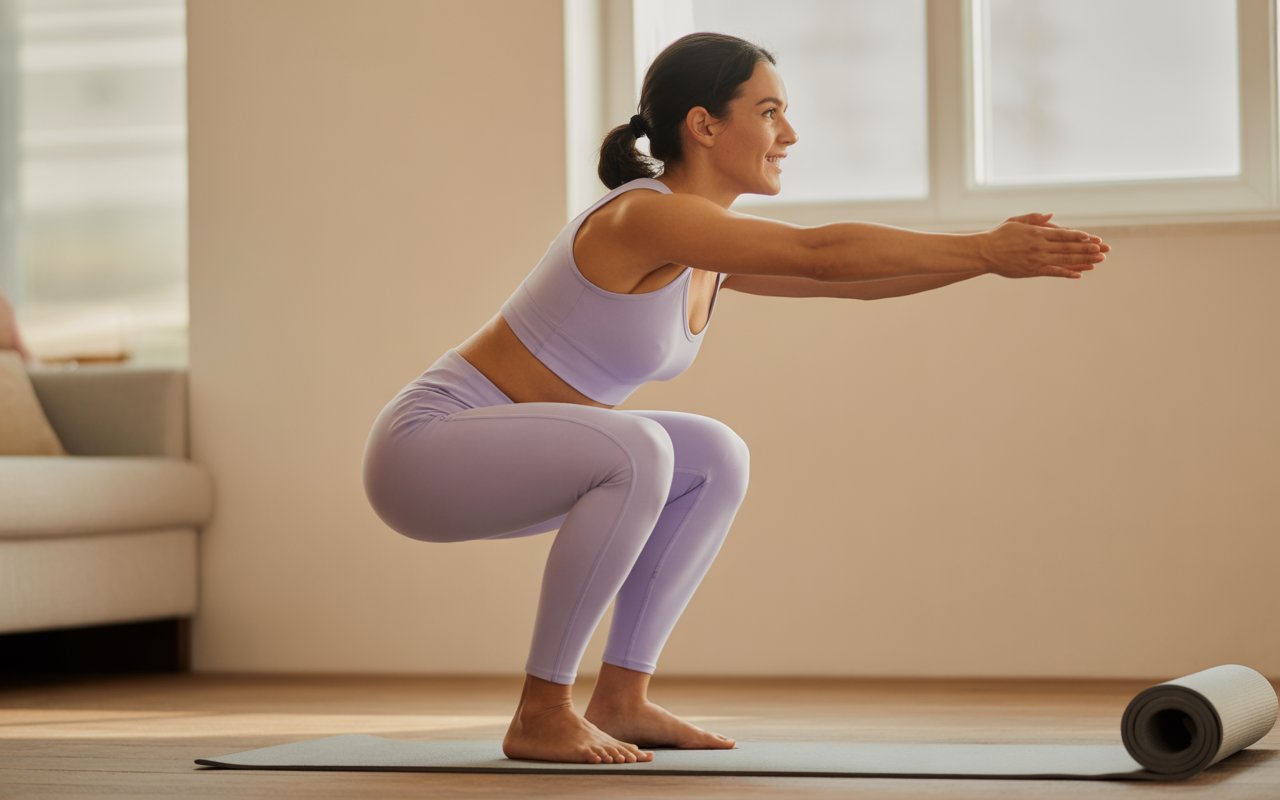
1. Bodyweight Squats
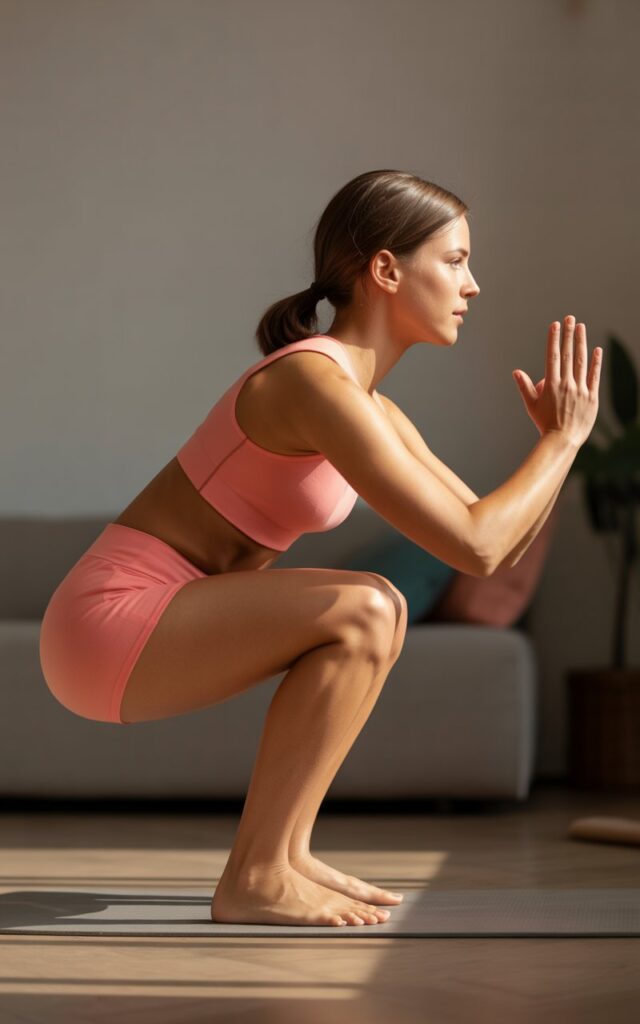
Squats are one of the most functional exercises a woman can do. They mimic the exact motion of sitting down and standing up, which means you’re training movements your body uses every single day.
Stand with your feet hip-width apart, toes turned slightly out. Push your hips back as if you’re lowering into a chair, keeping your chest up and knees tracking over your toes. Go as deep as feels comfortable, then press through your heels to stand back up.
Start with 2 sets of 12 reps. Rest 60 seconds between sets.
2. Glute Bridges
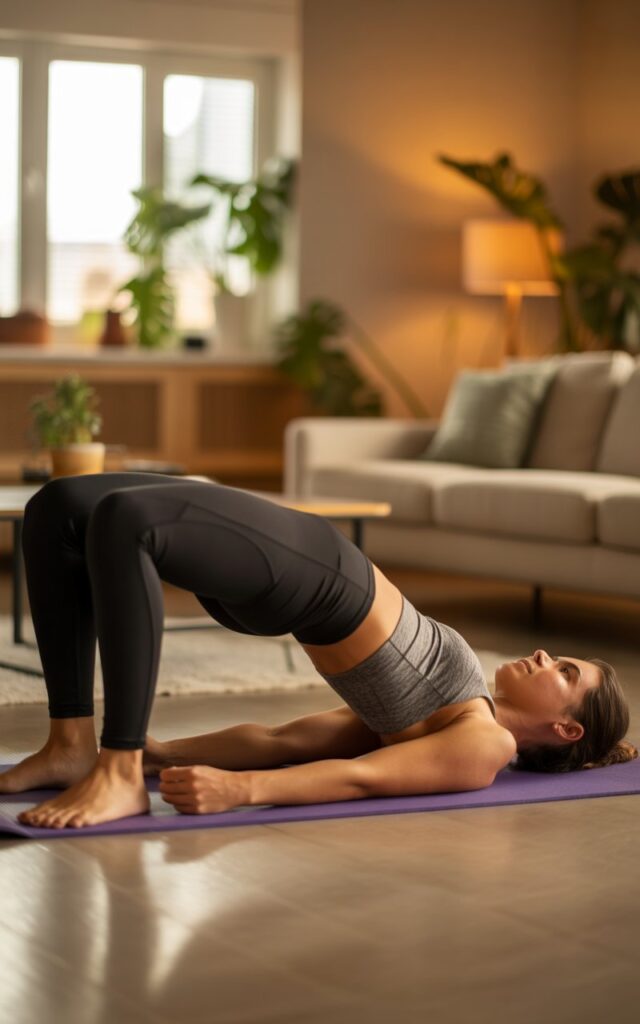
This one is particularly valuable for women who sit at a desk all day. Prolonged sitting weakens the glutes over time, which can lead to lower back pain and poor posture.
Lying on your back with your knees bent and feet flat on the floor, press through your heels to lift your hips toward the ceiling. Squeeze your glutes at the top, hold for a second, then lower back down.
It’s simple, it’s low-impact, and the effects on posture and back comfort are surprisingly fast. Do 2 sets of 15 reps.
3. Knee Push-Ups
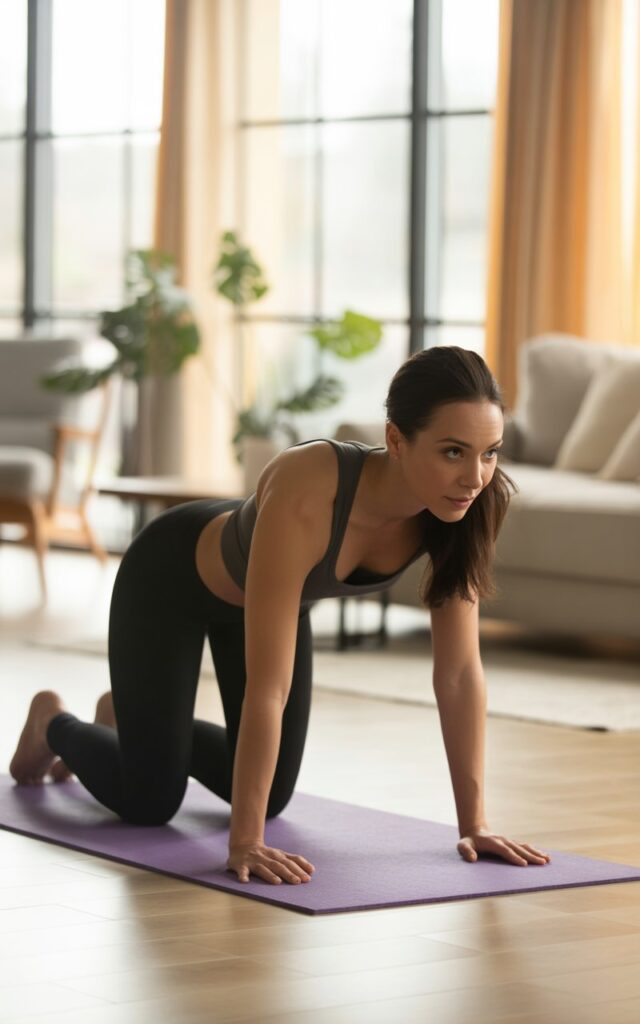
Push-ups build strength in your chest, shoulders, and triceps while engaging your core throughout the movement. The knee variation makes it completely accessible for beginners without losing most of the benefits.
Start in a plank position on your knees, hands slightly wider than your shoulders. Lower your chest toward the floor, elbows angled at about 45 degrees, then push back up.
If even knee push-ups feel too challenging, elevate your hands on a countertop or sturdy chair — that’s a perfectly valid place to start. 2 sets of 10 reps.
4. Forward Lunges
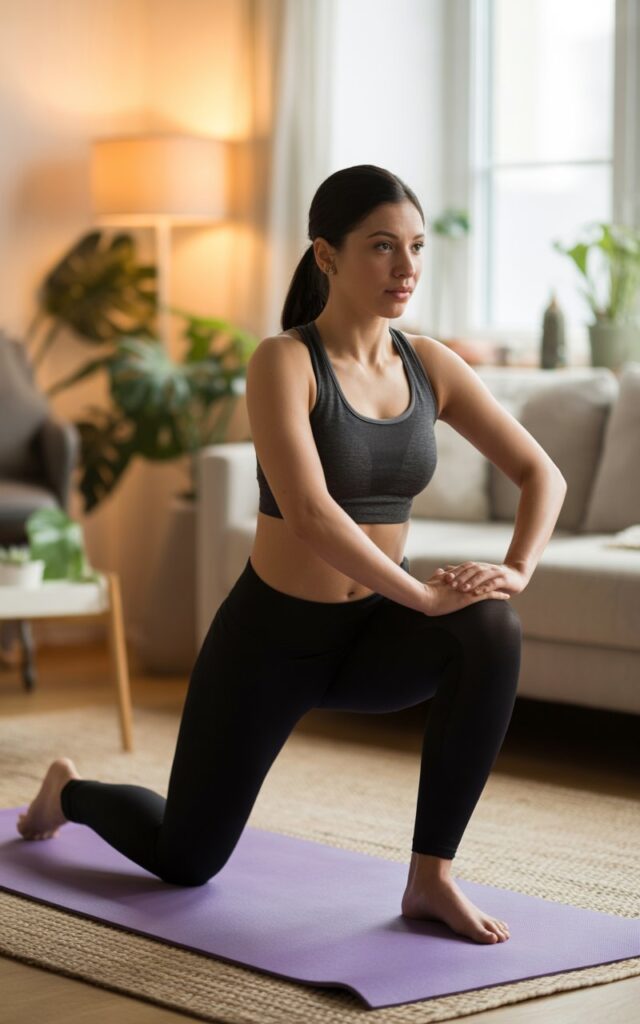
Lunges work your quads, hamstrings, and glutes while improving your balance — something that becomes more and more worth training as you get older.
Step one foot forward, lower your back knee toward the floor, then push off your front foot to return to standing. Switch legs and repeat.
They might feel a little awkward at first, and that’s normal. The coordination comes quickly with practice. Start with 2 sets of 10 reps per leg, and hold onto a wall or chair if you need steadying at first.
5. Plank Hold
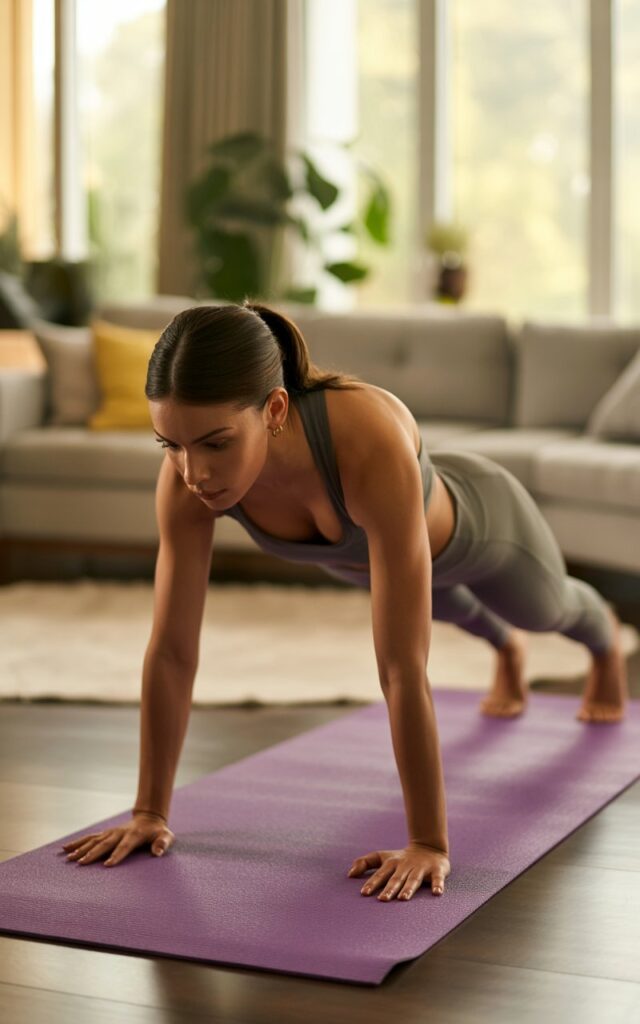
The plank is one of the best core exercises that exists — not just for your abs, but for the deep stabilizing muscles in your back, hips, and shoulders.
Lie face down and prop yourself up on your forearms, elbows directly under your shoulders. Keep your body in a straight line from head to heels, squeezing your core and glutes. Don’t let your hips sag or rise.
Ten seconds is a respectable place to start. Work up from there. Aim for 3 holds of 10–20 seconds each, resting 30 seconds in between.
6. Marching in Place
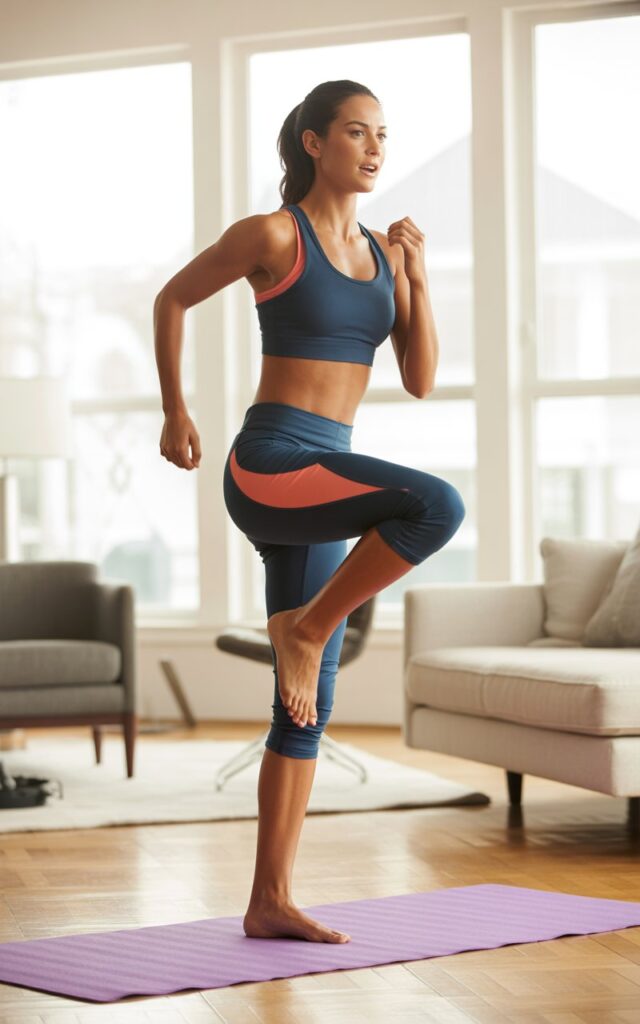
Simple, effective, and easy on your joints. Marching in place is one of the best low-impact cardio options for beginners because you control the pace entirely.
Lift your knees to hip height, pump your arms, and keep a steady rhythm. This gets your heart rate up without any impact on your knees or ankles.
Use it as a warm-up, as active rest between other exercises, or as a standalone 10-minute cardio session on lighter days. It counts.
7. Wall Sit
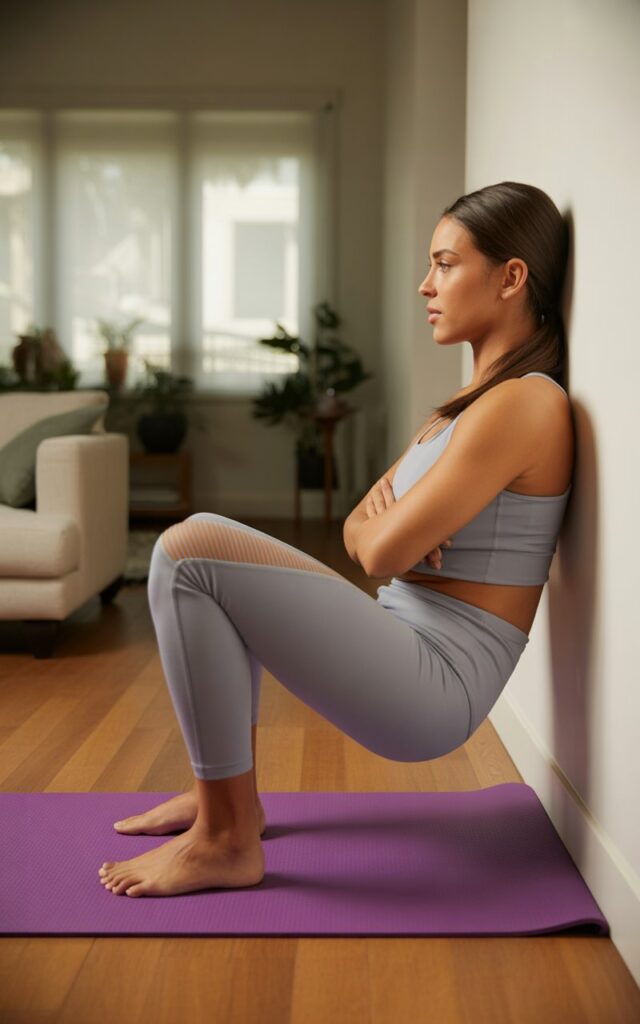
Stand with your back flat against a wall. Slide down until your thighs are parallel to the floor (or as close as feels manageable), feet flat, knees directly above your ankles. Hold that position. Your legs will start to burn quickly, which is the point — this exercise builds strength in your quads and glutes in a way that’s completely joint-friendly.
Hold for 20–30 seconds to start. Rest, then repeat twice more.
8. Standing Side Leg Raises
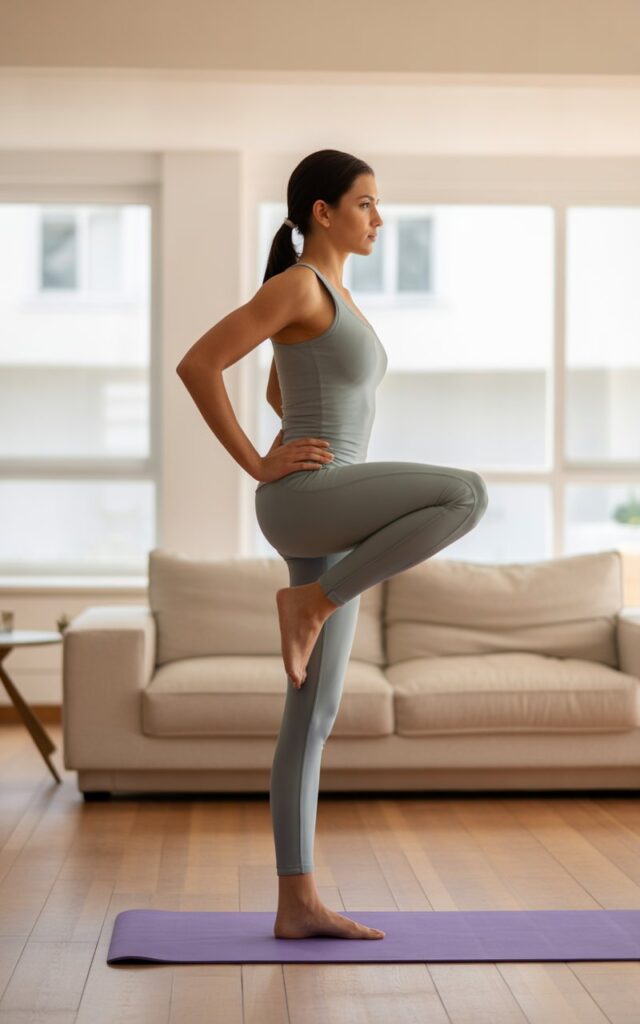
These target your outer hips and glutes — areas that tend to be weak in women who sit for most of the day.
Stand straight, holding a wall or chair for balance if needed. Keeping your leg straight and toes pointing forward, lift one leg out to the side, hold for a second, then lower it back down.
- Move slowly and with control
- Don’t let your torso tilt — the work should come from your hip, not your lower back
- Do 2 sets of 12 reps per side
9. Superman Hold
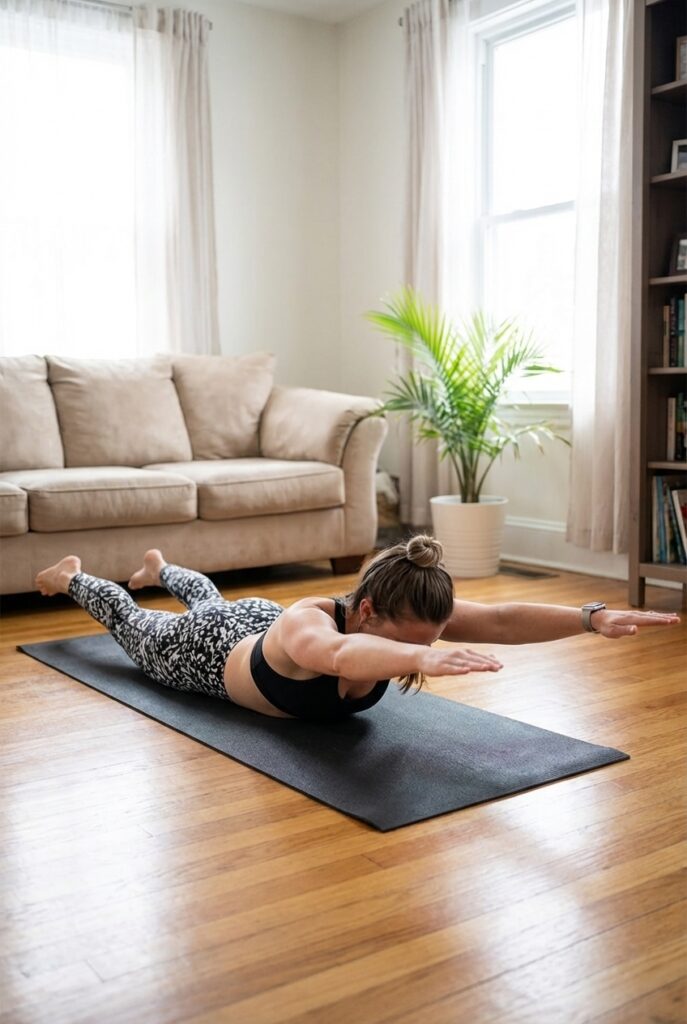
Lie face down on the floor with your arms extended in front of you. Simultaneously lift your arms, chest, and legs off the ground, hold for two to three seconds, then lower. This targets the muscles along your spine and the back of your shoulders — muscles that rarely get attention but play a huge role in posture and back health.
It feels small, but the soreness the next day will tell you it was working. 2 sets of 10 reps.
10. Dead Bug
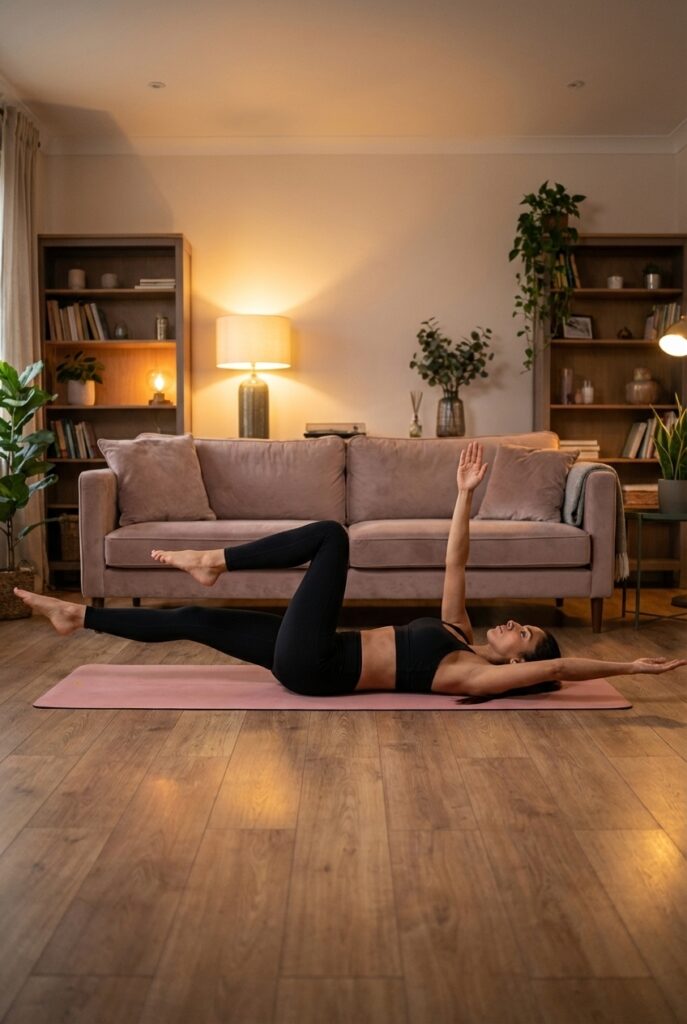
The dead bug is one of the most underrated beginner core exercises. Lie on your back with your arms pointed straight up toward the ceiling and your knees bent at 90 degrees, shins parallel to the floor. Slowly lower your right arm and left leg toward the floor at the same time, keeping your lower back pressed flat. Return to start, then repeat on the other side.
It looks simple and feels surprisingly challenging. The key is keeping your lower back in contact with the floor the entire time — that’s where the core work happens. 2 sets of 8 reps per side.
How to Put It All Together
You don’t need to do all ten in one session. Pick five or six, complete 2 sets of each, and you have a solid 20-minute workout. Rotate the exercises over the week so you’re hitting different muscle groups on different days. Aim for three sessions per week with at least one rest day between them — that 48-hour window is when your muscles actually repair and get stronger.
The only real rule is this: a short workout you actually do is always better than a long one you skip. Start with what you can manage, show up consistently, and increase the challenge gradually as your strength builds.
Your Body Will Thank You
You don’t need a gym membership, a trainer, or an hour of free time to start building real strength and stamina. These ten exercises cover every major muscle group in your body, require zero equipment, and take up no more space than a yoga mat. The hardest part is genuinely just getting started — after that, momentum builds faster than most women expect.
Pick three exercises from this list today. That’s it. Do two sets of each, cool down with some light stretching, and see how you feel. One session can shift your mindset. A consistent week can change how your body feels. And a month in, you’ll wonder why you waited as long as you did.
Frequently Asked Questions
Q: How many days a week should a beginner work out at home?
A: Three days a week is a solid starting point. This gives your muscles time to recover between sessions while building a consistent habit. As you get stronger and more comfortable, you can add a fourth day.
Q: Do I need any equipment to do these workouts?
A: No. Every exercise on this list uses only your bodyweight. The one thing worth getting is a basic yoga or exercise mat, which gives your joints some cushioning for floor exercises like planks and bridges. But it’s not required to start.
Q: How long should each workout session be?
A: For beginners, 15 to 20 minutes is plenty. Choosing five or six of these exercises and completing two sets of each puts you right in that range. Quality of movement matters more than time spent.
Q: Is it normal to feel sore after the first few sessions?
A: Yes, some muscle soreness 24 to 48 hours after a workout is completely normal when you’re starting out. Light movement, gentle stretching, and staying hydrated help. If you feel sharp pain during a workout — not general fatigue, but actual pain — stop and rest.
Q: Can I do these workouts if I haven’t exercised in years?
A: Absolutely. These exercises are chosen specifically because they’re low-impact and adaptable. Exercises like knee push-ups, wall sits, and marching in place can all be modified to whatever level feels manageable right now. Start easier than you think you need to and build from there.
Q: Will bodyweight exercises actually build muscle?
A: Yes. Bodyweight training builds muscle effectively, especially for beginners, as long as you progressively challenge yourself — increasing reps, slowing down the movement, or reducing rest time over time. The concept is called progressive overload, and it applies to bodyweight training just as well as lifting weights.
Q: Should I warm up before these workouts?
A: Always. Two minutes of light movement — marching in place, arm circles, and some gentle leg swings — is enough to prepare your muscles and reduce the chance of injury. Skipping the warm-up, especially on cold mornings, is how avoidable strains happen.
Q: What’s the best time of day to work out at home?
A: Whatever time you’ll actually do it. Consistency matters far more than timing. Some women prefer mornings because it gets the workout done before the day gets busy. Others prefer evenings when the house is quieter. There’s no wrong answer.

