

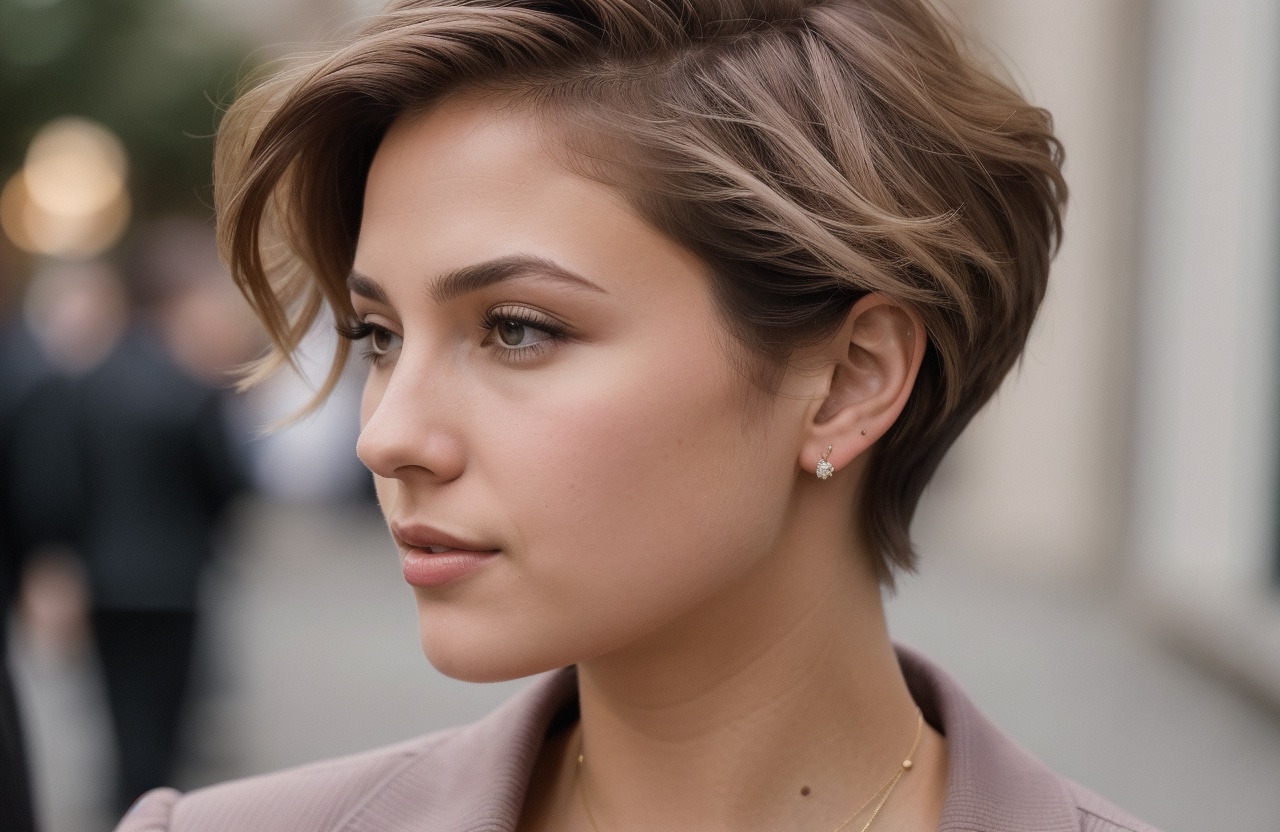
Short hair with soft texture presents a beautiful canvas for creating stunning hairstyles that frame your face and showcase your natural hair’s movement. Women with this hair type often discover that their strands have a silky, fine quality that feels smooth to the touch but can sometimes lack the grip needed for certain styles. The good news is that with the right cut and styling approach, soft textured short hair can look absolutely gorgeous while being surprisingly easy to maintain.
Many women assume that soft texture means limited styling options, but this couldn’t be further from the truth. Your hair’s natural smoothness actually allows for cleaner lines in geometric cuts, while its lightweight nature makes it perfect for creating airy, voluminous styles that won’t fall flat by midday. The key lies in understanding which cuts complement your hair’s characteristics and learning the specific techniques that work with, rather than against, your texture.
In the following sections, we’ll share the best hairstyle options specifically suited for short hair with soft texture, from cuts that add natural body to styling methods that create lasting definition. You’ll discover how to work with your hair’s unique qualities to achieve looks that stay fresh from morning to night, plus maintenance tips that keep your style looking salon-perfect between appointments. Let’s continue reading to find your perfect soft-textured short hairstyle.
- What Makes Soft Texture Hair Different for Short Styles?
- Which Short Cuts Work Best with Soft Hair Texture?
- How Do You Style Soft Textured Short Hair?
- What Maintenance Does Soft Textured Short Hair Need?
- How Can You Add Definition to Soft Short Hair?
- Your Perfect Soft-Textured Style Awaits
- Frequently Asked Questions
What Makes Soft Texture Hair Different for Short Styles?
Soft texture hair behaves quite differently from coarser hair types, particularly when cut short. The individual strands tend to be finer in diameter, creating a smooth surface that reflects light beautifully but doesn’t hold onto styling products as readily. This characteristic becomes especially noticeable with shorter lengths where there’s less weight to help hair fall into place naturally.
How soft texture affects styling hold
Your soft hair’s smooth cuticle layer means products tend to slide through rather than grip onto each strand. This explains why that perfect morning style might deflate by lunchtime despite using what seems like enough product. The solution isn’t necessarily more product – it’s choosing formulations specifically designed for fine, soft hair that provide hold without heaviness.
Think of your hair like silk fabric compared to cotton. While cotton readily absorbs and holds onto substances, silk requires special care and specific techniques to maintain its shape. Similarly, soft textured hair needs lightweight, film-forming products that create structure without weighing down the delicate strands.
The relationship between hair density and soft texture
Soft texture doesn’t automatically mean thin hair – many women with soft texture actually have dense hair with lots of strands per square inch. However, because each strand is fine, the overall volume can appear less substantial than someone with fewer but coarser strands. Understanding this distinction helps you choose cuts that maximize your hair’s natural fullness.
When hair is both soft and dense, layering becomes your best friend. Strategic layers remove bulk where it’s not needed while maintaining fullness where you want it most. This creates the illusion of thicker, more substantial hair without the weight that can drag down soft strands.
Why certain cuts work better than others
Not all short cuts are created equal for soft textured hair. Blunt, one-length cuts can look sleek initially but often fall flat without the natural grip that coarser hair provides. Instead, cuts with built-in movement and texture work wonderfully because they don’t rely solely on your hair’s ability to hold a shape.
Product absorption and soft hair characteristics
The way soft hair interacts with products differs significantly from other textures. Your strands might become oversaturated quickly with heavy creams or oils, leading to that dreaded greasy appearance even with minimal product use. Water-based formulas and alcohol-free mousses typically work better, providing structure without the weight. Understanding your hair’s absorption rate helps you determine not just which products to use, but how much and how often to apply them.
Common misconceptions about soft textured hair
Many believe that soft hair can’t achieve edgy or dramatic styles, but this simply isn’t true. Soft texture actually allows for incredibly precise cuts that showcase clean lines and geometric shapes. The smoothness of each strand creates sharp edges in cuts like asymmetrical bobs or undercuts that might look fuzzy or undefined on coarser textures.
Another misconception is that soft hair always lacks volume. While it’s true that soft strands don’t naturally stand away from the scalp like coarser hair might, the right cutting techniques combined with proper styling can create impressive volume that lasts. The secret lies in working with your hair’s natural tendencies rather than fighting against them.
Which Short Cuts Work Best with Soft Hair Texture?
Finding the perfect short cut for soft textured hair means selecting styles that naturally complement your hair’s characteristics while minimizing daily styling efforts. The most successful cuts for this hair type incorporate movement, layers, or architectural elements that provide structure without relying heavily on styling products.
The layered pixie cut advantage
A layered pixie cut transforms soft hair into a style with natural movement and dimension. By incorporating varying lengths throughout the cut, your stylist creates pieces that can move independently, preventing that flat, stuck-to-the-head look that soft hair sometimes develops. The shorter layers on top provide lift at the roots, while slightly longer pieces around the face soften the overall appearance.
The beauty of this cut lies in its versatility – you can style it sleek and polished for professional settings or tousle it with a bit of texture spray for a more casual, lived-in look. Because the layers are cut to work with your hair’s natural fall pattern, even air-drying produces an attractive result. This makes it perfect for women who want style without spending hours in front of the mirror.
Bob variations that add dimension
The classic bob gets a soft-texture makeover through strategic modifications that prevent the style from looking too heavy or lifeless. A slightly graduated bob, where the back is cut shorter than the front, creates natural lift and prevents the hair from lying flat against your head. This subtle angle also helps soft hair maintain its shape throughout the day.
Consider asking for a “lived-in” bob with barely-there layers that create movement without sacrificing the clean lines that make bobs so appealing. Soft hair actually holds these precision cuts beautifully, showing off the expert cutting techniques in ways that coarser hair might obscure.
For added interest, try incorporating subtle face-framing pieces that are cut slightly shorter than the rest of the bob. These pieces naturally flip out or curve in, creating movement around your face without any styling effort.
Textured crops for movement
A textured crop offers the perfect balance between edgy style and easy maintenance for soft hair. This cut typically features short, choppy layers throughout that create natural piece-y separation. Because the individual sections are cut at different lengths and angles, your hair gains instant texture that doesn’t rely on product or heat styling.
The textured crop works particularly well for women with straight, soft hair who want to add visual interest without chemical treatments. Your stylist might use point cutting or razor techniques to create the texture, both of which work beautifully on soft hair. The result is a modern, effortless style that looks intentionally undone yet polished.
What makes this cut especially suitable for soft texture is how it uses the hair’s natural smoothness to create defined pieces. Each section catches light differently, creating depth and dimension that makes your hair appear fuller and more substantial.
Undercut styles for contrast
An undercut paired with soft textured hair on top creates stunning contrast that turns heads. The closely trimmed or shaved sections provide structure and reduce bulk exactly where you need it, while the longer soft hair on top maintains feminine appeal. This combination works exceptionally well for women with dense but soft hair who struggle with too much volume at the nape or sides.
You can customize your undercut to be subtle or bold. Here are popular undercut variations for soft hair:
Hidden Undercut: Keeps the shaved section concealed under longer layers for professional settings
Side Undercut: Creates asymmetrical interest while reducing bulk on one side
Nape Undercut: Removes weight from the back while maintaining fullness on top
Designed Undercut: Incorporates patterns or designs in the shaved sections for artistic flair
The contrast between the ultra-short undercut and your soft, flowing top sections creates visual interest that requires minimal styling effort.
Asymmetrical cuts for visual interest
Asymmetrical cuts capitalize on soft hair’s ability to create clean, dramatic lines. Whether you choose a subtle difference in length from one side to the other or a bold, statement-making asymmetrical bob, this style adds instant sophistication to soft textured hair. The varying lengths naturally create movement and prevent your hair from looking too uniform or flat.
Soft hair’s smooth texture actually enhances asymmetrical cuts by creating sharp, defined edges that showcase the precision of the cut. Unlike coarser textures that might frizz or flip unexpectedly, soft hair maintains the intended shape, making your style look freshly done even days after leaving the salon.
How Do You Style Soft Textured Short Hair?
Styling soft textured short hair successfully requires a different approach than what works for other hair types. The techniques and products that create gorgeous results on coarse or thick hair might leave your soft strands looking limp or greasy. Understanding the specific needs of your hair texture transforms your daily styling routine from frustrating to effortless.
Your soft hair responds best to a less-is-more philosophy. Rather than layering multiple heavy products, you’ll achieve better results with one or two lightweight formulas applied strategically. The goal is enhancing your hair’s natural characteristics while adding just enough hold and definition to maintain your style throughout the day.
Choosing the right styling products
Product selection makes or breaks your styling success with soft textured hair. Volumizing mousses with alcohol-free formulas provide lift without the crunchiness or drying effects that can make soft hair look damaged. Apply these to damp hair, focusing on the roots where you need the most support.
Texture sprays designed for fine hair add grit and hold without weight. These products contain polymers that coat each strand lightly, creating the grip your soft hair needs to hold styles. Unlike traditional hairsprays that can make soft hair look helmet-like, texture sprays maintain movement while providing structure.
Heat styling techniques that work
When using heat tools on soft textured short hair, temperature control becomes crucial. Your delicate strands need less heat than coarser textures – typically between 250-300°F provides sufficient styling power without damage. Always use a heat protectant spray, but choose one specifically formulated for fine hair that won’t weigh down your style.
The way you use your tools matters as much as the temperature setting. Instead of repeatedly running a flat iron through the same section, use single, smooth passes to achieve your desired result. For volume, focus your blow dryer at the roots while lifting sections with a round brush, then finish with a blast of cool air to set the style.
Creating waves or curls in soft short hair requires a different technique than longer styles. Use a smaller barrel curling iron or wand, and wrap larger sections more loosely rather than small, tight sections. This prevents the curls from looking too precise or doll-like on your delicate texture.
Air-drying methods for natural texture
Air-drying can produce beautiful results on soft textured short hair when done correctly. Start by gently squeezing excess water from your hair with a microfiber towel – regular terry cloth can rough up your hair’s cuticle and create frizz. Apply a lightweight leave-in conditioner or cream designed for fine hair, distributing it evenly with your fingers.
To prevent your hair from drying flat against your head, try these techniques:
Root Lifting: Flip your head upside down periodically as your hair dries
Clip Placement: Use small clips at the crown to lift roots while drying
Scrunching Method: Gently scrunch sections to encourage natural wave patterns
Part Switching: Change your part several times during drying for volume
The key is disturbing your hair as little as possible once the drying process begins. Too much touching or combing can disrupt the natural pattern and create frizz on soft textured hair.
Creating volume without weighing hair down
Volume creation for soft hair requires strategic product placement and styling techniques. Apply volumizing products only to your roots and the first inch or two of hair – applying them through the lengths will weigh down your delicate strands. Work the product in with your fingertips, massaging your scalp to ensure even distribution.
Blow-drying technique significantly impacts volume results. Dry your hair in the opposite direction from how you plan to wear it, then flip it back for instant lift. For example, if you part your hair on the left, blow-dry it all to the right first. This simple trick creates volume at the roots that lasts throughout the day.
Quick styling tips for busy mornings
Mornings don’t always allow for elaborate styling routines, but soft textured short hair can look polished with minimal effort. Keep a small bottle of dry texture spray beside your bed for instant morning refreshing. A quick spritz at the roots followed by tousling with your fingers revives yesterday’s style in seconds.
For slightly more styling time, try the “twist and heat” method. Twist small sections of damp hair, hit them quickly with your blow dryer, then release. This creates natural-looking texture and movement without the need for curling irons or extensive styling. The technique works especially well on soft hair because the smooth texture holds the twist pattern readily.
On particularly rushed mornings, accessories become your best friend. A stylish headband or decorative clips can transform bedhead into an intentional style while you’re still having your morning coffee.
What Maintenance Does Soft Textured Short Hair Need?
Maintaining soft textured short hair requires a thoughtful approach that preserves your style’s shape while keeping your delicate strands healthy. Because short cuts grow out more noticeably than longer styles, regular maintenance becomes essential for keeping your look fresh and intentional rather than overgrown and shapeless.
Trimming frequency for shape retention
Soft textured short hair typically needs trimming every 4-6 weeks to maintain its intended shape. This might seem frequent, but soft hair tends to lose its structure more quickly than coarser textures as it grows. The precision lines and carefully crafted layers that make your cut special can become blurred after just a few weeks of growth.
Between professional trims, you might notice certain areas growing faster or looking shaggier than others. The hair around your ears and neckline often needs the most frequent attention. Some women learn to do minor touch-ups at home between salon visits, though this requires proper tools and careful technique to avoid creating uneven spots.
Washing routines that preserve texture
Your washing routine significantly impacts how your soft textured hair behaves between washes. Overwashing strips natural oils that help provide structure and hold, while underwashing can leave soft hair looking limp and greasy. Most women with this hair type find washing every 2-3 days provides the best balance.
Choose sulfate-free shampoos that cleanse without stripping. Soft hair doesn’t need aggressive cleansing agents since it doesn’t typically hold onto as much oil or product buildup as coarser textures. Focus shampoo application on your scalp rather than the lengths, allowing the suds to cleanse the hair shafts as you rinse.
Conditioner application requires a light touch with soft textured hair. Apply only to the mid-lengths and ends, avoiding the roots entirely. Too much conditioner near the scalp weighs down your style and makes soft hair appear greasy quickly. A weekly clarifying treatment removes any accumulated product residue without daily harsh washing.
Overnight care techniques
How you treat your soft textured short hair while sleeping affects your morning styling routine significantly. Silk or satin pillowcases reduce friction that can cause tangles and frizz in delicate strands. These smooth fabrics also help preserve your style’s shape better than cotton, which can create weird bends and flat spots.
For extra protection, consider these nighttime strategies:
Pineapple Method: Loosely gather hair at the very top of your head with a soft scrunchie
Silk Wrap: Use a silk scarf to protect your edges and maintain smooth texture
Pin Curls: Create loose pin curls for overnight volume without heat damage
Dry Shampoo Prevention: Apply dry shampoo before bed to absorb oils while you sleep
Some women find that sleeping with their soft hair slightly damp (about 80% dry) actually helps maintain style shape, as the hair sets in position overnight.
Seasonal adjustments for hair health
Soft textured hair responds sensitively to seasonal changes, requiring adjustments to your care routine throughout the year. Winter’s dry air can make your already delicate strands more prone to static and breakage. During these months, incorporate a weekly deep conditioning mask and consider using a humidifier in your bedroom to maintain moisture levels.
Summer presents different challenges for soft hair. Humidity can make your carefully styled hair fall flat within minutes of stepping outside. Switching to anti-humidity products during warmer months helps maintain your style’s integrity. Look for serums or sprays that create a barrier against moisture without adding weight.
Spring and fall transitions often require gradual adjustments to your routine. Pay attention to how your hair responds to changing temperatures and humidity levels, adjusting your product selection accordingly. You might need volumizing products in humid summer but moisturizing formulas in dry winter.
Professional treatments worth considering
Several professional treatments can enhance soft textured short hair’s manageability and appearance. Glossing treatments add shine and smoothness without the commitment or potential damage of permanent color. These semi-permanent treatments coat each strand with conditioning agents that smooth the cuticle and enhance light reflection.
Keratin treatments specifically formulated for fine hair can improve manageability without completely eliminating texture. Unlike traditional keratin treatments that might make soft hair too flat, these gentler versions reduce frizz while maintaining body. The effects typically last 6-8 weeks on soft textured hair.
Scalp treatments deserve consideration too, especially if you struggle with oiliness that makes soft hair appear limp. Professional scalp balancing treatments regulate oil production and remove buildup that home care might miss. Regular scalp treatments every 6-8 weeks can dramatically improve how your soft textured short hair behaves between washes.
How Can You Add Definition to Soft Short Hair?
Creating lasting definition in soft textured short hair challenges many women, but achieving this goal is entirely possible with the right techniques and tools. The smooth surface of soft hair strands can make individual pieces blend together, creating a uniform look that lacks the piece-y separation many modern styles require.
Texturizing techniques without damage
Adding texture to soft hair doesn’t require damaging chemical processes or excessive heat styling. Your stylist can use specialized cutting techniques that create natural texture through the cut itself. Point cutting, where scissors are held vertically to create irregular edges, adds movement without removing too much length. This technique works particularly well on soft hair because each irregularly cut strand moves independently.
Razor cutting offers another option for creating texture, though it requires an experienced stylist who understands soft hair’s unique needs. When done correctly, razor cutting produces beautifully feathered edges that move naturally. The technique removes weight while creating soft, lived-in texture that doesn’t require daily styling effort.
Color techniques that create dimension
Strategic color placement can create the illusion of thicker, more textured hair without changing your actual hair structure. Babylights, extremely fine highlights woven throughout your hair, add dimension that makes soft hair appear fuller. The subtle color variation creates depth that prevents your style from looking flat or one-dimensional.
Shadow roots or root smudging techniques work wonderfully for soft textured short hair. By keeping the roots slightly darker than the rest of your hair, you create natural-looking depth that adds visual weight to fine strands. This technique also means less frequent touch-ups since the grow-out looks intentional.
For those wanting more dramatic dimension, consider these color techniques:
Face-Framing Highlights: Lighter pieces around your face create movement and brightness
Underneath Lowlights: Darker sections beneath add depth without overwhelming soft hair
Balayage for Short Hair: Hand-painted highlights create natural-looking dimension
Color Blocking: Bold sections of different colors add artistic interest to simple cuts
Strategic cutting methods
The way your stylist approaches cutting your soft textured hair dramatically affects the final result’s definition. Graduated layers, where each layer is slightly shorter than the one below, create natural stacking that adds body and movement. This technique works especially well for soft hair because it doesn’t rely on the hair’s natural texture to create shape.
Interior layers, also called invisible layers, remove weight from within the hair without changing the overall perimeter. This method maintains your style’s clean lines while adding movement and preventing the helmet-like appearance that one-length cuts can create on soft hair.
Product layering for lasting hold
Successful product layering for soft hair starts with the lightest formulas and builds strategically. Begin with a volumizing spray at the roots while hair is still damp. This creates a foundation of lift that supports whatever style you create. Next, apply a lightweight styling cream through the mid-lengths for control without stiffness.
Once your hair is dry, finish with a texture spray or dry shampoo for grip and separation. These products add the grit soft hair needs to maintain piece-y definition. The key is allowing each product layer to dry or set before adding the next – rushing this process results in product buildup that weighs down delicate strands.
Tools that make a difference
Investing in the right tools transforms your ability to create definition in soft textured short hair. A high-quality blow dryer with multiple heat and speed settings gives you precise control over your styling. Look for models with cool shot buttons that help set your style once you’ve achieved the desired shape.
Small round brushes, between 1-2 inches in diameter, work best for short soft hair. Natural boar bristles grip soft strands better than synthetic options, helping you create tension for smooth styles or volume at the roots. Metal core brushes conduct heat from your blow dryer, speeding up styling time while reducing heat exposure.
Texturizing tools deserve a place in your styling arsenal too. A small flat iron can create bends and waves that add definition to straight soft hair. Instead of sliding the iron straight through sections, try crimping, twisting, or bending at various angles to create irregular texture that looks effortlessly undone.
Your Perfect Soft-Textured Style Awaits
Working with soft textured short hair becomes a joy rather than a challenge once you understand its unique characteristics and needs. The techniques, cuts, and products designed specifically for your hair type transform daily styling from a struggle into a simple routine that enhances your natural beauty. Your soft hair’s smoothness and light-reflecting qualities create stunning styles that coarser textures simply cannot achieve.
The journey to finding your ideal short hairstyle starts with choosing a cut that complements your hair’s natural tendencies, then building a maintenance routine that preserves both the style’s shape and your hair’s health. Whether you prefer the edgy appeal of an undercut, the classic elegance of a textured bob, or the playful movement of a layered pixie, soft textured hair adapts beautifully to countless short styles. Armed with the right knowledge and techniques, you’ll discover that your soft textured short hair is not a limitation but rather a gorgeous foundation for expressing your personal style.
Frequently Asked Questions
Q: How often should I wash soft textured short hair?
A: Washing every 2-3 days typically works best for soft textured hair. This frequency prevents natural oils from weighing down your delicate strands while avoiding the dryness that comes from overwashing.
Q: Can soft textured hair hold curls in short styles?
A: Yes, soft textured hair can hold curls when you use the right techniques. Use lightweight curl-enhancing products, lower heat settings (250-300°F), and set curls with cool air for longer-lasting results.
Q: What’s the best haircut for very fine, soft hair?
A: Layered pixie cuts and graduated bobs work exceptionally well for very fine, soft hair. These cuts incorporate movement and dimension that prevent the flat appearance fine hair sometimes develops.
Q: Do I need special products for soft textured hair?
A: Using products formulated for fine or soft hair makes a significant difference. Look for lightweight, volumizing formulas that provide hold without heaviness, and avoid heavy creams or oils that weigh down delicate strands.
Q: How can I prevent my soft short hair from looking flat?
A: Apply volumizing products only to roots, blow-dry hair upside down or in the opposite direction from your part, and use dry texture spray for instant lift. Strategic layering in your haircut also prevents flatness.
Q: Will an undercut work with soft textured hair?
A: Undercuts work beautifully with soft textured hair, creating contrast and reducing bulk where needed. The combination of ultra-short and soft longer sections adds visual interest and makes styling easier.
Q: How do I know if my hair has soft texture?
A: Soft textured hair feels silky and smooth to touch, individual strands are fine in diameter, and products tend to weigh it down easily. Your hair likely reflects light well but might struggle to hold styles without proper products.
Q: What’s the biggest mistake people make with soft textured short hair?
A: Using too much product is the most common mistake. Soft hair needs less product than other textures, and overloading with heavy formulas creates a greasy, weighed-down appearance.

