

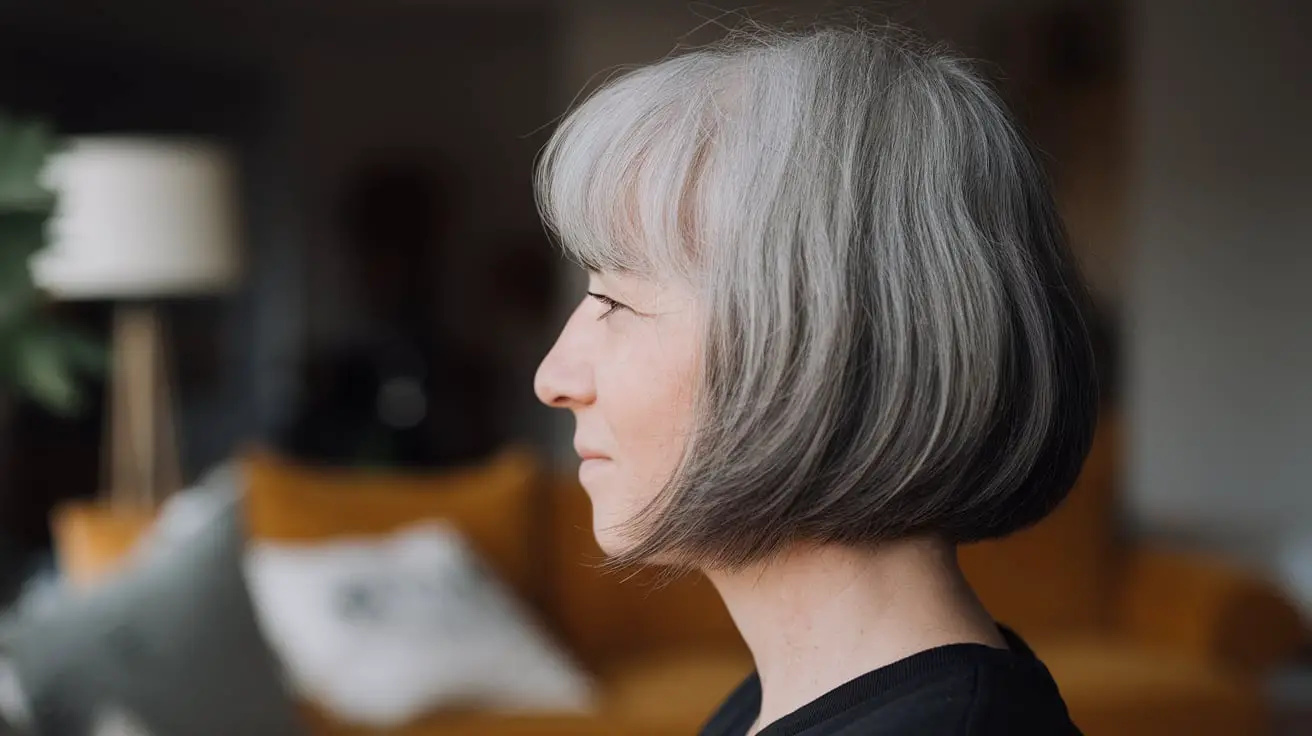
Gray hair has become a powerful symbol of confidence and authenticity in recent years. More women are choosing to celebrate their silver strands rather than covering them up, discovering that the right haircut can transform gray hair into a stunning asset. The journey to finding that perfect cut involves understanding how gray hair behaves differently from pigmented hair and knowing which styles highlight its unique beauty.
The texture and structure of gray hair presents both opportunities and considerations that affect how different cuts will look and feel. Gray strands tend to be coarser and may have different growth patterns than your previous hair color, which means cuts that worked beautifully before might need adjusting. The good news is that gray hair often has incredible shine and dimension that certain haircuts can amplify, creating looks that are sophisticated, modern, and effortlessly elegant.
In the following sections, you’ll discover how to work with your gray hair’s characteristics rather than against them. From understanding why gray hair requires special attention to finding cuts that suit your face shape and lifestyle, this guide covers everything you need to know about choosing and maintaining the perfect haircut for your silver locks. Let’s explore the possibilities that await when you match the right cut with your natural gray beauty.
Why Gray Hair Needs Special Consideration

Gray hair isn’t just hair without pigment – it’s a completely different texture and structure that responds differently to cutting techniques and styling methods. The absence of melanin changes how each strand behaves, often making it more wiry, coarse, or prone to frizz. These changes happen because the hair follicle produces less oil as we age, and the cuticle layer becomes rougher without pigment to smooth it down.
Texture Changes With Gray Hair
Your hair’s texture transformation happens gradually as pigment production decreases. What starts as a few rebellious silver strands can eventually become a full head of hair with entirely different characteristics. Some women find their previously straight hair develops waves or curls, while others notice increased coarseness or a tendency toward dryness. Understanding these changes helps you and your stylist select cuts that work with your hair’s new personality rather than fighting against it.
How Gray Hair Reflects Light Differently
Silver strands have a unique ability to catch and reflect light, creating dimension that pigmented hair simply can’t achieve. This reflective quality means that layered cuts and textured styles can look particularly stunning, as each layer catches light at different angles. However, this same characteristic can also highlight any unevenness in your cut or damage to your hair, making precision cutting and regular maintenance especially important.
Moisture and Styling Needs
The structure of gray hair often leads to increased porosity, meaning it absorbs and loses moisture more quickly than pigmented hair. This characteristic affects how your haircut will look day to day and influences which styles will be easiest to maintain. Cuts that require minimal heat styling often work better, as gray hair can be more susceptible to heat damage. Your stylist might recommend specific cutting techniques that help your hair retain its shape without excessive styling products or tools.
Without melanin to provide natural protection, gray hair becomes more vulnerable to environmental factors like sun exposure and pollution. This vulnerability means that certain haircuts – particularly those that distribute natural oils more effectively or provide some coverage to the ends – can help maintain healthier-looking hair between salon visits.
Color Variations in Gray Hair
Not all gray hair is created equal. You might have bright silver strands mixed with darker ones, creating a salt-and-pepper effect, or you might have pure white sections alongside steel gray areas. These variations affect how different cuts will look on you. A skilled stylist can use cutting techniques to blend these variations seamlessly or highlight them for added dimension. Some cuts work better with uniform gray, while others celebrate the natural variation in your silver tones.
The way your gray grows in also matters. Some women gray from the temples back, others from underneath, and some develop a dramatic white streak. Your haircut should complement your specific graying pattern, whether that means incorporating your natural highlights into face-framing layers or using strategic length to blend different tones.
Short Haircuts That Make Gray Hair Shine
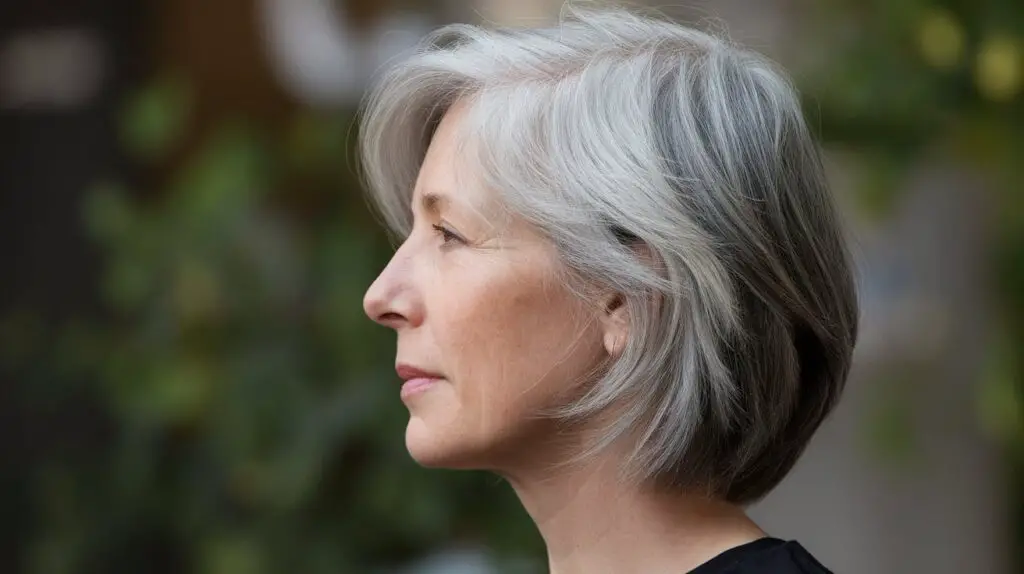
Short haircuts offer gray-haired women an opportunity to showcase their silver tones while minimizing maintenance and maximizing style. The key lies in choosing cuts that complement your hair’s natural texture and your lifestyle needs. Short styles can range from ultra-cropped pixies to chin-length bobs, each offering different benefits for gray hair.
Pixie Cuts for Gray Hair
A well-executed pixie cut can be transformative for gray hair, offering a fresh, modern look that requires minimal daily styling. The shorter length means less weight pulling down on your strands, which can help create natural volume and movement. Pixies work particularly well for women whose gray hair has become finer or those dealing with thinning, as the shorter length creates an illusion of fuller hair.
The versatility of pixie cuts surprises many women who assume short means limited styling options. You can wear it sleek and polished for professional settings, tousled and textured for casual days, or add some styling product for an edgier evening look. The key is finding the right pixie variation for your face shape and hair texture – some benefit from longer layers on top, while others look stunning with a more uniform length throughout.
Bob Variations
The bob remains one of the most flattering cuts for gray hair, offering structure and sophistication while being relatively easy to maintain. Whether you choose a classic one-length bob, an angled bob, or a textured bob with layers, this cut provides enough weight to control wiry gray strands while being short enough to stay manageable. The clean lines of a bob can make gray hair look particularly polished and intentional.
Consider how different bob variations might work with your specific hair characteristics:
Classic Bob: Works beautifully for straight to slightly wavy gray hair, creating a sleek, timeless look
Angled Bob: Adds visual interest and can help balance facial features while showing off gray’s natural shine
Textured Bob: Perfect for adding movement to coarser gray hair, with layers that create softness
Stacked Bob: Provides excellent volume at the crown, ideal for fine gray hair that tends to lie flat
Layered Short Styles
Layers in short haircuts serve multiple purposes for gray hair. They remove bulk from coarse strands, add movement to straight hair, and create dimension that highlights your silver tones. The strategic placement of layers can also help manage any awkward growth patterns that sometimes accompany gray hair. Your stylist might use point cutting or texturizing techniques to create layers that move naturally without requiring extensive styling.
Short layered cuts work exceptionally well for women who prefer a wash-and-wear approach to their hair. The layers help your hair fall into place naturally as it dries, reducing the need for blow-drying or heat styling. This is particularly beneficial for gray hair, which can be more prone to damage from excessive heat exposure.
Maintenance Tips for Short Gray Cuts
Short haircuts on gray hair typically require trimming every 4-6 weeks to maintain their shape and prevent any yellowing at the ends. Regular trims also help manage any wiry strands that might stick out as your hair grows. Between salon visits, using a purple-toned shampoo once or twice a week can help maintain the brightness of your silver color and prevent any unwanted yellow tones from developing.
The products you use matter more with short gray hair since there’s less length to hide any issues. A lightweight leave-in conditioner can help manage texture without weighing down your style, while a small amount of styling cream or pomade can define your cut’s shape and control any flyaways. Many women find that their product needs change significantly when they go gray and short, often requiring less product overall but choosing formulations specifically designed for coarse or dry hair.
Medium-Length Styles That Complement Silver Tones
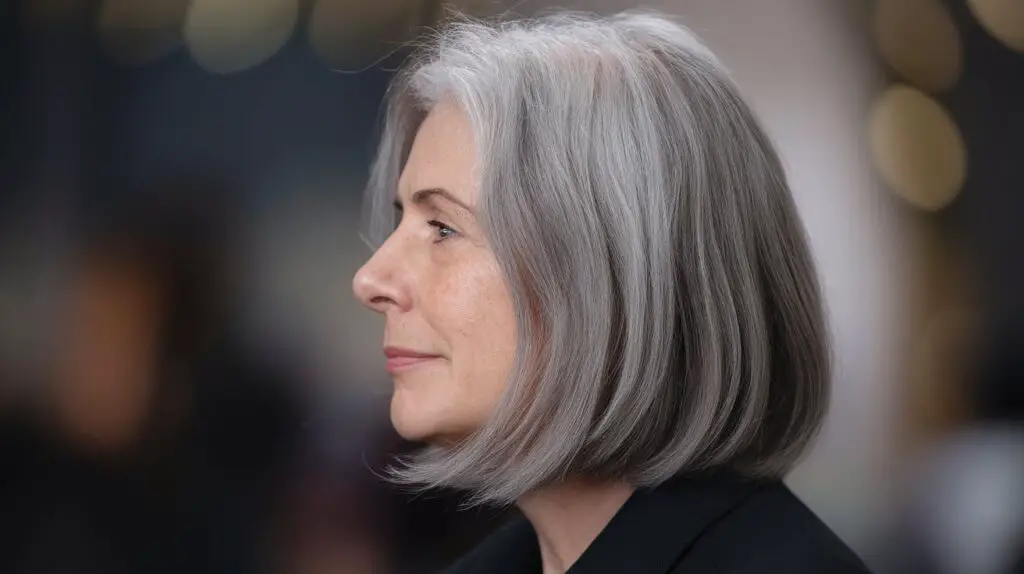
Medium-length haircuts offer the perfect balance for women with gray hair who want versatility without the maintenance of long hair or the commitment of a short cut. These styles, typically falling between the chin and shoulders, provide enough length for various styling options while remaining manageable for daily care. The weight of medium-length hair can also help control the sometimes unruly nature of gray strands.
Shoulder-Length Options
Shoulder-length cuts create a flattering frame for most face shapes while showcasing the multidimensional beauty of gray hair. This length allows for enough weight to keep coarser gray strands smooth while being light enough to maintain movement and body. Many women find this length ideal because it’s long enough to pull back into a ponytail for convenience but short enough to style quickly for everyday wear.
The way your cut interacts with your shoulders can dramatically affect its overall appearance. Hair that sits right at the shoulders might flip out or under depending on your hair’s natural tendencies, while hair cut just above or below the shoulders tends to lie more predictably. Your stylist can help determine the ideal length based on your hair’s specific behavior and your styling preferences.
Adding subtle layers throughout shoulder-length hair prevents it from looking heavy or shapeless, particularly important for thick gray hair. These layers should be carefully placed to maintain the overall length while creating movement. Face-framing pieces that start around the cheekbones can soften the overall look and draw attention to your features rather than focusing solely on your hair color.
Lobs and Their Variations
The long bob, or lob, has become increasingly popular among women with gray hair for good reason. This cut typically falls between the chin and collarbone, offering more styling versatility than a traditional bob while requiring less maintenance than longer styles. The lob works particularly well for gray hair because its length provides weight to control texture while its shape maintains a modern, polished appearance.
Different lob variations suit different hair types and face shapes. A blunt lob creates a strong, contemporary look that works beautifully with straight or slightly wavy gray hair. An A-line lob, longer in front than in back, can help elongate round faces while adding visual interest. A textured lob with choppy layers throughout creates a more relaxed, effortless vibe that works well with naturally wavy or curly gray hair.
Adding Movement to Medium Cuts
Creating movement in medium-length gray hair requires thoughtful cutting techniques that work with your hair’s natural tendencies. Since gray hair can sometimes appear flat or lifeless due to its lack of pigment, incorporating movement through strategic layering becomes even more important. Your stylist might use techniques like slice cutting or point cutting to create layers that move independently, adding life to your overall style.
The placement of these movement-creating layers matters significantly. Layers that start too high can create unwanted volume or frizz, while layers that begin too low might not provide enough movement. For most women with gray hair, starting layers around the cheekbones or jawline creates the most flattering effect, adding movement without sacrificing the overall shape of the cut.
Consider asking your stylist about disconnected layers – sections cut shorter than the overall length that create texture and movement without removing too much bulk. This technique works particularly well for women with thick gray hair who want to maintain length while adding visual interest and reducing weight.
Styling Techniques for Volume
Medium-length gray hair often benefits from volume-enhancing styling techniques that complement your haircut. The right cut provides the foundation, but how you style it can make the difference between flat, lifeless hair and a vibrant, voluminous look. Root-lifting products applied to damp hair before blow-drying can create lasting volume without weighing down your silver strands.
The direction you blow-dry makes a noticeable difference in how your medium-length cut looks. Drying your hair in the opposite direction from how it naturally falls creates lift at the roots. For added volume, try flipping your head upside down while drying the roots, then finishing with your head upright to smooth the lengths. Round brushing the ends can create polish and movement that enhances your cut’s shape.
Many women with medium-length gray hair find that air-drying with the right products creates beautiful, natural texture. A volumizing mousse or texture spray applied to damp hair can enhance your cut’s natural movement as it dries. This approach works particularly well for wavy or curly gray hair, allowing your natural texture to shine while maintaining the shape of your cut.
Long Haircuts That Work With Gray Hair
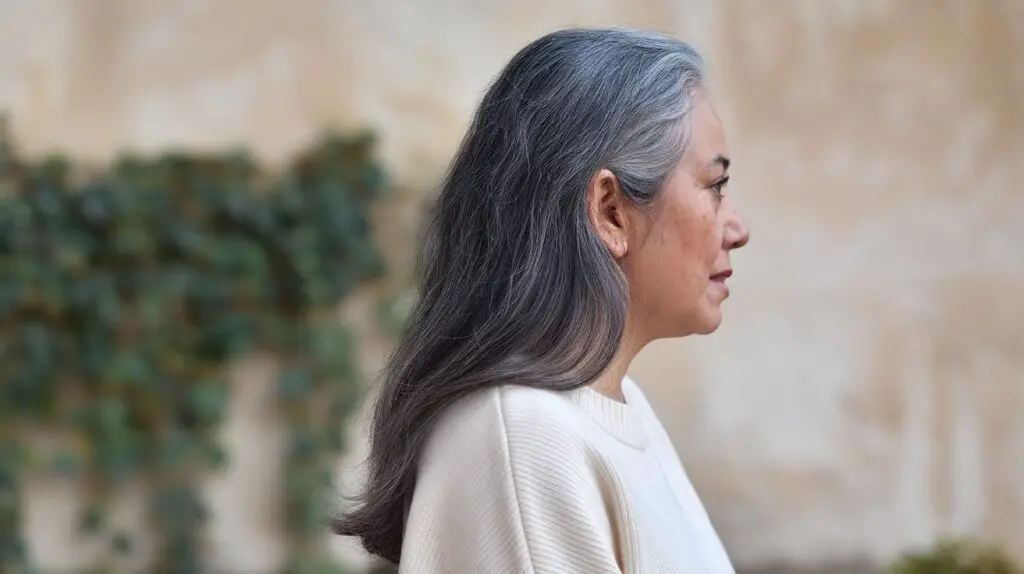
Long gray hair makes a striking statement, challenging the outdated notion that women should cut their hair short as they age. With the right cut and care routine, long gray hair can look healthy, vibrant, and thoroughly modern. The key lies in choosing cuts that prevent your hair from looking stringy or unkempt while maintaining enough length to showcase your silver tones.
Layered Long Cuts
Layers become essential in long gray haircuts to prevent the weight from dragging everything down and creating a flat, lifeless appearance. The coarser texture of gray hair actually works to your advantage in layered cuts, as each layer maintains its shape better than fine, pigmented hair might. Strategic layering starting from the mid-lengths down through the ends creates movement without sacrificing the overall length you love.
Long layers that blend seamlessly work better for gray hair than choppy, disconnected layers that might emphasize any dryness or damage. Your stylist should focus on creating fluid movement through the lengths while maintaining density at the ends. This approach prevents the thin, wispy ends that can make long gray hair look unkempt or aging.
The spacing between layers affects how your long gray hair moves and styles. Closer layers create more movement and can help manage thick, coarse hair, while wider-spaced layers maintain more weight and work well for finer gray hair. Your stylist can customize the layering pattern based on your hair’s specific needs and your styling abilities.
What about maintaining the health of long gray hair between cuts? Regular dusting appointments every 8-10 weeks help prevent split ends from traveling up the hair shaft while maintaining your overall length. This approach keeps long gray hair looking fresh and healthy rather than holding onto damaged length that detracts from your overall appearance.
Face-Framing Techniques
Face-framing layers in long gray hair serve both aesthetic and practical purposes. These shorter pieces around your face can soften strong features, highlight your bone structure, and create movement that prevents long hair from looking heavy or severe. The way these layers are cut can dramatically affect how youthful and modern your long gray hair appears.
The starting point for face-framing layers depends on your face shape and personal preferences. Some women prefer layers that begin at the cheekbones for a soft, romantic look, while others choose layers starting at the chin or collarbone for a more structured appearance. Your stylist should consider how these layers will behave when your hair is both styled and air-dried, ensuring they enhance rather than complicate your daily routine.
Graduated face-framing creates the most flattering effect for most women with long gray hair. This technique involves cutting progressively longer layers that blend seamlessly into the overall length, creating movement without any harsh lines. The result is a soft frame that draws attention to your face while maintaining the flow of your long hair.
Managing Length With Gray Hair
Long gray hair requires different management strategies than shorter cuts, particularly given the texture changes that accompany graying. The increased dryness and coarseness of gray strands means that longer lengths need extra attention to prevent tangling and breakage. Your haircut should facilitate this management rather than complicate it.
Consider incorporating slight graduation through the back of your long cut. This technique removes weight from the underneath sections while maintaining length on top, making your hair easier to manage and style. It also helps prevent the triangle shape that can develop when thick, coarse gray hair is cut in one length.
The ends of long gray hair need special attention in your haircut. Rather than cutting straight across, your stylist might use point cutting or texturizing techniques to create softer ends that blend better and resist the blunt, harsh look that can emphasize dryness. These techniques also help your hair move more naturally and reduce the appearance of any damage.
Here are essential considerations for managing long gray hair:
Regular Trims: Schedule cuts every 10-12 weeks to maintain healthy ends
Deep Conditioning: Use intensive treatments weekly to combat dryness
Protective Styling: Avoid tight elastics and use silk scrunchies or clips
Gentle Handling: Use wide-tooth combs and start detangling from the ends
Heat Protection: Always use heat protectant when styling with hot tools
Keeping Long Gray Hair Healthy
The health of long gray hair directly impacts how your haircut looks and behaves. Since gray hair tends to be more porous and prone to damage, maintaining its health becomes crucial for preserving your cut’s shape and your hair’s overall appearance. Your haircut should work with your hair care routine, not against it.
Protein-moisture balance becomes particularly important for long gray hair. Too much protein can make your hair brittle and prone to breakage, while too much moisture can leave it limp and shapeless. Your stylist can help assess your hair’s needs and recommend cuts that complement your hair’s current condition. Some women benefit from cuts that remove the oldest, most damaged portions while maintaining satisfying length.
Environmental protection plays a larger role in maintaining long gray hair than many women realize. Sun exposure can yellow gray hair and increase dryness, while chlorine and mineral deposits can create unwanted tints. Your haircut should allow for protective styling options like loose braids or buns that shield your lengths from environmental damage without creating tension at the roots.
How to Choose the Right Cut for Your Face Shape
Selecting a haircut that flatters your face shape while working with your gray hair’s texture creates the most harmonious and attractive result. Your face shape provides a starting point for determining which cuts will balance your features, but your hair’s specific characteristics and your lifestyle needs should also influence your decision. Understanding how different cuts interact with various face shapes helps you make an informed choice that you’ll love wearing every day.
Round Face Considerations
Round faces benefit from haircuts that add height and create the illusion of length. For gray hair, this might mean incorporating volume at the crown through layered cuts or choosing styles with vertical lines that elongate your face. Avoid cuts that add width at the cheekbone level, as these can emphasize roundness rather than creating balance.
A side part works better than a center part for round faces, creating asymmetry that lengthens your appearance. Long, side-swept bangs can also help create diagonal lines that slim and elongate. If you prefer shorter cuts, consider a pixie with height on top or an angled bob that’s longer in front – both styles help create the illusion of a longer face shape.
Gray hair’s natural volume can actually work to your advantage with a round face. The coarser texture helps maintain height at the crown, which is exactly what you want for creating length. Your stylist can use texturizing techniques to enhance this natural volume while keeping the sides sleeker for the most flattering effect.
Oval Face Options
Oval faces have the most flexibility when choosing haircuts, as this balanced shape works well with virtually any style. This freedom allows you to focus primarily on what works best for your gray hair’s texture and your personal preferences rather than worrying about balancing facial proportions. You can experiment with different lengths and styles to find what makes you feel most confident.
Since oval faces don’t require specific balancing techniques, you can choose cuts based on your hair’s behavior and maintenance preferences. If your gray hair is thick and coarse, you might opt for longer layers that remove bulk while maintaining style. If it’s become finer with age, shorter cuts that maximize volume might be more flattering.
Take advantage of your oval face shape to try trending cuts that might not work as well on other face shapes. Blunt bobs, shaggy layers, or even bold pixie cuts can all look fantastic. Your main consideration should be how much time you want to spend styling and maintaining your chosen cut.
Square Face Styling
Square faces feature strong jawlines and broad foreheads that benefit from softening through strategic haircut choices. Cuts with soft layers, waves, or curls help counteract angular features, while styles that add width at the temples and narrow at the jaw create more oval proportions. Gray hair’s texture often naturally creates the softness needed to flatter square faces.
Layered cuts work particularly well for square faces, especially when layers start at or below the jawline. This placement helps soften the jaw’s angle while creating movement that draws the eye vertically rather than horizontally. Side-swept bangs or face-framing layers that curve inward can also help soften strong features.
Length becomes your friend with a square face. Whether you choose a long layered cut, a shoulder-length style with movement, or a chin-length bob with soft edges, maintaining some length helps balance your face’s proportions. Even shorter styles like pixie cuts can work if they incorporate softness through texture and asymmetrical elements.
Heart-Shaped Face Cuts
Heart-shaped faces, characterized by wider foreheads and narrower chins, look best with cuts that add width at the jaw level while minimizing volume at the crown. This might seem counterintuitive given gray hair’s tendency toward volume, but strategic cutting can redirect that volume to the most flattering areas.
Chin-length bobs and shoulder-length cuts work beautifully for heart-shaped faces, as they add fullness where you need it most. Side parts and side-swept bangs help minimize forehead width while creating a diagonal line that balances your features. If you prefer longer hair, ask for layers that start at the chin to add width at the lower portion of your face.
Gray hair’s texture can actually help create the width you need at jaw level. The natural body in gray strands helps maintain fullness through the lower portions of your haircut. Your stylist might use texturizing techniques at the crown to reduce volume there while maintaining it through the ends for optimal balance.
Working With Your Natural Texture
Your gray hair’s natural texture should guide your haircut choice as much as your face shape does. Fighting against your hair’s natural tendencies leads to frustration and excessive styling time, while working with them creates effortless, beautiful results. Whether your gray hair is straight, wavy, curly, or kinky, there’s a flattering cut that celebrates rather than suppresses its natural state.
Straight gray hair benefits from cuts with built-in movement through layers or angles. Blunt cuts can work if your hair is fine and needs the density, but most straight gray hair looks best with some texturizing to prevent a heavy, helmet-like appearance. Consider cuts that you can air-dry for a casual look or polish with minimal heat styling for dressier occasions.
Wavy and curly gray hair thrives with cuts that enhance natural texture. Layered cuts that follow your curl pattern create shape without frizz, while techniques like the “curly cut” (cutting hair dry in its natural state) ensure each curl falls perfectly. The key is finding a stylist who understands how to cut curly gray hair, as it requires different techniques than straight hair.
Your Silver Hair Journey Awaits
Finding the perfect haircut for your gray hair opens up a world of styling possibilities that celebrate rather than hide your natural color. The journey to discovering which cut best suits your silver strands involves considering multiple factors – from your hair’s changed texture to your face shape and lifestyle needs. The most successful approach combines an understanding of how gray hair behaves with a clear vision of the look you want to achieve.
Your relationship with your gray hair will continue evolving as you experiment with different cuts and styling techniques. What works perfectly now might need adjusting as your hair continues to change, and that’s perfectly normal. The key is staying open to trying new approaches while maintaining regular communication with a stylist who understands the specific needs of gray hair. With the right cut, your gray hair becomes not just something you accept, but a stunning feature you genuinely love.
Frequently Asked Questions
Q: How often should I get my gray hair cut to maintain its shape and health?
A: Gray hair typically needs trimming every 6-8 weeks for short styles and 8-12 weeks for longer cuts. The coarser texture of gray hair means it holds its shape longer than fine hair, but regular trims prevent damaged ends and maintain your style’s intended shape.
Q: Will certain haircuts make my gray hair look yellow or dull?
A: Blunt, one-length cuts can sometimes emphasize yellowing or dullness because they don’t create the movement that reflects light attractively. Layered cuts with movement tend to showcase gray hair’s natural shine better. Regular use of purple shampoo also helps maintain brightness regardless of your cut.
Q: Can I still have long hair if it’s gray, or should I go shorter?
A: You can absolutely have long gray hair if it’s healthy and well-maintained. The key is choosing a cut with long layers to prevent heaviness and maintaining excellent hair health through regular trims and deep conditioning treatments. Long gray hair can look stunning when properly cared for.
Q: Do certain haircuts make gray hair easier to style?
A: Yes, cuts that work with your hair’s natural texture require less daily styling. For example, if your gray hair is naturally wavy, a cut that enhances those waves will be easier to maintain than one requiring daily straightening. Shorter cuts generally need less styling time but require more frequent salon visits.
Q: Should I avoid bangs with gray hair?
A: Not at all – bangs can look fantastic with gray hair. The key is choosing the right type for your hair texture. Wispy, textured bangs work well for coarse gray hair, while fuller bangs suit finer textures. Side-swept bangs are particularly flattering and easier to maintain than straight-across styles.
Q: Will layers make my thin gray hair look even thinner?
A: When done correctly, layers can actually make thin gray hair appear fuller by creating movement and removing weight that drags hair down. The key is avoiding over-layering. Your stylist should create long, blended layers rather than short, choppy ones that might reduce density too much.
Q: How do I know if my stylist understands gray hair?
A: A knowledgeable stylist will discuss your gray hair’s specific texture changes, recommend appropriate cutting techniques, and understand that gray hair often needs different handling than pigmented hair. They should also be familiar with products and treatments specifically beneficial for gray hair.
Q: Can I change my haircut dramatically when going gray, or should I stick with familiar styles?
A: Going gray is actually an excellent time to try a new haircut. Your hair’s texture has likely changed, so styles that didn’t work before might look fantastic now. Many women find that going gray gives them the confidence to try bolder, more modern cuts they wouldn’t have considered before.

