

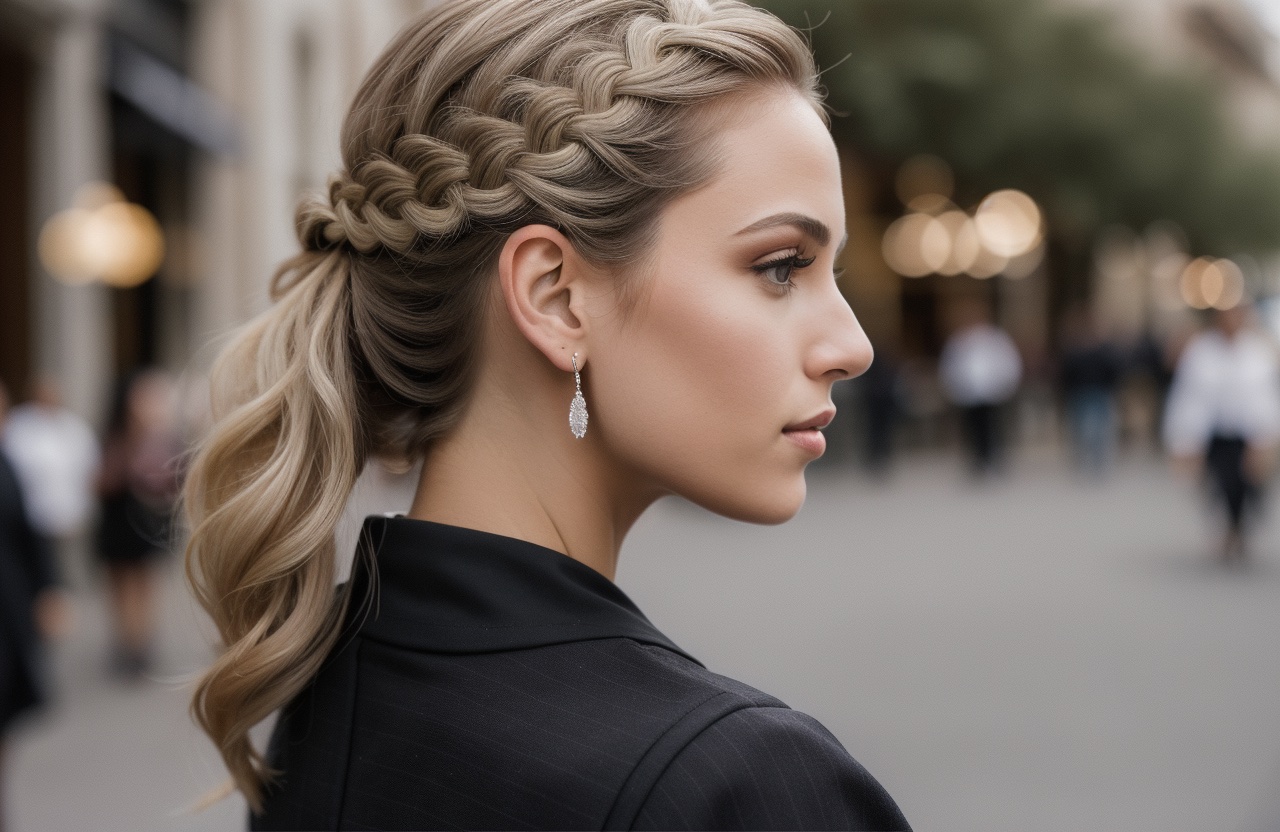
French braids have captivated women for centuries with their intricate beauty and practical functionality. This timeless hairstyle transforms ordinary locks into sophisticated patterns that work equally well for casual errands or elegant evenings out. Whether your hair barely grazes your shoulders or cascades down your back, French braiding offers endless possibilities for creating stunning looks that stay secure throughout your day.
The beauty of French braids lies in their remarkable adaptability to different hair lengths and textures. Short-haired women who once believed braiding was off-limits have discovered clever techniques that create gorgeous woven styles on pixie cuts and bobs. Meanwhile, those blessed with medium or long locks can experiment with increasingly complex patterns and combinations that showcase their hair’s natural beauty while keeping strands neatly contained.
Ready to discover which French braid styles will transform your specific hair length? The following sections reveal professional techniques, creative variations, and insider tips that help you master this versatile hairstyle. From petite braids that add texture to cropped cuts to elaborate designs that turn lengthy tresses into works of art, you’ll find inspiration and instruction tailored to your unique hair situation.
What Makes French Braids Perfect for Every Hair Length
French braiding stands apart from other braiding techniques through its unique method of gradually incorporating hair as you work down the head. This distinctive approach creates a raised, woven pattern that sits flush against the scalp before transitioning into a traditional braid. The technique’s flexibility allows stylists and DIY enthusiasts to adapt the size, tension, and placement based on available hair length, making it accessible to virtually everyone.
The adaptability of French braiding technique
The magic happens in how you adjust your approach based on hair length. With shorter styles, you’ll work with smaller sections and tighter weaves, creating delicate patterns that add dimension without requiring substantial length. Medium-length hair opens up more possibilities, allowing for fuller braids and more complex routing across the head. Long hair provides the ultimate canvas, supporting everything from simple single braids to interconnected masterpieces.
Your grip and finger positioning change dramatically between lengths too. Short hair demands precision and closer hand placement to the scalp, while longer lengths allow for more relaxed movements and broader sections. This adaptability extends to the tools you use – smaller elastics and bobby pins become essential for securing shorter styles, while longer hair might only need a single hair tie at the end.
How tension and placement vary by length
Tension control becomes crucial when working with different hair lengths. Short hair requires consistent, gentle tension to prevent painful pulling while ensuring the braid holds its shape. You’ll find that maintaining this balance gets easier with practice, as your fingers learn to gauge the right pressure for each section.
Medium-length hair offers more forgiveness with tension variations. You can create looser, more romantic styles or tighter, athletic-appropriate braids depending on your mood and plans. The key lies in starting with appropriate tension at the crown and maintaining consistency as you work downward.
Long hair presents unique tension challenges. Starting too tight can cause headaches by day’s end, while beginning too loose results in a braid that unravels within hours. The weight of longer hair naturally creates downward pull, so you’ll need to account for this when determining initial tension. Many women with lengthy locks prefer starting slightly tighter at the crown, then gradually loosening as they progress.
Professional tips for different textures
Hair texture plays as significant a role as length in determining braiding success. Fine hair benefits from texturizing products and slight teasing before braiding to create grip and volume. Without this preparation, silky strands tend to slip out of the weave, creating a messy appearance within hours.
Thick hair requires different strategies entirely. Sectioning becomes paramount – working with smaller pieces prevents bulky, uneven braids. You might need stronger-hold products and more secure pinning techniques to manage the volume. Some women with extremely thick hair find that slightly damp braiding works better than completely dry styling.
Curly and coily textures bring their own advantages and challenges to French braiding. The natural grip of textured hair often means braids stay put longer without additional products. However, you’ll need to work more slowly and carefully to prevent tangling. Detangling each section thoroughly before incorporating it into the braid prevents painful snags and ensures smooth results.
Common mistakes to avoid
Even experienced braiders fall into certain traps that compromise their results. One frequent error involves starting the braid too high or too low on the head. The ideal starting point varies by face shape and personal preference, but generally sits at the crown for maximum versatility.
Another widespread mistake involves inconsistent section sizes. Grabbing random amounts of hair as you progress creates an uneven, lopsided appearance. Developing a rhythm and visual gauge for consistent sections takes practice but dramatically improves your final results.
Poor preparation ranks among the most frustrating mistakes. Attempting to French braid tangled, product-heavy, or overly slippery hair sets you up for failure. Taking time to properly prep your strands – whether through washing, detangling, or adding appropriate styling products – makes the actual braiding process infinitely smoother.
Women often underestimate the importance of proper finishing techniques too. A beautiful braid can quickly deteriorate without appropriate securing methods. This means choosing the right elastic size, using adequate bobby pins for shorter styles, and considering finishing sprays that provide hold without stiffness.
Speed represents another common pitfall. Rushing through the braiding process leads to loose sections, uneven tension, and general messiness. While French braiding does become faster with practice, maintaining steady, deliberate movements produces far superior results compared to hasty attempts.
Short Hair French Braid Techniques and Styles
Short hair opens up a world of delicate, intricate French braiding possibilities that many women never realize exist. Gone are the days when pixie cuts and bobs meant giving up on braided styles entirely. Today’s techniques transform even the shortest locks into beautifully woven creations that add texture, interest, and sophistication to any look. The secret lies in understanding how to work with limited length while maximizing visual impact through strategic placement and creative adaptations.
Mini French braids for pixie cuts
Pixie cuts might seem too short for traditional braiding, but mini French braids prove otherwise. These tiny masterpieces typically measure just an inch or two in length, following the hairline or creating subtle accents throughout shorter styles. Start by identifying the longest sections of your pixie cut – usually found at the crown or around the fringe area.
Working with such short lengths requires modified techniques. Instead of grabbing substantial sections like you would with longer hair, you’ll work with wisps and small strands. Your fingers need to stay close to the scalp throughout the process, maintaining constant contact to prevent losing your grip on these petite pieces.
Consider starting with slightly damp hair when creating mini braids on pixie cuts. The moisture provides extra grip and control, preventing fine strands from slipping through your fingers. A light misting with water or texturizing spray often provides just enough tackiness without creating the soaking wet look that makes styling difficult.
Securing these miniature creations requires special attention. Traditional hair elastics often overwhelm the delicate proportions of pixie-length braids. Instead, opt for clear elastic bands designed for fine hair or small rubber bands typically used for orthodontic purposes. These nearly invisible options hold securely without adding bulk.
Bobby pins become your best friend when working with pixie-length braids. Unlike longer styles where the braid itself provides stability, shorter versions need strategic pinning to stay in place. Criss-cross bobby pins at the end of each mini braid, sliding them in at angles that follow your natural hair growth patterns. This technique ensures they stay hidden while providing maximum hold.
The placement of mini braids on pixie cuts can completely transform your overall style. A single braid along the side part adds asymmetrical interest, while multiple tiny braids scattered throughout create an edgy, textured effect. Some women prefer concentrating their braids around the crown area, where slightly longer pieces allow for more elaborate patterns.
Don’t forget about the power of leaving certain sections unbraided. The contrast between woven and loose pieces adds dimension to shorter cuts. This technique works particularly well for women growing out their pixies, as it helps blend different lengths while maintaining a polished appearance.
Side-swept French braids for bobs
Bob-length hair provides the perfect canvas for side-swept French braids that frame the face beautifully. This style works exceptionally well for both straight and angled bobs, creating movement and interest while keeping hair away from the face. The key to success lies in understanding how to work with the graduated lengths typical of bob haircuts.
Begin your side-swept braid at the deeper side of your part, starting just above the temple area. This positioning allows you to incorporate the maximum amount of hair while creating a flattering diagonal line across the head. For bobs with significant layering, you’ll need to adjust your technique to catch shorter pieces as you progress.
The angle of your braid matters tremendously with bob-length hair. Too steep, and you’ll run out of hair before reaching a secure ending point. Too shallow, and the braid won’t create that desirable sweeping effect. Aim for approximately a 45-degree angle from your starting point to just behind the opposite ear. This trajectory provides the ideal balance of coverage and security.
Working with bob-length layers requires patience and strategic planning. As you encounter shorter pieces that won’t quite reach the main braid, you have several options. Some can be incorporated for just a few passes before naturally falling out, creating a soft, romantic effect. Others might need to be left out entirely, styled separately to complement the braided section.
Here’s where styling products become especially helpful for bob-length side-swept braids:
Texture Spray: Creates grip in slippery, freshly washed hair without heaviness
Light-Hold Pomade: Smooths flyaways and shorter pieces that escape the braid
Flexible Hairspray: Sets the style without creating stiffness or crunchiness
Sea Salt Spray: Adds natural-looking texture and enhances the braid’s definition
The finishing point for side-swept braids on bobs requires careful consideration. Unlike longer hair where you can continue braiding down the length, bobs often end abruptly. Some women prefer tucking the end behind their ear and securing with bobby pins, creating a seamless look. Others allow the braid to end naturally, securing with a small elastic and leaving the tail visible for a more casual vibe.
Variations on the classic side-swept style keep things interesting. Try incorporating a Dutch (reverse) French braid technique for added dimension, or combine two parallel braids that merge behind the ear. These adaptations work particularly well for special occasions when you want something more elaborate than your everyday style.
Double French braids for chin-length hair
Double French braids transform chin-length hair into a stylish, symmetrical masterpiece that works for everything from workouts to weddings. This classic style gains new life when adapted for shorter lengths, creating a youthful, polished look that stays put throughout the day. The key lies in understanding how to section and balance the braids when working with limited length.
Creating a clean center part forms the foundation for successful double braids. Use a rattail comb to draw a precise line from your forehead to the nape of your neck. This part doesn’t have to be perfectly straight – a slight zigzag can add modern flair – but it should be clearly defined to ensure even distribution of hair between the two sides.
Start each braid at the hairline, positioning them symmetrically on either side of the part. With chin-length hair, you’ll typically begin incorporating hair immediately rather than starting with a small traditional braid section. This approach maximizes the French braided portion while you have sufficient length to work with.
Maintaining consistent tension between both braids prevents one from appearing tighter or looser than its partner. Many women find it helpful to complete one braid entirely before starting the second, while others prefer alternating between sides to ensure symmetry. Either approach works, but consistency in your chosen method produces the best results.
The challenge with double French braids on chin-length hair often comes at the nape area. As you approach the shortest layers, you might struggle to incorporate all the hair cleanly. Some pieces might be too short to reach, requiring creative solutions. You can either leave these wisps loose for a softer effect or use small bobby pins to tuck them under the completed braids.
Ending double braids on shorter hair requires adaptation from traditional techniques. Instead of long pigtails, you’ll likely have small tufts or barely enough length to secure with elastics. Many women prefer tucking these ends under and pinning them flat against the head, creating a cleaner finish. Others embrace the shorter tails, adding small decorative elastics or clips for intentional styling.
Incorporating accessories for shorter styles
Accessories elevate short French braided styles from simple to spectacular. The right additions can disguise the challenges of working with limited length while adding personality and flair. Unlike longer hair where accessories might get lost in the volume, shorter styles showcase every decorative element beautifully.
Metallic bobby pins have evolved far beyond their utilitarian origins. Today’s decorative options include geometric shapes, pearls, crystals, and intricate designs that transform basic braids into artistic statements. When working with shorter French braids, strategically placed decorative pins can extend the visual line of your style while securing any rebellious pieces.
Small flowers, whether fresh or silk, add romantic touches to braided styles. Tuck tiny blooms into the weave of your French braid, or cluster them at the ending point where shorter hair might otherwise look unfinished. The key lies in choosing proportionally appropriate accessories – oversized flowers overwhelm short styles, while delicate options enhance without dominating.
Ribbons woven through French braids create vintage-inspired looks perfect for special occasions. With shorter hair, thin satin or grosgrain ribbons work better than wide options. Start incorporating the ribbon from the beginning of your braid, treating it as an additional strand. This technique adds color and interest while helping to secure shorter pieces that might otherwise escape.
Hair rings and cuffs designed for braids offer modern metallic accents. These small accessories clip or slide onto completed braids, adding edgy sophistication. Position them at regular intervals along your French braid, or cluster them near the end for concentrated impact. Gold, silver, and rose gold options complement different skin tones and personal styles.
Temporary hair color provides another accessory option for short braided styles. Chalk, spray, or clip-in colored pieces add vibrant dimension to French braids without permanent commitment. This approach works particularly well for shorter hair, where the concentrated color creates maximum visual impact along the braided section.
Making thin braids appear fuller
Creating the illusion of fullness in French braids on short, fine hair requires specific techniques and styling tricks. Many women with thinner hair assume braids will only emphasize what they lack, but the right approach actually creates volume and density that makes hair appear thicker than reality.
Preparation makes all the difference for thin-haired braiding success. Start with volumizing products applied to damp hair, focusing on the roots where lift matters most. Blow-dry with your head flipped upside down, using your fingers to lift sections away from the scalp. This foundation provides the structure needed for fuller-looking braids.
The pancake technique transforms tight, thin braids into fuller masterpieces. After completing your French braid, gently tug at the edges of each woven section, starting from the bottom and working upward. This pulling motion loosens the braid strategically, creating width and dimension. With shorter hair, use extra caution to avoid pulling so much that pieces fall out entirely.
Strategic backcombing before braiding adds instant volume to thin hair. Focus on the sections you’ll be incorporating into the French braid, gently teasing at the roots to create lift. This technique works especially well at the crown area, where added height creates the most dramatic visual impact. Smooth the top layer lightly to hide the teasing while maintaining the volume beneath.
Consider incorporating braiding hair or subtle extensions designed for short styles. Modern options include clip-in pieces specifically created for braiding, which blend seamlessly with shorter cuts. These additions provide extra grip and fullness without the commitment or expense of permanent extensions. Choose colors that match your natural hair precisely for undetectable results.
The way you section hair significantly impacts the final fullness of your braids. Instead of creating perfectly clean sections, allow some strategic messiness. Slightly irregular partings and intentionally loose pieces create texture and movement that disguises thinner areas. This undone approach actually makes braids appear fuller than meticulously precise styles.
Medium Length Hair French Braid Possibilities
Medium length hair hits the sweet spot for French braiding versatility. Falling somewhere between the shoulders and mid-back, this length provides enough material for complex styles while remaining manageable for self-styling. Women with medium-length locks can experiment with virtually any French braid variation, from workplace-appropriate classics to intricate special occasion designs. The balanced proportions of medium hair mean braids neither overwhelm nor underwhelm, creating perfectly scaled styles for any face shape or personal aesthetic.
Classic French braid variations
The traditional center French braid takes on new dimensions with medium-length hair. You have sufficient length to create a substantial braid without the weight and bulk that sometimes plague longer styles. Starting at the crown and working straight back, this timeless option suits everything from morning yoga classes to afternoon business meetings.
Diagonal French braids
Diagonal French braids offer a fresh twist on the classic by changing the direction of your weave. Instead of working straight back, angle your braid from one temple toward the opposite shoulder. This creates visual interest and flatters virtually every face shape by adding asymmetrical movement.
Medium length provides the perfect canvas for this style because you have enough hair to complete the diagonal journey without running short. The braid naturally ends at shoulder level, where you can either secure it with an elastic or transition into a regular side braid for extra length.
The reverse French braid effect
Also known as Dutch braiding, this technique creates a raised, 3D effect by braiding under rather than over. With medium-length hair, the proportions of a reverse French braid appear particularly striking. The elevated texture stands out beautifully against the scalp without becoming too heavy or pulling uncomfortably by day’s end.
To master this variation, simply reverse your normal French braiding motion. Where you would typically cross sections over the middle, cross them underneath instead. This small change creates dramatic visual differences, making your braid appear fuller and more prominent. The technique works especially well for women with finer hair who want to create the illusion of thickness.
Multiple parallel braids
Medium length allows for creative parallel braiding patterns without the complexity of super long hair. Try creating two or three French braids running side by side from the forehead toward the crown. These can remain separate throughout or merge into a single braid at the back.
The key to successful parallel braids lies in clean sectioning from the start. Use a rattail comb to create distinct parts that guide each braid’s path. Keep the braids evenly spaced and maintain consistent tension across all strands. This prevents one braid from appearing tighter or more prominent than its neighbors.
Half-up French braid styles
Half-up styles maximize the beauty of medium-length hair by showcasing both braided and flowing sections. These versatile options keep hair out of your face while maintaining feminine movement through the loose lower portions. The contrast between structured braiding and free-flowing locks creates dynamic styles suitable for any occasion.
Begin with the classic half-up French braid crown. Section hair from temple to temple, creating a horseshoe shape across the top of your head. French braid this upper section straight back, incorporating hair only from within your sectioned area. Once you reach the crown, secure with an elastic and allow the braid to blend with the remaining loose hair.
For added interest, try the waterfall effect within your half-up style. As you French braid across the side of your head, drop the bottom section after each incorporation and pick up a new piece from below. This creates cascading loops that flow into the unbraided lower half, resembling a romantic waterfall of hair.
The braided headband variation offers another stunning half-up option. Starting at one ear, French braid across the front hairline toward the opposite ear. Keep the braid positioned about an inch back from your face for the most flattering placement. This creates a natural-looking headband that keeps shorter face-framing pieces under control while allowing the rest to flow freely.
Consider combining techniques for more elaborate half-up styles. You might start with a French braided fringe area that transitions into a small bun at the crown, leaving the lower lengths loose. Or create two French braids starting at the temples that meet and merge at the back, forming a heart shape when viewed from behind.
Texture plays a crucial role in half-up French braid success. Medium-length hair benefits from light texturizing before braiding to prevent slippage. Apply a small amount of sea salt spray or texture powder to the sections you’ll be braiding, then proceed with your chosen style. This extra grip ensures your half-up creation stays put without requiring excessive pins or products.
French braid crowns and halos
Crown and halo braids create ethereal, goddess-like styles that work beautifully on medium-length hair. These circular braiding patterns frame the face while showcasing braiding skills through their continuous, unbroken design. The proportions of medium hair provide just enough length to complete the circle without excess bulk or weight.
Starting a crown braid requires strategic planning. Begin behind one ear where the braid will be less visible if your ending doesn’t perfectly match your starting point. Work your way around the head, staying about two inches from the hairline for optimal placement. This distance creates the illusion of a crown while maintaining comfort throughout wear.
The incorporation pattern for crown braids differs from standard French braiding. You’ll only add hair from the lower side (closer to your face) while the upper sections come from the already-braided portion. This technique keeps the braid positioned correctly as a crown rather than spiraling toward the center of your head.
Maintaining even tension throughout proves challenging but crucial for crown braid success. The curve of your head means you’re constantly adjusting hand positions and angles. Practice keeping your arms relaxed and switching positions smoothly to prevent fatigue and inconsistent tension. Some women find it helpful to rotate their body rather than reaching awkwardly around their head.
Here are essential tools for creating perfect crown and halo braids on medium hair:
Clear Elastics: Nearly invisible when securing the braid end to the beginning
Bobby Pins: Match your hair color for seamless security at connection points
Texturizing Powder: Applied at roots for grip and volume throughout the crown
Flexible Hold Spray: Sets the style without stiffness or visible residue
Rattail Comb: Creates clean sections and smooths bumps during braiding
Connecting the braid end to create a seamless circle requires finesse. As you approach your starting point, gradually reduce the size of hair additions to taper the braid naturally. Tuck the tail under the beginning section and secure with bobby pins placed strategically to remain hidden. A light misting of hairspray helps blend any visible connections.
Combining with other braiding techniques
Medium-length hair provides the perfect playground for mixing French braiding with other techniques. These hybrid styles showcase creativity while maximizing the versatility of your hair length. By combining different braiding methods, you create unique looks that stand out from standard options.
The French-to-fishtail transition works exceptionally well on medium hair. Start with a classic French braid at the crown, then switch to a fishtail pattern once you’ve incorporated all the hair from your scalp. This creates an interesting textural shift that draws the eye downward while showcasing mastery of multiple techniques.
To execute this transition smoothly, complete your French braid as normal until reaching the nape. Then divide the gathered hair into two sections instead of three. Take small pieces from the outside of each section and cross them over to join the opposite side, creating the characteristic fishtail pattern. The contrast between tight French braiding and looser fishtail weaving adds visual intrigue.
Rope braid accents introduce another textural element to French braided styles. Try creating a small French braid on one side that transitions into a rope braid, then wraps around to join a larger French braid on the opposite side. This asymmetrical approach adds unexpected twists that elevate simple styles into conversation starters.
The bubble braid combination creates playful volume in medium-length styles. After completing a French braid that incorporates hair from the crown to mid-head, continue with a regular braid. Add small elastics every two inches down the remaining length, then gently tug each section to create bubble-like puffs. This technique adds whimsy and dimension to otherwise classic styles.
Four-strand French braiding introduces complexity without overwhelming medium-length hair. This technique creates a flatter, wider braid with intricate woven patterns. While more challenging than traditional three-strand braiding, the results justify the extra effort. The unique texture stands out beautifully on medium lengths where every detail remains visible.
Day to night transformations
The beauty of French braids on medium hair lies in their adaptability from casual daywear to elegant evening styles. With strategic adjustments and minimal effort, your morning braid transforms into a sophisticated night-out look. Understanding these quick change techniques means you’re always prepared for unexpected evening plans.
Start your day with a slightly loose French braid to enable easier evening transformation. This relaxed tension prevents the creasing and kinking that occurs with ultra-tight braids. Throughout the day, the braid naturally loosens further, creating the perfect foundation for evening styling adjustments.
When evening arrives, the pancaking technique instantly elevates your look. Gently pull at the edges of each braided section, working from bottom to top. This creates width and drama appropriate for nighttime occasions. Medium-length hair responds particularly well to this technique, achieving fullness without losing structural integrity.
Adding metallic accessories transforms day braids into evening glamour. Slide decorative pins along the braid’s path, concentrating them asymmetrically for modern appeal. Hair jewelry, small crystals, or pearl pins catch light beautifully in evening settings. The contained nature of medium-length braids means every accessory remains visible and impactful.
For dramatic transformation, partially undo your French braid to create romantic waves framing loose braiding. Release the lower third of your braid, allowing those pieces to fall freely. The upper portion maintains structure while the released sections add movement and softness perfect for dinner dates or evening events.
Consider incorporating temporary styling elements for nighttime enhancement. A touch of shimmer spray adds subtle sparkle that catches candlelight beautifully. Smooth any flyaways with a tiny amount of serum for polished perfection. These small additions elevate your existing braid into evening-appropriate sophistication without starting from scratch.
Long Hair French Braid Masterpieces
Long hair unlocks the ultimate potential for French braiding artistry. With lengths extending past the mid-back, you possess the raw material for creating genuinely breathtaking styles that shorter-haired women can only dream about. This abundance of length allows for intricate patterns, multiple braid combinations, and structural designs that transform hair into wearable art. The weight and flow of long locks add drama and movement to every braided creation, making even simple styles appear magnificent.
Intricate French braid patterns
The extra length of long hair supports complex weaving patterns that would be impossible on shorter lengths. These designs go beyond basic braiding to create geometric shapes, curves, and interconnected patterns across the scalp. Your hair becomes a canvas for expressing creativity through increasingly elaborate French braiding techniques.
Creating serpentine patterns
Serpentine or snake-like patterns wind across the head in graceful S-curves, showcasing the fluidity possible with lengthy locks. Start at one temple and guide your French braid in gentle waves across the scalp, incorporating hair as you follow your predetermined pattern. The key lies in maintaining smooth curves rather than sharp angles, which requires constant adjustment of hand positions and braiding angles.
Map out your serpentine path before beginning. Some women find it helpful to use washable marker dots on the scalp to guide their pattern, especially when attempting complex designs for the first time. These guides wash out easily but provide invaluable direction during the braiding process.
Geometric French braid designs
Long hair supports angular, geometric patterns that create modern, architectural looks. Think zigzags, diamonds, and triangular shapes formed through strategic French braiding. These designs require precise sectioning and careful planning but produce stunning results that photograph beautifully.
To achieve clean geometric lines, use a rattail comb for exact partings. Create your base pattern through sectioning before beginning any braiding. This foundation determines your final design’s success, so invest time in getting the sections perfectly aligned. The abundance of long hair means you can create multiple geometric shapes that interconnect across your entire head.
Lattice and basketweave effects
Perhaps the most impressive use of length involves creating lattice or basketweave patterns through overlapping French braids. Start with multiple parallel braids running in one direction, then weave perpendicular braids through them. This technique requires significant length to execute properly, as each braid must be long enough to weave over and under multiple cross-sections.
The process demands patience and often benefits from assistance. While possible to achieve solo with practice, having someone help with the back sections ensures even spacing and proper tension throughout. The finished effect resembles intricate basket weaving, with your hair forming the stunning raw material.
Multiple French braid combinations
Long hair’s generous length supports numerous braids working together in harmonious designs. Where shorter hair might manage two or three braids maximum, lengthy locks can accommodate five, six, or even more individual French braids that merge, separate, and intertwine throughout their journey.
Start with the classic five-strand French braid convergence. Section hair into five equal parts across the crown, beginning each with its own French braid. As you work downward, gradually angle the outer braids toward the center. By mid-head level, begin incorporating each outer braid into its neighbor, eventually merging all five into one magnificent unified braid.
The visual impact of multiple braids depends heavily on consistent sizing and tension. Use hair clips to temporarily hold completed sections while working on others. This prevents tangling and maintains the clean lines essential for professional-looking results. Long hair’s weight naturally helps braids hang properly, but consistent technique remains crucial.
Consider asymmetrical multiple braid arrangements for modern appeal. Perhaps three braids on one side merge into a single braid that wraps around to join two braids from the opposite side. These unexpected combinations showcase creativity while maintaining wearability for various occasions.
Color-treated or naturally multi-tonal long hair creates additional visual interest in multiple braid styles. The interweaving of different shades produces a ribboned effect that enhances the complexity of your design. Even subtle highlights become more noticeable when woven through multiple French braids.
French braid updos for special occasions
Long hair’s abundance provides endless possibilities for formal French braid updos. These elevated styles transform cascading lengths into sophisticated sculptures suitable for weddings, galas, and other momentous events. The combination of French braiding techniques with updo construction creates hairstyles that remain secure throughout long events while appearing effortlessly elegant.
The French braid chignon represents timeless sophistication. Begin with a loose French braid starting at the crown, incorporating all hair as you work downward. Instead of braiding to the ends, stop at the nape and twist the remaining length into a low bun. Wrap the braid around this bun base, securing with pins for a seamless blend of textures.
For maximum drama, consider the French braid crown with waterfall draping. Create a crown braid around the entire head, but instead of incorporating all hair, allow strategic sections to fall freely. Gather these loose pieces at the nape, twisting them into an elaborate low bun decorated with the dropping waterfall pieces. This style combines the security of braiding with the romance of flowing hair.
The inside-out French braid updo offers a modern twist on classical styling. Create multiple reverse French braids across the scalp, all directed toward a central point at the back. Rather than combining them into one braid, twist each individually and pin into an abstract rose-like formation. The raised texture of reverse braiding adds incredible dimension to the final updo.
Here’s how different pinning techniques affect your French braid updo longevity:
U-Shaped Pins: Provide maximum hold for heavy sections in elaborate updos
Spiral Pins: Twist directly into braided sections for invisible security
Decorative Pins: Add glamour while serving functional purposes in formal styles
Mini Bobby Pins: Perfect for catching small pieces without adding bulk
Hair Sticks: Create architectural elements while securing large twisted sections
Long hair updos incorporating French braids benefit from proper preparation. Day-old hair often works better than freshly washed, as natural oils provide grip and malleability. If working with clean hair, apply texturizing products liberally to create the workable base essential for elaborate styling.
Adding volume and texture
Long hair’s weight often works against volume, making strategic techniques essential for creating full, textured French braids. Understanding how to build and maintain lift throughout lengthy braids separates amateur attempts from professional-looking results. These methods transform potentially flat, lifeless braids into dimensional masterpieces.
Begin building volume before braiding starts. Apply volumizing mousse to damp roots, then blow-dry using a round brush to create lift at the scalp. This foundation provides the structure needed to support voluminous braids throughout their considerable length. Focus particularly on the crown area, where height creates the most dramatic impact.
The incorporation technique significantly affects volume in long French braids. Instead of pulling sections straight back, lift them up and away from the scalp before weaving into the braid. This creates space between the braid and head, preventing that plastered-down look common with heavy, long hair. Maintain this lifted approach throughout the entire braiding process.
Texturizing specific sections before incorporation adds incredible dimension. Lightly backcomb pieces before adding them to your French braid, focusing on random sections rather than every piece. This creates natural-looking fullness and prevents the uniformly smooth appearance that can make braids appear thin despite abundant hair.
The strategic release technique transforms tight braids into voluminous showpieces. After completing your French braid, work from bottom to top, gently tugging small pieces from each woven section. Unlike aggressive pancaking, this subtle approach maintains the braid’s integrity while adding softness and dimension throughout its length.
Product selection plays a crucial role in maintaining volume throughout long braids. Dry texture spray applied during braiding provides grip without weight. Avoid heavy serums or oils that encourage flat, limp results. Instead, choose lightweight formulations that support lift while controlling frizz and flyaways common with lengthy styles.
Maintaining braids overnight
The investment of time required for elaborate long hair French braids makes overnight preservation essential. Proper maintenance techniques ensure your intricate styling survives sleep, extending wearability across multiple days. Understanding how to protect lengthy braids prevents frustrating morning reconstruction while maintaining hair health.
Silk or satin pillowcases provide the first line of defense against overnight braid destruction. These smooth fabrics reduce friction that causes frizz, loosening, and general dishevelment. The investment in quality bedding pays dividends through extended hairstyle longevity and reduced hair breakage from cotton’s rougher texture.
The pineapple method adapts beautifully for braided styles. Loosely gather your French braid(s) at the very top of your head, securing with a soft scrunchie. This positioning prevents you from sleeping directly on the braids while maintaining their shape. The elevation also reduces tension on the scalp that can develop from side-sleeping on tight braids.
For maximum protection, consider wrapping techniques. A large silk scarf or dedicated hair wrap encases your braids completely, preventing any friction or tangling during sleep. Start at the nape, winding the fabric up and around your braided style. Secure at the crown with the scarf’s ends tied loosely to avoid pressure marks.
Morning refresh routines revive overnight braids without complete restyling. Lightly mist with water mixed with leave-in conditioner to reactivate styling products and smooth any frizz. Use your fingers to gently reshape any sections that shifted during sleep. A final light application of hairspray sets everything back in place for another day’s wear.
Some women find that sleeping in braids actually improves their appearance by day two. The slight loosening creates a lived-in texture that appears intentionally bohemian rather than freshly done. This evolved look works particularly well for casual occasions where ultra-polished styling might seem excessive.
How to Master French Braiding on Yourself
Self-braiding French styles on your own hair presents unique challenges that differ dramatically from braiding others’ hair. The reversed perspective, arm fatigue, and coordination requirements can frustrate even those who excel at braiding friends’ or children’s hair. Yet with proper techniques, tools, and dedicated practice, creating beautiful French braids on yourself becomes not just possible but enjoyable. The independence of styling your own hair opens up daily possibilities without relying on others or salon appointments.
Essential tools and products
Success in self-braiding starts with assembling the right toolkit. Quality tools make the difference between struggling through a frustrating experience and smoothly creating the style you envision. Investing in proper equipment pays off through easier execution and more polished results.
A high-quality brush designed for your hair type forms the foundation. Whether you need a detangling brush for thick hair or a boar bristle option for fine strands, starting with completely smooth, knot-free hair prevents painful snags mid-braid. Keep this brush within arm’s reach throughout braiding for quick touch-ups between sections.
Mirrors transform self-braiding from guesswork to precision. While a standard bathroom mirror works for front sections, adding a hand mirror or investing in a three-way mirror changes everything. The ability to see your work from multiple angles ensures even sections and catches problems before they compound.
Hair elastics in various sizes accommodate different braid thicknesses and hair types. Stock clear elastics for invisible hold, fabric-covered options for comfort, and small rubber bands for securing tiny sections. Having multiple choices readily available prevents stopping mid-braid to search for appropriate securing methods.
Sectioning clips prove invaluable for managing hair during complex self-braiding. Choose clips that grip without leaving marks, as you’ll frequently reposition them throughout the process. Longer clips work better than small ones, providing secure hold for thick sections while remaining easy to handle with potentially awkward arm positions.
The right products make self-braiding significantly easier. A lightweight texturizing spray provides grip without stickiness that complicates finger movements. Apply before beginning, focusing on areas you’ll be braiding rather than saturating all hair. This targeted approach maintains manageability while providing necessary hold.
Step-by-step self-braiding techniques
Mastering the basic movements for self-French braiding requires breaking down the process into manageable components. Understanding each element separately before combining them prevents overwhelming confusion and builds muscle memory more effectively.
Begin with proper positioning. Stand or sit with shoulders relaxed and spine straight. Hunching creates fatigue and limits arm mobility. Some women prefer standing for better range of motion, while others find sitting provides more stability. Experiment to discover your optimal position.
The starter section
Creating your initial sections sets the foundation for the entire braid. Use your thumbs to section a triangle of hair at your desired starting point, typically at the crown. This first section should be smaller than you might use when braiding others – about one inch at the base works well. Divide this into three equal strands.
Hold these initial strands with specific finger positions that you’ll maintain throughout. The left strand rests between your left thumb and index finger. The middle strand sits between your left index and middle fingers. The right strand mirrors this on your right hand. This grip allows for smooth transfers as you braid.
The incorporation technique
Adding hair to your French braid while maintaining control requires coordinated movements. As you cross the right strand over the middle, use your right pinky and ring fingers to gather a new section from the right side of your head. This multitasking motion becomes second nature with practice.
The size of incorporated sections determines your braid’s final appearance. Consistent small sections create a tight, intricate look, while larger sections produce a looser, more casual style. When self-braiding, err on the side of slightly larger sections initially – you can always practice with smaller ones as your skills improve.
Transfer strands smoothly between hands to maintain tension. After crossing and incorporating, shift the completed section to the opposite hand. This constant hand-switching prevents fatigue and maintains even tension throughout the braid. Think of it as a rhythmic dance between your hands.
Mirror positioning and hand placement
Strategic mirror setup dramatically improves self-braiding success. Position your main mirror directly in front at eye level. Add a hand mirror or position yourself between two mirrors to see the back of your head. Some women find a three-way vanity mirror ideal for complete visibility.
Adjust lighting to eliminate shadows that obscure your work. Bright, even illumination from multiple sources works better than single overhead lights that create dark spots. Natural daylight provides ideal conditions when available. Position yourself to maximize whatever lighting you have.
Your elbow position affects endurance and precision. Keep elbows lifted away from your body rather than pressed against your sides. This opens up your range of motion and prevents the cramping that comes from restricted positions. Take breaks to shake out your arms when needed.
Hand flexibility improves with specific exercises. Before braiding, stretch your fingers and wrists with gentle rotations and flexes. This preparation reduces fatigue and increases dexterity for the intricate movements ahead. Some braiders find that warming up with simpler braids helps prepare for complex French braiding.
Adapt traditional techniques for the self-braiding angle. Movements that work when braiding others may feel awkward on yourself. For instance, instead of reaching straight back, angle your hands slightly upward. This adjustment accommodates the natural arc of your arms while maintaining control.
Building muscle memory
Consistent practice transforms awkward movements into smooth, automatic actions. Muscle memory develops through repetition, but quality matters more than quantity. Focused practice sessions yield better results than mindless repetition that reinforces poor techniques.
Start with partial French braids to build foundational skills. Create small French braided sections at easily accessible areas like your temples or crown front. These practice zones allow you to see your work clearly while developing the basic movements. Gradually expand to more challenging areas as confidence grows.
Set realistic practice goals to maintain motivation. Perhaps aim for one complete French braid daily, regardless of how it looks. Or dedicate ten minutes to practicing specific techniques like even sectioning or smooth incorporation. Small, achievable goals prevent frustration while building skills progressively.
Video recording your practice sessions reveals habits invisible during the braiding process. Set up your phone to capture your movements from various angles. Reviewing footage highlights areas for improvement like uneven tension or inconsistent section sizes. This objective feedback accelerates skill development.
The progression from conscious effort to automatic execution follows predictable stages:
Week 1-2: Every movement requires concentrated thought and visual confirmation
Week 3-4: Basic movements feel more natural but still need focus
Week 5-6: Hands begin moving independently with less visual guidance needed
Week 7-8: Smooth braiding becomes possible while holding conversations
Beyond: Complex variations and blind braiding enter your repertoire
Physical comfort improves alongside technical skills. Initial sessions often result in sore arms and shoulders from unfamiliar positions. As muscle memory develops, your body naturally finds more efficient positions and movements. This physical adaptation parallels your technical improvement.
Troubleshooting common challenges
Every self-braider encounters similar obstacles during their learning journey. Understanding these common challenges and their solutions prevents discouragement and accelerates progress. Most problems have straightforward fixes once you identify the root cause.
Uneven sections plague beginners and experienced braiders alike. When self-braiding, maintaining consistent section sizes proves challenging without clear sight lines. Combat this by developing a tactile sense for section weight rather than relying solely on visual assessment. Practice grabbing sections with your eyes closed to build this sensitivity.
Losing track of which strand goes where creates frustrating tangles. This confusion often strikes when switching between hands or incorporating new sections. Develop a mental mantra or counting system to maintain orientation. Some braiders find saying “right over middle, left over middle” helps maintain the pattern.
Arm fatigue derails many self-braiding attempts before completion. Your muscles aren’t accustomed to sustained elevation at awkward angles. Build endurance gradually rather than powering through pain. Take strategic breaks, lowering your arms and shaking them out. These pauses actually improve your final result by preventing sloppy technique from tired muscles.
Inconsistent tension creates braids that look tight in some areas and loose in others. This usually results from changing your grip or rushing through certain sections. Focus on maintaining steady, even pressure throughout. If you notice tension variations, it’s better to undo and redo that section rather than continuing with uneven results.
Back-of-head blindness frustrates even experienced self-braiders. The area directly behind your crown resists visual inspection, making even incorporation challenging. Develop your touch sensitivity in this zone through targeted practice. Some braiders use their phone’s selfie camera as an additional mirror for tricky angles.
Your French Braid Awaits
French braiding transcends mere hairstyling to become a form of self-expression and creativity. Whether working with a pixie cut’s delicate wisps or luxurious lengths that cascade past your waist, these versatile techniques adapt beautifully to showcase your hair’s unique characteristics. The journey from fumbling beginner to confident braider rewards patience with the ability to create stunning styles for any occasion, from casual coffee runs to elegant evening events.
The techniques and variations explored throughout this guide provide your foundation for endless experimentation. As your skills develop, you’ll discover personal preferences for tension, positioning, and styling that make each braid uniquely yours. Remember that every expert braider started with shaky hands and uneven sections – persistence and practice transform initial struggles into effortless artistry that becomes second nature.
Frequently Asked Questions
Q: How long does my hair need to be for French braiding?
A: Hair needs to be at least 3-4 inches long for basic French braiding techniques. Shorter lengths around the ears or nape might not reach the braid, but you can work around this by using bobby pins or leaving these pieces loose.
Q: Why does my French braid always turn out loose and messy?
A: Loose, messy results usually stem from inconsistent tension or overly large sections. Focus on maintaining steady pressure throughout and keeping sections uniform. Also, texturizing products applied before braiding provide better grip for neater results.
Q: Should I French braid on clean or dirty hair?
A: Day-old hair typically braids better than freshly washed hair. Natural oils provide grip and prevent slipping. If you must braid clean hair, apply dry shampoo or texturizing spray first to add necessary texture.
Q: How can I prevent my arms from getting tired while self-braiding?
A: Take frequent breaks to lower and shake out your arms. Build endurance gradually with shorter practice sessions. Maintaining good posture and keeping elbows away from your body also reduces fatigue significantly.
Q: What’s the difference between Dutch braids and French braids?
A: Dutch braids (reverse French braids) cross sections under the middle strand rather than over, creating a raised, 3D braid that sits on top of the hair. French braids cross over, creating a flatter braid that sits closer to the scalp.
Q: How do I keep my French braid from hurting my scalp?
A: Scalp pain indicates excessive tension, particularly at the starting point. Loosen your grip slightly and avoid pulling hair straight back from the hairline. Starting your braid an inch back from your forehead also reduces tension on sensitive areas.
Q: Can I French braid hair with layers?
A: Yes, layers add beautiful texture to French braids. Shorter layers might pop out as you braid, which you can either tuck back in, secure with bobby pins, or leave loose for a romantic, undone effect.
Q: How long will a French braid last?
A: With proper securing and overnight protection, a well-done French braid can last 2-3 days. Using silk pillowcases and protective wrapping extends longevity while maintaining the style’s appearance.

