

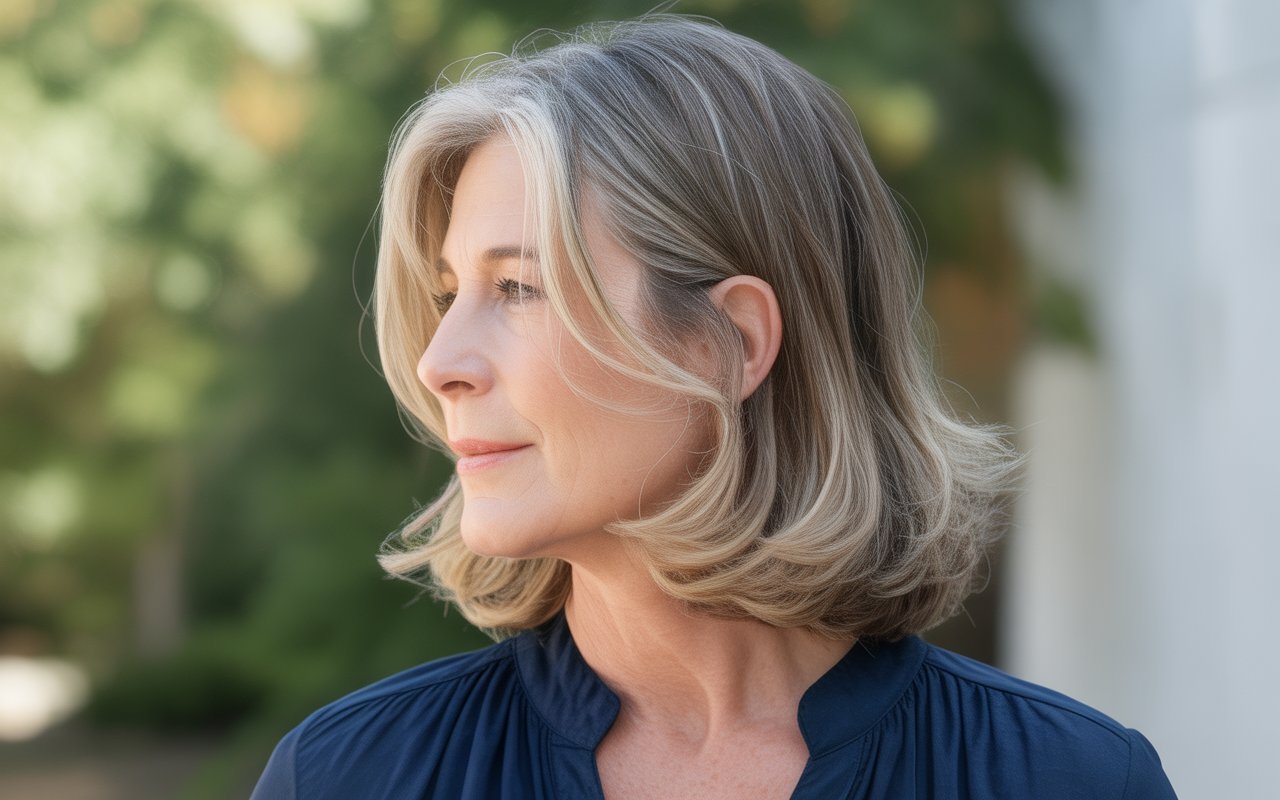
Transitioning to gray hair after 50 doesn’t mean you have to quit coloring altogether. Many women find themselves in that in-between stage where they’re ready to accept their natural silver but aren’t quite prepared to go cold turkey on hair color. The good news? There are plenty of hair color options that work beautifully during this phase, helping you ease into your natural gray while still looking polished and intentional.
“The transition to gray is a personal choice, and there’s no one-size-fits-all approach,” says celebrity colorist Rita Hazan, who has worked with stars like Beyoncé and Jennifer Lopez. “Strategic coloring can make the process feel less abrupt and more sophisticated.” The key is choosing shades that complement your incoming gray rather than fight against it. This means opting for cooler, ashier tones that blend seamlessly with silver strands, or using techniques that create dimension and soften the contrast between colored and natural hair.
From soft blonde highlights that mimic natural sun-kissed strands to rich brunette lowlights that add depth, the right color strategy can make all the difference. Below, you’ll find nine smart hair color choices specifically tailored for women over 50 who are transitioning to gray, along with expert insights on why each option works and how to make it work for your specific hair type and lifestyle.
1. Ash Blonde Highlights
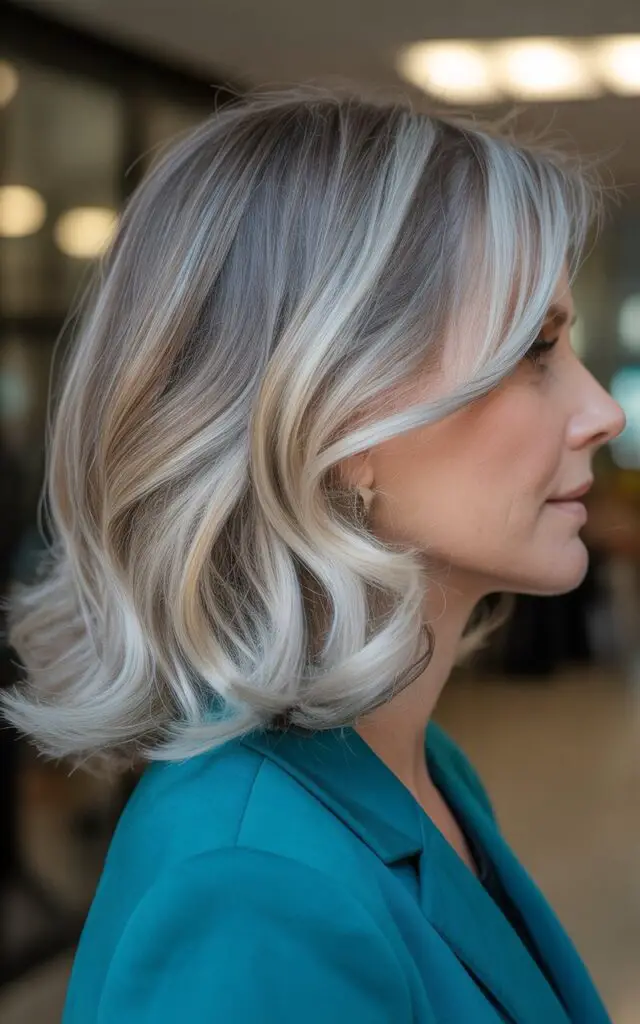
Ash blonde highlights are one of the most popular choices for gray transitions, and for good reason. This cooler-toned blonde naturally harmonizes with incoming silver hair, creating a soft, blended look that feels intentional rather than grown-out. Unlike warm golden highlights, ash blonde has those silvery undertones that mirror your natural gray.
“Ash tones are critical when transitioning because they don’t create harsh lines of demarcation,” explains colorist Sharon Dorram, who counts Nicole Kidman among her clients. The beauty of this approach lies in its ability to camouflage regrowth. As your natural gray comes in at the roots, it blends right into the ash blonde pieces rather than creating a stark contrast.
This technique works particularly well for women with naturally light to medium brown hair. The colorist places fine highlights throughout your hair, focusing on areas that would naturally lighten in the sun. As the gray grows in, you can gradually reduce the number of highlights during each salon visit, slowly phasing out the color without any dramatic changes. Maintenance typically requires touch-ups every 10-12 weeks, making it a relatively low-commitment option.
2. Babylights
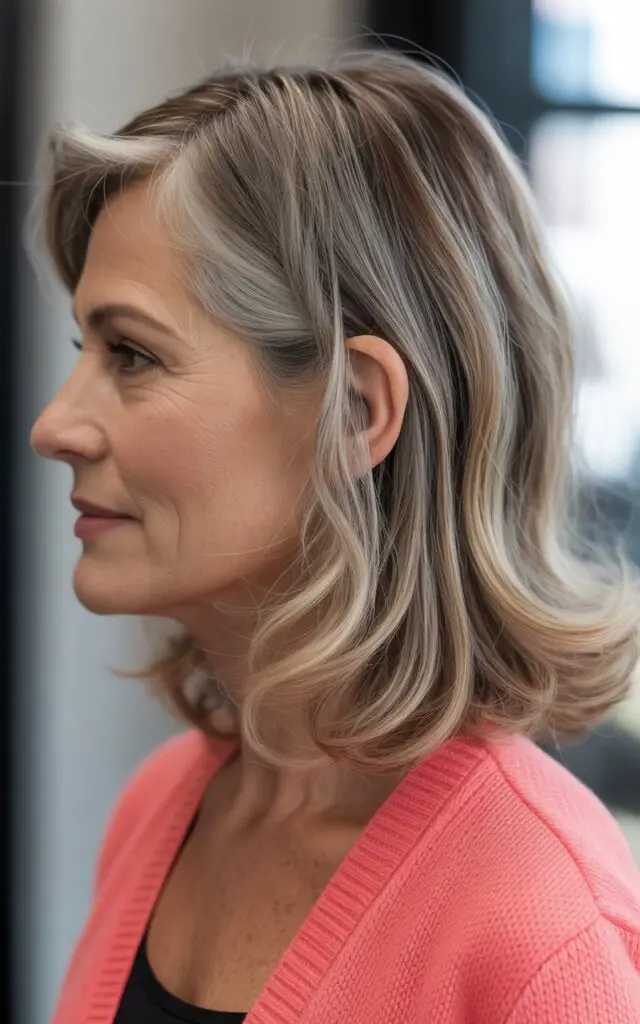
Babylights are ultra-fine, delicate highlights that mimic the subtle, multi-dimensional color you had as a child. These whisper-thin pieces of lighter hair are painted on strategically to create soft, natural-looking dimension. For women transitioning to gray, babylights offer an incredibly gentle way to blend silver strands while maintaining movement and depth.
The technique involves taking sections of hair that are much thinner than traditional highlights. “Think of babylights as the opposite of chunky highlights from the early 2000s,” says colorist Kadi Lee, who specializes in gray transitions. “These are so fine and soft that they create an almost painted effect.” The result is hair that looks naturally sun-kissed and dimensional, with enough variation to hide incoming gray.
What makes babylights particularly suitable for this transition is their subtlety. They don’t require heavy bleaching, which can be damaging to hair that may already be changing in texture as it grays.
The fine placement also means that as your natural silver grows in, it simply becomes part of the overall dimensional look. Women with fine to medium hair texture tend to see the best results, and maintenance is needed every 8-10 weeks.
3. Mushroom Brown
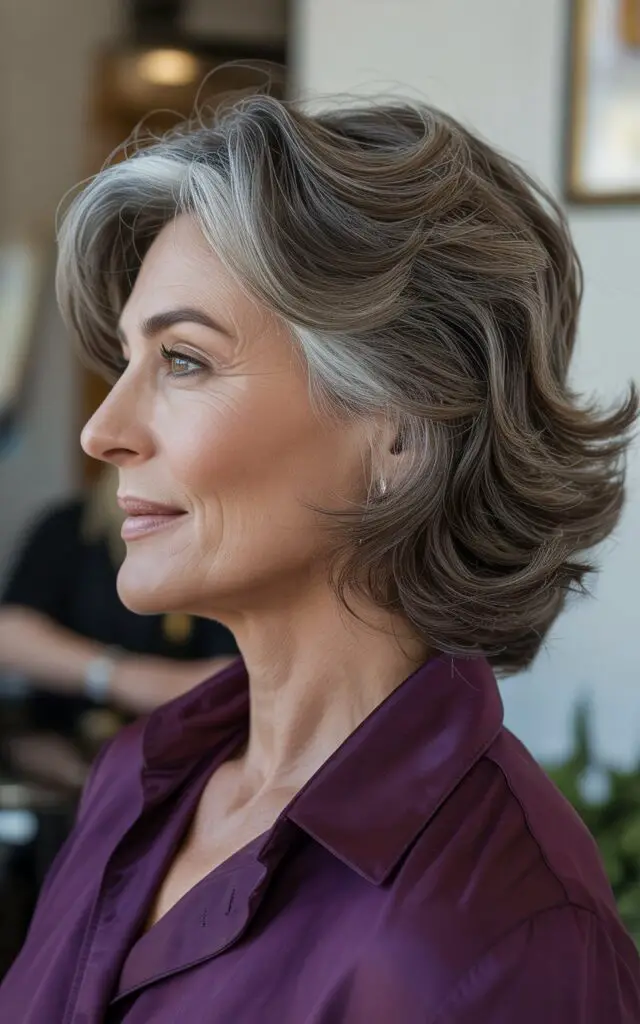
Mushroom brown has become a go-to shade for women transitioning to gray because it sits right in that sweet spot between brown and gray. This cool-toned brunette has ashy, almost grayish undertones that create a bridge between your colored hair and natural silver. It’s sophisticated, modern, and incredibly flattering on mature skin.
The shade gets its name from the earthy, neutral tone of mushroom caps. It’s not warm or golden, nor is it a stark cool brown. Instead, it occupies a middle ground that feels fresh and current. “Mushroom brown is basically training wheels for going gray,” explains colorist George Papanikolas. “It lets you get comfortable with cooler tones without fully committing to silver.”
This color works beautifully as an all-over shade or as lowlights blended with natural gray. For women with medium to dark brown hair, mushroom brown provides just enough coverage to soften the transition while still allowing some natural silver to peek through. It typically requires refreshing every 6-8 weeks, though root touch-ups can be stretched longer as more gray comes in and blends with the ashy base.
4. Silver Lowlights
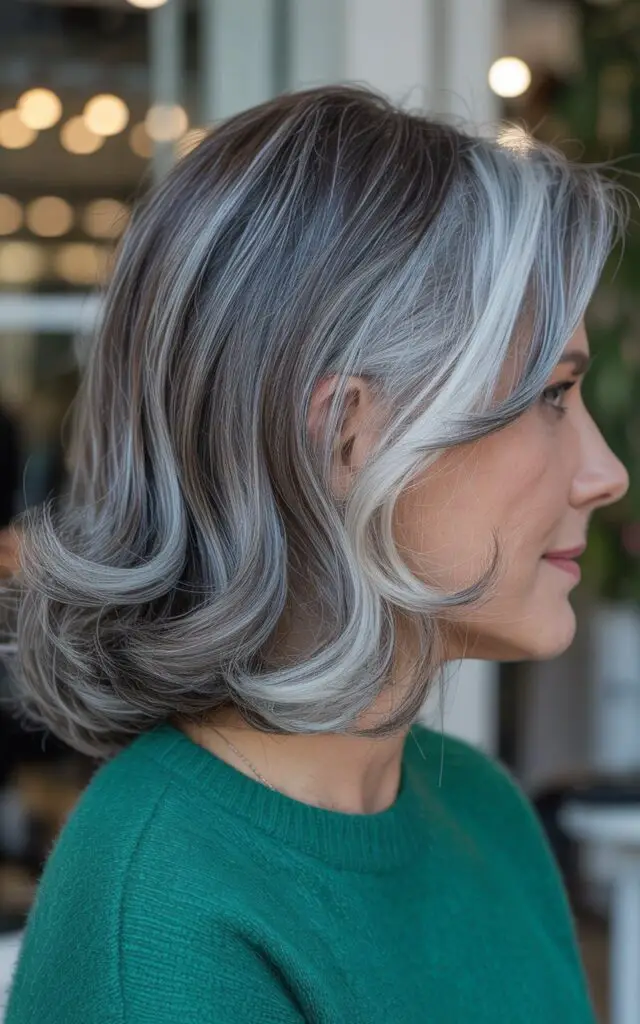
Here’s a reverse psychology approach: instead of highlighting to blend with gray, add silver lowlights to your colored hair. This technique introduces intentional gray tones into your existing color, creating a gradual shift toward your natural silver. It’s particularly effective for women who have significant gray coming in and want to make the transition feel more cohesive.
A colorist will paint or weave silver or gray-toned pieces throughout your hair, typically in the mid-lengths and ends. “We’re essentially pre-graying your hair,” says colorist Tracey Cunningham. “It sounds counterintuitive, but adding silver where you don’t have it yet creates a more uniform look as your natural gray grows in.” The result is hair that looks dimensional and intentional rather than patchy.
This approach works for any hair color, though it’s particularly striking on darker bases like brown or black. The silver pieces catch the light and add movement, while simultaneously making your incoming roots less noticeable. As your natural gray fills in at the roots, it blends seamlessly with the pre-placed silver lowlights. Maintenance varies depending on your growth rate, but most women return every 8-10 weeks.
5. Platinum Blonde
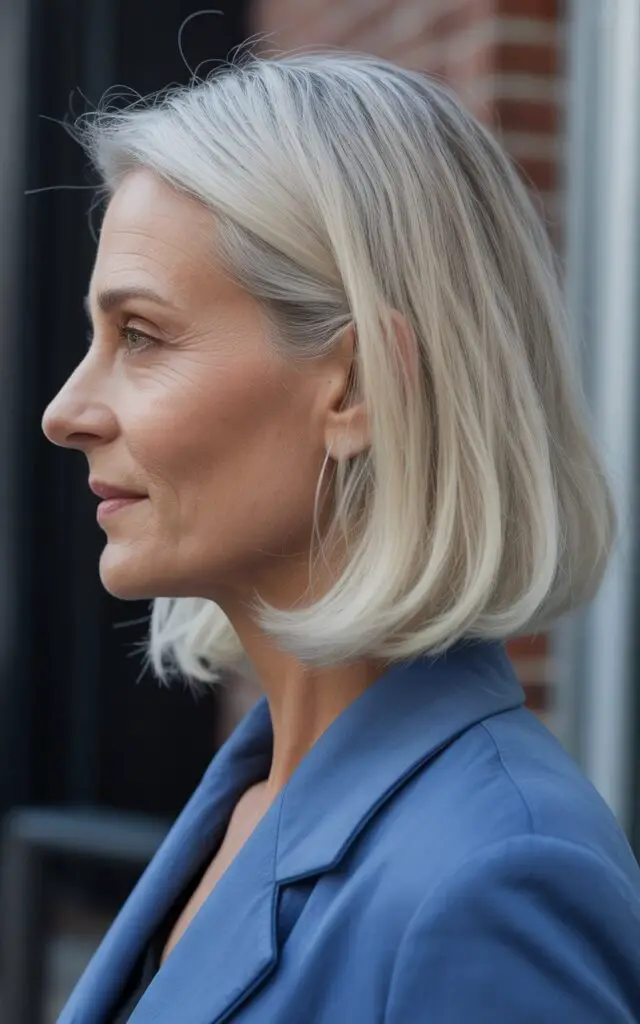
Going platinum might seem counterintuitive when transitioning to gray, but it’s actually a clever strategy for certain women. If you’re willing to lighten your entire head to a very pale blonde, your incoming gray roots will be far less noticeable against the light base. This creates a soft, almost monochromatic look that reads as intentional.
“Platinum is a commitment, but it can make the gray transition virtually invisible,” notes colorist Aura Friedman. The key is achieving a cool-toned platinum rather than a warm or brassy blonde. Those cooler tones have more in common with natural silver, creating better harmony as gray grows in. This option requires significant bleaching, so hair health must be a priority.
This route is best suited for women who already have light hair or who are prepared for the maintenance that platinum requires. You’ll need regular toning appointments every 4-6 weeks to keep the color looking fresh and prevent yellowing. However, many women find that once they’ve made the leap to platinum, the transition to fully gray is seamless and stress-free.
6. Balayage with Cool Tones
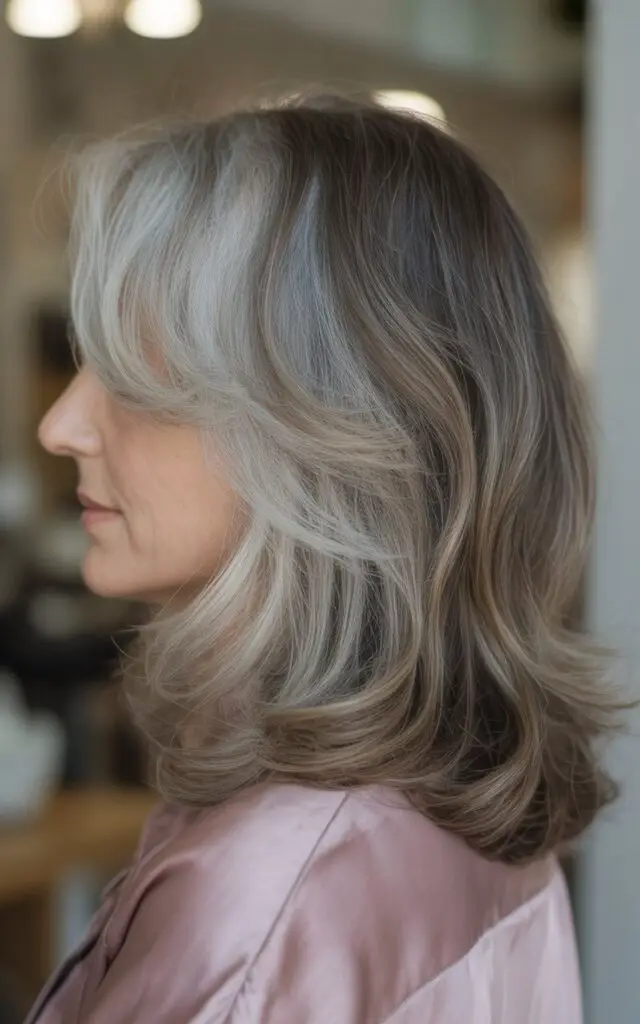
Balayage, a hand-painted highlighting technique, offers a softer, more natural-looking alternative to traditional foil highlights. When executed with cool, ashy tones, it becomes an excellent option for gray transitions. The painted-on color creates a gradual, sun-kissed effect that grows out beautifully and hides incoming silver.
Unlike foil highlights that can create distinct lines, balayage is applied freehand, resulting in a more organic blend of color. “The beauty of balayage for gray transitions is that it’s all about soft, diffused color,” explains colorist Johnny Ramirez. “There are no hard lines, so as gray comes in, it just becomes part of the overall look.” The colorist focuses lighter pieces around the face and through the mid-lengths, leaving roots slightly darker.
Cool-toned balayage typically incorporates ash blonde, beige, or even silver-toned highlights depending on your base color. These cooler shades harmonize with natural gray far better than warm, golden tones. The technique is also low-maintenance, requiring touch-ups only every 12-16 weeks. As you transition, your colorist can gradually reduce the amount of painted color, letting more natural gray show through.
7. Reverse Ombré
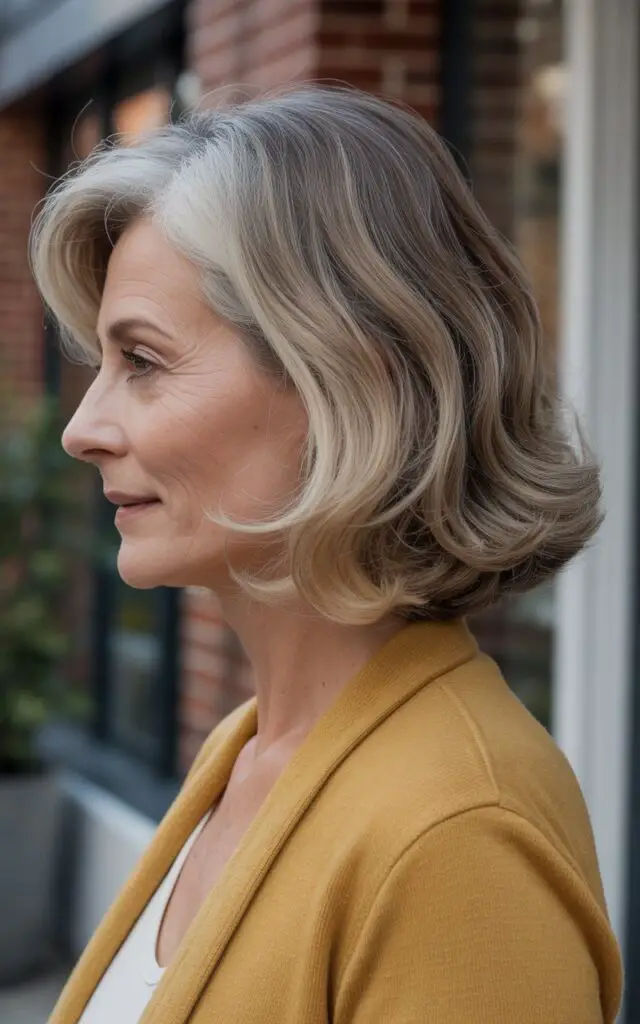
Traditional ombré features darker roots and lighter ends. Reverse ombré flips this concept, placing lighter, cooler tones at the roots and gradually transitioning to darker ends. For women going gray, this technique strategically places lighter color where gray typically appears first, creating a seamless blend that grows out gracefully.
The lighter root area is typically colored in cool blonde or even silver tones that match incoming gray. “Reverse ombré is perfect for women who are graying primarily at the hairline and crown,” says colorist Matt Rez. “We’re essentially meeting your natural gray where it’s happening, then transitioning to deeper color through the lengths.” This creates dimension while making regrowth nearly invisible.
This technique can be customized to any hair color. Brunettes might have ash blonde or mushroom brown at the roots transitioning to chocolate or espresso at the ends. Blondes might start with platinum or silver at the roots and deepen to honey or caramel.
The gradual transition means you can go several months between appointments, and as your gray fills in, it simply enhances the intended look.
8. Pewter Gray
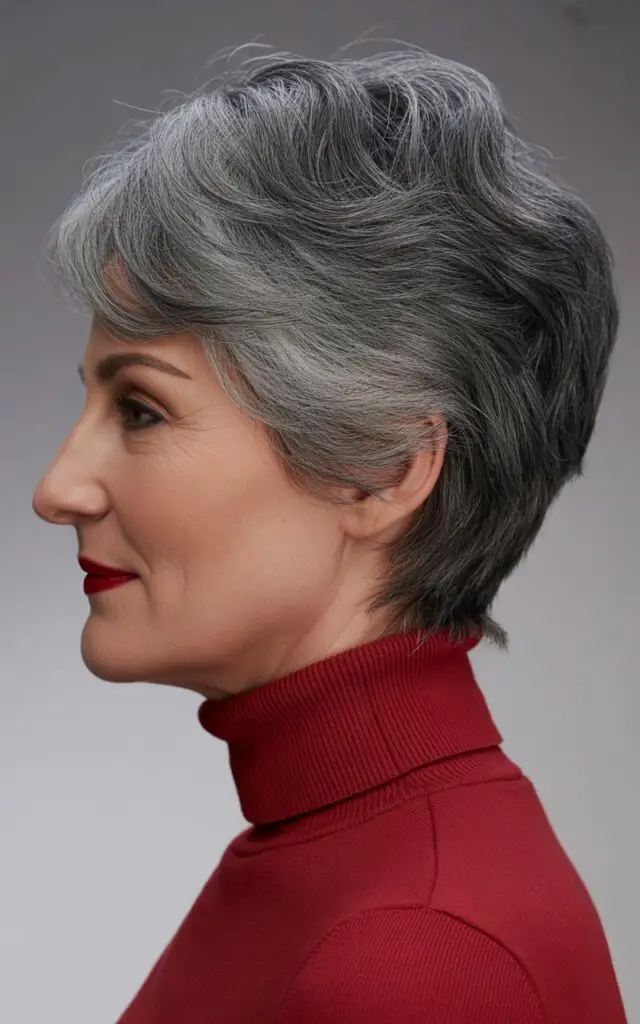
For women ready to fully lean into the gray but not quite ready to go completely natural, pewter gray offers the perfect middle ground. This is an all-over color that’s intentionally gray—not silver, not white, but a rich, metallic gray with depth and dimension. It’s fashion-forward and can actually make the transition to natural gray feel exciting rather than daunting.
Pewter sits deeper than silver but lighter than charcoal, creating a sophisticated tone that flatters mature skin. “Coloring your hair gray might seem strange, but it lets you control the shade and tone of your gray,” notes colorist Lorri Goddard-Clark. “Natural gray can come in patchy or with unwanted yellow tones. Pewter gives you a more refined version.” The metallic undertones add a modern edge.
Achieving pewter typically requires pre-lightening, especially for brunettes, followed by a gray toner. The process can be tough on hair, so a good bond-building treatment is crucial. Maintenance involves toning every 4-6 weeks to keep the color from shifting. Many women use this shade as a stepping stone, gradually letting their natural gray blend in until they’re ready to stop coloring altogether.
9. Blonde and Silver Blend
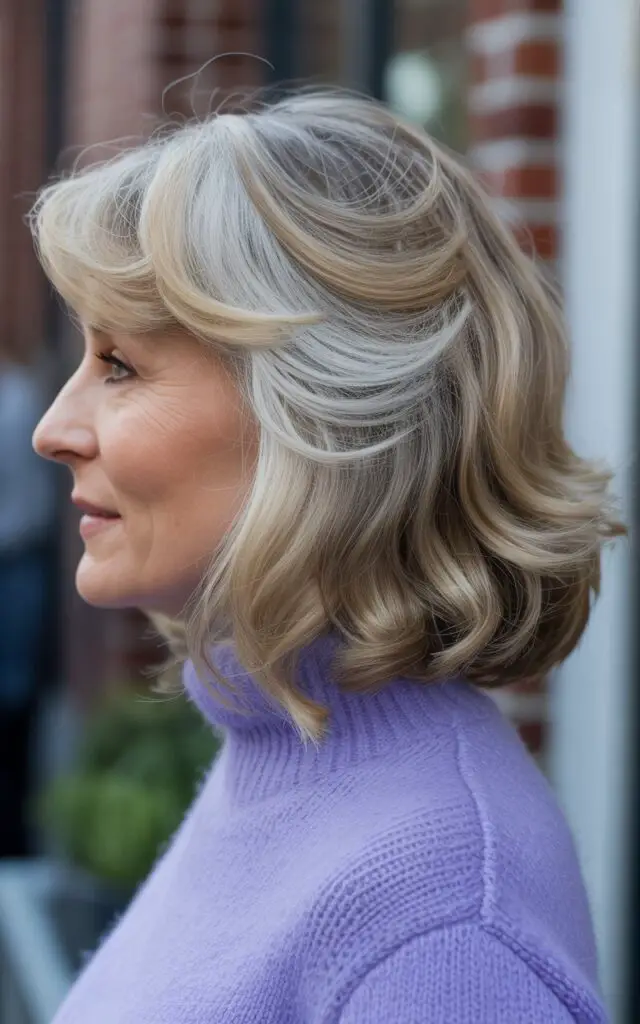
A blonde and silver blend combines traditional blonde highlights or balayage with intentional silver pieces, creating a multi-dimensional look that celebrates both color and natural gray. This technique acknowledges your transition while maintaining a polished, salon-fresh appearance. It’s particularly effective for women who want to keep some warmth but also want their gray to feel like part of the overall design.
The colorist weaves or paints both blonde and silver tones throughout the hair, creating variation and movement. “This blend technique is about celebrating where you are in the transition,” says colorist Marie Robinson. “You’re not fighting the gray, but you’re also not rushing to go completely silver. It’s a sweet spot that feels current and intentional.” The combination prevents the flat, one-dimensional look that can happen when all color is stripped away.
This option works beautifully on any base color but is especially stunning on light to medium brown hair. The blonde brings brightness around the face while the silver pieces tie into natural gray at the roots and throughout.
As your natural silver increases, your colorist can adjust the ratio, gradually adding more silver and reducing blonde until you’re ready to go fully natural. Maintenance typically falls every 10-12 weeks.
Transitioning to Gray After 50
Transitioning to gray after 50 isn’t about giving up on looking your best. It’s about finding a path that feels authentic while still letting you feel confident and put-together. The nine color choices outlined here prove that you don’t have to choose between embracing your natural silver and enjoying the creativity that hair color offers. Whether you opt for subtle babylights or make a bold statement with pewter gray, the right technique can make this transition feel less like a compromise and more like an evolution.
The most important factor is choosing an approach that fits your lifestyle, budget, and personal style. Some women want minimal maintenance and are ready to phase out color quickly. Others prefer a slower transition with more control over the process. There’s no wrong answer. Talk with a colorist who understands gray transitions and can create a customized plan that honors where you are and where you want to go. Your hair is changing, but that doesn’t mean your relationship with color has to end—it just gets to become something new.
Frequently Asked Questions
Q: How long does it typically take to fully transition to gray hair?
A: The timeline varies significantly based on your hair length, how much gray you already have, and which transition method you choose. For short hair, you might be fully gray in 6-8 months. Medium to long hair can take 1-2 years or longer. Some women use color to blend for several years before going completely natural.
Q: Will transitioning to gray make me look older?
A: Not necessarily. The key is keeping your hair healthy, well-cut, and styled. Gray hair that’s shiny and properly cared for can be incredibly flattering and modern. Many women find that good haircuts and updating their makeup actually make them look more current when they go gray.
Q: Can I still color my hair after I’ve gone fully gray?
A: Absolutely. Gray hair can be colored just like any other hair. Some women go fully natural and then decide to add highlights or lowlights later for dimension. Others color completely gray and then decide to try fashion colors. Your options remain open.
Q: What’s the most low-maintenance transition option?
A: Balayage with cool tones or reverse ombré tend to be the lowest maintenance because they grow out softly without harsh lines. You can often go 12-16 weeks between appointments. Traditional highlights require more frequent touch-ups.
Q: Does gray hair have a different texture than pigmented hair?
A: Yes, gray hair is often coarser and drier because it produces less natural oil. It can also be more wiry or have a different curl pattern. You may need to adjust your hair care routine with more moisturizing products and treatments.
Q: Should I go to a specialist for gray transition coloring?
A: It’s helpful to find a colorist experienced with gray transitions. They understand which tones blend best with silver and can create a strategic plan for your specific situation. Not all colorists have this expertise, so ask about their experience before booking.
Q: Will I need to change my hair care products during the transition?
A: Probably. Purple or blue shampoos can help tone brassiness in both colored and natural gray hair. You’ll also want to incorporate more moisturizing treatments since gray hair tends to be drier. Look for products specifically formulated for gray or silver hair.
Q: Can I transition to gray if I’ve been coloring my hair dark for years?
A: Yes, though it may require more patience and strategic planning. Dark color takes longer to grow out and creates more contrast with incoming gray. Your colorist might suggest gradually lightening your base color or using a reverse ombré technique to ease the transition.

