


Between back-to-back meetings, after-school pickups, and the thousand other things pulling at your time, spending 45 minutes on your hair every morning is simply not realistic. Most women know this feeling well — standing in front of the mirror at 7 a.m., hair still damp, trying to make something work before rushing out the door.
The good news is that the right haircut can change all of that. A well-chosen cut does most of the heavy lifting on its own, meaning you spend less time styling and more time getting on with your day. It’s not about sacrificing style for convenience — it’s about finding a cut that works with your natural texture instead of against it.
What makes a haircut truly low maintenance goes beyond just being short. The best options air-dry well, grow out gracefully without looking awkward, and hold their shape between salon visits. Whether you’re partial to keeping some length or you’re open to going shorter, there are plenty of polished, modern options worth considering.
1. The Classic Bob
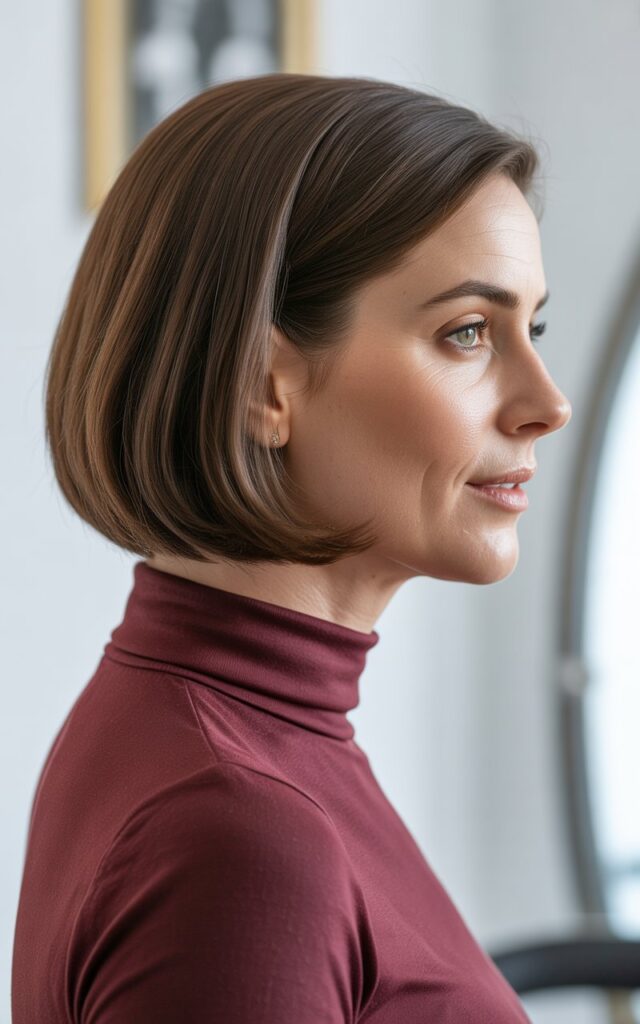
Few cuts have stood the test of time the way the classic bob has. Cut anywhere from the chin to just below the jaw, it frames the face cleanly and holds its shape well between trims. You can air-dry it for a relaxed, everyday look, or give it a quick blow-dry for a sharper finish when you need to look extra polished.
The bob works across a wide range of hair textures — straight, wavy, and even slightly curly. It also adapts well to different face shapes, especially when your stylist adjusts the length and angle slightly. If you’re looking for a style that looks intentional with minimal effort, this is a strong starting point.
One thing worth noting: ask for a version with minimal internal layers if you want the absolute lowest maintenance. The cleaner the cut, the more predictable the grow-out.
2. The Long Bob (Lob)

For women who aren’t ready to go full bob but want something easier to manage than long hair, the lob is an excellent middle ground. It typically hits somewhere between the collarbone and the shoulder, giving you enough length to pull back into a quick ponytail or half-up style on rushed mornings.
The lob also happens to be one of the most versatile cuts out there. It looks sharp when blown out straight, but it also handles air-drying beautifully — especially when paired with a bit of texturizing spray while damp. Wavy and straight hair types both tend to do well with this cut.
Trims every 8 to 10 weeks are typically enough to keep it looking fresh, which means fewer salon appointments than you might expect.
3. The Pixie Cut
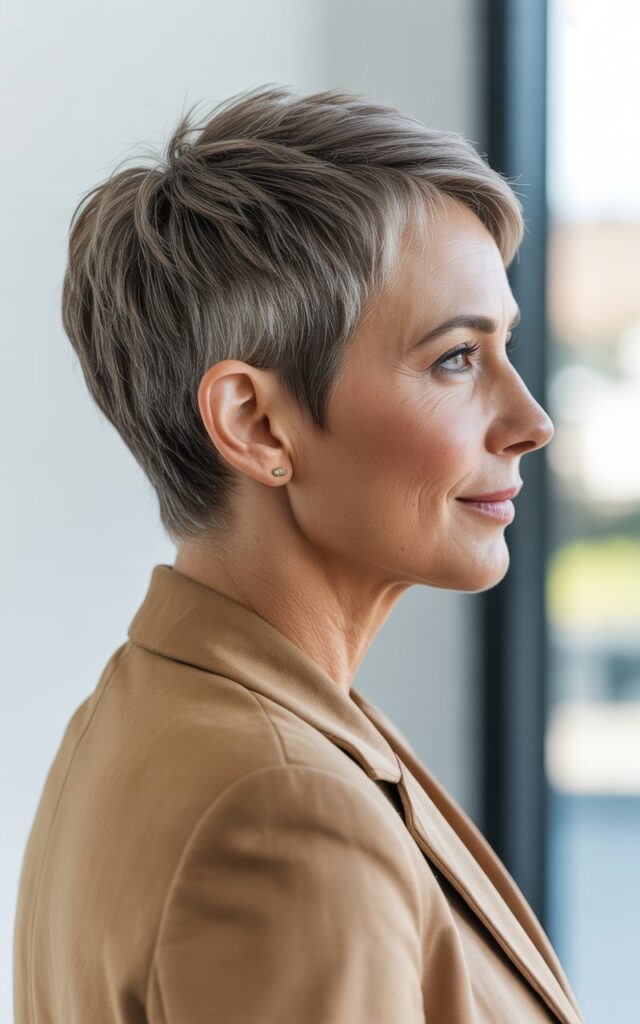
The pixie cut gets a reputation for being a bold choice, and it is — but it’s also one of the most genuinely low-effort haircuts available. At its shortest, it air-dries in minutes, requires little to no heat styling, and holds its shape well throughout the day.
It works particularly well for women with thicker hair, since removing all that length makes the hair far more manageable and faster to dry. That said, it can be adapted for finer hair too, with the right amount of texture built into the cut.
The trade-off with a pixie is that it requires more frequent trims — roughly every 4 to 6 weeks — to stay sharp. But if the alternative is spending 30 minutes with a blow dryer every morning, many women find the math still works in the pixie’s favor.
4. The Textured Shag

The shag has had a strong resurgence in recent years, and it earns its place on this list because it’s specifically designed to look good undone. Heavy layers, choppy ends, and sometimes curtain bangs give it a relaxed, lived-in look that actually gets better when you air-dry and leave it alone.
This cut works especially well for wavy and curly hair types, since the layers help reduce bulk and encourage natural texture to shine. A small amount of curl cream or sea salt spray scrunched into damp hair is often all it takes to get a finished result.
For straight hair, a shag can still work well, though you may want to add a touch of texturizing spray to get the most out of the layers. The key thing to communicate with your stylist is that you want the layers to feel soft and movable, not stiff.
5. The Blunt Cut
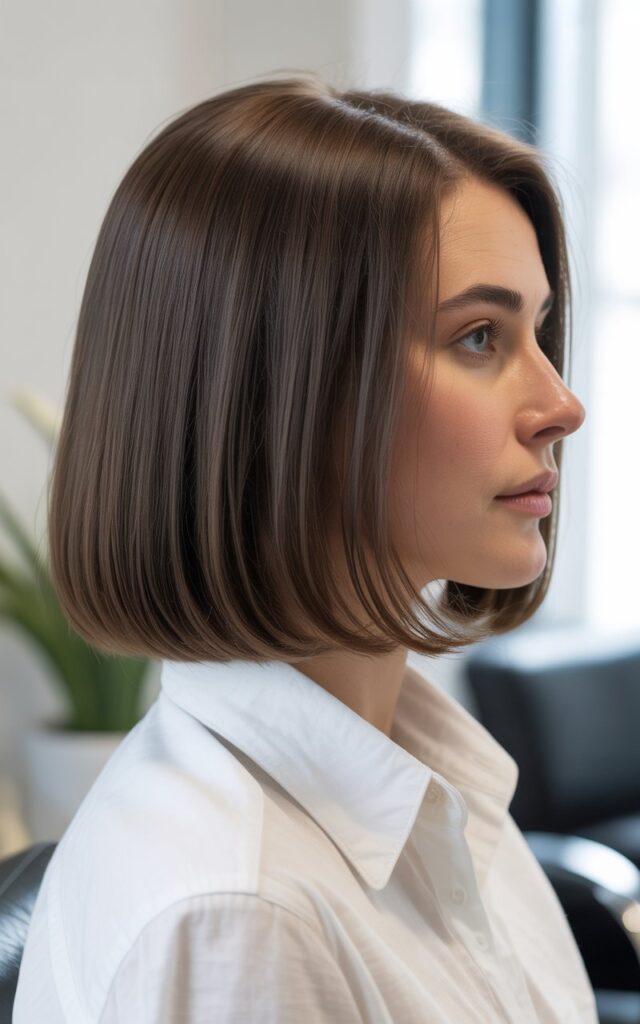
If simplicity is the goal, the blunt cut delivers it cleanly. This is a one-length cut — no layers, no angles, just a clean, straight line across the ends. It can be worn at any length from chin to mid-back, though it tends to look most polished at shoulder length or shorter.
The reason blunt cuts rank so well for easy upkeep is that the grow-out is predictable. There’s no complex layer structure to maintain, so you can stretch your salon visits further without things looking overgrown or shapeless. It also gives the appearance of thicker, denser hair — a bonus for women with finer strands.
Pair it with a lightweight smoothing serum on wash days and you’re done. It’s as no-fuss as haircuts get.
6. The French Bob

The French bob is a shorter variation of the classic bob, typically cut just below the chin or at chin length, often paired with soft bangs. It has a relaxed, slightly undone quality to it that makes it look effortlessly stylish without much actual effort involved.
What makes this cut especially appealing for busy women is that the bangs — when trained properly — essentially style themselves. Once you know where they want to sit, a wash-and-air-dry routine works perfectly well. No curling iron required.
It suits thicker and wavy hair particularly well. Women with very fine hair can make it work too, though they may want to ask for a touch more texture in the cut to give it some body.
7. Shoulder-Length Layers

Shoulder-length hair with subtle layers hits a sweet spot that’s hard to beat: enough length to have styling options, but light enough that it doesn’t feel like a chore to manage. The layers keep it from looking flat or heavy while adding natural movement.
This cut looks good on virtually all hair types and face shapes, which is part of why it stays popular year after year. It can be worn straight, in loose waves, or pulled back on days when you’re not in the mood to deal with it at all.
The key word here is “subtle.” Heavy layers can make this cut higher maintenance. Ask for face-framing layers with soft, graduated ends — that gives you the movement without requiring daily styling to look intentional.
8. Long Layers
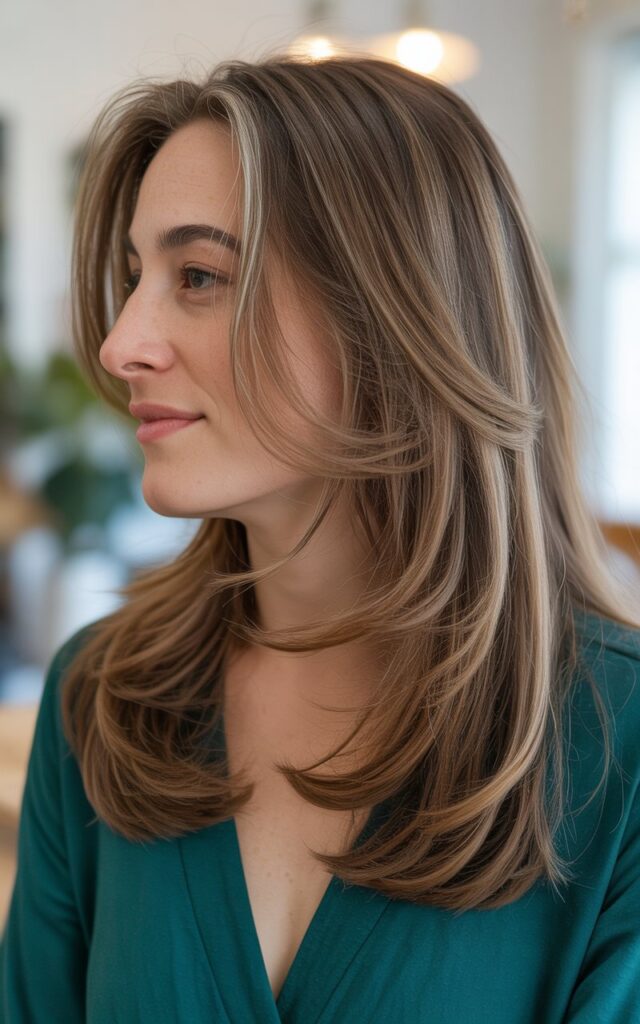
Not every woman wants to cut her hair short, and that’s completely fine. Long hair can absolutely be low maintenance — but only if the cut is working with you, not against you. Long layers are the answer here.
By removing weight from the mid-lengths and ends, layers make long hair lighter, easier to air-dry, and naturally more voluminous. The result is hair that looks like it took effort when it really didn’t. A bit of leave-in conditioner and a light oil through the ends is often enough to make long layers look polished on a regular wash-and-go day.
The grow-out on long layers is also very forgiving. Since there’s no sharp line to maintain, you can comfortably go 10 to 12 weeks between cuts without things looking messy.
A Few Things to Keep in Mind
No matter which cut you choose, a few habits can extend the life of any low-maintenance style. Dry shampoo between washes keeps roots looking fresh. A silk pillowcase reduces frizz overnight. And using the right products for your specific hair texture — whether that’s a curl-defining cream, a smoothing serum, or a volumizing mousse — makes a noticeable difference in how much effort your morning routine actually requires.
It’s also worth having an honest conversation with your stylist about your real lifestyle. Describe your actual morning routine, not your ideal one. The more specific you are, the better they can shape the cut to work for your day-to-day, not just look great leaving the salon chair.
The Right Cut Makes Every Morning Easier
Choosing a haircut that fits your life rather than your aspirational morning routine is one of the most practical decisions you can make. The eight styles covered here all share a common thread: they work with natural texture, grow out gracefully, and don’t require a full styling session every day to look put together.
The goal isn’t to stop caring about your hair — it’s to stop spending more time on it than you need to. Once you find a cut that suits your texture and your schedule, you’ll wonder why you waited so long to make the switch. Your mornings are worth reclaiming.
Frequently Asked Questions
Q: How often do I need to get a trim with a low-maintenance haircut?
A: It depends on the cut. Pixie cuts typically need a trim every 4 to 6 weeks. Bobs and lobs generally look good with a trim every 8 to 10 weeks. Long layers and blunt cuts can go 10 to 12 weeks comfortably before a refresh is needed.
Q: What’s the best low-maintenance cut for women with thick hair?
A: The pixie cut and the textured shag both work extremely well for thick hair. Both styles remove bulk and reduce drying time significantly, which is the main challenge thick hair presents.
Q: Are there low-maintenance options for women who want to keep their hair long?
A: Yes — long layers are the go-to option for women who prefer length. They reduce weight, speed up drying time, and give the hair natural movement without requiring much styling effort.
Q: What low-maintenance cut works best for wavy hair?
A: The textured shag and the lob both perform well with wavy hair. Both cuts encourage natural wave patterns, meaning air-drying produces a genuinely finished result without heat tools.
Q: Will a low-maintenance cut still look professional?
A: Absolutely. The classic bob, blunt cut, lob, and shoulder-length layers all read as polished and professional in workplace settings. The pixie and French bob are also well-suited for professional environments when styled cleanly.
Q: How do I choose between a bob and a lob?
A: Face shape is a good starting point. Women with rounder or fuller faces often find the lob more flattering since the added length creates a slimming effect. Women with narrower, oval, or heart-shaped faces tend to look great with either. The lob also gives you more styling versatility since the length can be pulled back.
Q: Do I need to use a lot of products to maintain these cuts?
A: Not at all. Most of these styles require minimal product — often just a texturizing spray, leave-in conditioner, or light serum depending on your hair type. The whole point of a low-maintenance cut is that it shouldn’t require an extensive product routine to look good.
Q: Is the blunt cut a good option for fine hair?
A: Yes, the blunt cut is actually one of the best options for fine hair. The clean, uninterrupted line across the ends creates the appearance of fuller, denser hair. Avoid heavy layering if your hair is fine, as too much texture can make it look thinner.
Q: How do I talk to my stylist about getting a truly low-maintenance cut?
A: Be specific about your actual routine. Tell your stylist how much time you realistically spend on your hair in the morning, whether you air-dry or blow-dry, and which tools you own and use regularly. The more honest you are, the better they can match the cut to your real life rather than an idealized version of it.

