

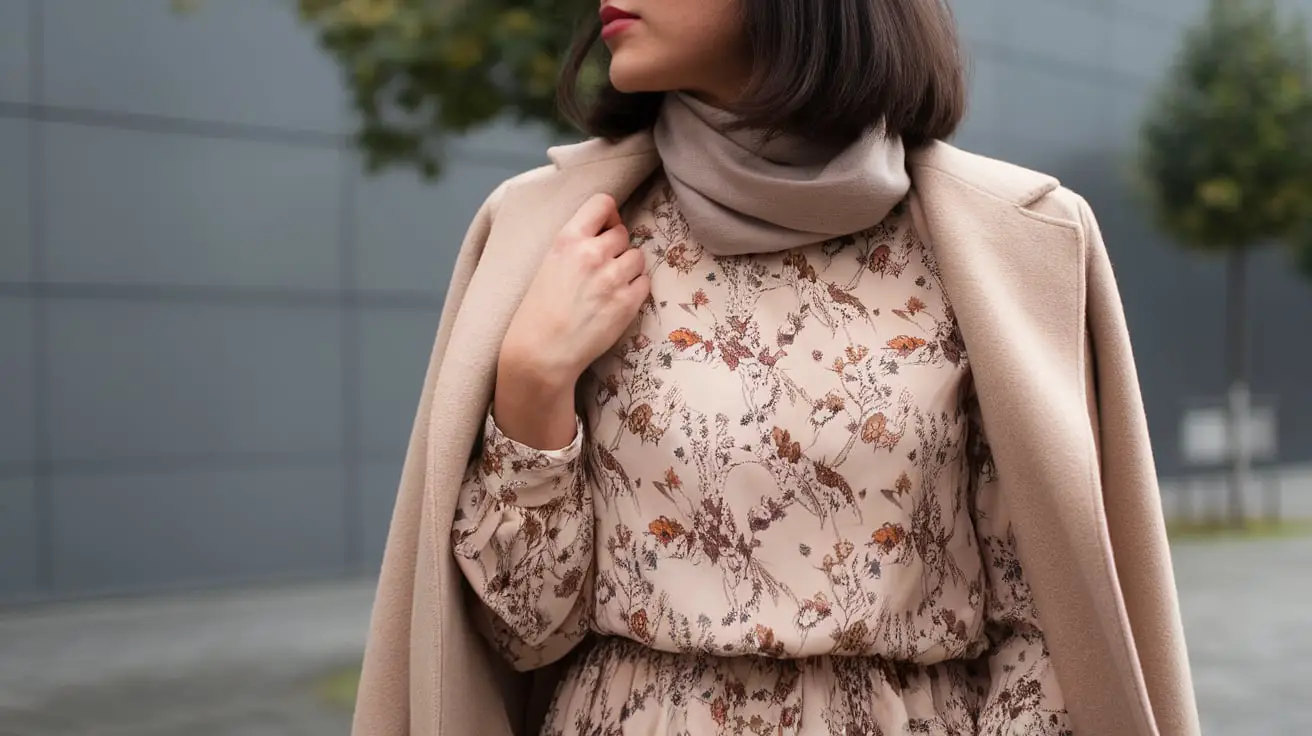
Fall brings that perfect opportunity to reimagine your dress collection with fresh styling approaches. The cooler weather opens up countless possibilities for creative layering, texture mixing, and accessorizing that simply wouldn’t work during summer’s heat. Your favorite dresses don’t need to hibernate just because temperatures drop – they can become the foundation for stunning autumn outfits that turn heads wherever you go.
Many women struggle with the transition from simple summer dress styling to the more complex world of fall fashion. The challenge lies in maintaining femininity and style while adapting to changing weather conditions. You might find yourself defaulting to the same cardigan-and-boots combination day after day, missing out on the creative potential that autumn dressing offers.
The following sections will guide you through practical yet stylish ways to transform your fall dress game completely. From innovative layering techniques to unexpected accessory pairings, you’ll discover methods that work for real life, not just fashion editorials. Keep reading to unlock the full potential of your dress collection this season.
How to Layer Your Fall Dresses for Visual Impact
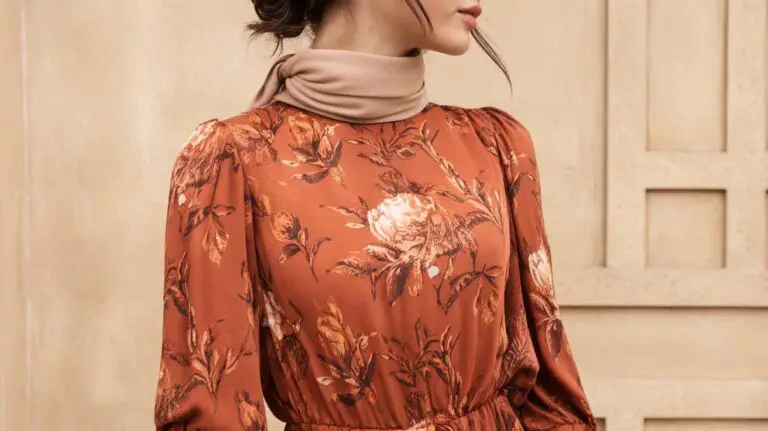
Layering transforms a simple dress into a complex, visually interesting outfit that showcases your personal style. The art lies in combining pieces that complement rather than compete with your dress, creating depth without bulk. Smart layering also extends the wearability of your summer dresses well into cooler months.
Strategic layering with blazers and jackets
The right blazer can instantly elevate any dress from casual to polished. Structured shoulders create beautiful contrast against flowing fabrics, while cropped styles highlight your waistline perfectly. Consider leather jackets for edgier appeal – they pair surprisingly well with feminine florals and delicate prints.
Match your jacket length to your dress hemline for balanced proportions. Longer dresses work beautifully with hip-length jackets, while midi dresses shine with cropped or waist-length options. The key is maintaining clear lines that don’t break up your silhouette awkwardly.
Using cardigans and sweaters creatively
Instead of simply throwing on a cardigan, think about proportion and styling details. Oversized cardigans worn open create vertical lines that lengthen your frame. Try knotting a button-up cardigan at the waist for a vintage-inspired twist that defines your shape.
Pullover sweaters worn over dresses offer endless styling possibilities. Let the dress hem peek out beneath for an interesting layered effect. This technique works particularly well with slip dresses or any style with a flowing skirt. Choose contrasting textures – a chunky knit over a silky dress creates visual interest through textural opposition.
The power of vests and waistcoats
Vests add structure and sophistication without the bulk of full sleeves. A tailored vest over a midi dress creates an unexpectedly chic office look. Denim vests bring casual cool to floral dresses, perfect for weekend outings.
Long vests or sleeveless dusters create dramatic vertical lines while adding warmth. These pieces work especially well over fitted dresses, creating movement and flow. Look for styles with interesting details like fringe, embroidery, or unique closures that become focal points of your outfit.
Mixing textures for depth
Texture mixing elevates even the simplest dress-and-layer combination. Pair smooth fabrics with rough ones, shiny with matte, thick with thin. A velvet blazer over a cotton dress creates rich contrast. Leather pieces against soft knits offer urban sophistication.
Consider these texture combinations for maximum impact:
Denim on Silk: The casual roughness of denim beautifully offsets delicate silk dresses
Tweed with Jersey: Classic tweed jackets add heritage charm to modern stretch dresses
Suede Against Cotton: Soft suede vests or jackets provide luxurious contrast to everyday cotton
Corduroy Over Crepe: The ribbed texture of corduroy adds visual weight to floaty crepe fabrics
Remember that successful layering requires attention to fit. Each piece should complement the others without creating bulk at the shoulders or waist. Start with your most fitted piece closest to your body, then add progressively looser layers. This approach maintains your shape while building visual interest through varying proportions.
Which Accessories Transform Simple Fall Dresses
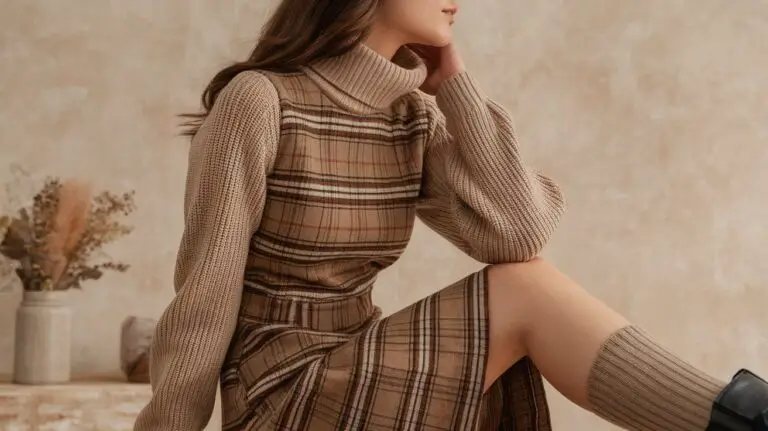
Accessories hold the power to completely reinvent any dress in your wardrobe. The right additions can shift a basic dress from office-appropriate to evening-ready, or from predictable to conversation-starting. Fall’s accessory options go far beyond summer’s minimal approach, offering rich opportunities for personal expression.
Statement boots that steal the show
Boots define the entire mood of your fall dress outfit. Combat boots with a floral midi create unexpected edge, while Victorian-inspired lace-up boots add romantic drama. The contrast between feminine dresses and tough footwear creates visual tension that catches attention.
Consider boot height carefully – it changes everything about your proportions. Ankle boots work universally but can feel safe. Mid-calf boots with midi dresses require careful attention to the gap between boot top and hem. Over-the-knee styles paired with shorter dresses create bold, confident statements that demand attention.
Western boots deserve special mention this season. Their pointed toes and decorative stitching add personality without overwhelming your dress. Choose colored or patterned styles for maximum impact, or stick with classic leather for versatility.
Bold belts for waist definition
Belting changes the entire silhouette of loose or shapeless dresses. Wide statement belts create hourglass shapes instantly, while chain belts add metallic shine that catches light beautifully. Position matters – high waist placement lengthens legs, while hip placement creates a relaxed, bohemian feel.
Double belts or layered chains offer advanced styling options. This technique works particularly well with simple, solid-colored dresses that can handle extra visual weight at the waist. Mix metals or combine leather with chain for textural interest.
Scarves and wraps as focal points
Scarves do more than provide warmth – they become art pieces around your neck. Oversized blanket scarves draped loosely add cozy volume that balances fitted dresses. Silk scarves tied at the neck or worn as headbands inject vintage glamour.
Experiment with unexpected scarf styling: thread a long scarf through belt loops for an improvised belt, or drape one asymmetrically over one shoulder. Printed scarves against solid dresses create focal points that draw eyes upward toward your face.
Bags that complete your look
Your bag choice can reinforce or completely redirect your dress style. Structured top-handle bags lend polish to casual dresses. Slouchy hobo bags soften severe lines. Crossbody styles add practical ease while keeping hands free.
Size matters tremendously – oversized totes ground floaty dresses, while mini bags add whimsy to serious styles. Consider unexpected textures like faux fur, beading, or fringe that add tactile interest. Vintage bags bring unique character that mass-produced accessories can’t match.
Jewelry choices that matter
Fall jewelry moves beyond delicate summer pieces toward bolder statements. Chunky chain necklaces add weight to lightweight dress fabrics. Stacked bracelets create arm parties that draw attention to graceful gestures. Statement earrings become focal points when hair is pulled back.
Mix metals freely – gold with silver, copper with brass. This approach adds complexity to simple dress outfits. Layer necklaces of varying lengths for dimensional interest. Choose one hero piece and build around it rather than competing for attention with multiple statement items.
Don’t forget about brooches – they’re having a major moment. Pin them at the shoulder, waist, or collar for vintage-inspired detail. Cluster multiple smaller brooches for artistic effect. These forgotten accessories add personality that feels fresh precisely because they’ve been overlooked for so long.
What Color Combinations Make Fall Dresses Pop
Color becomes your secret weapon for making fall dresses memorable. While autumn traditionally brings muted tones, strategic color use can make you stand out in a sea of black and brown. Understanding which combinations work helps you create outfits that feel both seasonal and striking.
Working with autumn’s palette
Fall’s natural colors – burgundy, mustard, rust, olive – provide a rich foundation for dress styling. These shades work beautifully together because they share warm undertones. A rust-colored dress with burgundy accessories feels cohesive yet interesting. Mustard yellow surprisingly flatters many skin tones when worn near the face.
Don’t feel limited to typical autumn shades though. Deep teals, rich plums, and forest greens offer sophisticated alternatives that still feel seasonally appropriate. These jewel tones particularly shine against fall’s natural backdrop of changing leaves.
Unexpected color pairings
Break conventional rules by combining colors that shouldn’t work but do. Pink with red creates a bold, modern statement. Orange paired with pink feels fresh and optimistic. Navy with black, once considered a fashion faux pas, now reads as sophisticated and intentional.
Consider these brave combinations that pay off:
Camel with Lavender: Soft purple tones against warm tan create unexpected elegance
Olive with Blush: Military green softened by pale pink feels romantic yet grounded
Burgundy with Cobalt: Deep wine shades with bright blue create rich contrast
Chocolate with Mint: Dark brown paired with soft green feels fresh and modern
The role of neutrals
Neutrals provide breathing room in colorful outfits while adding sophistication. Camel, cream, grey, and taupe work harder than basic black or white. These shades let bright dresses shine while adding polish through outerwear or accessories.
Layer different neutral tones for subtle complexity. A grey dress under a camel coat with cream accessories creates an expensive-looking monochromatic palette. Add one pop of color through lipstick or a bag for controlled impact.
Creating contrast with accessories
Accessories offer low-commitment ways to experiment with color. A simple black dress becomes extraordinary with emerald green boots and matching bag. Neutral dresses transform with colorful tights – burgundy, forest green, or even deep purple add unexpected depth.
Use the color wheel strategically. Complementary colors (opposites on the wheel) create maximum impact. A purple dress with yellow accessories stops traffic. Analogous colors (neighbors on the wheel) feel harmonious – an orange dress with red and yellow touches looks cohesive yet dynamic.
Monochromatic magic
Single-color outfits in varying shades create striking visual impact. Build depth through texture rather than color – combine matte, shiny, and textured fabrics in the same color family. A burgundy sweater dress with wine-colored tights and maroon boots looks intentional and polished.
This approach works particularly well with unexpected colors. An all-green outfit from sage to forest creates a memorable look. All-caramel ensembles feel expensive and considered. Even typically difficult colors like orange work when every element shares that hue.
Remember that skin tone affects color impact. Cool undertones shine in jewel tones and pure colors. Warm undertones glow in earth tones and muted shades. But rules exist to be broken – wearing “wrong” colors with confidence often works better than safe choices worn tentatively.
How to Mix Patterns and Textures with Fall Dresses
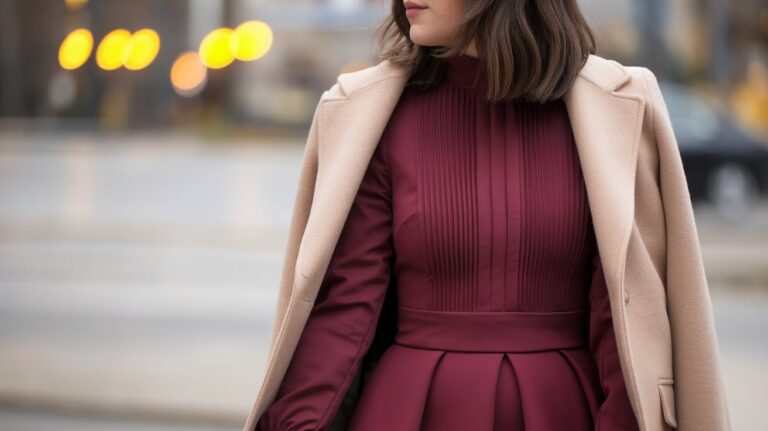
Pattern and texture mixing separates advanced dressers from those stuck in safe territory. This skill transforms basic dresses into complex, visually fascinating outfits that showcase creativity and confidence. The secret lies in understanding which combinations enhance rather than overwhelm.
Combining different fabric weights
Fall’s varying temperatures make fabric weight mixing both practical and stylish. Lightweight dress fabrics gain substance when paired with heavier layers. A flowing chiffon dress under a chunky cable-knit cardigan creates beautiful contrast. The delicate fabric peeks through, adding movement against the sweater’s stability.
Consider how fabrics interact when layered. Smooth fabrics slide easily over each other, while textured materials may catch or pull. A silk slip dress works perfectly under a wool sweater, but velvet against wool creates friction. Understanding these relationships helps you build comfortable, wearable combinations.
Heavy tweeds or wools grounded against lighter dress materials prevent outfits from feeling too precious. This balance keeps feminine dresses from reading overly sweet. Add a military-weight jacket over a delicate floral for instant edge.
Pattern mixing rules that work
Start with patterns that share a common color. Stripes and florals unite beautifully when they contain similar shades. Keep one pattern significantly larger than the other – a small polka dot cardigan over a bold geometric dress maintains visual hierarchy.
Mix pattern types rather than repeating similar designs. Geometric with organic, linear with curved, abstract with representational. A plaid scarf with a floral dress works because the patterns contrast completely. Two different florals compete for attention unless carefully coordinated.
Scale variation prevents pattern chaos. Combine a large-scale print dress with small-scale pattern accessories. Think big floral dress with tiny houndstooth tights, or bold striped dress with delicate printed scarf. This size difference creates order within complexity.
Adding textural interest
Texture adds dimension without color or pattern complications. Smooth dresses benefit from rough textures – add a shaggy faux fur vest or nubby boucle jacket. Conversely, textured dresses calm down with smooth leather or satin accessories.
Build textural stories through thoughtful combinations:
Lace with Leather: Delicate femininity meets tough sophistication
Velvet with Denim: Luxury grounded by everyday casual
Sequins with Wool: Sparkle warmed by cozy knit
Crochet with Satin: Handmade charm against sleek shine
Remember that texture affects color perception. Matte fabrics absorb light, making colors appear deeper. Shiny fabrics reflect light, creating brightness and movement. Use this knowledge to enhance or subdue your dress’s impact.
Balancing busy and simple elements
When your dress features busy patterns or bold textures, simplify everything else. A heavily patterned dress needs solid, simple accessories. Conversely, a plain dress becomes your canvas for pattern play through scarves, bags, and shoes.
The 70/30 rule helps maintain balance – keep 70% of your outfit simple if 30% makes a statement. This ratio prevents overwhelming the eye while ensuring visual interest. A dramatic printed dress (30%) pairs with simple boots, bag, and jacket (70%) for perfect proportion.
Pay attention to where patterns and textures sit on your body. Busy patterns draw eyes to those areas, while simple zones recede. Use this strategically – a patterned scarf draws attention upward, textured tights emphasize legs, a printed belt highlights your waist.
Sometimes breaking rules creates the most memorable outfits. Full pattern mixing – florals with stripes with plaids – can work with supreme confidence. The key is owning your choice completely. Fashion-forward women understand that attitude sells even questionable combinations.
Which Footwear Choices Define Your Fall Dress Style
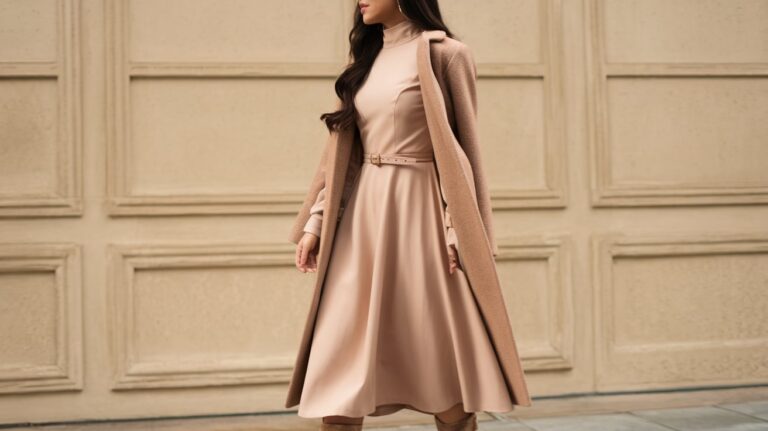
Footwear fundamentally alters how others perceive your fall dress outfits. The wrong shoes can destroy carefully crafted looks, while perfect pairs elevate simple dresses into statement outfits. Your shoe choice communicates style intentions more clearly than any other accessory.
Beyond basic ankle boots
While ankle boots remain fall staples, stepping outside this comfort zone pays style dividends. Pointed-toe options elongate legs more than round toes. Architectural heels add interest through unusual shapes. Western-style booties with decorative stitching bring personality without overwhelming dresses.
Consider unconventional ankle boot materials. Patent leather adds unexpected shine against matte fall fabrics. Velvet boots feel seasonally appropriate while adding luxury. Metallic options in bronze or pewter work as neutrals with more personality than black or brown.
Knee-high and over-the-knee options
Tall boots create dramatic silhouettes with shorter dresses. The key lies in proportion – leave some skin or tights visible between boot top and hem to avoid cutting your leg line. Over-the-knee styles work best with dresses hitting mid-thigh or above.
Flat tall boots offer comfort without sacrificing style. Pair them with flowing midi dresses for bohemian appeal. Add thick tights in contrasting colors for extra visual interest. Burgundy boots with grey tights and a black dress creates an sophisticated color story.
Heel height dramatically changes tall boots’ impact. Lower heels feel approachable and practical. Sky-high heels create va-va-voom appeal that transforms conservative dresses into showstoppers. Block heels split the difference, offering stability with style.
Unexpected shoe pairings
Sneakers with dresses no longer seem jarring – they communicate effortless cool. Choose fashion sneakers over athletic styles for intentional styling. Platform sneakers add height while maintaining comfort. Metallic or printed options feel special enough for dress pairings.
Loafers and oxfords bring menswear-inspired contrast to feminine dresses. Patent leather versions feel dressier than standard leather. Add colorful socks peeking above the shoe line for preppy charm. This combination works particularly well with midi or maxi lengths.
Consider unexpected evening options too. Satin pumps in jewel tones transform day dresses for night events. Embellished flats offer glamour without heel discomfort. Even decorated slides or mules can work with the right dress and tights combination.
Tights and socks as style elements
Hosiery becomes part of your footwear story, bridging shoes and dresses. Colored tights make neutral outfits pop – try burgundy, forest green, or even cobalt blue. Patterned options add whimsy but require careful coordination with your dress print.
Textured tights provide interest without color complications. Cable knit, ribbed, or subtle patterns add dimension. Opaque black remains foolproof, but grey, navy, and brown offer softer alternatives that may complement your skin tone better.
Socks over tights create layered interest. Ankle socks with mary janes feel sweetly subversive. Knee socks with shorter boots add preppy appeal. Choose socks that intentionally contrast or complement your shoe color for purposeful styling.
Weather-appropriate yet stylish choices
Practical doesn’t mean boring when selecting fall footwear. Rubber rain boots come in countless colors and patterns – choose printed versions to inject personality into grey-day outfits. Chelsea-style rain boots look intentional rather than purely functional.
For unpredictable weather, consider these solutions:
Waterproofed Suede: Maintains texture while repelling moisture
Rubber-Soled Boots: Provides traction without sacrificing style
Boot Toppers: Adds interest to plain rain boots
Weatherproof Sprays: Protects favorite shoes from unexpected showers
Temperature fluctuations demand versatility. Bootie-sneaker hybrids offer comfort with coverage. Shoes that work with and without socks or tights provide flexibility. Invest in quality pieces that transition seamlessly between weather conditions.
The ultimate footwear selection depends on your lifestyle and personal style. City dwellers need different options than suburban women. Office workers require different choices than stay-at-home moms. Choose shoes that support your actual life while pushing your style boundaries slightly. The perfect fall footwear makes you feel confident enough to tackle whatever your day brings.
Your Fall Dress Style Journey
Transforming your fall dress wardrobe doesn’t require buying entirely new pieces – it’s about reimagining what you already own through creative styling. The techniques covered here provide endless possibilities for making every dress in your closet work harder throughout autumn. From strategic layering that adds visual depth to unexpected color combinations that demand attention, these approaches turn simple dresses into memorable outfits that reflect your personal style.
The beauty of fall dressing lies in its flexibility and room for experimentation. Each dress becomes a foundation for countless different looks when you vary your layers, accessories, footwear, and color choices. Weather variations throughout the season actually work in your favor, providing legitimate reasons to try new combinations and push beyond your comfort zone. Start with one or two techniques that excite you most, then gradually incorporate others as your confidence grows.
Frequently Asked Questions
Q: Can I wear summer dresses in fall without looking seasonally confused?
A: Absolutely! The key is adding fall-appropriate layers and accessories. Transform a summer sundress with a denim jacket, ankle boots, and a felt hat. Add tights, a cardigan, and a scarf to make any lightweight dress work for autumn weather.
Q: How do I layer without adding bulk to my silhouette?
A: Start with fitted pieces closest to your body and gradually add looser layers. Choose thin, quality fabrics for base layers. Structured jackets and blazers actually create cleaner lines than bulky sweaters. Strategic belting also helps define your waist when wearing multiple layers.
Q: Which dress lengths work best for fall styling?
A: All lengths work with the right styling approach. Midi and maxi dresses pair beautifully with ankle boots and cropped jackets. Mini dresses look great with tall boots or tights and booties. The key is proportional balance between your dress length and other elements.
Q: What’s the easiest way to make a black dress stand out in fall?
A: Add colorful or textured accessories for instant impact. Try colored tights, a printed scarf, or statement boots. Metallic accessories also elevate black dresses. Layer unexpected pieces like a camel vest or burgundy blazer to break up the solid black.
Q: How do I transition my dress outfits from day to evening?
A: Swap practical layers for dressier options – exchange your denim jacket for a velvet blazer. Change flat boots to heeled versions. Add statement jewelry and a clutch while removing casual scarves. Darker lipstick instantly creates evening appeal.
Q: Can I mix brown and black in fall dress outfits?
A: This combination looks modern and sophisticated when done intentionally. Choose rich chocolate browns rather than muddy shades. Add a third color or metallic element to unite the neutrals. Confidence in your choice makes this pairing work beautifully.
Q: What should I do if my dress is too short for workplace appropriateness?
A: Layer a longer cardigan or duster that extends past the hem. Add opaque tights in a color that coordinates with your outfit. Pair with knee-high boots to minimize exposed leg. Consider wearing tailored pants underneath for a modern, layered look.
Q: How many layers are too many?
A: Generally, stick to three visible layers maximum to avoid overwhelming your frame. This might include your dress, a cardigan, and a scarf, or a dress, turtleneck underneath, and blazer on top. Focus on varying textures rather than adding more pieces.

