

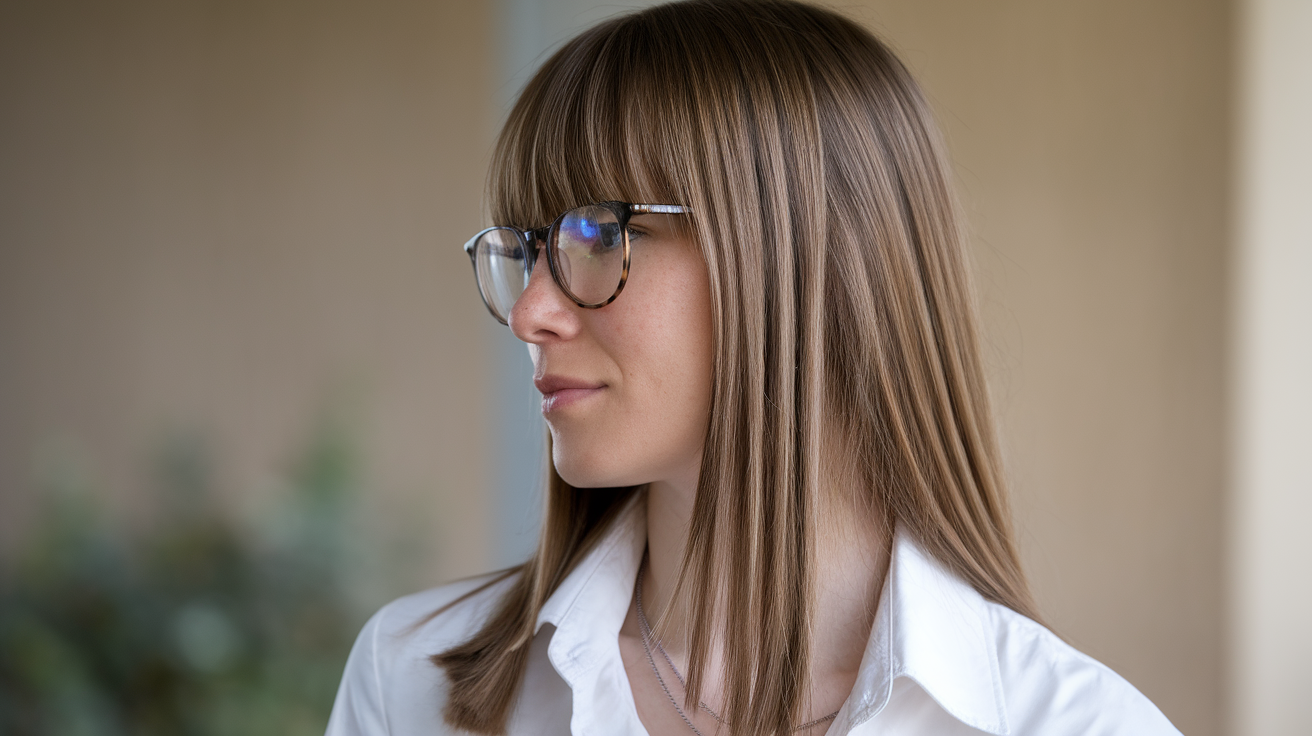
Straight hair with bangs has become one of the most requested looks in salons across the country, and for good reason. This classic combination offers endless versatility while maintaining a polished, put-together appearance that works for virtually any occasion. Whether you’re heading to the office, meeting friends for brunch, or attending a formal event, this hairstyle adapts beautifully to your needs.
The beauty of this particular style lies in its ability to transform your entire look with minimal effort. Bangs can soften angular features, add dimension to round faces, and create the illusion of larger eyes. Meanwhile, straight hair provides a sleek canvas that makes styling predictable and manageable, even on busy mornings when time is limited.
In the following sections, we’ll share five distinct approaches to wearing this timeless combination, each offering its own personality and styling requirements. From edgy modern cuts to soft romantic styles, you’ll discover options that suit various face shapes, hair textures, and personal preferences. Let’s uncover how to make this classic pairing work for your lifestyle and aesthetic goals.
The Modern Blunt Bob with Statement Bangs
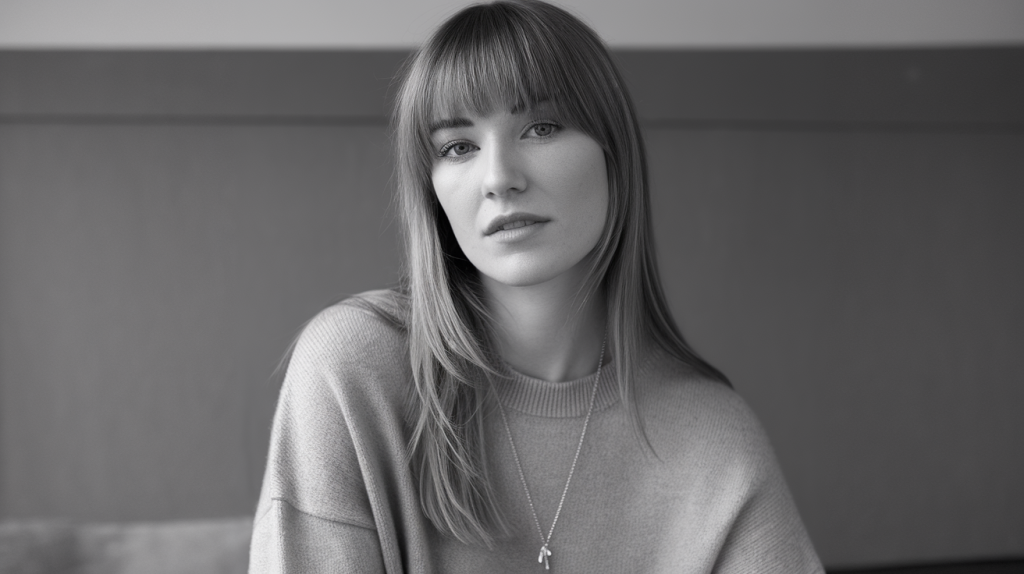
The blunt bob paired with bold, straight-across bangs creates an instantly recognizable silhouette that commands attention. This geometric style relies on precise cutting and careful maintenance to maintain its sharp edges and dramatic impact. The key to making this look work lies in understanding the balance between the severity of the cut and the softness it can bring to your features.
Why this combination works
Strong horizontal lines created by both the bob’s hemline and the bang edge produce a frame effect around your face. This visual boundary draws focus to your eyes and cheekbones while creating structure that many women find flattering. The style works particularly well for those with naturally straight or slightly wavy hair, as the texture complements the cut’s intended sleekness.
Women with oval or heart-shaped faces often find this combination especially flattering. The straight lines contrast beautifully with curved facial features, creating visual interest through opposition. Those with square faces might want to request slightly rounded edges to avoid emphasizing angular jawlines too strongly.
Styling techniques for sleek finish
Achieving that glass-like smoothness requires specific tools and techniques. Start with damp hair treated with a heat protectant spray, concentrating on the mid-lengths and ends. A lightweight smoothing serum applied sparingly helps control flyaways without weighing down your hair.
The blow-dry process determines your final result more than any product could. Use a paddle brush for the bob portion, directing the airflow downward while maintaining tension. For bangs, a round brush works better, allowing you to create slight bend at the ends that prevents them from lying completely flat against your forehead.
Your flat iron becomes essential for achieving that ultra-polished finish. Work in small sections, running the iron from roots to ends in one smooth motion. The temperature setting matters – fine hair requires lower heat around 300-350°F, while thicker textures might need 400°F for effective smoothing.
Face shapes that benefit most
While this style can work for various face shapes with slight modifications, certain facial structures particularly shine with this cut. Oval faces can wear this look exactly as described, with perfectly straight lines creating harmonious proportions. The balanced features of oval faces allow for the boldness of the style without overwhelming any particular facial characteristic.
Heart-shaped faces benefit from the way statement bangs balance a wider forehead with a narrower chin. The horizontal line created by the bangs visually reduces forehead width while the bob’s blunt edge adds weight around the jawline. This creates more symmetrical proportions overall.
Round faces might initially hesitate with this style, but strategic adjustments make it work beautifully. Keeping the bob slightly longer – hitting just below the jawline rather than at it – elongates the face. The bangs can be cut slightly shorter in the center and longer at the temples, creating a subtle arch that adds vertical dimension.
Maintenance tips for the look
This precision cut requires regular salon visits to maintain its shape. Plan for trims every 4-6 weeks, especially for the bangs which grow out quickly and lose their impact when too long. Between appointments, small adjustments with professional shears can keep bangs at the perfect length.
Daily maintenance involves protecting the style overnight. Silk or satin pillowcases reduce friction that causes frizz and bent pieces. Some women find wrapping their hair loosely in a silk scarf preserves the smooth texture achieved during styling.
Layered Lengths with Wispy Fringe
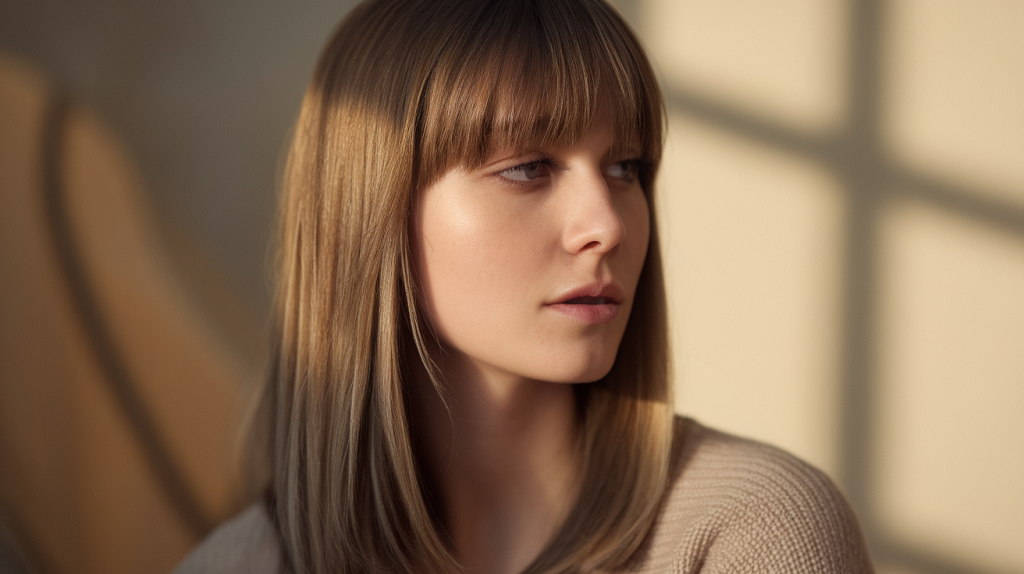
Moving away from severe lines, this softer approach combines graduated layers throughout longer hair with delicate, feathered bangs. The result feels romantic and effortless, perfect for women who want polish without appearing overly styled. This particular combination suits various hair densities and creates movement even in the straightest textures.
Creating movement in straight hair
Layers serve multiple purposes in straight hair, primarily adding dimension where natural texture might be lacking. Strategic cutting techniques remove weight from specific areas, allowing hair to move more freely. The key lies in placement – layers that start too high can create unwanted volume at the crown, while those beginning too low might not provide enough movement.
Professional stylists often employ point cutting or slide cutting techniques to create these layers. These methods produce softer edges than traditional blunt cutting, resulting in pieces that blend seamlessly. The graduated effect means each layer supports the one beneath it, creating cascading movement when you turn your head.
Balancing layers with bang texture
Wispy bangs require careful integration with the overall layered structure. They shouldn’t appear disconnected from the rest of your hair but rather flow naturally into the face-framing layers. This seamless transition creates cohesion throughout the entire style.
The texturizing process for these bangs differs from traditional cutting. Rather than creating one solid piece, stylists use thinning shears or razor techniques to remove bulk while maintaining length variation. This produces the signature wispy quality that feels light and airy against your forehead. Individual pieces should vary slightly in length, mimicking the natural irregularity of hair growth.
Consider how your bang density relates to your overall hair thickness. Women with fine hair might prefer fewer, more separated pieces to avoid overwhelming their features. Those with thicker hair can support denser fringe while still maintaining that ethereal quality through proper texturizing.
Product recommendations
The right products make the difference between limp, separated layers and bouncy, cohesive movement. Start with a volumizing mousse applied to damp roots – this provides lift without the stiffness associated with traditional gels or sprays. Focus application at the crown and wherever you want extra body.
A lightweight leave-in conditioner keeps layers smooth and manageable. Choose formulas that provide slip without heaviness, allowing pieces to move independently while maintaining overall polish. Spray versions often work better than creams for this style, as they distribute more evenly through multiple layers.
For styling, consider these product applications:
Root Lift Spray: Applied before blow-drying to create volume at the base without affecting length smoothness.
Texturizing Mist: Spritzed through mid-lengths to enhance layer separation and movement.
Light-Hold Hairspray: Used sparingly on bangs to maintain their position without stiffness.
Shine Serum: Applied to ends only for glossy finish without weighing down layers.
Daily styling routine
Your morning routine for this style should take approximately 15-20 minutes once you develop proficiency. Begin with freshly washed or refreshed hair – second-day hair often works wonderfully for this look as natural oils provide grip and texture.
Section your hair horizontally, starting with the bottom layers. Using a round brush, lift each section at the roots while directing heat downward. This technique creates volume while maintaining sleekness through the lengths. As you work upward, pay attention to the direction you’re brushing – alternating can create more dynamic movement.
Bangs require special attention during styling. Rather than brushing them straight down, sweep them side to side while drying. This prevents them from splitting at any cowlicks and creates that perfectly imperfect, wispy appearance. Once dry, use your fingers to separate and arrange individual pieces.
Finish by running your fingers through all layers, gently shaking them to encourage natural movement. A light misting of flexible-hold spray preserves the style without creating helmet hair. Remember that this look should appear touchable and soft, not frozen in place.
The Sleek Lob with Side-Swept Bangs
The long bob, affectionately known as the lob, paired with side-swept bangs offers sophisticated versatility that transitions seamlessly from day to night. This length – typically falling between the chin and shoulders – provides enough weight to maintain sleekness while remaining short enough for easy management. The diagonal line created by swept bangs adds dynamism to an otherwise simple cut.
Achieving the perfect angle
Creating the ideal sweep requires understanding your natural hair growth patterns. Most people have a natural part that their hair prefers, and working with this rather than against it produces the best results. The angle of your swept bangs should complement your face shape – a dramatic sweep works well for round faces, while a gentler angle suits longer face shapes.
The cutting technique for side-swept bangs differs from straight-across styles. Your stylist will cut them longer on one side, gradually shortening toward the opposite temple. This graduation allows for smooth integration with the rest of your hair when swept across. The longest point typically sits at or slightly below the cheekbone, creating a flattering frame for most face shapes.
When discussing this cut with your stylist, bring reference photos showing your preferred angle and length. Small variations in these elements dramatically change the overall effect. Some women prefer bangs that completely cover one eyebrow, while others want a lighter sweep that just grazes the brow line.
Heat styling methods
The sleek finish this style demands requires strategic heat application. Unlike tousled or textured looks, every piece needs to lie smooth and controlled. Begin with a blow-dry that sets the foundation for your final look.
For the lob portion, use a large round brush to create subtle bend at the ends. This prevents the severe, stick-straight appearance that can look dated. Direct the dryer’s nozzle downward along the hair shaft, following your brush from roots to ends. This technique seals the cuticle for maximum shine.
Side-swept bangs need special attention during heat styling. Use a smaller round brush to direct them across your forehead while simultaneously creating slight curve. The key is maintaining tension while brushing – loose technique results in bangs that won’t hold their sweep. Once dry, a quick pass with a flat iron can perfect any unruly pieces.
Some women find that velcro rollers help set the sweep while they finish getting ready. After heat styling, wrap the bang section around a large roller in the desired direction. The residual heat sets the shape, and removing the roller after 5-10 minutes reveals perfectly positioned bangs.
Keeping bangs in place
Throughout the day, side-swept bangs face challenges that straight bangs don’t encounter. Gravity, natural oils, and movement all work against maintaining that perfect sweep. Strategic product use and occasional touch-ups keep them looking fresh.
Bobby pins hidden beneath the top layer can secure bangs without visible hardware. Choose pins that match your hair color and position them where the bangs naturally want to separate. This invisible support system maintains the sweep without constant adjustment.
Dry shampoo becomes your secret weapon for maintaining this style. Applied preventatively to clean bangs, it absorbs oils before they accumulate. This proactive approach keeps bangs from separating or falling flat against your forehead. Focus application at the roots where oil production is highest.
For occasions requiring absolute reliability, consider using a texturizing spray designed for bangs. These products provide grip that helps pieces stay positioned without the crunchiness of traditional hairspray. Apply sparingly – too much product makes bangs appear dirty or weighted down.
Professional finishing touches
Small details elevate this style from good to exceptional. Professional stylists know tricks that make the difference between salon-perfect and merely acceptable results. Incorporating these techniques into your routine adds polish without significant extra time.
The direction you brush matters more than you might think. Always brush the lob portion straight down initially, then add your desired shape. This ensures all hairs lie in the same direction before you create any bends or curves. Random brushing creates subtle inconsistencies that affect the overall sleekness.
Consider the temperature of your final rinse when washing. Cool water seals the hair cuticle, creating smoother texture that’s easier to style sleek. This simple adjustment during washing pays dividends during styling, requiring less heat and product to achieve your desired finish.
A professional-quality smoothing treatment every few months maintains the integrity needed for this polished style. These treatments fill in microscopic damage along the hair shaft, creating a smoother surface that reflects light better. The result is enhanced shine and easier styling between salon visits.
Long Straight Hair with Curtain Bangs
Curtain bangs paired with long, straight hair create an effortlessly chic aesthetic that flatters virtually every face shape. This style’s popularity stems from its versatility – the bangs can be worn parted down the middle, swept to either side, or pinned back when you want a different look. The combination feels both current and timeless, making it a smart choice for women wanting a fashionable yet classic appearance.
Frame your face perfectly
The magic of curtain bangs lies in their ability to create a soft frame without the commitment of traditional bangs. They typically start shorter at the center of your forehead, gradually lengthening toward your temples where they blend into face-framing layers. This graduation creates a gentle arc that highlights your best features.
The key to perfect curtain bangs is customization based on your specific face shape and features. Women with wider foreheads might prefer bangs that start slightly shorter in the center, creating more coverage. Those with smaller foreheads often look best with longer center pieces that maintain openness around the face.
Your stylist should consider your hair’s natural growth patterns when cutting curtain bangs. A slight natural wave or cowlick can actually enhance this style, adding organic movement that prevents the bangs from appearing too perfect or styled. The cut should work with your hair’s tendencies rather than fighting against them.
The transition point where bangs meet the rest of your hair determines the overall effect. A seamless blend creates continuity that elongates the face, while a more defined separation between bangs and lengths adds structure. Discuss these options with your stylist to determine what best suits your aesthetic goals.
Blow-drying techniques
Proper blow-drying technique transforms curtain bangs from flat and separated to voluminous and perfectly positioned. The process starts immediately after washing, when hair is still soaking wet. Rough-dry your bangs first using just your fingers, moving them from side to side to prevent any strong part from forming.
Once your bangs are about 80% dry, switch to a round brush. The size matters – medium-sized brushes create the ideal curve for most curtain bang styles. Position the brush at your roots and roll it away from your face while directing heat over it. This motion creates the signature curtain effect where bangs naturally fall away from the center.
For the long lengths, maintain sleekness by working in sections from bottom to top. Keep your dryer’s nozzle pointed downward and maintain tension with your brush. This technique smooths the cuticle while preventing unnecessary volume that can make long hair appear puffy rather than sleek.
The final touch involves cold air. Once each section is dry, hit it with cool air from your dryer. This sets the style and adds shine by closing the hair cuticle completely. Pay special attention to the bang area, as this cold shot helps them maintain their shape throughout the day.
Managing length and volume
Long straight hair presents unique challenges in maintaining both sleekness and body. Without some volume at the roots, lengthy hair can appear flat and lifeless. Yet too much volume creates an outdated, overstyled appearance. Finding the right balance requires strategic product placement and styling techniques.
Root-lifting products should concentrate only where you need height – typically the crown area. Avoid applying volumizers near your face where the curtain bangs fall, as extra lift here can make them difficult to style properly. Instead, focus on creating gentle elevation at the top of your head that gradually smooths into sleek lengths.
Regular trims every 8-10 weeks keep long hair looking healthy and prevent stringy ends that detract from the overall polish. Even when growing out your length, removing damaged ends actually makes hair appear longer by eliminating see-through sections at the bottom.
Weight distribution throughout long hair affects how it hangs and moves. Very long one-length hair can appear heavy and drag down any volume you create. Subtle long layers, starting no higher than your collarbone, remove excess weight while maintaining the overall sleek appearance. These nearly invisible layers also help curtain bangs blend more naturally.
Transitioning between styles
One major advantage of curtain bangs with long hair is the endless styling possibilities. On days when you want a different look, these bangs adapt easily without requiring completely different cutting or styling techniques.
For a more casual appearance, try air-drying with a texturizing cream scrunched through damp bangs. This creates piece-y separation that feels relaxed and beachy. The long lengths can be braided, pulled into a low ponytail, or twisted into a bun while the curtain bangs add softness around your face.
When you need a more polished look, use a flat iron to perfect both the bangs and lengths. Create a deep side part and sweep all bangs to one side for asymmetrical drama. Alternatively, pin them back with decorative clips for a completely open face that showcases your features differently.
Growing out curtain bangs happens gradually and attractively, unlike traditional straight-across bangs that go through awkward phases. As they lengthen, they simply become longer face-framing layers that continue to flatter. This seamless growth pattern makes them ideal for women who like to change their style regularly.
The Textured Shag with Choppy Bangs
The modern shag paired with choppy bangs brings controlled chaos to straight hair, creating an edgy aesthetic that feels both rebellious and refined. This heavily layered cut adds massive personality to otherwise predictable straight texture, making it perfect for women wanting to make a statement without sacrificing sophistication.
Adding dimension to straight hair
The shag cut relies on dramatic layering throughout the entire head to create its signature messy-chic appearance. Unlike traditional layers that blend smoothly, shag layers are deliberately choppy and disconnected. This creates visual interest through contrast – some pieces are significantly shorter than others, producing a tousled effect even in pin-straight hair.
Your stylist will use various cutting techniques to achieve this dimensional look. Razor cutting produces soft, wispy ends that move independently. Point cutting creates subtle texture within each layer. The combination of techniques results in hair that appears full of movement and life, even when completely straight.
The placement of these layers matters tremendously. Shorter layers around the crown add height and prevent the style from looking flat. Longer layers through the bottom maintain some length while still contributing to the overall texture. Face-framing pieces cut at varying lengths create an organic, lived-in feeling that defines the modern shag.
Choppy bangs complete the look by carrying the textured theme onto your forehead. These aren’t your precise, blunt bangs – instead, they feature irregular lengths and intentionally imperfect edges. Some pieces might hit at your eyebrows while others are notably shorter or longer, creating visual interest that draws attention to your eyes.
Creating piece-y texture
Achieving that perfectly imperfect, piece-y texture requires specific styling techniques that differ from traditional smoothing methods. Instead of brushing all hair in the same direction, you’ll work to separate and define individual pieces.
Start with damp hair treated with a volumizing mousse at the roots and a texturizing cream through the lengths. These products provide grip and hold that help maintain separation between layers. Avoid heavy conditioners or oils that might weigh down the layers and prevent them from moving independently.
During blow-drying, use your fingers rather than a brush for most of the process. Lift sections at the roots while scrunching and twisting random pieces. This technique encourages natural texture and prevents the uniform smoothness that would defeat the shag’s purpose. A diffuser attachment can help maintain texture while drying.
Once hair is completely dry, use a flat iron strategically – not to smooth, but to add bends and flicks to various pieces. Slightly bend some layers outward, others inward, and leave some completely straight. This variation creates the dimensional appearance that makes shags so visually interesting.
Products for definition
The right styling products transform a basic layered cut into a true textured shag. Each product serves a specific purpose in building and maintaining the style’s characteristic piece-y separation.
Here are essential products for achieving optimal texture:
Sea Salt Spray: Creates gritty texture that helps pieces separate and maintain their position.
Matte Paste: Defines individual pieces without shine, maintaining the undone aesthetic.
Texture Powder: Adds grip at roots for volume and throughout lengths for enhanced separation.
Light Wax: Perfect for piecing out the choppy bangs and creating definition in shorter layers.
Your product application technique matters as much as the products themselves. Work with small amounts, building texture gradually rather than applying everything at once. Concentrate on the ends and mid-lengths where you want the most definition, using whatever remains on your hands for the roots.
Styling for different occasions
The beauty of this textured style lies in its adaptability. While it naturally leans casual, simple adjustments can make it appropriate for various settings and occasions.
For everyday wear, the undone texture works perfectly as-is. Simply scrunch in some sea salt spray and let your hair air dry for maximum texture, or diffuse for faster results. Separate the choppy bangs with your fingers, using a tiny amount of wax to define specific pieces. This effortless approach takes minutes but delivers major style impact.
Professional settings might require taming the chaos slightly while maintaining the cut’s personality. Use a smoothing cream instead of texturizing products, and blow-dry with more control using a paddle brush. The layers and choppy bangs still provide interest, but the overall effect appears more polished and intentional.
Evening events call for amplified drama. Add extra texture powder at the roots for maximum volume, then use a curling iron to add random bends throughout the layers. Piece out the bangs more dramatically with styling wax, creating separation that catches light beautifully. A light misting of shine spray adds glamour without eliminating the essential texture.
Your Perfect Bang Style Awaits
Finding your ideal combination of straight hair and bangs ultimately depends on your lifestyle, maintenance preferences, and personal style. Each of these five approaches offers distinct advantages, from the low-maintenance appeal of curtain bangs to the bold statement of a blunt bob with dramatic fringe. The key lies in honest assessment of your daily routine and styling commitment, then choosing accordingly.
Remember that great hair starts with a skilled cut tailored to your specific hair texture and face shape. A talented stylist can adapt any of these styles to work with your unique features, making modifications that enhance your best qualities. Regular maintenance, quality products, and proper styling techniques will keep your chosen look fresh and polished throughout the weeks between salon visits.
Frequently Asked Questions
Q: How often should I trim my bangs to maintain their shape?
A: Most bangs require trimming every 2-3 weeks to maintain their ideal length and shape. You can learn to trim them yourself between salon visits using professional shears, or schedule quick bang trims with your stylist.
Q: Will straight hair with bangs work for my wavy or curly natural texture?
A: Yes, but you’ll need to commit to daily heat styling to achieve the sleek look. Consider using a keratin treatment or professional smoothing service to reduce styling time and protect your hair from daily heat exposure.
Q: Which bang style is most flattering for round faces?
A: Side-swept bangs and curtain bangs typically work best for round faces as they create diagonal lines that elongate the face. Avoid very short, straight-across bangs that can emphasize facial width.
Q: Can I wear bangs if I have a cowlick at my hairline?
A: Absolutely! A skilled stylist can work with your cowlick by adjusting the bang length and cut angle. Sometimes cowlicks actually add natural movement that enhances certain bang styles, particularly side-swept and curtain varieties.
Q: What’s the best way to style bangs in humid weather?
A: Use anti-humidity products before styling, set bangs with cool air after blow-drying, and carry dry shampoo for touch-ups. Some women find that setting spray specifically designed for bangs helps maintain their style in challenging weather.
Q: How do I prevent my bangs from getting greasy throughout the day?
A: Apply dry shampoo to clean bangs as a preventive measure, avoid touching them frequently, and keep face products away from your hairline. Washing just your bangs between full shampoos can also help maintain freshness.
Q: Should I choose thick or wispy bangs for fine hair?
A: Wispy, textured bangs typically work better for fine hair as they don’t require as much density to look full. Thick, blunt bangs might use too much of your hair’s volume, leaving the rest looking thin.
Q: Can I pull off bangs with a very short forehead?
A: Yes, but opt for longer, side-swept or curtain styles that start below your natural hairline. These create the illusion of more forehead space while still providing the framing effect of bangs.

