

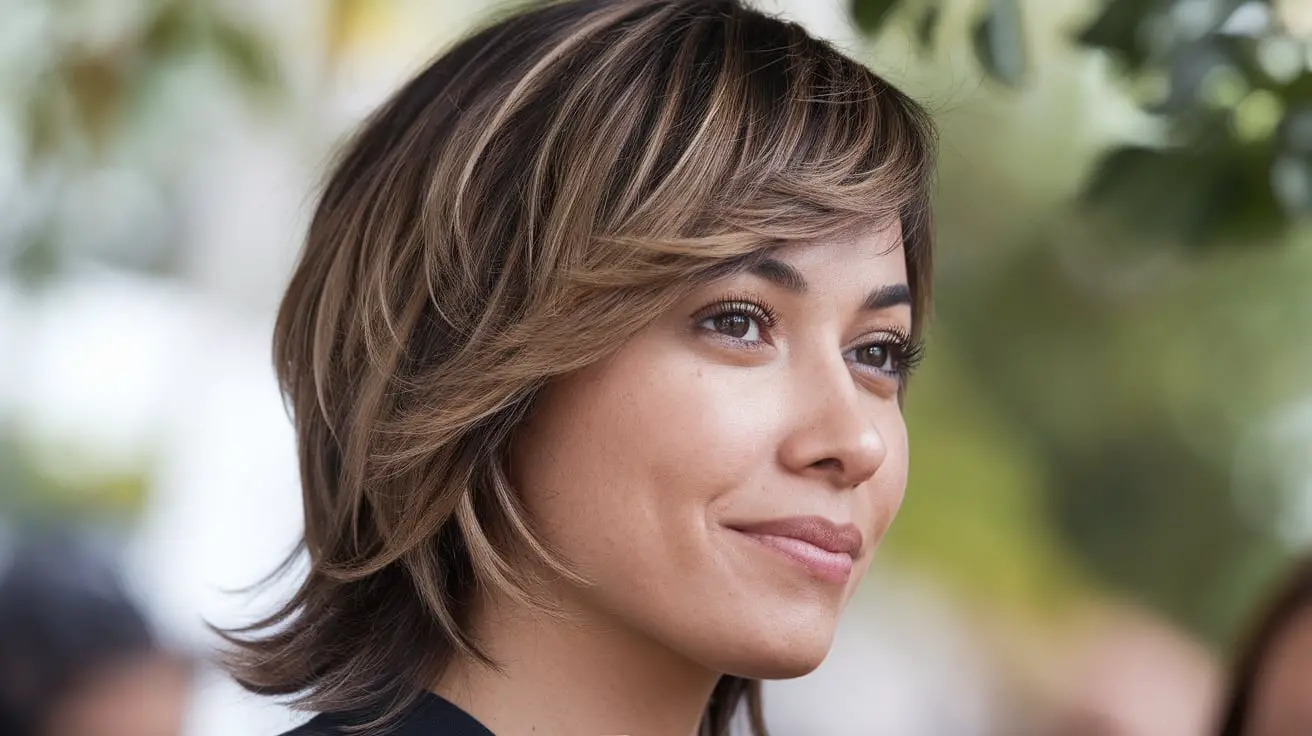
Looking at layered cuts for medium hair reveals why so many women are choosing these styles right now. The perfect balance between short and long hair, medium length offers countless possibilities for creative layering. These cuts bring movement, dimension, and personality to hair that might otherwise fall flat or feel uninspired.
Medium hair with layers suits nearly every lifestyle and face shape. Whether you prefer wash-and-go simplicity or enjoy experimenting with different styling techniques, layered medium cuts adapt to your needs. The strategic placement of layers can slim round faces, soften angular features, or add fullness to fine hair – making these cuts incredibly versatile.
The following sections will explore five specific layered cuts that are defining hair trends this year. From the rebellious wolf cut to the sophisticated graduated bob, each style offers something different while maintaining that perfect medium length. Let’s discover which layered cut might become your signature look.
What Makes Layered Cuts Perfect for Medium Hair
Medium length hair sits at that sweet spot where layers can truly shine. Unlike shorter cuts where layers might feel limited, or longer styles where they can get lost, medium hair showcases each layer’s movement and texture beautifully. The length provides enough weight to prevent layers from sticking out awkwardly while still allowing plenty of bounce and body.
How layers enhance medium length hair
Layers transform medium hair from a single-length curtain into a dynamic, multidimensional style. Each layer catches light differently, creating depth that makes hair appear thicker and healthier. The varied lengths also prevent that heavy, triangular shape that medium hair sometimes develops when cut straight across. Instead, you get natural movement that flows with your body’s motion.
The magic happens when layers work together to create shape without sacrificing length. Your hair maintains its medium status while gaining incredible versatility. One day you might wear it sleek and professional; the next, you can tousle those layers for a casual, beachy vibe. This flexibility makes layered medium cuts particularly appealing to women juggling multiple roles and settings.
The versatility of medium layered styles
What makes these cuts so adaptable? The answer lies in their structure. Medium layered hair responds well to various styling methods:
- Blow-drying: Creates smooth, bouncy volume
- Air-drying: Reveals natural texture and wave patterns
- Curling irons: Layers hold curls longer and prevent that “sausage curl” effect
- Straightening: Produces sleek styles with subtle movement at the ends
Face shapes that benefit most
While layered medium cuts work for everyone, certain face shapes see dramatic improvements. Oval faces can experiment with any layer placement, from subtle graduation to bold, choppy pieces. Round faces benefit from layers starting below the chin, which elongate the face visually. Square faces soften with curved layers around the jawline, while heart-shaped faces balance beautifully with layers concentrated from the cheekbones down.
Long faces find their perfect match in medium layered cuts too. The horizontal visual lines created by layers at different heights break up facial length. Adding some side-swept bangs or face-framing pieces enhances this effect even more.
Maintenance considerations
Before committing to layers, consider your maintenance comfort level. While these cuts grow out more gracefully than precision bobs or pixies, they do require regular trims every 6-8 weeks to maintain their shape. The good news? Medium layered hair often looks intentionally tousled as it grows, giving you more flexibility between salon visits.
Your hair’s natural texture also influences maintenance needs. Straight hair shows layer lines more clearly, requiring more frequent shaping. Wavy or curly hair disguises growing layers better, potentially extending time between cuts. Factor in your styling routine too – if you prefer minimal daily effort, choose softer, blended layers over dramatic, piece-y ones.
The Modern Shag Cut for Medium Hair
The shag has shed its 1970s reputation and emerged as one of this year’s most requested cuts. This updated version maintains the signature layers and texture while feeling fresh and contemporary. Medium-length shags hit that perfect point between collarbone and shoulders, giving you enough length to pull back while keeping styling time manageable.
Characteristics of this cut
Modern shags feature shorter layers on top that gradually blend into longer pieces underneath. Unlike uniform layering, shag cuts create deliberate disconnection between sections. The crown area typically has the most dramatic layering, building volume and lift that prevents flat roots. Edges remain soft and piece-y rather than blunt, creating that effortlessly undone appearance that defines current hair trends.
Bangs play a crucial role in contemporary shag cuts. Whether you choose curtain bangs that sweep to the sides or a full fringe with textured edges, they integrate seamlessly with the rest of the cut. The key lies in keeping them light and airy – heavy, straight-across bangs would clash with the shag’s carefree spirit.
Styling techniques
Getting that perfect shaggy texture doesn’t require professional skills. Start with damp hair and apply a volumizing mousse from roots to mid-lengths. Use your fingers to lift sections at the crown while blow-drying with a diffuser attachment. This technique enhances natural texture while building body where you need it most.
For a more polished look, wrap sections around a large round brush while blow-drying, then shake them loose with your fingers. The goal isn’t perfection – it’s controlled chaos that looks effortless. A texturizing spray applied to dry hair adds that final touch of piece-y separation that makes shags so appealing.
Who should try this style
Shag cuts particularly flatter women with fine to medium hair density. The extensive layering creates an illusion of thickness and volume that fine hair often lacks. If your hair tends toward the limp side, a shag might revolutionize your styling routine. The built-in texture means you can achieve a full, dynamic look without hours of teasing and spraying.
Daily maintenance tips
Living with a shag cut means adjusting your hair care routine slightly. Sleep on a silk pillowcase to minimize friction that can create unwanted frizz. In the morning, refresh your layers with a quick spritz of water mixed with a small amount of leave-in conditioner. Scrunch gently to reactivate yesterday’s products without adding buildup.
Dry shampoo becomes your best friend with this cut. Applied at the roots, it maintains volume between washes while absorbing oils that might weigh down your layers. Focus application on the crown area where volume matters most.
Variations for different textures
Curly-haired women can rock shag cuts beautifully with some adjustments. The layers should be cut longer to account for shrinkage when hair dries. Your stylist might use a technique called “curl-by-curl cutting” to ensure each layer enhances your natural pattern rather than fighting against it.
Straight hair benefits from extra texturizing during the cutting process. Point cutting and razor work create the separation needed for that signature shaggy look. Without natural texture to rely on, straight-haired shag wearers might need to use more styling products to achieve the desired effect.
The Feathered Layers Revival
Feathered layers have returned with a vengeance, updated for contemporary tastes while maintaining their signature swooping movement. This technique creates layers that curve away from the face, resembling bird feathers in their delicate, graduated structure.
How feathered layers differ from regular layers
While standard layers simply reduce bulk and add movement, feathering involves a specific cutting angle that creates that distinctive flip. Your stylist holds scissors at a sharp angle while cutting upward, producing ends that naturally curve outward. This technique requires precision – the angle determines whether you get elegant feathering or unwanted flipping.
The placement of feathered layers matters enormously. Starting them too high can create an outdated, overly voluminous look reminiscent of 1980s hair bands. Modern feathering typically begins at cheekbone level or lower, creating face-framing movement without excessive width. The result feels sophisticated rather than retro.
Best hair types for feathering
Medium to thick hair responds beautifully to feathering techniques. The natural weight of thicker strands helps create that graceful outward curve without requiring excessive styling products. Fine hair can work too, but requires strategic layering to prevent the feathered sections from appearing stringy or separated.
Your hair’s natural texture influences how feathering behaves. Straight to slightly wavy hair showcases the technique most clearly. Very curly or coily hair might not display the characteristic feathered shape as obviously, though the layering still adds beautiful dimension and movement.
Women with natural body in their hair find feathering particularly rewarding. The technique enhances existing movement, creating an amplified version of your hair’s natural tendencies.
Styling products needed
Creating perfect feathered layers requires the right product arsenal. A lightweight volumizing foam applied to damp roots provides lift without weighing down the delicate feathered ends. Follow with a heat protectant spray, concentrating on mid-lengths where you’ll focus your styling efforts.
During blow-drying, a medium-hold styling cream helps define each feathered section. Work it through with your fingers, twisting sections away from your face to encourage that signature curve. The cream provides just enough hold to maintain shape without creating stiffness.
Finishing sprays designed for flexible hold preserve your feathered style without that helmet-hair feeling. Look for products that promise “brushable hold” – these allow movement while maintaining the feathered shape throughout your day.
Common mistakes to avoid
Over-layering ranks as the biggest feathering mistake. Too many layers create a thin, wispy appearance rather than the full, flowing movement you want. Trust your stylist’s judgment about layer density – sometimes less truly is more. Another common error involves using heavy products that weigh down the feathered sections. Your carefully crafted layers disappear under the weight of thick creams or oils. Stick to lightweight formulations that enhance rather than mask your cut’s movement.
Heat styling at too high temperatures can also ruin feathered layers. Excessive heat damages the precise angles cut into your hair, causing feathered sections to lose their shape. Keep tools at medium heat and always use protection sprays.
Professional cutting techniques
Skilled stylists employ several methods to create modern feathered layers. The slide cutting technique involves closing scissors partially while sliding them down the hair shaft. This creates soft, graduated ends that feather naturally. Point cutting adds texture to feathered sections, preventing them from looking too uniform or dated.
Some stylists combine razor and scissor work for optimal feathering. Razors create the softest edges, perfect for that wispy, feathered effect. However, they require expert handling – improper razor technique can cause damage and frizz. Scissors offer more control and work better for certain hair types, particularly those prone to frizz.
The Wolf Cut Phenomenon
The wolf cut exploded onto social media and hasn’t slowed down since. This hybrid style combines elements of shags and mullets, creating an edgy yet wearable look that suits medium-length hair perfectly. Named for its wild, untamed appearance, the wolf cut offers controlled rebellion for women wanting something different.
What defines a wolf cut
A true wolf cut features heavy layering throughout, with the shortest pieces sitting around the crown and gradually lengthening toward the bottom. Unlike traditional layers that blend seamlessly, wolf cuts maintain visible separation between sections. The overall silhouette creates volume on top with a tapered, mullet-inspired length at the back.
Face-framing takes center stage in wolf cuts. Dramatic layers around the face start as short as the cheekbones, creating a curtain effect that can be styled forward or swept aside. These shorter pieces contrast deliberately with the longer back sections, producing that characteristic “wild” appearance.
Why it works for medium hair
Medium length provides the ideal canvas for wolf cuts. You get enough length variation to create the style’s signature shape without the maintenance headaches of longer hair. The proportions balance naturally at medium length – too short and you lose the mullet element, too long and the dramatic layering becomes overwhelming.
This length also allows versatility in styling. You can emphasize the edgy elements for nights out or smooth everything down for professional settings. Medium-length wolf cuts grow out more gracefully too, maintaining their shape longer than shorter versions would.
Styling for different occasions
Transform your wolf cut from rebellious to refined with strategic styling:
Professional settings: Blow-dry with a paddle brush for smoother texture. Tuck the face-framing pieces behind your ears and use a shine serum to tame any wayward layers.
Casual daytime: Scrunch damp hair with texturizing mousse and air-dry. The natural texture enhances the cut’s wild nature perfectly.
Evening events: Use a curling wand on random sections, leaving others straight. This mixed texture amplifies the wolf cut’s deliberate undone aesthetic.
Athletic activities: The varied lengths actually make ponytails and buns more interesting. Shorter layers fall out naturally, creating an effortlessly messy updo.
Texture considerations
Wolf cuts adapt surprisingly well to different hair textures, though each requires specific considerations. Straight hair might need extra help achieving that tousled, wolfish texture. Salt sprays and texture powders become essential styling tools. Creating bends and waves with heat tools adds visual interest to otherwise smooth layers.
Wavy hair finds its perfect match in wolf cuts. Natural wave patterns enhance the cut’s inherent wildness without requiring much manipulation. A curl-enhancing cream and air-drying might be all you need.
Curly textures create the most dramatic wolf cuts. Each curl forms at a different length, amplifying the layered effect exponentially. The key lies in cutting the layers longer than they appear when stretched, accounting for significant shrinkage.
Growing out process
One major advantage of medium-length wolf cuts involves their growth pattern. Unlike severe short cuts that require frequent maintenance, wolf cuts evolve attractively over several months. The shortest layers gradually catch up to longer sections, eventually transforming into a traditional layered cut. This natural progression gives you options – maintain the wolf cut with regular trims or let it evolve into something new.
During the growing-out phase, adjust your styling to minimize awkward lengths. Extra texturizing products help blend layers that might otherwise appear disconnected. Regular micro-trims every 8-10 weeks keep the overall shape intact while allowing gradual length gain. Many women find they actually prefer their wolf cut after a month or two of growth when the initial dramatic angles soften slightly.
The Soft Graduated Bob with Layers
The graduated bob has evolved from its severe, angled origins into something altogether softer and more wearable. This year’s version incorporates gentle layers that create movement while maintaining the sophisticated bob silhouette. At medium length, typically grazing the shoulders, this cut offers professional polish with a modern twist.
Structure of graduated layers
Graduation in hair cutting refers to a steady progression of length from shorter to longer, or vice versa. In soft graduated bobs, the back sections are cut shorter, gradually increasing in length toward the front. Layers are then carved into this graduated foundation, but with a light hand that maintains the overall shape.
These layers differ from those in other cuts because they follow the graduation line rather than disrupting it. Each layer enhances the angle without creating harsh steps or disconnections. The result reads as one flowing shape rather than multiple distinct sections.
The softness comes from how these graduated layers are finished. Instead of razor-sharp lines, edges are point-cut or softly textured. This treatment prevents the severe, geometric look that graduated bobs sometimes have, creating approachable sophistication instead.
Length variations
Medium graduated bobs offer numerous length options to suit different preferences and face shapes. The classic version hits right at the collarbone, with the back sitting slightly higher at the nape. This proportion elongates the neck while maintaining enough length for versatility.
Some women prefer a more dramatic graduation with the back significantly shorter than the front. This creates an almost diagonal line from back to front, adding edge to an otherwise classic cut. Others choose minimal graduation, just enough to add shape without obvious length variation.
Consider your daily routine when selecting length. Longer front pieces can be tucked behind ears or pinned back easily. Shorter backs dry quickly but might require more frequent trims to maintain their graduated shape.
Volume building techniques
Graduated bobs naturally create volume through their structure, but strategic styling amplifies this effect. Root lifting sprays applied to damp hair at the crown provide a foundation for all-day fullness. Focus product application where the graduation is shortest – typically the back sections.
Blow-drying technique matters enormously with this cut:
- Round brush method: Pull sections up and away from the head while drying, creating lift at the roots
- Paddle brush smoothing: Creates sleek finish while maintaining the graduated shape
- Diffuser scrunching: Enhances natural texture within the layered structure
- Velcro roller setting: Builds long-lasting volume without heat damage
Color placement tips
The graduated bob’s structure creates unique opportunities for color placement. Highlights painted through the longer front sections draw attention to the face while creating dimension. Lowlights in the shorter back sections add depth and make the graduation more pronounced.
Balayage techniques work particularly well with this cut. The hand-painted highlights can follow the graduation line, creating a seamless flow of color that enhances the cut’s movement. Consider placing the lightest pieces around your face where the hair is longest – this brightens your complexion while showcasing the cut’s shape.
For those preferring subtle color, try reverse balayage. Darker pieces underneath create shadow and depth, making the graduated layers appear more dimensional. This technique also requires less maintenance than traditional highlights.
Seasonal adaptations
Your graduated bob can shift with the seasons through simple styling changes. Summer calls for lighter texture and beachy waves. Use sea salt spray and scrunch while air-drying, allowing the graduation to create natural shape. The shorter back sections stay off your neck in humidity, while longer front pieces can be clipped up when needed.
Winter styling might involve sleeker finishes that showcase the precise graduation. Smooth with a flat iron, using a heat protectant serum that adds shine. The graduated shape creates interesting lines when worn with scarves and high collars.
Spring and fall offer opportunities to play with texture. Try alternating between smooth and textured styling throughout the week. The graduated layers provide enough structure that even messy styling looks intentional rather than unkempt.
The Textured Lob with Face-Framing Layers
The lob (long bob) has earned its place as a modern classic, and this year’s textured version with strategic face-framing takes it to new heights. Sitting perfectly at medium length, usually between the chin and shoulders, this cut combines the ease of shorter hair with the versatility of longer styles.
Defining features of this cut
A textured lob differs from a standard lob through its deliberately uneven, piece-y finish. Instead of a blunt, one-length line, the ends are cut with various techniques to create movement and separation. The texture might come from point cutting, slide cutting, or razor work, depending on your hair type and desired outcome.
Face-framing layers in a textured lob start around the cheekbones and cascade downward. These aren’t dramatic, disconnected layers but rather subtle graduations that soften the face. They blend seamlessly into the overall length while providing movement around your features.
The perimeter of a textured lob often features a slightly rounded shape rather than completely straight across. This subtle curve prevents the boxy appearance that some lobs can have, especially on thicker hair. Combined with the internal layers and face-framing pieces, the overall effect feels organic and lived-in.
Customization options
Every textured lob can be tailored to individual preferences and features. The degree of texturizing depends on your hair’s natural density – thicker hair might need more aggressive texturizing to prevent bulkiness, while fine hair requires a gentler approach to maintain fullness. Your stylist can adjust the amount and placement of layers accordingly.
Face-framing layers offer endless customization possibilities. Starting them higher creates a more dramatic, layered look, while beginning at jaw level provides subtle movement. The angle of these layers matters too – steeper angles create more contrast, while gradual angles blend more naturally.
Length provides another customization point. Some women prefer their lob to just kiss the shoulders, while others like it floating above. Front pieces might be cut slightly longer than the back for a subtle A-line effect, or kept even for a more uniform appearance.
Heat styling methods
Various heat styling techniques bring out different personalities in your textured lob. A flat iron used with a slight bend at the ends creates that modern, slightly undone look. Don’t aim for pin-straight strands – the texture in your cut shines through better with some movement.
Curling wands or irons add romantic waves that complement the face-framing layers beautifully. Alternate curl directions for a more natural effect, and don’t curl every single piece. Leaving some sections straight enhances the textured, effortless appearance.
For volume without curls, try the “flat wrap” technique. Wrap sections around a large round brush while blow-drying, then immediately wrap them around velcro rollers to cool. This sets the shape without creating defined curls, resulting in bouncy body that lasts.
The “bend and press” method with a flat iron creates modern texture. Rather than sliding the iron straight down, create subtle bends at different points along the hair shaft. These irregular bends mimic natural texture and prevent your lob from looking too perfect.
Air-dry techniques
One major appeal of textured lobs lies in their air-dry potential. With the right preparation, you can achieve gorgeous results without heat tools. Start with a leave-in conditioner to prevent frizz, then apply a lightweight styling cream designed for your texture type.
The “twist and release” method works wonderfully. Take small sections of damp hair, twist them gently, then release. The hair dries with subtle waves that enhance your cut’s texture. For more defined results, leave the twists in until hair is completely dry.
Scrunching remains a classic technique for good reason. Apply product to damp hair, then repeatedly squeeze sections upward with your palms. This encourages natural wave patterns while working with the textured cut. The face-framing layers will dry with beautiful movement using this method:
- Product distribution: Focus more product on the ends where texture is most visible
- Sectioning strategy: Scrunch in small sections for more defined texture
- Timing matters: Start scrunching when hair is about 50% dry for best results
- Finishing touches: Once fully dry, shake at the roots for volume
Professional finishing touches
Small professional techniques make significant differences in how your textured lob appears. Stylists often use a technique called “dusting” between regular cuts to maintain the texture without losing length. This involves barely trimming the very ends, removing only damaged pieces while preserving the overall shape.
Point cutting during maintenance appointments keeps the texture fresh and prevents the ends from looking too heavy. Your stylist might also use thinning shears strategically, but sparingly – over-thinning can make hair appear stringy rather than textured.
The way your stylist dries and styles your hair after cutting provides a roadmap for home styling. Pay attention to where they direct the airflow, how they position their hands, and which products they choose. These professional touches can be replicated at home with practice.
Final Thoughts on Choosing Your Perfect Layered Cut
The world of layered medium haircuts offers endless possibilities for personal expression and style evolution. Each of the five cuts discussed brings something unique to the table, from the rebellious wolf cut to the polished graduated bob. Your choice depends on several factors including your hair’s natural texture, your lifestyle demands, and your personal aesthetic preferences.
Consider too the journey your hair will take over the coming months. The beauty of medium layered cuts lies in their graceful evolution. As layers grow and shift, your style transforms naturally, giving you different looks without drastic changes. This flexibility makes these cuts particularly valuable investments in your appearance, offering variety and interest throughout their lifespan. Whether you choose dramatic layers or subtle graduation, the key lies in working with a skilled stylist who understands your hair’s unique characteristics and your styling capabilities.
Frequently Asked Questions
Q: How often should I trim my layered medium hair to maintain the shape?
A: Most layered medium cuts need trimming every 6-8 weeks to maintain their shape. However, textured styles like shags and wolf cuts can go 10-12 weeks between trims since they’re meant to look more undone.
Q: Can I create layers in my medium hair if it’s very fine and thin?
A: Yes, but the approach differs from thicker hair. Your stylist should create longer, subtle layers that add movement without removing too much bulk. Avoid heavy layering which can make fine hair appear even thinner.
Q: Which layered cut requires the least daily styling effort?
A: The textured lob typically needs minimal daily styling, especially if your hair has natural wave or texture. Many women can air-dry this cut with just a bit of product for a perfectly undone look.
Q: Will layers make my wavy hair frizzier?
A: Properly cut layers actually reduce frizz in wavy hair by removing weight and allowing curls to form properly. The key is finding a stylist experienced with wavy textures who can cut layers that work with your natural pattern.
Q: How do I know if my face shape suits dramatic layers?
A: Dramatic layers work with most face shapes when placed correctly. Oval and heart-shaped faces handle bold layering especially well. Round faces benefit from dramatic layers that start below the chin, while square faces soften with curved, dramatic layers around the jawline.
Q: Can I switch between different layered styles without growing my hair out completely?
A: Yes, many layered cuts can transform into others with strategic trimming. A grown-out wolf cut becomes a shag, while a textured lob can evolve into a graduated bob. Discuss transition options with your stylist.
Q: What’s the difference between texturizing and layering?
A: Layering removes length at various points to create movement and shape. Texturizing involves techniques that create piece-y, separated ends without necessarily removing much length. Most modern cuts combine both techniques.
Q: Do layered cuts work with color-treated or highlighted hair?
A: Layered cuts actually showcase color beautifully. The varied lengths catch light differently, making highlights appear more dimensional. Just ensure your hair is healthy enough for layering if it’s been heavily processed.

