

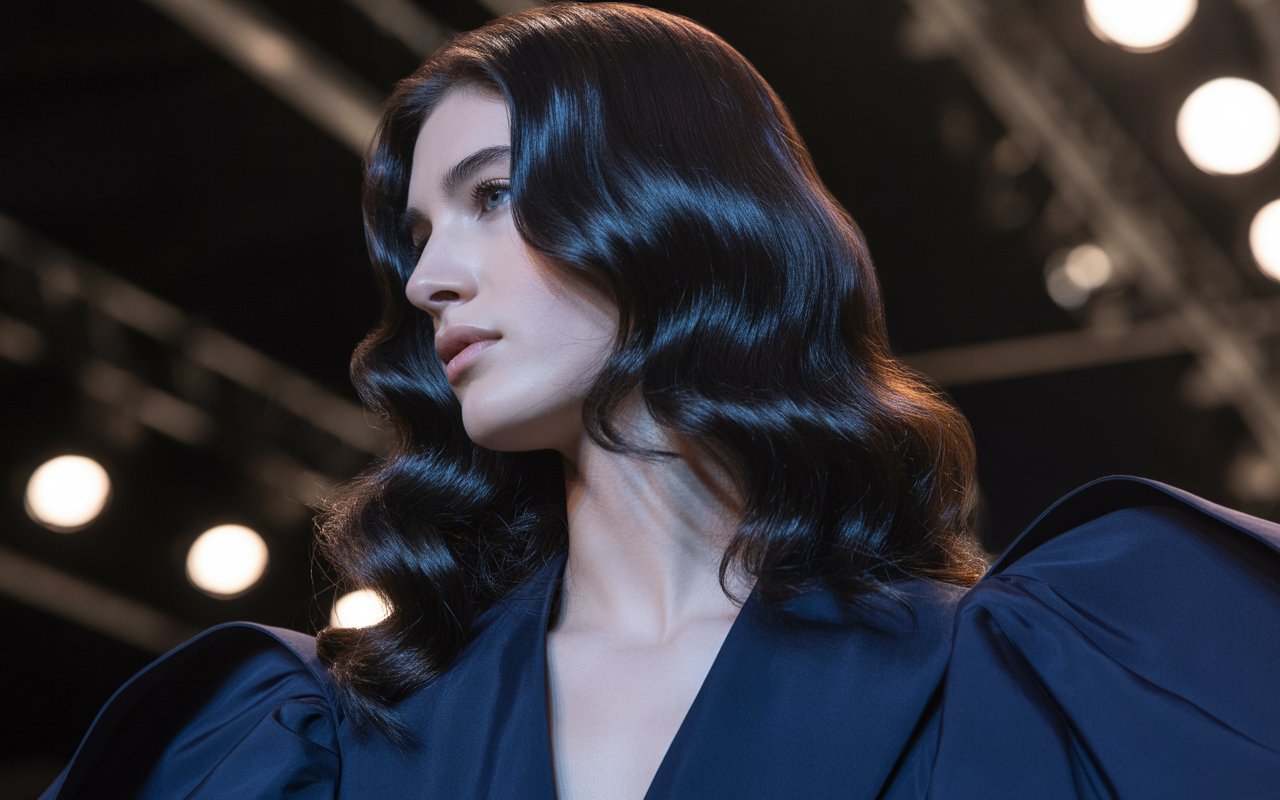
There’s a reason dark hair has always felt powerful. It’s rich, it’s grounding, and it has a way of making everything else — your skin, your eyes, your whole face — look more defined. But if you’ve ever felt like your brunette hair was falling a little flat, like it was technically dark but not exactly alive, that’s a very specific problem with a very specific fix.
Black sapphire is a hair color that sits right at the intersection of black and midnight blue. It’s not a fantasy color that demands bleach and upkeep — it’s a deep, cool-toned shade that works with dark hair, not against it. In certain lighting, it reads as a rich, glossy black. In others, it catches the light with a subtle shimmer of blue that gives it a completely different kind of depth. That shift is what makes it so wearable and, for brunettes, so flattering.
Whether you want the full transformation or just a hint of dimension, there are plenty of ways to wear this shade. Below are 11 looks worth knowing about — from the simplest all-over color to the more creative techniques that let you play with placement, contrast, and shine.
- 1. All-Over Black Sapphire
- 2. Glossy Blue-Black Blowout
- 3. Sapphire Balayage on Dark Brown Hair
- 4. Hidden Blue Underlayer
- 5. Blue-Black Ombré
- 6. Reverse Ombré with Sapphire Roots
- 7. Streaks and Peekaboo Highlights
- 8. Black Sapphire on Curly Hair
- 9. Black Sapphire with a Shadow Root
- 10. Demi-Permanent Sapphire Gloss
- 11. Full Dimension with Lowlights
- How to Keep the Color Looking Its Best
- Does It Work for Your Skin Tone?
- The Right Kind of Dark
- Frequently Asked Questions
1. All-Over Black Sapphire
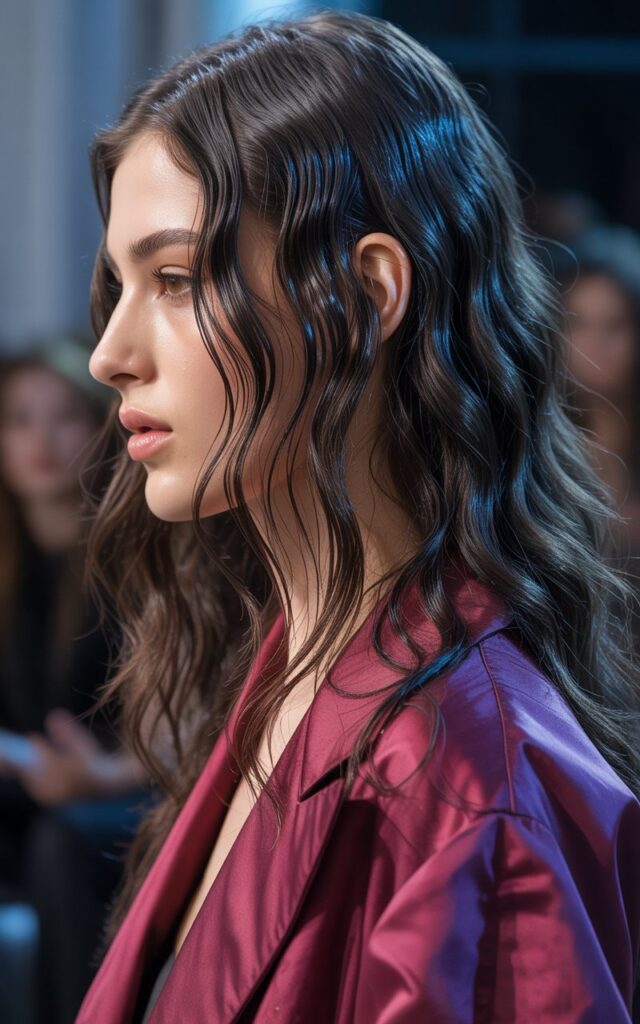
The most straightforward version of this color is exactly what it sounds like — a full, all-over application that replaces your current shade with a soft black infused with blue-toned depth. This works especially well for brunettes with medium to dark brown hair, since the underlying pigment gives the color something to grip. The result isn’t a flat, matte black. It’s glossy, dimensional, and noticeably richer than it would look on lighter hair.
If you’ve been thinking about going darker but didn’t want to lose all dimension, this is a strong starting point. It’s also one of the lowest-maintenance options since the grow-out is natural and the color tends to fade gracefully without turning brassy.
2. Glossy Blue-Black Blowout
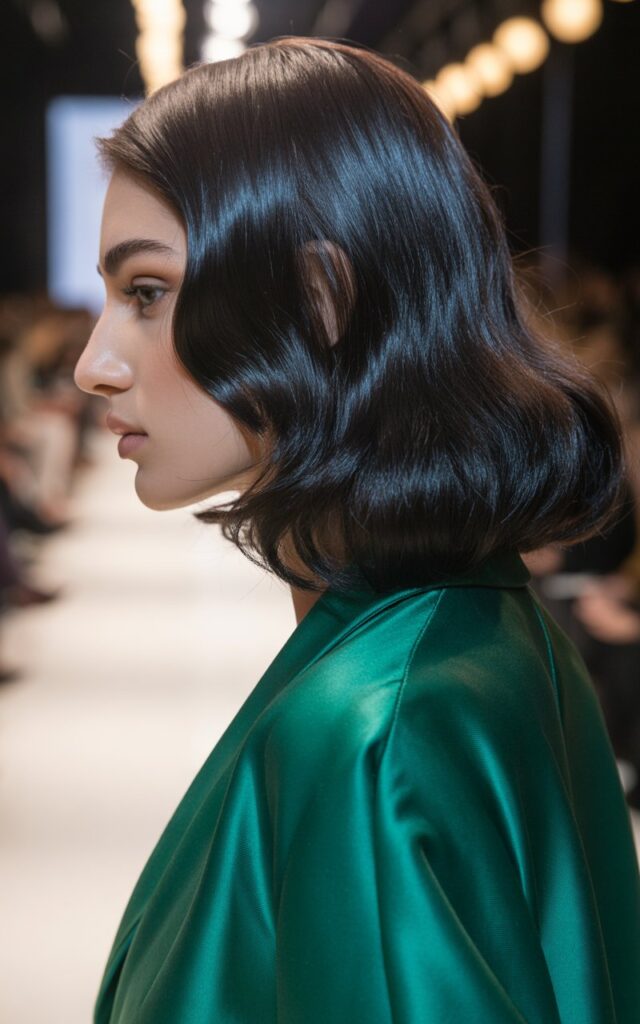
This look is less about a specific technique and more about finish. When paired with a smooth blowout or a silk press, this deep shade becomes almost mirror-like. The blue undertones reflect light in a way that makes the hair look impossibly shiny — the kind of shine that most women with naturally dark hair only get right after leaving the salon. Long, straight hair shows it off best, but it looks equally stunning on a sleek, shoulder-length cut.
3. Sapphire Balayage on Dark Brown Hair
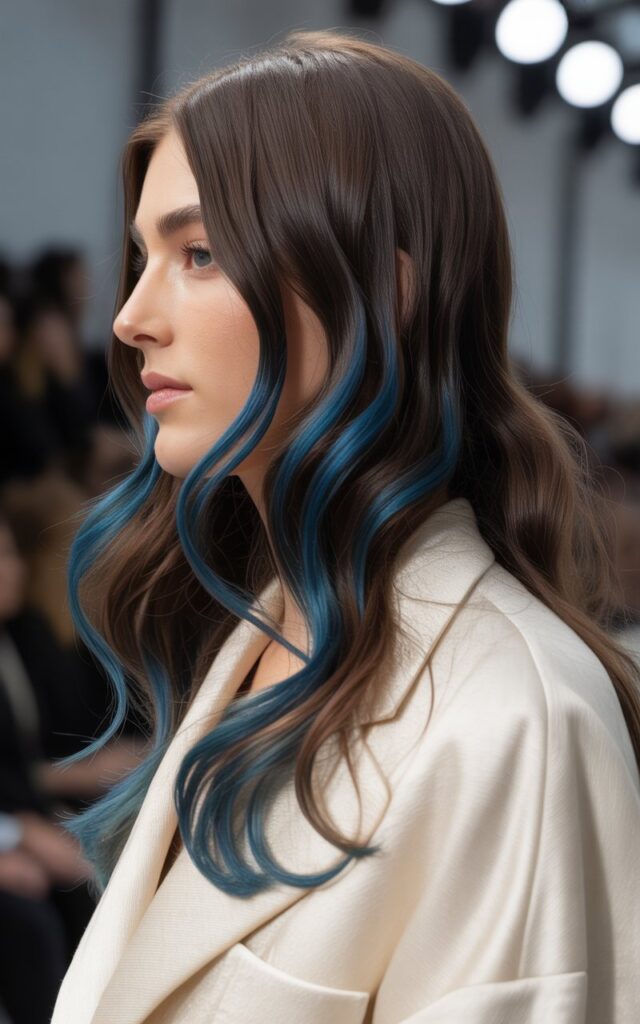
Balayage isn’t just for blondes. On dark brown hair, a hand-painted application of deeper blue-black tones creates a graduated effect that adds serious dimension without the contrast being too obvious. The key is in the placement — concentrating the cooler, darker color at the mid-lengths and ends while keeping the roots slightly warmer gives the hair a natural, lived-in depth.
This is one of the best options for women who want a change that isn’t immediately obvious but makes their hair look visibly better. People will notice something is different — they just won’t always be able to say what.
4. Hidden Blue Underlayer
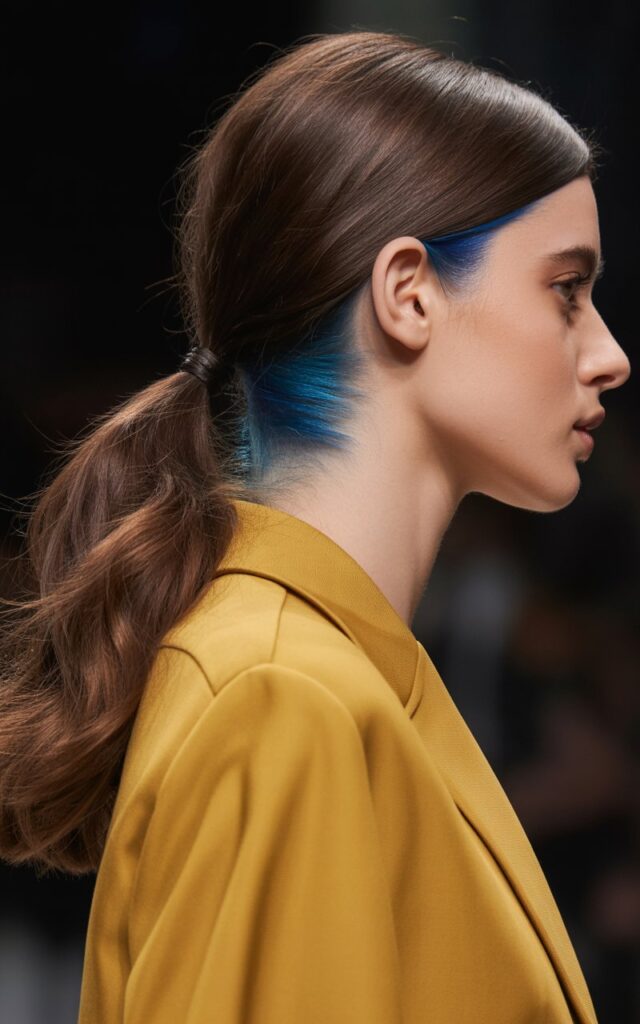
This one is for the woman who likes the idea of a bold color but isn’t ready to commit to it everywhere. The underlayer approach involves applying the sapphire-toned color only to the lower sections of the hair — the layers underneath — while keeping the top sections a natural dark brown or black.
Day to day, you won’t see it unless the wind catches your hair or you pull it up. But when you wear a ponytail, a bun, or a half-up style, that streak of blue-black shows through beautifully. It’s a way of wearing color that feels personal rather than performative.
5. Blue-Black Ombré
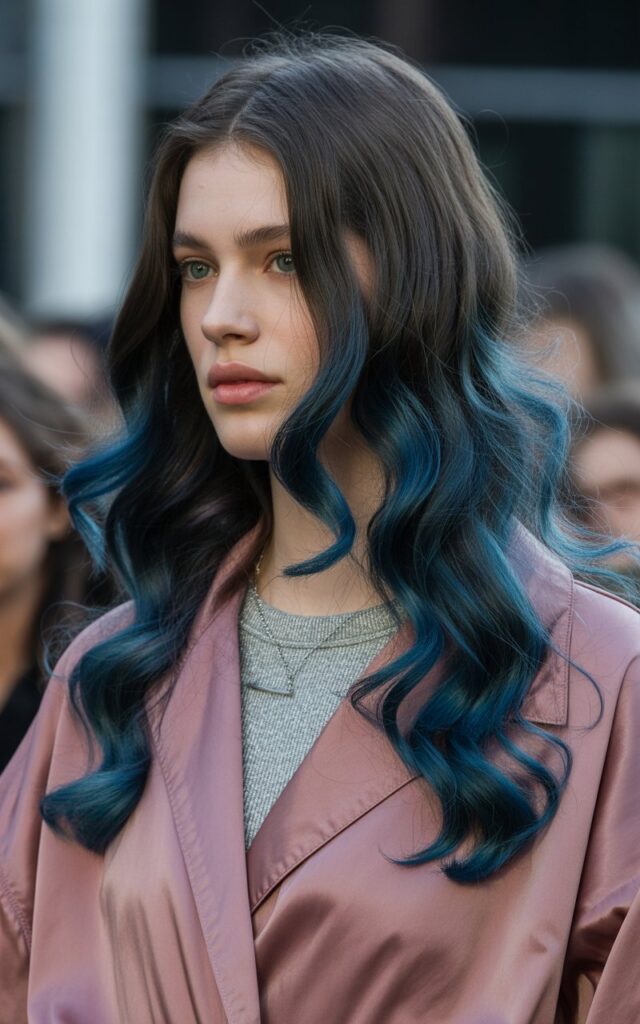
An ombré using these tones works by transitioning from a natural dark brown at the roots to a deep blue-black at the ends. Since both shades are within a similar color family, the gradient is subtle rather than stark — more of a quiet shift than a visible contrast. It’s particularly flattering on wavy or curly hair, where the movement of the texture helps blend the transition naturally. On straight hair, the gradient line is more defined, which creates a clean, graphic effect.
6. Reverse Ombré with Sapphire Roots
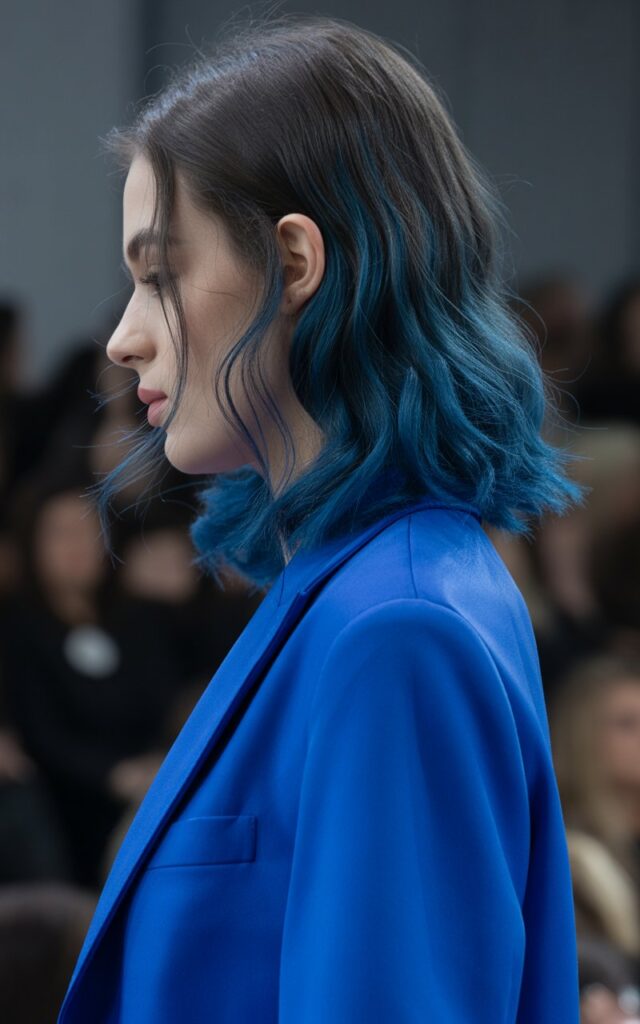
The reverse ombré flips the formula. Here, the deeper blue-black color is concentrated at the roots and gradually lightens — or warms — toward the ends. It’s an unconventional approach that tends to look very intentional and modern. For brunettes who already have some natural lightness at their ends from sun exposure or previous color, this technique can work with what’s already there rather than fighting it.
7. Streaks and Peekaboo Highlights
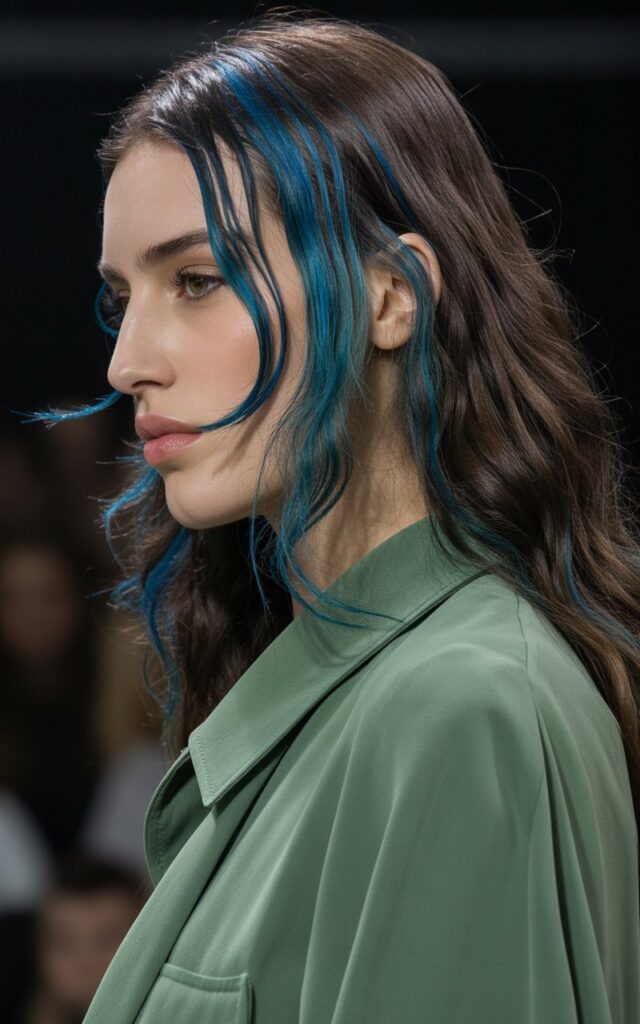
For a more graphic take, some women add defined streaks of sapphire blue alongside their natural dark color. These aren’t blended highlights — they’re intentional, visible sections of cooler color that create contrast against the warmer brown base. The effect is bold but still grounded because the blue is dark enough to stay in the same general tonal family as the rest of the hair.
Placement matters a lot here. Face-framing streaks are the most impactful for everyday wear, while scattered streaks throughout the length create a more editorial look.
8. Black Sapphire on Curly Hair
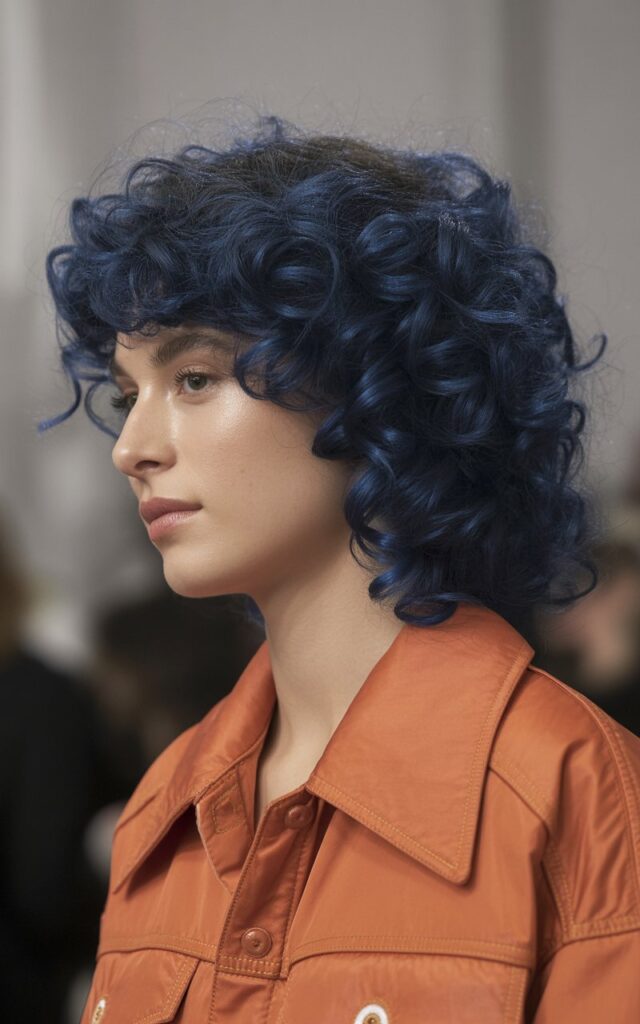
Curly and coily hair textures interact with color differently than straight hair. The way the strands spiral means that light hits them from multiple angles at once, which amplifies the blue undertones considerably. A woman with tight curls who applies this shade will see more shimmer and flash than someone with straight hair wearing the same color. That’s a feature, not a flaw. The color looks alive in a way that flat, single-toned black often doesn’t.
9. Black Sapphire with a Shadow Root
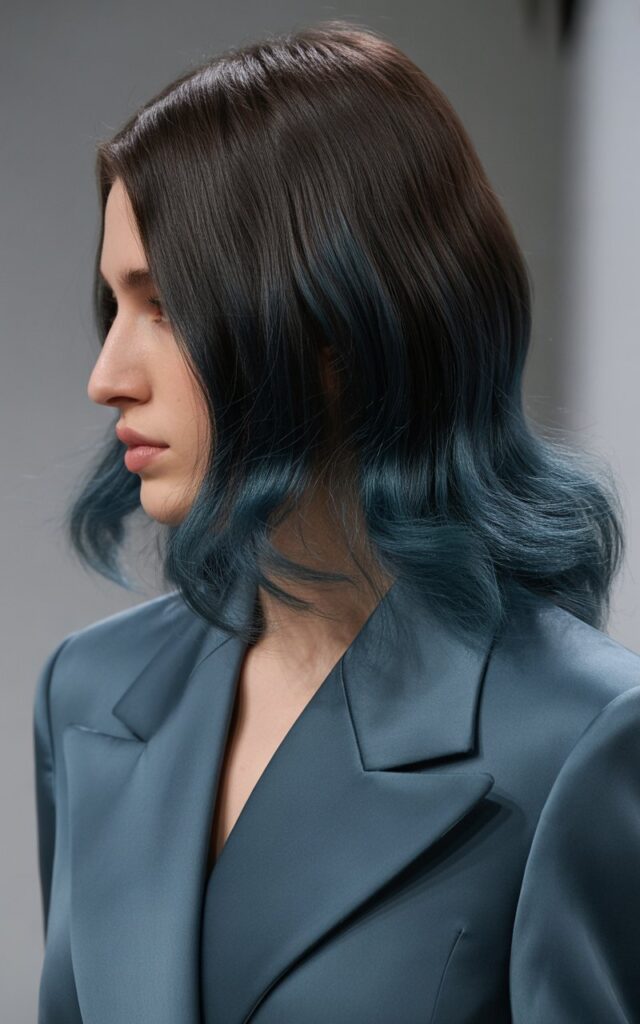
A shadow root involves deepening the root area intentionally to create a soft, blended contrast between the roots and the rest of the hair. Combined with this cool-toned shade, it produces a look that feels very modern and polished — almost like the hair has its own built-in depth gradient.
The practical benefit is that grow-out becomes almost invisible. Since the roots are intentionally darker and the color fades toward the lengths rather than creating a hard line, you get more time between appointments without your hair looking neglected.
10. Demi-Permanent Sapphire Gloss
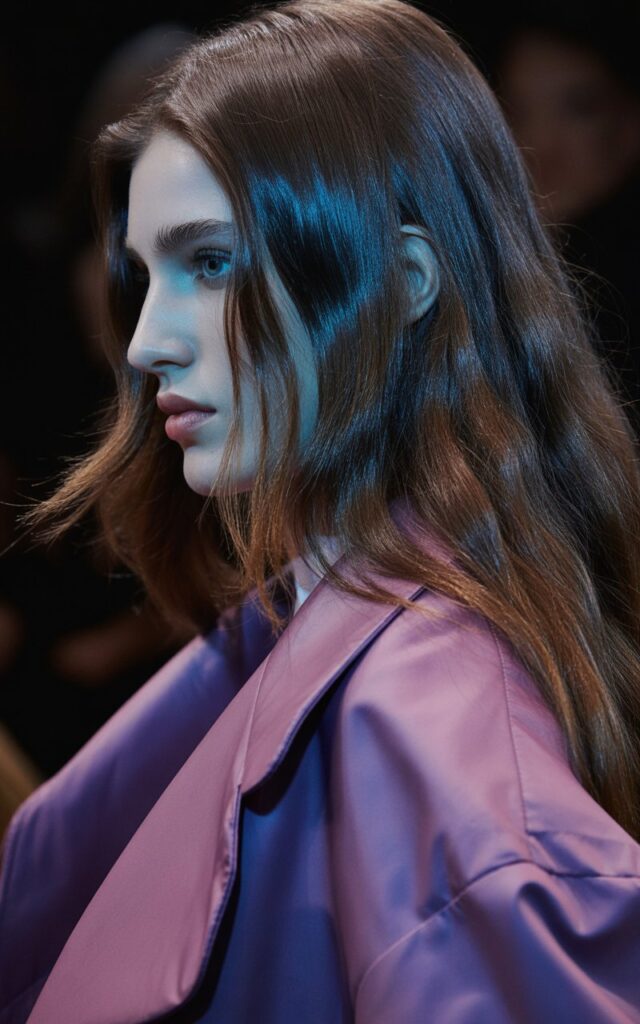
Not every woman wants a permanent commitment, and demi-permanent options for this color have gotten very good. A demi-permanent gloss deposits cool blue-black tone onto dark hair without lifting or lightening, which means there’s very little risk involved. The color sits on top of the hair structure rather than penetrating it deeply, which gives it that glassy, reflective finish that permanent color sometimes lacks.
It fades gradually — usually over 6 to 8 weeks — rather than growing out with a visible line, making it a good low-stakes way to try the color before going permanent.
11. Full Dimension with Lowlights
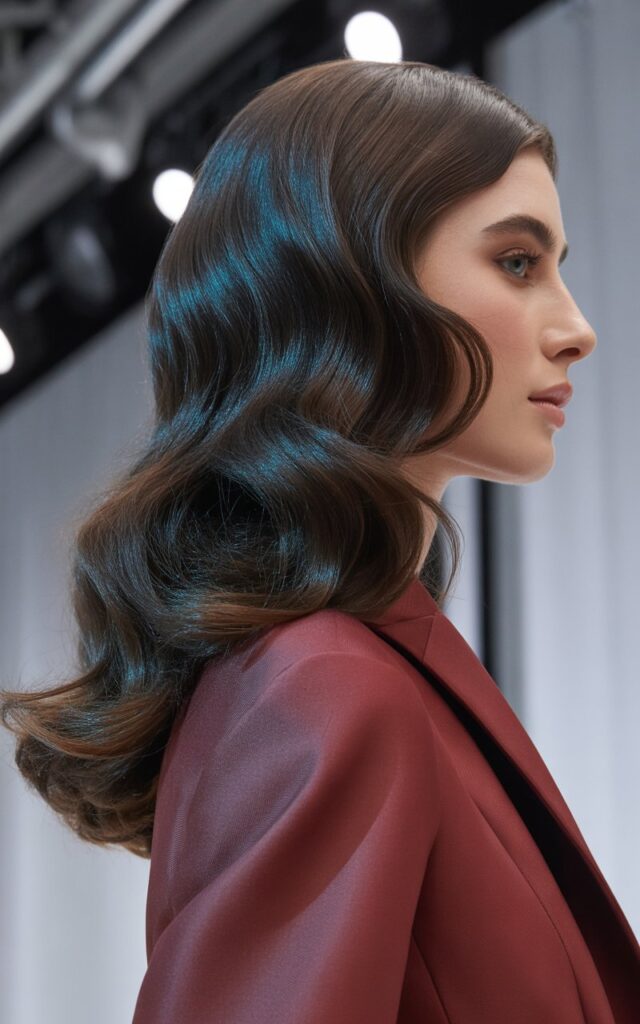
Lowlights add dimension by placing darker sections throughout the hair to create depth and contrast. For brunettes with hair that’s already a medium brown, adding strategic lowlights in a blue-black shade can make the overall color look significantly richer without a full color overhaul. The effect is subtle but cumulative — your hair ends up looking thicker, deeper, and more multidimensional than a single all-over process would produce.
How to Keep the Color Looking Its Best
The blue undertones in this shade are the first thing to fade, so protecting the color means protecting those cool tones. A few habits make a real difference.
Wait at least 48 hours after coloring before washing your hair.
Wash with cool or lukewarm water — hot water opens the hair cuticle and pulls color out faster.
Use a shampoo and conditioner formulated for color-treated hair. Products with sulfates will strip the color more quickly.
Limit heat styling when possible. When you do use heat tools, always apply a heat protectant first.
Sun exposure fades cool tones faster than warm ones, so if you spend a lot of time outdoors, consider a UV-protective hair spray or leave-in treatment.
Does It Work for Your Skin Tone?
One of the reasons this shade has become more popular across the board is that it’s genuinely flattering on a wide range of skin tones. The cool blue undertones complement women with cool or neutral complexions particularly well — fair skin with pink undertones, medium olive skin, and deeper cool-toned complexions all look striking with this shade.
For women with warm undertones — golden, peachy, or coppery skin — the contrast between the cool hair and warm complexion can still be very flattering. The key is making sure the color doesn’t skew too ashy. A softer, slightly warmer version of the blue-black formula keeps the look balanced rather than washed out.
The Right Kind of Dark
Dark hair doesn’t have to be boring, and it doesn’t have to be high-maintenance to be interesting. This particular shade sits in that sweet spot — it’s not a casual commitment, but it’s also not asking you to rebuild your entire hair routine. It works with what brunettes already have, adds a layer of cool-toned complexity, and delivers a finish that flat, single-process color simply can’t match.
Whether you go all in or start with something subtle like a demi-permanent gloss or a few lowlights, the difference is noticeable. Your hair ends up looking richer, more polished, and genuinely dimensional — like you put a lot more effort in than you actually did.
Frequently Asked Questions
Q: Does black sapphire hair color require bleach?
A: In most cases, no. Because this shade is a deep, dark color, it doesn’t require lifting your natural pigment first. On medium to dark brown hair, the color deposits directly without bleaching. If you want brighter blue tones to show more prominently, some light lifting in specific sections may help — but for the standard blue-black effect, your natural dark base is actually an advantage.
Q: How long does the color last before fading?
A: Permanent formulas typically last until new hair grows in, though the blue undertones will begin to fade after several weeks. With proper color-safe care, the color can stay vibrant for up to 6–10 weeks before needing a refresh. Demi-permanent versions fade more gradually, usually over 6 to 8 weeks.
Q: Can I get this color done at home?
A: For an all-over application, at-home options from brands like Garnier Olia and Schwarzkopf Color Ultime are reasonably accessible and produce good results on dark hair. For techniques like balayage, lowlights, or the hidden underlayer, a professional colorist will give you much more control over the placement and result.
Q: Will it cover gray hair?
A: Yes. Most permanent formulas in this shade range provide 100% gray coverage. Gray strands may actually absorb the cool blue tones quite well, giving them a silvery-blue quality before fading that can look really striking.
Q: Is this color suitable for all hair textures?
A: Yes. The color works on straight, wavy, curly, and coily hair. In fact, curly and coily textures often show the blue shimmer more dramatically because of how they reflect light. The main thing to consider is the condition of your hair — very dry or damaged hair should be treated before coloring to get the best result.
Q: How do I prevent the blue tones from fading too fast?
A: Cool tones fade faster than warm ones, so keeping up the color requires a few adjustments. Wash less frequently (2–3 times a week rather than daily), use cool water, avoid sulfate-heavy shampoos, and minimize direct sun exposure. A gloss treatment at the salon every few weeks can also refresh the blue tones between full color appointments.
Q: What haircut styles look best with this color?
A: Almost any cut works with this color, but cuts with movement — layers, waves, curls — tend to show the dimensional quality of the shade best. Blunt bobs and sleek, straight styles lean into the glossy, high-shine finish. The color is versatile enough to work with both polished and textured styles.
Q: Is this a good option for women who want low-maintenance color?
A: It can be. The all-over color and shadow root techniques are the most low-maintenance since the grow-out is soft and doesn’t create a harsh line. The demi-permanent gloss is also a good option for low commitment — it fades gradually and doesn’t require root touch-ups the same way permanent color does.

