

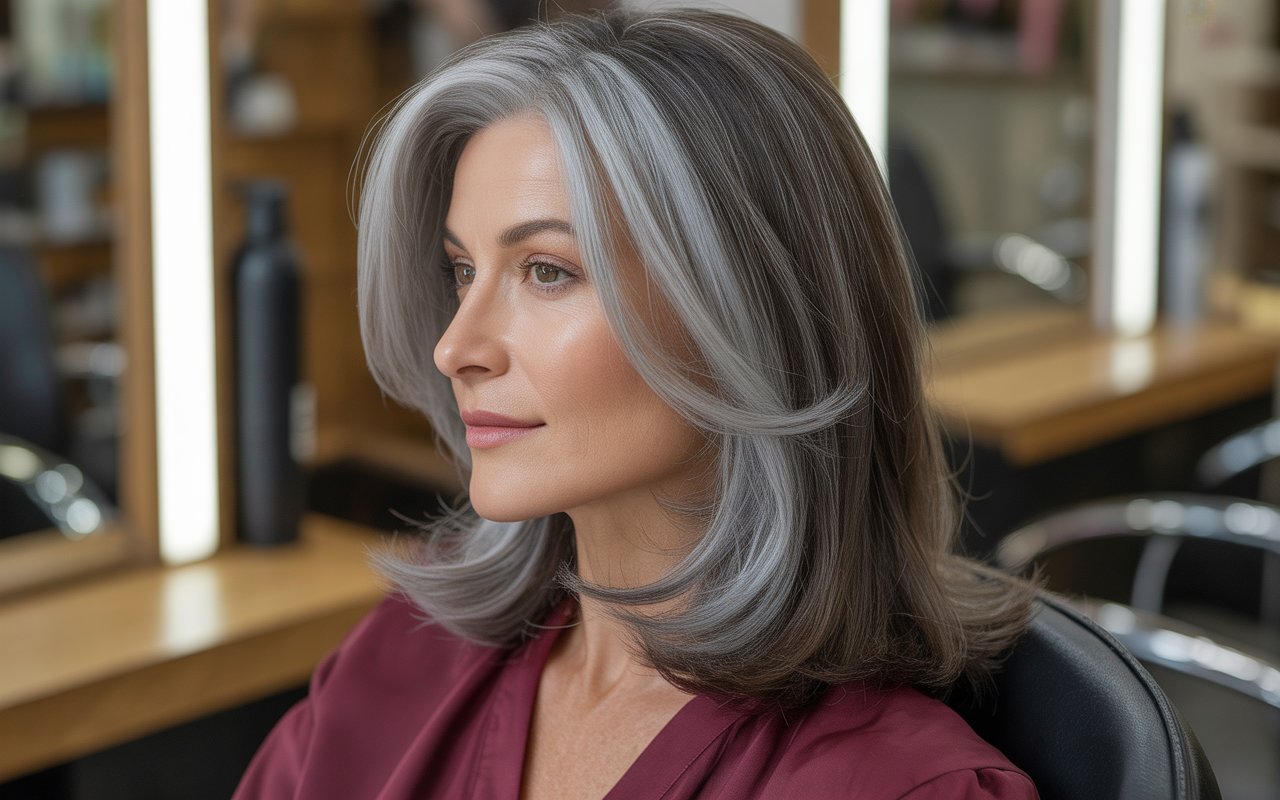
Going silver used to feel like something to dread. For decades, women were told to cover up every strand the moment it appeared, as if gray hair were a problem that needed solving. That thinking has shifted significantly. More women today are choosing to work with their silver rather than against it — and the results, when done with the right technique, are genuinely striking.
Still, the decision is not always easy, especially the first time around. There is a real difference between knowing gray hair can look beautiful and actually feeling ready to see it on your own head. Most women who are new to this process worry about that awkward in-between phase, the harsh line of demarcation where old color meets new growth, or simply the fear that they will hate the result and feel stuck with it.
That is exactly where gray blending comes in. Rather than going cold turkey — stopping color entirely and growing everything out — blending works with your current hair color and your incoming silver to create a softer, more gradual shift. The ten options below are all well-suited to women who are curious but cautious, and they range from barely-there to bolder, so there is something here regardless of how far along you are in the process.
- 1. Classic Silver Balayage
- 2. Salt-and-Pepper Blend
- 3. Silver Babylights
- 4. Greige Blending
- 5. Root Shadowing with Gray Tones
- 6. Ashy Brunette Blend
- 7. Face-Framing Silver Highlights
- 8. Smoky Gray Balayage
- 9. Platinum Money Piece
- 10. Dimensional Lowlight Blend
- Silver Looks Good on You — Even Now
- Frequently Asked Questions
1. Classic Silver Balayage
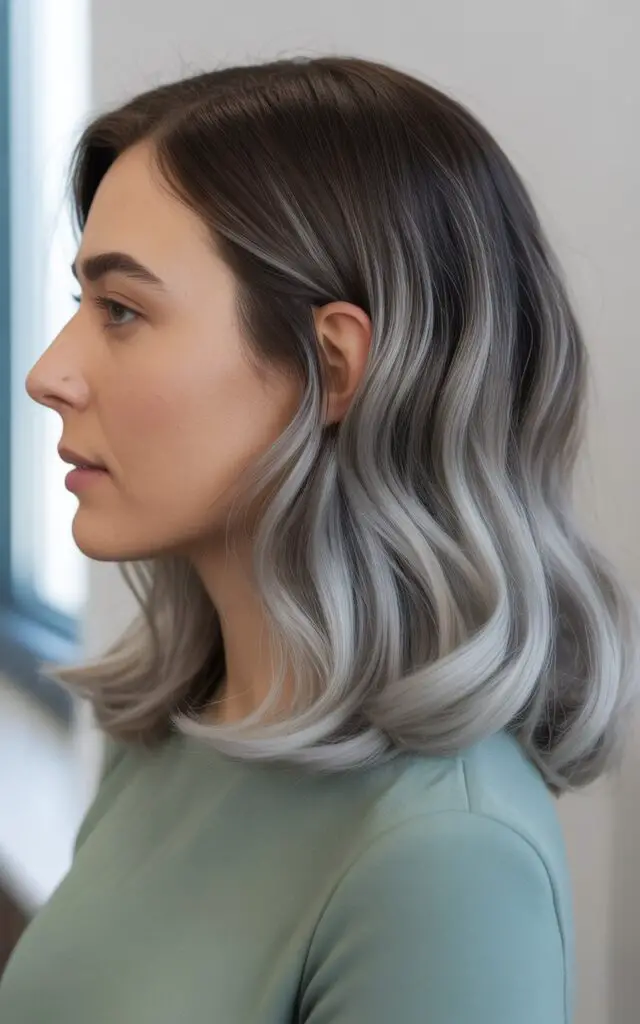
Balayage is one of the most forgiving techniques available for this kind of transition. The color is hand-painted onto sections of hair rather than applied from root to tip, which means the grow-out is soft and gradual — there is no harsh line to contend with as your roots come in. For women with brown or dark hair, a silver balayage adds cool, metallic dimension that makes incoming grays look completely intentional. Touch-ups are typically needed every three to six months, making it one of the lower-maintenance options on this list.
2. Salt-and-Pepper Blend
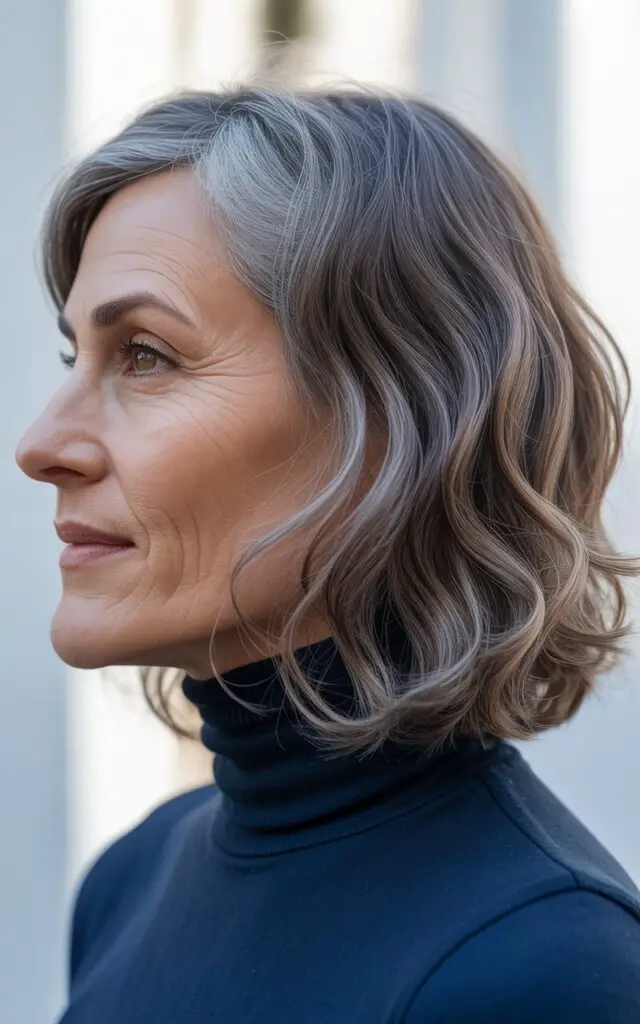
Salt-and-pepper is not a single color — it is the dimensional effect that happens when silver and darker strands coexist. For many women, this is already happening naturally, and a colorist can work with that pattern rather than fight it. The technique often involves softening the base color slightly toward a cooler, ashier shade so that the contrast between dark and silver is less stark. The result looks effortless and grows out beautifully without dramatic regrowth lines.
3. Silver Babylights
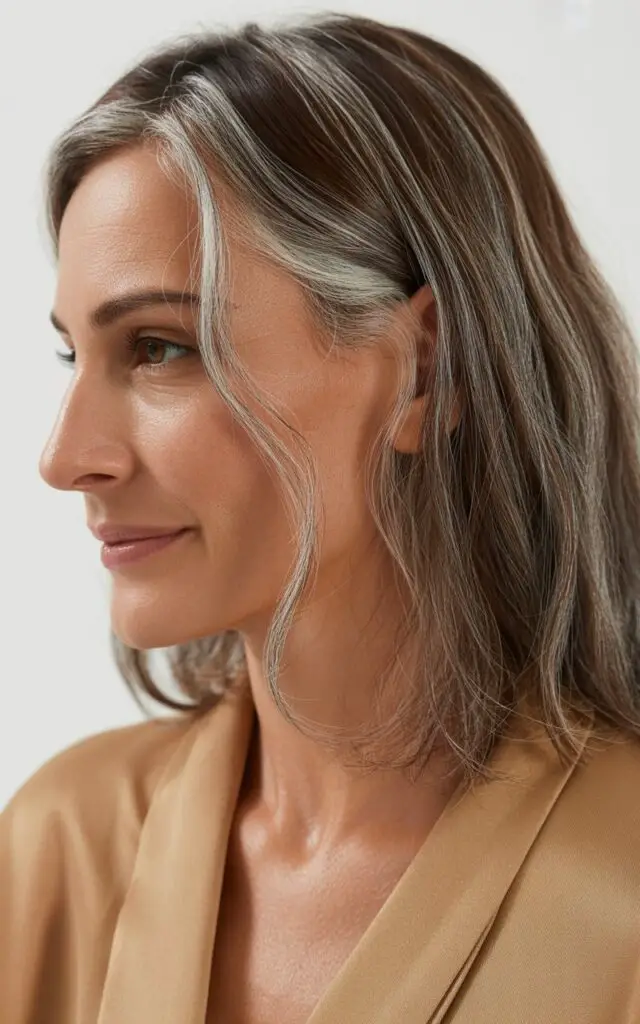
Babylights are very fine, delicate highlights — much thinner than traditional highlights — that mimic the kind of natural color variation you might remember from childhood. When done in cool silver or platinum tones, they work particularly well for women who are starting to notice silver strands scattered throughout their darker base. The effect is subtle from a distance but adds noticeable dimension and brightness up close. Because the pieces are so fine, regrowth is soft and easy to manage.
4. Greige Blending
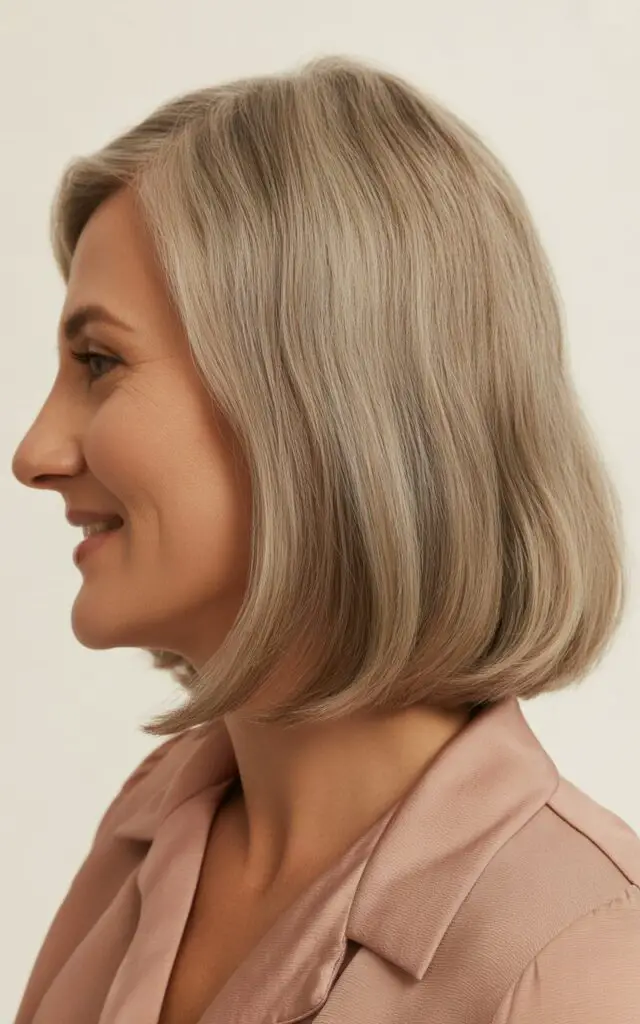
Greige — a blend of gray and beige — is a good middle ground for women who are not ready for a fully cool-toned, silvery result. It sits between warm and cool, which means it works across a wide range of skin tones. A colorist achieves this look by mixing ash and beige tones to soften the overall color while letting natural silver grow in more easily over time. It reads as polished and modern without feeling stark or icy.
5. Root Shadowing with Gray Tones
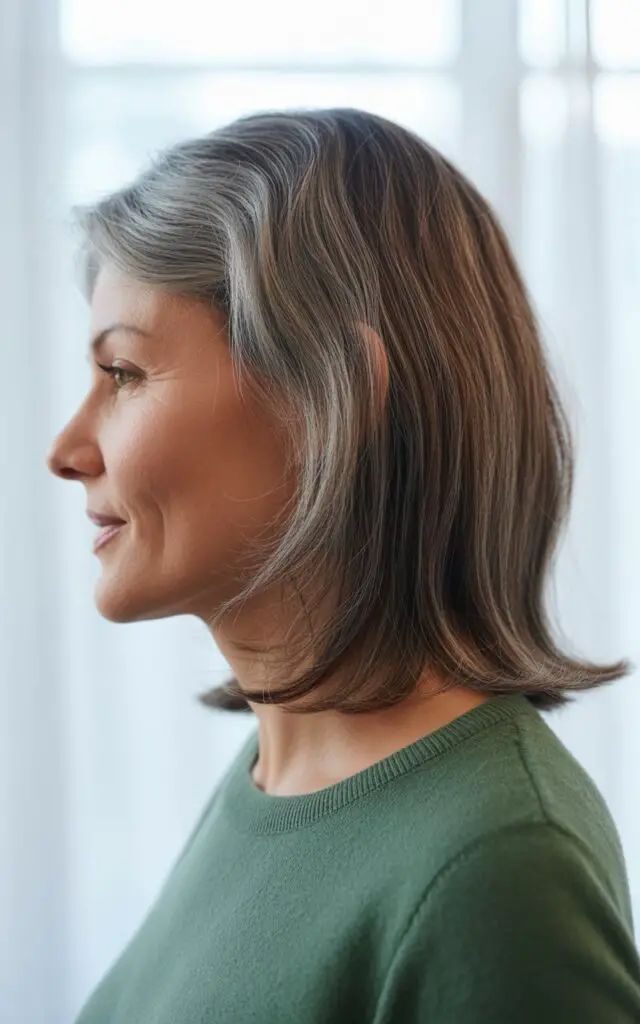
Root shadowing is essentially the opposite of highlights — instead of lightening sections, a colorist applies a slightly darker or gray-toned color at the roots to blend the line between your base color and incoming silver. This is a good starting point for women who are not sure how much they want to change but want to eliminate that blunt demarcation line that tends to appear between appointments. It is also one of the least expensive and least damaging options.
6. Ashy Brunette Blend
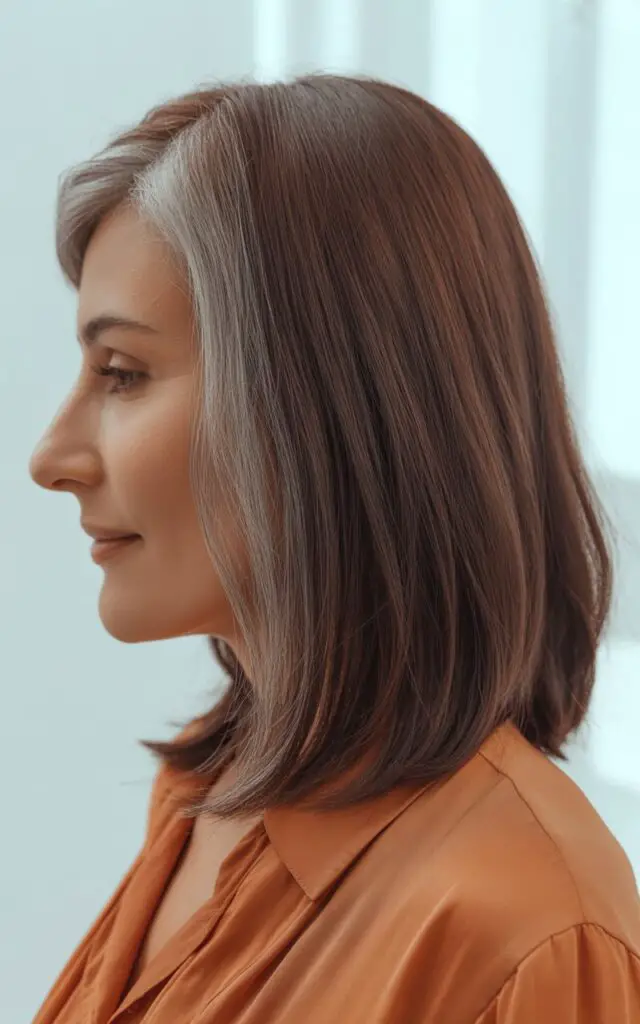
For women with medium to dark brown hair, shifting toward an ashier version of that brown is a smart first step. An ash-toned brunette base sits much closer in tone to silver and gray, which means incoming silver strands blend right in rather than standing out against a warm, reddish-brown backdrop. Your colorist can achieve this with a demi-permanent toner or gloss applied over your existing color, often in combination with a few well-placed highlights.
7. Face-Framing Silver Highlights
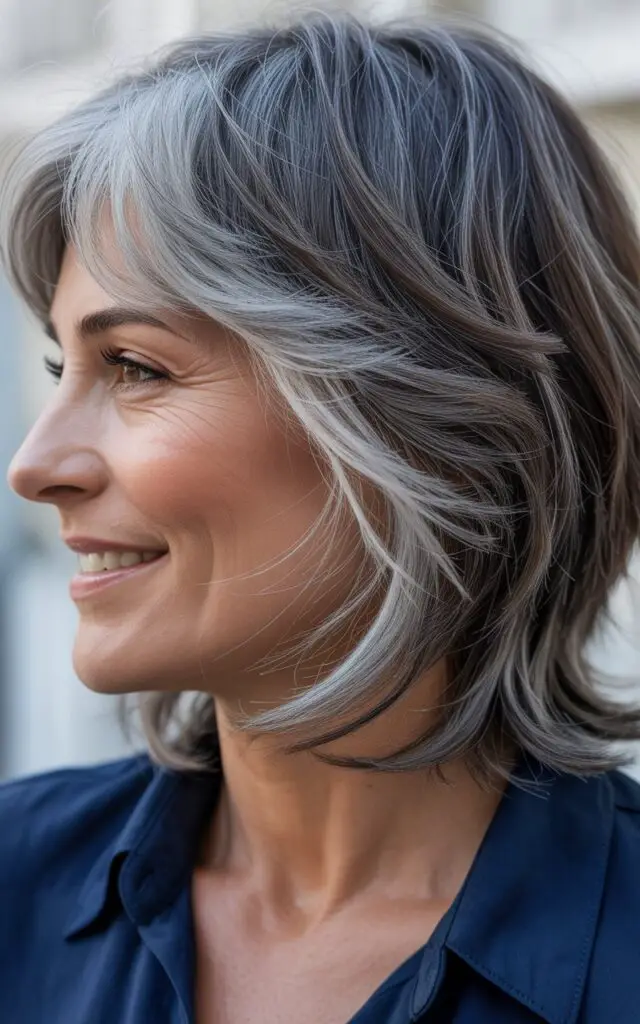
If you are not ready to change your all-over color, starting with face-framing highlights is a low-commitment way to get comfortable with silver tones. Lighter, cooler pieces placed around the hairline and temples add brightness to the face and make the silver strands that naturally tend to appear first in those areas look completely intentional. It is a natural starting point that can be expanded gradually, session by session, as you become more comfortable.
8. Smoky Gray Balayage
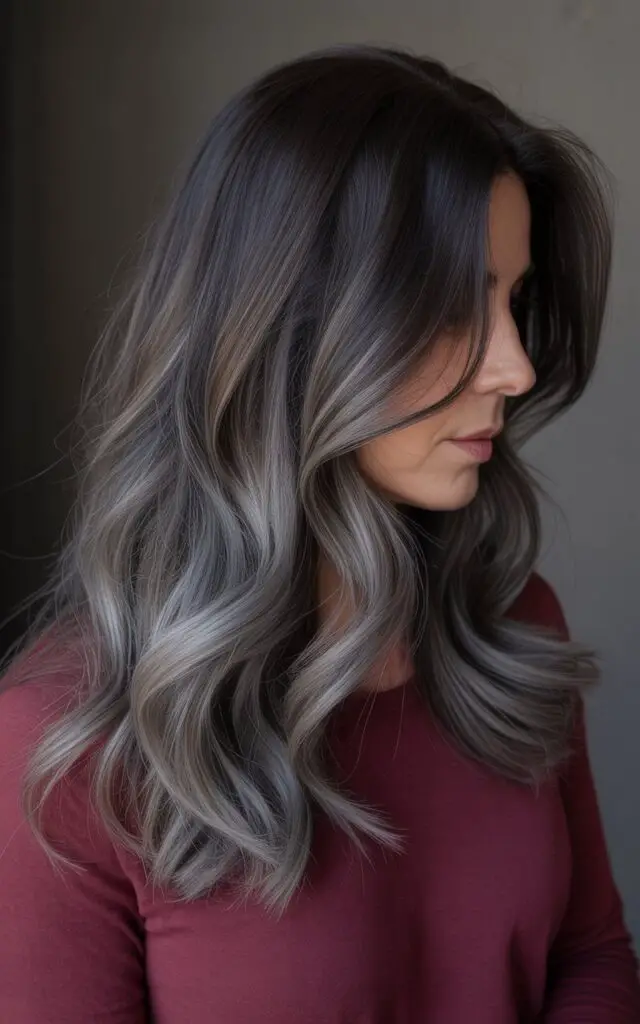
This is a step up from a classic silver balayage in terms of drama. Smoky gray sits between charcoal and silver, adding depth and dimension that works especially well for women with darker hair who want a noticeable shift without going all the way to platinum. The multi-tonal nature of a smoky finish means the color looks lived-in and dimensional rather than flat, and it photographs beautifully. Upkeep is similar to regular balayage — every three to six months depending on how quickly your hair grows.
9. Platinum Money Piece
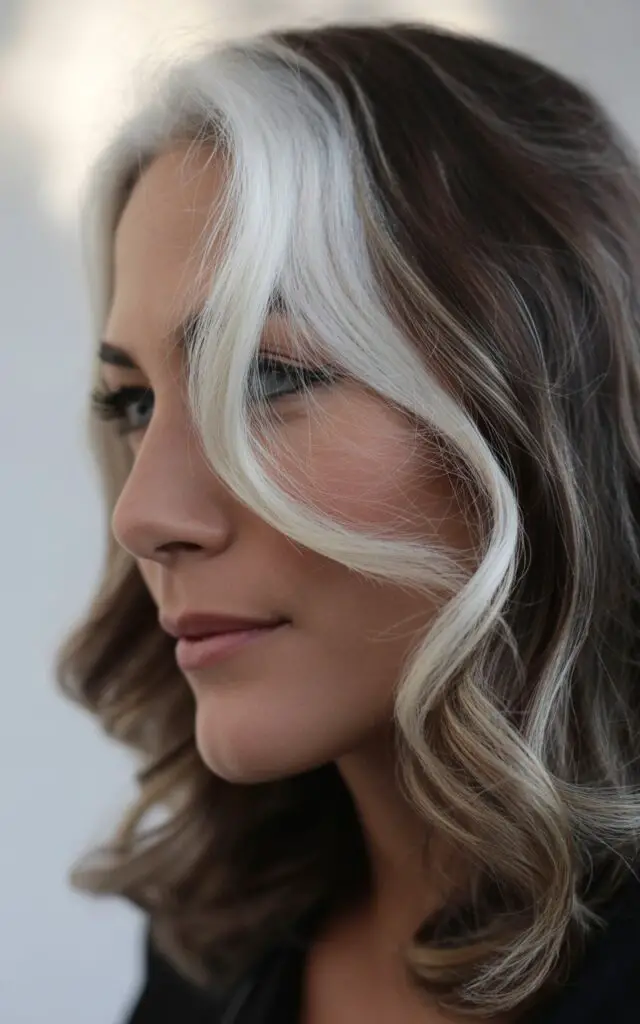
A money piece is a bold, face-framing highlight — typically lighter and more prominent than a regular highlight — placed at the front sections of hair. In platinum or near-white tones, it creates a high-contrast, fashion-forward look that also serves a practical purpose: it mimics and draws attention to the silver that tends to appear first at the temples and hairline. Women with darker hair who want a bolder statement while still keeping most of their length untouched often gravitate toward this option.
10. Dimensional Lowlight Blend
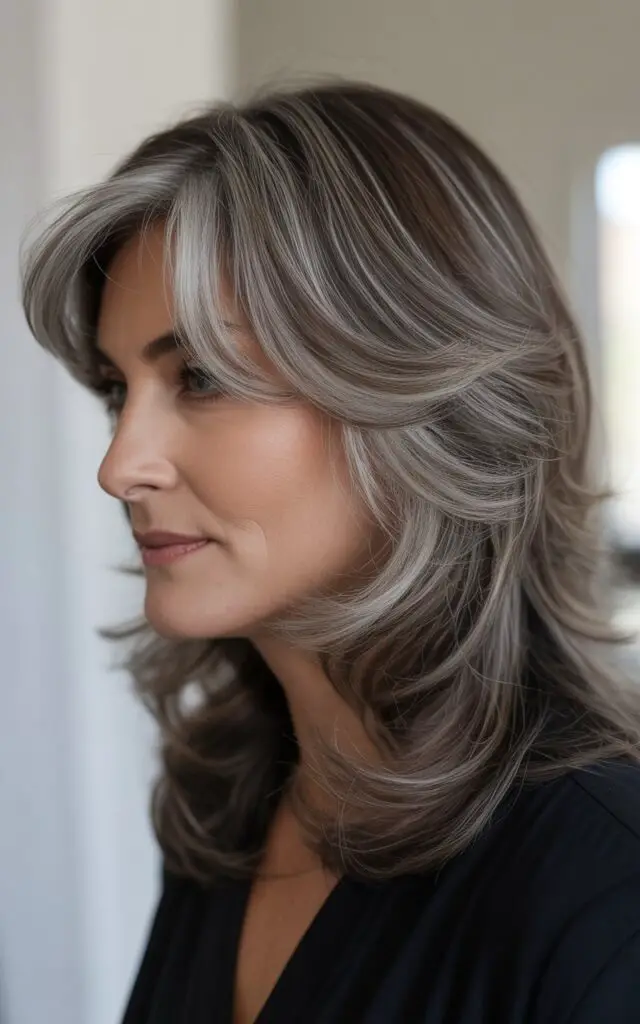
While highlights add light, lowlights add depth — and for women whose hair is already fairly light or who have a lot of natural silver coming in, lowlights can actually provide better balance. By weaving in slightly darker pieces among the silver, a colorist creates contrast and dimension that keeps the overall look feeling full and rich rather than flat. This technique is often combined with highlights or toners for a fully customized result, and it is particularly effective for women who feel their silver looks too one-dimensional on its own.
Silver Looks Good on You — Even Now
The hesitation most women feel at the start of this process is completely understandable, but the options available today make it far more manageable than it was even ten years ago. You do not have to choose between keeping up relentless root touch-ups and walking around with an awkward two-toned grow-out for months. The ten techniques above sit comfortably in between, giving your hair time to transition on its own schedule while still looking polished and put-together at every stage.
Whatever you choose, the first appointment is usually the hardest part. After that, most women find that seeing the silver properly incorporated — rather than fighting against it — is a relief. The goal is not to look like you stopped caring for your hair. The goal is to look like the silver was always part of the plan.
Frequently Asked Questions
Q: What is the difference between gray blending and simply stopping hair color?
A: Stopping color entirely means growing out your natural hair with a visible line between your old color and your roots, which can take a long time and often looks harsh in the process. Gray blending uses coloring techniques like highlights, lowlights, and balayage to soften that transition so the grow-out looks intentional at every stage.
Q: How often do I need salon appointments with gray blending?
A: It depends on the technique. Root shadowing and lowlights may need refreshing every eight to twelve weeks. Balayage and babylights are more low-maintenance, typically requiring a visit every three to six months. Your colorist can recommend a schedule based on how fast your hair grows and how blended you want the result to look.
Q: Can gray blending work on dark hair?
A: Yes, and it is actually one of the most common requests colorists get. Dark hair creates a stronger contrast against silver, so techniques like ashy brunette toning, silver balayage, and babylights are particularly effective for softening that stark difference and helping the two tones coexist naturally.
Q: Will gray blending damage my hair?
A: Compared to full bleaching or frequent all-over permanent color, gray blending is generally less damaging because it uses selective techniques that do not cover every strand. However, any chemical coloring process carries some risk, so working with an experienced colorist and maintaining a good conditioning routine matters.
Q: What is a money piece and is it a good choice for beginners?
A: A money piece is a bright, face-framing highlight placed at the front sections of your hair. It is a good option for women who want to experiment with lighter, cooler tones near their face without committing to a full color change. It is also easy to maintain or expand gradually over time.
Q: What hair care products should I use once I start gray blending?
A: A purple or silver-toning shampoo helps prevent yellow or brassy tones from developing in lighter, cooler sections. Using a moisturizing conditioner or hair mask regularly is also important, since silver and highlighted hair tends to be drier and more porous than uncolored hair.
Q: How do I know which gray blend technique is right for me?
A: The best starting point is a consultation with a colorist who has experience with silver transitions. Factors like your current hair color, the percentage of gray you already have, your hair texture, and how much maintenance you are comfortable with all affect which technique will look best and grow out most gracefully.
Q: Is greige a good choice if I have warm-toned skin?
A: Greige — a mix of gray and beige — tends to be one of the more versatile options for women with warmer skin tones because it is not as cool or icy as pure silver or platinum. The beige component adds a softness that can complement golden and olive complexions more naturally.
Q: Can I do any gray blending techniques at home?
A: Some basic highlighting kits are available for at-home use, and certain toning shampoos or glosses can help maintain your color between appointments. However, for the initial blending work — especially on darker hair — visiting a professional colorist gives you a much more controlled, even result and reduces the risk of patchiness or uneven color.

