

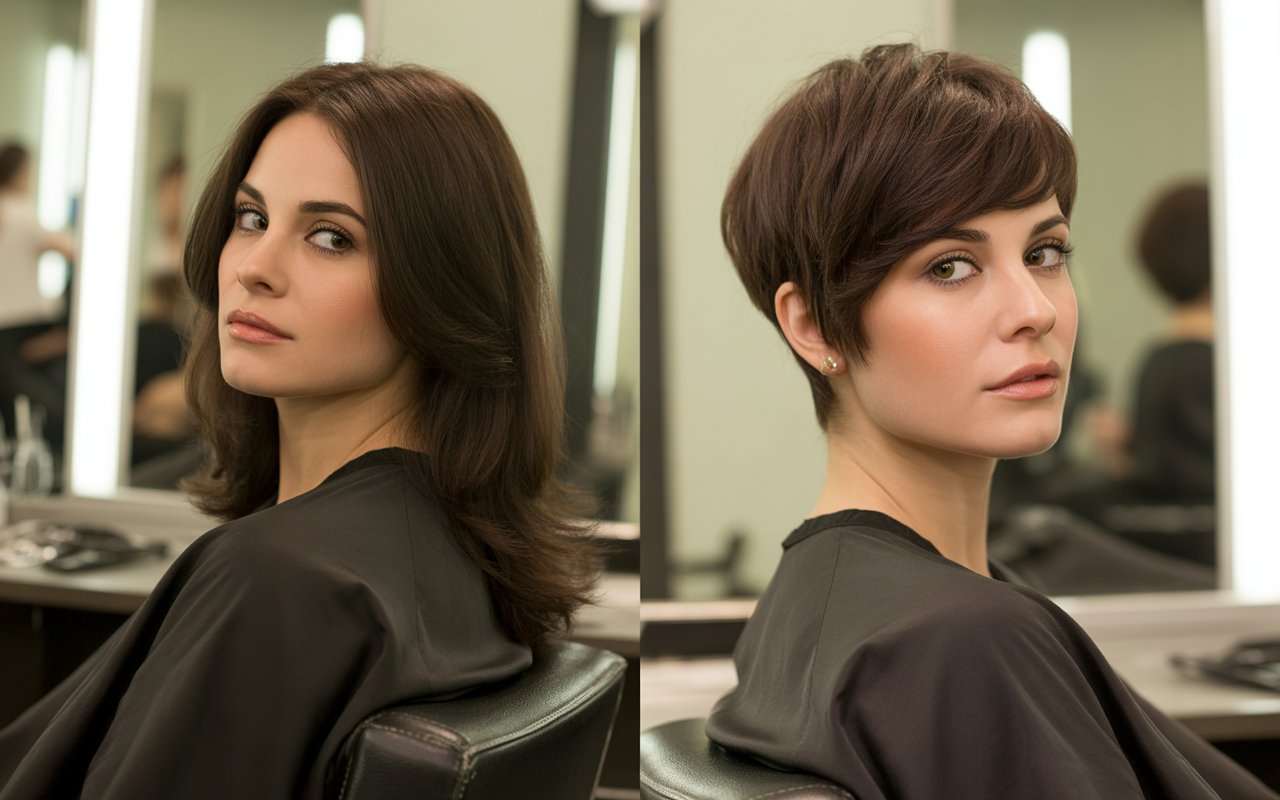
The first time you seriously consider chopping off all your hair, there’s a moment of pause. You look at yourself in the mirror, hair pulled back tight against your head, and you think — maybe. That pause is normal. Going from long hair to a cropped, close-cut style is one of the most dramatic changes a woman can make without any surgery involved, and it tends to bring out feelings that surprise people. Excitement, anxiety, exhilaration — sometimes all three at once.
What’s interesting is how different the reality turns out to be compared to the fear. Women who make this cut consistently report the same thing: they wish they’d done it sooner. The haircut itself takes about 30 minutes. The confidence shift seems to last much longer.
The pixie cut has been part of the cultural conversation since Audrey Hepburn wore one in the 1950s, and it hasn’t left. It keeps returning in new forms — softer, edgier, longer, more textured — because it works on women of all ages, hair types, and face shapes when done right. The following ten transformations cover the full range of what this cut can do, and what to think about before you sit down in that chair.
- 1. The Classic Cropped Pixie: Clean, Simple, Striking
- 2. The Textured Shaggy Pixie: For Women Who Hate Looking Too Polished
- 3. The Undercut Pixie: When You Want Something Edgier
- 4. The Long Pixie (or Mixie): The Best of Both
- 5. The Curly Pixie: Short Hair That Actually Shows Off Natural Texture
- 6. The Pixie with Side-Swept Bangs: Soft and Versatile
- 7. The Platinum Blonde Pixie: Color and Cut Together
- 8. The Silver or Gray Pixie: Owning the Natural Color
- 9. The Asymmetrical Pixie: One Side Longer Than the Other
- 10. The Tapered Pixie: Crisp Edges, Modern Finish
- What Your Face Shape Actually Tells You
- The Short Hair Feels You Don't Expect
- The Right Cut Is the One You Actually Want
- Frequently Asked Questions
1. The Classic Cropped Pixie: Clean, Simple, Striking
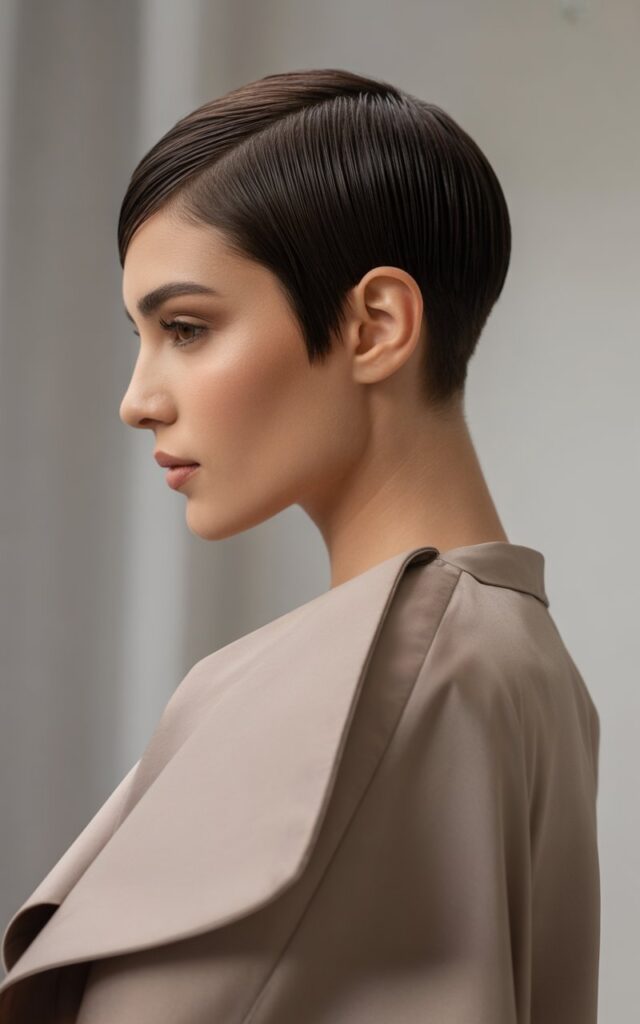
This is the one most people picture when they hear “pixie cut” — short on the sides and back, with slightly more length kept on top. It’s the Halle Berry, the early Emma Watson, the Michelle Williams. Clean lines, minimal bulk, and a cut that immediately draws attention to the face.
For the transformation itself, stylists typically section the hair into four ponytails before the initial cut if the length is significant. This keeps the removal organized and preserves the hair for donation if that’s the goal. What happens next is where the real artistry comes in: the shaping of the neckline, the blending of the sides, and the decision about how much length to keep on top.
Women with fine hair often see the most dramatic improvement with this version. Fine hair that falls flat when long suddenly has visible body and movement when there’s less of it weighing itself down.
2. The Textured Shaggy Pixie: For Women Who Hate Looking Too Polished
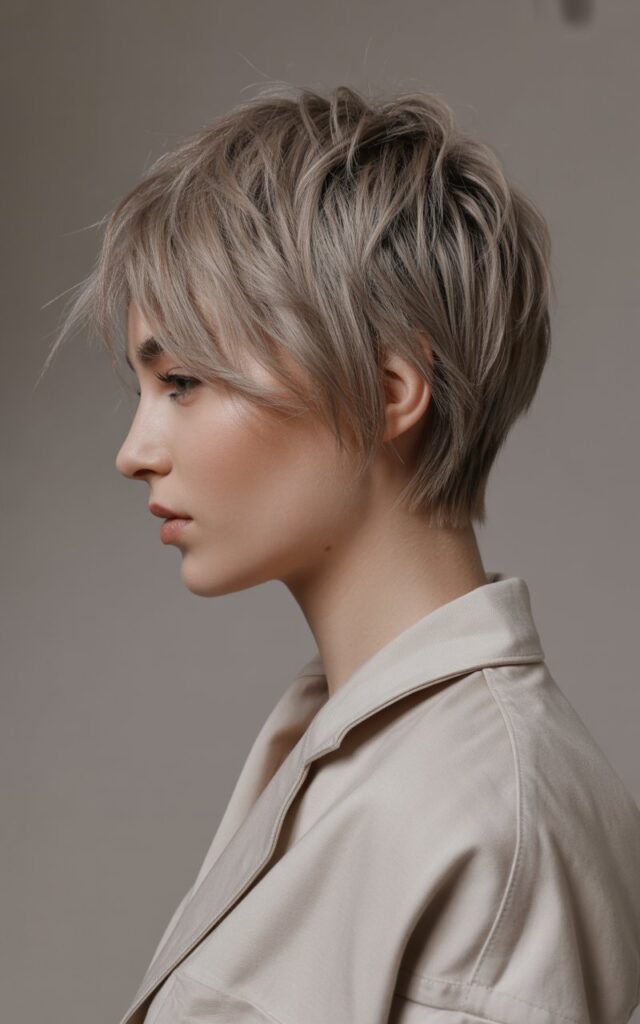
Not everyone wants something precise and tight. The shaggy pixie leans into a looser, lived-in look — more layers, more movement, a slightly longer nape, and a top section that can be tousled rather than smoothed. Think messy in the best way possible.
This particular variation works especially well for women with naturally wavy or slightly coarse hair. The texture of the hair itself becomes part of the style rather than something to fight against. A small amount of texturizing spray is usually all the styling it needs.
The transformation from long hair to a shaggy pixie tends to look less jarring than a very tight crop because there’s still visible length and softness. For women who are nervous about going short, this is often a good starting point.
3. The Undercut Pixie: When You Want Something Edgier
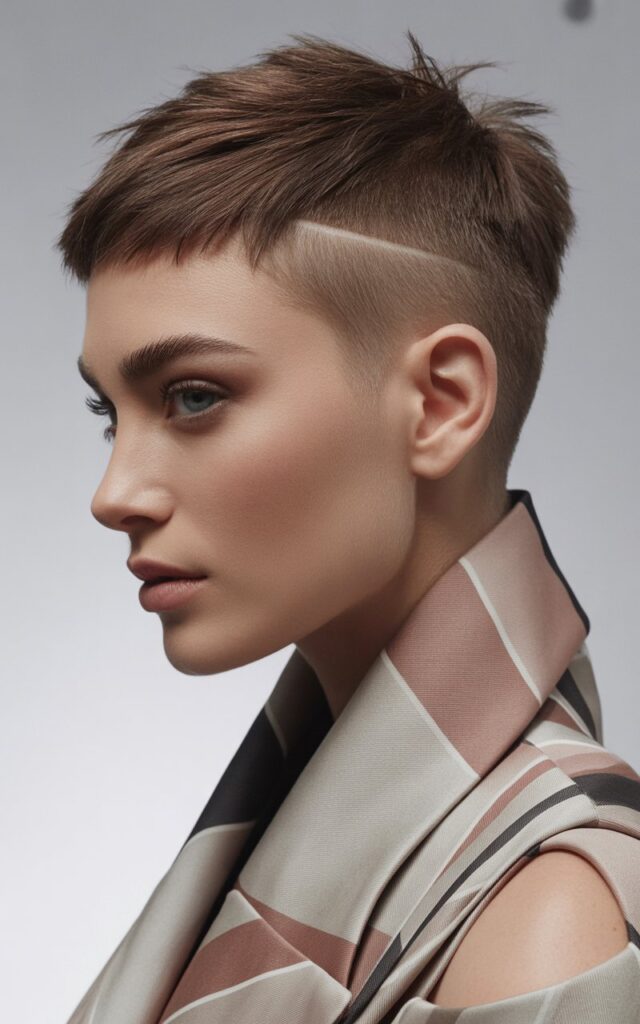
The undercut takes the standard short cut and adds a shaved or very closely cropped section beneath the longer top layer. The contrast between the two is what makes it work — the length on top gives the cut softness and styling flexibility, while the undercut adds edge and keeps the back of the neck cool and clean.
Women with thick hair tend to love this version because the undercut actually removes bulk without sacrificing the look of fullness. Stylists describe it as a way to take the weight out of a thick head of hair while keeping the top section dramatic.
Maintenance is more frequent with this cut — the undercut grows out quickly and starts to lose its definition around the three to four week mark. But for women who enjoy that crisp, fresh-from-the-salon feeling regularly, it’s worth it.
4. The Long Pixie (or Mixie): The Best of Both
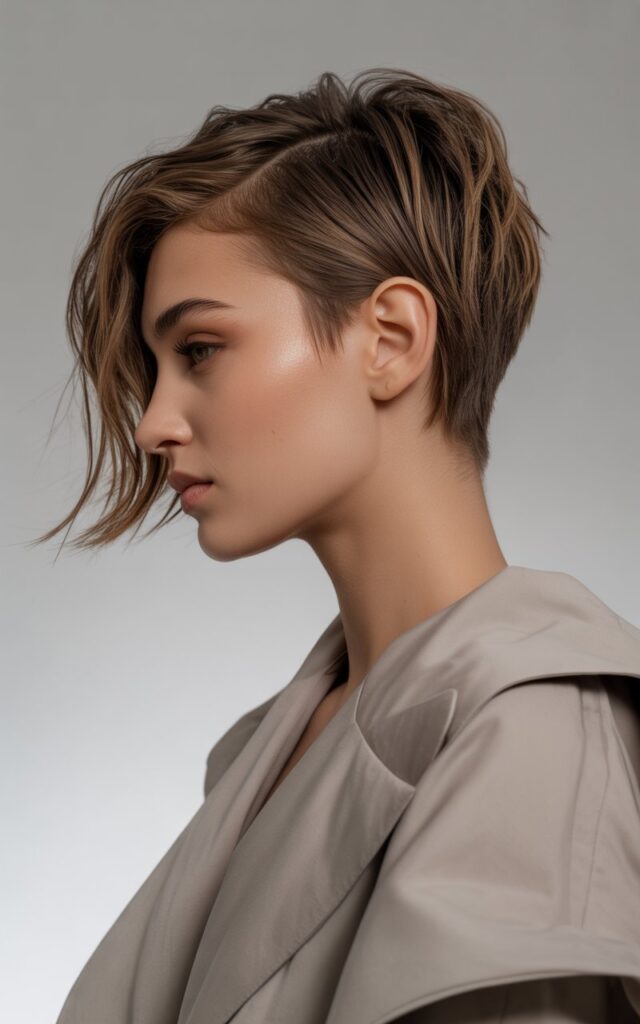
The long pixie — sometimes called a mixie when it starts to edge toward a bob — keeps more length overall, particularly around the face and at the sides. It’s still unmistakably short, but there’s enough hair to tuck behind an ear, add a clip, or part in multiple directions.
This cut is genuinely flattering on most face shapes because the extra length gives a stylist more to work with in terms of framing. Women with heart-shaped faces in particular benefit from the additional length at the sides, which creates balance with a wider forehead.
From a transformation standpoint, the long pixie is the gentler introduction to short hair. The amount removed is still significant, but the result doesn’t require adjusting to the feeling of bare skin on the back of the neck — which, for many women, is the strangest part of going fully short.
5. The Curly Pixie: Short Hair That Actually Shows Off Natural Texture
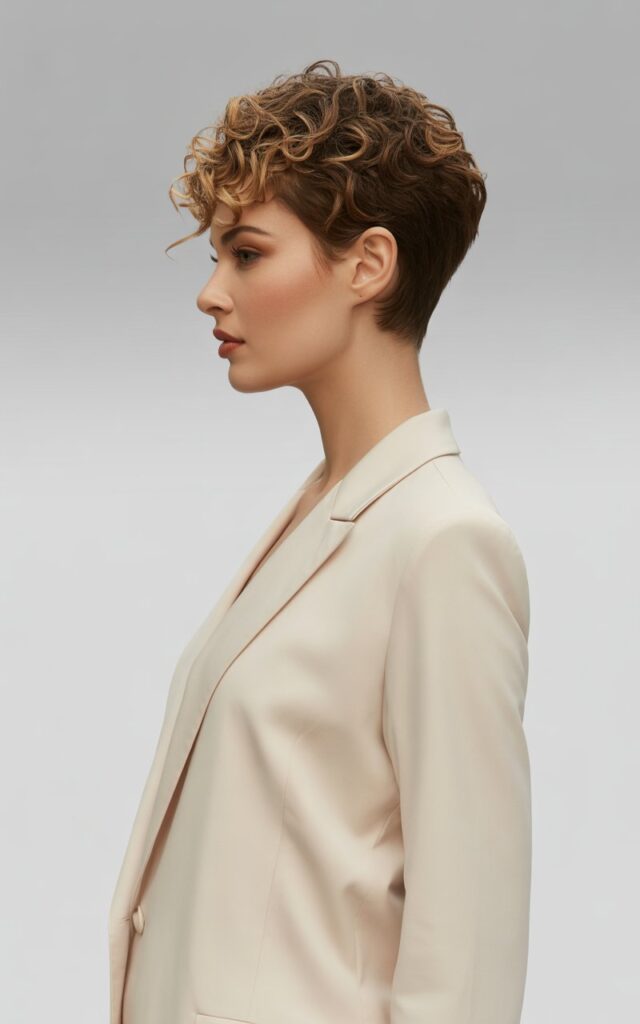
Natural curls and waves look genuinely beautiful in a short crop. The key is finding a stylist who understands how to cut curly hair short — because the wrong cut can send curls bouncing straight up, and the right one can create a shape that practically styles itself.
The transformation works best when the hair is cut dry or at least with curl pattern in mind. Curly hair contracts significantly once cut, so what looks like a certain length wet can end up considerably shorter when it dries. A good stylist accounts for this.
Women who’ve spent years fighting their curl pattern with long hair often describe the curly pixie as something of a relief. Suddenly, the texture that felt like a battle becomes the entire point.
6. The Pixie with Side-Swept Bangs: Soft and Versatile
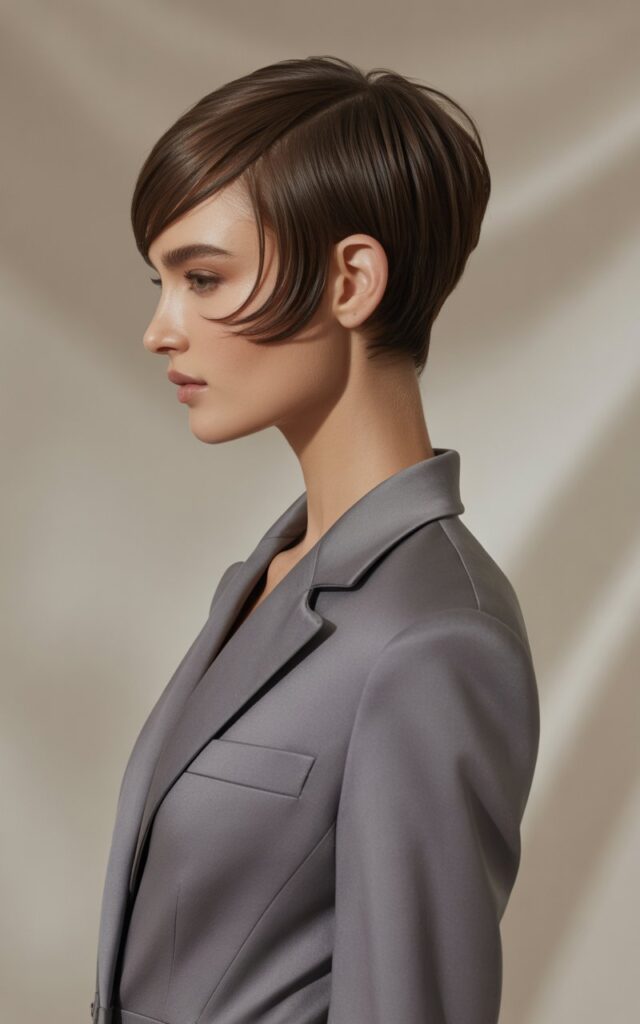
Adding a side-swept fringe to a short crop changes the whole feel of the cut — it softens it, adds a layer of adjustability, and gives women something to work with during the grow-out phase. The bangs can be worn swept to one side, pushed back, or clipped away entirely depending on the day.
This version works particularly well for women with round faces. The diagonal line created by side-swept bangs visually lengthens the face in a way that a blunt, symmetric cut doesn’t. It’s a small detail that makes a real difference in how the cut sits on different face shapes.
From long hair, this transformation often involves keeping slightly more length in the front than other versions of the cut. The stylist shapes everything else close while preserving that front section.
7. The Platinum Blonde Pixie: Color and Cut Together
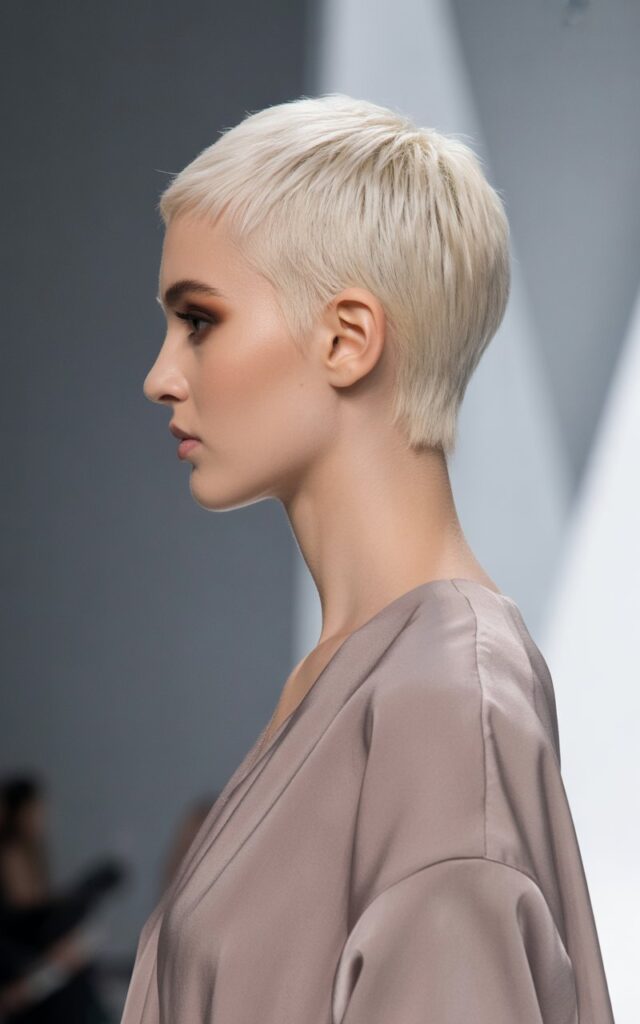
Going short and going lighter at the same time doubles the transformation — and not just visually. Women who take this combination approach often describe it as feeling genuinely different from either change done alone.
Platinum works especially well on a pixie because the cut shows off the color from every angle. There’s no hiding it, no blending into length. The color is fully visible all the time, which means color maintenance needs to become part of the routine. Toning shampoos and regular touch-ups keep platinum from going brassy.
This is also one of the more high-commitment transformations on this list — both financially and in terms of upkeep. But for women who want a full reset, it delivers exactly that.
8. The Silver or Gray Pixie: Owning the Natural Color
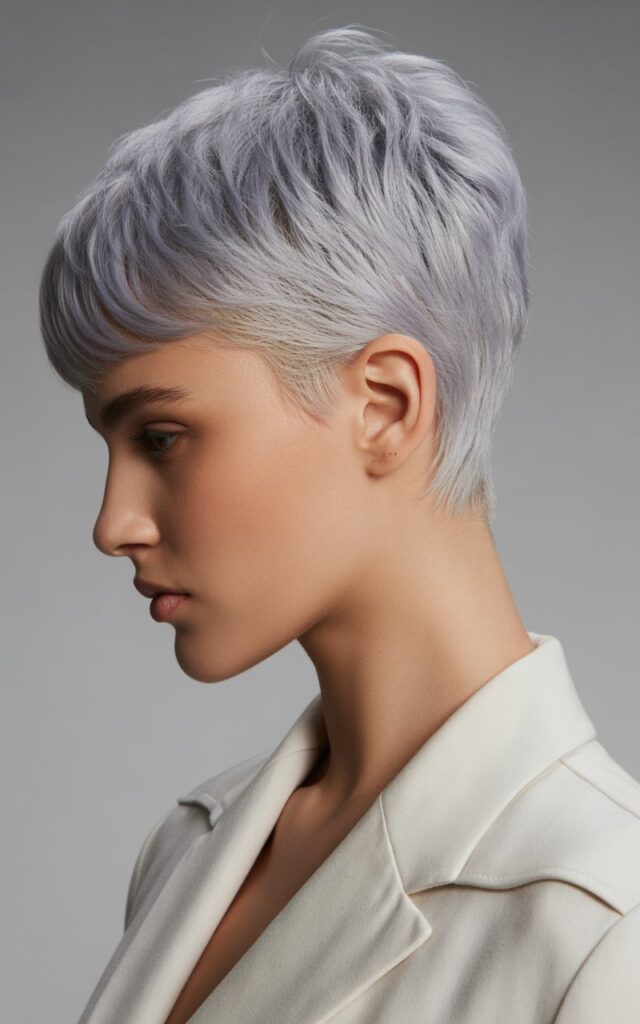
Going short while also letting natural gray or silver grow in is a combination that’s become increasingly popular, and for good reason. The pixie cut takes the awkward grow-out phase of transitioning to gray and turns it into something intentional. Instead of a visible line of demarcation, you get a cut that frames the silver as a style choice.
Women who’ve been coloring their hair for years and are ready to stop find that going short is the most practical way to make the transition. The gray and dyed sections are removed together as the cut grows out, rather than sitting side by side on long hair.
Silver hair also has a particularly striking quality when worn short — it tends to catch light in a way that shows dimension and shine rather than fading into a background.
9. The Asymmetrical Pixie: One Side Longer Than the Other
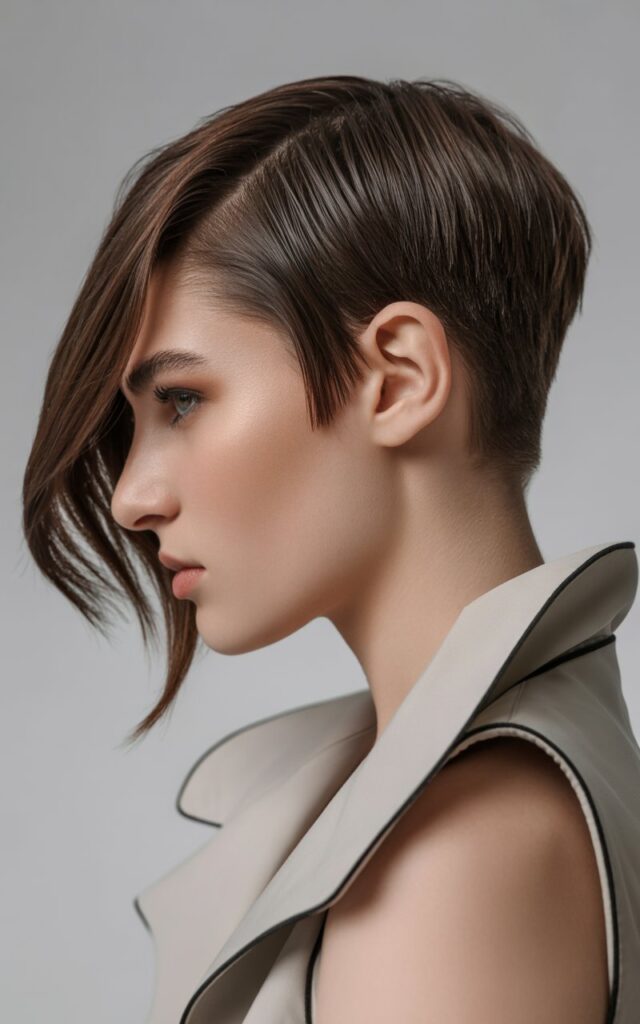
An asymmetrical pixie keeps one side or section notably longer than the other, creating a silhouette that is deliberately off-balance in a way that reads as stylish rather than unfinished. It’s a cut that requires precision — the asymmetry has to be intentional and clean.
This version tends to work well for women with strong, defined features. The visual weight of the longer side creates a frame without softening everything the way a symmetric cut does. It’s a bold choice, and it looks like one.
Bring clear reference photos to the salon for this cut in particular. Because the asymmetry can be done in multiple ways — longer on the left, longer on the right, with or without bangs — the details matter more than they do with a more standard shape.
10. The Tapered Pixie: Crisp Edges, Modern Finish
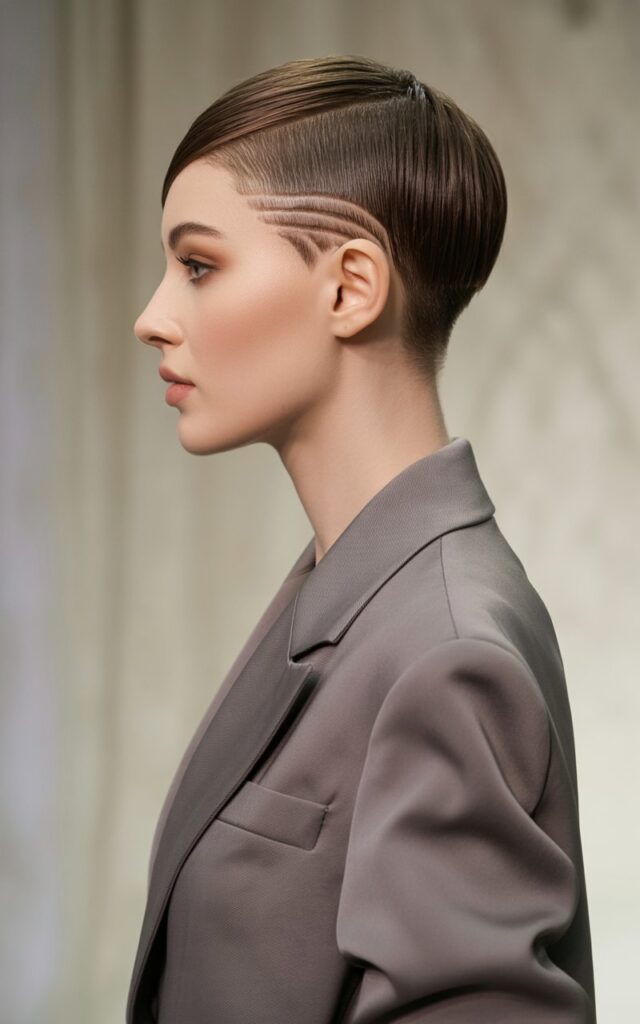
A tapered pixie follows the natural shape of the head closely, with the hair tapering down to a clean, defined edge at the neckline and around the ears. It’s one of the most structured versions of the cut, and one of the most polished.
Women with natural Black hair often favor the tapered pixie because it works beautifully with coils and tight curl patterns, defining the shape of the head rather than fighting it. The result is clean, sophisticated, and very low maintenance on a day-to-day basis — even though it requires regular trims to keep the taper sharp.
From long natural hair, this transformation is one of the more dramatic simply because of how much length comes off. But the result tends to fit instantly, in a way that stylists describe as making the cut look like it was always meant to be there.
What Your Face Shape Actually Tells You
Before any of this happens in real life, knowing your face shape gives you a useful starting point. Oval faces have the most flexibility and can support almost any version of the cut. Round faces do best with volume at the crown and a side-swept element to add visual length. Square faces benefit from soft layers and wispy texture that breaks up the angularity of the jaw. Heart-shaped faces look best with additional volume around the sides and ears to balance a wider forehead.
That said, face shape is a starting point — not a rule. A skilled stylist can adjust the proportions of almost any cut to work on any face. The bigger factors are hair texture, lifestyle, and how much maintenance feels reasonable for your day-to-day routine.
The Short Hair Feels You Don’t Expect
There are a few things no one fully warns you about before the big chop. Showering takes a fraction of the time. Drying hair goes from 20 minutes to about five. The back of your neck feels exposed in a way that takes a week or two to get used to. And mornings — mornings become noticeably faster.
There’s also the reaction of other people, which tends to be more intense than expected, in both directions. Some women find that friends and family are immediately supportive. Others encounter more complicated responses, the kind that reveal how much people equate long hair with femininity. These reactions tend to say more about the people having them than about the cut itself.
The Right Cut Is the One You Actually Want
Short cuts come and go in terms of trend cycles, but the women who make this change and love it aren’t usually making a trend decision. They’re making a personal one — something that has more to do with how they want to feel than what anyone else is doing.
If the idea has been sitting in the back of your mind for a while, that’s usually worth paying attention to. Save the references that genuinely appeal to you, find a stylist who has done this cut on real people with photos to show, and have an honest conversation about what your hair can actually do. The transformation itself takes less time than you think. The result tends to last much longer than a single haircut.
Frequently Asked Questions
Q: Will a pixie cut work for my hair type?
A: Most hair types can support some version of a short crop. Fine hair often looks fuller and more voluminous when cut short. Thick hair benefits from the removal of bulk that a pixie provides. Curly and wavy hair can look genuinely beautiful in a short cut, though the stylist needs to account for how much the hair will contract once dry. The key is finding the right variation for your specific texture rather than expecting every version to work the same way.
Q: How do I know which type of pixie cut is right for my face shape?
A: Oval faces can wear almost any variation. Round faces look best with volume at the crown and a side-swept element. Square faces do well with soft, wispy layers that break up the jaw’s angularity. Heart-shaped faces benefit from extra length or volume at the sides to balance a wider forehead. These are starting points — a good stylist will adjust based on your specific proportions.
Q: How short does the hair actually get?
A: That depends entirely on which version you choose. A classic tight pixie leaves the back and sides very close to the scalp, often less than an inch. A long pixie or mixie keeps considerably more length — sometimes two to three inches — especially around the face. It’s a wide range, which is why bringing specific reference photos to the salon matters.
Q: How often do I need to get it trimmed?
A: Most pixie cuts need a trim every four to six weeks to maintain their shape. Undercut versions may need attention every three to four weeks since the shaved section grows out and loses definition quickly. The maintenance schedule is more frequent than with long hair, but each appointment tends to be shorter.
Q: Can I donate my hair when I do the big chop?
A: Yes, and many women choose to do exactly that. Stylists typically section long hair into individual ponytails before cutting so that the hair can be kept intact for donation. Organizations like Locks of Love and Wigs for Kids accept donations of varying lengths — check each organization’s specific requirements before your appointment.
Q: What styling products do I need for a pixie cut?
A: This depends on the finish you want. Texturizing spray adds movement and separation, which works well for shaggy or tousled styles. Pomade creates a sleeker, more polished look. A lightweight mousse or root-lifting spray adds volume at the crown. For most women, one or two products are all that’s needed — far fewer than the products that accumulate with long hair.
Q: What should I bring to the salon before making this cut?
A: Reference photos are the most useful thing you can bring. Bring multiple images — not just the final result you want, but photos that show the angle, texture, and length variation you’re drawn to. The more specific the visual communication, the better the stylist can match the cut to your hair. Being clear about your lifestyle (how much morning time you have, whether you exercise regularly, how comfortable you are with frequent trims) also helps the stylist recommend the right version for you.
Q: Is there a way to ease into going this short?
A: The long pixie, or mixie, is the most gradual version of the cut. It removes significant length but keeps enough hair that the neck isn’t fully exposed and styling options stay wider. Some women also choose to go to a bob first, let themselves adjust to shorter hair, and then take it up to a pixie at the next appointment. There’s no requirement to do it all in one step.

