

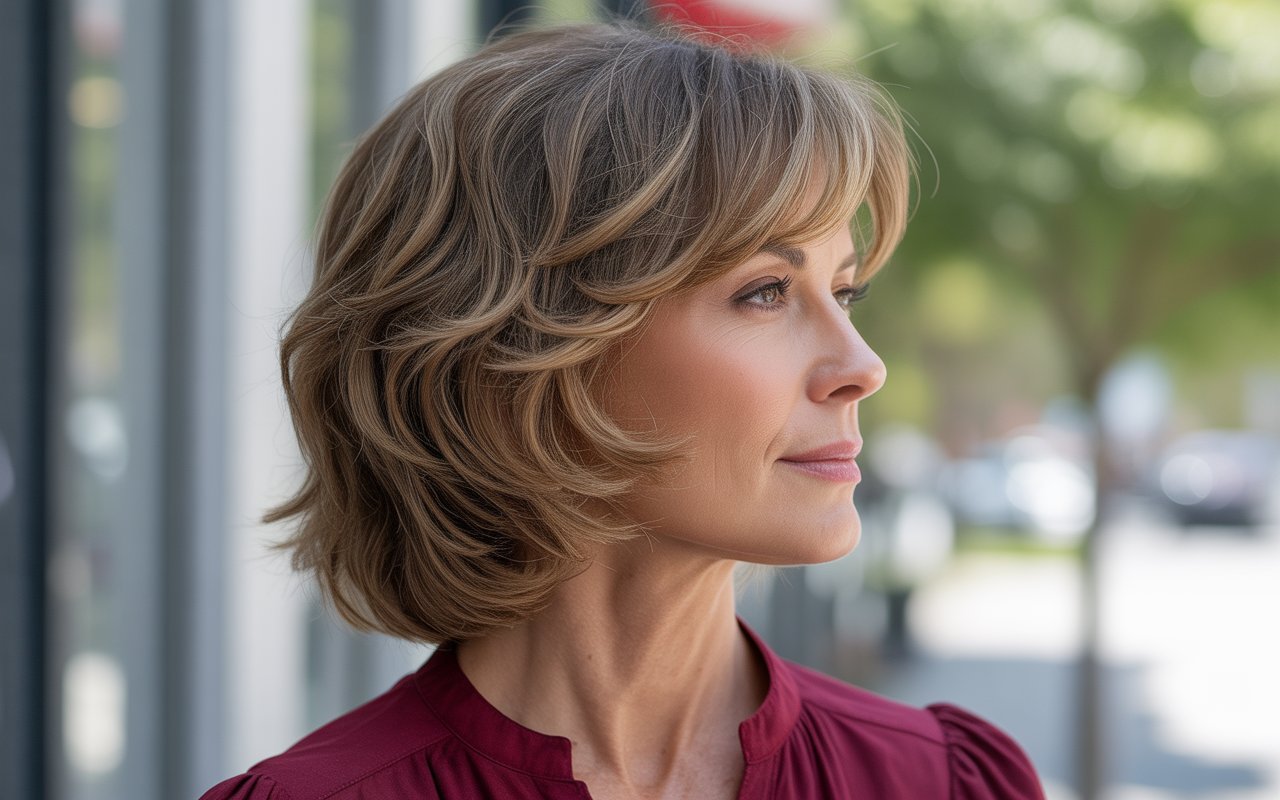
Your 40s are, honestly, one of the best decades to finally get the haircut you want. You know your face, you know your hair, and you’ve stopped trying to please everyone else. So it makes sense that more women in this age group are gravitating toward a cut that’s layered, lived-in, and full of movement — the medium shag.
Hair changes in your 40s. It may be finer than it used to be, or it might sit flatter at the roots. The good news is that a well-cut shag works with those changes instead of against them. The layers add volume, the texture adds dimension, and the overall shape gives the hair a lighter, more effortless feel. None of that requires a drastic transformation or a complicated styling routine.
Below 10 medium shag variations that look fresh, work for real life, and are genuinely flattering for women in their 40s — from face-framing curtain bang styles to soft wolf cuts to shoulder-length options with bold color choices.
- 1. The Classic Layered Shag with Curtain Bangs
- 2. The Soft Wolf Cut
- 3. The Shoulder-Length Shag with Wispy Bangs
- 4. The Shaggy Lob (Shag-Meets-Long Bob)
- 5. The Textured Shag for Fine Hair
- 6. The 70s-Inspired Feathered Shag
- 7. The Curly Shag
- 8. The Shag with Side-Swept Bangs
- 9. The Shag with Bold Color
- 10. The Sleek Shag
- The Right Shag Is Out There for You
- Frequently Asked Questions
1. The Classic Layered Shag with Curtain Bangs
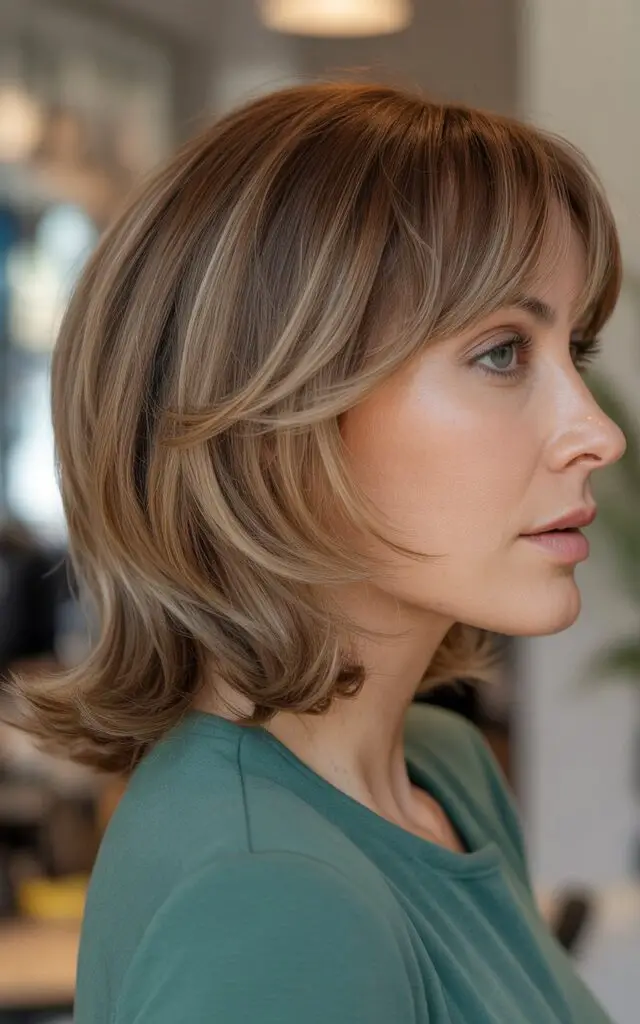
This is the version most people imagine when they think of a modern shag. Layers are distributed from the crown down to the ends, with curtain bangs that part in the middle and sweep away from the face. The result is a shape that opens up the eyes and balances the cheekbones.
For women in their 40s, this works especially well because the bangs soften the forehead without hiding it. The layers keep the hair from sitting flat, which is a common issue as hair naturally loses density over time. Style it with a round brush on the bangs and some texturizing spray on the mid-lengths for a finish that looks effortless but put-together.
This cut flatters oval, heart, and square face shapes most, though it can be adjusted for nearly anyone with the right layer placement.
2. The Soft Wolf Cut
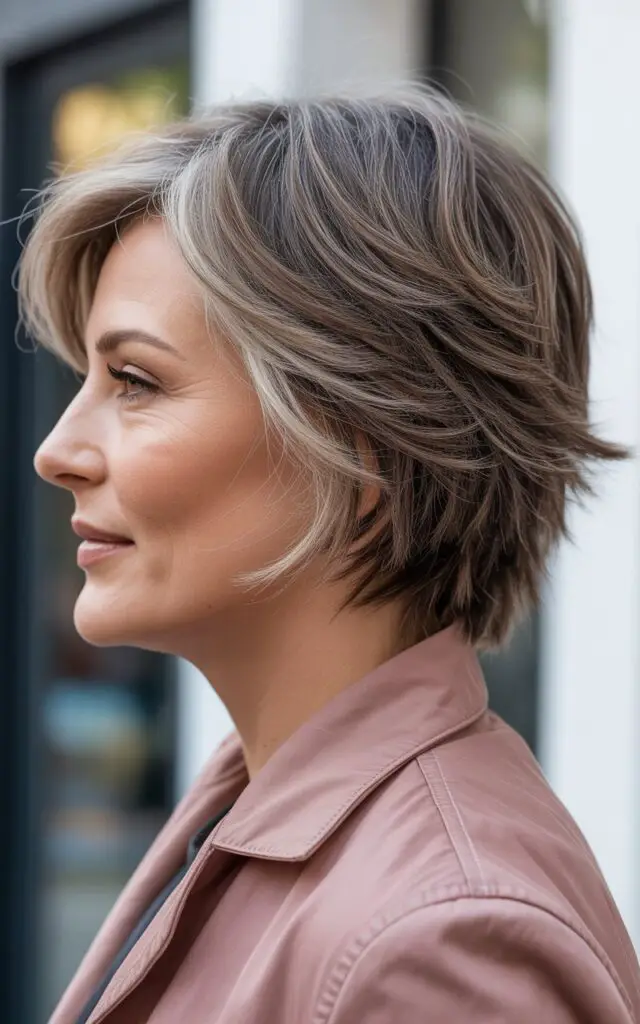
The wolf cut is a newer hybrid between a shag and a mullet — but before you click away, hear this out. The version that suits women in their 40s is soft and polished, not wild. Short crown layers create lift at the top, while the length is maintained through the mid-back or collarbone area.
The key difference from a traditional shag is that the layers are more dramatic at the top, creating serious volume at the crown. For women with fine or flat hair, this structure makes a real difference. It gives the hair a fullness that no product alone can fake.
Style it with a diffuser if you have any natural wave, or use a medium-barrel curling wand to add loose movement through the lengths. A finishing mist or lightweight oil on the ends keeps everything looking polished.
3. The Shoulder-Length Shag with Wispy Bangs
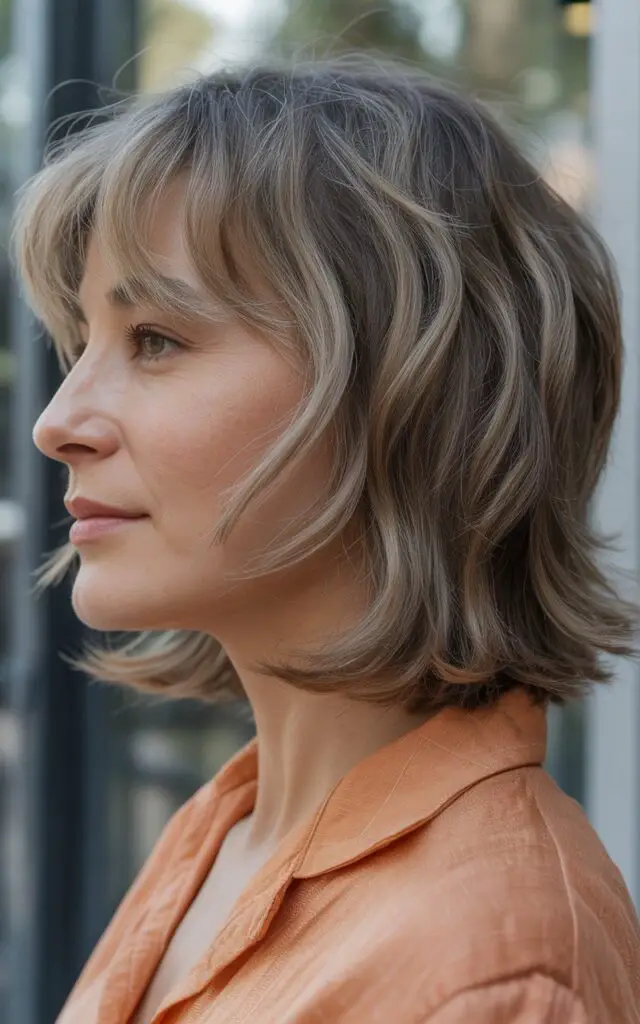
This version sits right at or just below the shoulder and uses wispy, feathered bangs instead of the heavier curtain style. The effect is lighter and more understated — good for women who want texture and movement but prefer a quieter overall look.
Wispy bangs work particularly well for fine hair because they don’t add visual weight to the front of the face. The layers throughout the cut give an impression of thickness without the actual density. Ask your stylist to use a razor or point-cutting technique on the ends for that signature feathered finish.
This is also one of the most low-maintenance options on this list. Let it air-dry with a bit of mousse for a natural, relaxed finish, or blow it out for something more refined.
4. The Shaggy Lob (Shag-Meets-Long Bob)
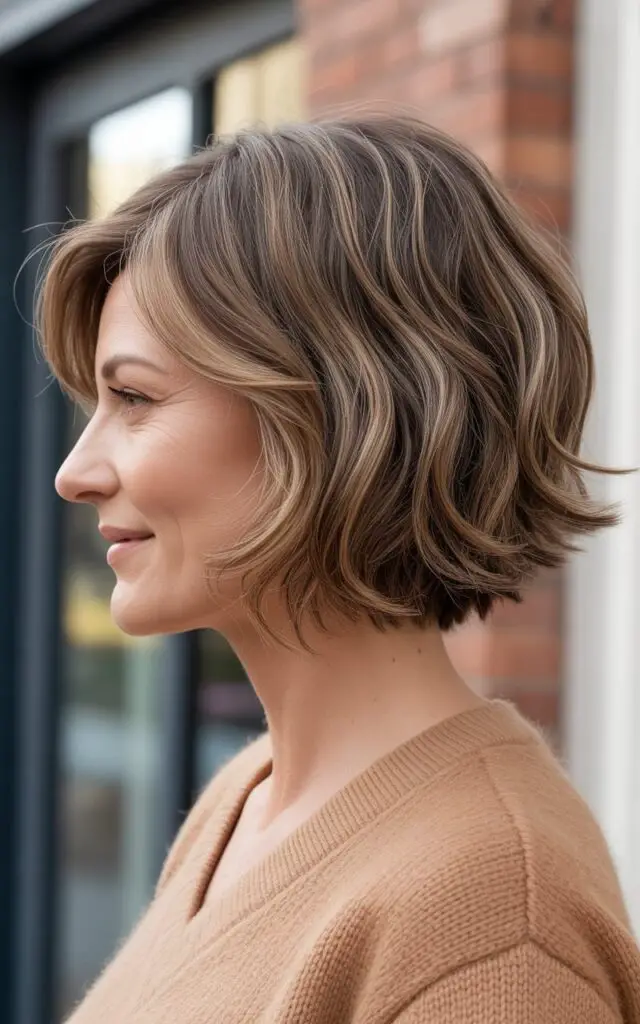
The shaggy lob — sometimes called the shaglob — is a shoulder-length cut with the structure of a lob and the texture of a shag. The length sits at or just above the collarbone, making it practical and easy to manage, while layers inside the cut give it plenty of movement.
For women in their 40s who aren’t sure if they want a full shag, this is a great middle ground. The shape is familiar and polished, but the internal layering makes it feel current and lighter than a standard blunt lob.
It works well with balayage or subtle highlights, since the layers create natural separation that lets the color show up beautifully. Style it with loose waves for a casual look, or blow it out straight for something sleeker and more defined.
5. The Textured Shag for Fine Hair
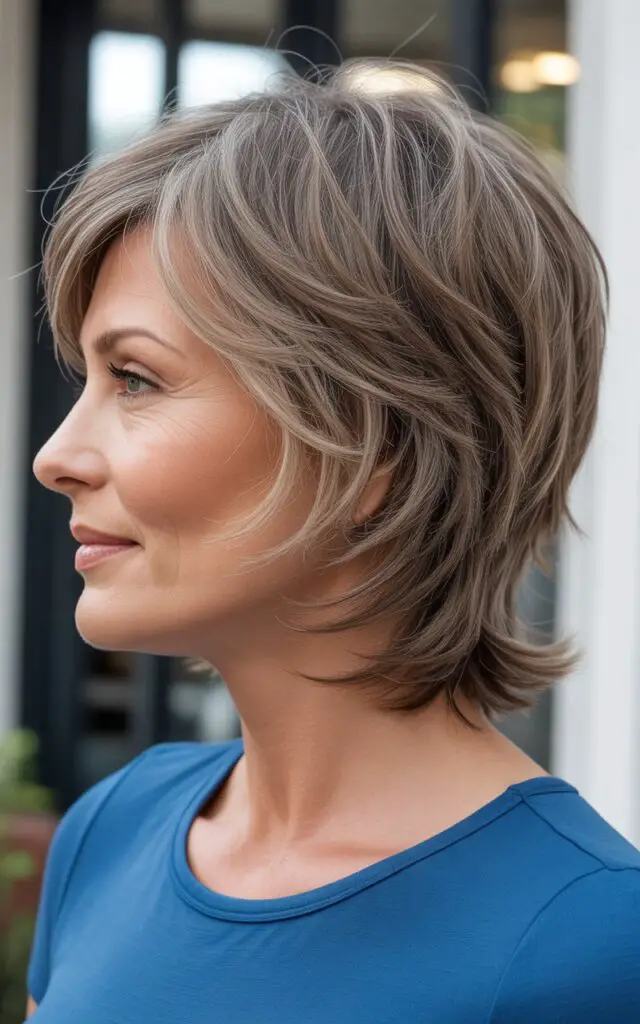
Fine hair needs a specific approach with any shag cut. Too much layering can make it look wispy and thin rather than full and textured. The right version adds volume where it counts — at the crown and through the mid-lengths — while keeping the ends from getting too sparse.
A medium shag for fine hair typically features shorter layers at the top to create lift, with longer, softer layers through the bottom half. Bangs are optional but can help frame the face and add the appearance of thickness at the front.
The styling trick here is using a volumizing mousse before blow-drying and lifting the roots with a round brush. This builds structure into the cut from the inside out, so it holds shape throughout the day without needing constant product reapplication.
6. The 70s-Inspired Feathered Shag
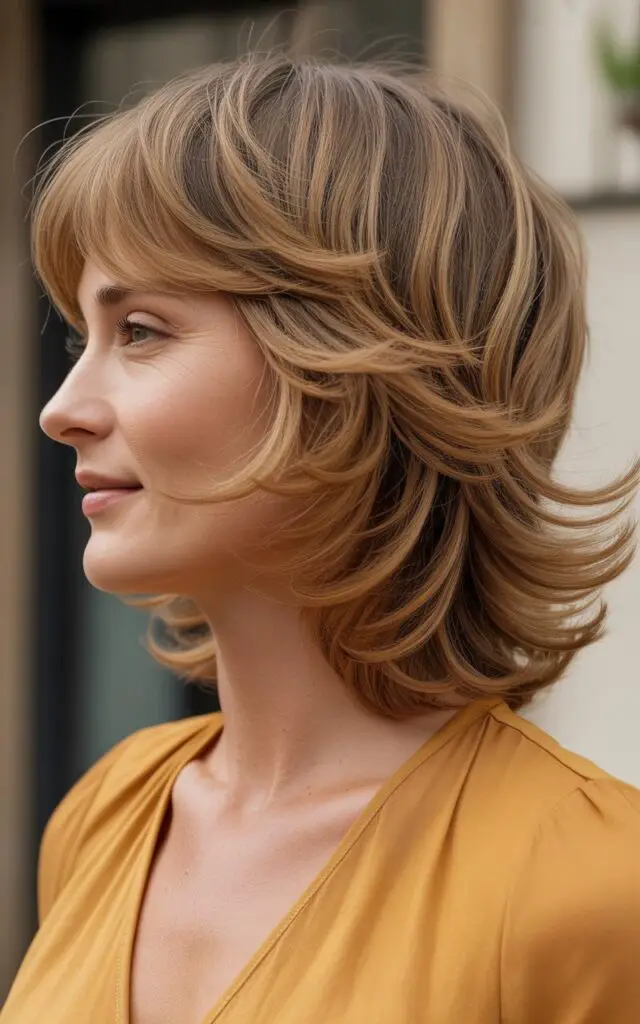
There’s a reason the 70s shag keeps coming back. Full, feathered layers. Lots of movement. Face-framing pieces that flip away from the face. It’s a style that looks effortless while actually doing a lot of flattering work.
The modern version of this cut for women in their 40s is slightly tamed compared to the original. Instead of heavy, overly uniform layers, the feathering is more strategic — focused around the face and through the mid-lengths where movement matters most. It works best on medium to thick hair, since finer hair can sometimes look too diffuse with heavy feathering.
Pair this with a warm hair color like caramel, chestnut, or golden blonde and the layers catch the light beautifully. A large-barrel curling iron or hot rollers will give you that signature 70s volume.
7. The Curly Shag
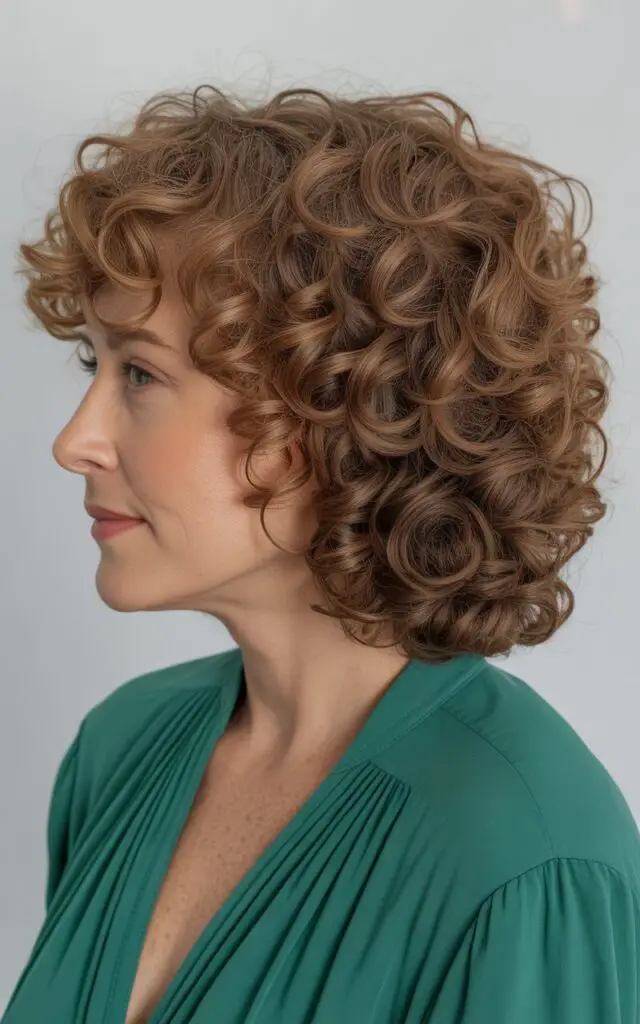
Naturally curly hair and the shag cut are a natural pairing. The layered structure of the shag allows curls to spring and coil at different lengths, creating a shape that’s full at the crown and gradually tapered through the ends. It prevents the heaviness and puffiness that can happen with curly hair when it’s all one length.
For women in their 40s with curly hair, this cut is practical as much as it is stylish. Curly hair can get dryer and coarser with age, and the removal of excess weight through layering makes it easier to manage and style.
The styling approach here is simple: apply a curl cream or gel-cream combination to damp hair, diffuse on low heat, and gently fluff the crown with a pick once dry. Keep the ends moisturized with a lightweight oil to prevent frizz.
8. The Shag with Side-Swept Bangs
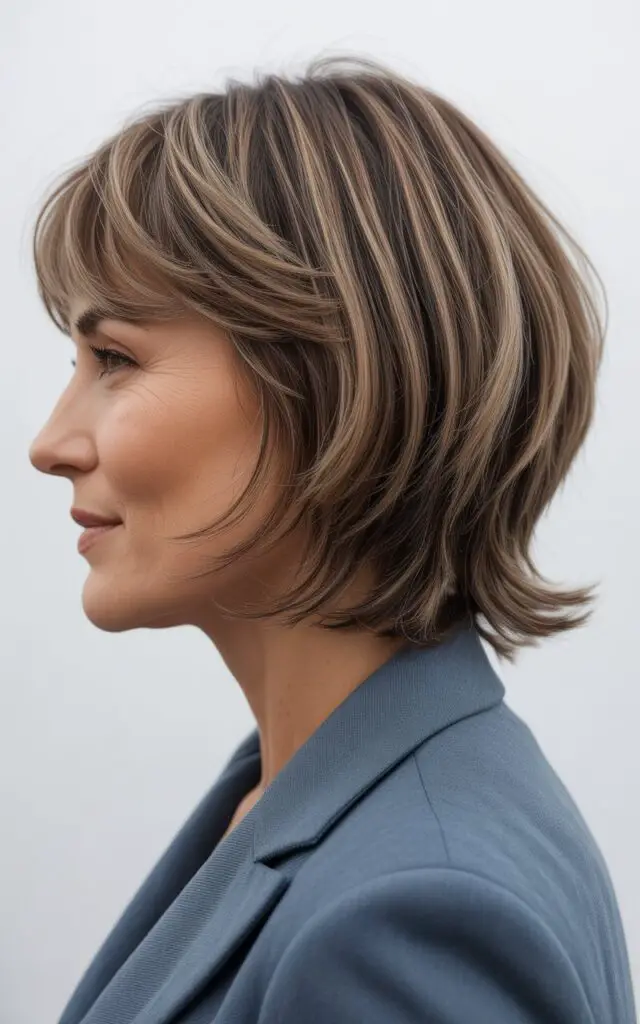
Not everyone likes bangs in the center of their forehead, and side-swept bangs offer a softer, more asymmetrical option. Paired with a medium shag, the side-swept fringe creates a diagonal line that lengthens the face and adds interest to the overall shape.
This variation works well for women with round or square face shapes, where the angled fringe helps to add length and balance. The rest of the cut follows the same shag principles — layers throughout, textured ends, movement through the mid-lengths.
Blow-dry the bangs with a small round brush and sweep them to your preferred side. A tiny bit of texture paste through the ends gives the cut some definition without stiffness.
9. The Shag with Bold Color
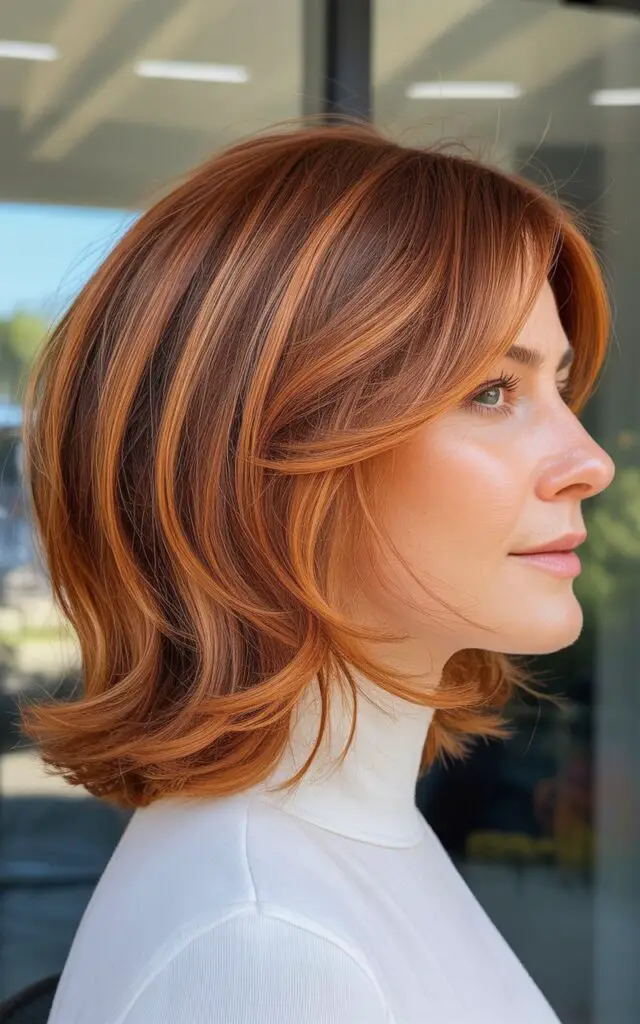
Sometimes the cut and the color together create the total look. A medium shag is one of the best haircuts for showing off layered color techniques because the separation between layers creates natural depth and dimension.
Balayage, highlights, and color melts all show up particularly well in a shag because the movement in the cut lets the different tones catch the light at different angles. For women in their 40s, a warm balayage in honey, caramel, or copper can add warmth and brightness around the face — which is particularly flattering as skin tone changes with age.
If you’re working with natural gray or silver, a medium shag with soft layering is one of the best ways to showcase that color. The texture prevents silver strands from looking flat, and the movement makes the overall look feel modern rather than dated.
10. The Sleek Shag
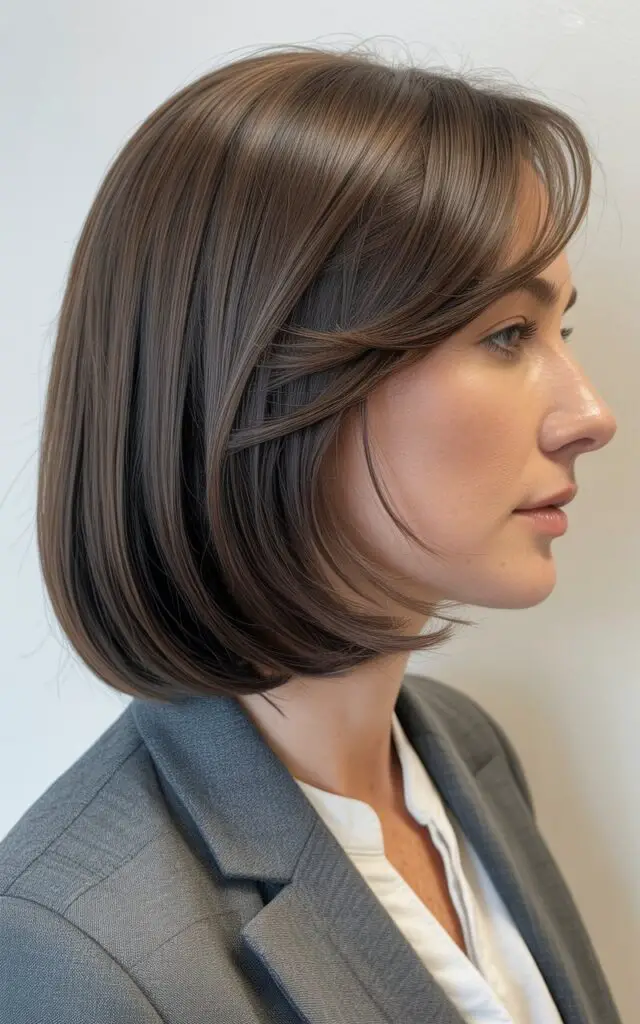
Not every shag has to look undone. The sleek version keeps the layered structure of the cut but styles the hair smooth, straight, and polished. Think of it as the shag’s more professional alter ego — it still has all the internal texture and shape, but the finish is clean.
This works especially well for women who need a versatile cut that can go from the office to the weekend without much effort. The layers are still there, adding volume and movement, but a flat iron and a smoothing serum pull everything together for a refined look.
Ask your stylist for a shag with soft, blended layers and minimal disconnect between them — this gives you the polished finish when straight while still showing beautiful texture when worn wavy or air-dried.
The Right Shag Is Out There for You
Hair in your 40s is still your hair — it just might need a slightly different approach than it did in your 20s. A medium shag, done with the right layer placement for your texture and face shape, can genuinely make your hair look fuller, your features look more defined, and your overall style look current.
The best part is that this cut grows out well. You’re not locked into a high-maintenance situation where every week matters. A trim every 8 to 12 weeks keeps the shape, and in between, the layers do the work for you. Whether you go for the soft feathered version or the bold wolf cut, there’s a variation here that fits your hair, your life, and your taste.
Frequently Asked Questions
Q: What exactly is a medium shag haircut?
A: A medium shag sits roughly between the chin and the collarbone and features choppy, layered ends with shorter layers at the crown. It usually includes some type of bangs — curtain, side-swept, or wispy — and has a textured, lived-in finish.
Q: Is a medium shag a good choice for fine hair?
A: Yes, but it needs to be done carefully. The best approach for fine hair is softer, more blended layers that add volume without making the ends look too thin. Avoid very choppy or disconnected layers, which can make fine hair look sparse.
Q: How often does a medium shag need to be trimmed?
A: About every 8 to 12 weeks. The good news is that this cut grows out pretty gracefully. You don’t need to rush back to the salon — the layers continue to give the cut shape even as the hair grows.
Q: Do I need to use special products to style a shag?
A: Not necessarily special, but a few key products help. A lightweight texturizing spray or mousse works well for adding definition to the layers. If you have fine hair, a volumizing mousse is your best friend. For curly versions, a curl cream or gel-cream combination will define the layers nicely.
Q: Can a medium shag work on naturally curly hair?
A: Absolutely. In fact, it’s one of the best cuts for curly hair because the layers work with the natural curl pattern to create shape and remove excess weight. Just make sure your stylist cuts it dry or with the curl in mind so the final result reflects how your hair actually behaves.
Q: What face shapes suit a medium shag best?
A: A medium shag is one of the more versatile cuts and can be adjusted for most face shapes. Curtain bangs work well for heart and oval faces, side-swept bangs flatter round and square faces, and wispy bangs are a softer option for nearly everyone.
Q: Is a medium shag high-maintenance?
A: Not particularly. It’s considered one of the more low-maintenance cuts because the texture and layers are meant to look a little undone. Air-drying is often enough, especially if you use a light mousse or texturizing spray. Trimming every couple of months keeps it in shape.
Q: Can I get a medium shag if my hair is thinning?
A: Yes — in fact, this cut is often recommended for thinning hair because the layers create the appearance of volume and fullness. The trick is to avoid too much layering at the ends, which can make thinning hair look even more sparse. Soft, blended layers are the goal.
Q: Does a medium shag work with gray or silver hair?
A: It looks really beautiful with gray and silver hair. The texture and movement of the cut prevent silver strands from looking flat, and the layers allow the natural variation in gray tones to show up as dimension rather than uniformity.
Q: What’s the difference between a shag and a wolf cut?
A: The wolf cut is essentially a shag variation with more dramatic crown layers and a stronger contrast between the short top layers and the longer lengths. Both share the same layered, textured DNA. The wolf cut is slightly bolder, while the classic shag is more evenly distributed through the length.

